
Archaeological Sites of Anatolia
-

Ancient Ani Once a major city on the medieval Silk Road, Ani developed at a crossroads of trade, political power and cultural exchange. Its surviving churches, city walls and monumental ruins reflect a rich architectural heritage. Today, the abandoned cityscape offers a striking record of the communities that once lived there.
-

Hasankeyf Hasankeyf grew along the Tigris River and preserves traces of human settlement extending back thousands of years. Its cliffs, caves and historic monuments reflect many successive periods of habitation. The photographs record a landscape where archaeological heritage and the life of the river were closely intertwined.
-

Allianoi Allianoi was an ancient thermal settlement near Bergama in western Türkiye, associated with the Roman period. Its baths and archaeological remains reveal the importance of water and healing in the ancient world. This series documents a historical site whose preservation became a subject of public concern.
-

Lykia Civilization The Lycian region of southwestern Anatolia is known for its distinctive rock-cut tombs and ancient urban remains. Tomb façades carved into cliffs preserve traces of local architectural traditions and beliefs about death. The photographs explore how these monuments remain part of the surrounding landscape.
-

Hattusa Hattusa was the capital of the Hittite Empire and an important political centre of Bronze Age Anatolia. Its monumental gates, fortifications and archaeological remains evoke the scale of the ancient city. The site offers a way to encounter the architecture and historical legacy of Hittite civilisation.
-

Alacahoyuk Alacahöyük is an archaeological settlement with remains from several periods of Anatolian history. Its celebrated Sphinx Gate belongs to the Hittite era and remains one of the site's most recognisable monuments. The photographs focus on the relationship between the excavated structures and their historical setting.
-

Sardes Sardes was the capital of ancient Lydia and is associated with King Croesus and the wealth of the Pactolus River. Its surviving archaeological remains reveal later Greek and Roman chapters as well as the city's earlier importance. The photographs trace a place shaped by commerce, power and changing civilisations.
-

Commagene Kingdom On Mount Nemrut, King Antiochus I of Commagene created a monumental tomb-sanctuary in the first century BCE. Colossal seated figures and fallen stone heads occupy terraces high above the surrounding landscape. Their scale and setting make the site an extraordinary meeting point of sculpture, kingship and memory.
-

Perge Perge was an important ancient city of Pamphylia, in the region of present-day Antalya. Its streets, public buildings and surviving architectural details reveal the organisation of urban life in antiquity. The photographs examine the spaces through which generations of inhabitants once moved.
-

Korykos Corycus was an ancient city in Cilicia, Anatolia, located at the mouth of the valley called Seytan deresi,Mersin Province, Turkey
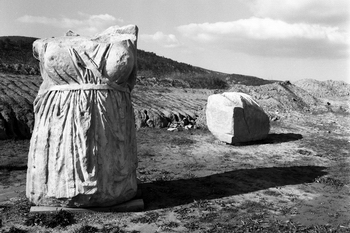
Claros (Klaros) — 1994 Photographed in 1994 near İzmir, Klaros was an ancient sanctuary of Apollo and a renowned oracle of Ionia. The headless statue of Artemis and scattered ruins recall a sacred site encountered in complete silence.
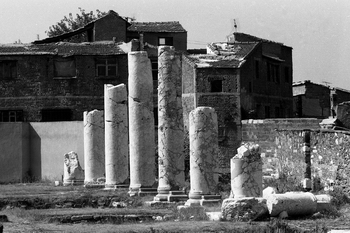
Smyrna Agora — İzmir Photographed in 1994 and 1999, the ancient Agora stood amid old houses and workshops. These images connect the Roman remains of Smyrna with memories of the İzmir neighbourhood where I grew up.
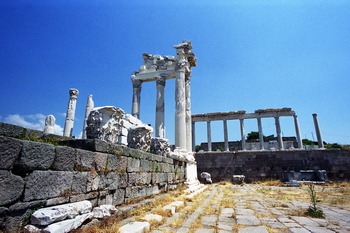
Pergamon (Bergama) — 1972–2008 Photographed in 1972, 1999 and 2008, Bergama’s Acropolis, Asclepion, Red Basilica and archaeological museum reveal the legacy of ancient Pergamon. These images also trace changes in the city and its heritage across 36 years of visits.
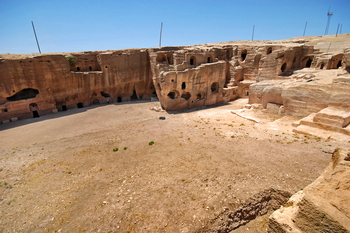
Dara Ancient City — 2008 Photographed on 4 June 2008 with an archaeologist as my guide, Dara reveals a remarkable frontier city of the Eastern Roman Empire. Its rock-cut chambers, necropolis and monumental remains preserve layers of Mesopotamian history.
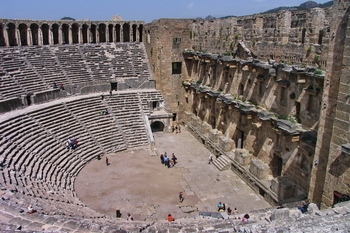
Aspendos — 2005 Photographed on 9 April 2005, the remarkably preserved Roman theatre at Aspendos reveals the architectural skill of antiquity. Its sweeping seating tiers, monumental stage building and enduring acoustics reflect the cultural heritage of ancient Pamphylia.
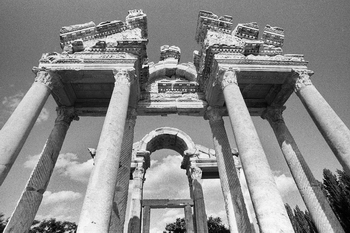
Aphrodisias — 1999 Photographed on black-and-white analogue film in 1999, Aphrodisias reveals its celebrated marble sculpture and Roman architecture. These images also reflect the deliberate choices and patient craftsmanship of analogue photography.
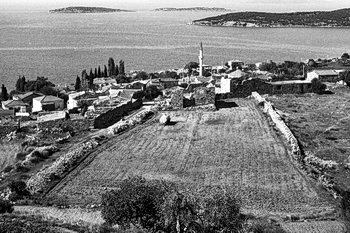
Erythrai (Ildırı) — 1994 Photographed during a family visit in 1994, Erythrai was one of the twelve ancient Ionian cities. These black-and-white images document its ruins and mosaics then exposed to the elements, connecting Karaburun’s history with the need to protect cultural heritage.
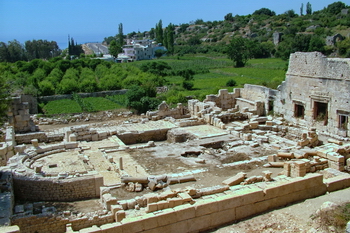
Elaiussa Sebaste — 2005 Photographed on 18 May 2005 near Ayaş on the Mediterranean coast, Elaiussa Sebaste preserves the remains of an ancient Cilician port city. Excavated walls, public buildings and the surrounding landscape reveal traces of its Roman and Byzantine past.
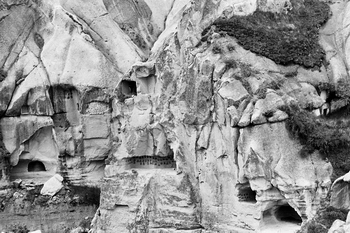
Cappadocia — 1977 & 2009 Two photographic journeys, thirty-two years apart: Avanos and the rock-cut settlements of Zelve in 1977, followed by Ihlara Valley, Derinkuyu Underground City, the Church of St. Theodore and Göreme’s rock churches in 2009.
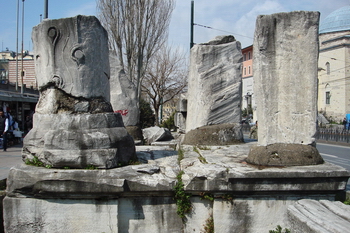
Arch of Theodosius — Istanbul (2014–2023) Photographed in 2014 and 2023, the surviving columns and marble fragments of the Arch of Theodosius stand amid the everyday commerce and traffic of Beyazıt. Their tree-trunk carvings recall the monumental entrance to the ancient Forum of Theodosius.
Archaeological Sites Around the World
-

Terracotta Army My fifth route in China was visiting emperor's underground army. Today is considered the 8th wonder of the world.
-

Ayutthaya Ayutthaya, full name Phra Nakhon Si Ayutthaya, is an ancient capital in the Central Plains of Thailand, 85 km north of Bangkok.
-

Teotihuacan Teotihuacan is known today as the site of many of the most architecturally significant Mesoamerican pyramids built in the pre-Columbian Americas, namely the Pyramid of the Sun and the Pyramid of the Moon.
-

Chichen-Itza Chichen Itza was a major focal point in the Northern Maya Lowlands from the Late Classic (c. AD 600-900) through the Terminal Classic (c. AD 800-900) and into the early portion of the Postclassic period (c. AD 900-1200).
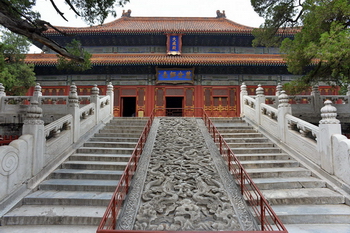
Temple of Confucius — Beijing Founded in the Yuan dynasty, Beijing’s Temple of Confucius honours the philosopher and his teachings. Its courtyards, halls and stone inscriptions reflect a long tradition of scholarship. Photographed in 2014.
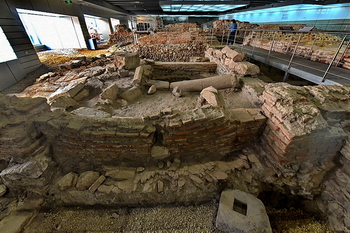
Ancient Serdica — Sofia Ancient Serdica lies beneath the modern centre of Sofia. Roman streets and buildings uncovered during excavations are now visible beside everyday city life. Photographed in Bulgaria in 2022.
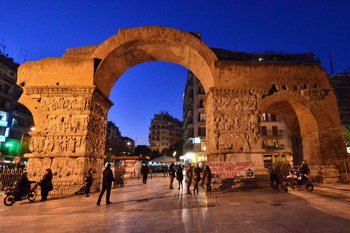
Historical Thessaloniki — Greece Photographed in December 2013, Thessaloniki’s Roman Forum, Palace and Arch of Galerius, and Byzantine walls reveal centuries of history within the modern city. Ancient monuments remain part of everyday urban life.