


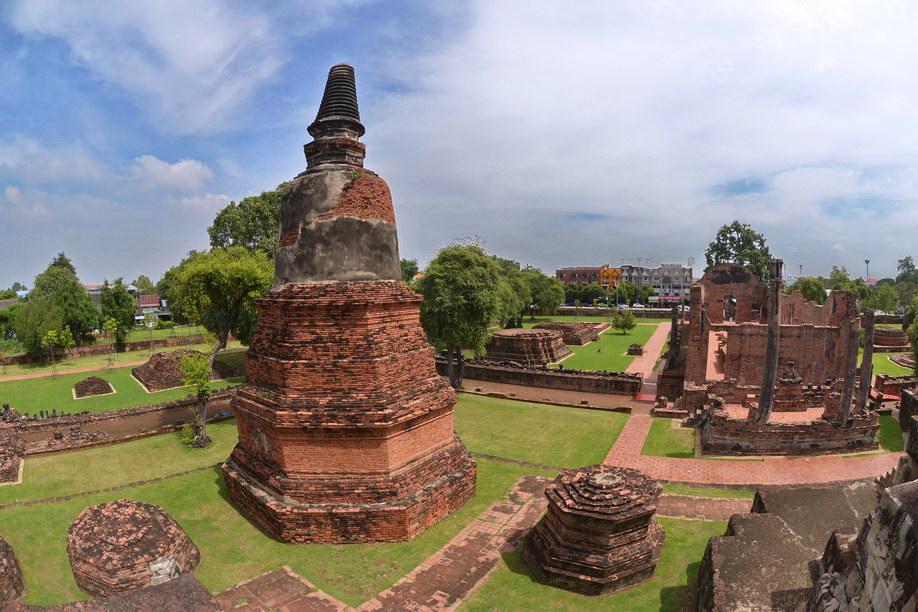
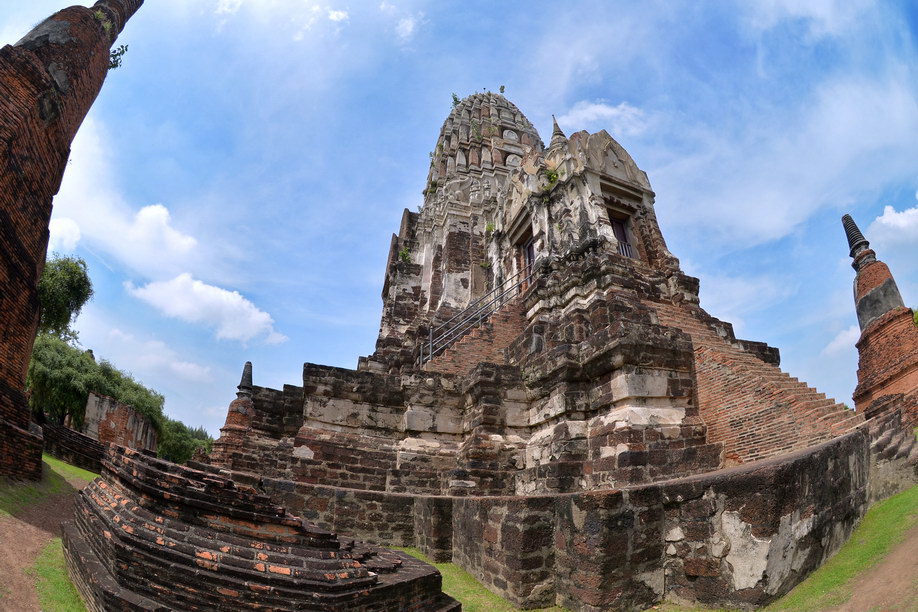

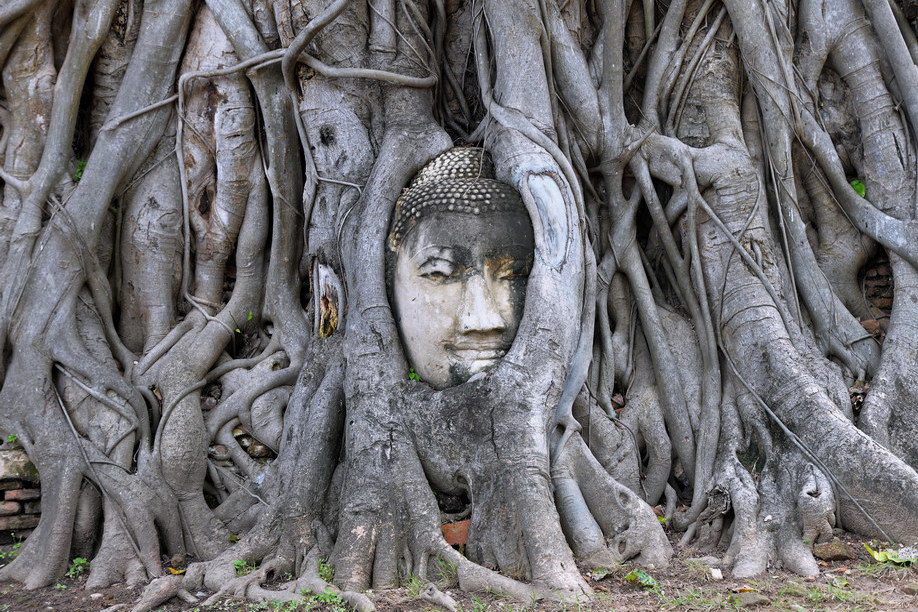
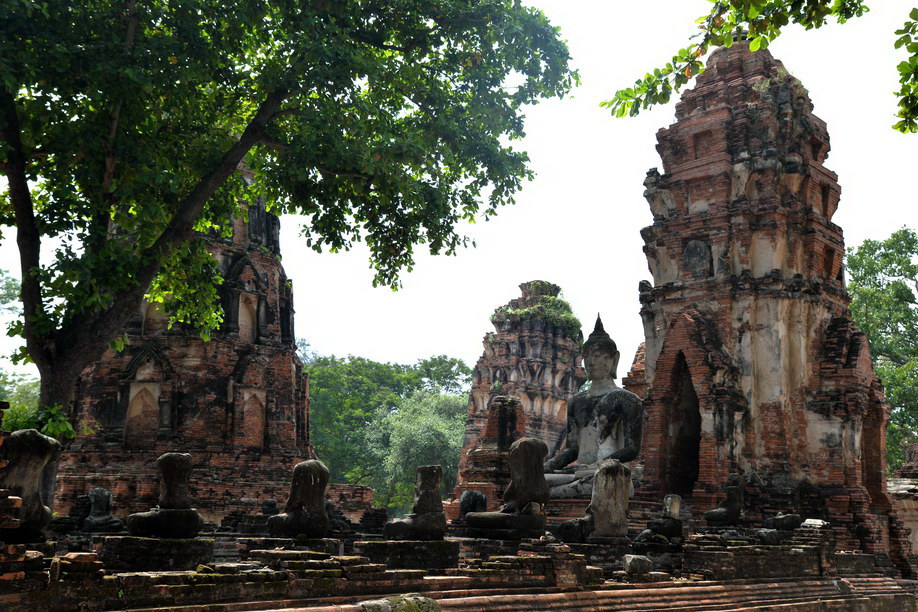


In October 2018, while visiting our daughter, who was teaching in Bangkok, my wife and I decided to travel to Ayutthaya, the former capital of Siam. We took a taxi to the bus station early in the morning and continued north by minibus. After the crowded streets of Bangkok, we were heading toward a very different landscape: a city whose most visible landmarks were the remains of temples, monasteries and royal buildings.
Ayutthaya, formally Phra Nakhon Si Ayutthaya, was founded in the fourteenth century and became one of Southeast Asia’s great political and commercial centers. Its position on a network of rivers connected the kingdom with inland communities and maritime trade routes. Merchants and envoys arrived from across Asia and, later, Europe. The city’s history is therefore not only a story of kings and wars, but also of exchange among people, religions, goods and ideas.
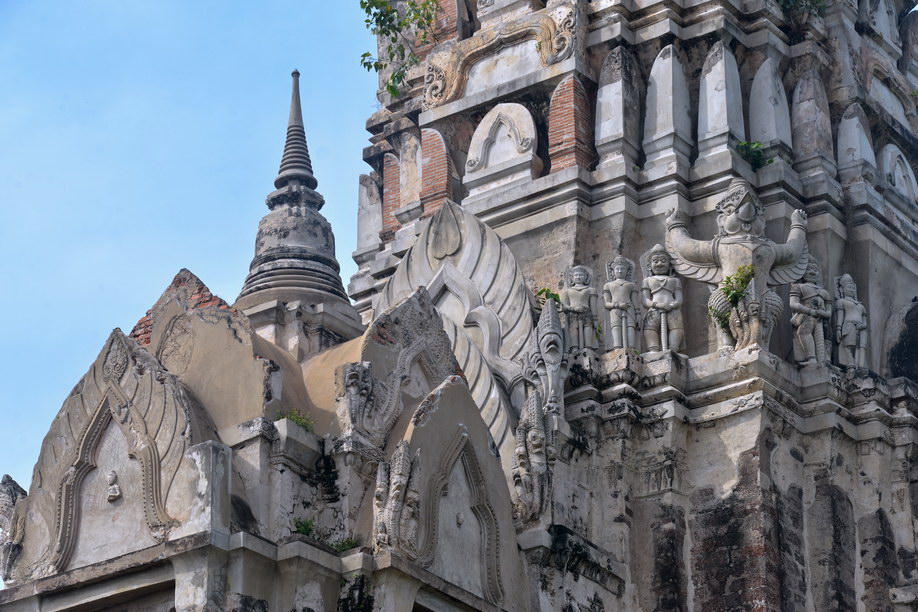
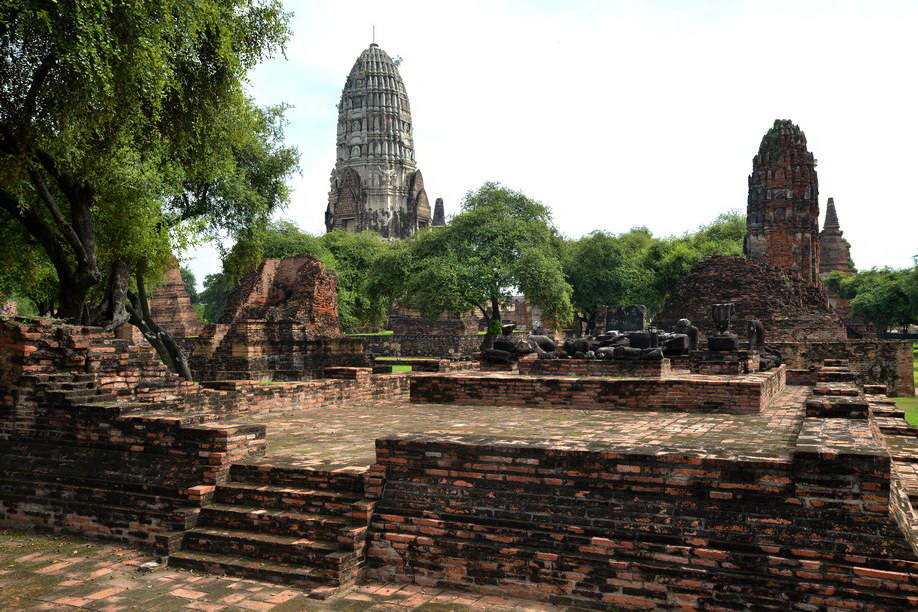
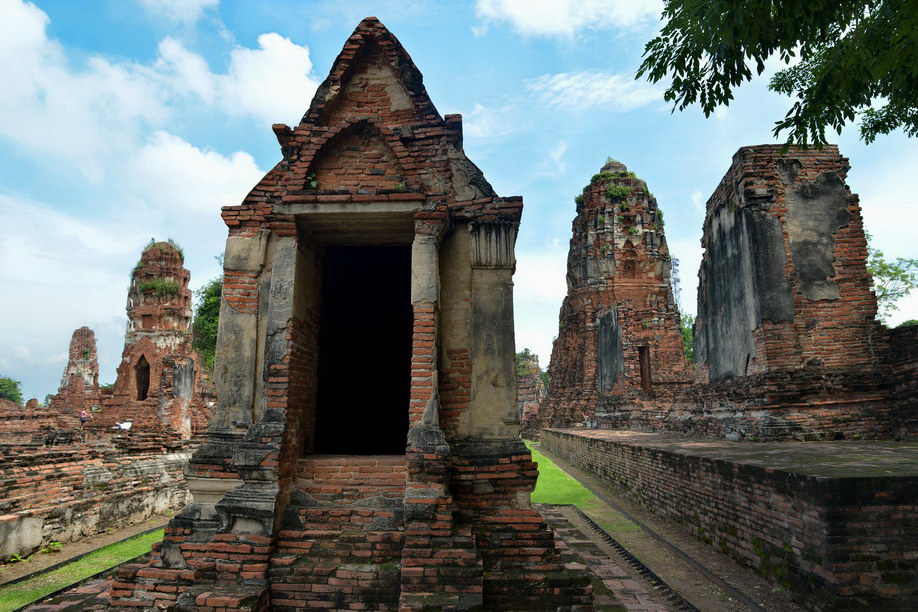
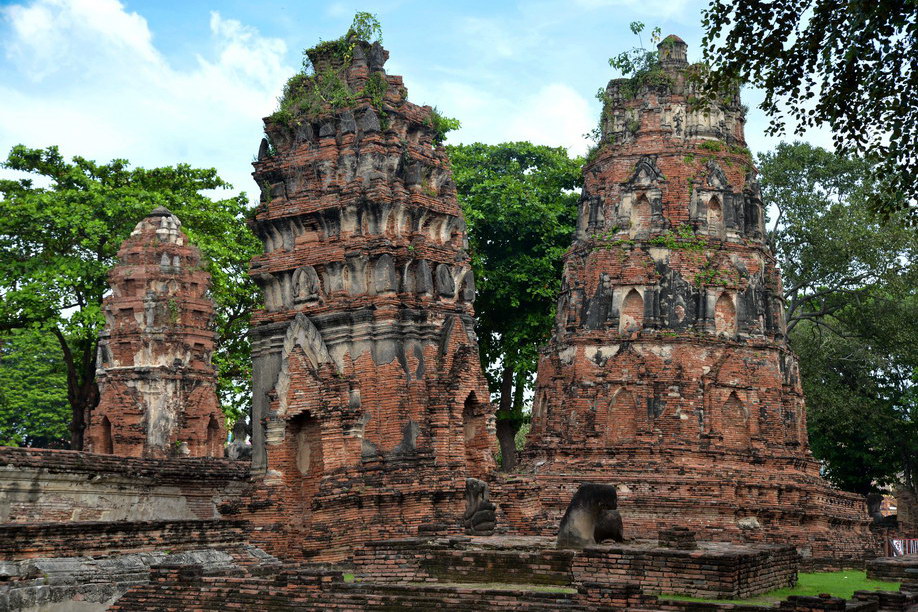
For more than four centuries, Ayutthaya served as the center of a powerful kingdom. Its architecture developed through encounters with several traditions, including Khmer-influenced forms and the distinctive language of Thai Buddhist monuments. The tall prang towers, rows of chedis and surviving monastery walls make those influences visible, although the buildings we see today represent different periods and cannot be attributed to a single civilization.
In 1767, Burmese forces captured Ayutthaya, bringing the kingdom’s era as a capital to an end. The destruction, abandonment and later reuse of materials transformed the city over time. Standing among the ruins, it is easy to imagine a single dramatic moment, but the landscape is also the result of the many generations that followed. What survives is fragmentary, and precisely for that reason it asks the visitor to look carefully.
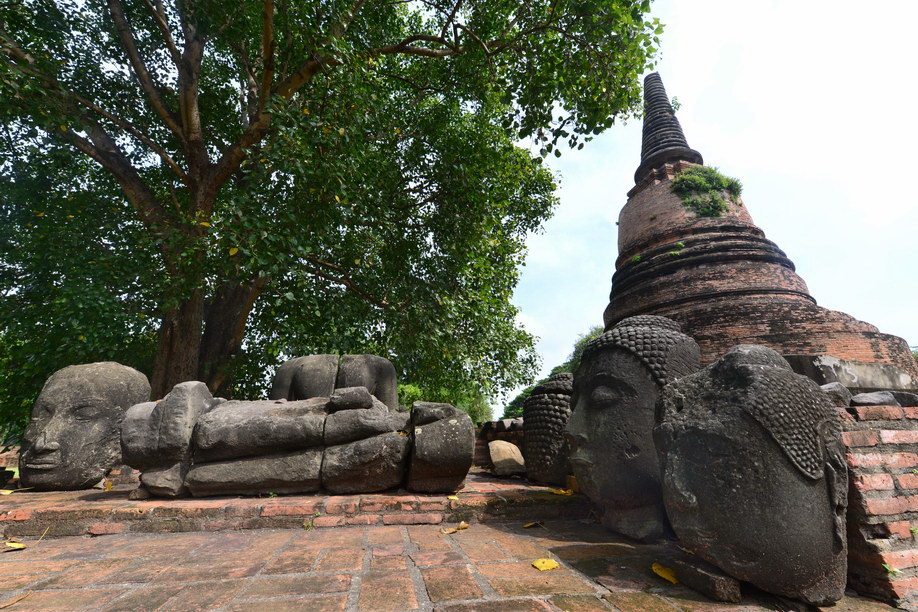
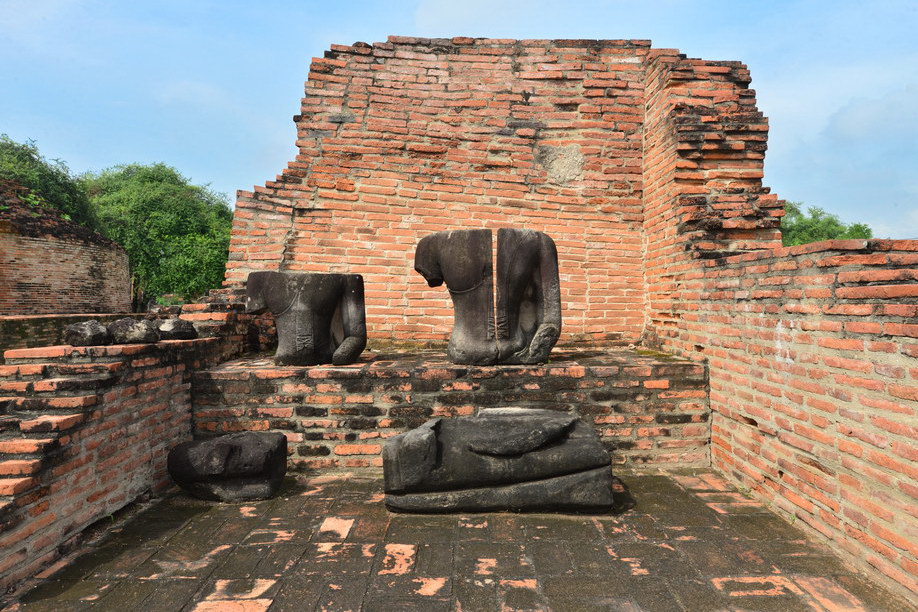
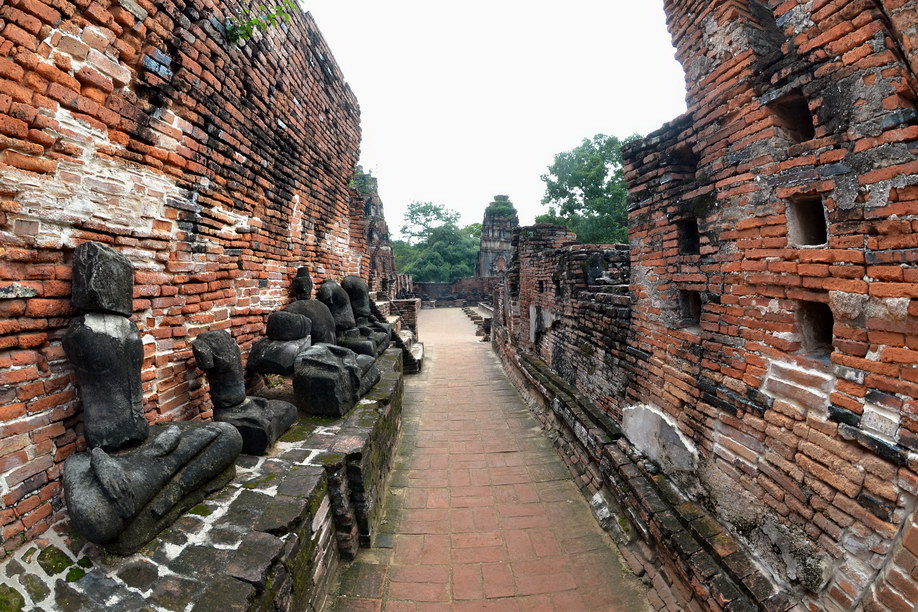
During our visit, we discovered that the historic area could not simply be entered with one ticket covering every monument. Different sites had their own admission arrangements. Moving between them gave us a sense of the old city as a collection of places rather than one enclosed archaeological park. Each stop offered a different arrangement of brick walls, towers, courtyards and images of the Buddha.
The sculptural details interested me as much as the monumental forms. Buddhist imagery dominates many of the surviving religious sites, while architectural ornament also reflects older Indian religious concepts transmitted through the region. These layers should not be mistaken for evidence that Ayutthaya was merely a Khmer city; they reveal the long cultural conversations from which Siamese art developed.
As a photographer, I was drawn to the relationship between the surviving structures and the empty spaces around them. A weathered brick surface, the rhythm of repeated columns or the silhouette of a tower can suggest the scale of a building that no longer exists. I wanted the photographs to convey not only the appearance of the ruins but also the sense of time that makes them so affecting.
The Historic City of Ayutthaya was inscribed on the UNESCO World Heritage List in 1991. Recognition helps protect its exceptional archaeological and historical significance, yet the experience of walking through it remains personal. For me, the journey with my wife was an encounter with the remains of a once-flourishing capital—and a reminder that even the most powerful cities leave behind only part of their stories.