
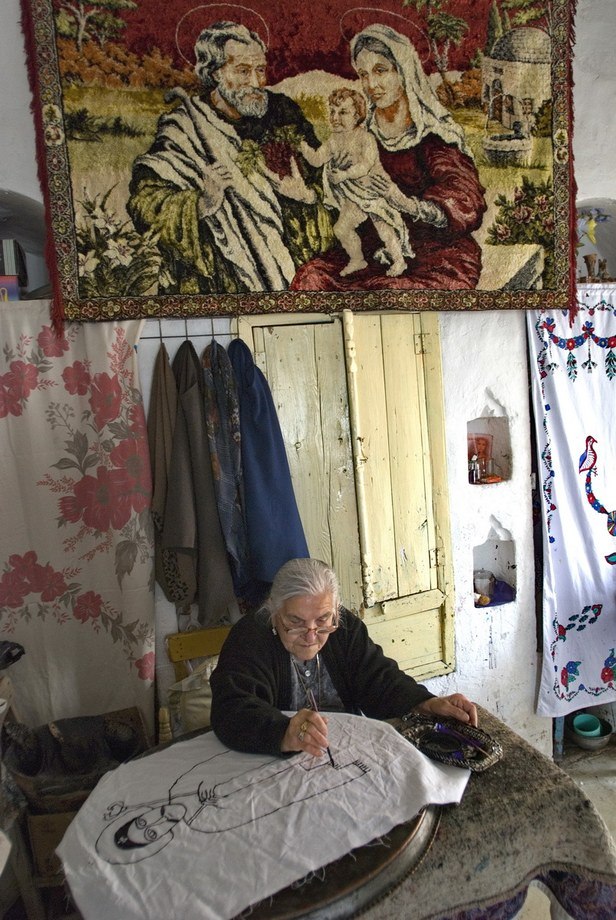
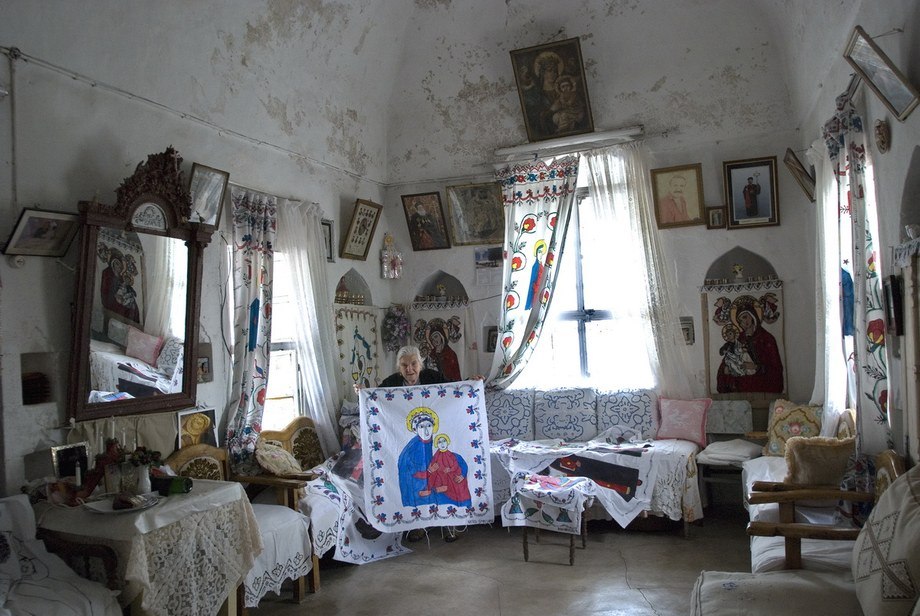
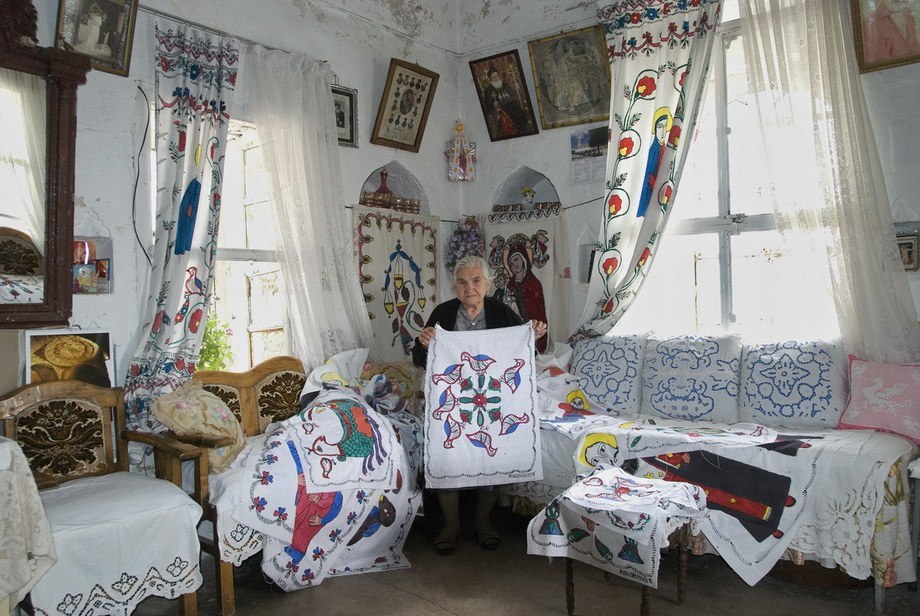
In 2007, in Mardin, I photographed Nasra Şimmeshindi, known locally simply as Nasra Teyze, in her home, which also served as her workshop. One of the last representatives of the Syriac textile-printing tradition, Nasra Teyze had learned the craft from her father and continued his profession throughout her life. She carried forward the traditional patterns, religious figures and decorative motifs of Syriac textile printing, preserving the knowledge and experience she had inherited from him. The altar curtains in Syriac churches included works made by Nasra Teyze and her father. She died in 2016 at the age of 92.
What struck me when I met her was not only the work she produced. The place in which she lived was itself an inseparable part of the story. The house, with the characteristics of Mardin’s traditional stone architecture, was also her working space. High ceilings, stone walls, niches and windows shared the same room with religious pictures and crosses, brightly coloured textiles and completed works. Everyday life, faith and production were not separate from one another. Rather than photograph Nasra Teyze simply as an isolated portrait, I felt that I had to photograph her within this entire environment.
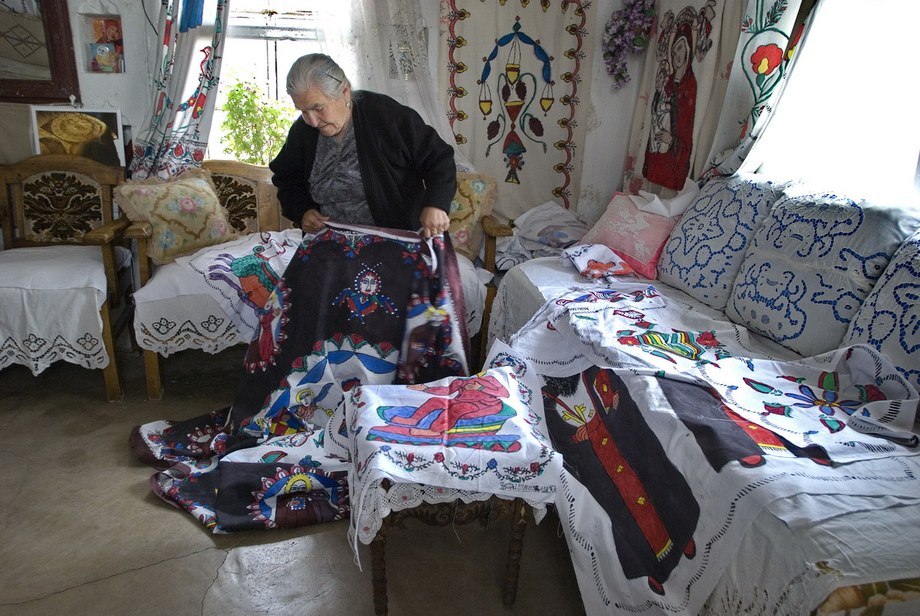
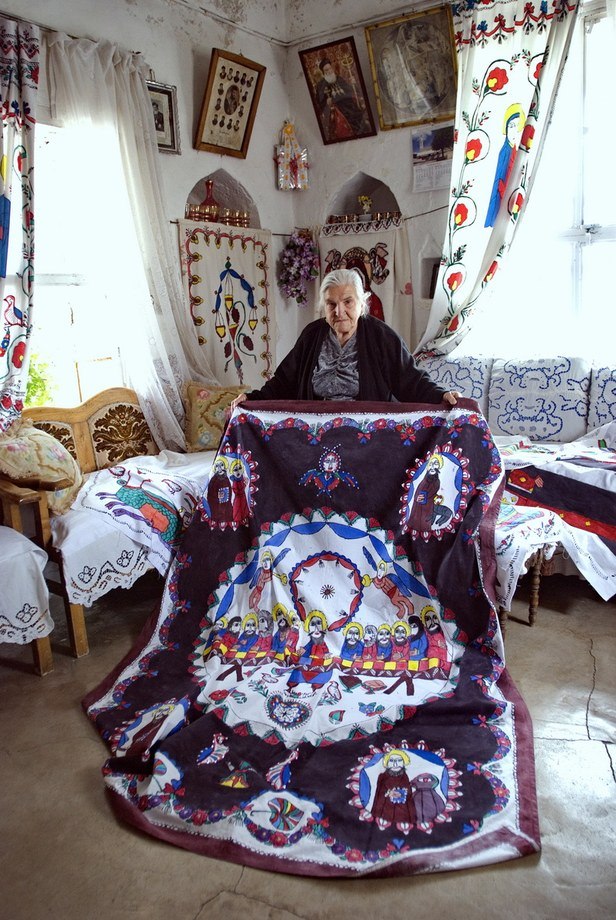
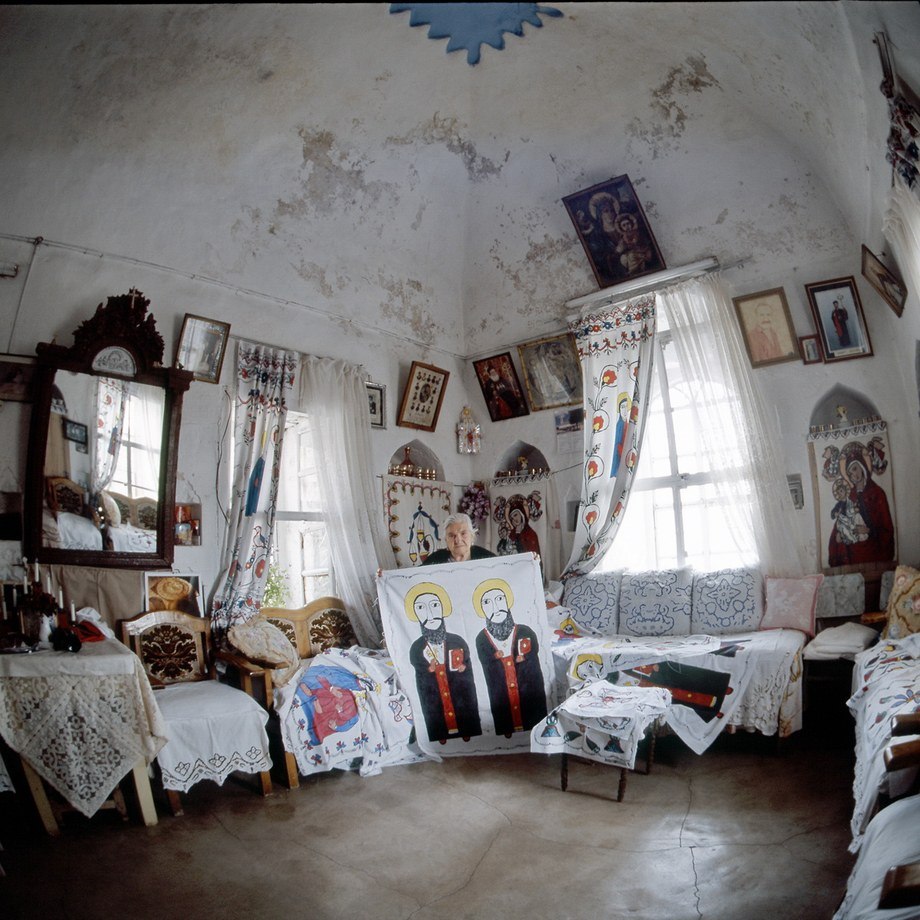
The room was quite narrow, and photographing it was technically difficult. In order to include Nasra Teyze, her work, the religious symbols and the architectural features of the house within the same frame, I had to use a fisheye lens on my medium-format camera. I used it knowing that it would create a pronounced perspective. In some photographs I moved back as far as I could and tried to bring almost the entire room into the frame. In this way, from the high ceiling and windows to the religious images on the walls and Nasra Teyze’s colourful textiles, I was able to bring the different layers of the space together in a single image.
The perspective created by the fisheye lens was initially the result of necessity, but looking at the photographs today, I think the results were worth it. The wide field of view did more than allow me to show a confined room; it placed Nasra Teyze inside her own world. Her textiles, religious symbols, the architecture of the house and traces of everyday life surrounded her. Some of these photographs therefore became, for me, not merely images of a place but environmental portraits of the artist.
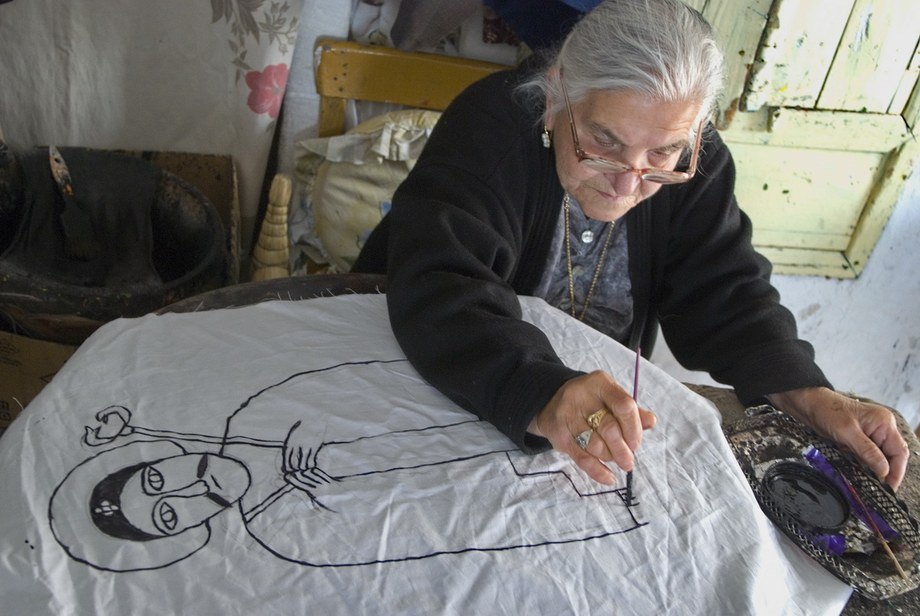
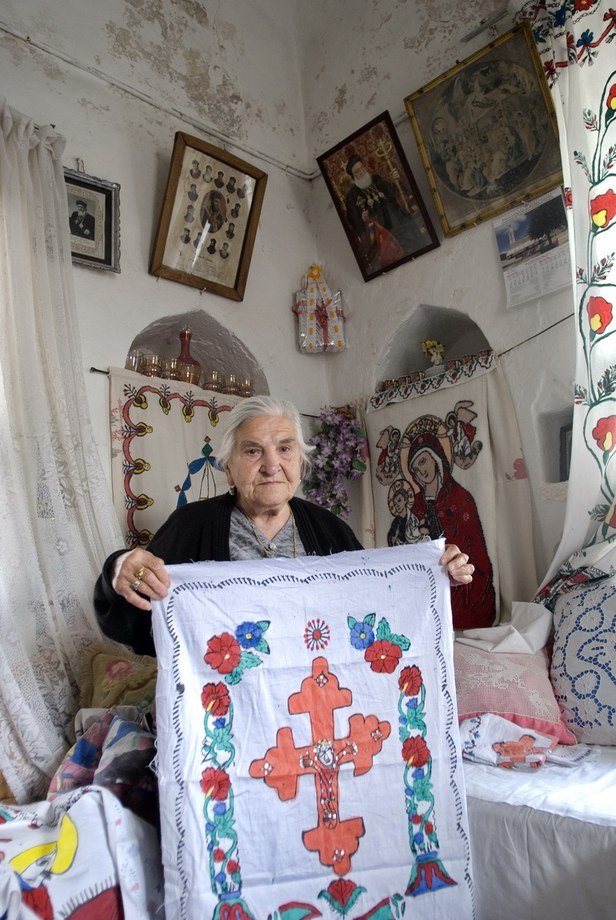
Of course, I did not limit myself to wide views. I also wanted to photograph Nasra Teyze while she was working. I moved closer as she worked on the cloth, formed the designs and used her brush, photographing her hands and the surface in front of her. Later I photographed her as she opened her works to show them to me and stood among them. The series thus moves from the overall space to the process of making, and from there to the relationship between Nasra Teyze and her work.
Religious narratives occupied an important place in her textiles. Figures and scenes from Christian iconography appeared alongside crosses, birds, flowers and various decorative motifs in intense colour. These were not simply decorative fabrics. Some were used within the religious life of Syriac churches, particularly as altar curtains. Seen in this context, the relationship between the religious images I encountered on the walls of her home and the figures Nasra Teyze transferred onto cloth became even more meaningful. The cultural and religious environment in which she lived and the images she produced complemented one another within the same space.
When I made these photographs in 2007, I could not, of course, have understood as clearly as I do today that this tradition was approaching its end. What I saw before me was an elderly woman still practising the craft she had learned from her father, within a living space of extraordinary photographic richness. But after Nasra Teyze died in 2016 at the age of 92, the meaning of the photographs changed as well. Only later did I fully understand that I had recorded the working process, the works and the workshop of the last artist continuing her father’s profession.
Looking at these photographs again today, what matters most to me is the totality that surrounded Nasra Teyze. The architecture of the stone house, the religious symbols, the colourful textiles, the works she made, and in the midst of all of this an elderly woman who continued to work — none could really be separated from the others. I tried not to separate them in my photographs either. The fisheye lens I chose because of the confined space perhaps served a more important purpose than I had expected: instead of merely showing Nasra Teyze, I was able to bring her world into the photograph as well.