
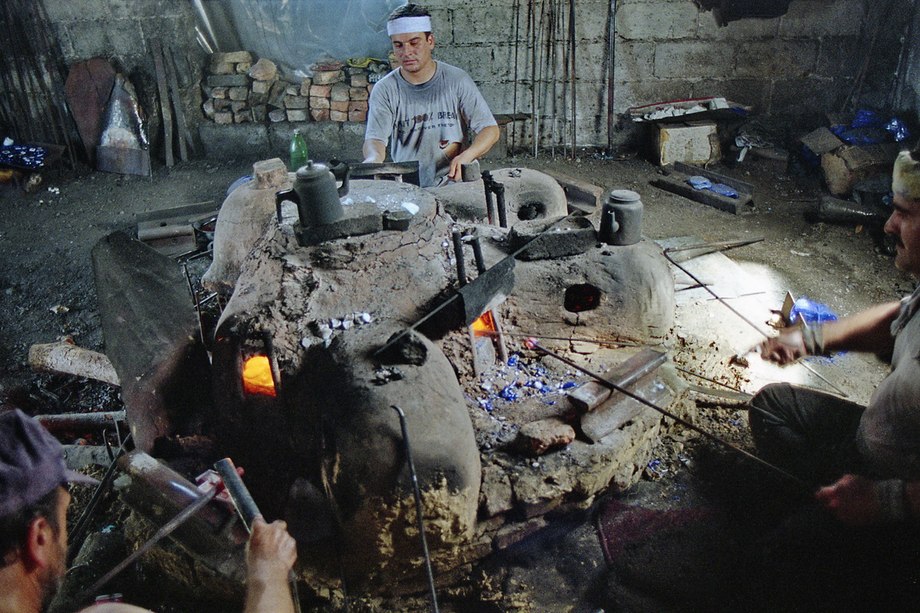
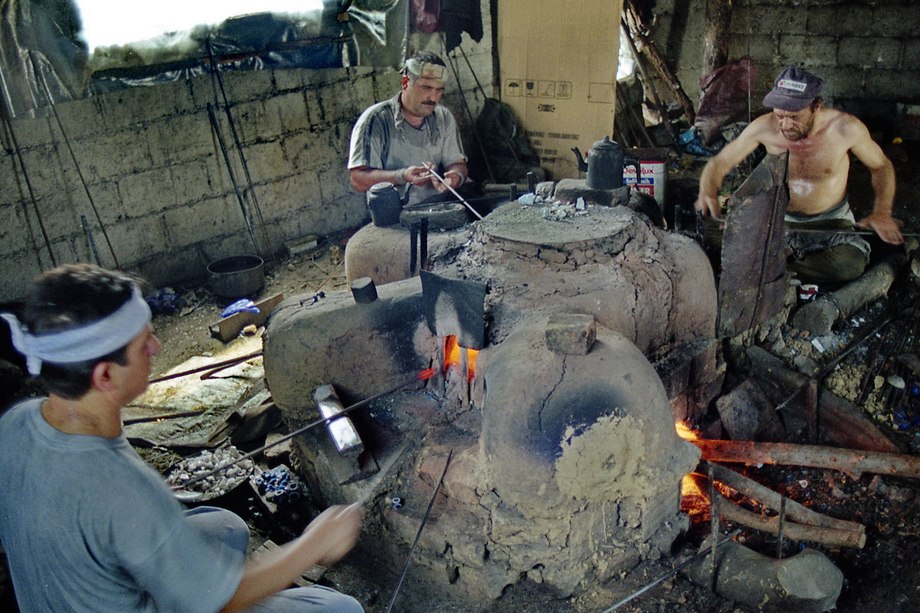
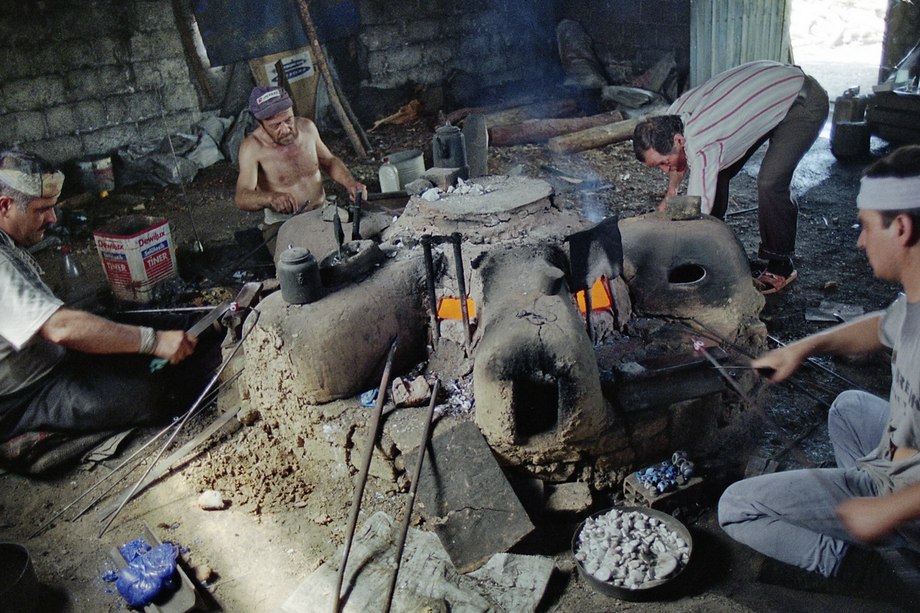
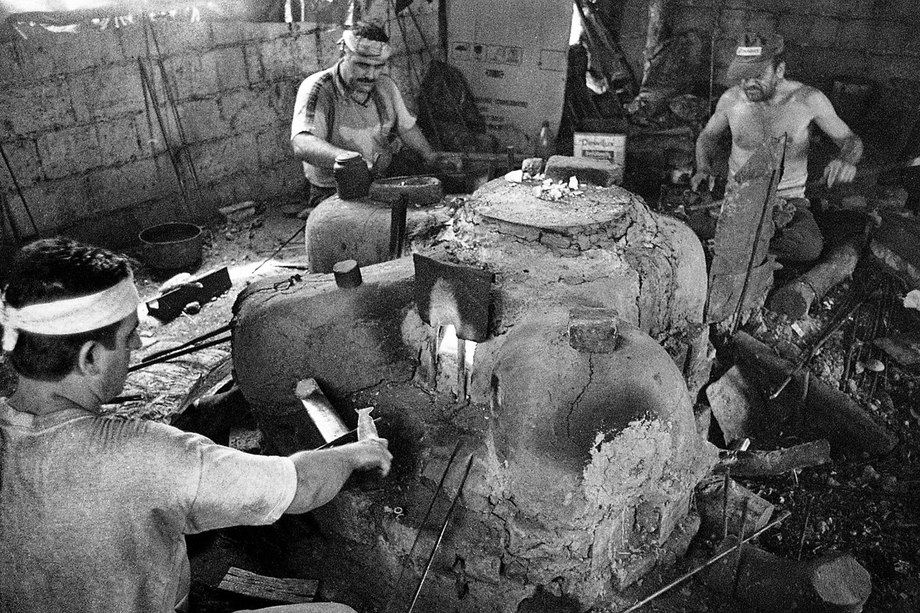
This project did not emerge in a single day. In 1999, during several journeys made at different times, I photographed in two traditional Turkish evil eye bead workshops. My first encounter with this environment drew me back again. Returning at different times and observing the same craft in two separate workshops allowed me to do more than take a few photographs and leave. With every visit I came a little closer and began to notice details that had escaped me at first.
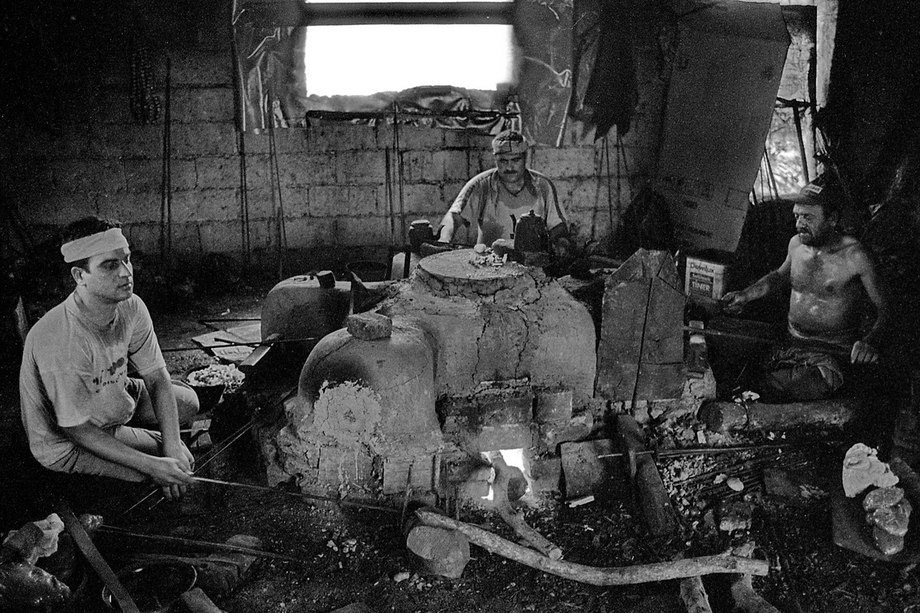
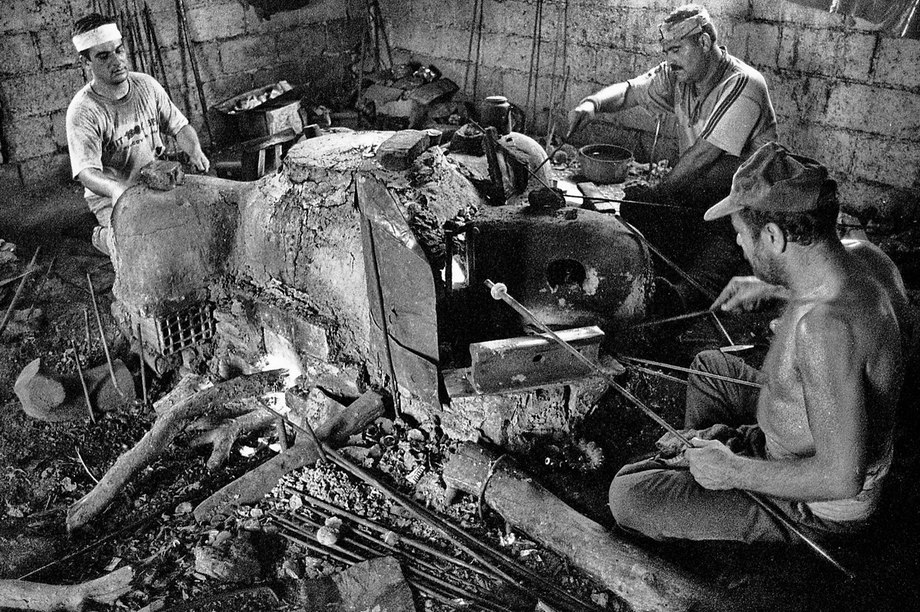
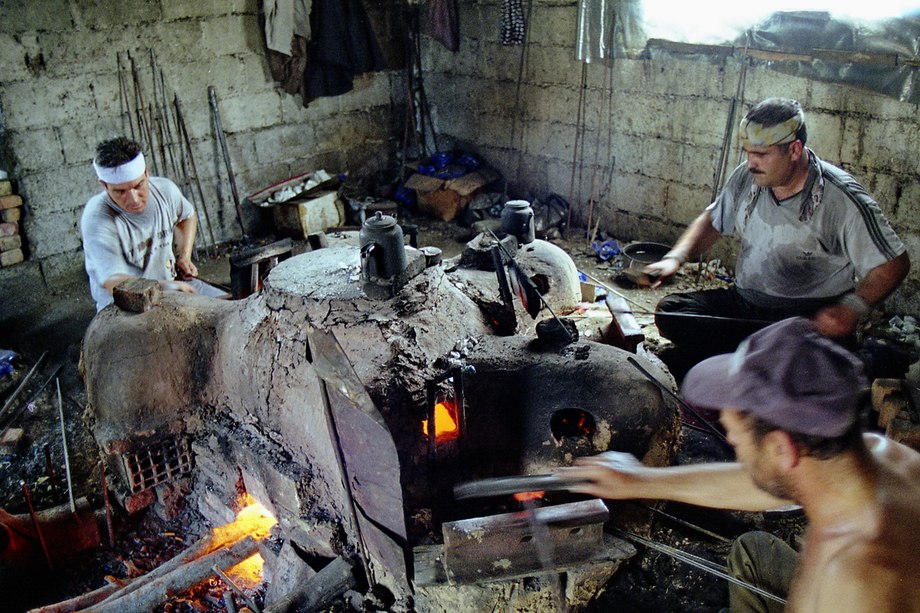
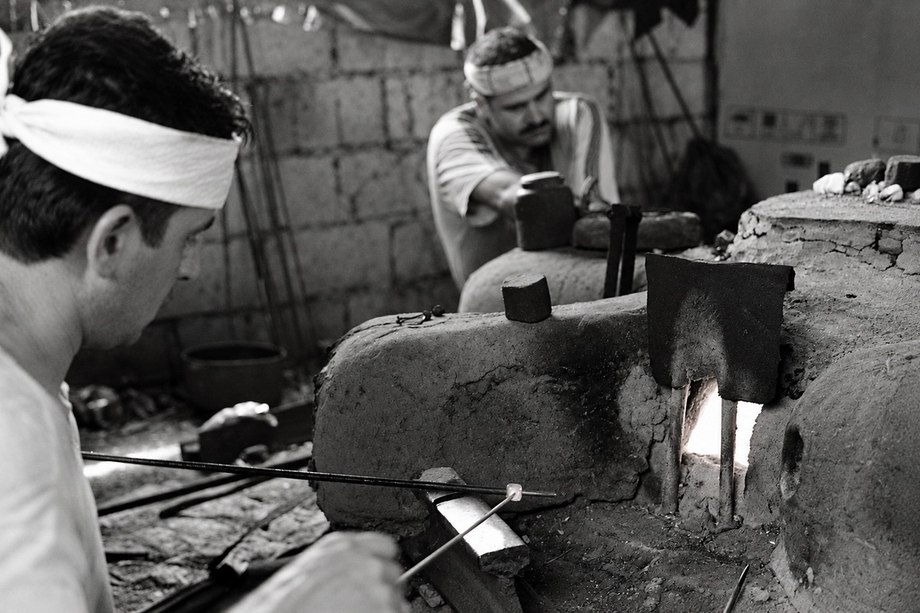
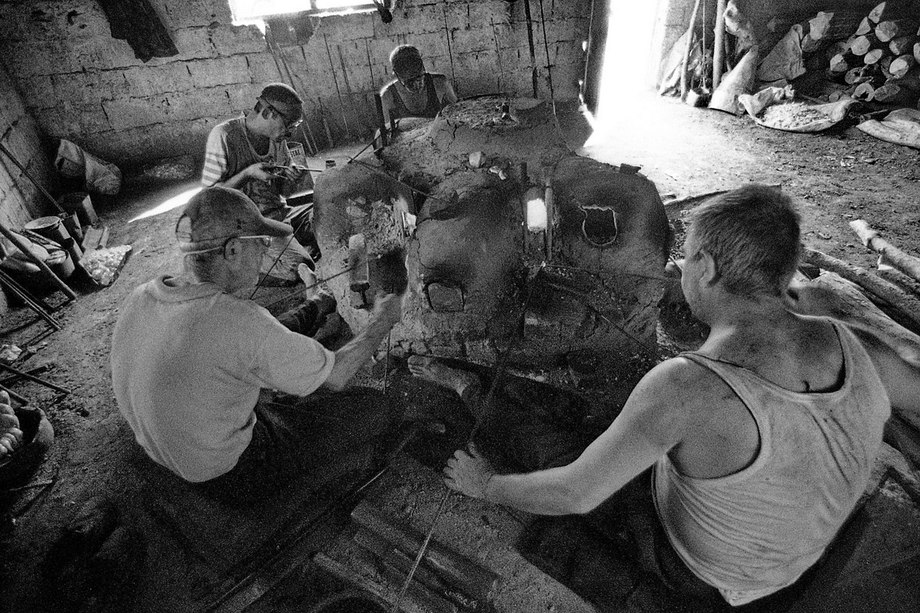
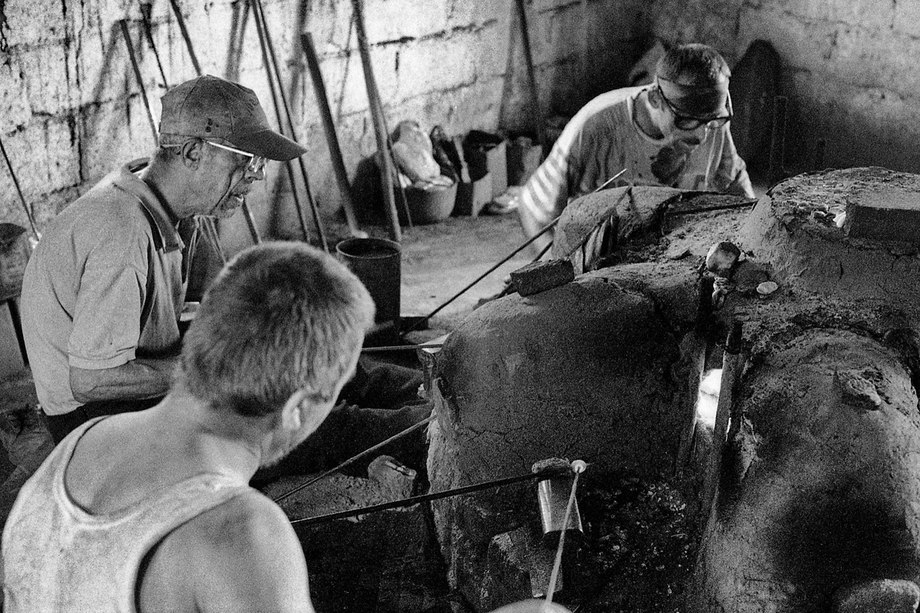
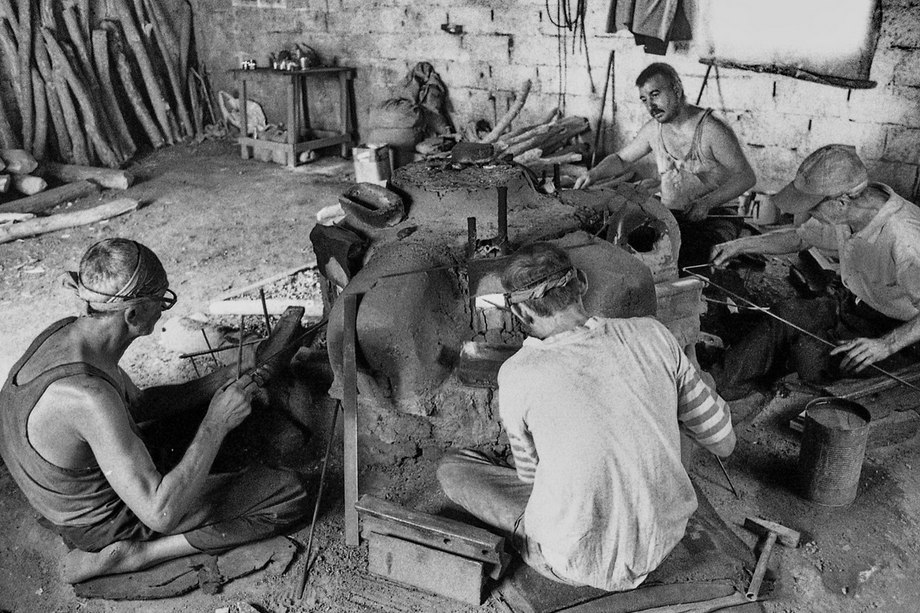
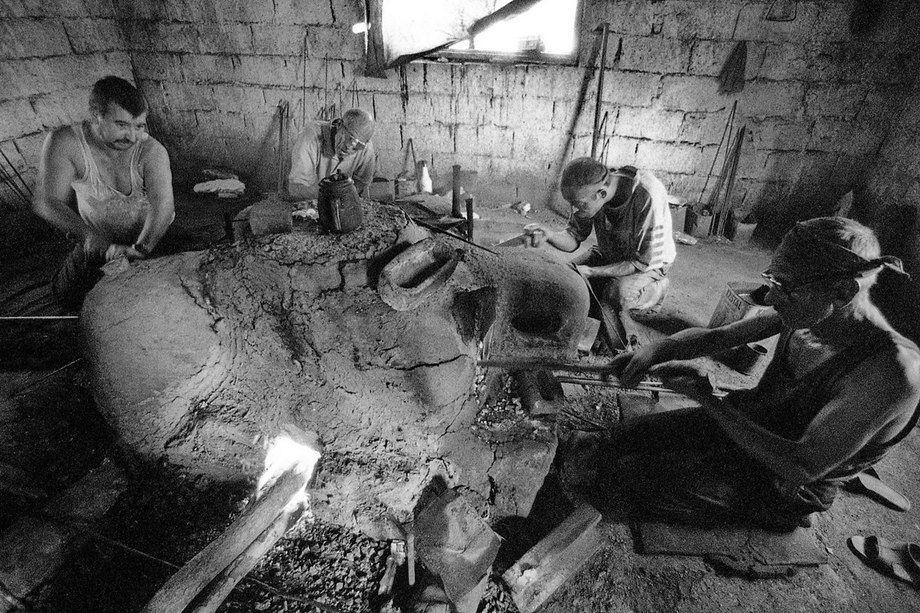
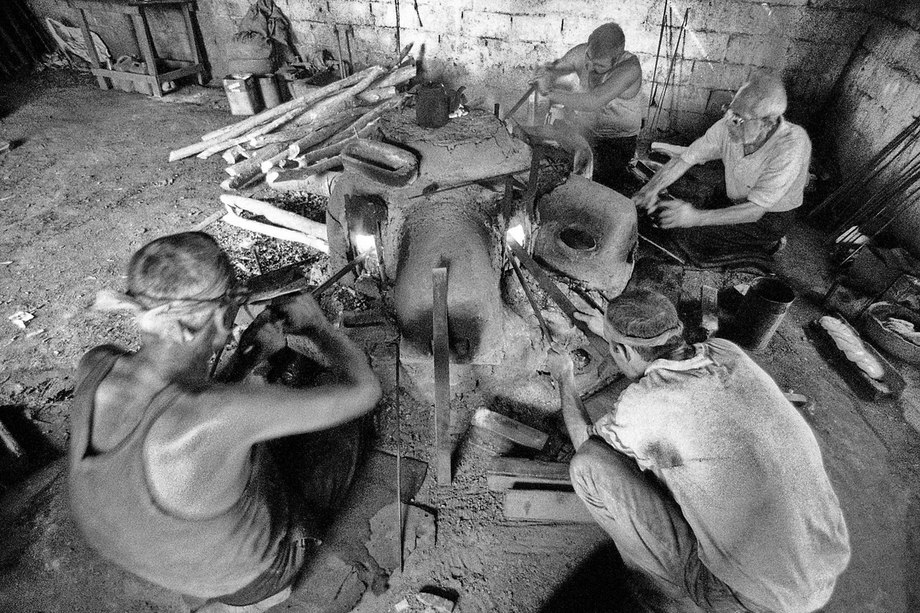
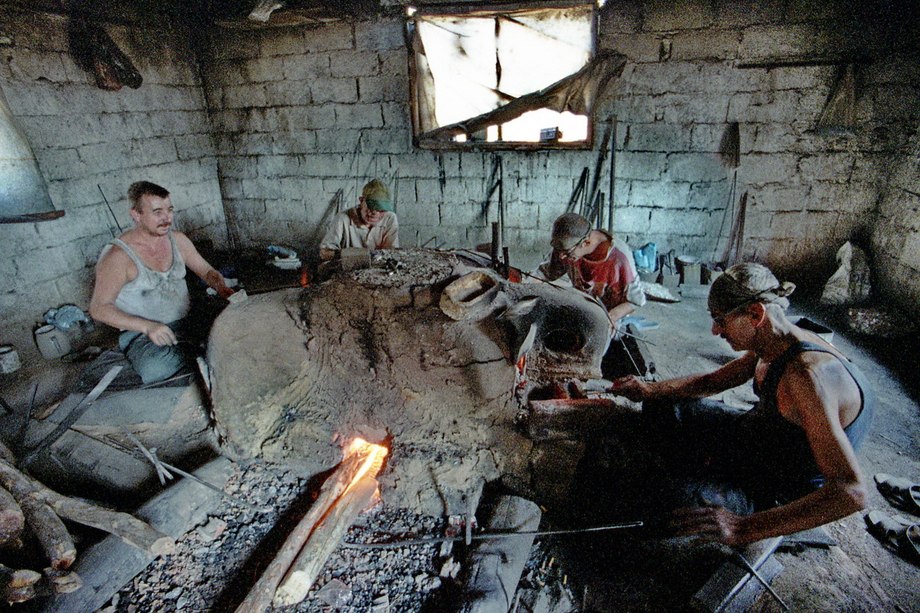
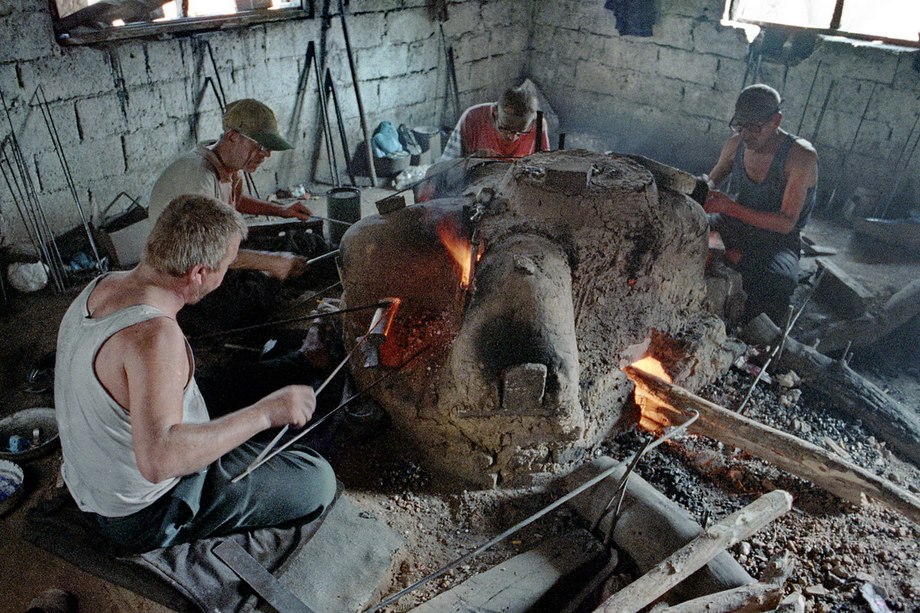
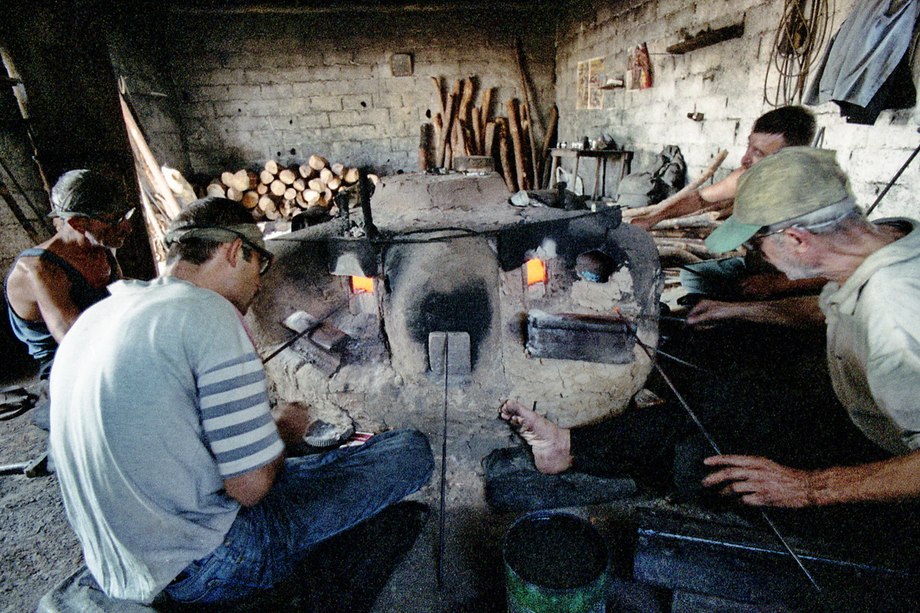
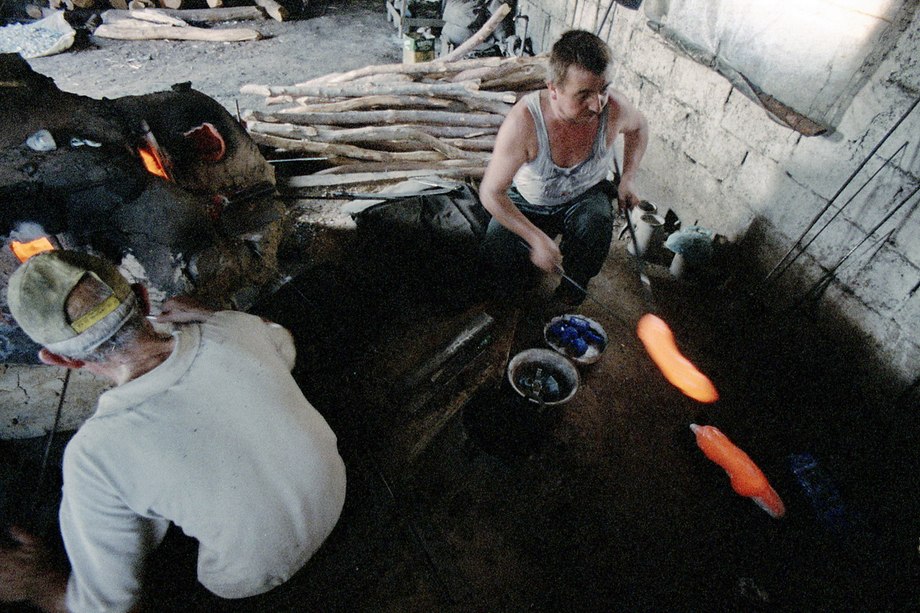
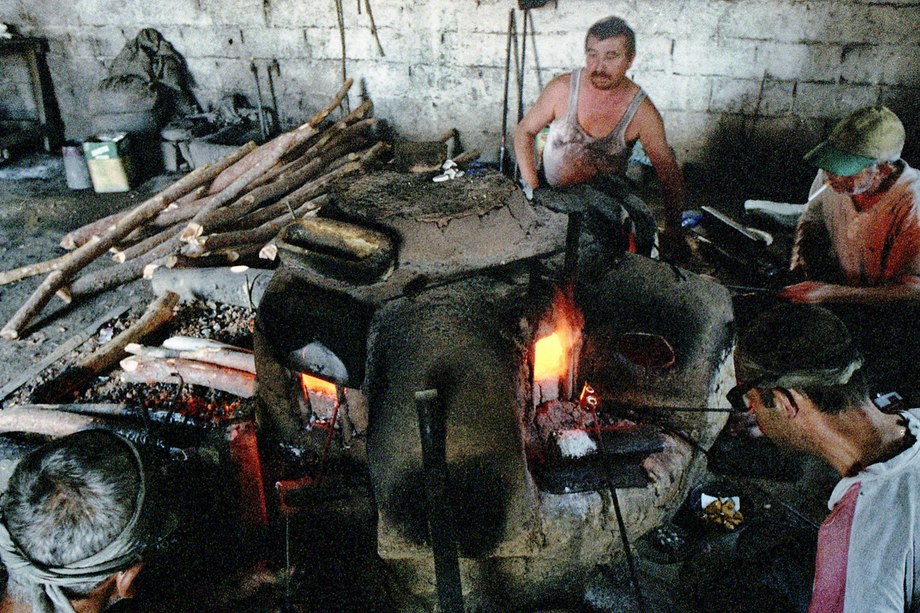
What first caught my attention was the large, roughly built furnace at the heart of each workshop. Made of stone, brick and earth, it seemed to be not only the physical but also the vital centre of the place. The craftsmen worked around it within an order that appeared to have evolved naturally over many years. Long metal rods reached into the small openings of the furnace from different directions, and the glowing glass taken from the fire was shaped within seconds. What initially looked chaotic soon revealed its own rhythm. Everyone knew where to stand, when to approach the fire and what the person beside him was about to do.
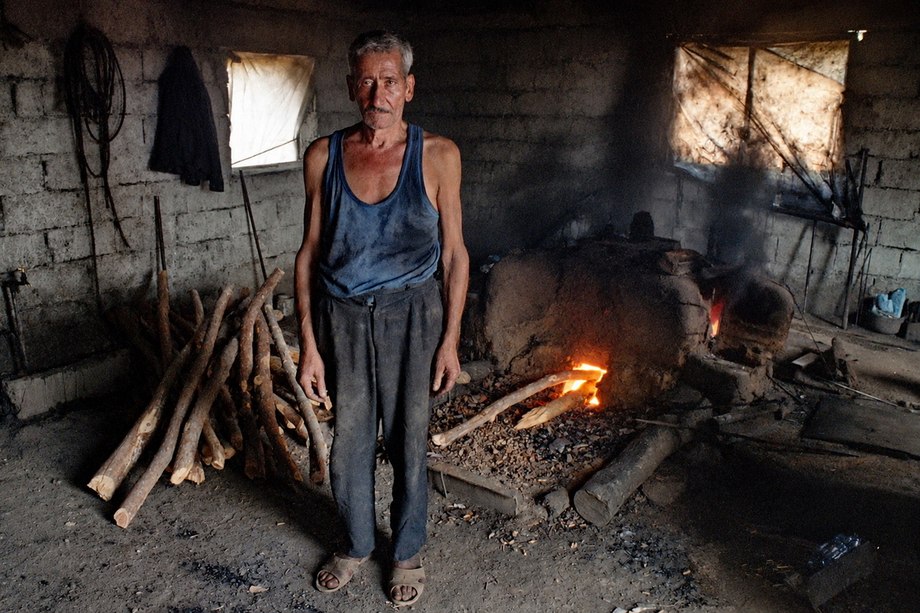
The working conditions were harsh. The furnaces burned continuously, fed throughout the day with firewood piled nearby. Years of soot had settled on the walls, ceiling and tools. The intense heat of the furnace was added to the temperature outside. The craftsmen's perspiring faces, stained clothes and hands made the weight of these conditions visible. Yet I saw no sense of haste in their work. The movements that had to be completed within the brief time allowed by molten glass were performed almost instinctively, through years of experience.
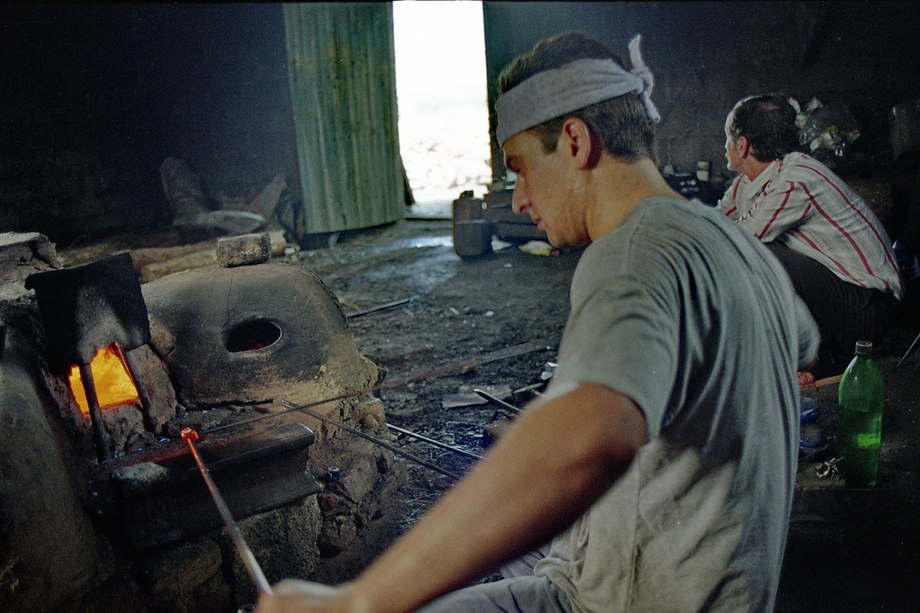
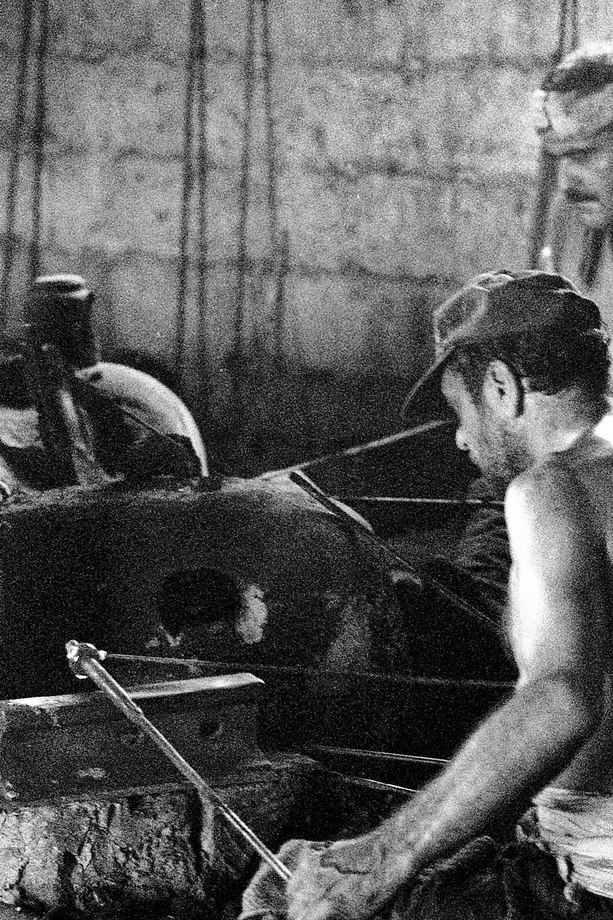
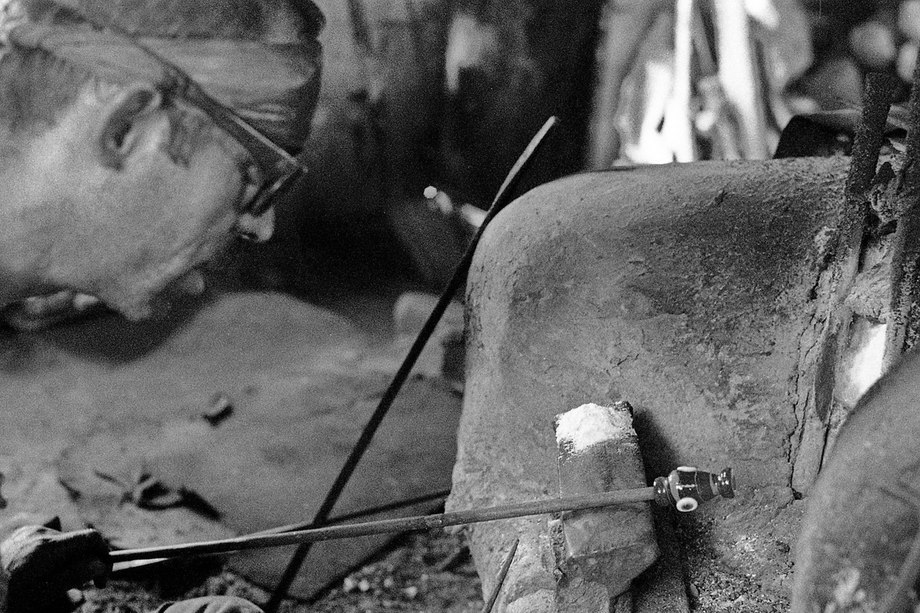
With each visit I found myself becoming more a part of the order surrounding the furnace. At first I tried to understand the scene as a whole; later my attention shifted towards hands, faces, tools and the tiny pieces of glass taking shape at the ends of metal rods. Sometimes I stepped back to photograph the entire working arrangement around the furnace; at other times I concentrated on a single craftsman and his task. Gradually I began to understand how much fire, repetition, manual skill and human labour lay behind such a small object.
This project was also a period of technical exploration for me. In the workshops I used a 17 mm wide-angle lens as well as 28 mm and 50 mm Carl Zeiss lenses. The 17 mm in particular was a new experience. Even when I stood very close to the craftsmen and the furnace, I could include much of the workshop in the frame. Its sometimes exaggerated perspective made the furnace appear more dominant and intensified the sense of movement around it. What I first regarded as a technical necessity gradually became part of the visual language of the photographs.
The 28 mm gave me a more restrained wide-angle view, allowing me to describe the space without the stronger perspective of the 17 mm. The 50 mm Carl Zeiss encouraged a different way of looking. With it I could concentrate more closely on people, hands, individual tasks and small details rather than on the workshop as a whole. Looking at the photographs today, I see that these lenses changed not only the framing but also the way I looked at the workshop: sometimes I photographed people within their environment, and sometimes a single person within that larger working order.
Light was a problem in itself. The interiors were dark. Hard daylight entering through the windows, deep shadows inside the workshop and the red glow of the furnace created very different exposure values within the same frame. Alongside black-and-white film, I therefore used high-ASA colour negative film. It allowed me to work in lower light and to photograph the craftsmen without interfering too much with their natural movements. There was a price: grain became pronounced and colours, particularly in the shadows, could shift.
When I look at these negatives now, I no longer regard the grain or the occasionally imperfect colours simply as technical flaws. They have become part of the period in which the photographs were made. In the black-and-white images, the shape of the furnace, the movements of the craftsmen and the structure of the workshop become more pronounced. Colour adds another essential element to the story: fire. The orange light emerging from the furnace openings, the glowing glass at the end of a metal rod and the red flashes within the darkness allow me to feel the heat again, many years later.
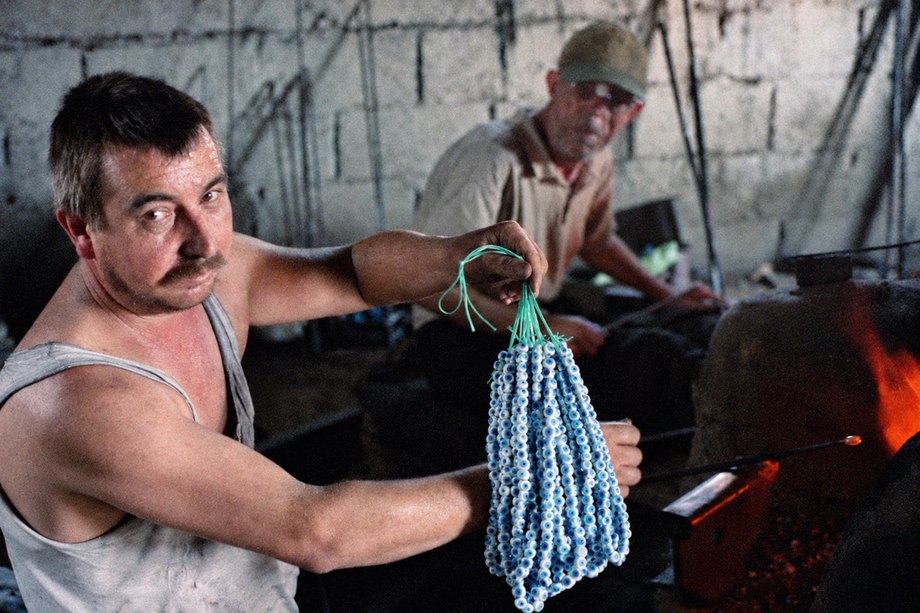
Seeing the finished product at the end of this process changed my understanding of the work. When one of the craftsmen held up strings of blue-and-white göz boncuğu—traditional Turkish evil eye beads—the contrast between the severity of the work around the furnace and the smallness of the finished object was striking. Seen from outside, it was simply a piece of glass only a few centimetres across. Behind it were fire, wood, glass, sweat, repetition and a manual skill accumulated over years.
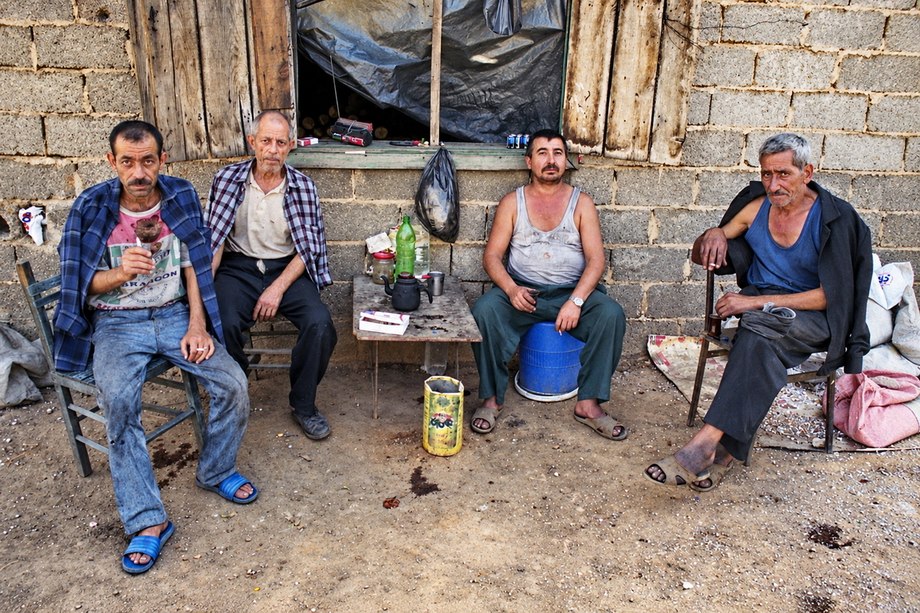
The photographs I made outside the workshops were important to me for the same reason. I wanted to see the craftsmen not only as men working around a furnace, but also as people sitting together, resting and talking during a break. After the fire and constant movement inside, the quiet outside introduced another rhythm into the story. Hands that had been continuously at work were, for a short while, still.
One of my strongest memories of this project cannot be seen in the photographs. At the end of a working day, when I returned home, the workshop seemed to come home with me. I realised that the smell of smoke and soot had settled not only into my clothes but also into my camera bags. As soon as I entered the house, I left the bags on the balcony to air and, before even sitting down, went straight to the bathroom. Even after showering, the smell of burnt wood and smoke seemed to remain in my nose. When I picked up the camera bag again the following day, it was still there. The hours I had spent in the workshop had left their trace not only on the negatives, but on everything I had carried with me.
By the time this work, made over several journeys and in two different workshops, came to an end, I had more than a record of how an evil eye bead was produced. I had also photographed a culture of work organised around the furnace: the craftsmen's relationship with fire and with one another, the demanding physical conditions and the skill accumulated through years of practice.
Looking back at these negatives many years later, I also recognise a change in my own photography. I was gradually moving away from photographing a person in isolation and towards describing people within the places where they lived and worked. The 17, 28 and 50 mm lenses and the high-ASA film had initially been technical responses to the conditions I encountered, but over time they also helped shape my photographic language.
For that reason, what I most want to preserve in these photographs today is not technical perfection. I want the grain, the occasional colour shifts, the flare of the fire, the details disappearing into darkness and the heavy atmosphere around the furnace to remain. Each belongs to the experience of being in those workshops in 1999. Rather than turning the photographs into images of today, I prefer them to continue carrying the traces of the time in which they were made.