
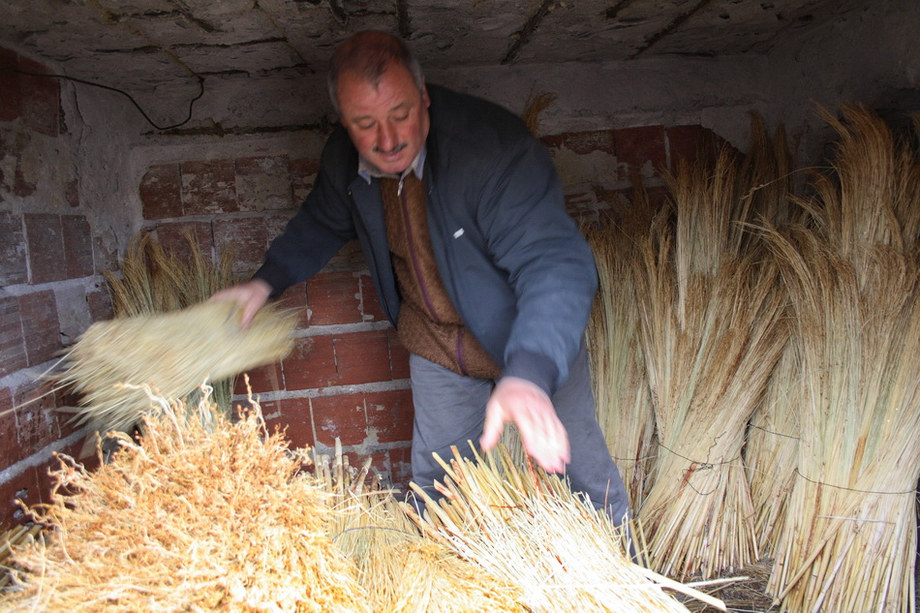
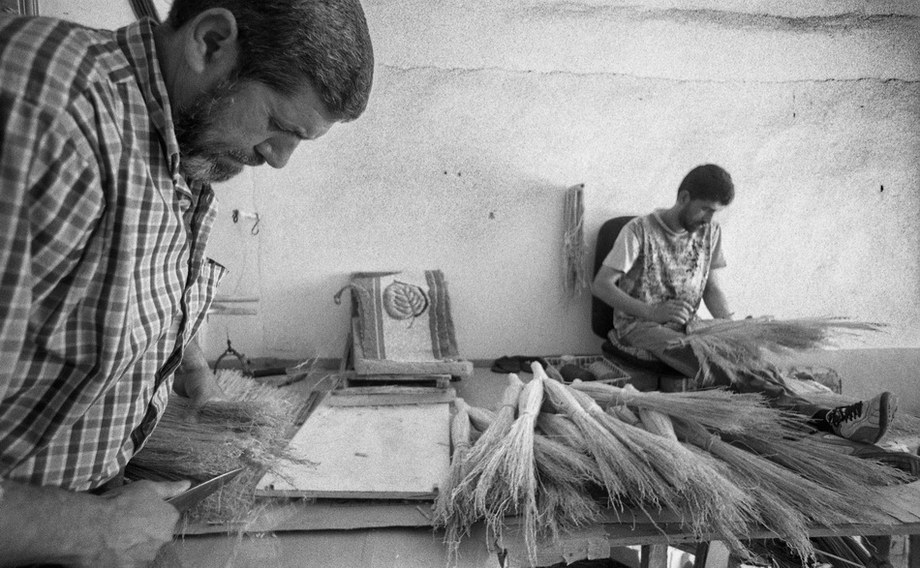
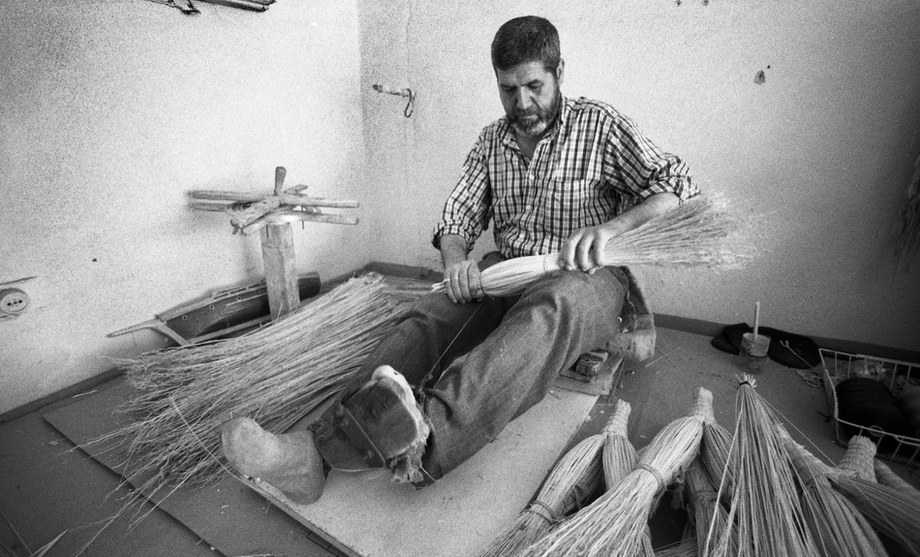
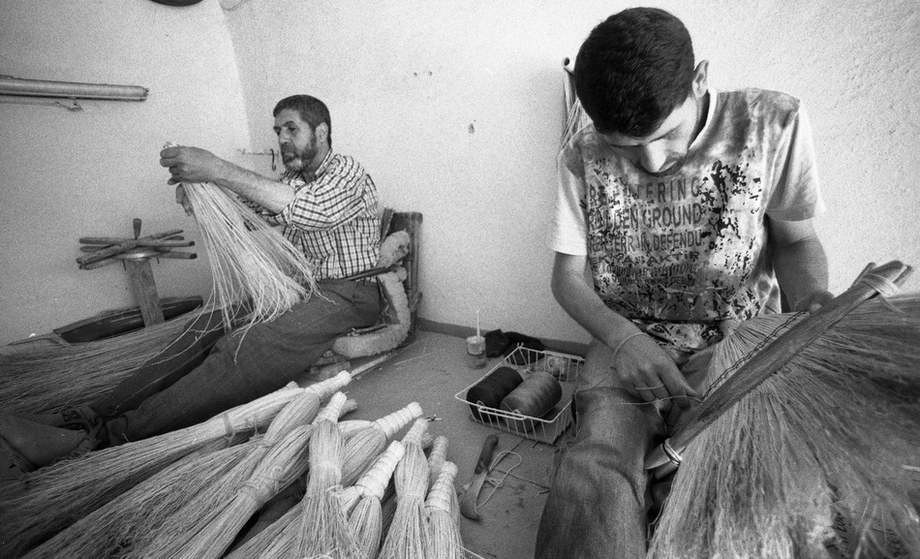
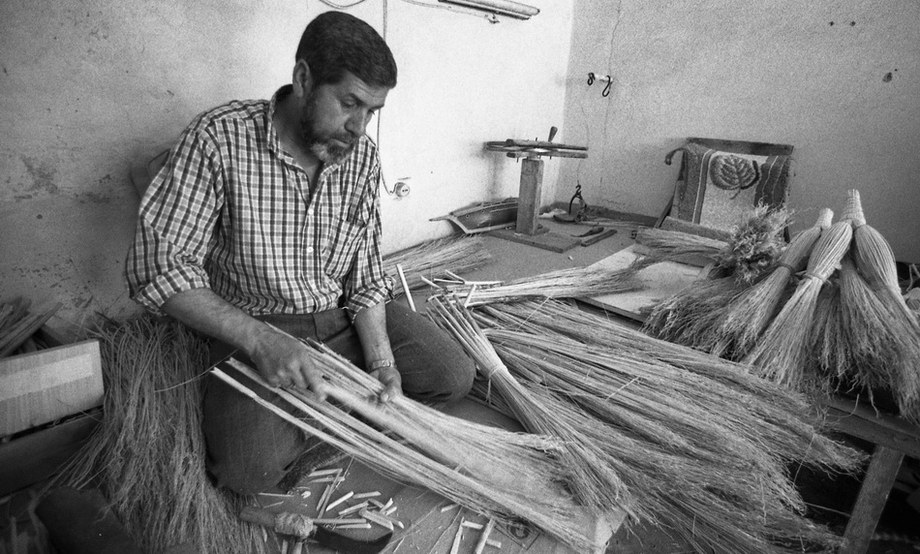
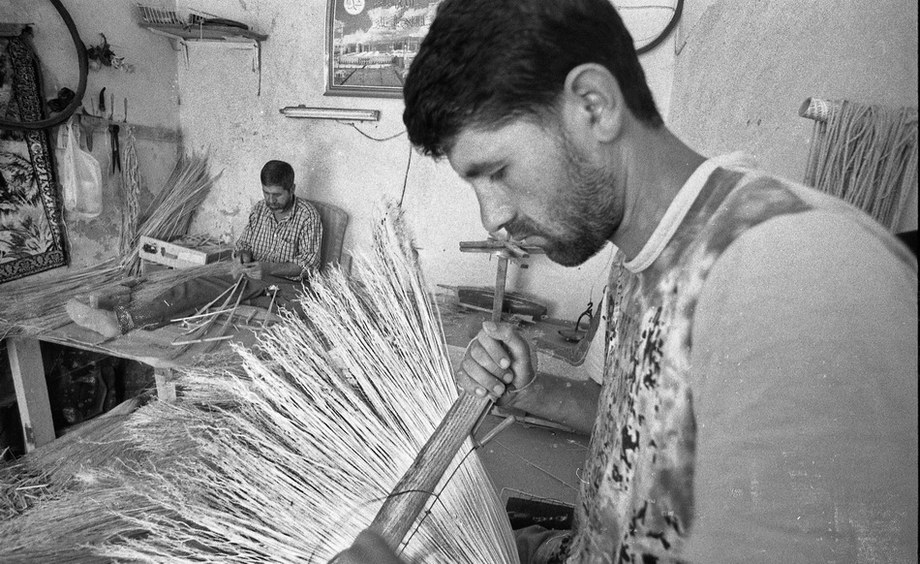
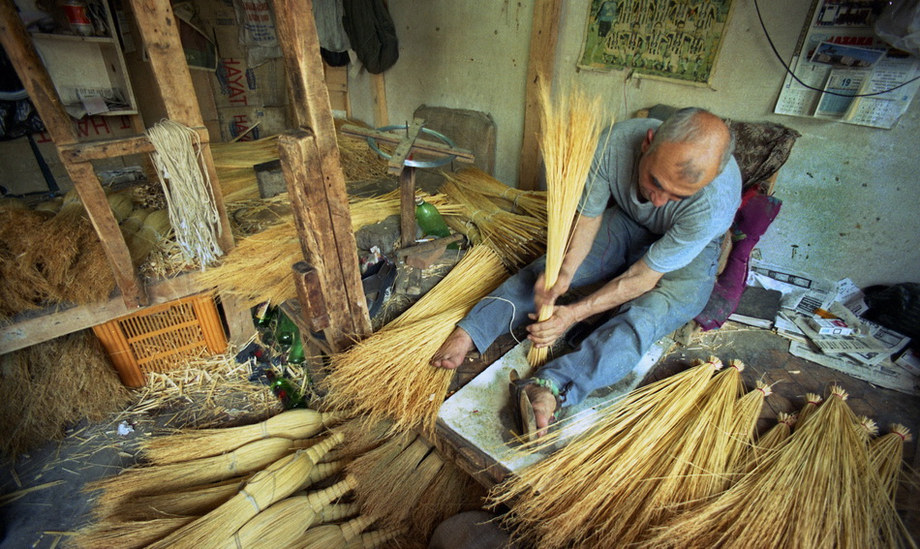
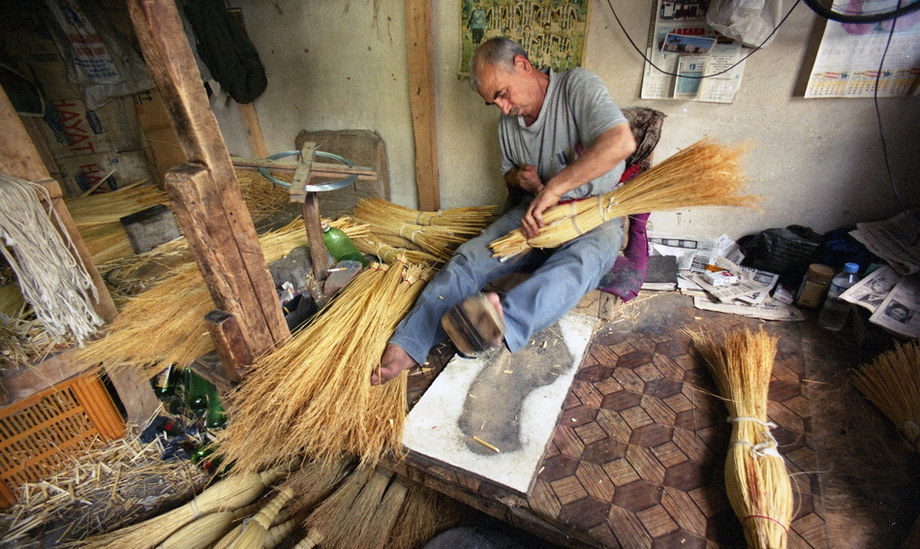
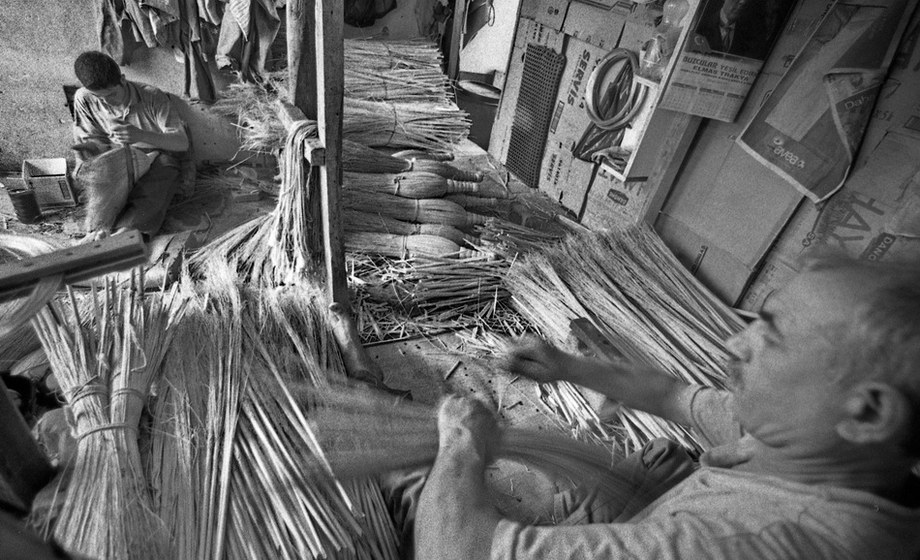
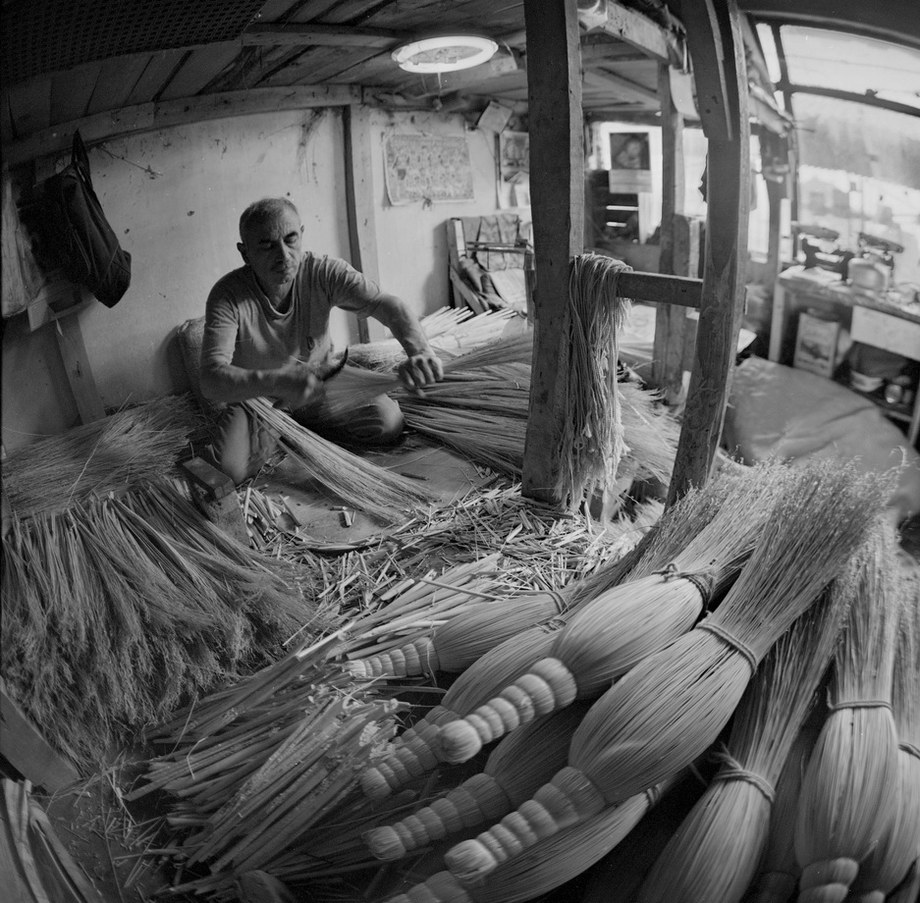
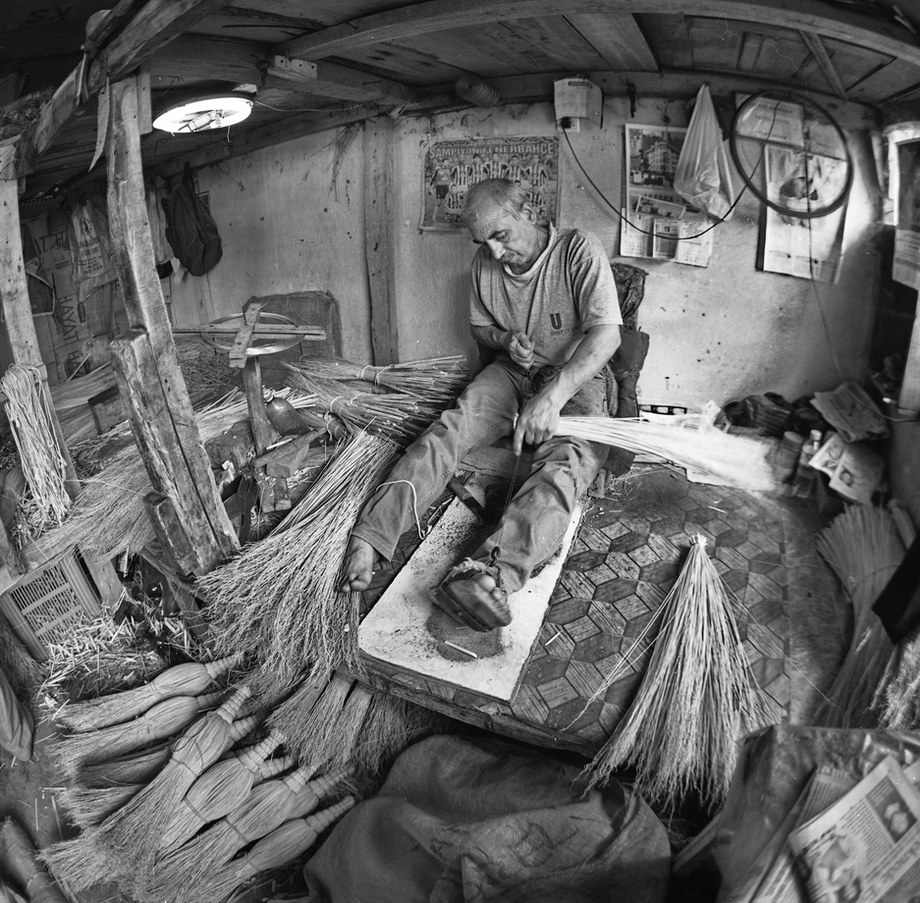
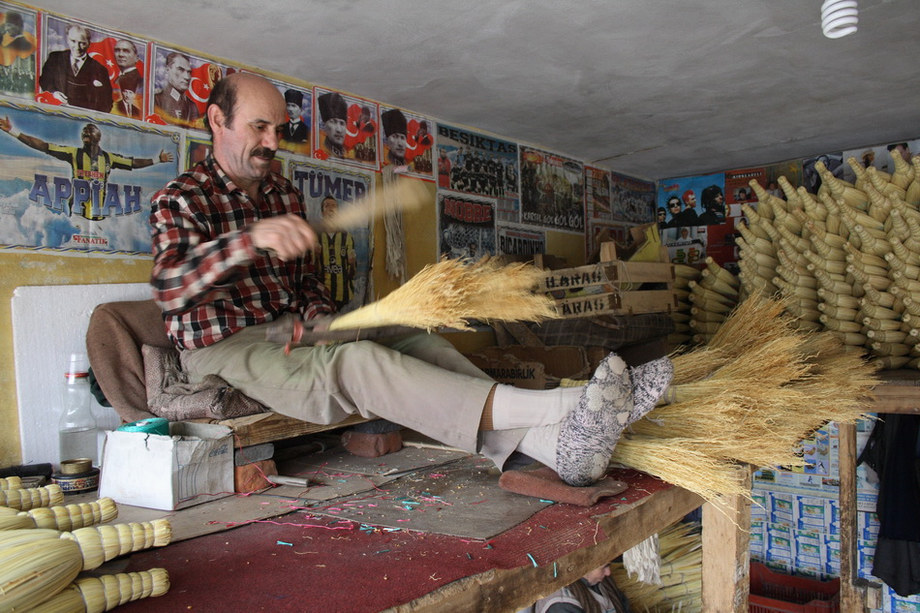
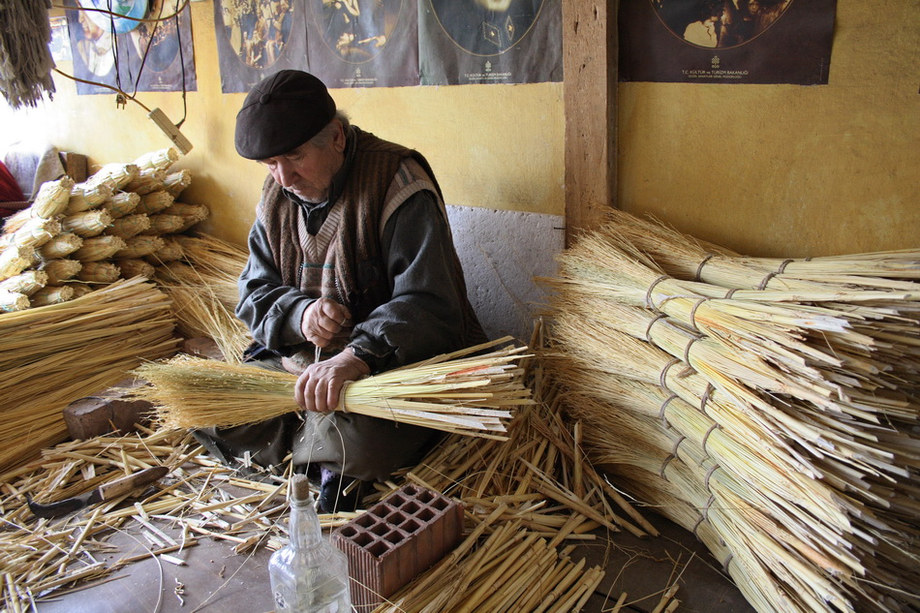
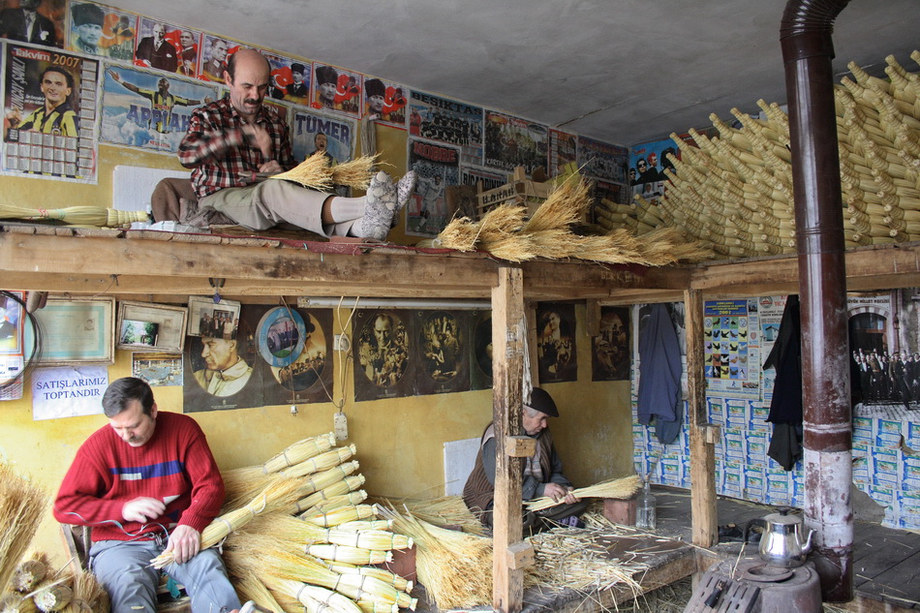
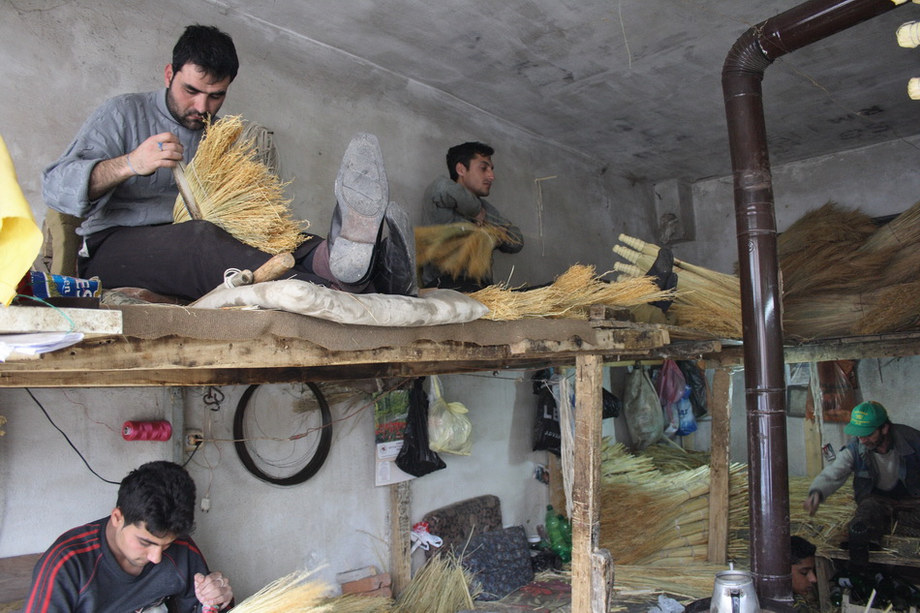
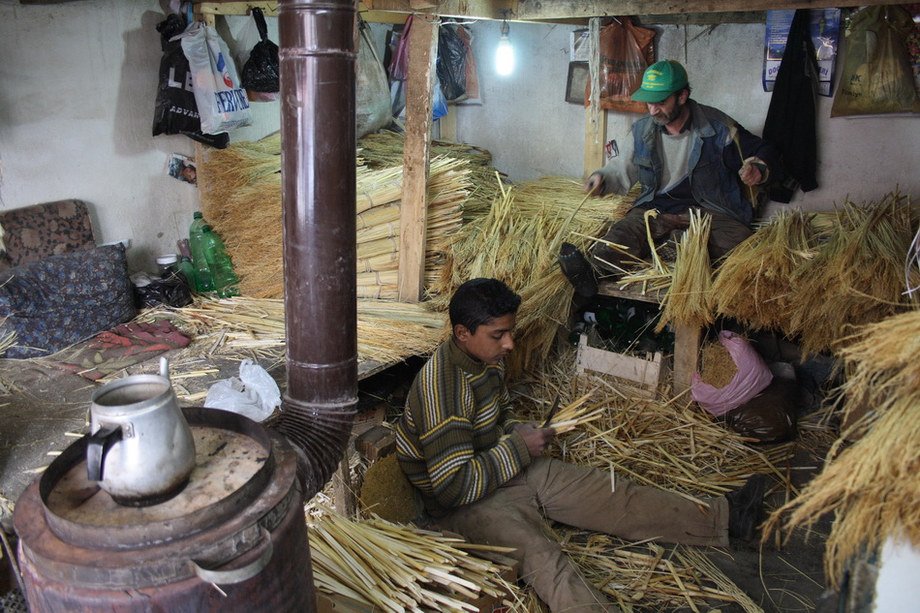
In 2006, I travelled to Kırklareli on several occasions to photograph the craftsmen who made traditional household brooms. I returned at different times, visiting small workshops and watching the work as it unfolded. I was interested not simply in the finished object, familiar from everyday life, but in the knowledge, patience and physical effort hidden within its making.
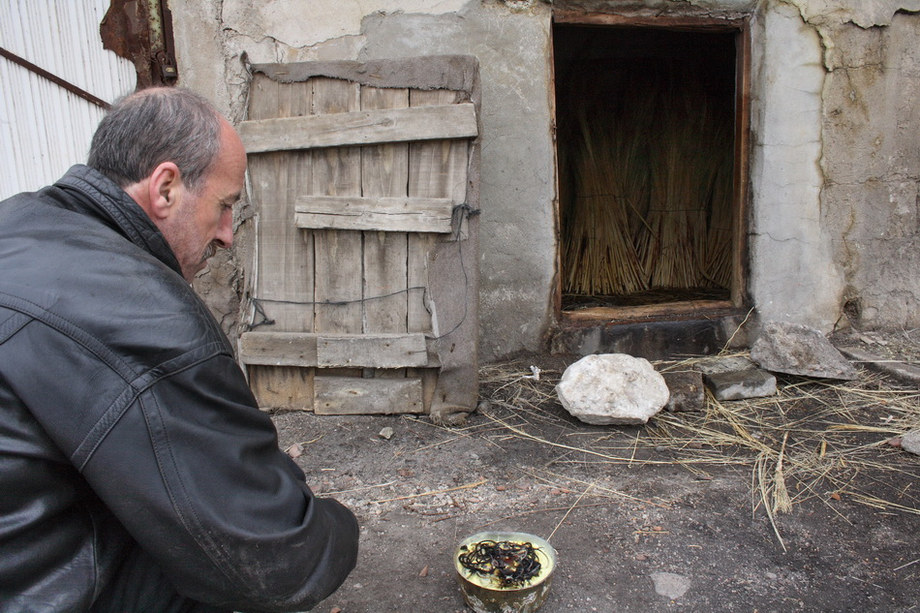
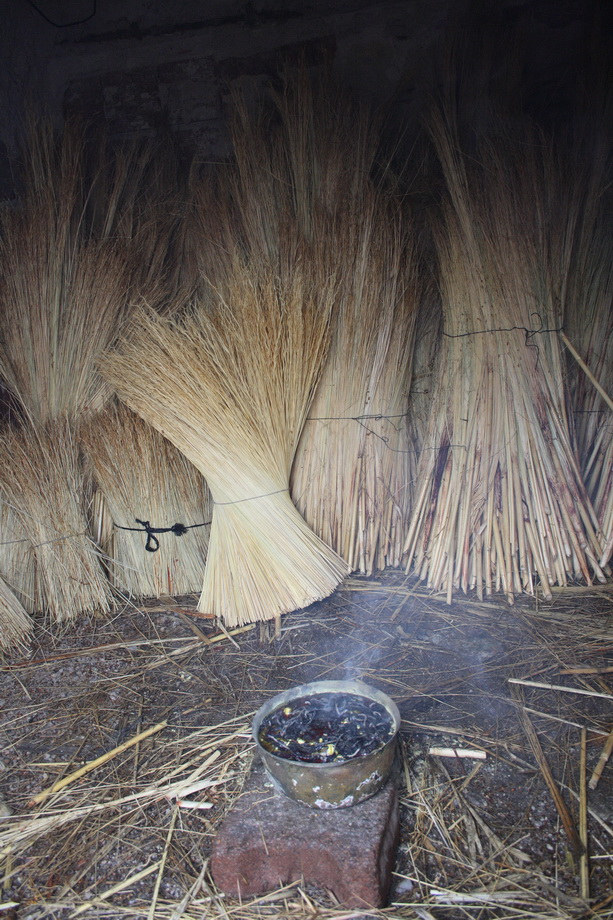
The process begins long before a craftsman takes a bundle in his hands. Broomcorn, a variety of sorghum grown for its long, flexible flowering branches, is harvested, dried and cleaned of seeds. The material is then prepared for use. As I learned, the broom fibres were placed in an enclosed space where sulphur was burned. This treatment gave them their characteristic golden-yellow colour and was also used for its disinfecting effect. Traditional accounts of broom making describe moistening the fibres before sulphur treatment, which also helps preserve their flexibility during subsequent work.
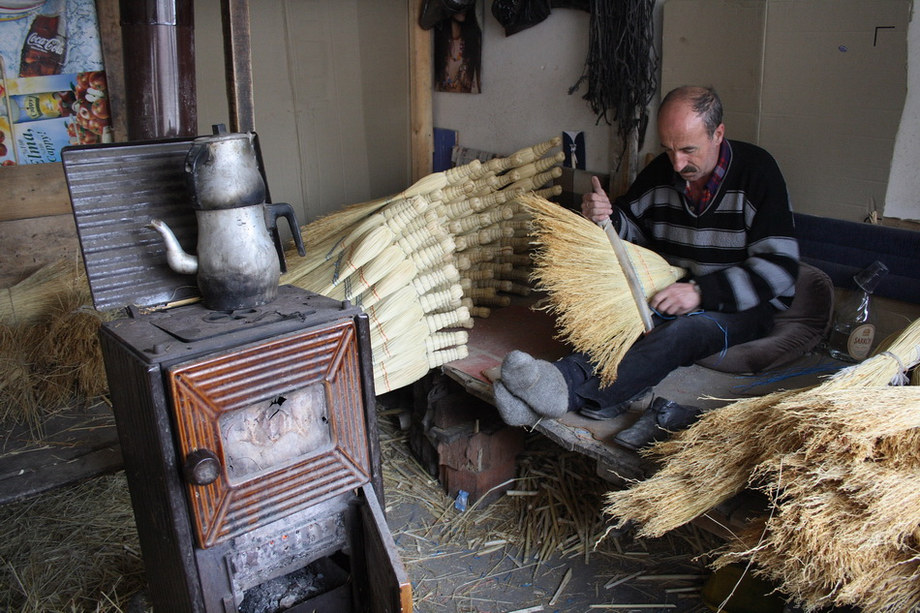
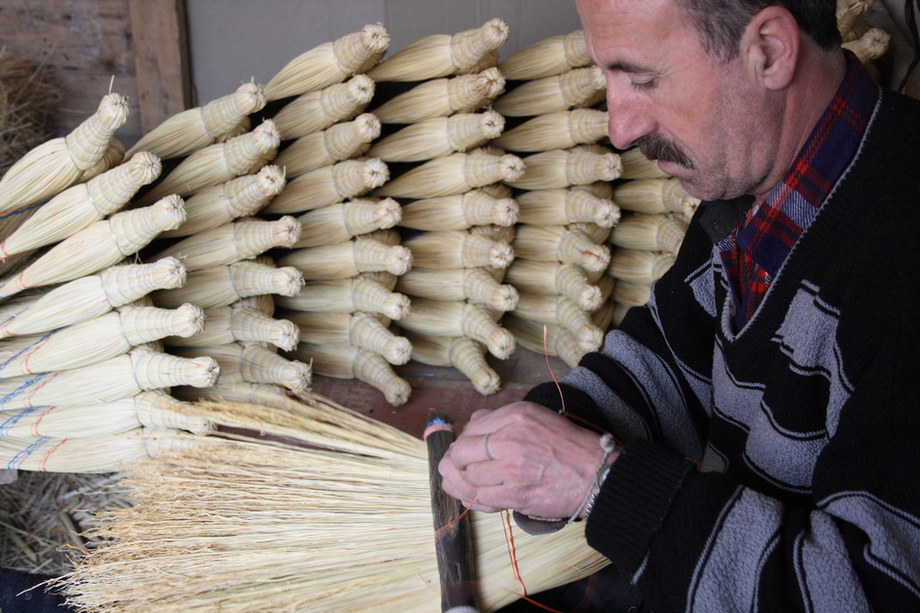
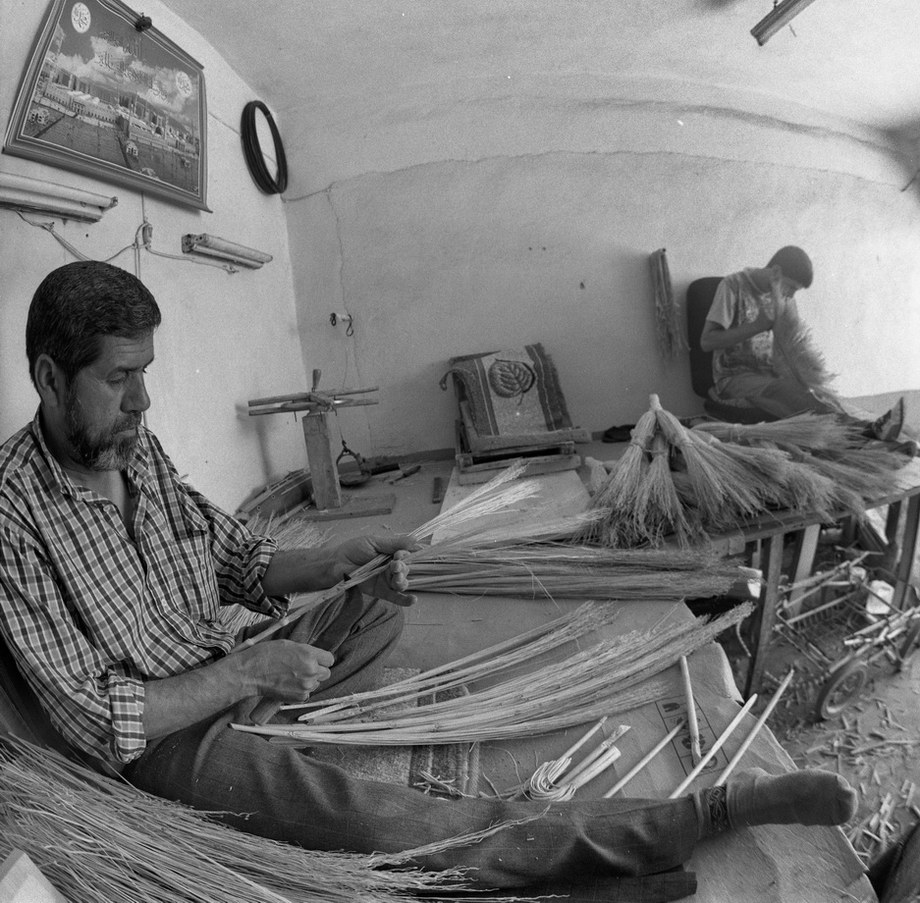
After preparation, the material reaches the small workshops. The fibres are sorted according to their length and quality, gathered into bundles, and gradually shaped into brooms. Different stages call for binding, tightening and stitching so that the broom holds together and its sweeping surface takes the desired form. Finally, the ends are trimmed. What looks like a simple household implement is the result of many separate operations, each dependent on the judgement and practised movements of the maker.
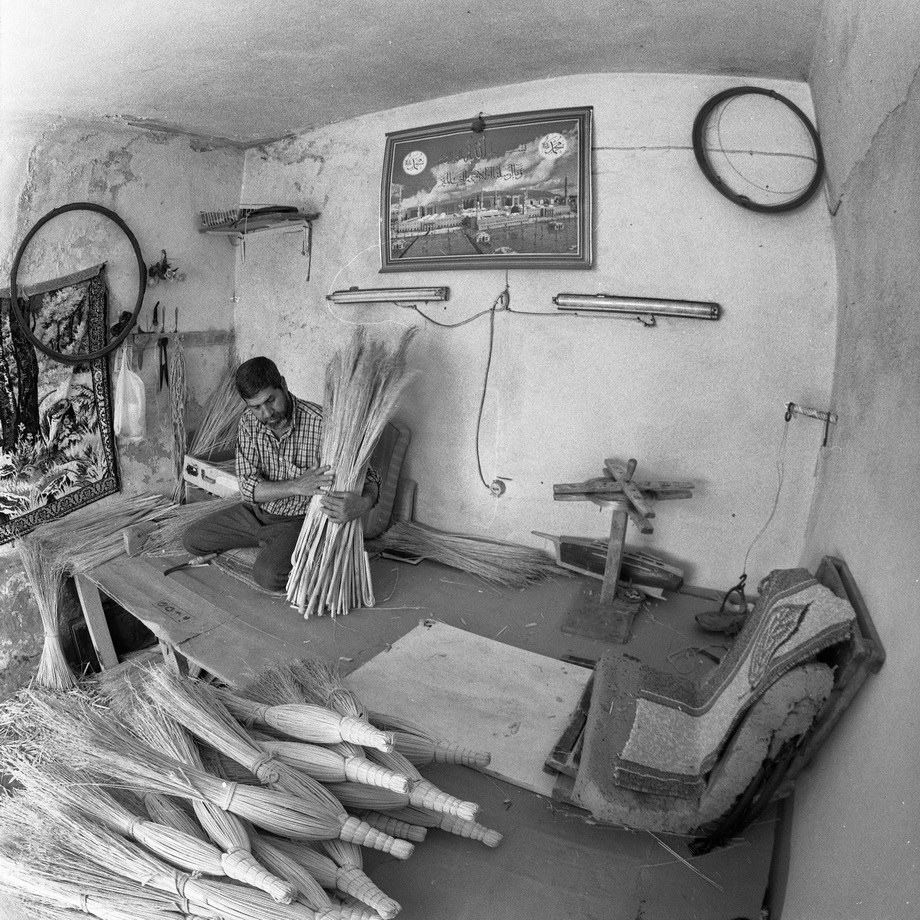
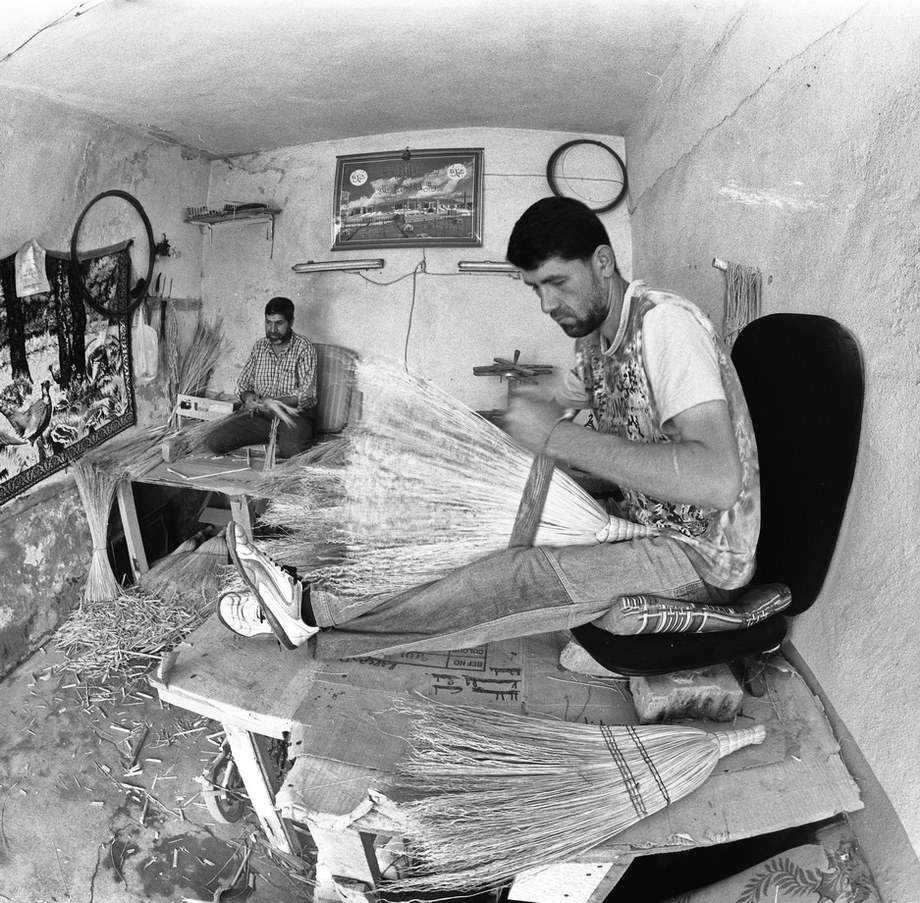
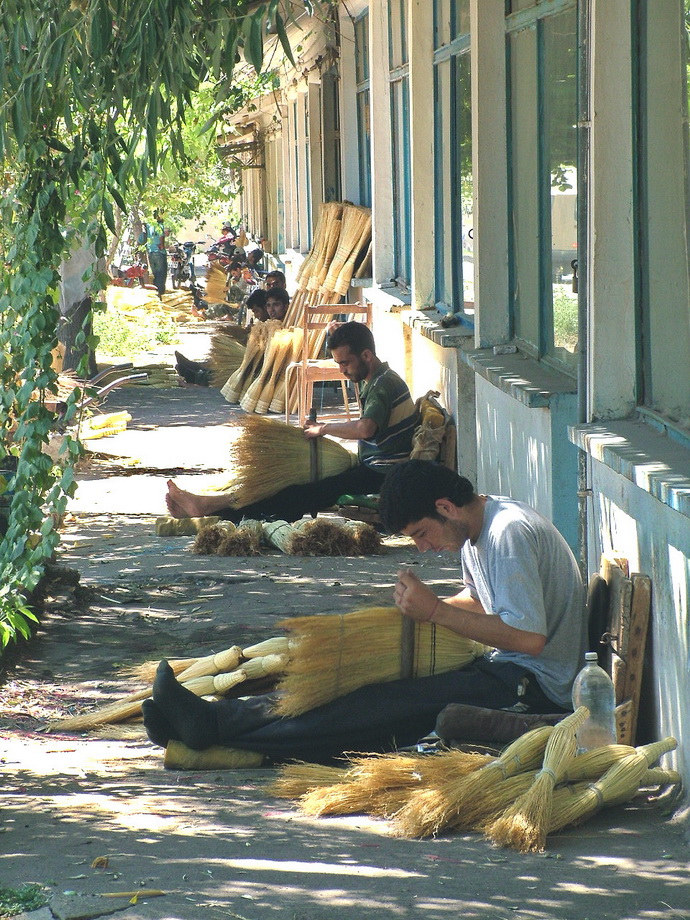
In Kırklareli, I saw how closely this craft was connected to the spaces in which people worked. The workshops were modest, filled with bundles of material and the tools needed for the next stage. During the summer, the craftsmen often carried their work outside and sat near the doorways, taking advantage of the open air and daylight. The boundary between workshop and street became part of the working environment. Those moments were especially interesting to me as a photographer: the work was visible as part of the town's daily life.
I photographed the craftsmen in both colour and black and white. Some images concentrate on hands pulling fibres together or securing a bundle; others include the people, tools and surroundings that gave the activity its character. Looking back at these twenty-four photographs, I see a record of a traditional craft, but also of the individuals who sustained it through ordinary working days. My repeated visits to Kırklareli in 2006 allowed me to preserve a small part of that world through photography.