
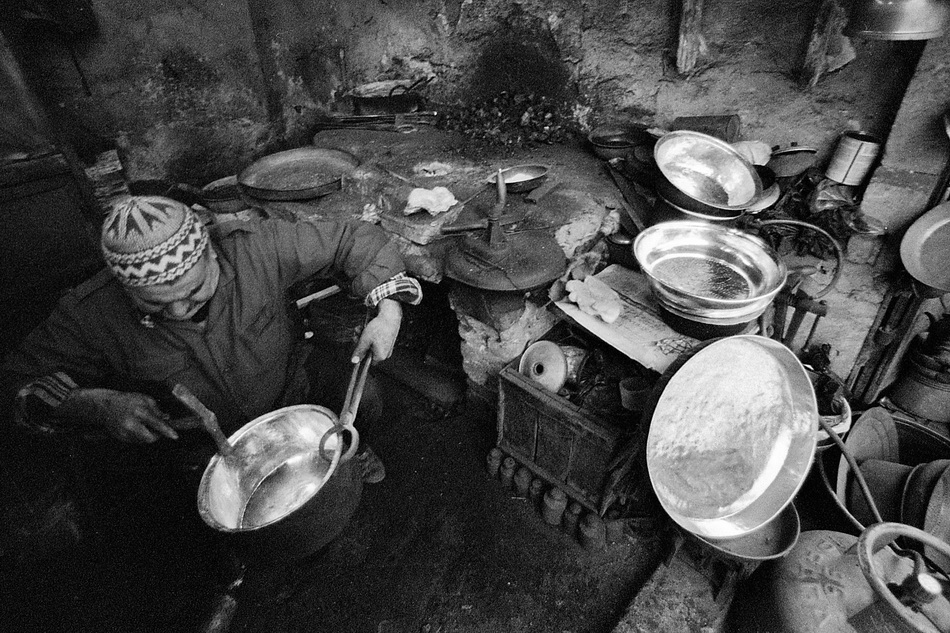
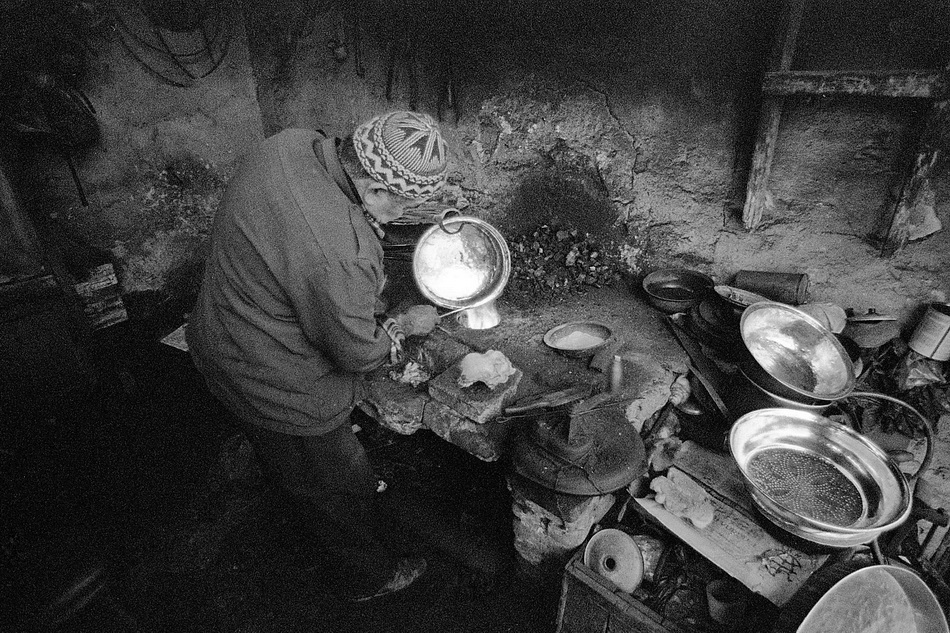
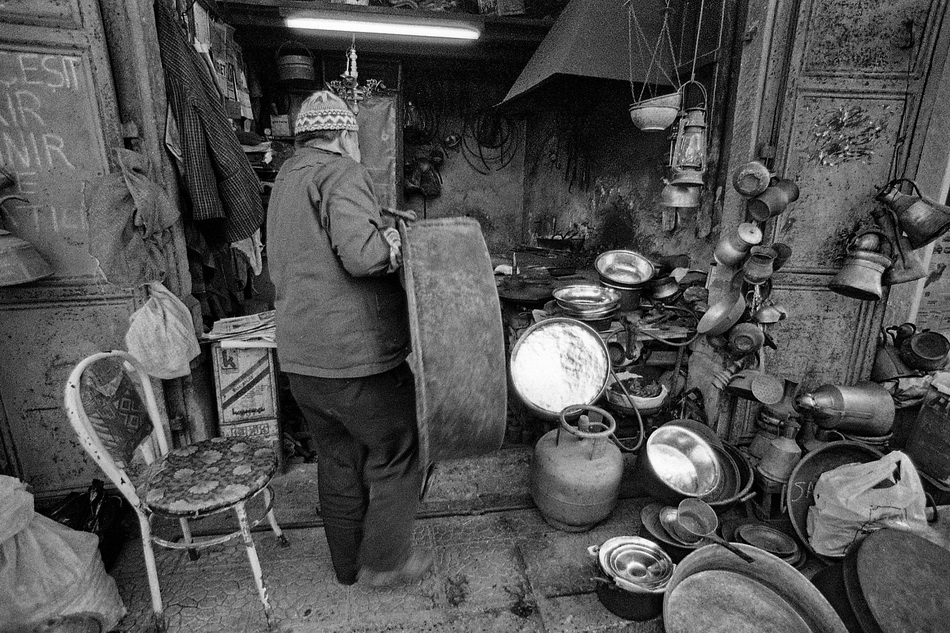
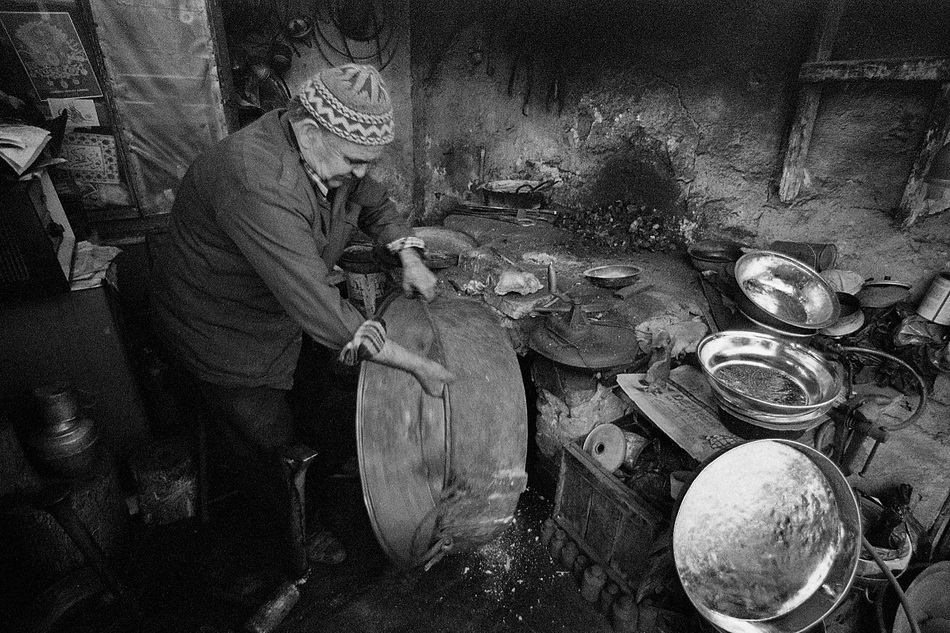
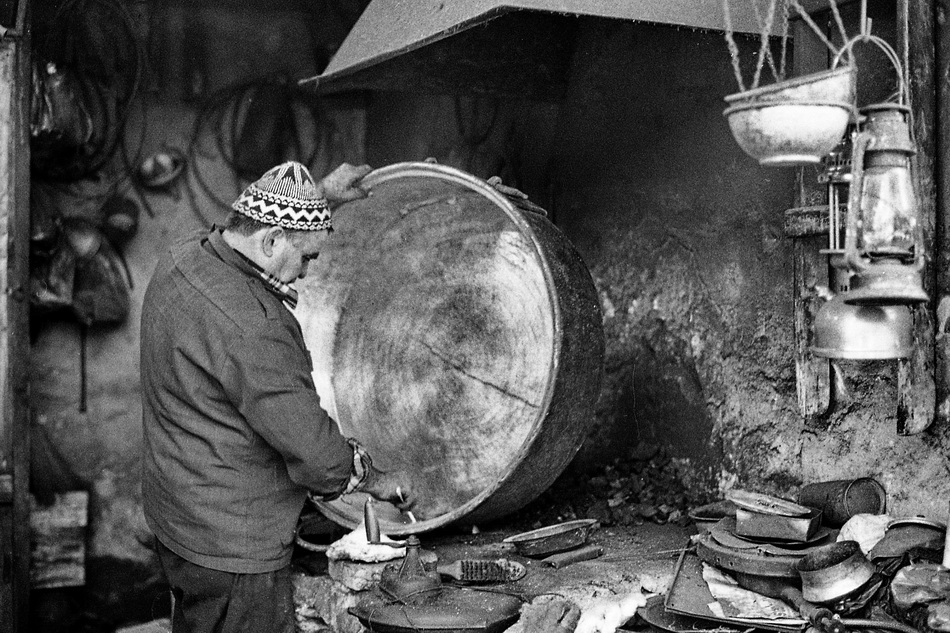
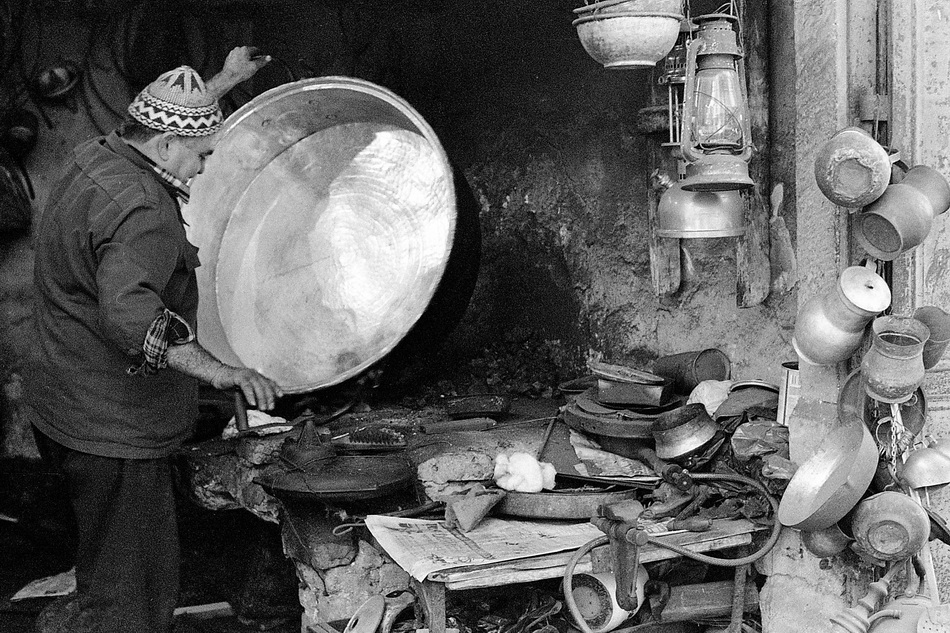
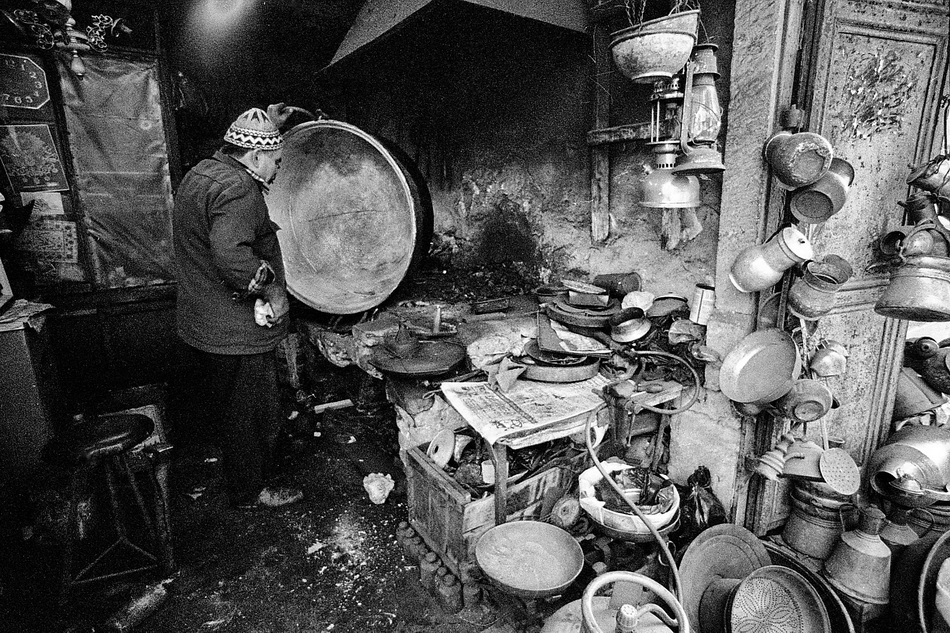
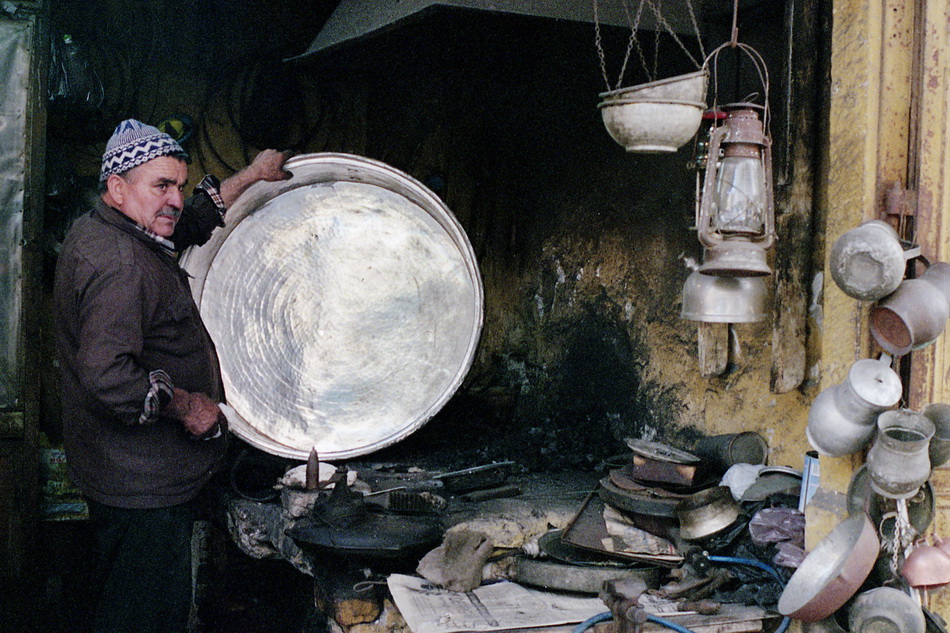
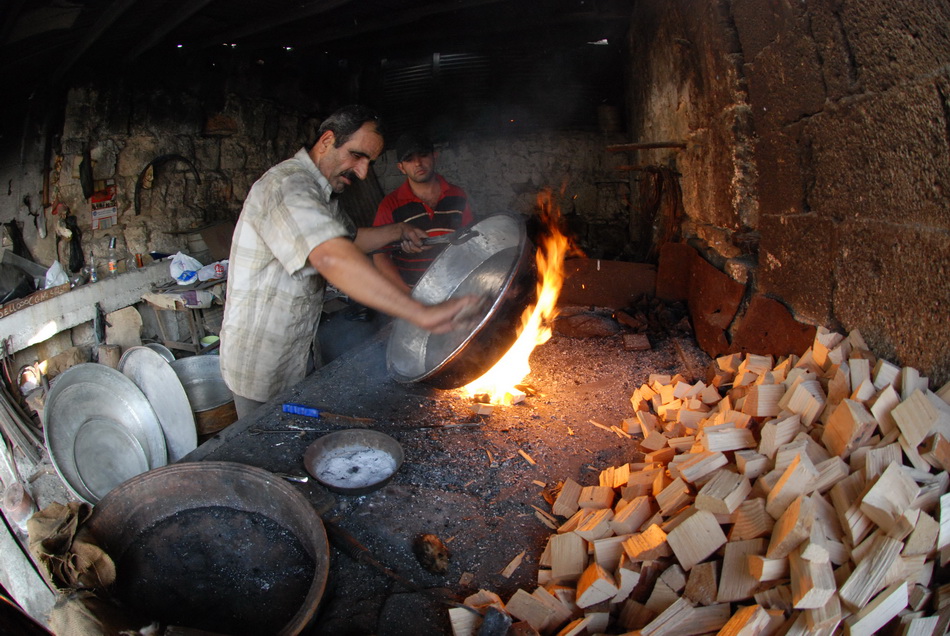
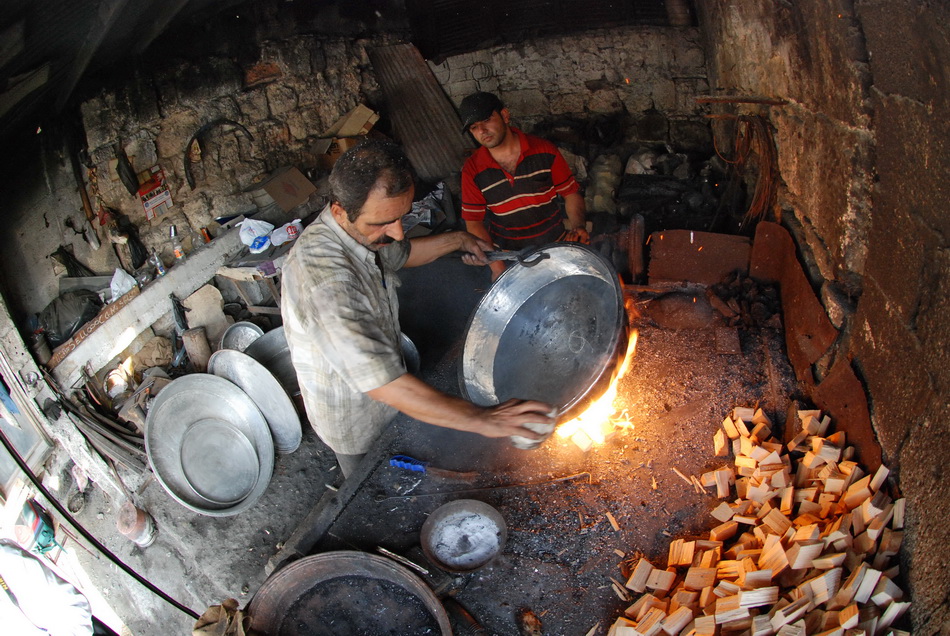
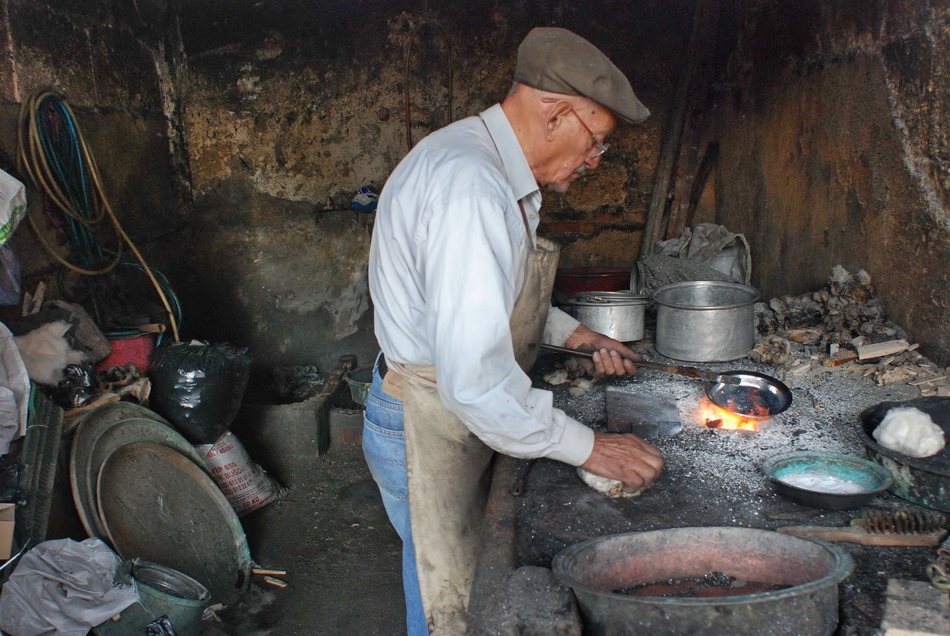
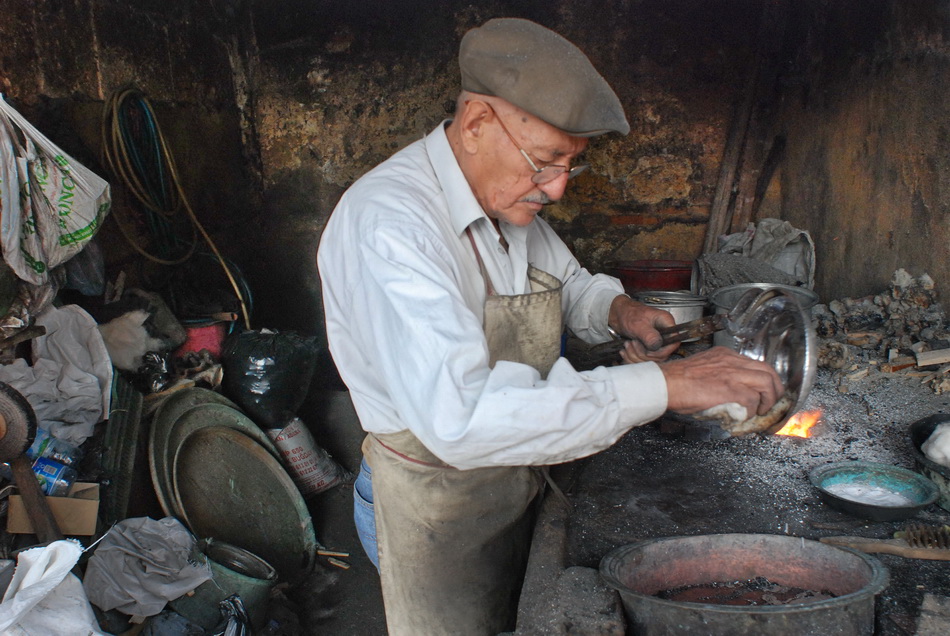
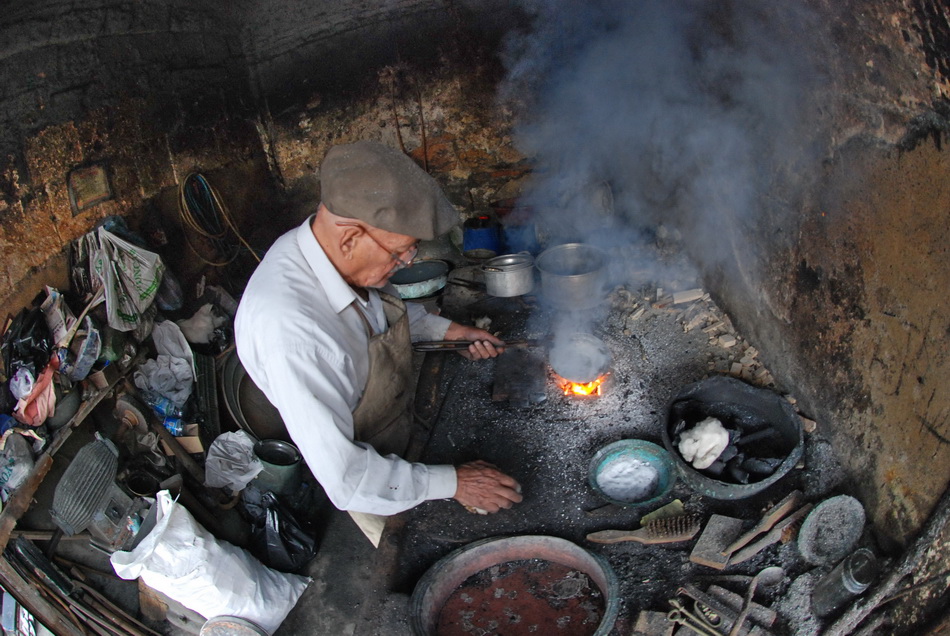
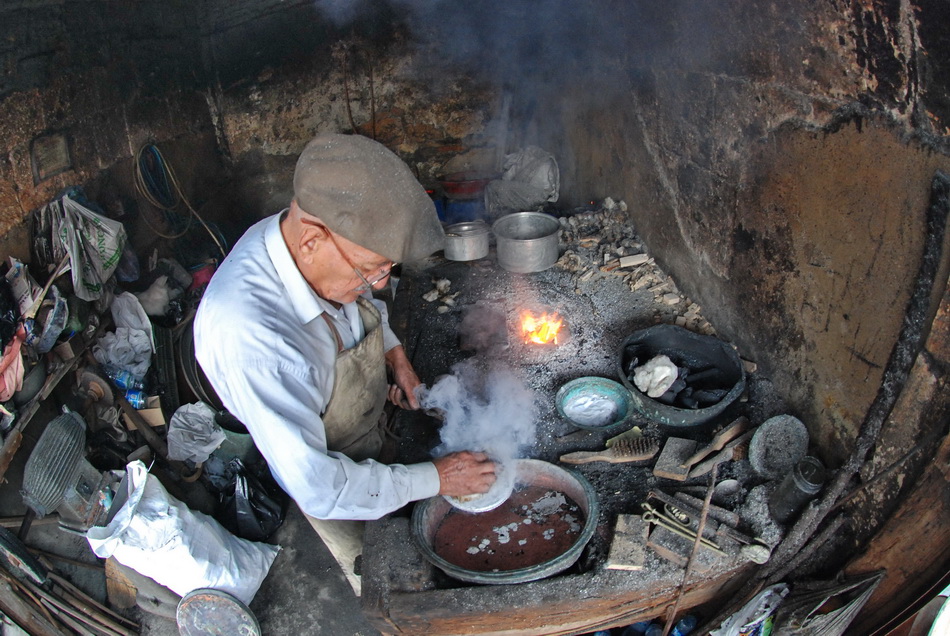
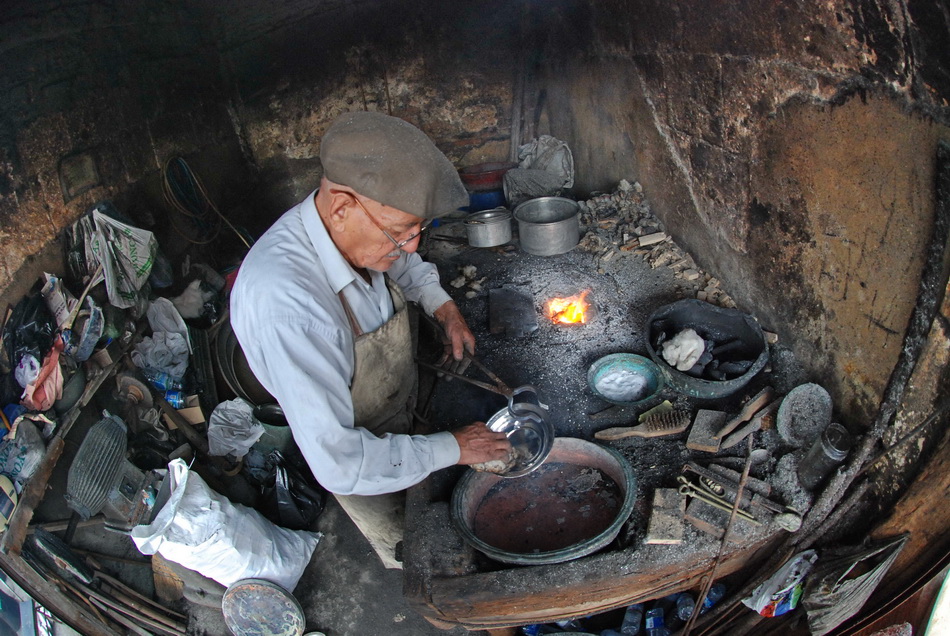
In 1999, I photographed traditional tinsmiths in Tire, near İzmir, and returned to the subject in Tarsus in 2008. On both occasions, I was interested not only in the renewal of copper vessels, but also in the craftsmen’s working environments, their tools and the movements shaped by years of experience. Soot-darkened hearths, vessels hanging on the walls, tongs, anvils and the distinctive arrangement of small workshops revealed the close relationship between this craft and everyday life.
Traditional tinsmithing involves coating the surfaces of copper vessels—particularly those used for preparing and storing food—with a thin layer of tin. Copper has been used in kitchens for centuries because it conducts heat efficiently. Yet direct contact with certain foods, especially acidic ones, can cause copper to migrate into food and pose a health risk. A tin lining provides a protective barrier. As that lining wears away, it must be renewed, allowing the same copper vessels to remain in use for many years.
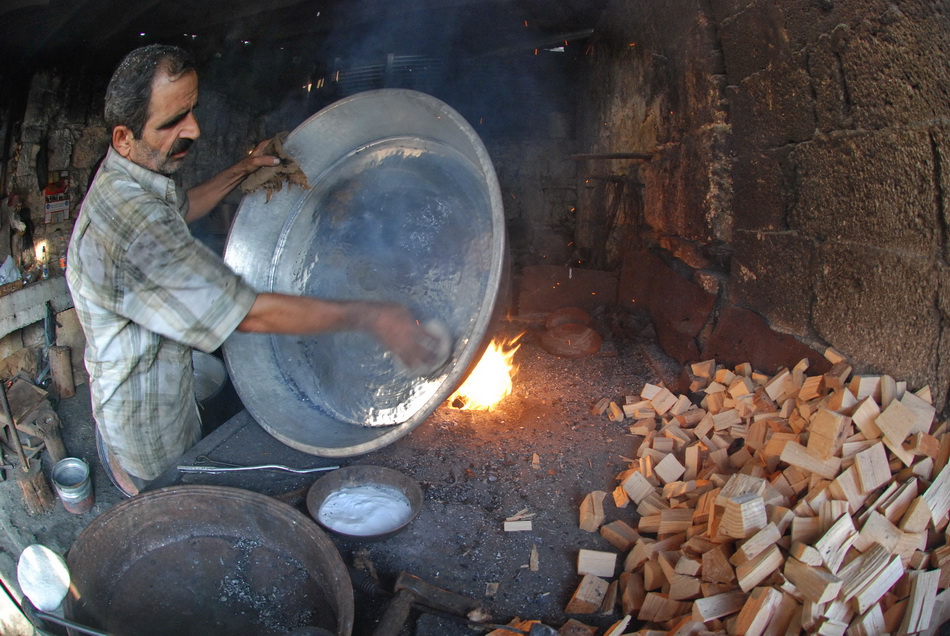
The process begins with preparing the vessel. Dirt, grease, oxidation and remnants of the old coating are removed. Where necessary, dents or distortions are corrected with a hammer. The vessel is then heated over the tinsmith’s hearth. To help the tin adhere, the craftsman uses a flux traditionally known as nişadır (ammonium chloride). As the tin melts, it is spread in a thin, even layer across the hot surface with a special cotton pad. Experience is essential at this stage: the craftsman must continually judge the vessel’s temperature, the movement of the molten tin and the uniformity of the coating. When the work is finished, the inner surface has a bright, silvery appearance.
Tinsmithing is not simply a way of applying a new coating; it is also a means of returning an old object to use. Cauldrons, pots, pans, trays and other kitchen utensils could be repaired and re-tinned whenever necessary. With the spread of stainless steel, aluminium and other types of cookware, however, the need for traditional tinsmiths declined. Craftsmen once familiar in marketplaces and streets became increasingly difficult to find.
In the photographs I made in Tire and Tarsus, nine years apart, I wanted to document not only the technical stages of tinning but also the craftsmen’s working conditions and the spaces marked by their trade. Hours spent beside the fire, repeated movements across the copper surfaces and soot-darkened workshops made the physical labour of the craft visible. Looking at these images today, I remember the craftsmen I met in two different towns and a traditional occupation that has become less visible as everyday life has changed.