
Templo de San Rafael — Santa Escuela de Cristo
Standing immediately beside the much more famous Parroquia de San Miguel Arcángel, the Templo de San Rafael, also known as the Santa Escuela de Cristo, can easily be overlooked. Yet it represents a much earlier layer of the religious history of San Miguel de Allende.
The origins of the church go back to the sixteenth century. The first parish of San Miguel was established in 1564, and San Rafael is traditionally identified with this early church, which later became known as the Parroquia Vieja — the Old Parish Church. When a larger parish church was constructed beside it during the following century, San Rafael lost its role as the principal church but continued its religious life.
A major change came in 1742, when the Oratorian priest Luis Felipe Neri de Alfaro established here the Santa Escuela de Cristo, a religious brotherhood devoted to prayer, penitence and spiritual discipline. The name became so closely associated with the building that the church is still commonly known as Santa Escuela de Cristo today.
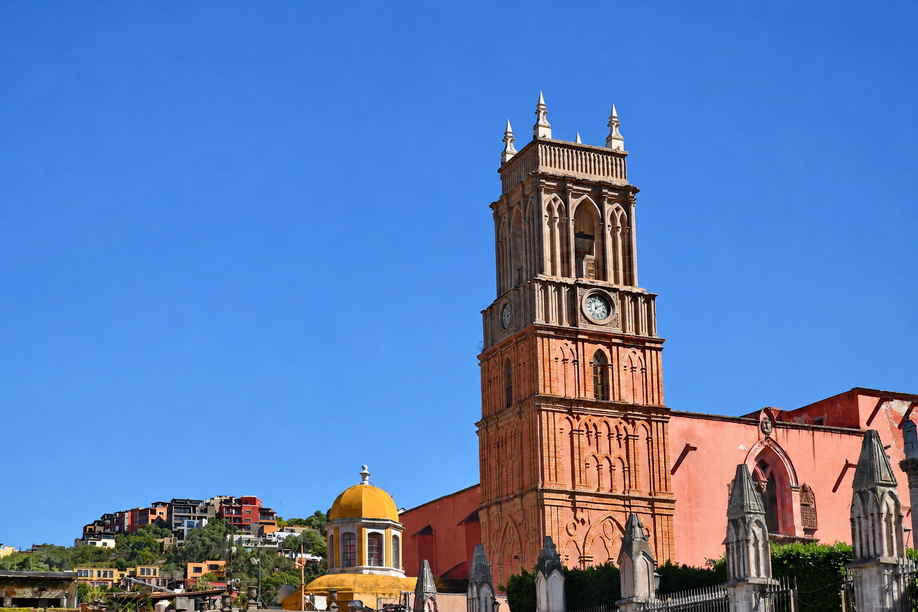
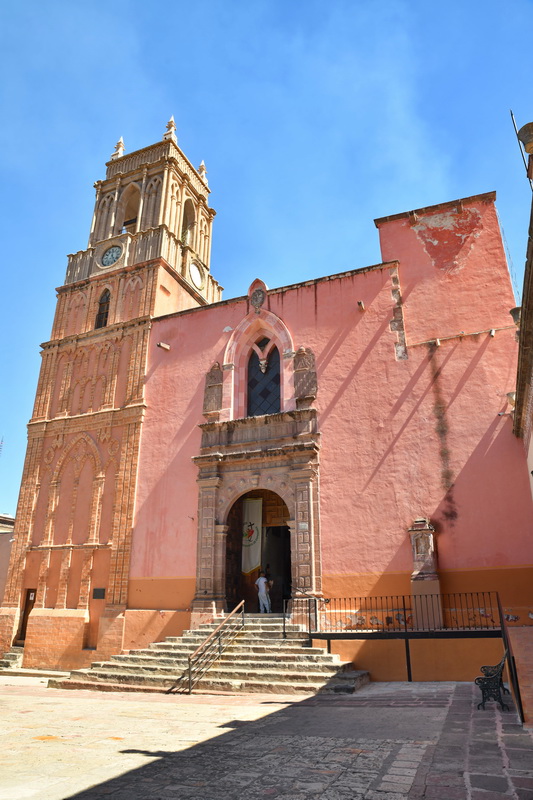
The architecture itself records these successive periods. The relatively modest scale of the church contrasts strongly with the soaring façade of the Parroquia beside it. Its main façade is arranged on two levels, with arches, pilasters and ornamental details below and a pointed Gothic-influenced choir window above. The square bell and clock tower adds another distinctive element to the building.
The Gothic appearance of some of these features is not part of the original colonial church. In the late nineteenth century, Zeferino Gutiérrez, the local master stonemason responsible for the famous Neo-Gothic façade of the neighbouring Parroquia, also altered San Rafael. He transformed the choir window in a Neo-Gothic manner and modified and heightened the bell and clock tower. In this way the visual relationship between the two neighbouring churches became even stronger.
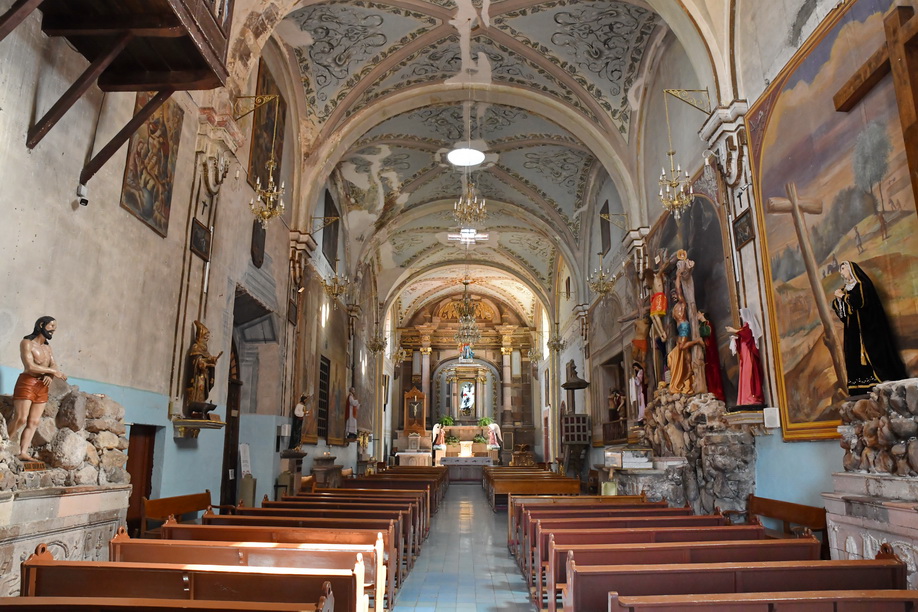
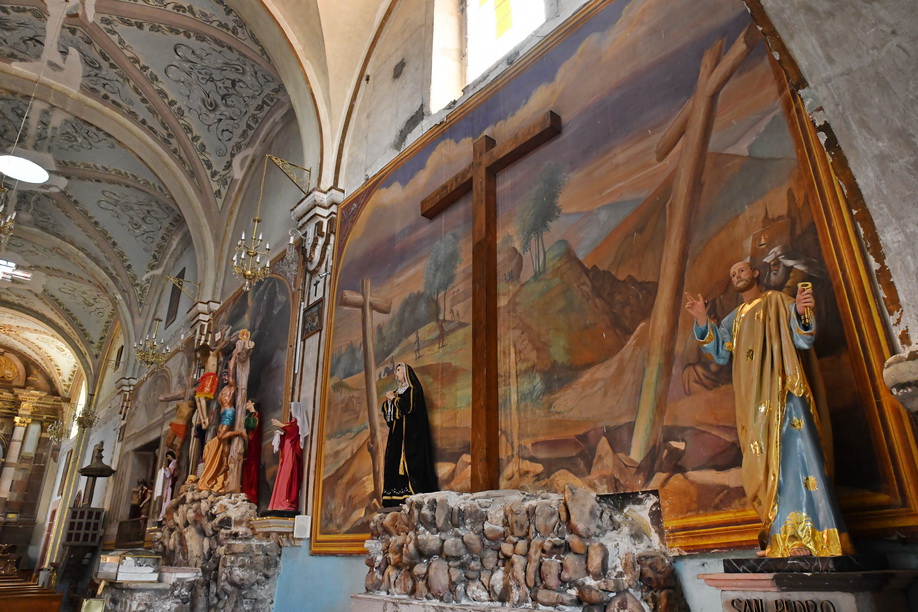
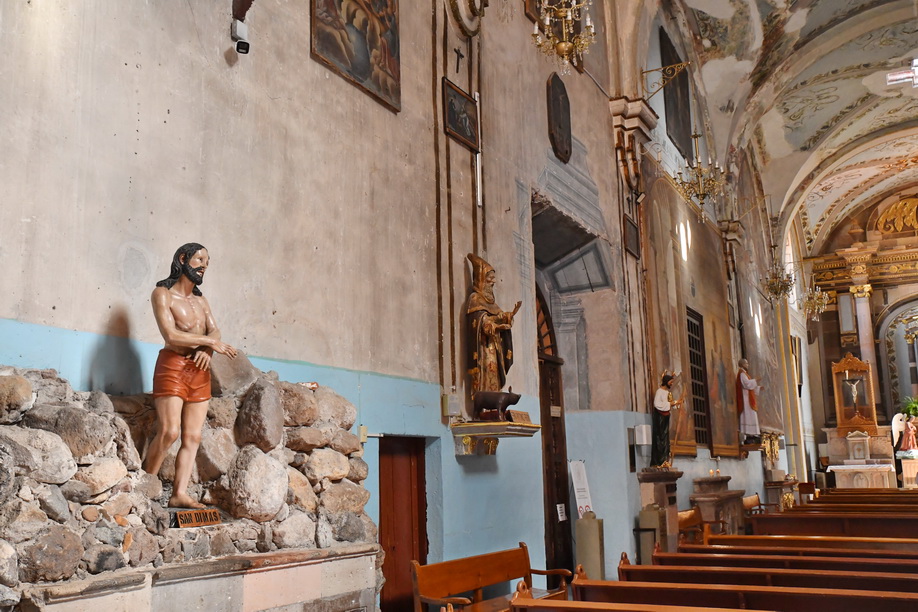
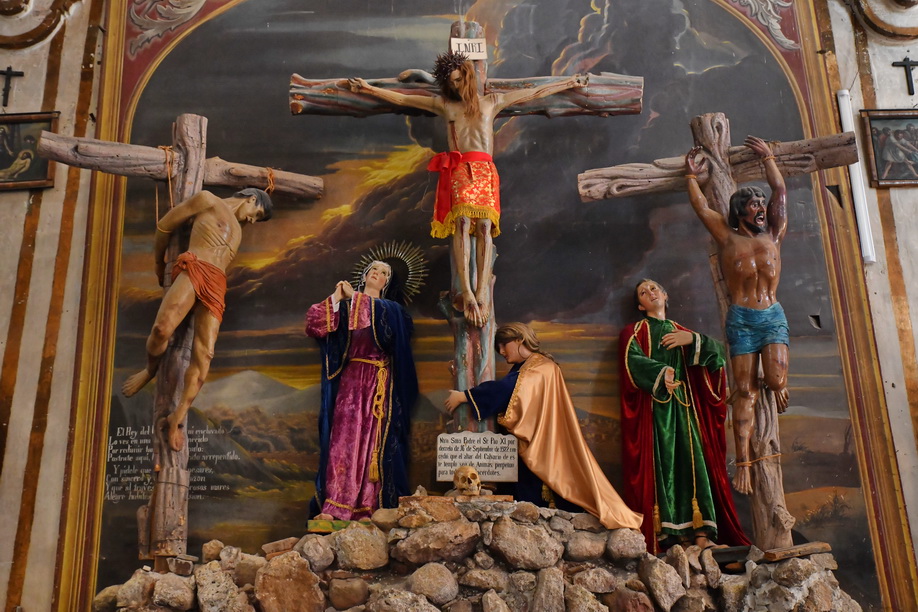
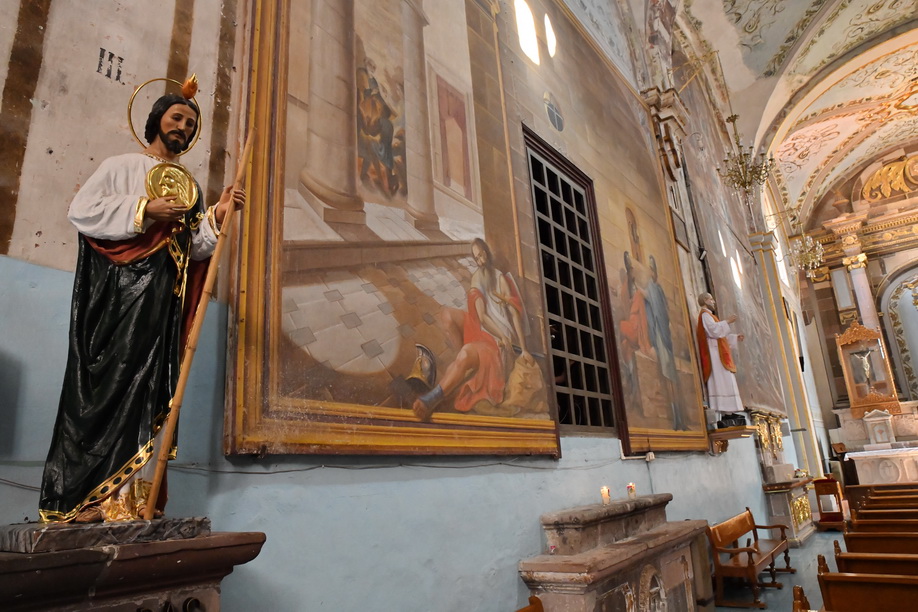
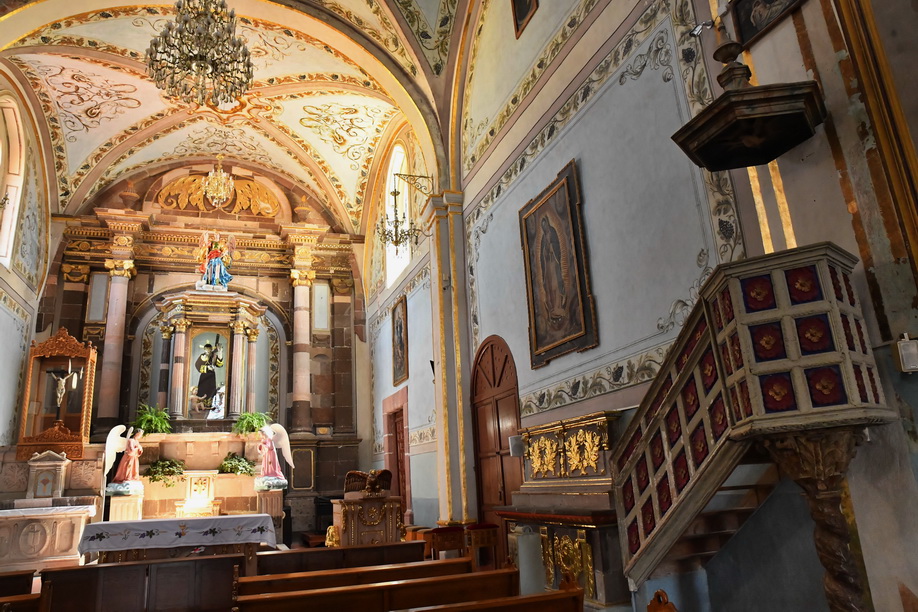
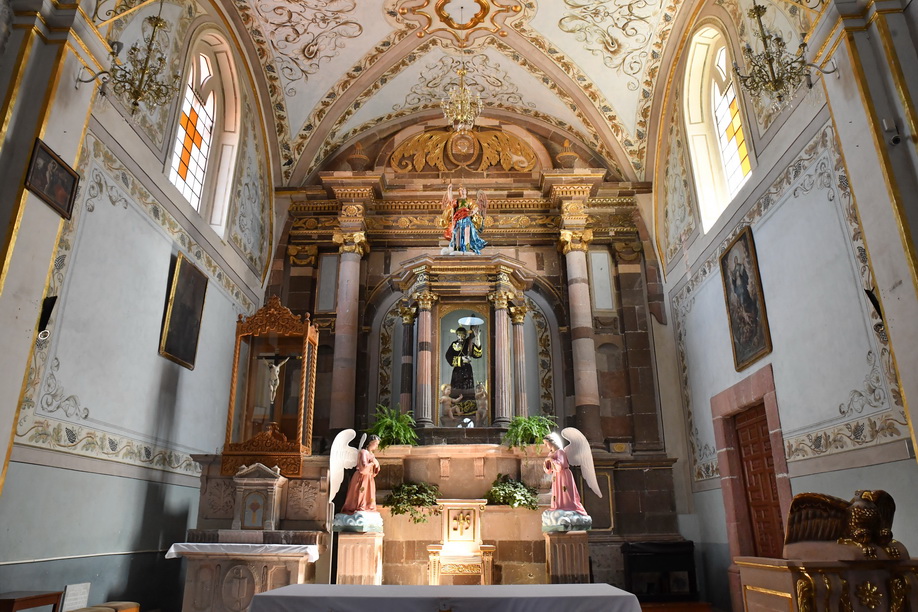
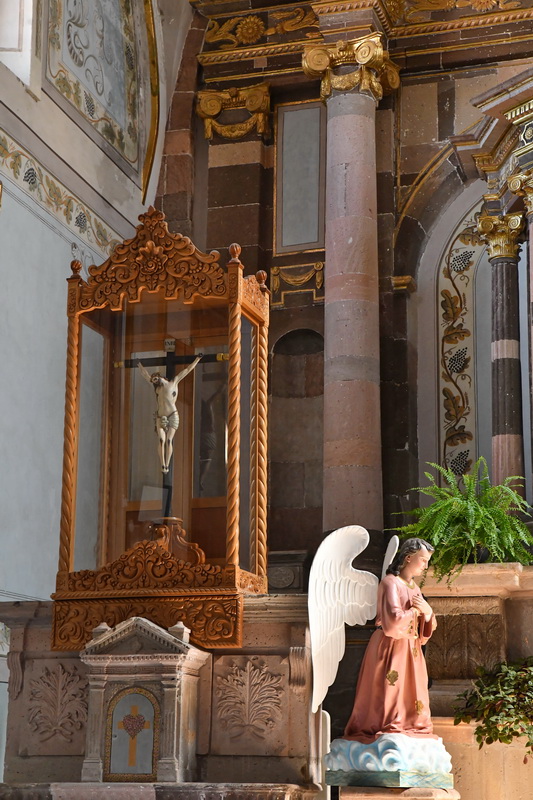
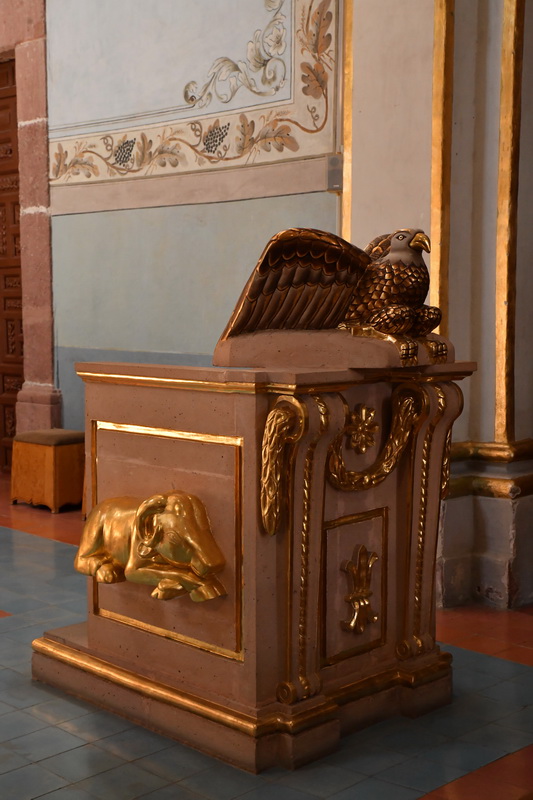
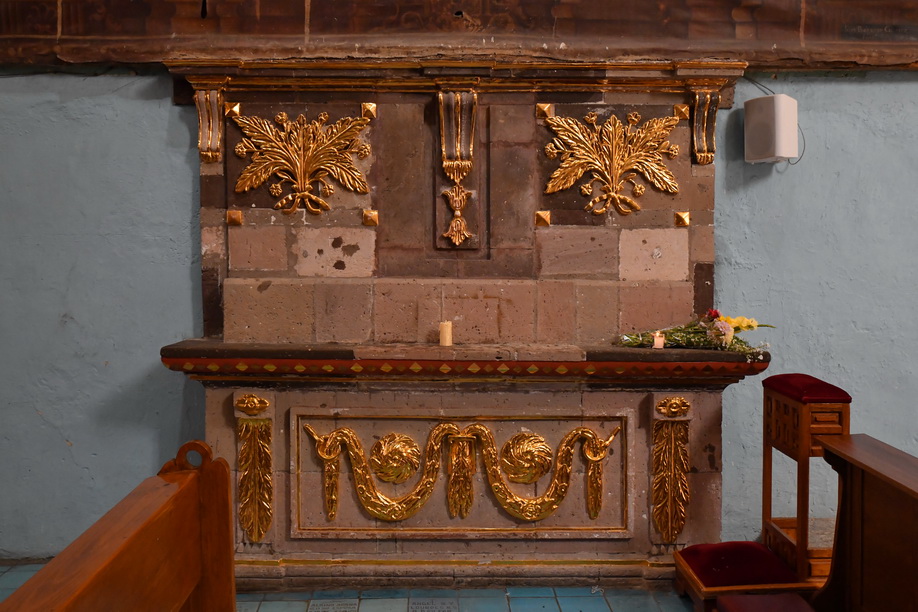
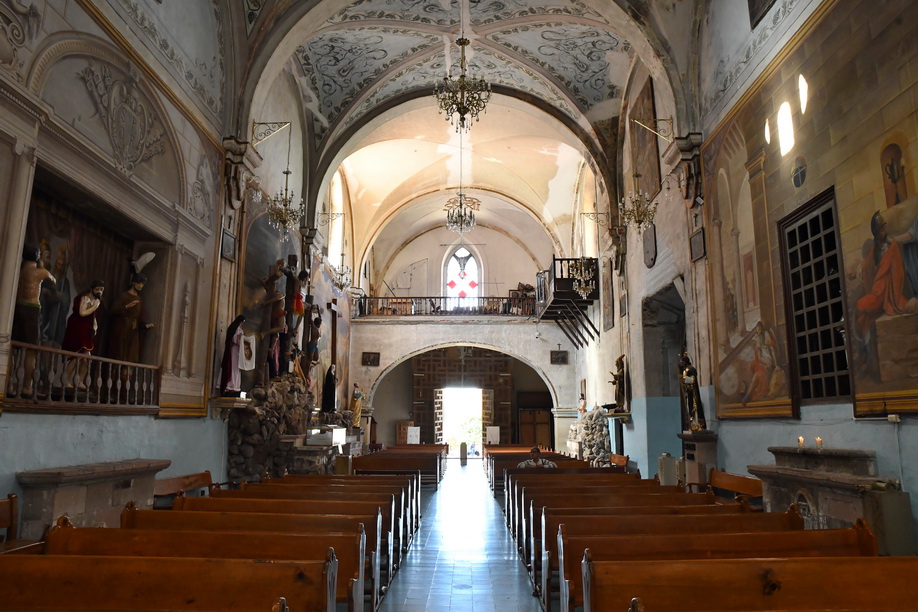
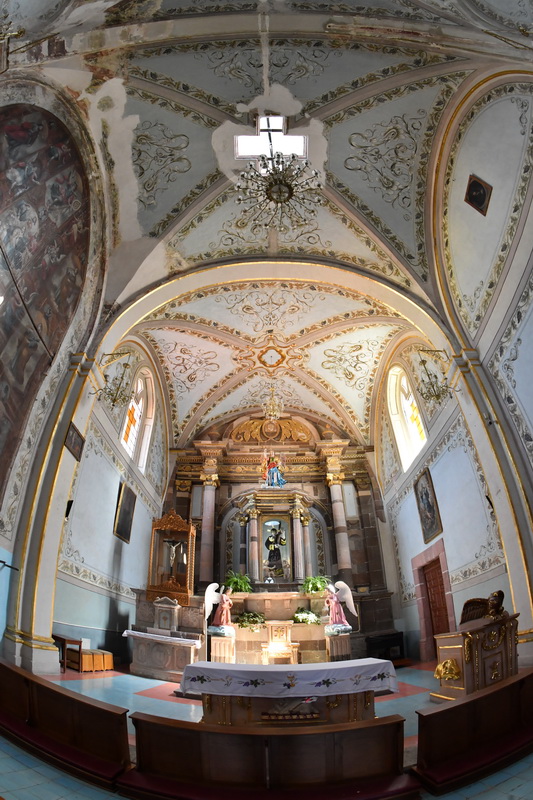
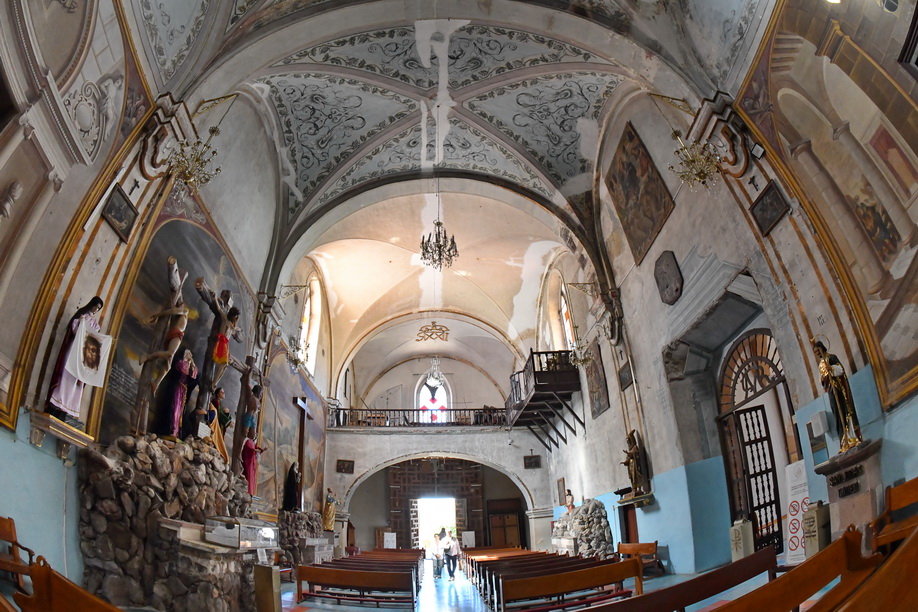
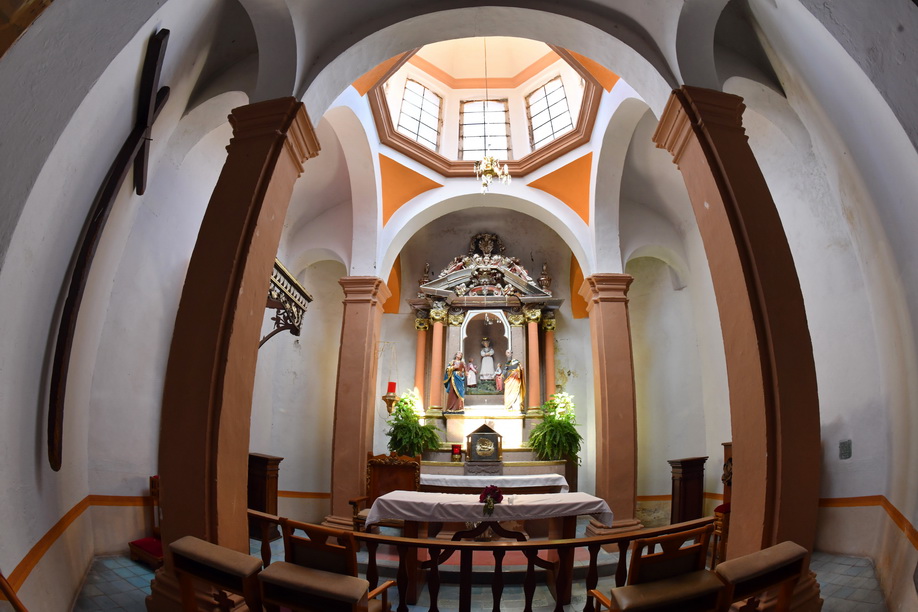
Inside, San Rafael is much more intimate than the Parroquia. The church has a single nave, vaulted sections and side altars. Religious paintings and sculptures, including scenes connected with the Passion of Christ, create an atmosphere quite different from the monumental exterior of its famous neighbour. The more subdued light also reinforces the sense of enclosure and contemplation.
Another interesting detail connects the church directly with Zeferino Gutiérrez. A lateral chapel was adapted as a mausoleum for Gutiérrez and his family. The man who gave San Miguel de Allende its most recognizable architectural silhouette therefore remains physically connected with the smaller and much older church that stands beside his celebrated work.
For me, the relationship between San Rafael and the Parroquia is what makes this small church particularly interesting. Standing side by side, they represent very different periods of San Miguel's history: the modest scale of an early colonial parish, the religious life of the eighteenth-century Santa Escuela de Cristo, and the nineteenth-century Neo-Gothic imagination of Zeferino Gutiérrez.
The Parroquia may dominate the skyline of San Miguel de Allende, but San Rafael quietly preserves an older memory of the town — a church that was already here long before the pink Gothic towers beside it became the symbol of the city.