
Templo de San Francisco
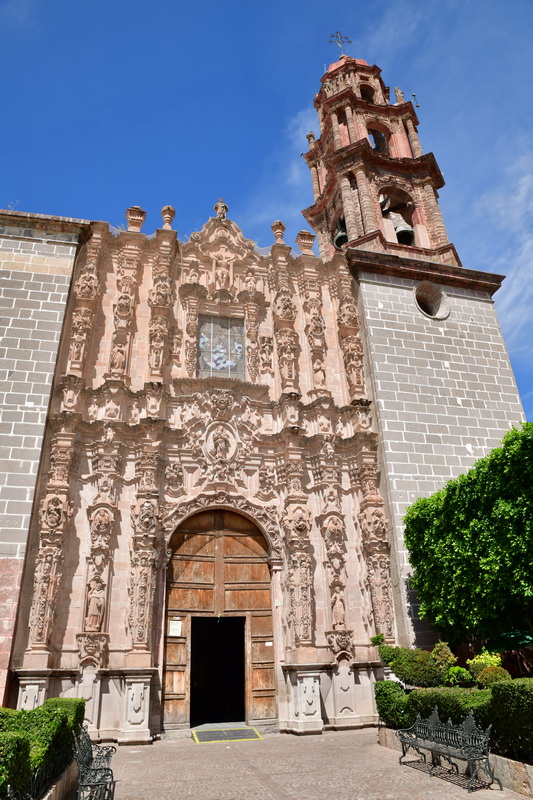
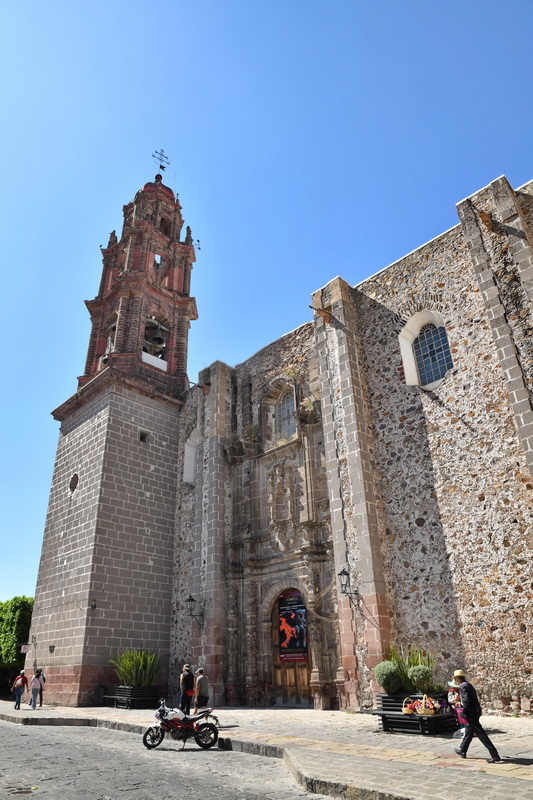
The Templo de San Francisco stands only a short distance from the Jardín Principal, yet its architecture belongs to a very different visual world from the Neo-Gothic Parroquia de San Miguel Arcángel. What immediately attracts attention is its extraordinarily rich stone façade, where columns, niches, saints, floral motifs and ornamental carving seem to cover almost every available surface.
Construction of the church began in 1779 and continued for approximately twenty years, reaching completion around 1799. The building therefore belongs to a particularly interesting moment in the architecture of New Spain, when the exuberant forms of the late Baroque were beginning to coexist with the more restrained language of Neoclassicism.
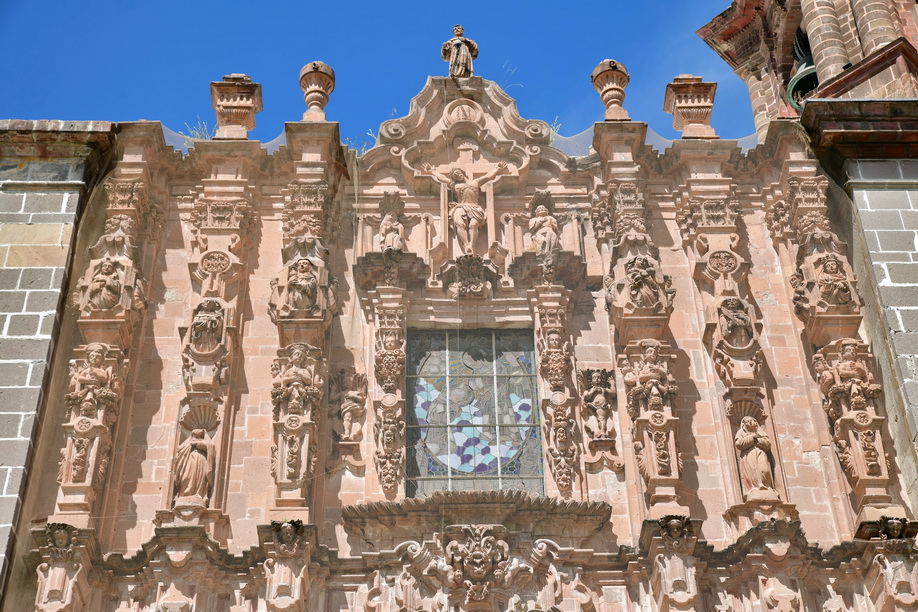
The main façade is generally described as Churrigueresque or late Mexican Baroque. Yet these terms only partly explain what can be seen in the stone. Rather than functioning simply as decoration applied to a wall, the carved surface creates a dense visual composition in which architecture, sculpture and religious imagery become almost inseparable.
The central entrance is framed by richly carved architectural elements that draw the eye upward through successive levels of the façade. Niches containing saints are surrounded by columns, foliage, scrolls and other ornamental forms. The warm local stone gives even the most elaborate carving a sense of unity, while strong sunlight creates constantly changing shadows within the deeply cut surfaces.
This richness is characteristic of the way European Baroque forms were transformed in colonial Mexico. The craftsmen who worked on churches such as San Francisco did not simply reproduce European models. Architectural ideas arriving from Spain were interpreted through local stone, regional craftsmanship and the artistic traditions that had developed in New Spain over generations.
The church was dedicated to Saint Francis of Assisi, founder of the Franciscan order. The Franciscans had played an important role in the evangelization of central Mexico since the sixteenth century, and Franciscan religious traditions remained deeply embedded in the region. Images of saints and other religious figures incorporated into the façade would therefore have been more than decoration: they formed part of a visual language immediately recognizable to worshippers.
One of the most interesting aspects of San Francisco is that the building does not belong stylistically to a single moment. Its bell tower was completed later, during the nineteenth century, and is associated with the spread of Neoclassical taste in Mexico. Compared with the restless movement and dense carving of the eighteenth-century façade, the tower is more orderly and restrained.
The contrast is easy to see. The façade seems almost to dissolve beneath its ornament, while the tower above is organized through clearer architectural lines and more controlled proportions. Two successive architectural ideas therefore occupy the same building: the final flowering of colonial Baroque and the Neoclassical aesthetic that increasingly replaced it.
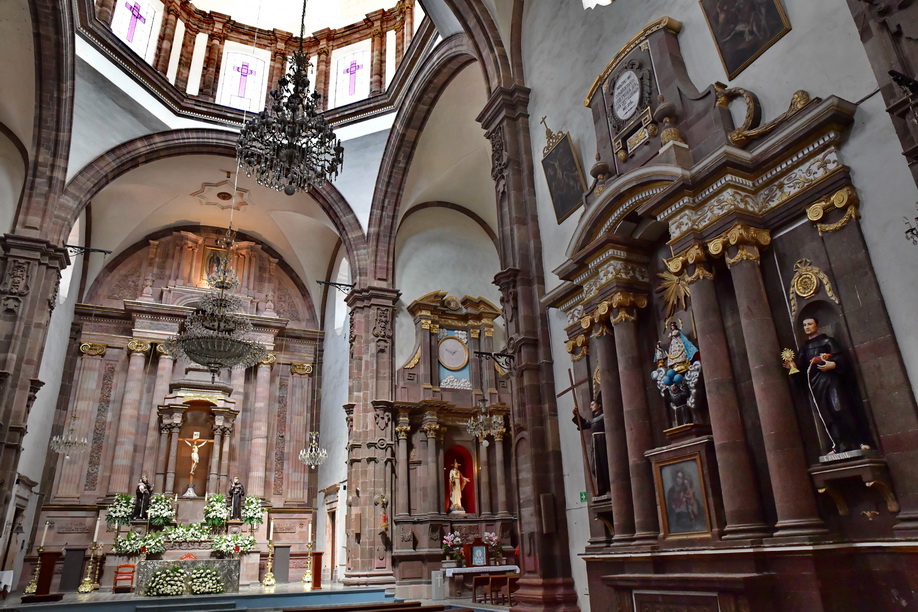
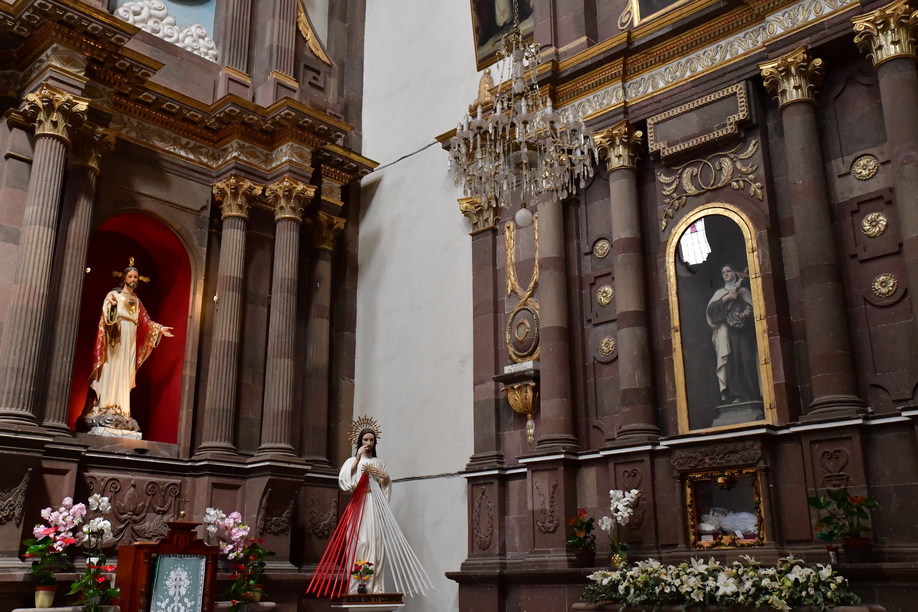
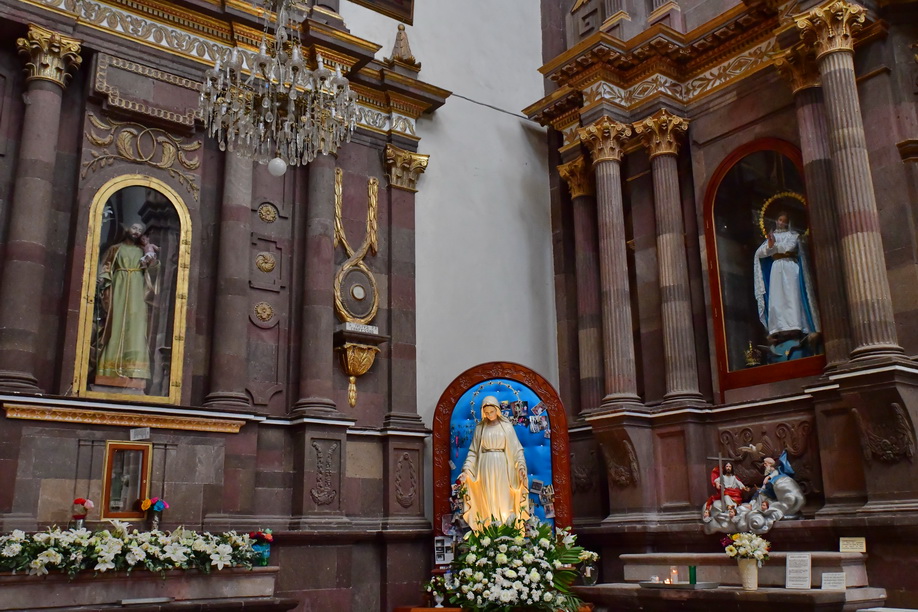
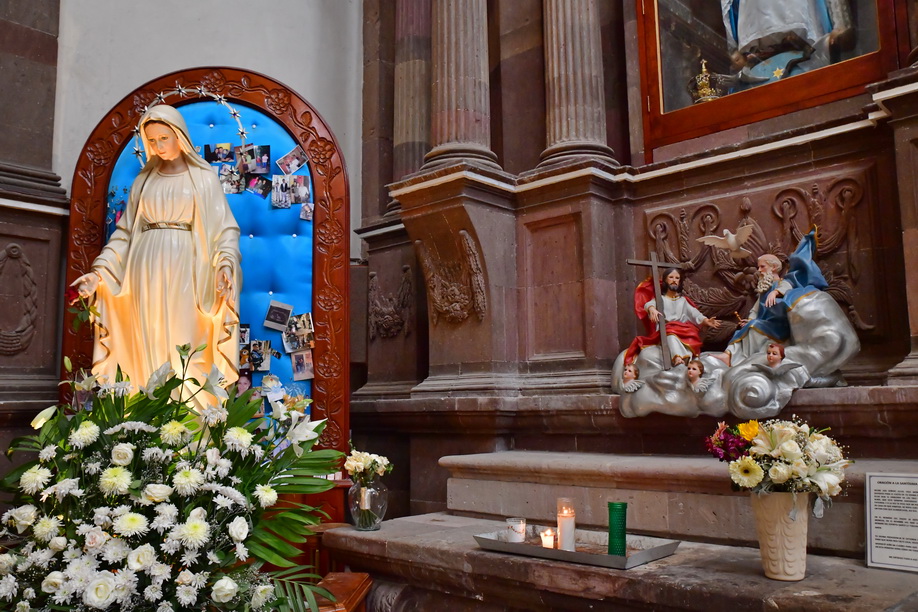
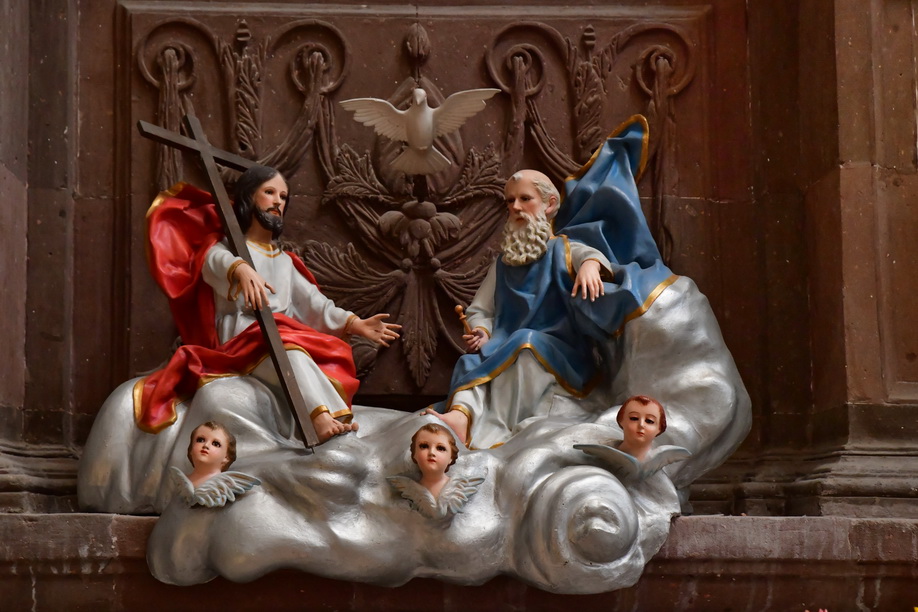
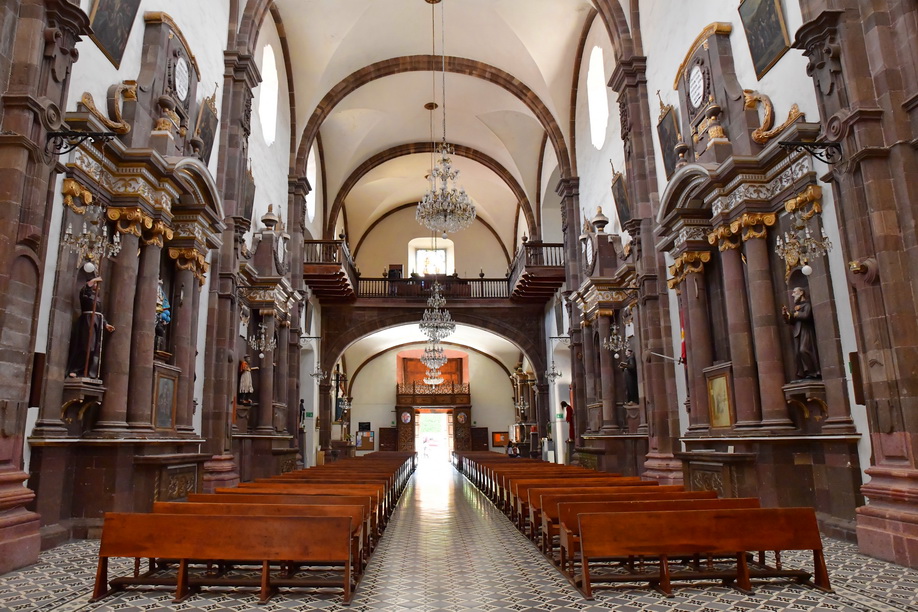
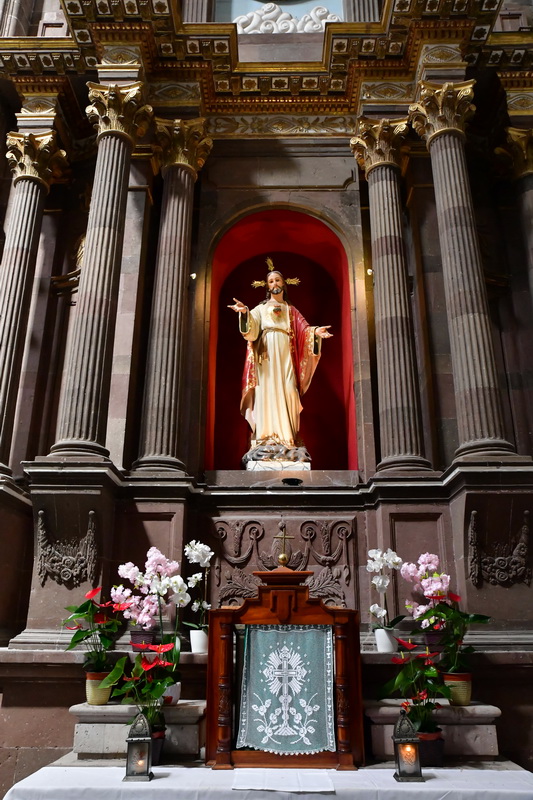
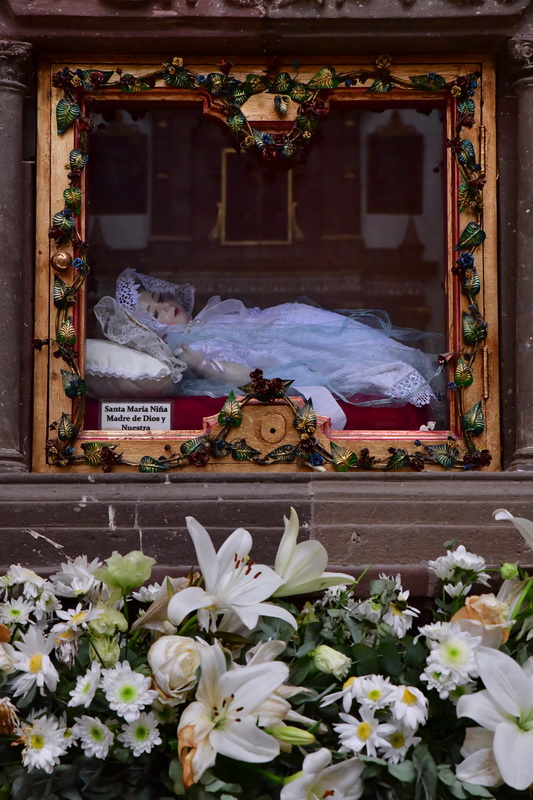
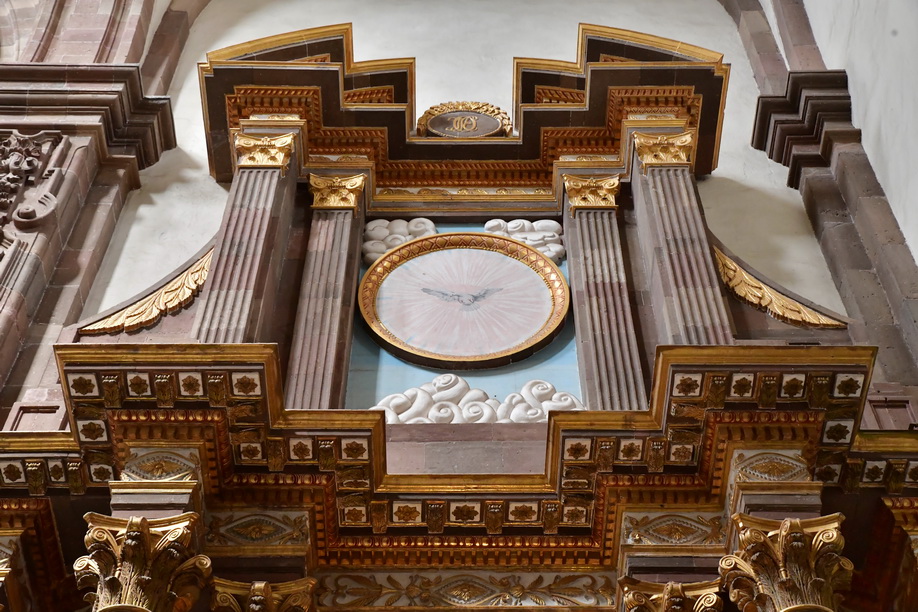
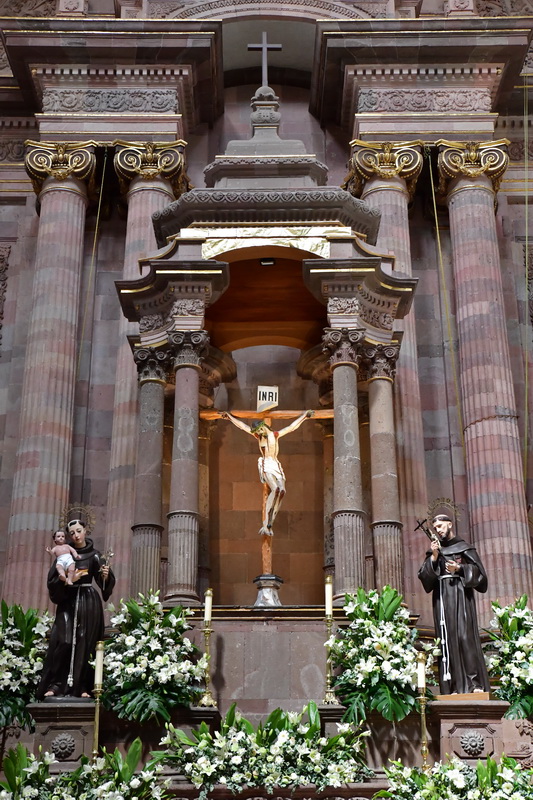
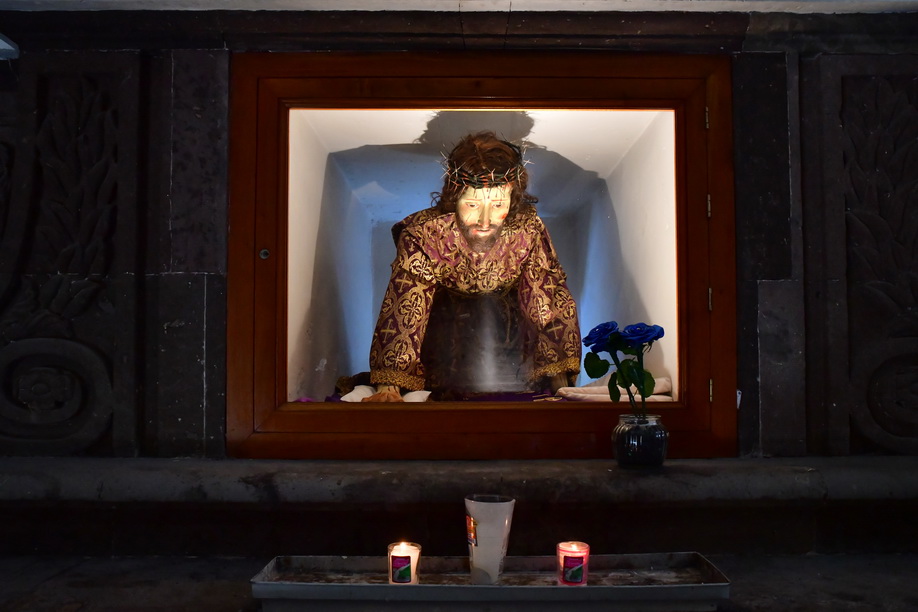
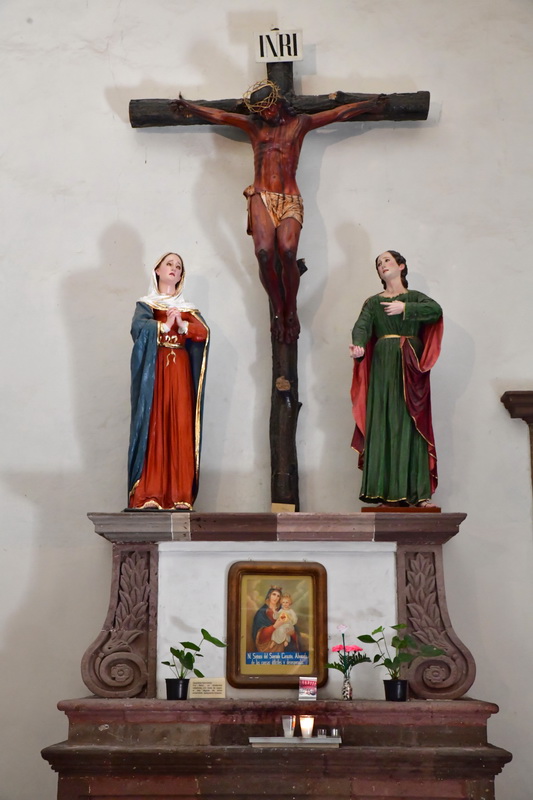
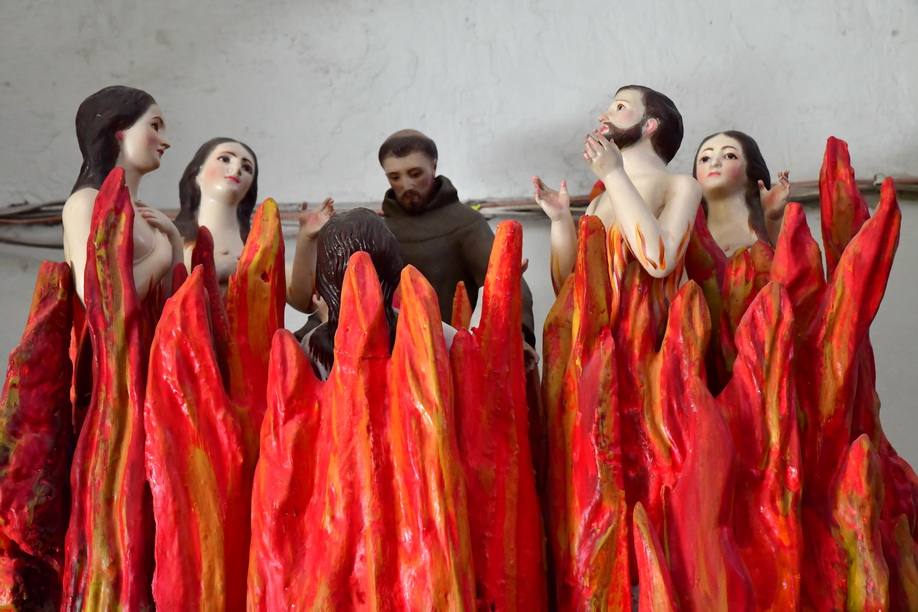
Inside, the atmosphere changes again. The decoration is more restrained than the exterior suggests, partly reflecting later alterations to the church. Altars, paintings, sculptures and devotional images accumulated over different periods, while the building continued to function as a living place of worship rather than becoming simply a historical monument.
This continuing religious life is important. When photographing churches, I am interested not only in architecture but also in the traces left by the people who use them. Candles, flowers, images of saints and small devotional objects create another layer that architectural history alone cannot explain. In San Francisco, the monumental stone façade and these more intimate expressions of faith belong to the same place.
The church also offers an interesting comparison with the other religious buildings of San Miguel de Allende. At the Parroquia, Zeferino Gutiérrez reinterpreted European Gothic architecture in the nineteenth century. At Las Monjas, he created a monumental dome. San Francisco belongs primarily to an earlier generation, when the highly expressive Baroque traditions of colonial Mexico were still flourishing.
Within a relatively small area of the historic centre, these churches therefore allow very different architectural periods to be read almost as a sequence: colonial Baroque, Neoclassicism and the later Neo-Gothic imagination of Zeferino Gutiérrez.
For me, the façade of San Francisco is its strongest expression. From a distance it appears as a richly textured stone surface; from close up it breaks apart into saints, columns, leaves, scrolls and shadows. It is architecture that continually rewards a closer look — and for a photographer, that change of scale is perhaps its most fascinating quality.