
Templo de la Inmaculada Concepción — Las Monjas
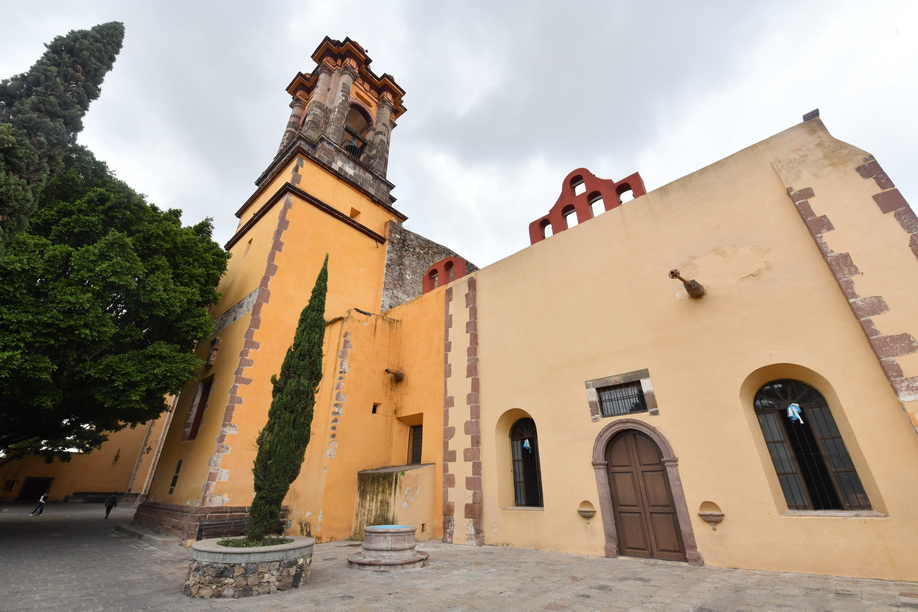
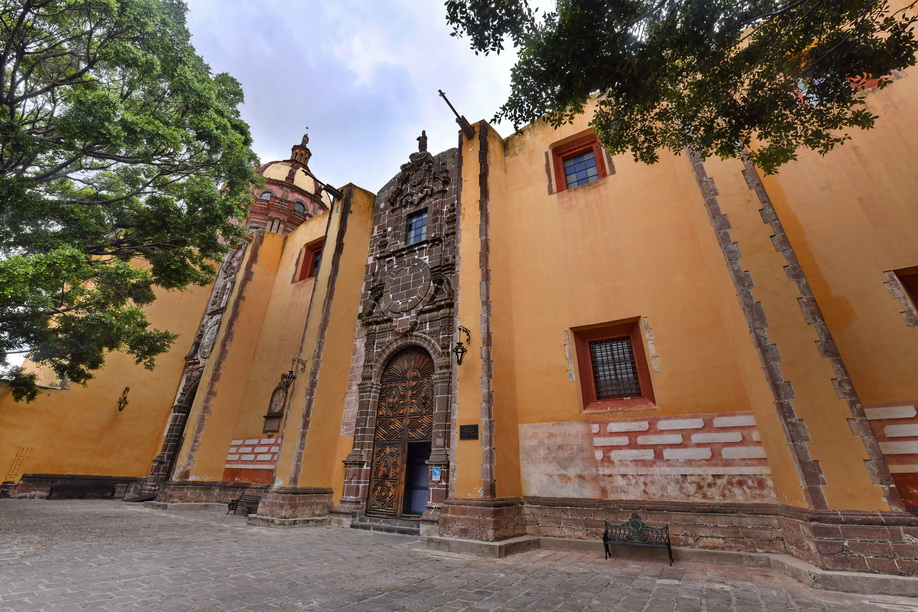
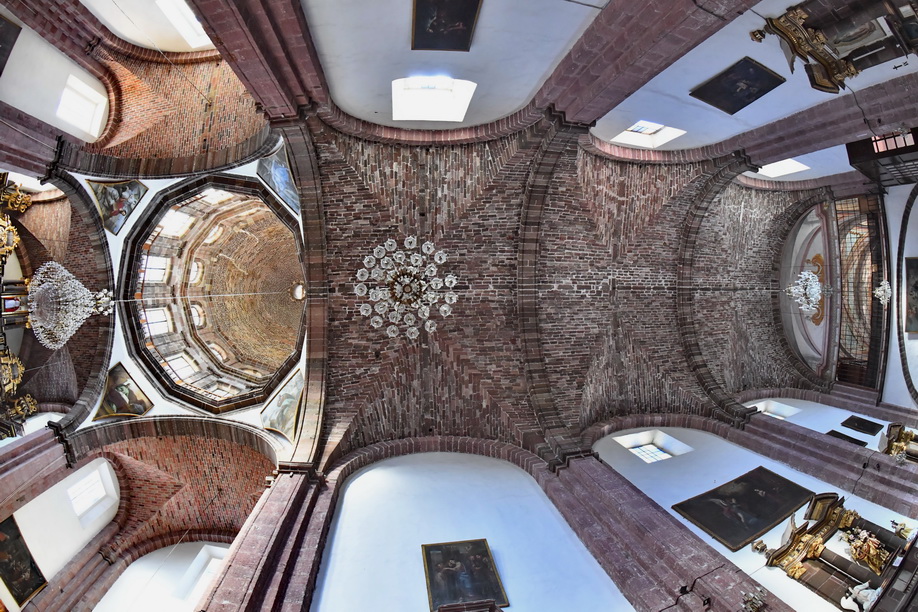
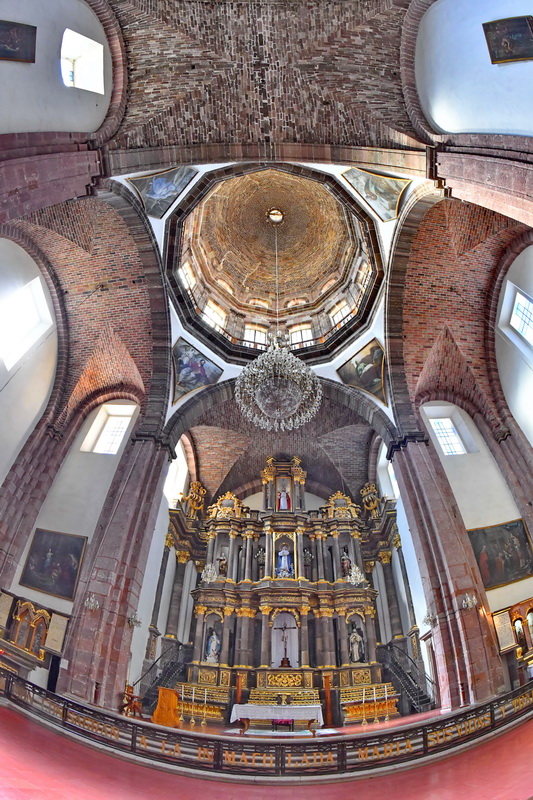
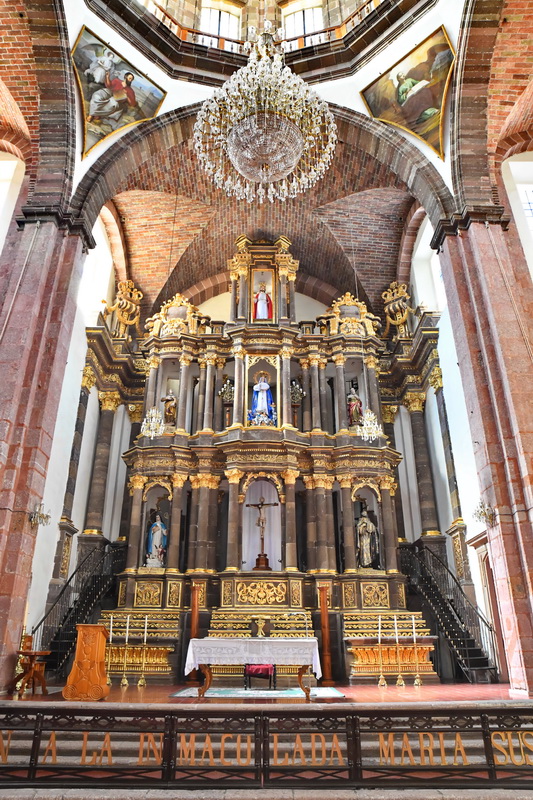
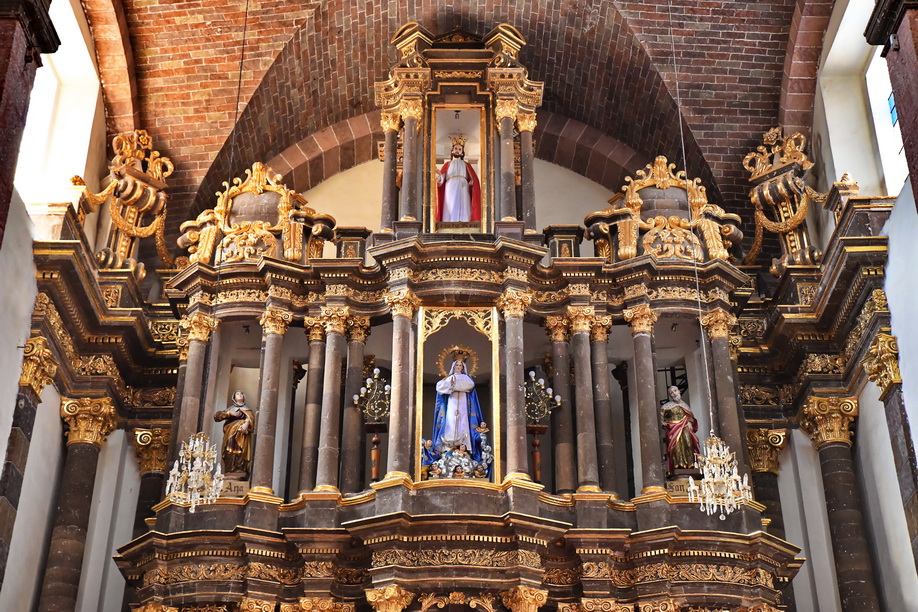
The Templo de la Inmaculada Concepción, commonly known in San Miguel de Allende as Las Monjas — “The Nuns”, is inseparable from the remarkable story of María Josefa Lina de la Canal y Hervás. Born in 1736 into one of the wealthiest families of San Miguel el Grande, she inherited a considerable fortune after the death of her parents. While still very young, she decided to devote herself to religious life and to use much of her inheritance to establish a convent for women in her hometown.
According to the historical record, Josefa Lina sought spiritual guidance from Luis Felipe Neri de Alfaro, founder of the nearby Sanctuary of Atotonilco. After a period of retreat and reflection, she confirmed both her religious vocation and her intention to establish a convent dedicated to the Immaculate Conception.
Royal authorization for the convent was granted by King Ferdinand VI of Spain on 21 September 1754. Construction began the following year under the direction of architect Francisco Martínez Gudiño, assisted by local master builders including Pedro Joaquín de Tapia and Salvador Antonio Hernández.
The scale of the project proved much greater than originally anticipated. When the convent was inaugurated on 28 December 1765, parts of the complex were still unfinished. Josefa Lina herself entered religious life there and continued to support the institution she had created. She died in 1770, only five years after the inauguration, and her remains are preserved within the church she helped establish.
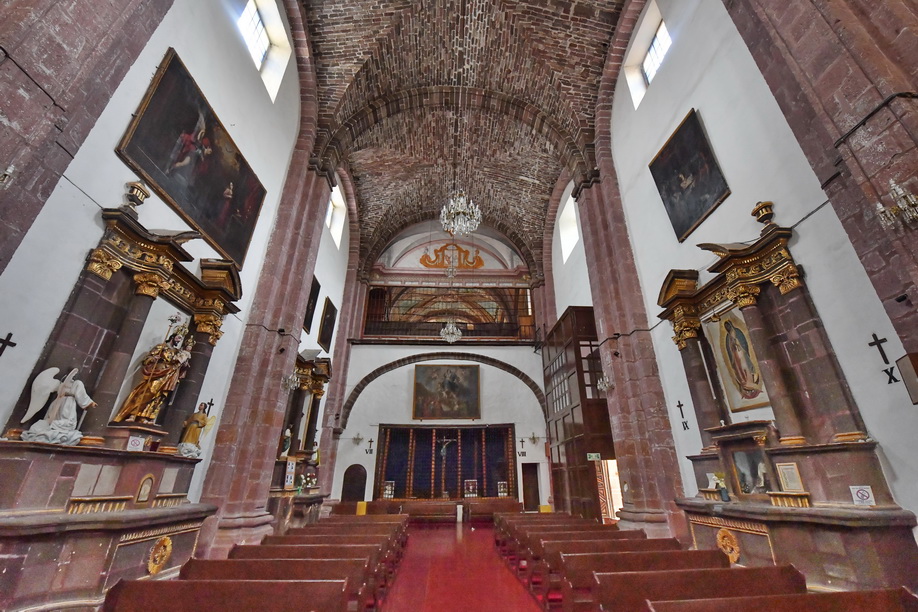
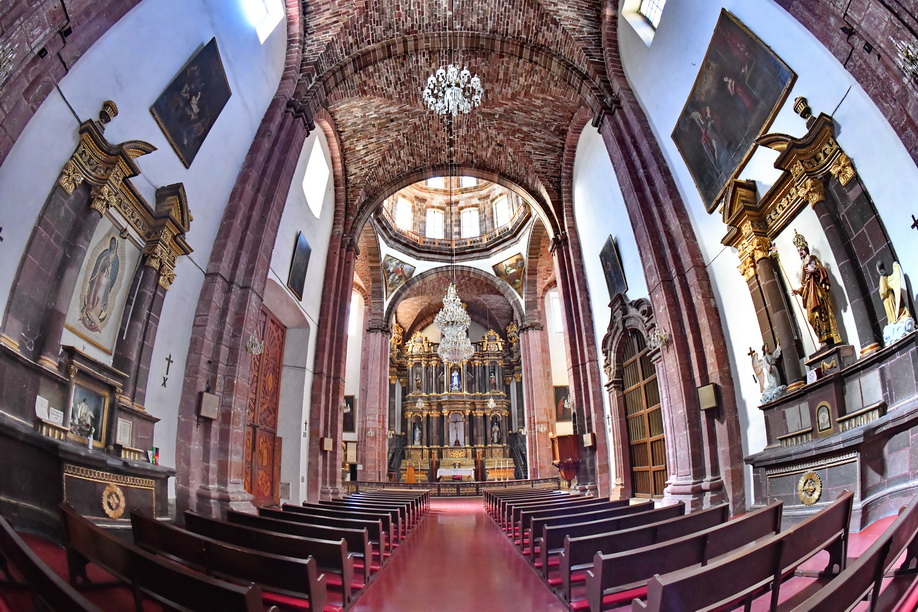
The original convent was organized around a large cloister, with cells for the nuns as well as spaces associated with religious education. The women lived a largely enclosed life, separated from the outside world. Inside the church, the upper and lower choir areas and their imposing screens still recall this division between the cloistered community and public worship.
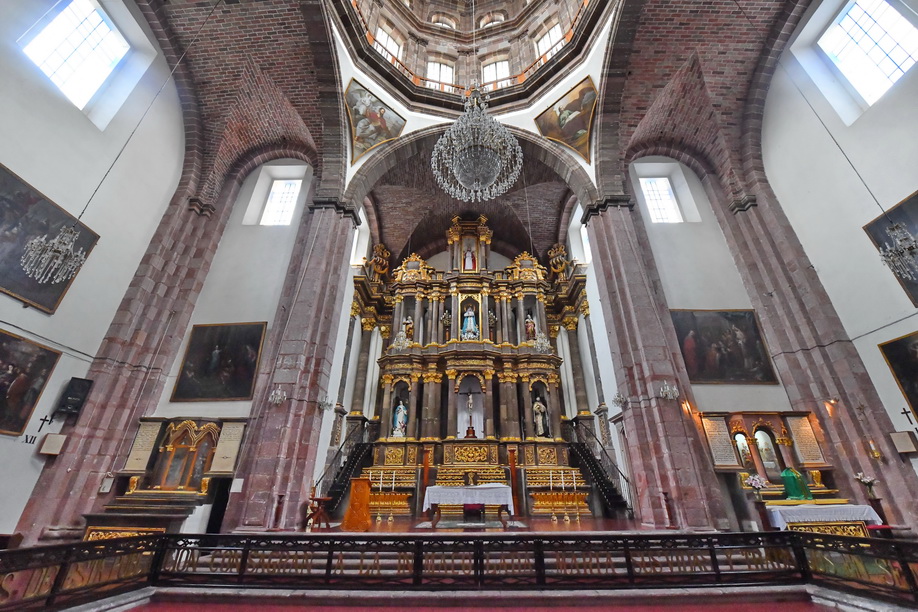
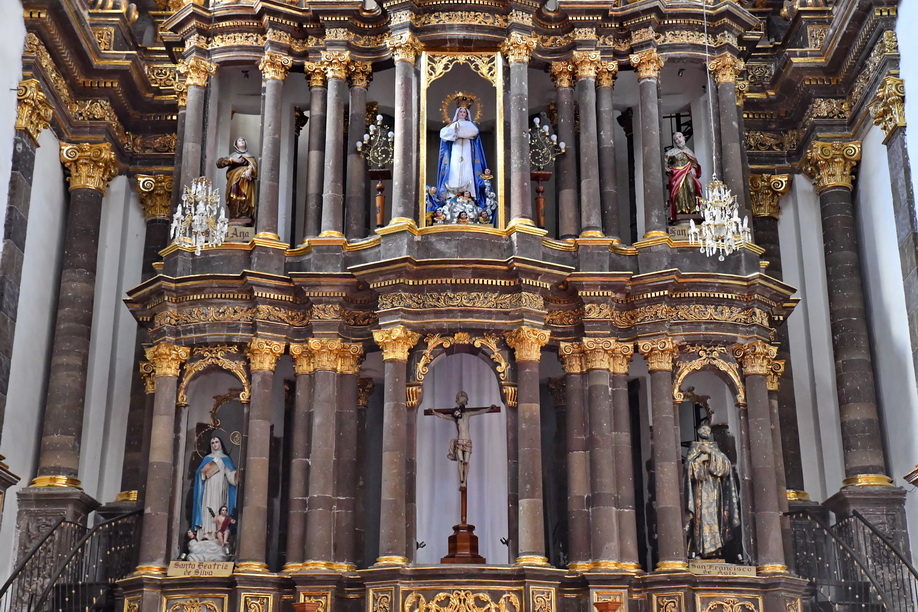
The church also preserves important works of colonial religious art. Paintings attributed to artists including Miguel Cabrera, Juan Rodríguez Juárez and Miguel Antonio Martínez de Pocasangre form part of a collection that reflects the cultural wealth of eighteenth-century New Spain. A gilded retablo survives in the lower choir, together with portraits connected with the founder.
Yet the element that most dramatically defines Las Monjas today was added more than a century after the convent was founded.
In the late nineteenth century, Zeferino Gutiérrez, the local master builder whose work had transformed the Parroquia de San Miguel Arcángel, was commissioned to complete and remodel important parts of the church. His work took place in at least two phases, first between 1880 and 1882 and again in 1891.
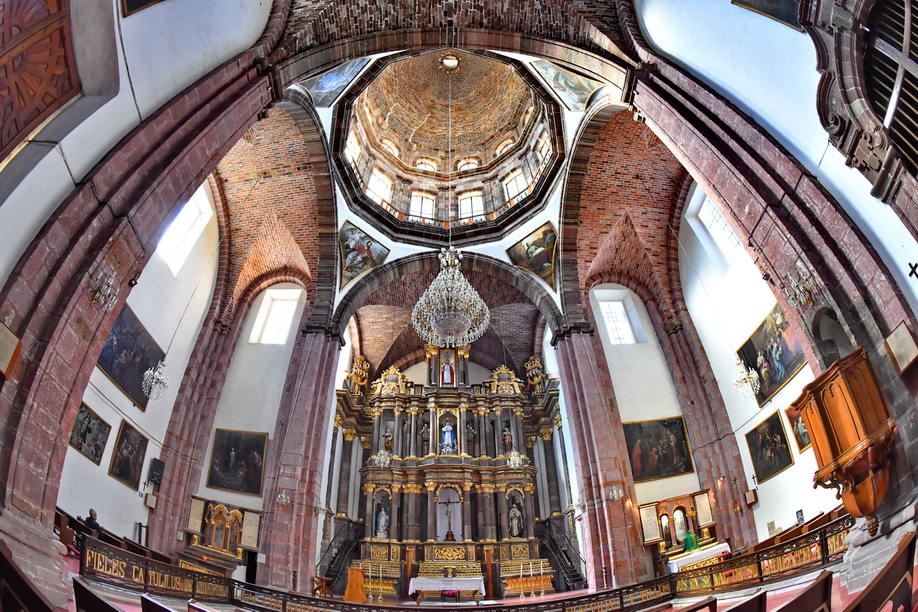
The great dome belongs to this second phase. An inscription at its base records an extraordinary detail: construction of its brickwork began on 1 May 1891 and was completed on 9 June — only thirty-nine days later.
Rising above a high drum pierced by large windows and framed by paired columns, the dome is crowned by a lantern and an image of the Immaculate Conception. Its proportions and monumental silhouette transformed the appearance of the church and gave San Miguel de Allende another of its most recognizable landmarks.
The dome is traditionally said to have been inspired by the great dome of Les Invalides in Paris. The resemblance is understandable, particularly in its high drum, classical organization and dominant position over the building. Whether Gutiérrez was consciously reproducing a specific European model is more difficult to establish. As with his Neo-Gothic work on the Parroquia, what matters is perhaps less the question of direct imitation than the way he interpreted European architectural forms through local materials and building traditions.
This is one of the things that makes Zeferino Gutiérrez so interesting to me. Within a relatively small area of San Miguel, his work appears in very different forms: the Neo-Gothic towers of the Parroquia, alterations to San Rafael, the signed marble altar of the Oratorio, and here, the monumental dome of Las Monjas. Each building reveals a different side of the same local craftsman.
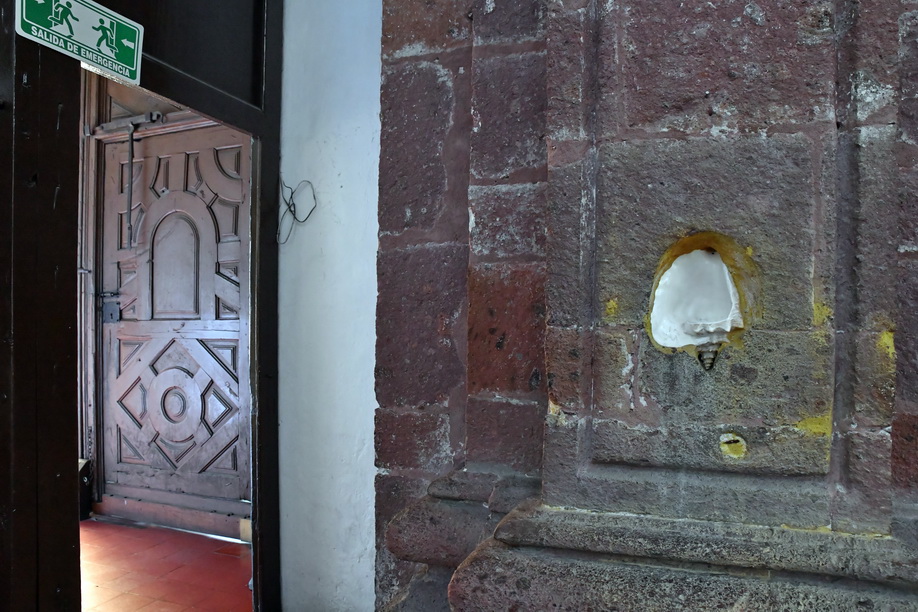
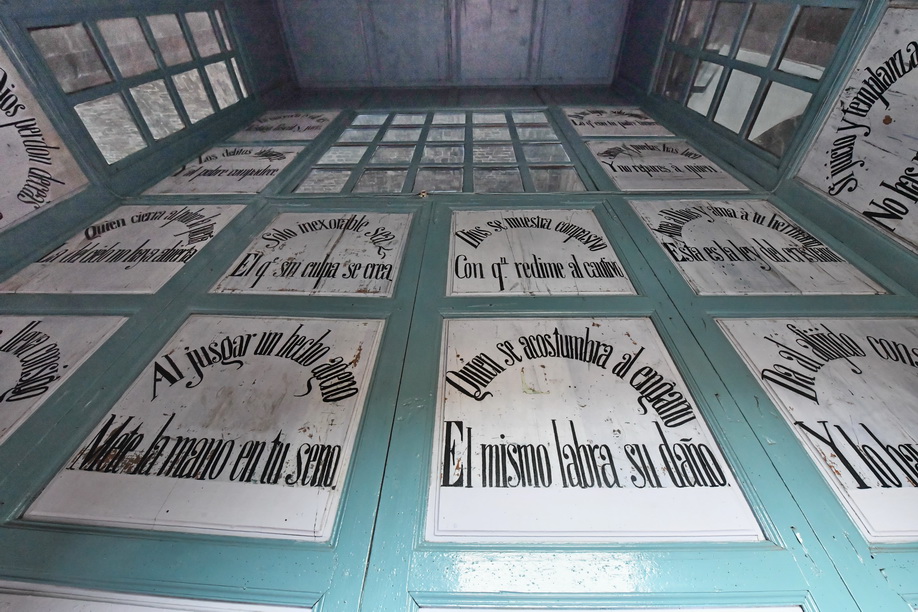
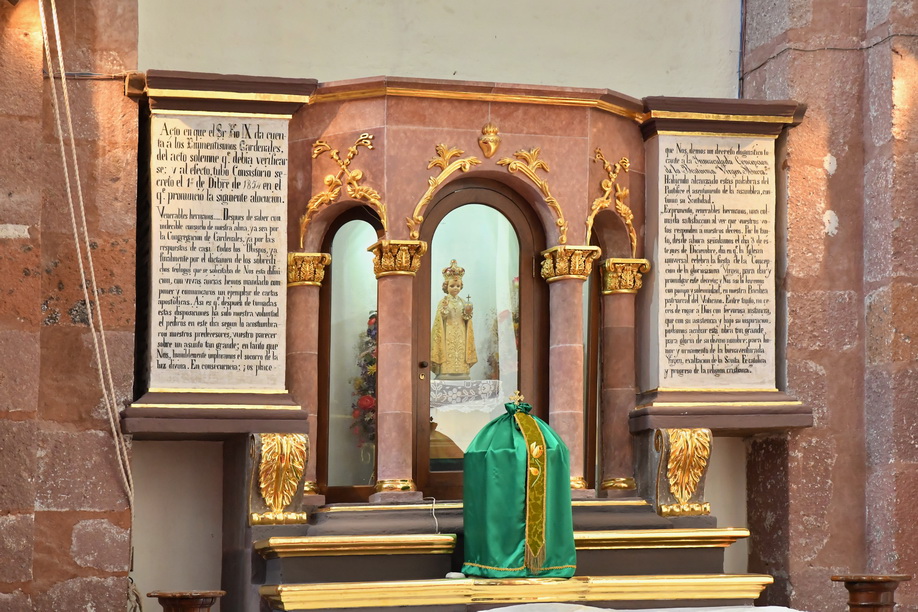
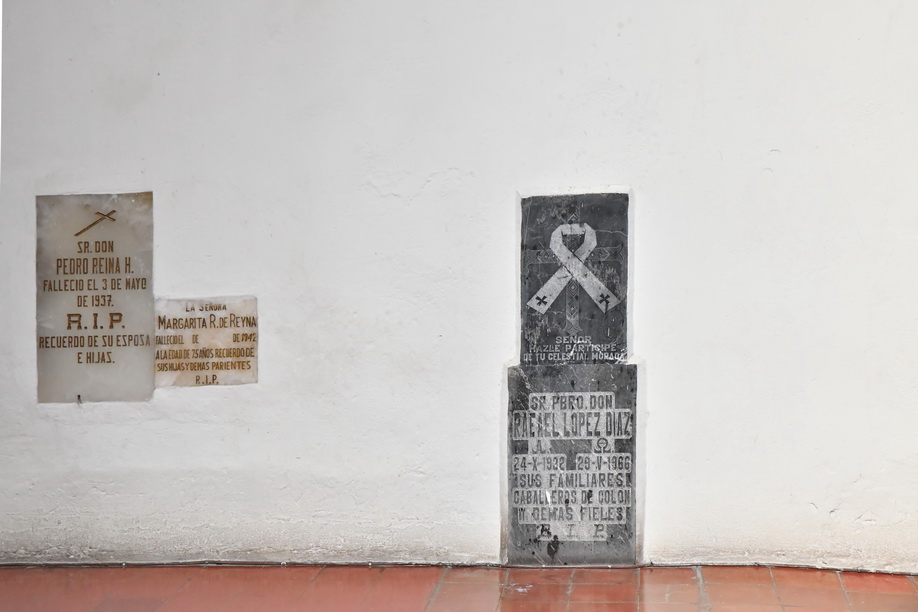
Inside Las Monjas, however, some of the most interesting details are much smaller. Screens, paintings, sculptures, carved wood and liturgical objects survive from different periods of the church's history. Even modest objects can reveal aspects of religious practice that monumental architecture alone cannot explain.
For me, Las Monjas is therefore a building of contrasts: the private world of an eighteenth-century community of cloistered women and the enormous dome visible across the city; the colonial paintings and quiet interior beside Zeferino Gutiérrez's ambitious nineteenth-century architecture.
What began with the decision of a young woman in eighteenth-century San Miguel eventually became one of the defining silhouettes of the city. The story of Las Monjas connects Josefa Lina de la Canal's personal religious vocation with the architecture of Zeferino Gutiérrez more than a century later — two very different lives leaving their marks on the same building.