
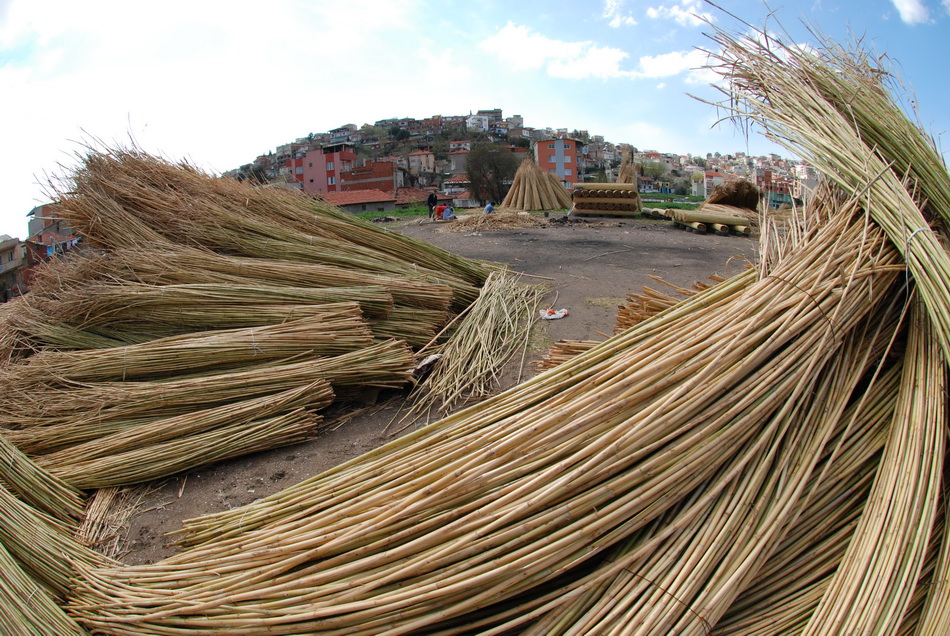
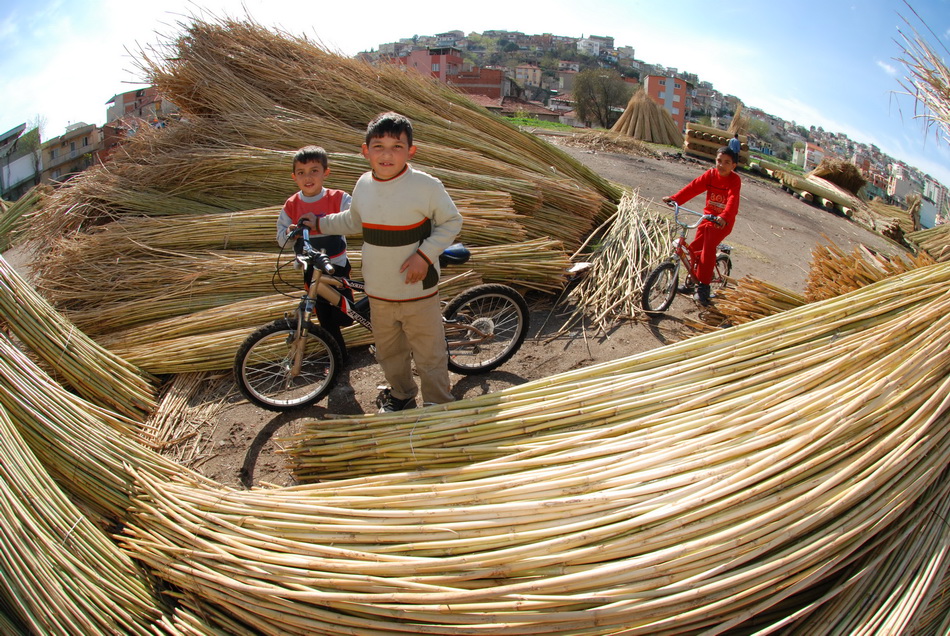
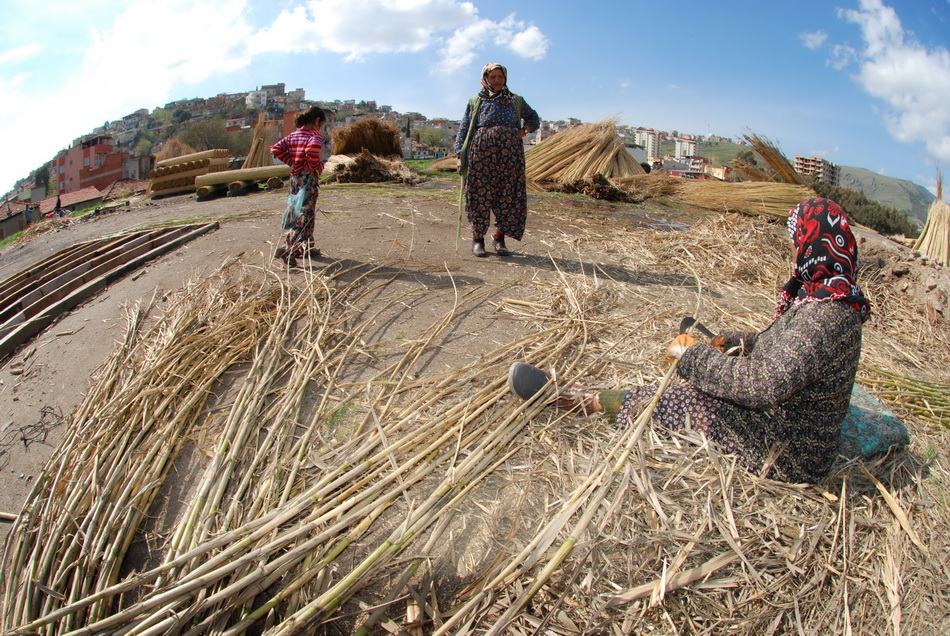
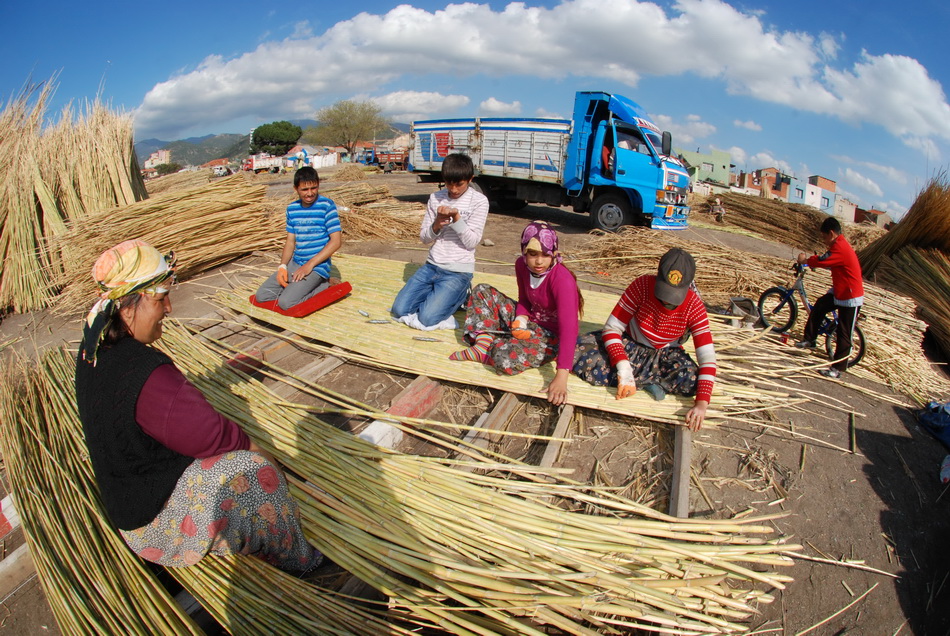
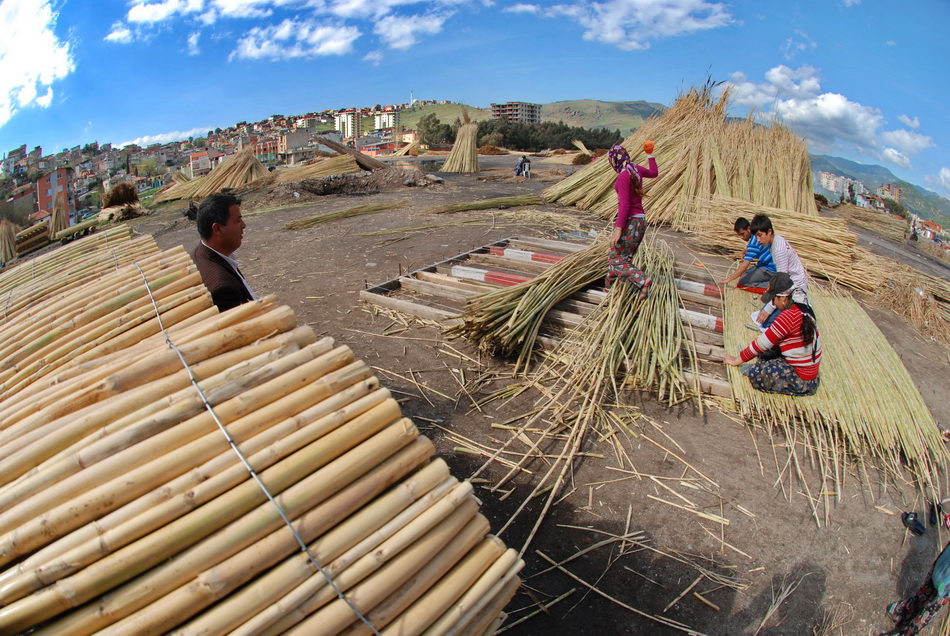
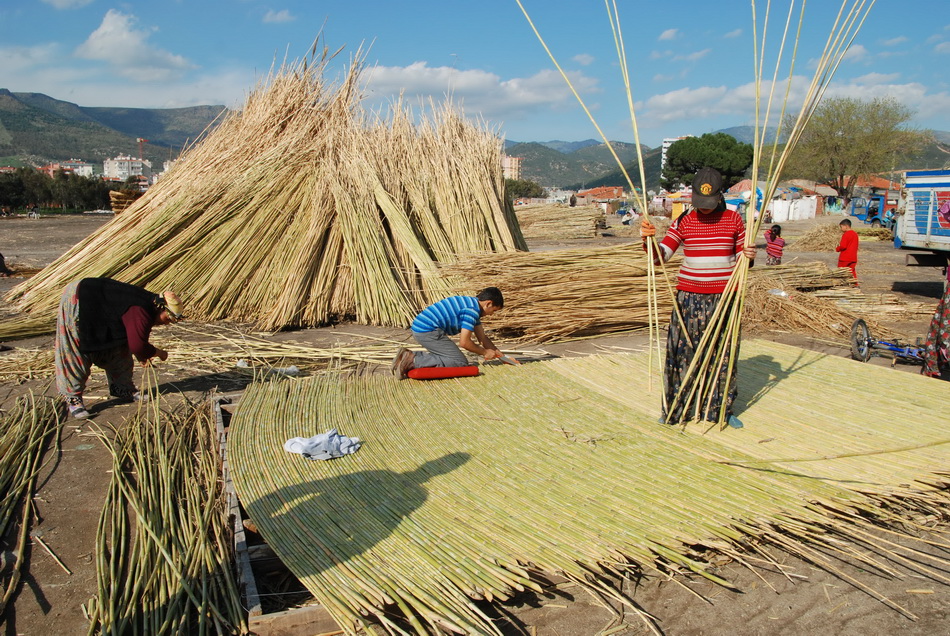
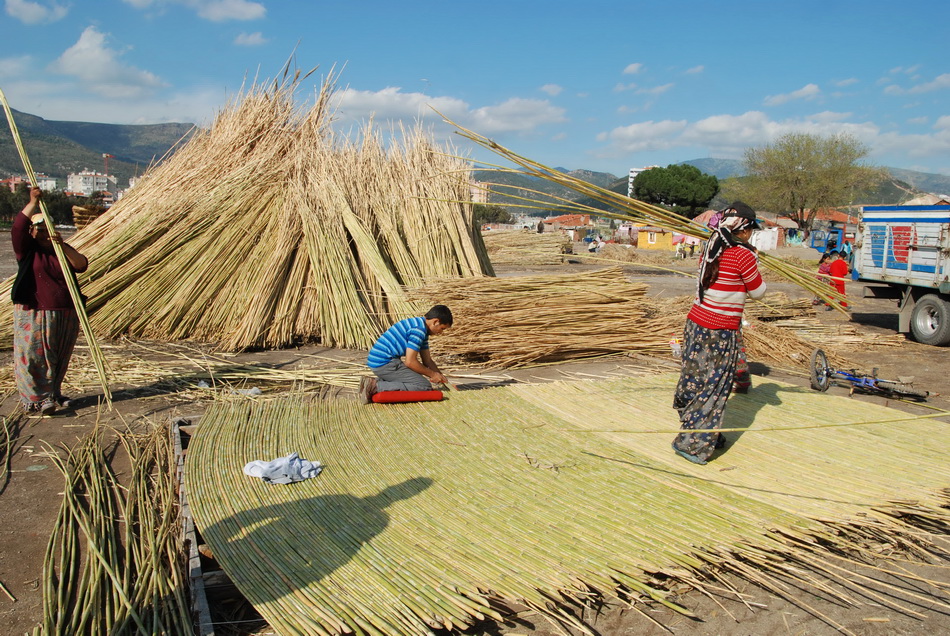
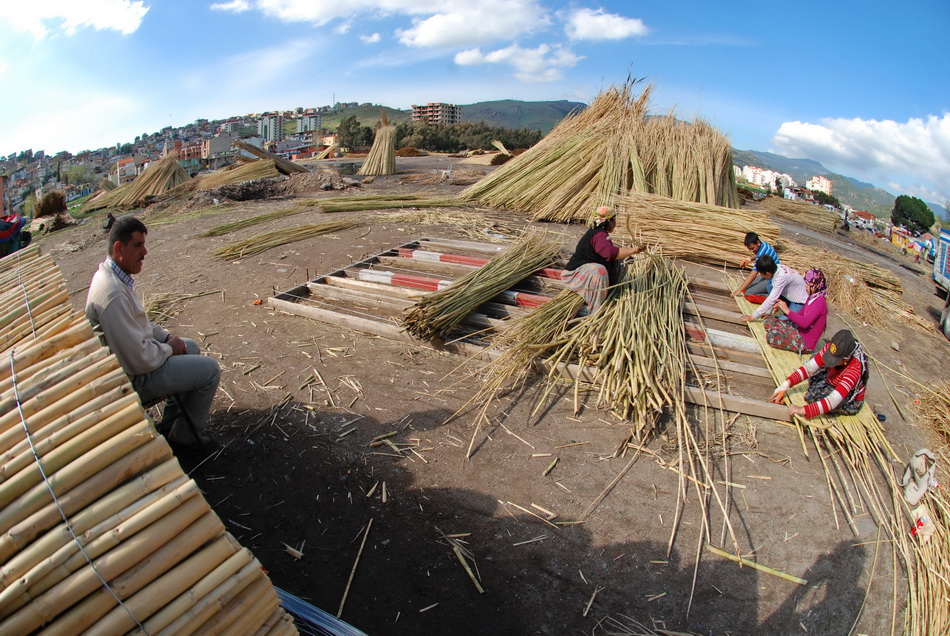
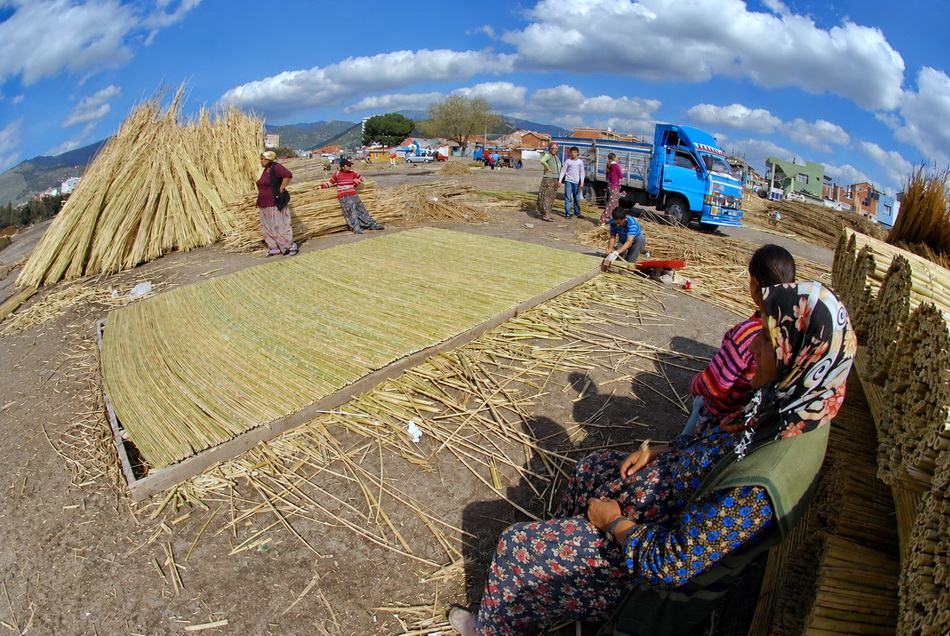
In March 2008, while working on my photographic project about Roma communities, I visited a neighbourhood on higher ground in İzmir where families were making reed screens for shade and fencing. Bundles of tall reeds were stacked around an open work area. Women, men and children took part in different stages of production. What looked simple from a distance required coordination, dexterity and sustained manual effort.
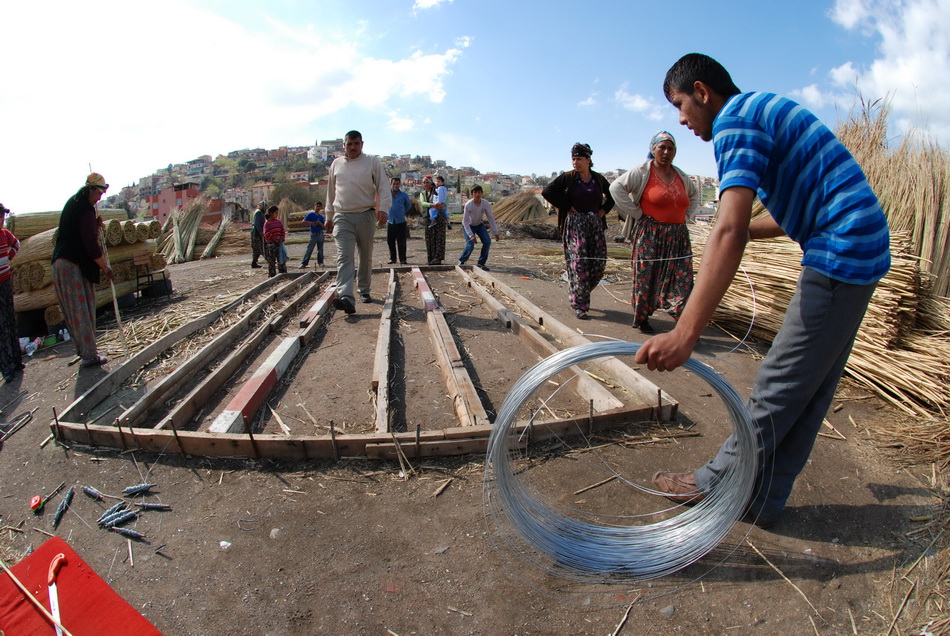
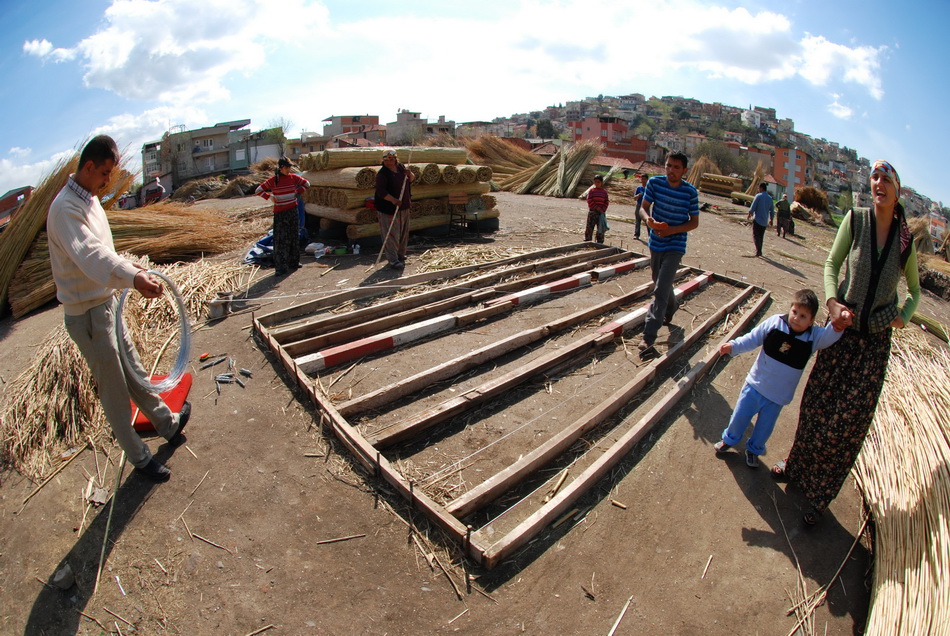
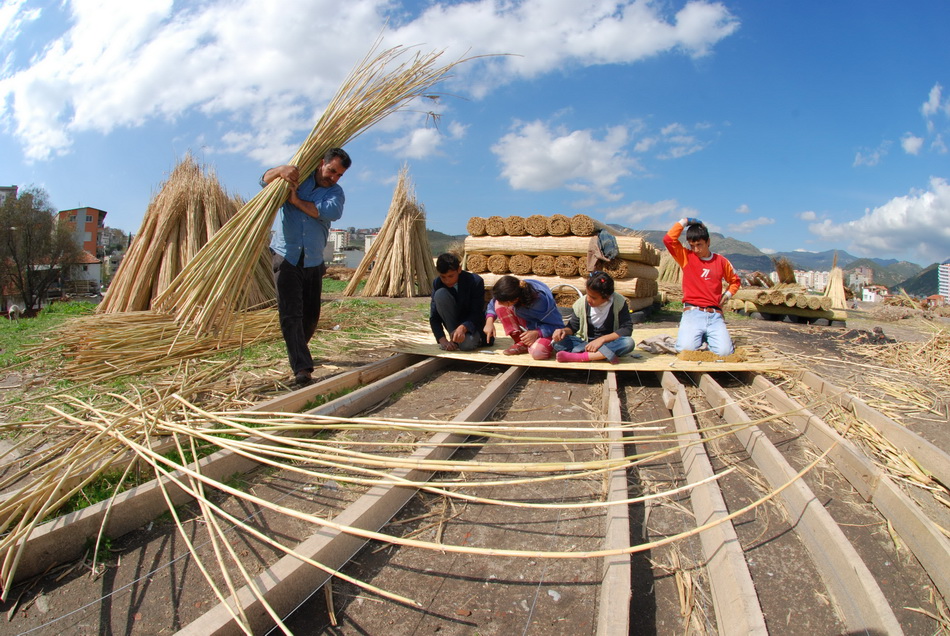
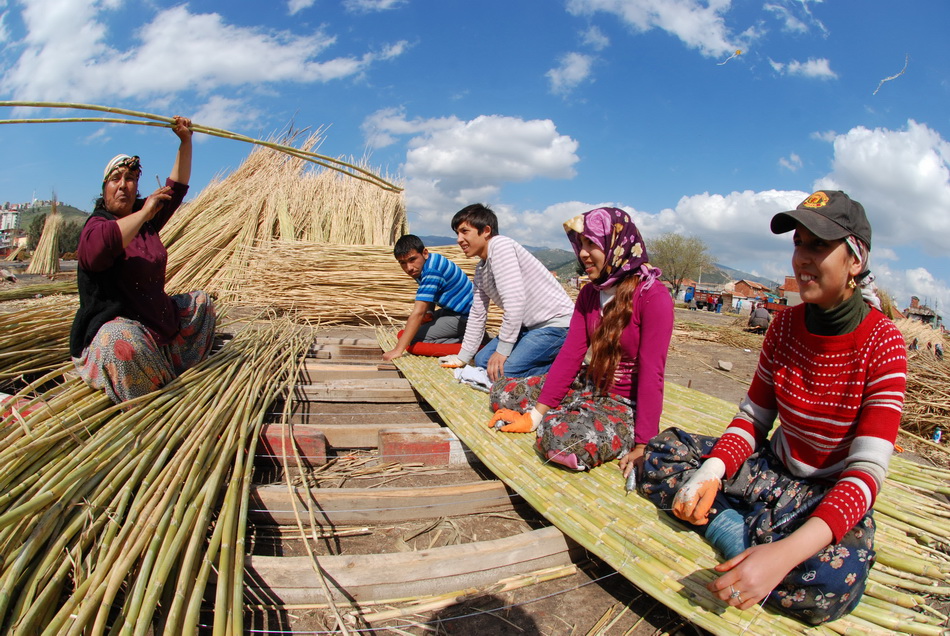
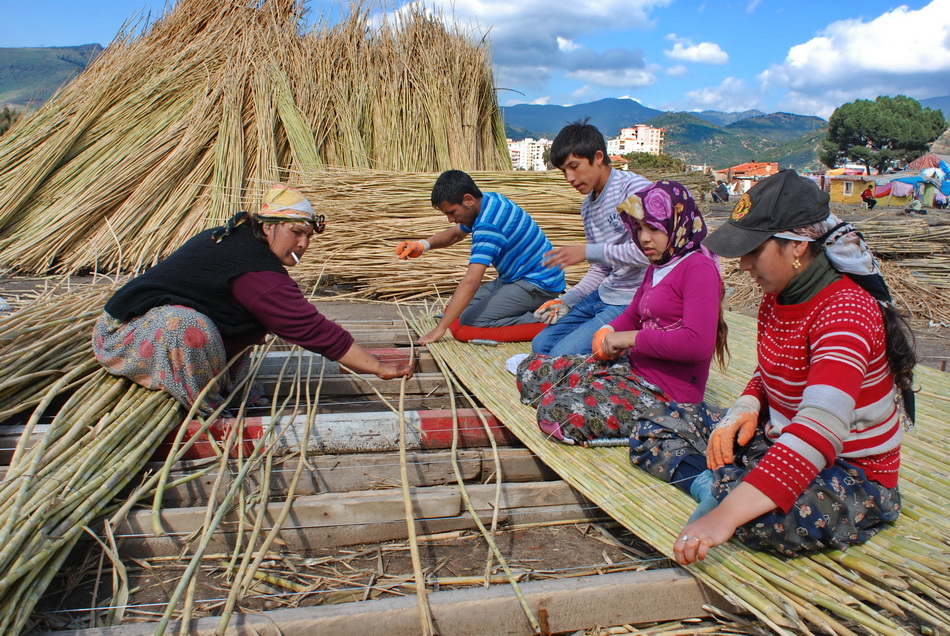
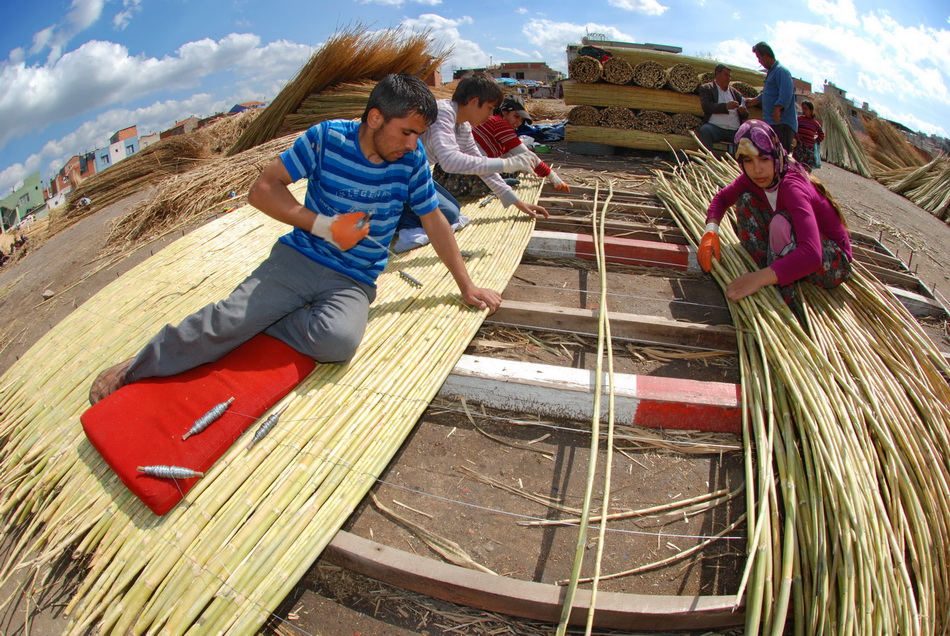
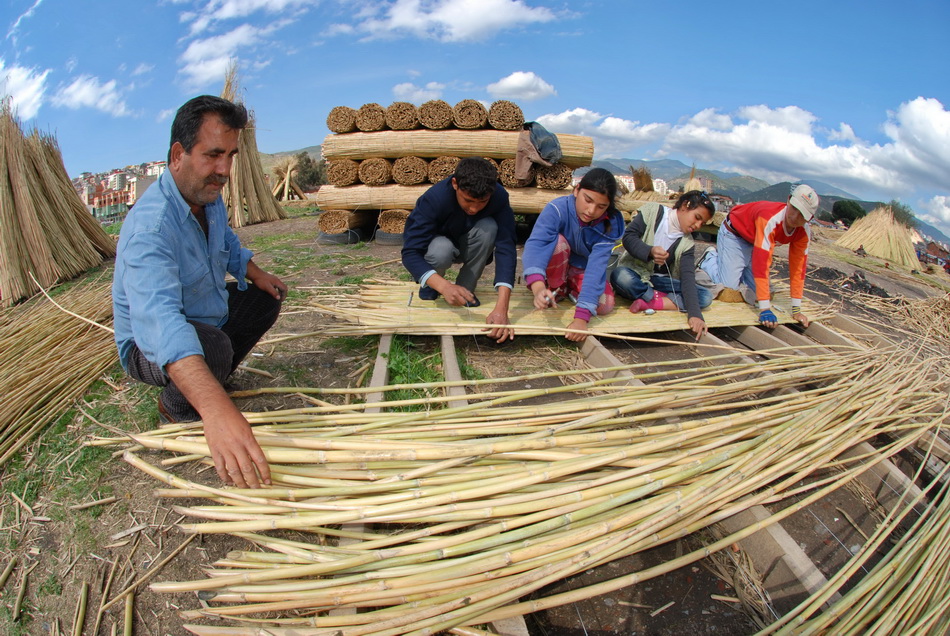
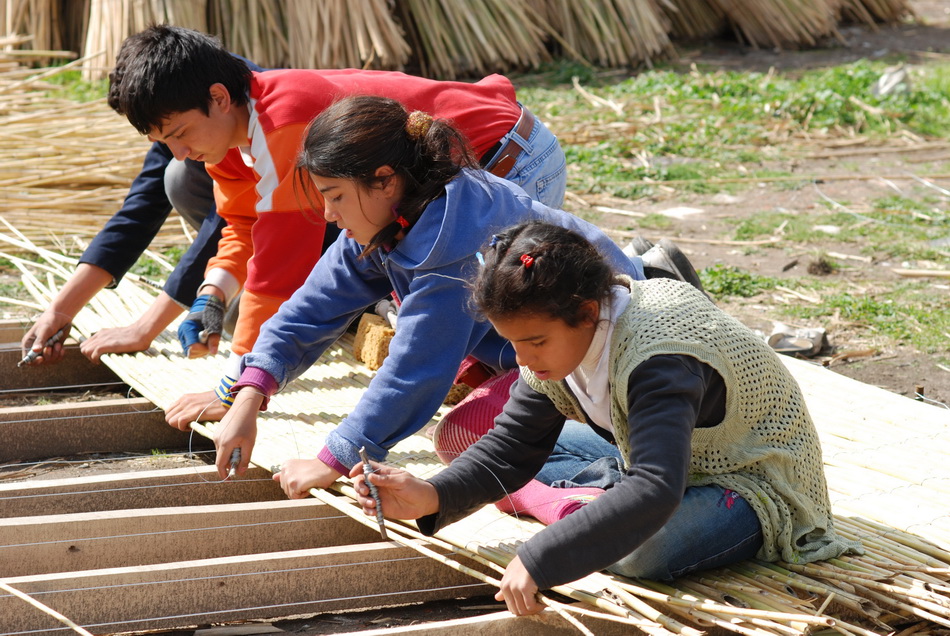
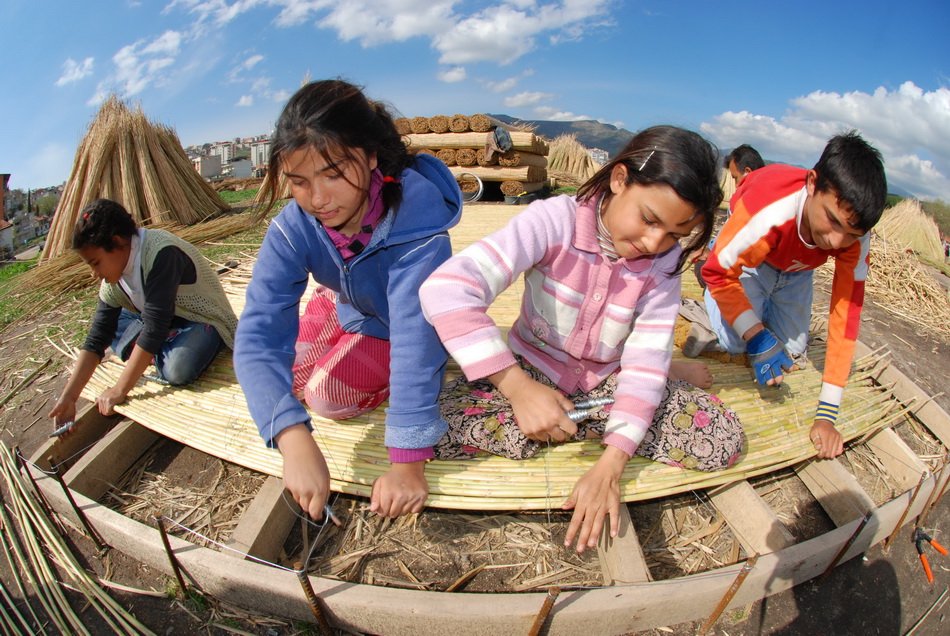
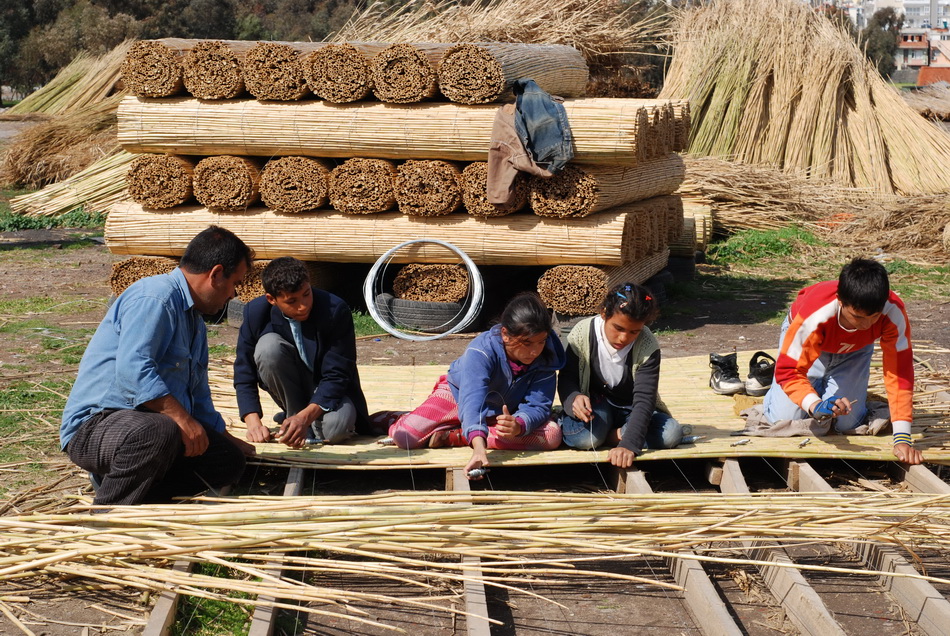
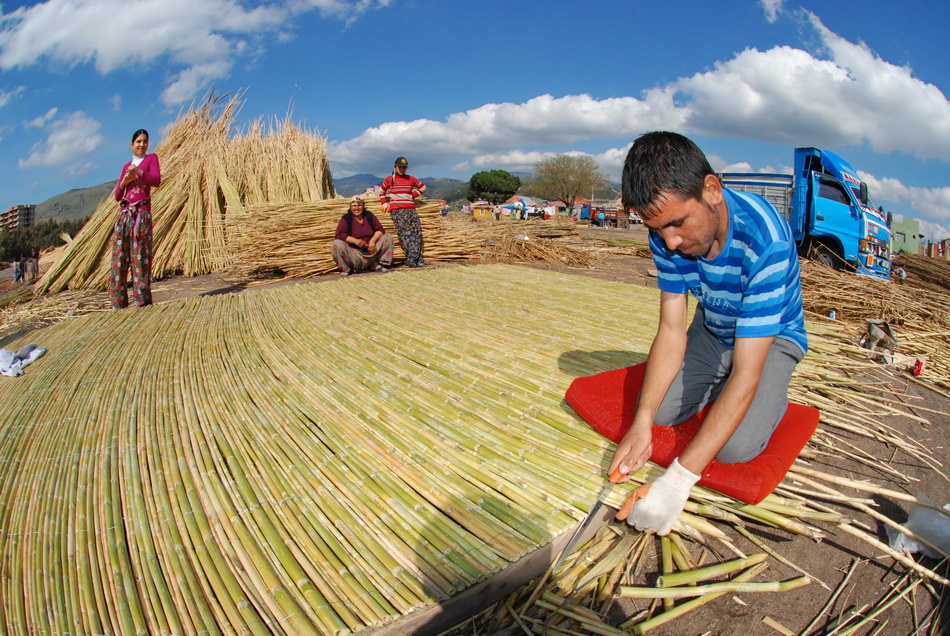
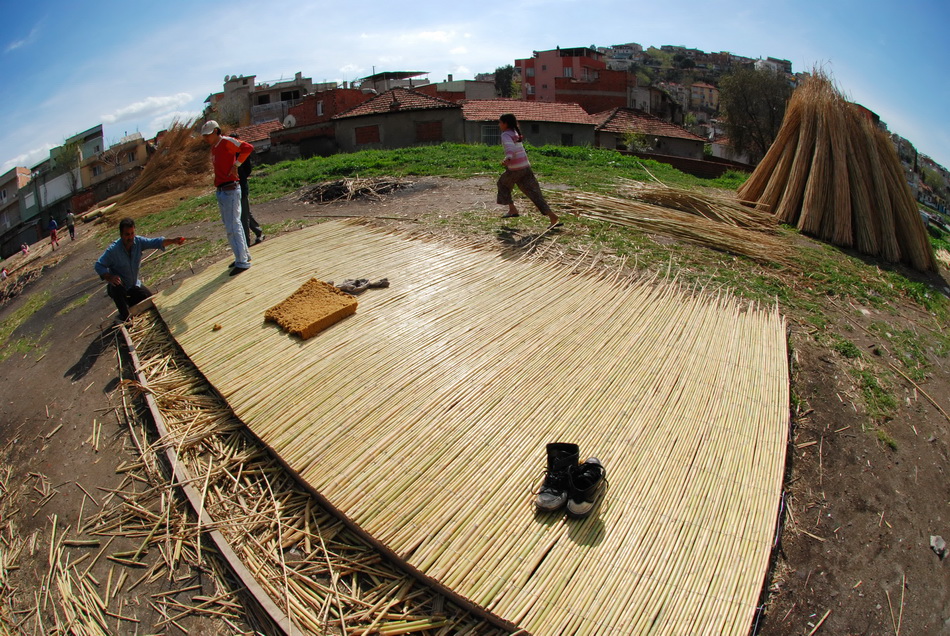
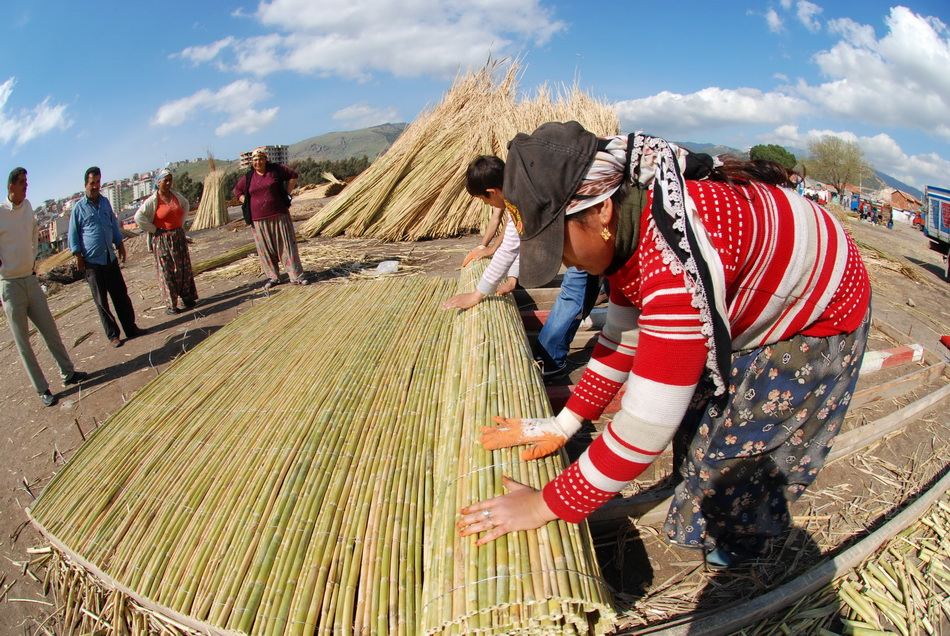
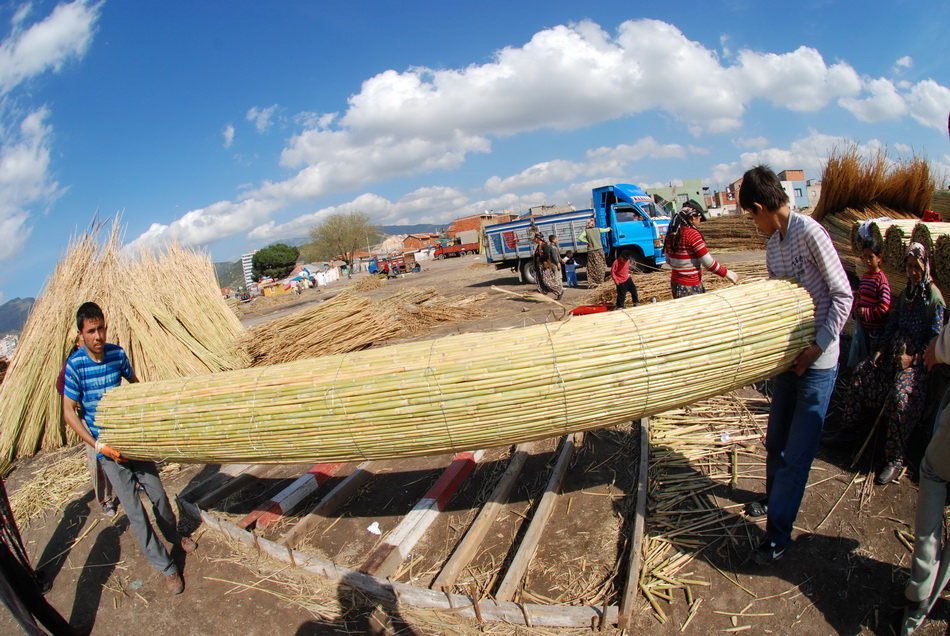
In the Aegean region, reeds commonly grow along the edges of fields and gardens, where they can also serve as natural boundaries. Here, prepared stalks were laid side by side across long wooden frames. Wire was used to hold and tighten the reeds together into broad, flexible panels. Working close to the ground, the makers adjusted the stalks and secured them by hand, without elaborate machinery. The raw materials and the resulting woven surfaces occupied almost every part of the worksite.
The children’s participation was particularly striking. Several worked beside adults at the wooden frames, positioning reeds and helping with the wire fastenings. Their small hands appeared well suited to reaching between the closely spaced stalks. Yet these photographs are not simply a story of skills being passed from one generation to the next. They also document children engaged in labour, and raise questions about the economic circumstances in which that work took place.
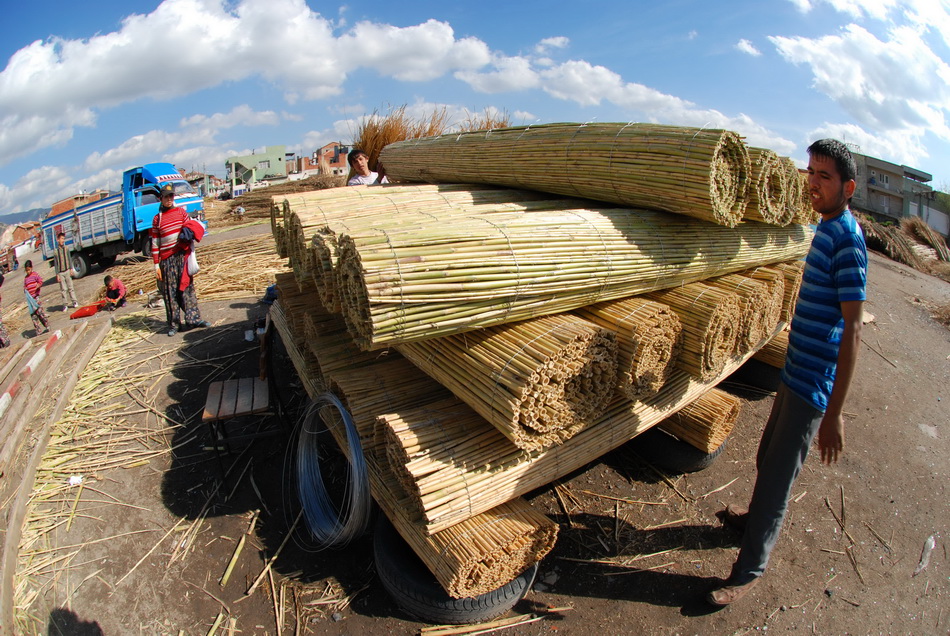
The finished screens could be used to shade cafés and other open-air spaces or to form garden fences, especially along the Aegean coast during the summer season. I understood that the panels were loaded onto trucks and sold in coastal holiday areas. I photographed only the production, not the selling. The origin of the reeds was not established during my visit; they may have been purchased in bulk, but I cannot confirm that.
Basket making, broom making and other forms of work with natural materials are among the handcrafts practised by some Roma artisans. This workshop offered another example of practical knowledge applied to an everyday material. My photographs from March 2008 preserve the gestures, shared working space and human effort behind these reed screens, including the prominent role of children in their making.