
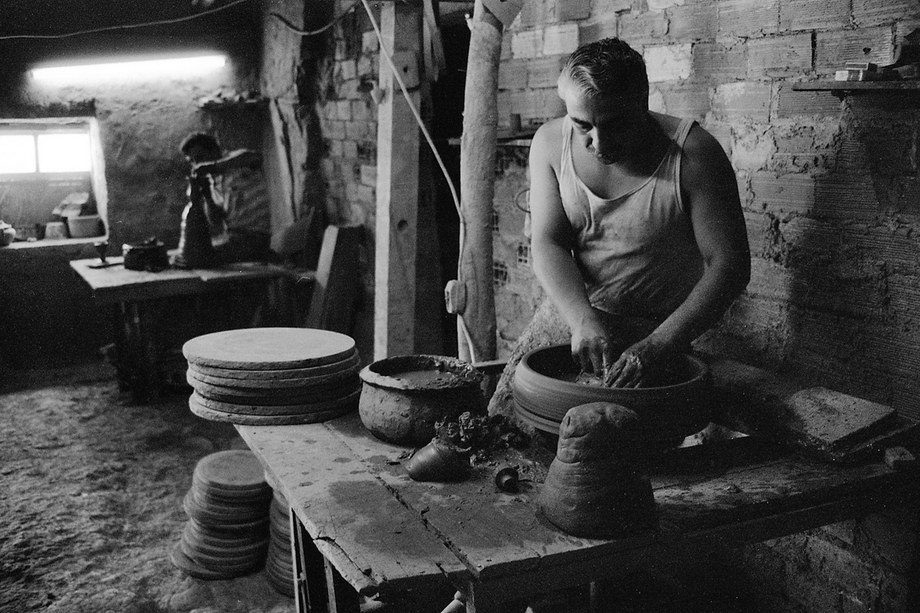
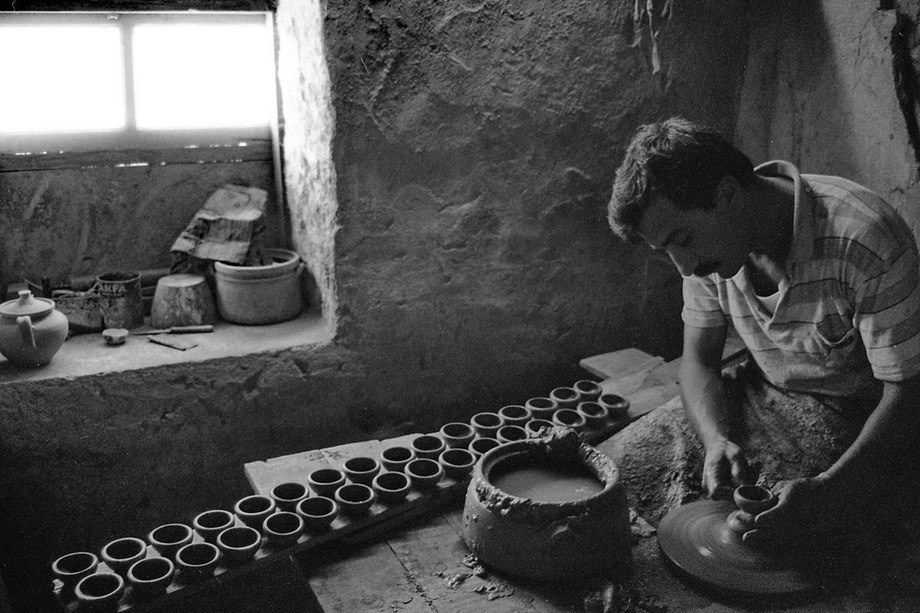
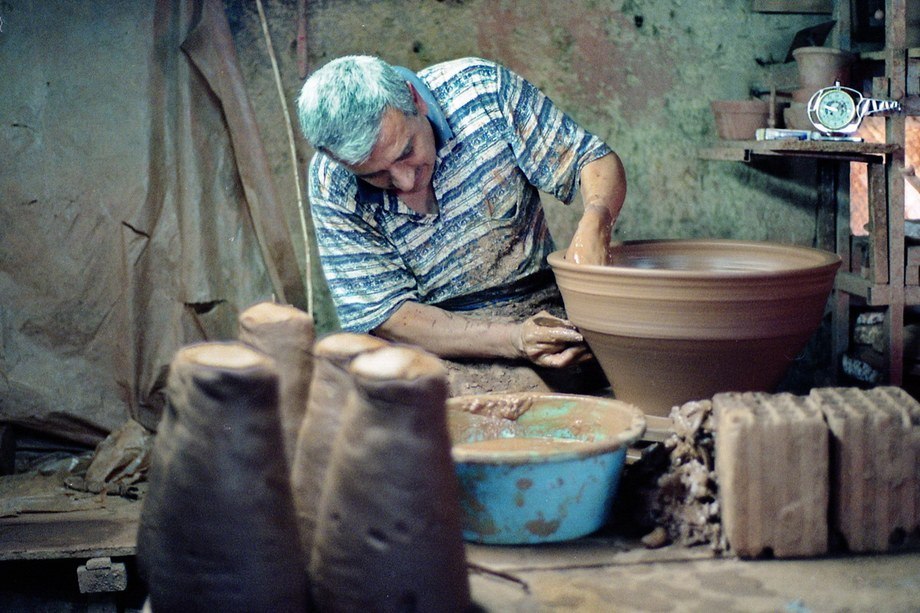
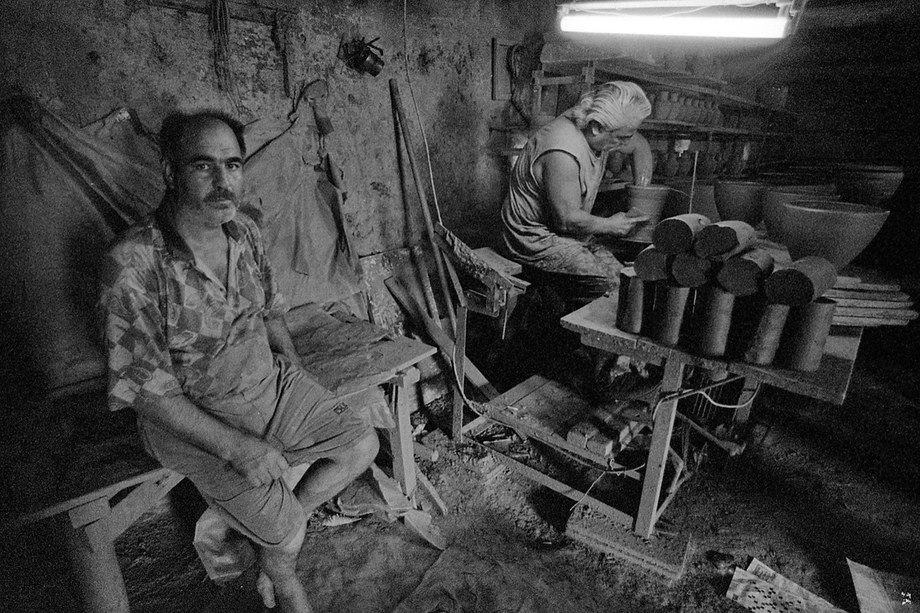
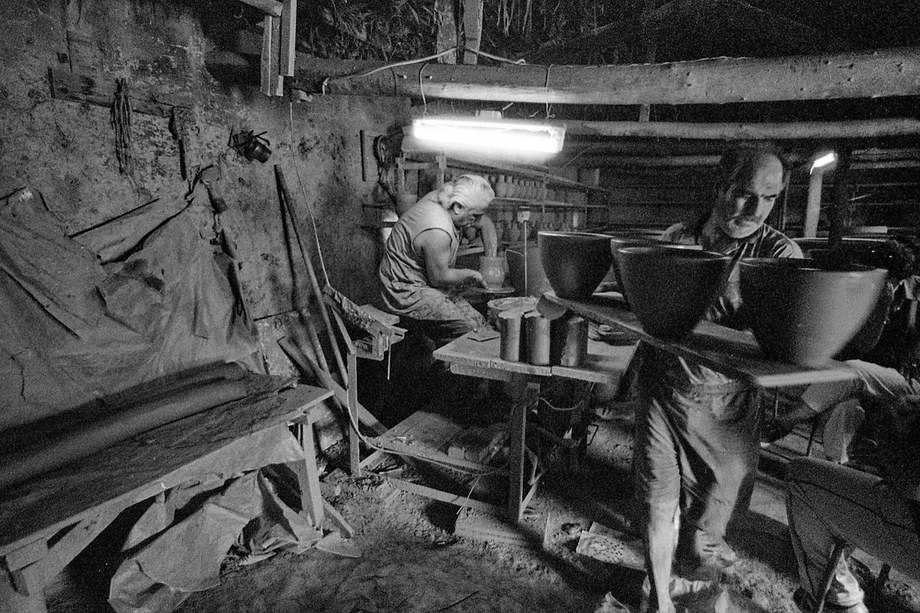
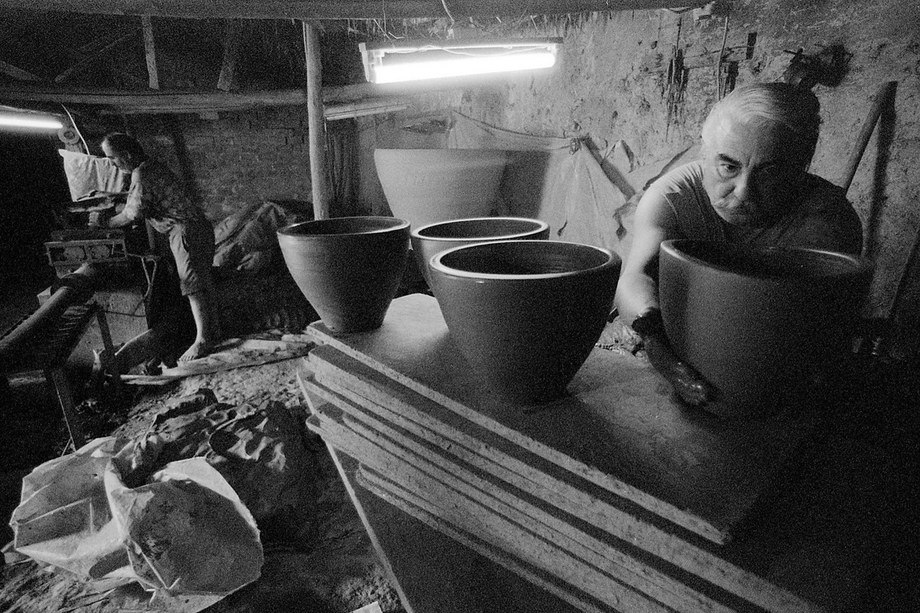
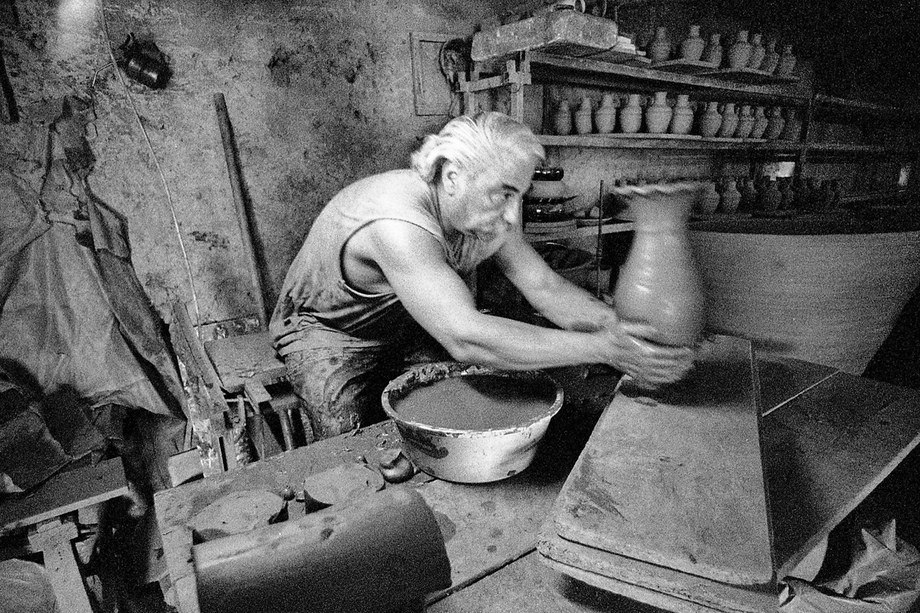
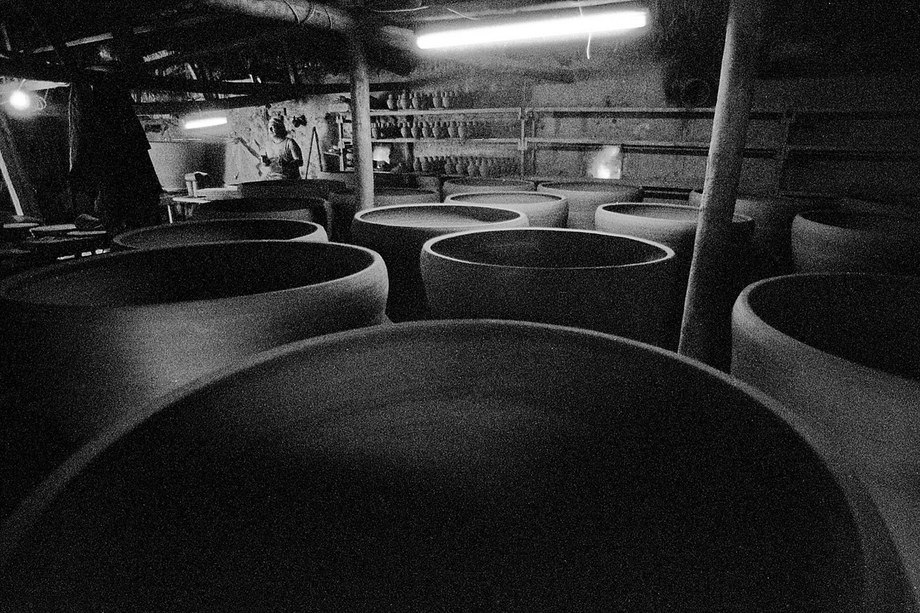
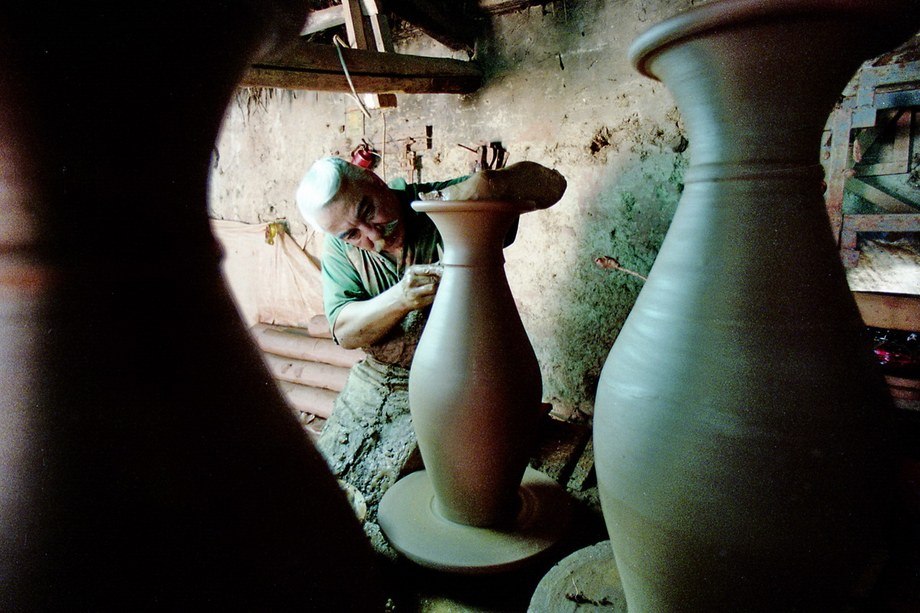
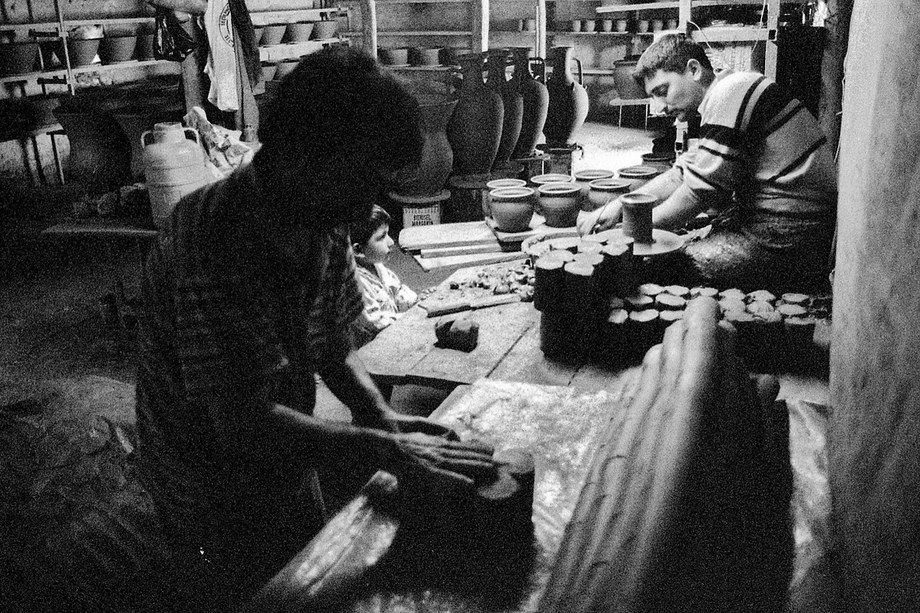
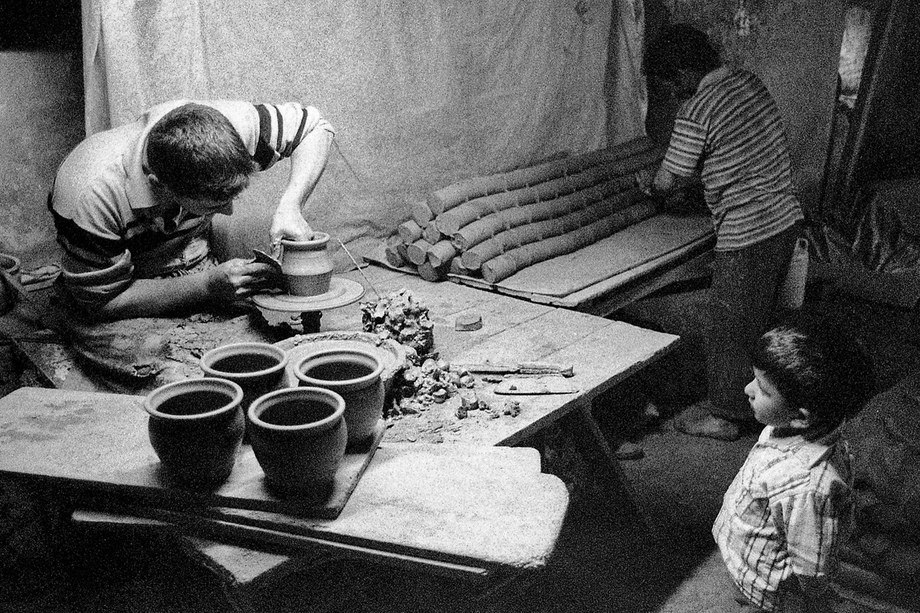
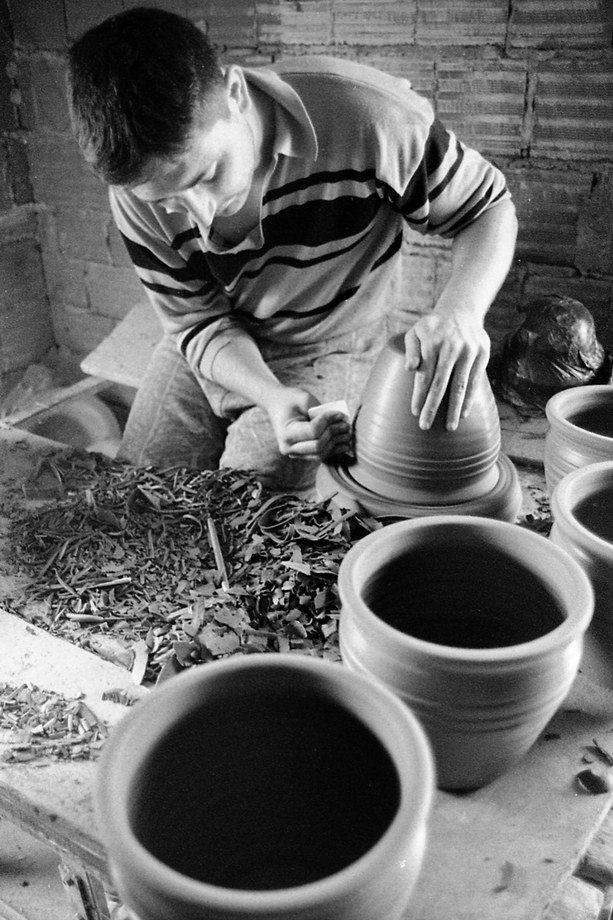
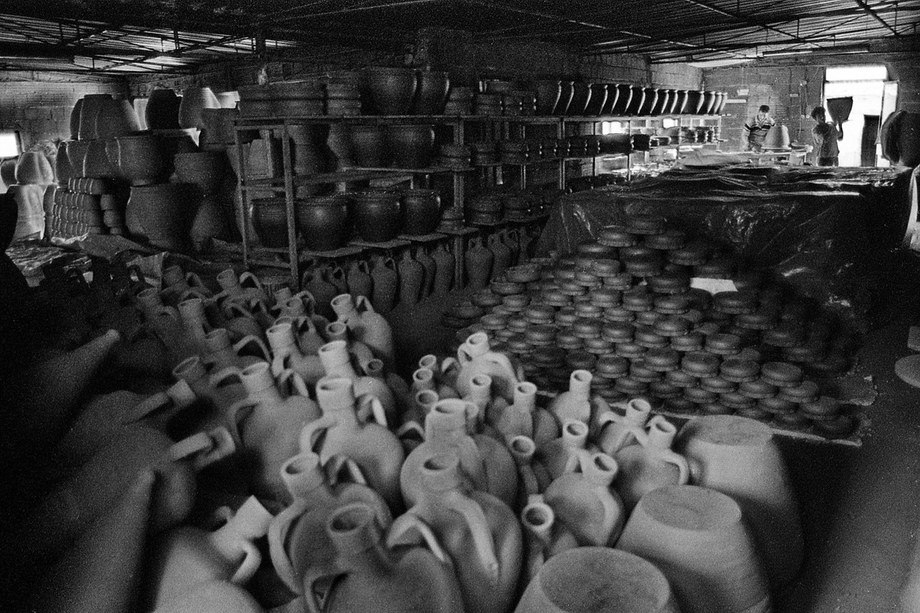
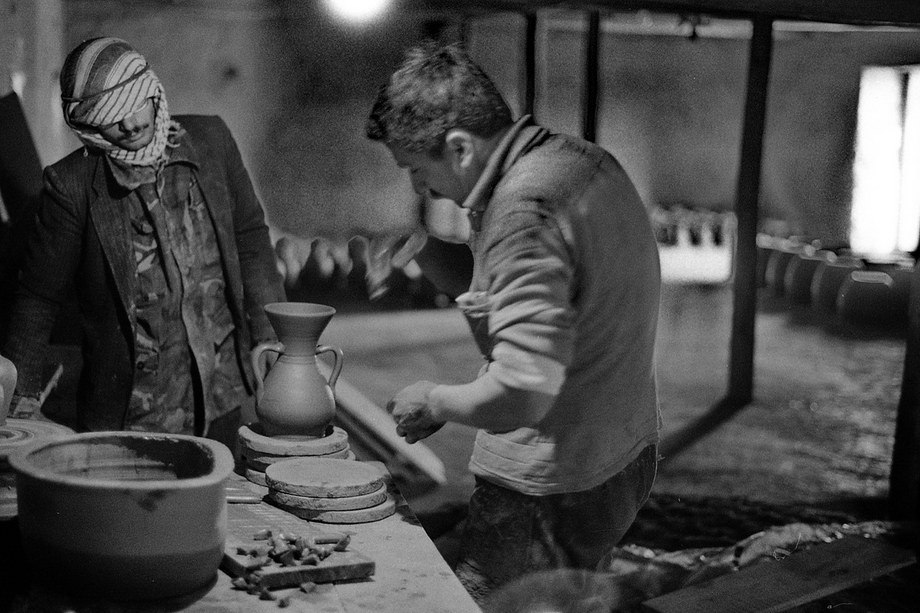
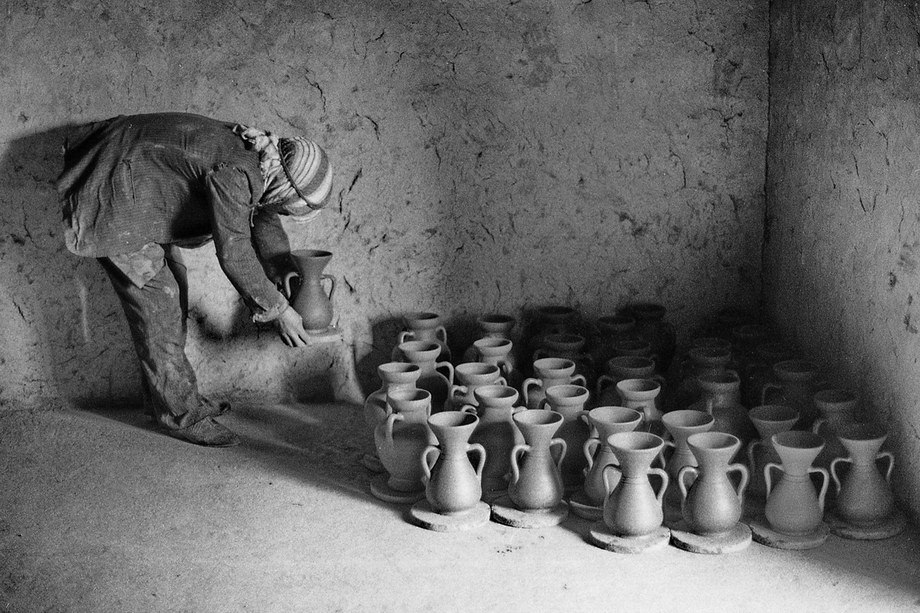
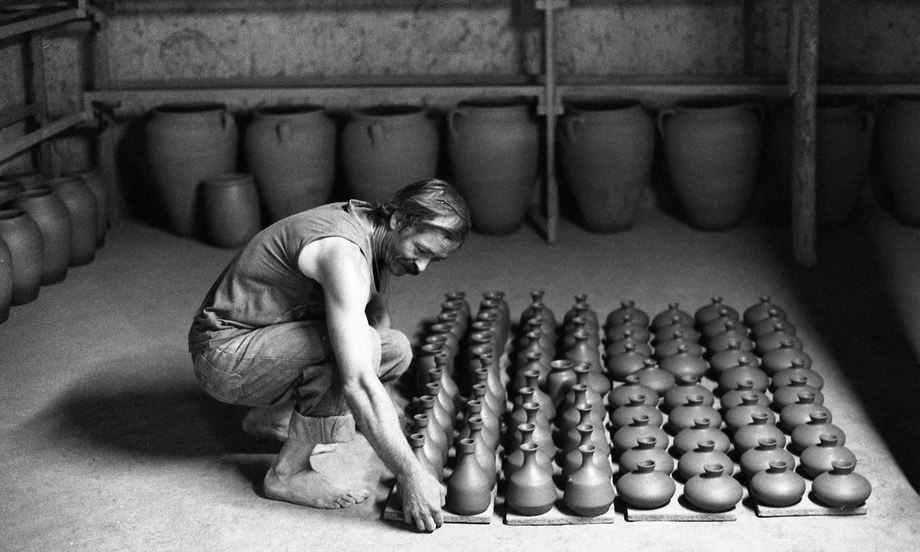
I met Hasan Usta in 1988 in his workshop in Menemen. At the time, he was working together with his older brother. The workshop was close to the town centre. What struck me on my first visit was not only the way the pottery was made; the working environment itself—the wheels, the clay, and the pots left to dry—was an inseparable part of that world. It was not a place where I simply took a few photographs and left. My relationship with Hasan Usta continued over the years. I returned to his workshop at different times and photographed the work there until 2001, over a period of about thirteen years.
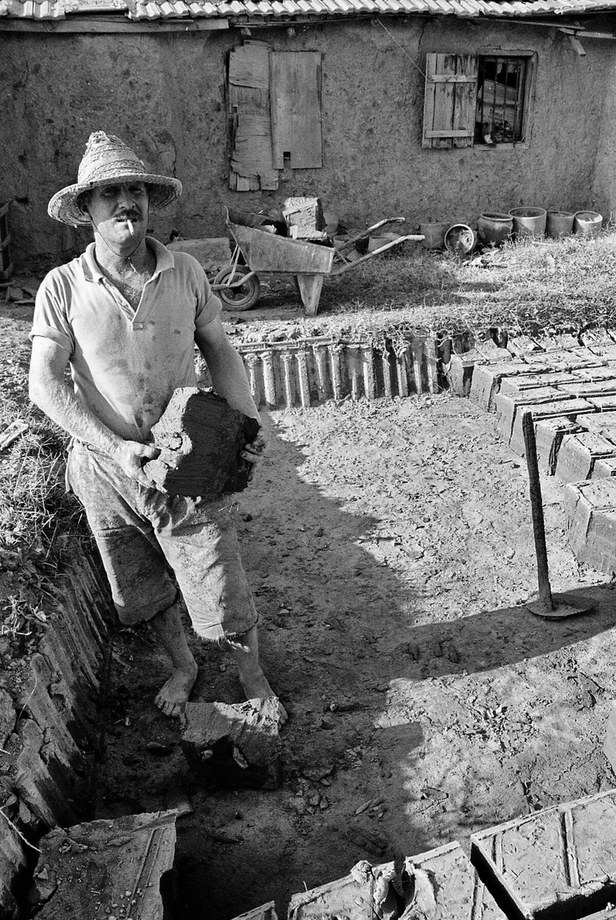
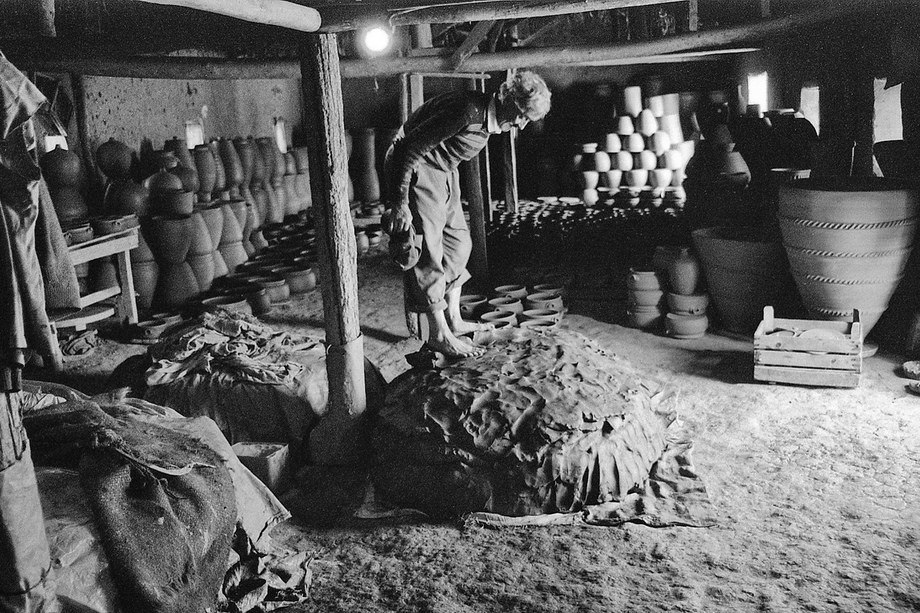
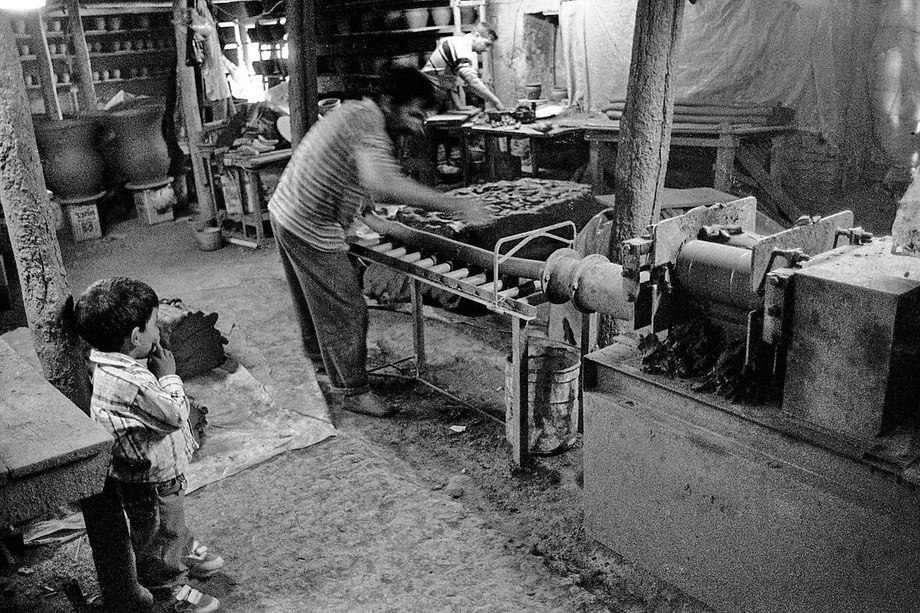
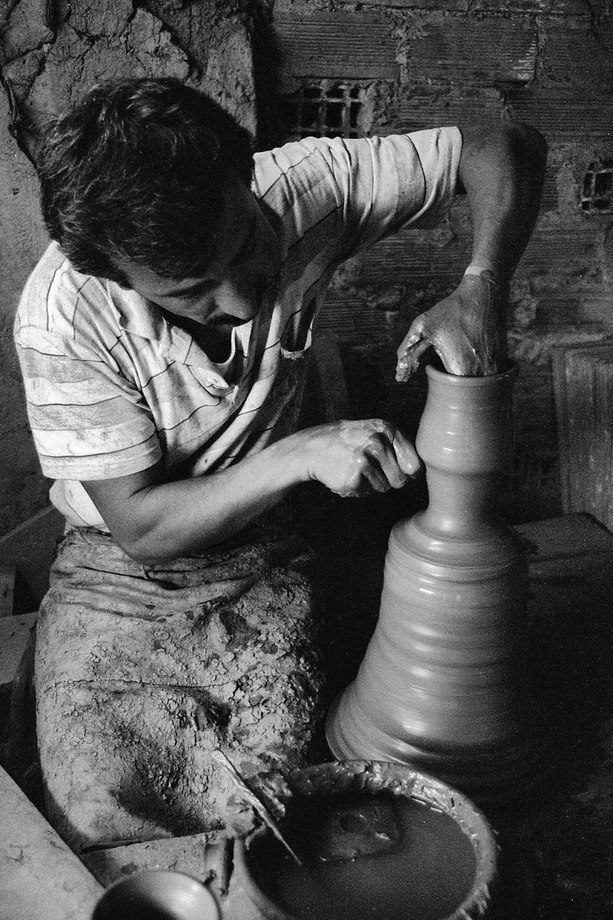
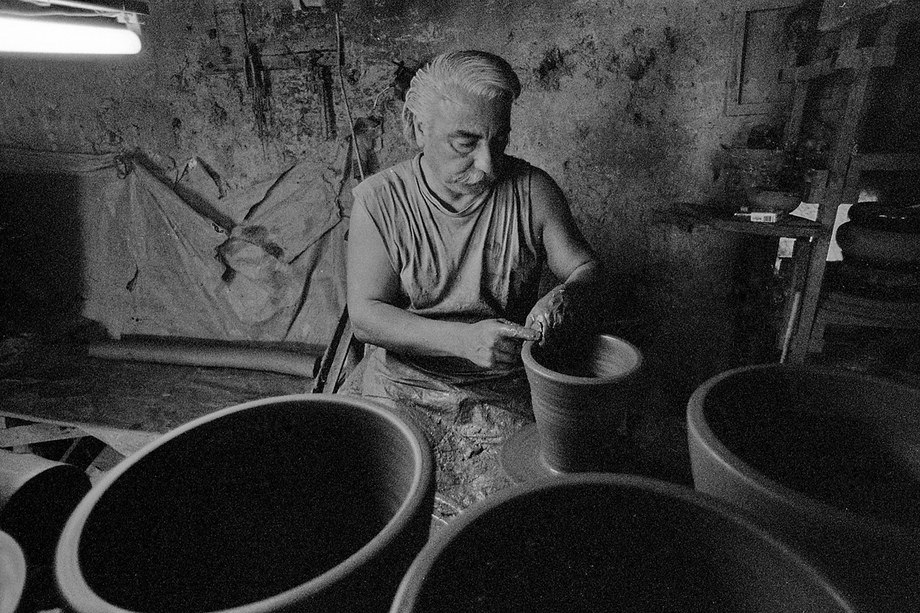
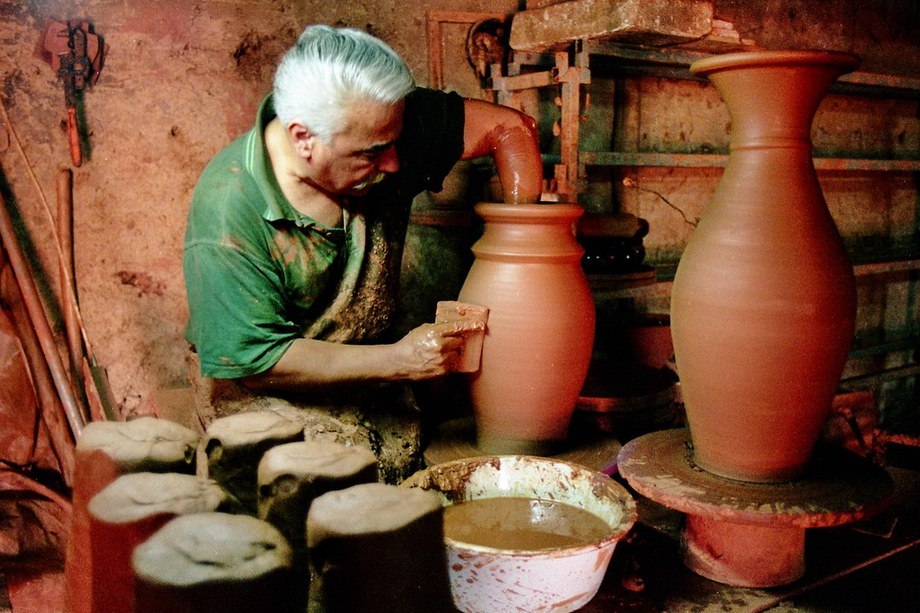
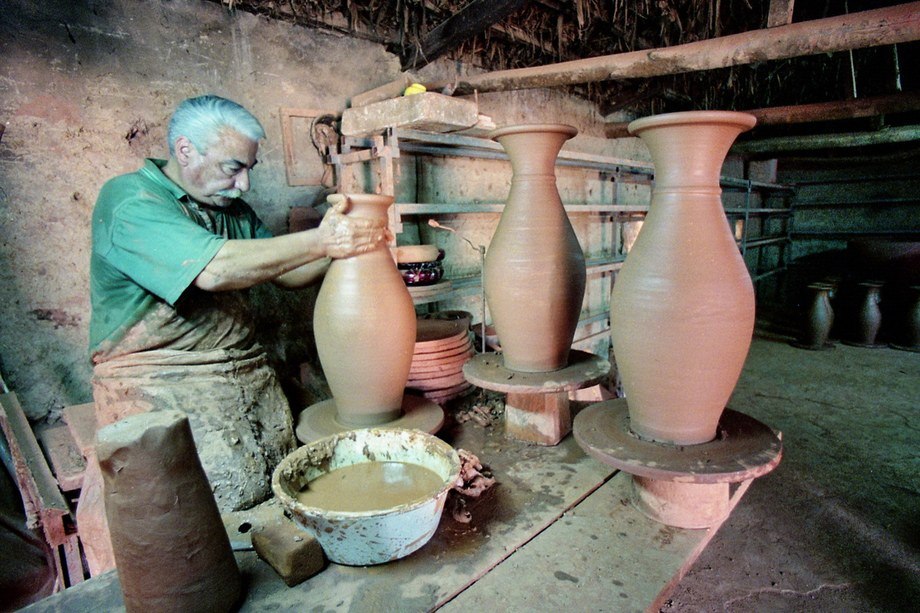
In the potters' hands, the clay slowly took shape, passing through different stages of production until it became a vessel. For me, the process that produced the finished object was as important as the object itself. So, alongside completed pots, I tried to photograph the preparation of the clay, the work at the wheel, the craftsmen's hands, and the successive stages of production.
As I spent more time in the workshop, I came to understand more clearly that pottery was not simply a matter of shaping clay as it turned on the wheel. There were many stages that complemented one another, each with its own working rhythm. At the wheel, I was especially drawn to the movement of the hands. Even the slightest touch could alter the form of the turning clay; the hands would sometimes draw the clay upward, sometimes support it from the outside, and sometimes shape the vessel from within. Years of experience had given these movements a natural precision.
Over the years I also witnessed an important change in the workshop. When I first met Hasan Usta, he was working with his older brother. On later visits, I saw his son take his place at the wheel. What had begun as a photographic record of pottery making thus became, without my having planned it, a record of a craft being passed from one generation of a family to the next.
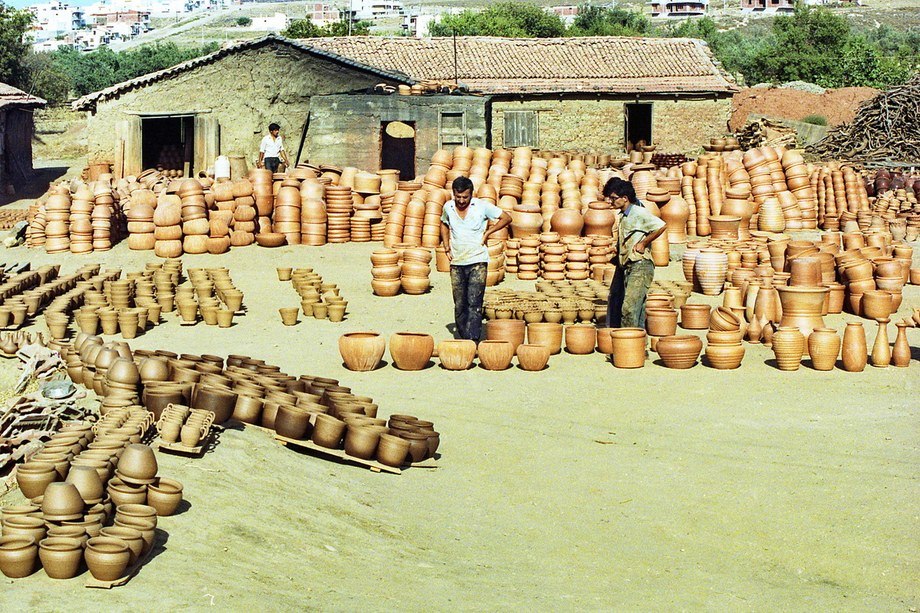
The first photograph in the series has a particular significance for me today. In the foreground are Hasan Usta's workshop and pottery spread across a wide open area, while in the background new buildings can already be seen rising. When I made the photograph, my attention was naturally on the workshop, the craftsmen and the production. Looking at the same frame many years later, the construction in the background has also become part of the story: in the foreground, a long-established way of making things; in the background, the approaching new city.
In the years since, Menemen has grown rapidly and construction around the town centre has become increasingly dense. I do not think Hasan Usta's workshop is still in the same place today; most likely, the site has also been absorbed by this development.
When I first walked through the door of that workshop in 1988, I had no idea that the work would continue for thirteen years. Today, when I look at these photographs, I see not only Hasan Usta and the making of pottery, but also a craft passing from one generation to another and the traces of a working place that has probably disappeared within a changing city. For me, this is where the documentary value that these photographs have acquired over time lies.