
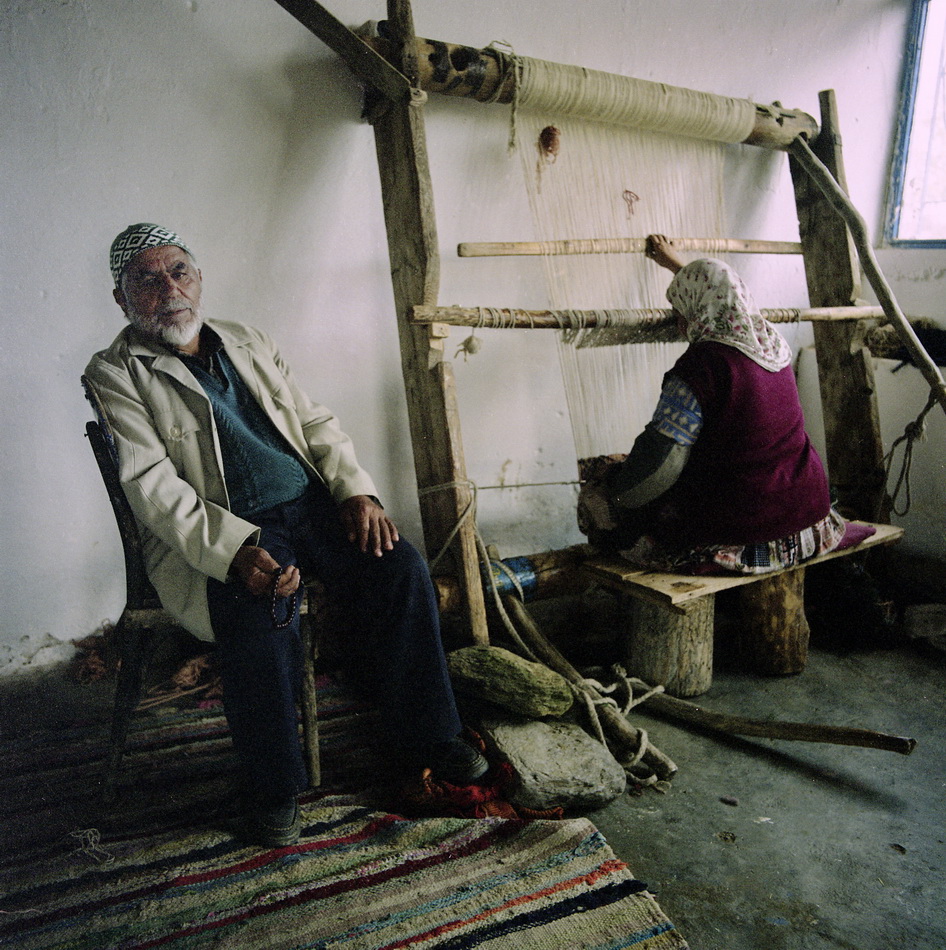
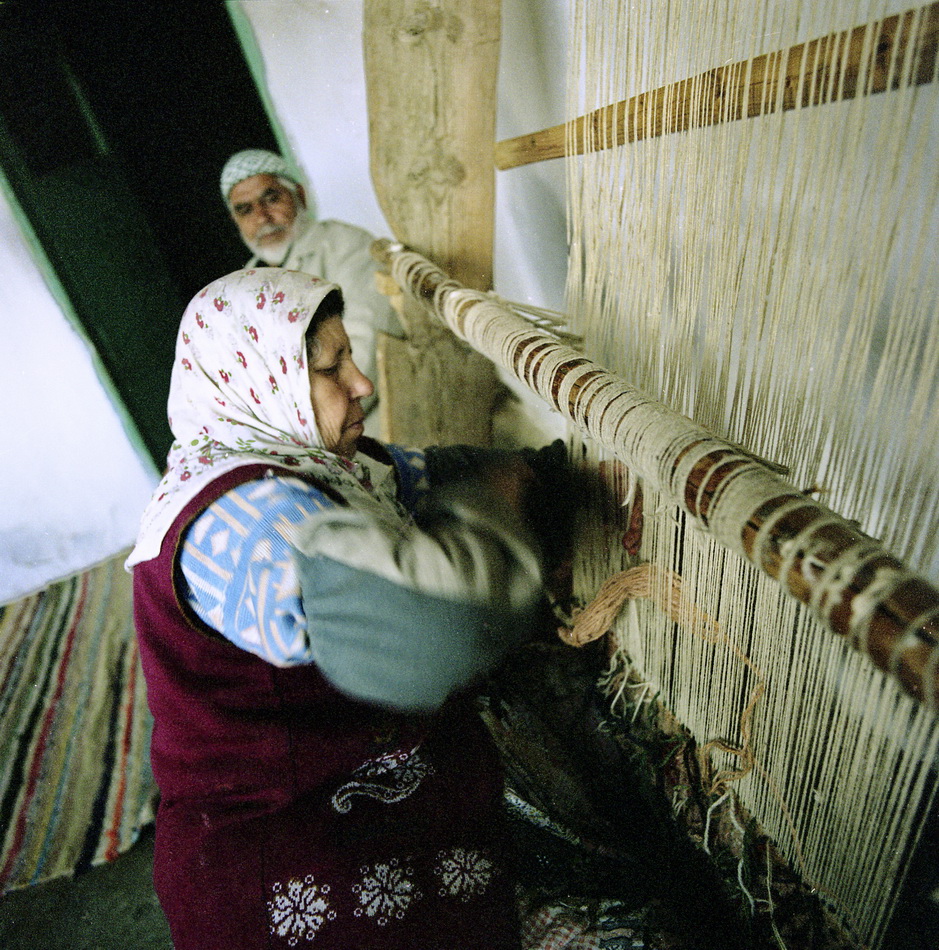
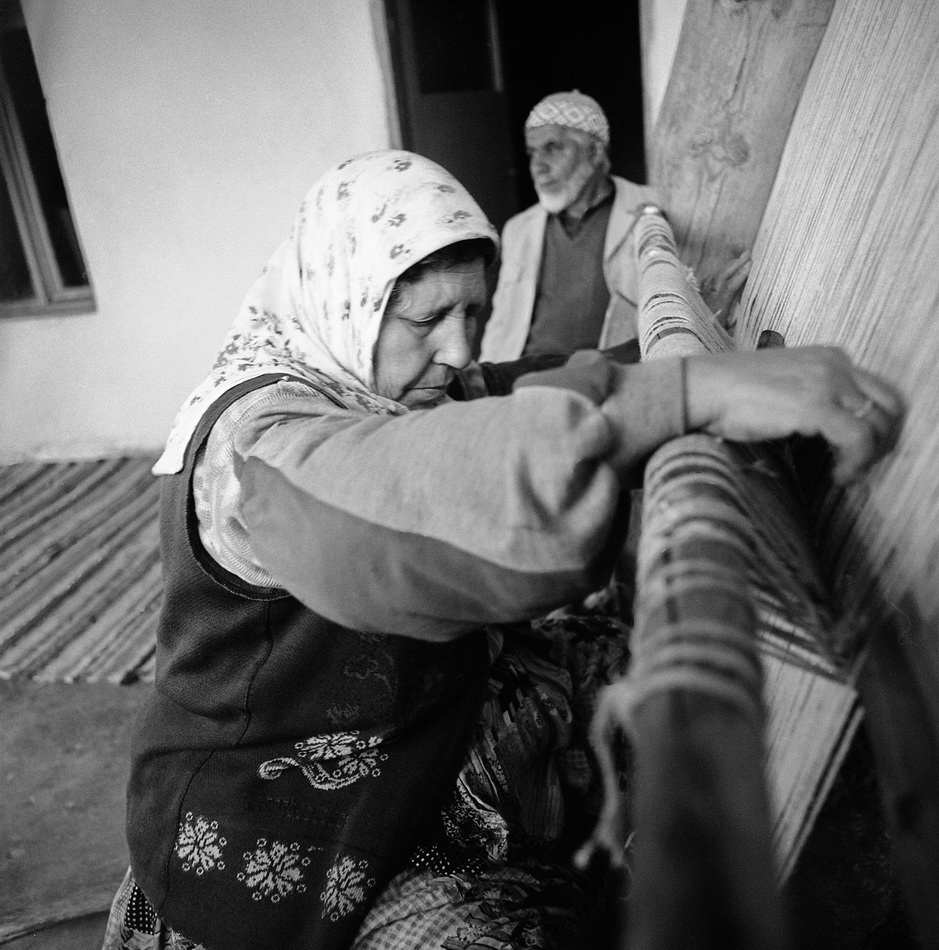
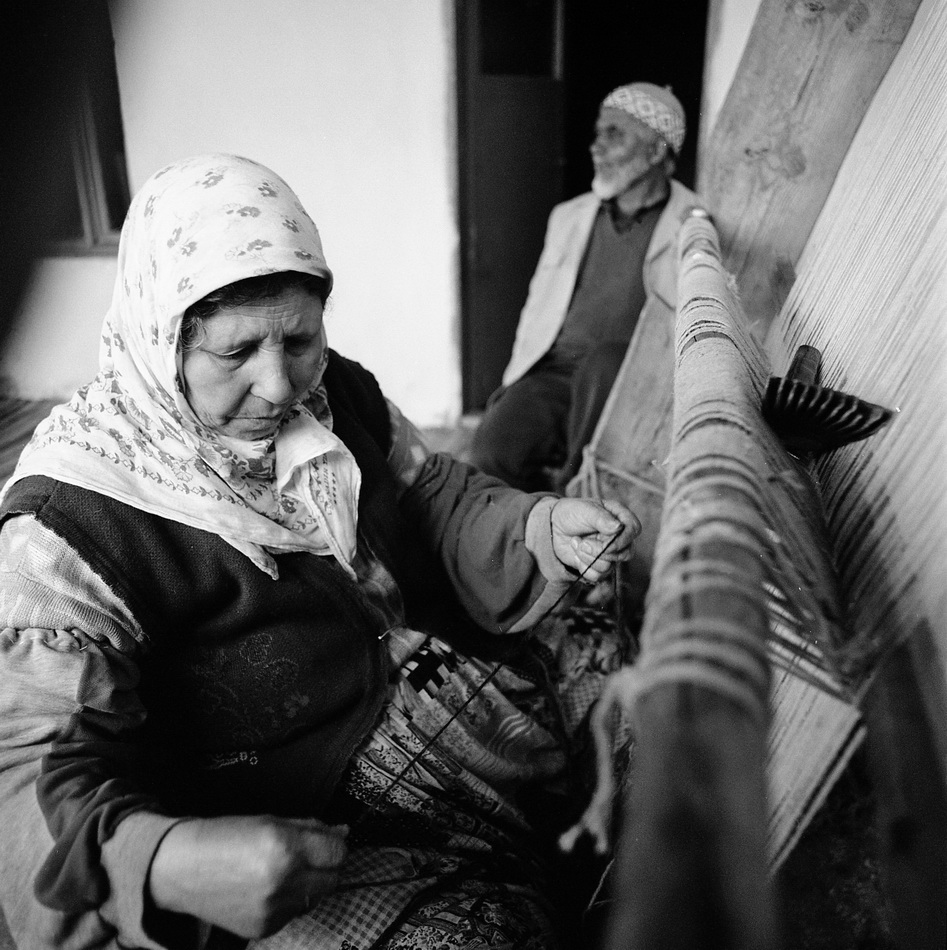
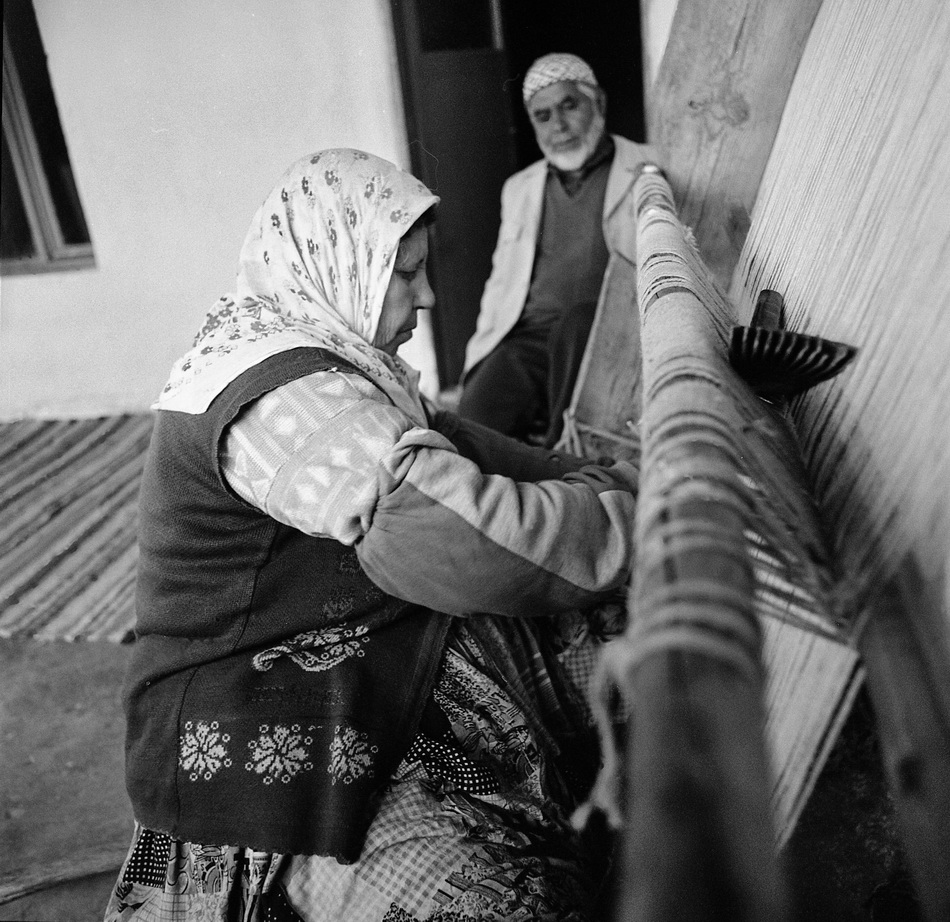
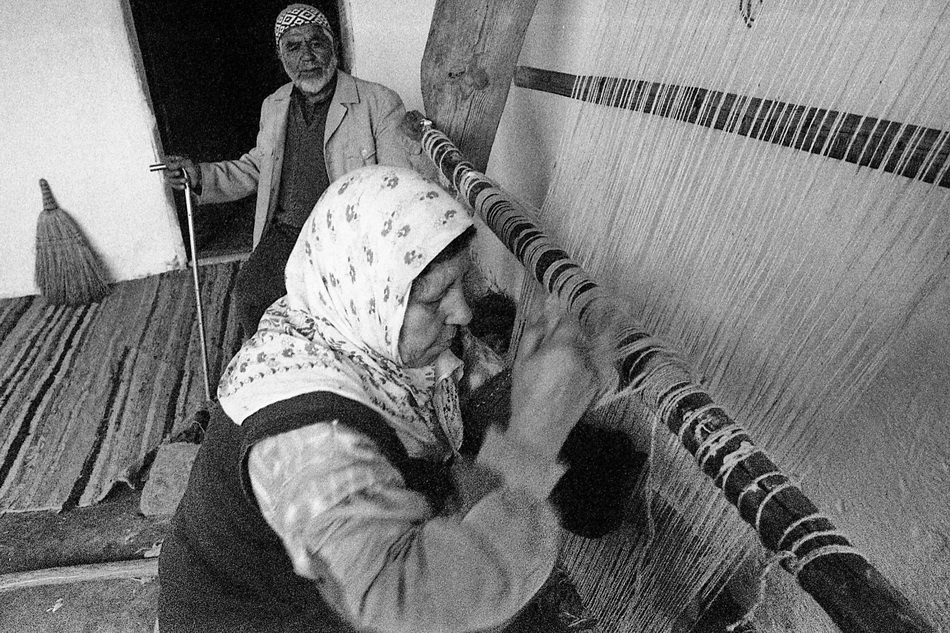
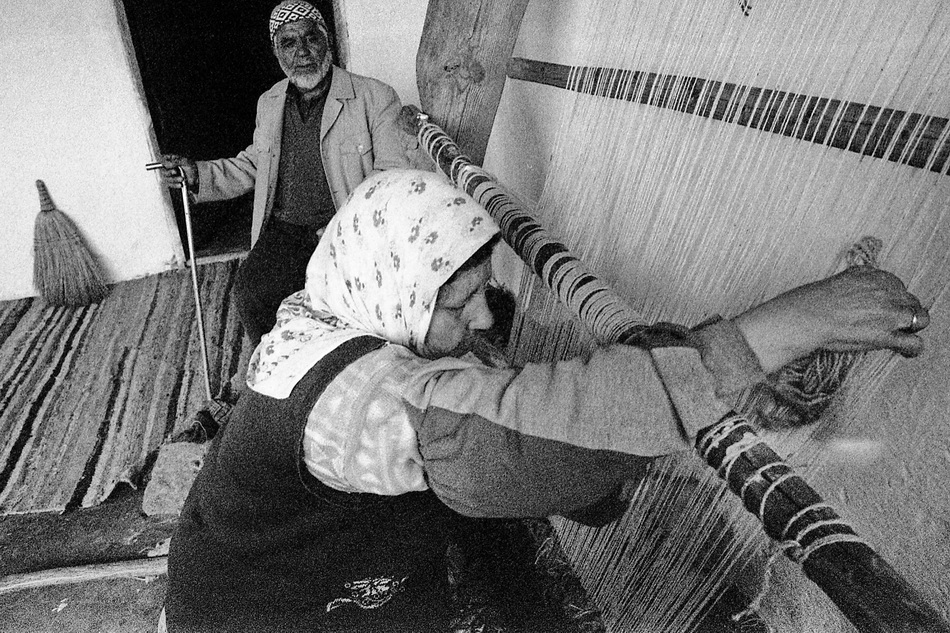
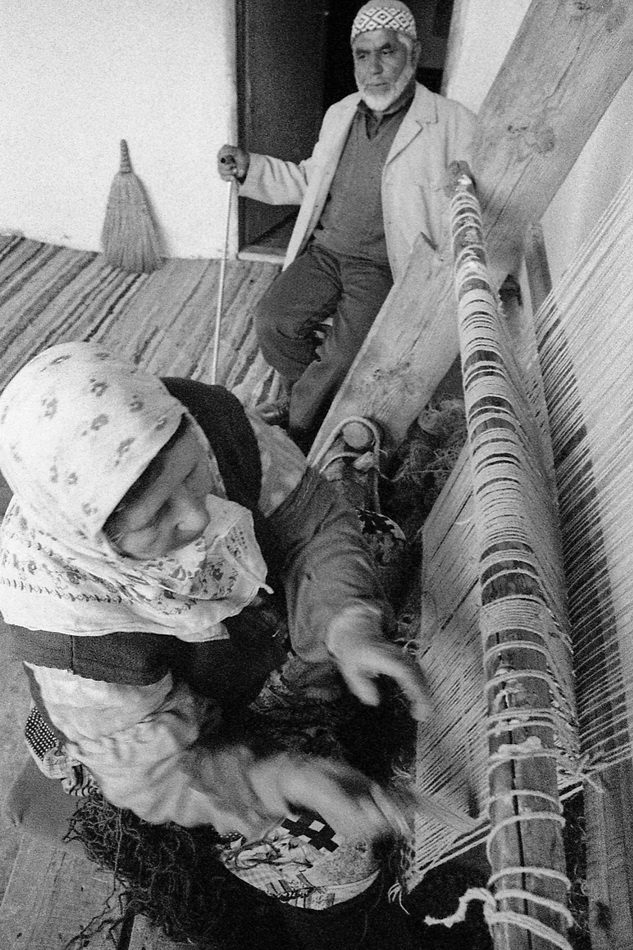
In 2002, I visited a family in Eşme, Uşak, to photograph traditional kilim weaving. A woman worked at a large loom, patiently building the pattern thread by thread. Her practiced movements, the taut warp threads and the wooden structure of the loom were inseparable parts of the scene before me.
Her husband remained nearby throughout my visit, continually checking the weaving and watching the work closely. What interested me was the relationship between the woman's concentration at the loom and her husband's attentive presence. They occupied different roles within the same family working environment, and I wanted that relationship to be visible in the photographs.
Eşme is known for its kilim-weaving tradition. Unlike a knotted-pile carpet, a kilim is a flat-woven textile, formed as coloured weft threads pass between the warp threads. Its patterns emerge slowly through repeated, precise hand movements. Beyond the finished textile, the loom and the work itself reveal the skill and patience required to sustain this tradition.
That day, I wanted to document not simply a kilim in progress, but the people and labour behind it. The woman's outstretched arms, her posture as she worked, and her husband observing in the background became as important to me as the woven surface. Looking at these images today, I remember a family's working space in Eşme in 2002, and the place of traditional production within everyday life.