
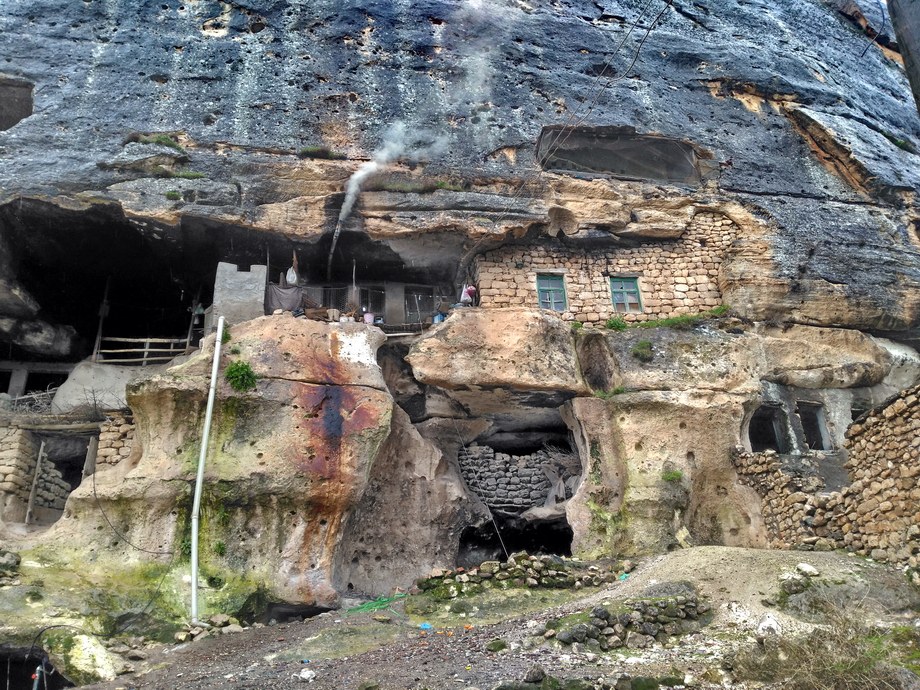
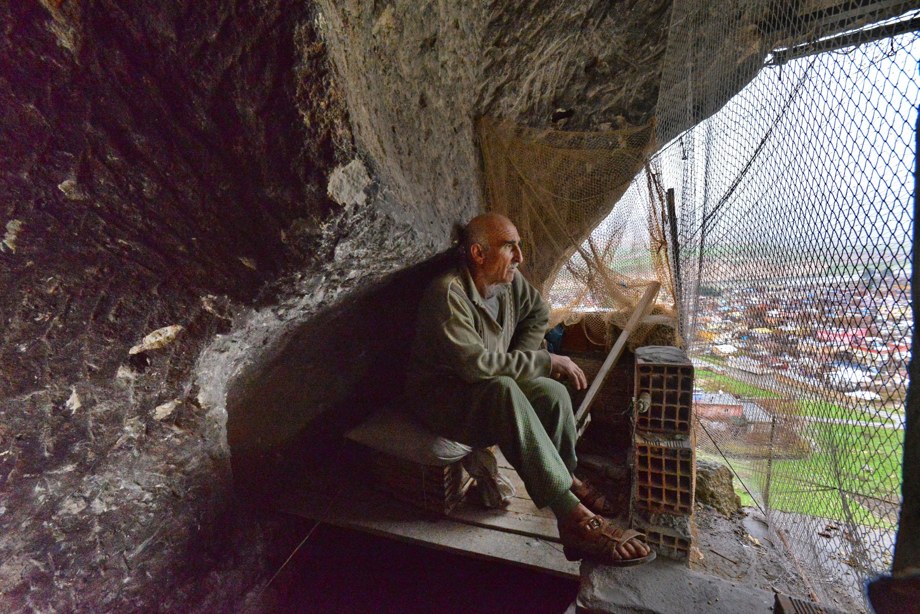
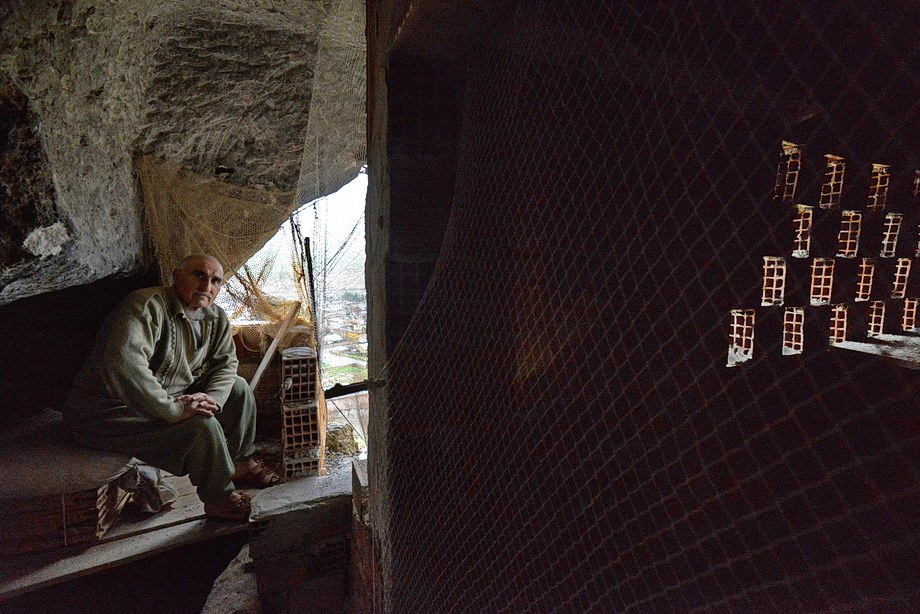
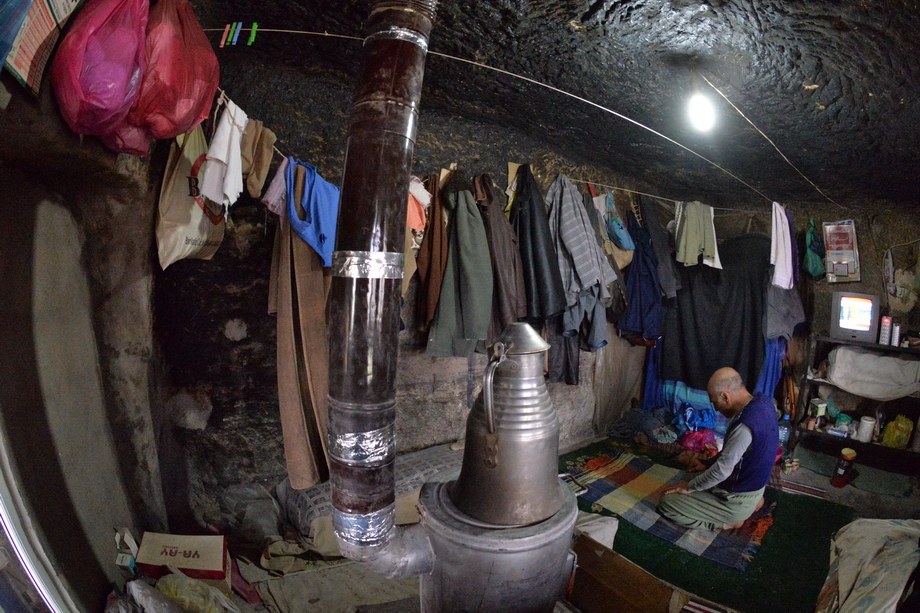
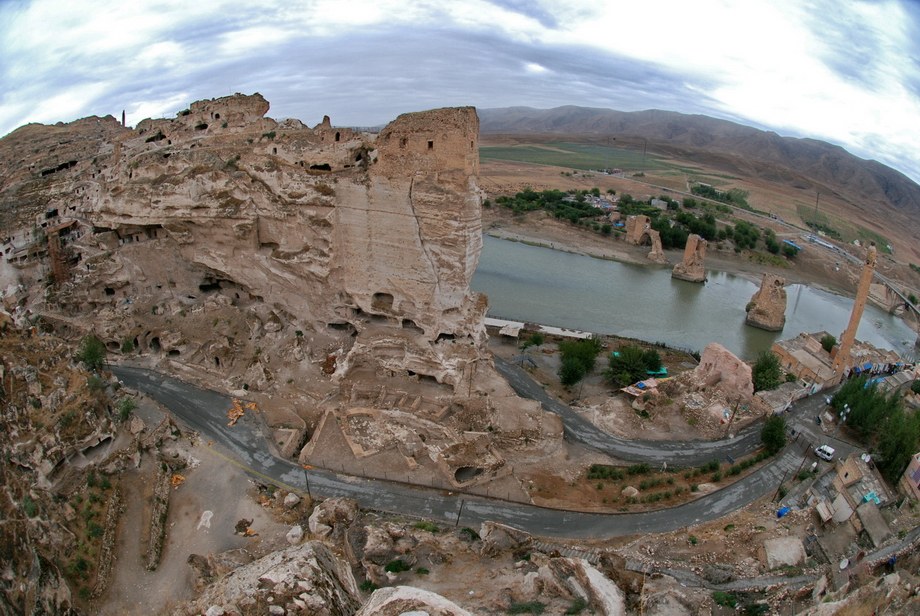
In March 2017, seven years after my previous visit, I returned to Hasankeyf and was able to visit a man who still lived in a cave house. He told me that the home had been in his family for three generations and that he held its title deed. Having faced objections on the grounds that his use of the historic site was damaging it, he had become reluctant to receive outsiders or members of the press. Through mutual friends, he agreed to meet me and allowed me to take a limited number of photographs.
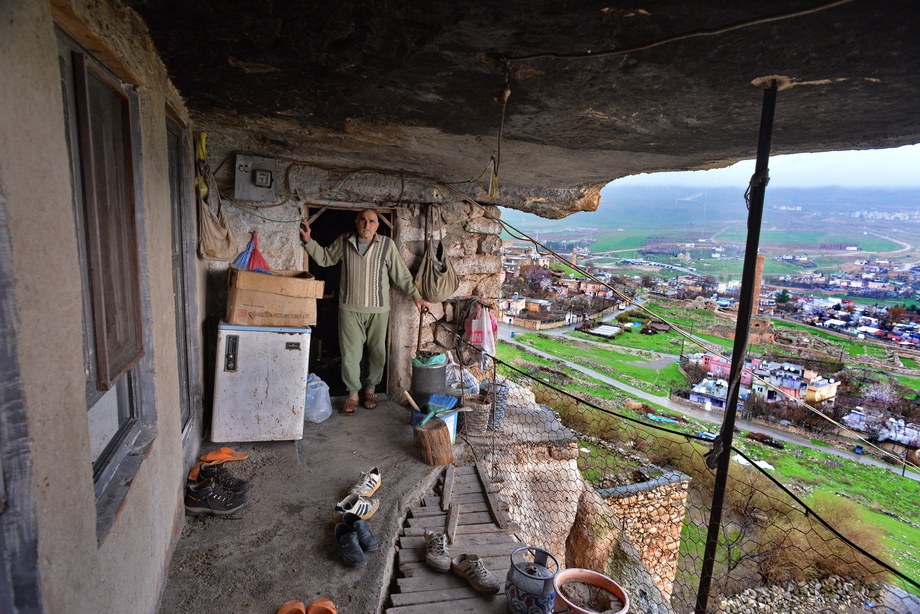
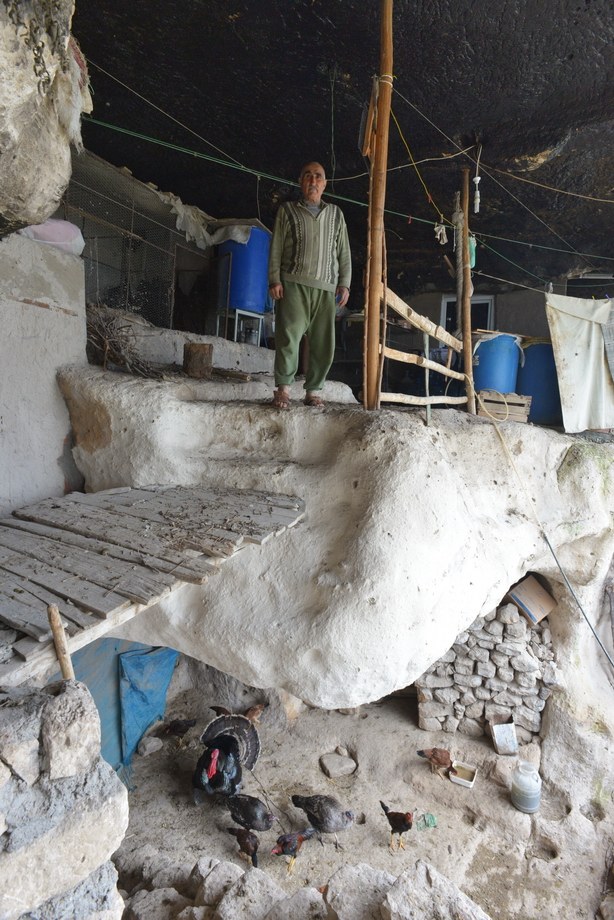
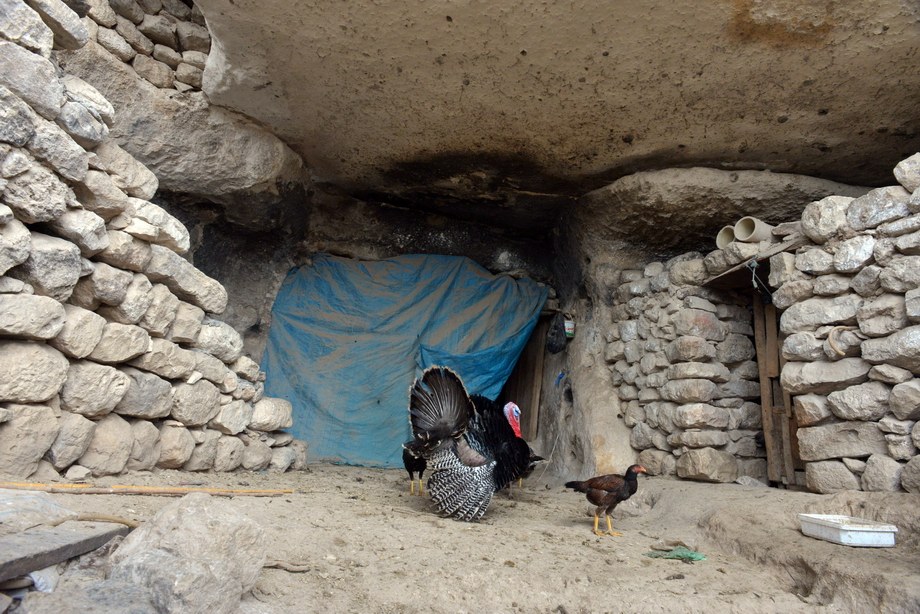
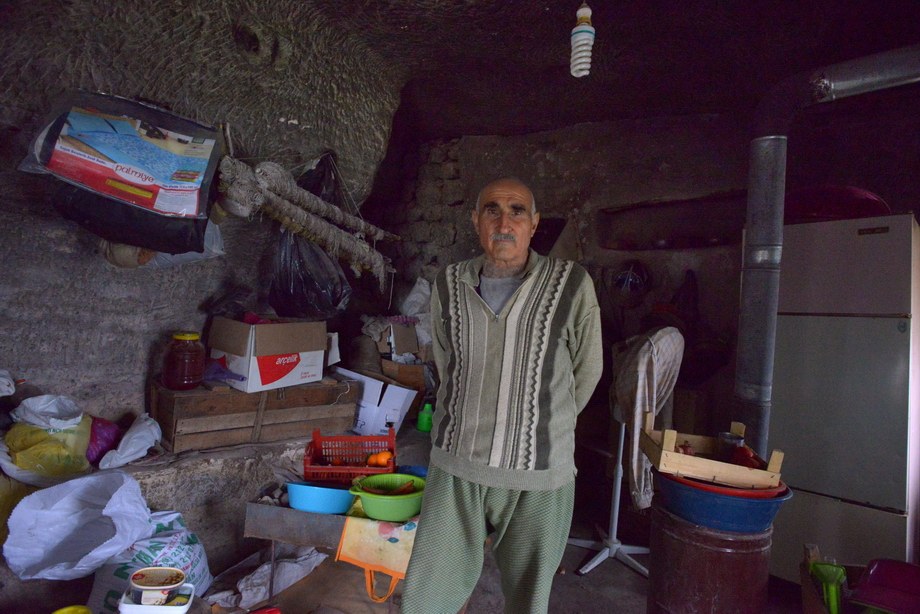
His home occupied a large recess in the rock, partly enclosed by stone walls. Wooden walkways, steps and platforms connected its different levels. Below, he kept poultry; above, a terrace overlooked the town. Electricity and running water were connected to public networks. A refrigerator, television and washing machine shared the space with the ancient rock: everyday life existed somewhere between the old and the modern.
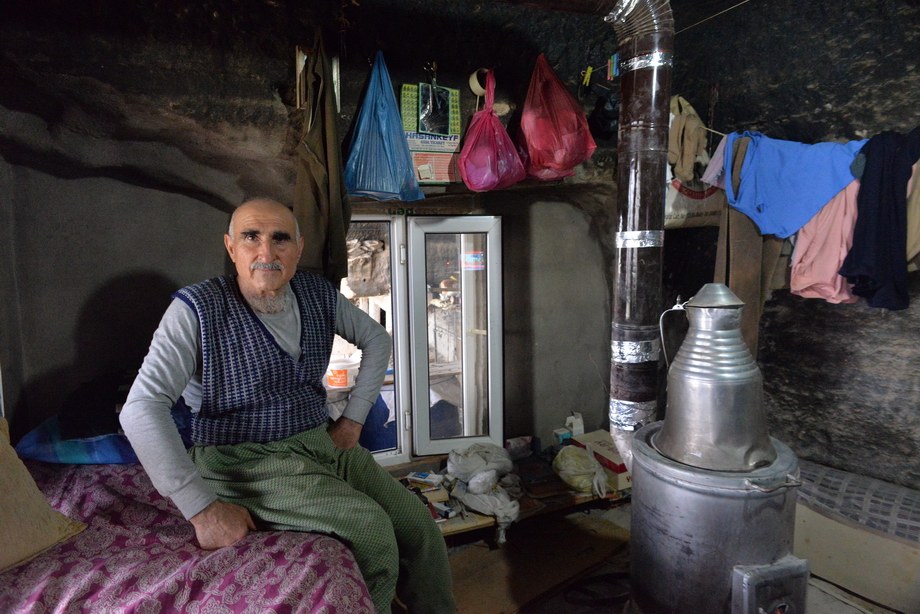
The walls and ceiling of the single living room had darkened over years of smoke from the stove, where hot water was always kept ready. Clothes hung from lines stretched across the room instead of being stored in a wardrobe. Modern double-glazed windows and the insulating rock helped protect the interior from the cold. There was another stove in the kitchen; during winter, some food was kept outdoors in the cold, while the summer fan remained covered.
The most striking part of the home was its panoramic terrace, formed partly by natural rock and partly by timber. Laundry dried there, and the washing machine stood outside because there was no room indoors. He had also adapted a higher recess into a second lookout, reached by a wooden ladder in good weather. A net helped keep wild birds from nesting there.
I was struck by how naturally life continued within this historic setting. He had adapted a home inherited through generations to meet his everyday needs, bringing old and new into a single living space. The cave home I photographed in March 2017 was later submerged by the waters of the Ilısu Dam. These photographs remain a record of a place and a way of life that can no longer be seen there.