
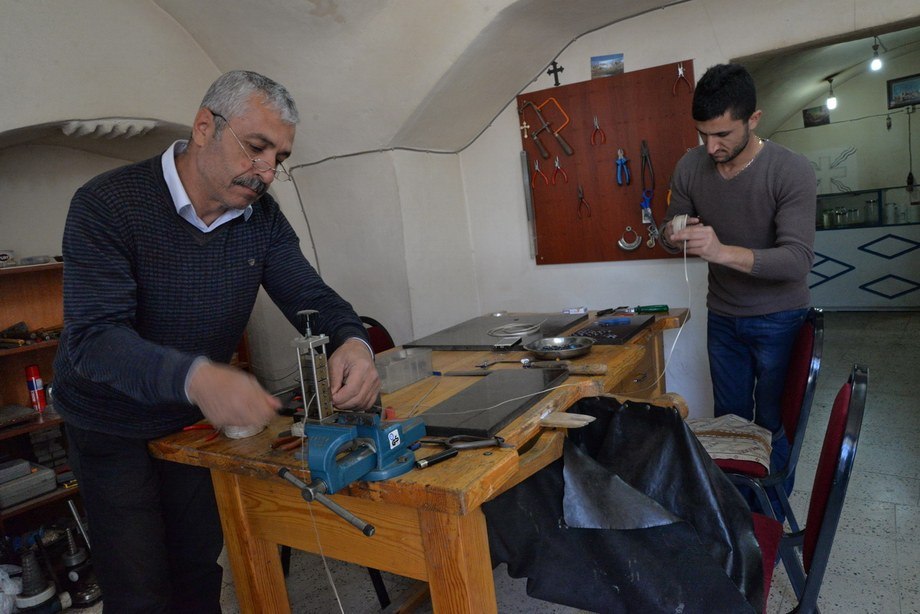
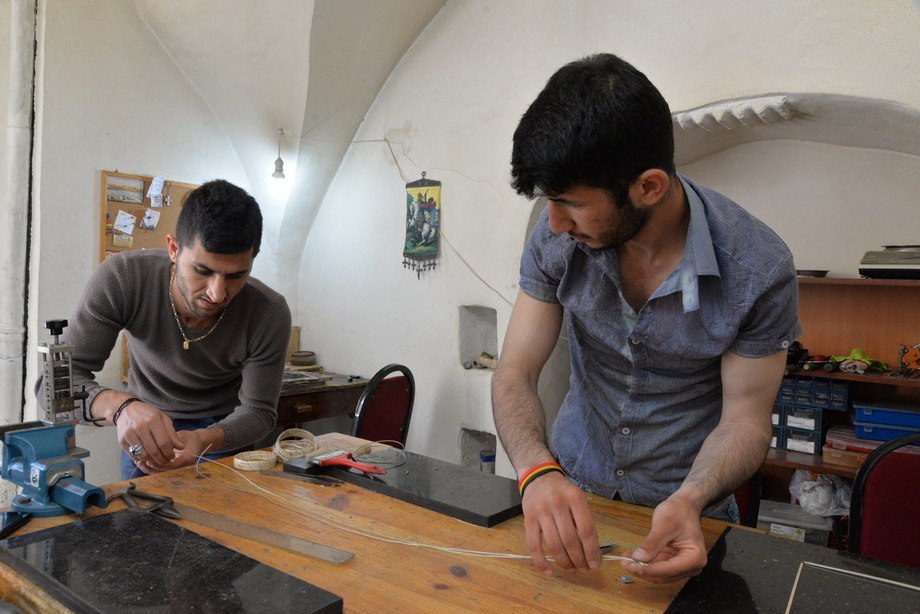
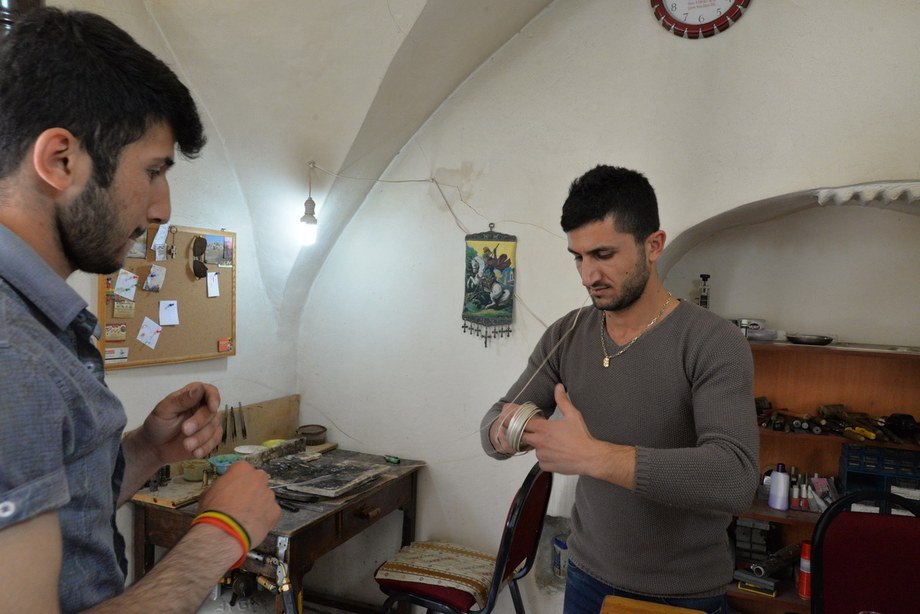
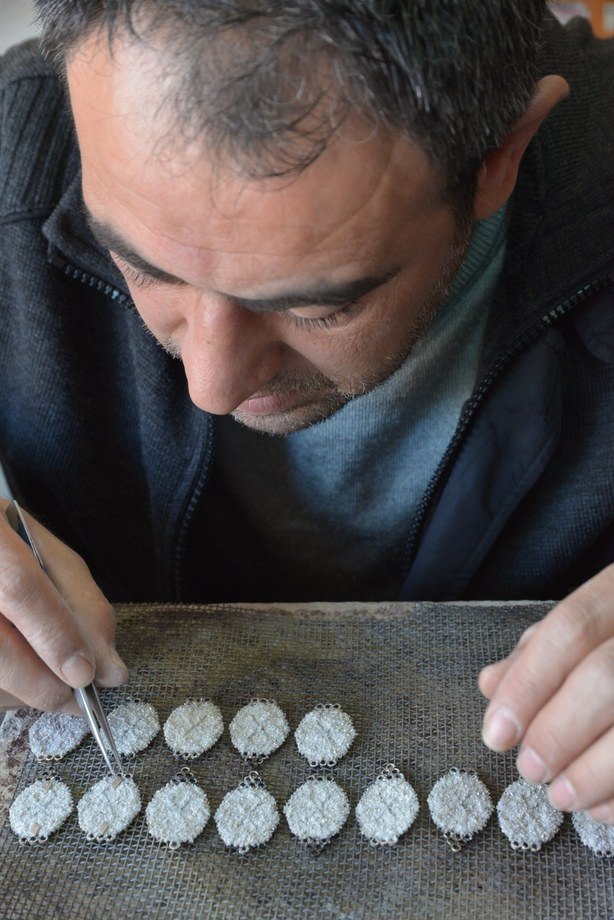
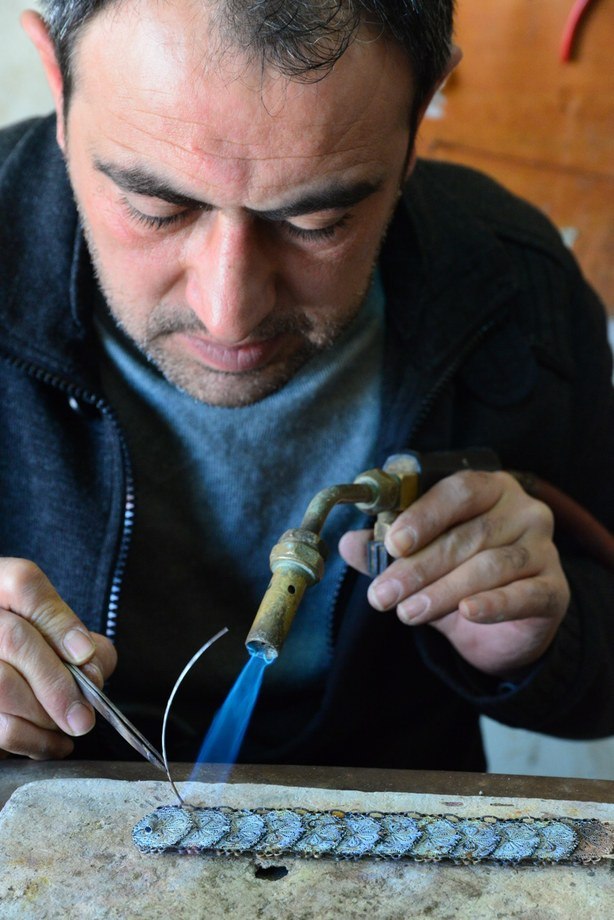
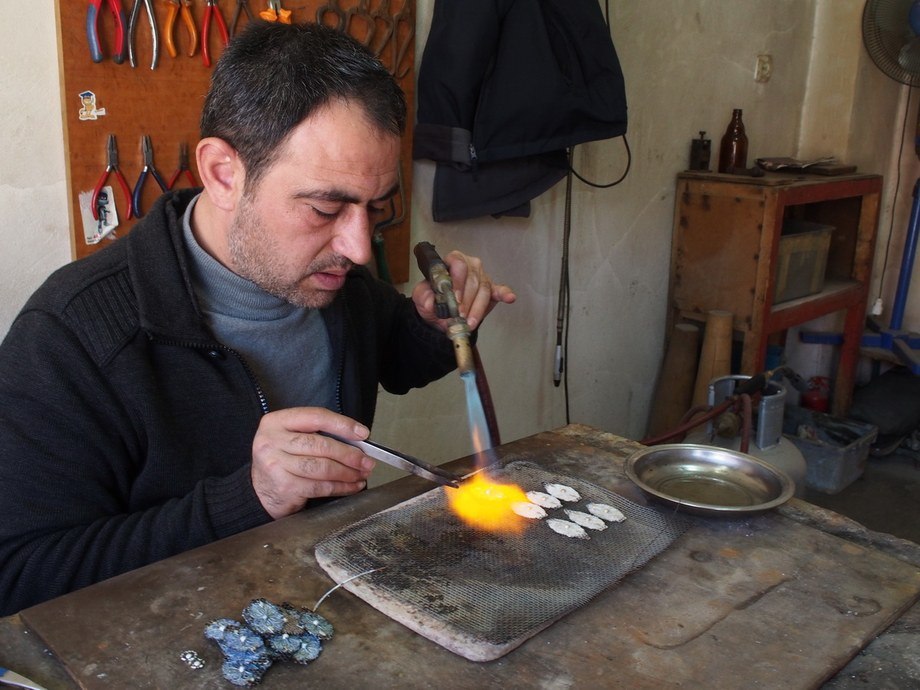
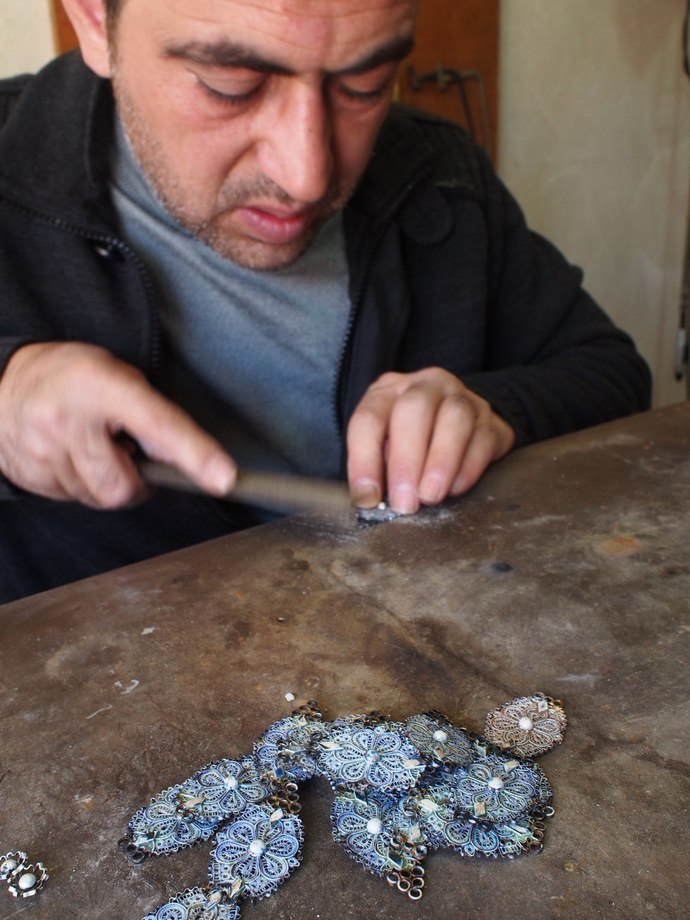
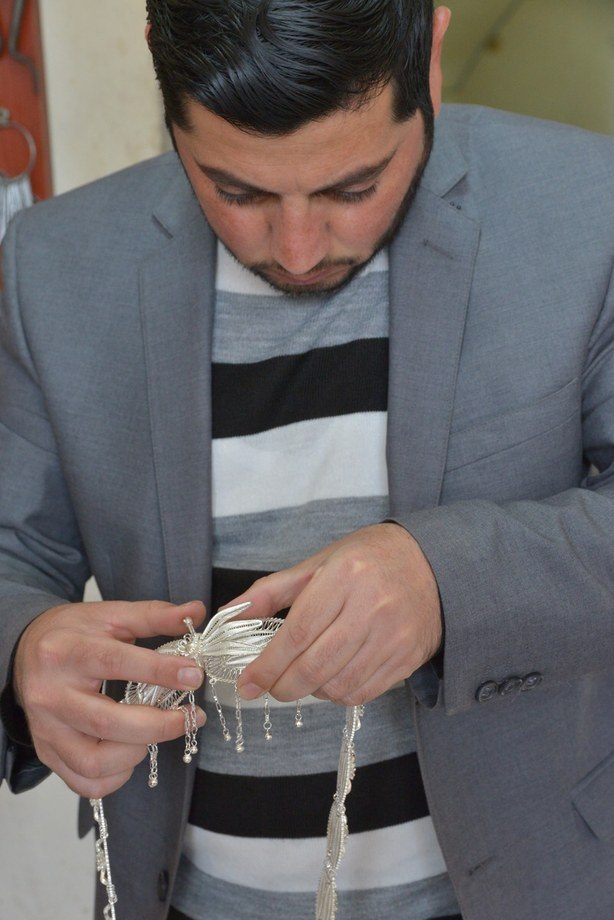
I visited Mardin and Midyat at different times during my photographic work. While documenting the people, everyday life and traditional crafts of the region, I became particularly interested in the skills preserved by Syriac artisans. Entering such workshops, however, and photographing the working environment of a community with its own close-knit social and cultural relationships, was not simply a matter of knocking on a door and asking permission. It took time to get to know people and build trust. Thanks to relationships established during earlier visits, I was finally able to enter a Syriac filigree workshop in Midyat in April 2015 and photograph the craftsmen at work.
Filigree is a metalworking craft in which gold or silver is drawn into extremely fine wires and shaped into intricate designs. Its roots reach back to the ancient jewellery-making traditions of Mesopotamia and Anatolia, and Midyat has long been one of its important centres. Syriac craftspeople have played a significant role in preserving and passing on the local silverworking tradition. Family workshops and the master–apprentice relationship enabled not only technical skills, but also patience, manual dexterity and a sense of design to pass between generations. Over time, artisans from other communities also became involved in this work, which remains an important part of Midyat’s cultural identity.
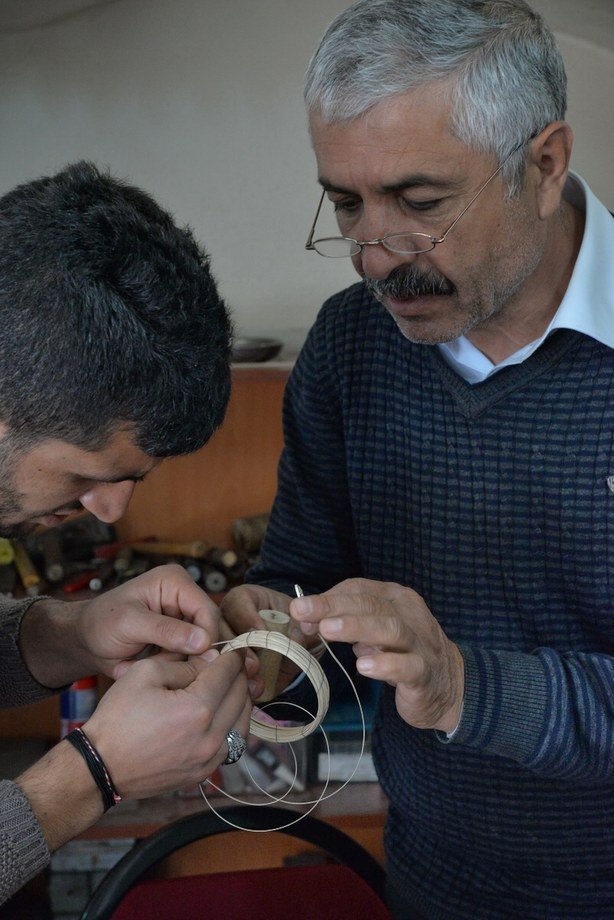
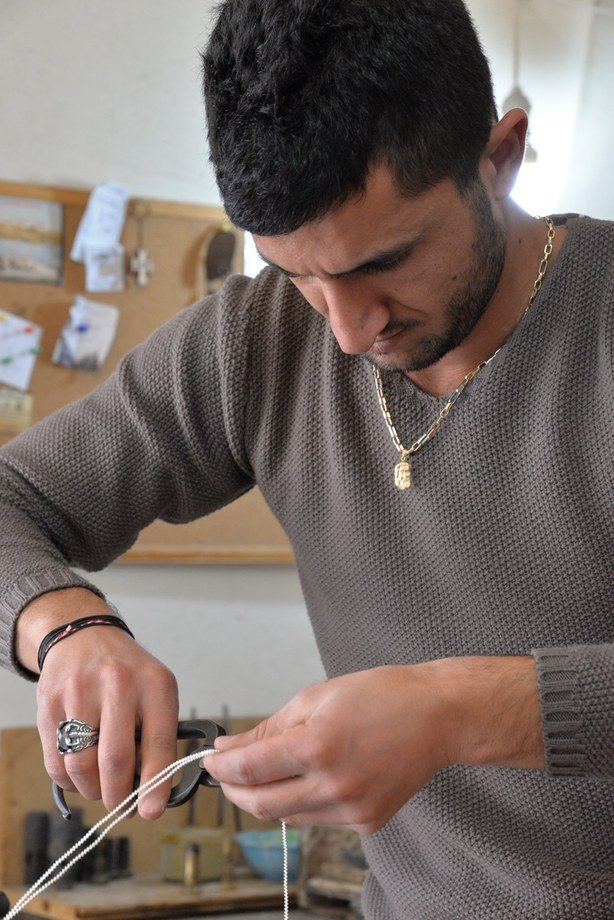
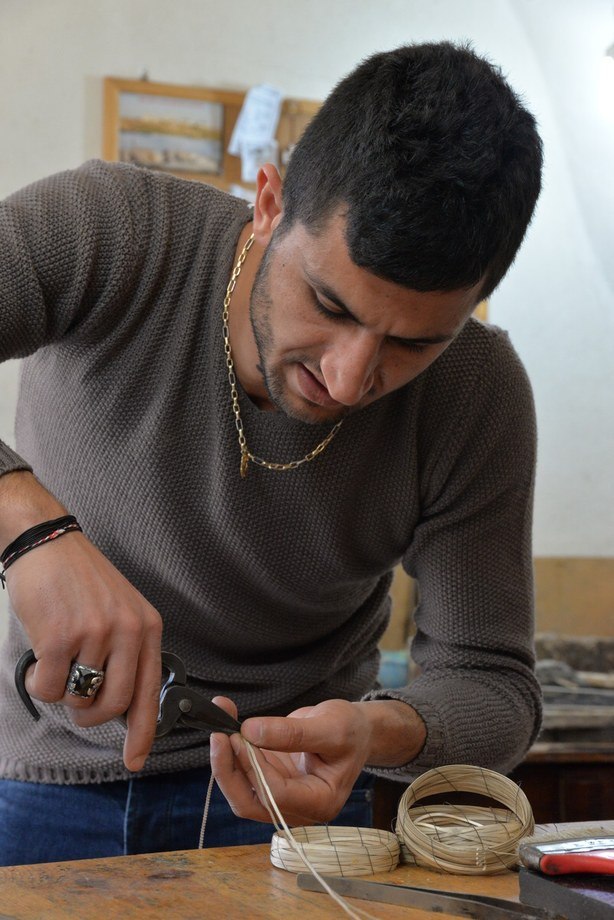
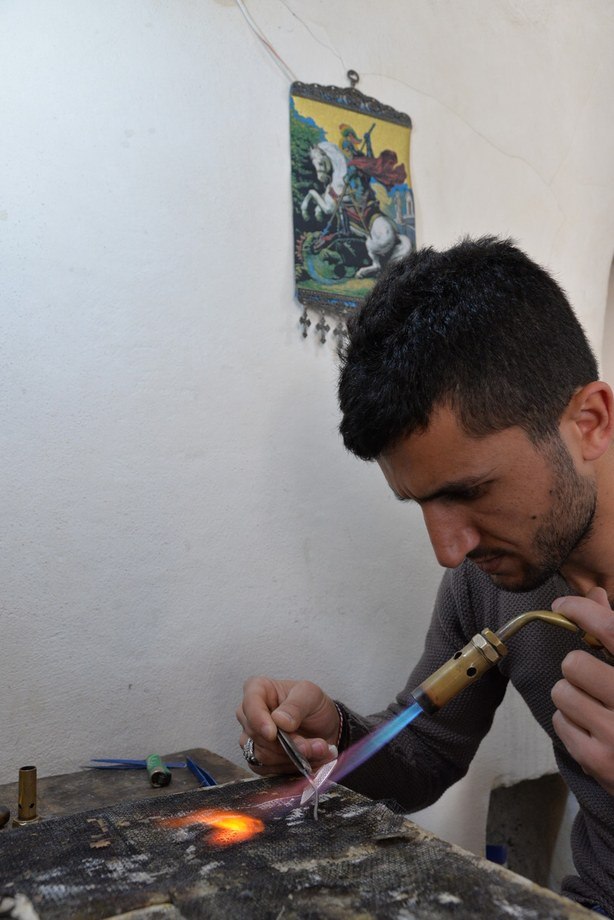
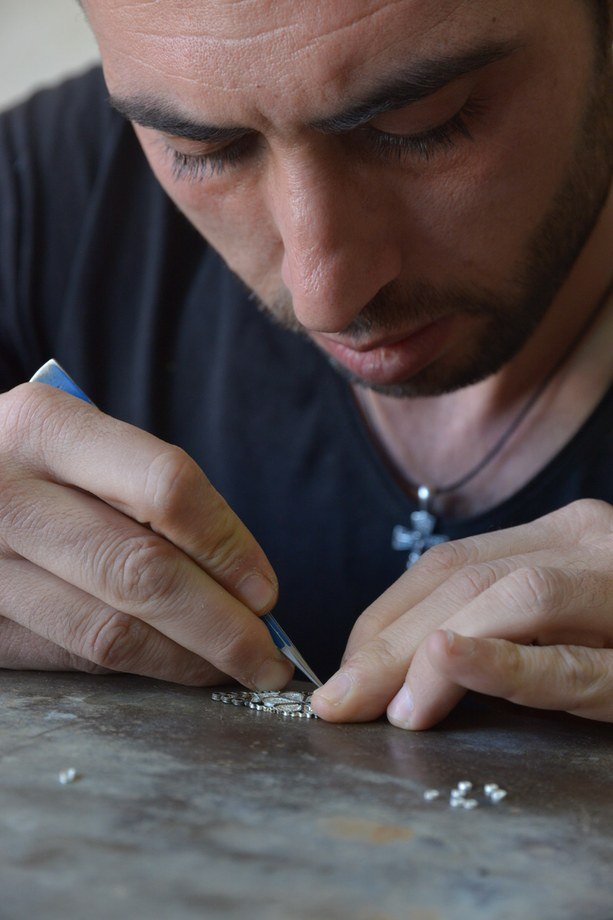
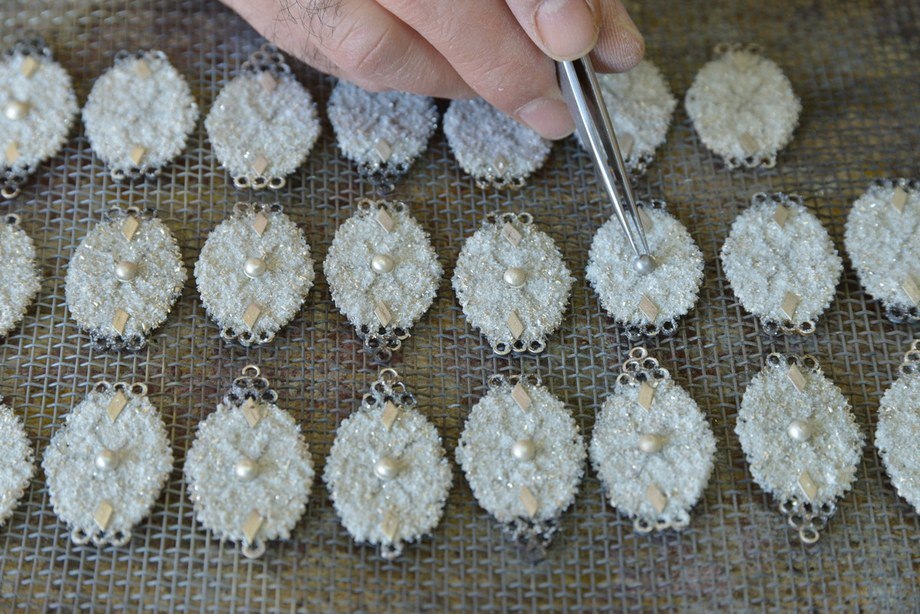
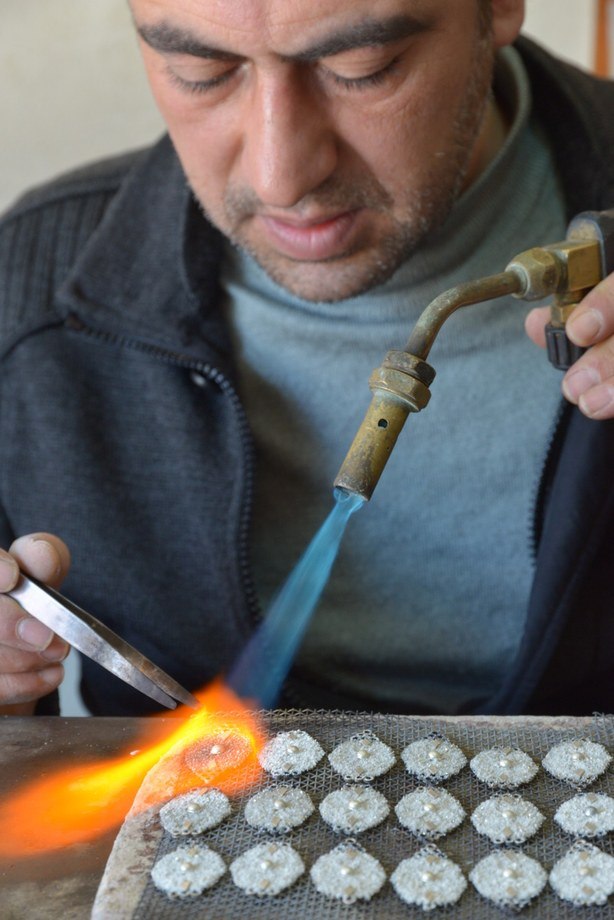
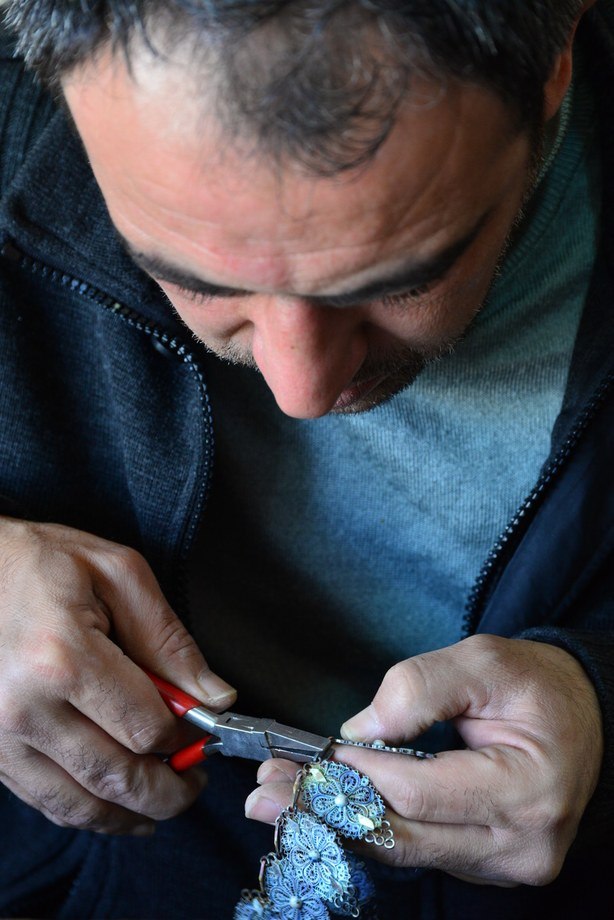
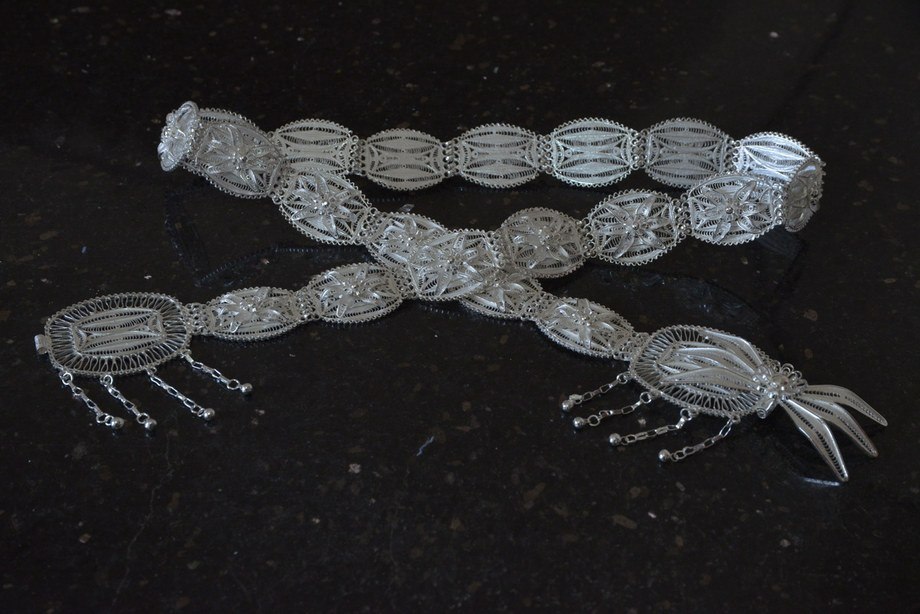
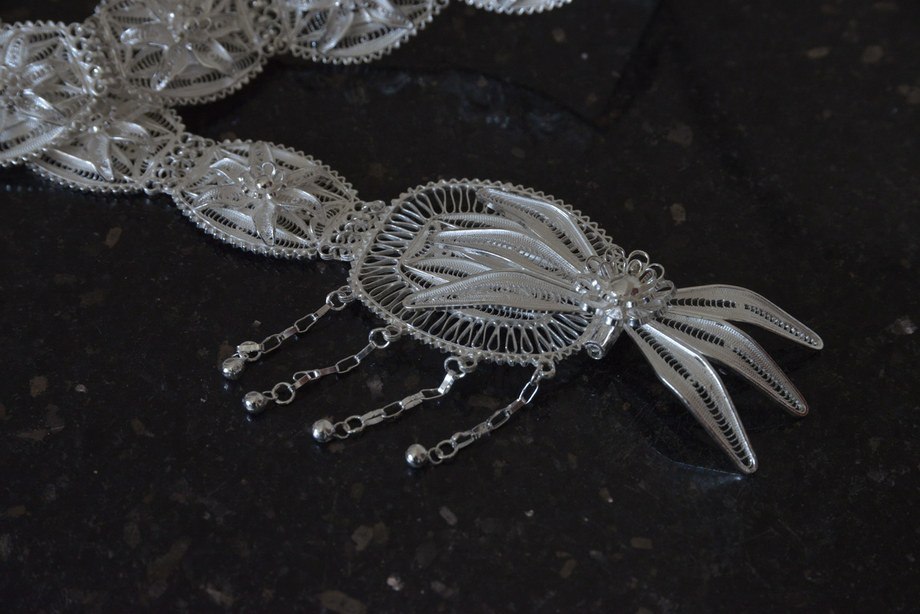
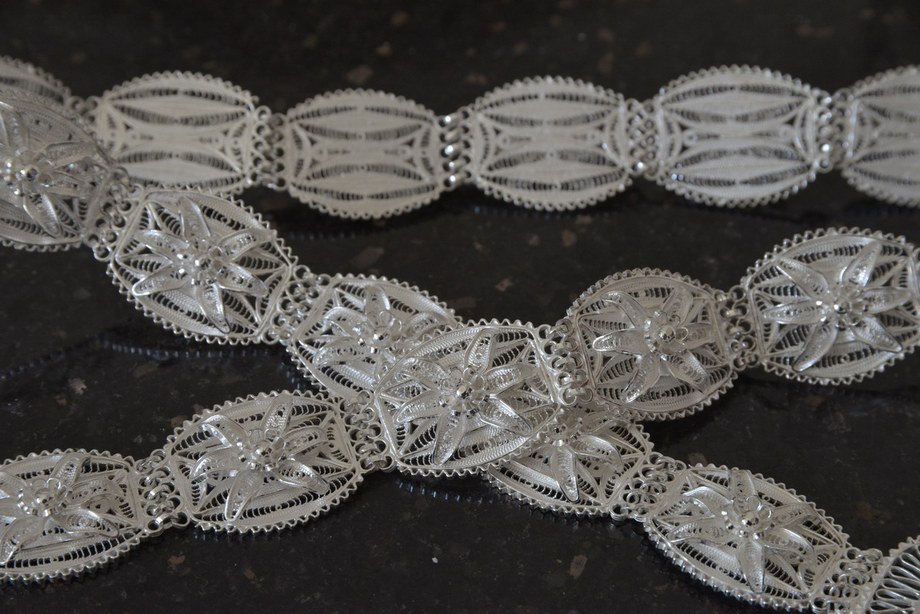
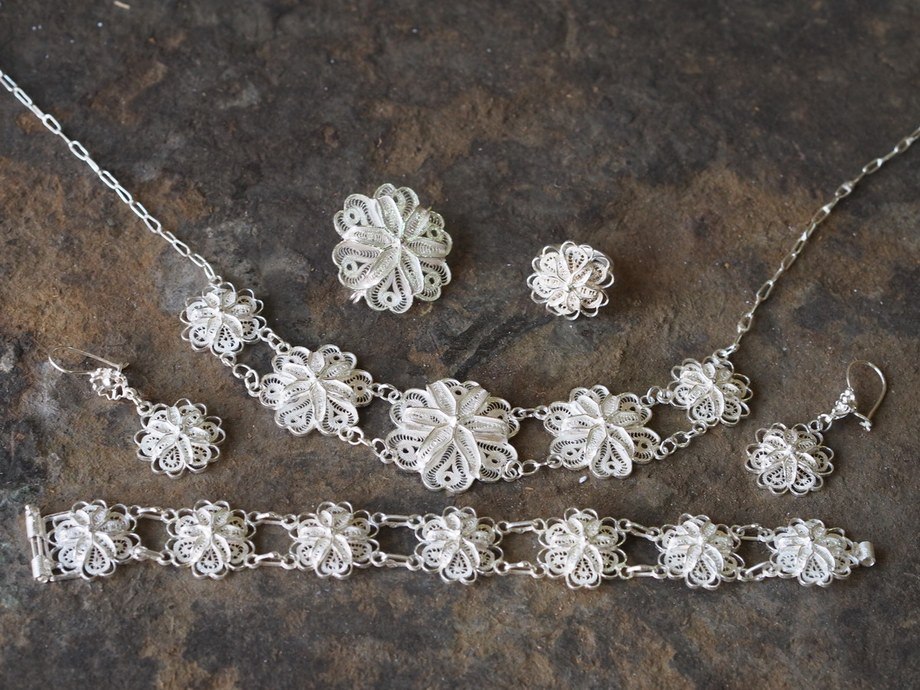
The most striking quality of filigree is the way exceptionally thin silver wires can be made to resemble delicate lace. Silver is prepared and drawn through progressively smaller holes in a drawplate until the required thickness is reached. Using small pliers and tweezers, the artisans bend and curl the wires and arrange them inside a previously formed framework. Even a space measuring only a few millimetres may require numerous tiny pieces. Flowers, leaves, spirals and geometric motifs are shaped individually and carefully joined by soldering. Controlling the heat is essential: the fine wires must be joined without being damaged. Earrings, necklaces, bracelets, belts and other decorative objects gradually emerge from this painstaking work.
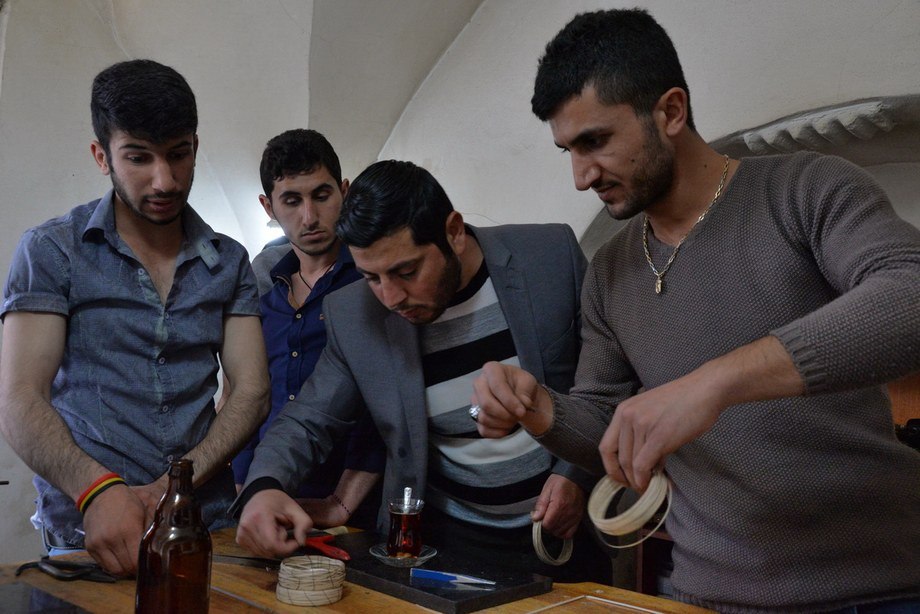
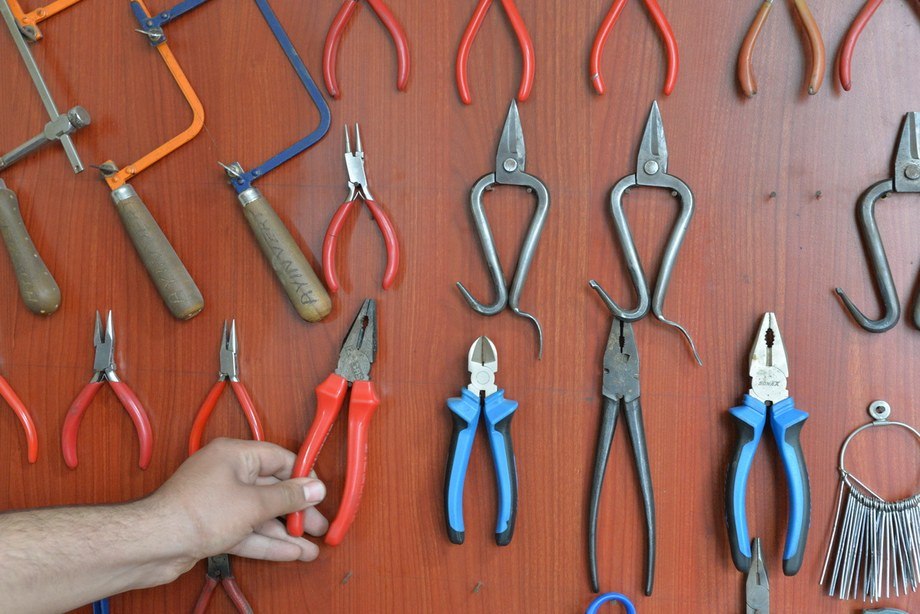
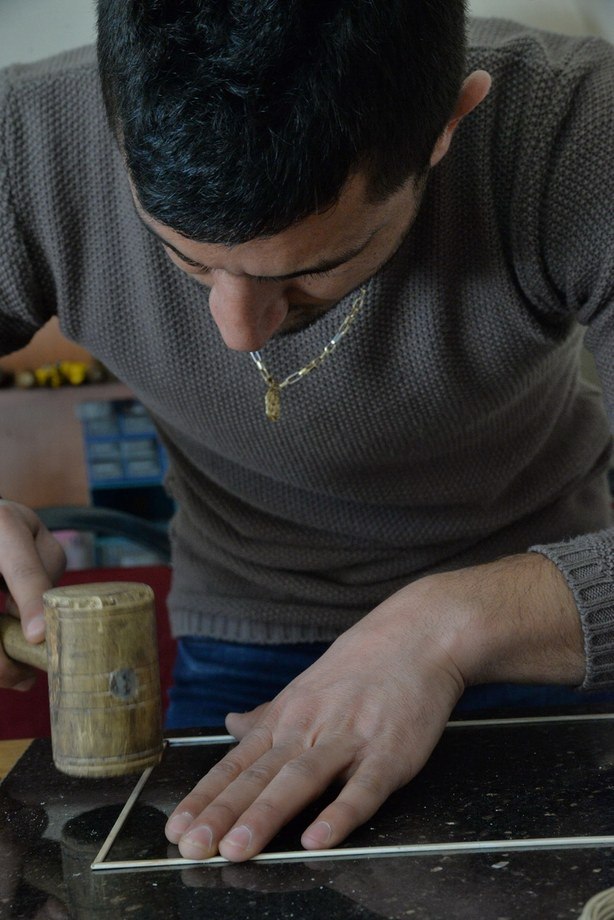
What impressed me most in the workshop was how naturally this delicate craftsmanship formed part of everyday working life. Craftsmen and younger workers of different ages sat around the same benches. While one prepared the wire, another shaped tiny components; someone else soldered or adjusted the final connections of a nearly finished piece. The simple tools scattered across the tables, pliers hanging on the wall, the flame, the minute pieces of silver held in tweezers and the concentration on the artisans’ faces all revealed the attention this craft demanded. I wanted my photographs to show their hands, the successive stages of production and the working relationships within the workshop.
At the end of the visit, I also photographed examples of completed filigree jewellery. Having watched the production process, I could no longer see them merely as elegant ornaments. Behind each small motif were repeated movements, acquired knowledge, skill and time. Through this work made in Midyat in April 2015, I wanted to document not only how silver is shaped, but also the everyday workshop life of a craft tradition carried forward through generations of Syriac artisans.