
Erythrai Ancient City — An Important City of Ancient Ionia
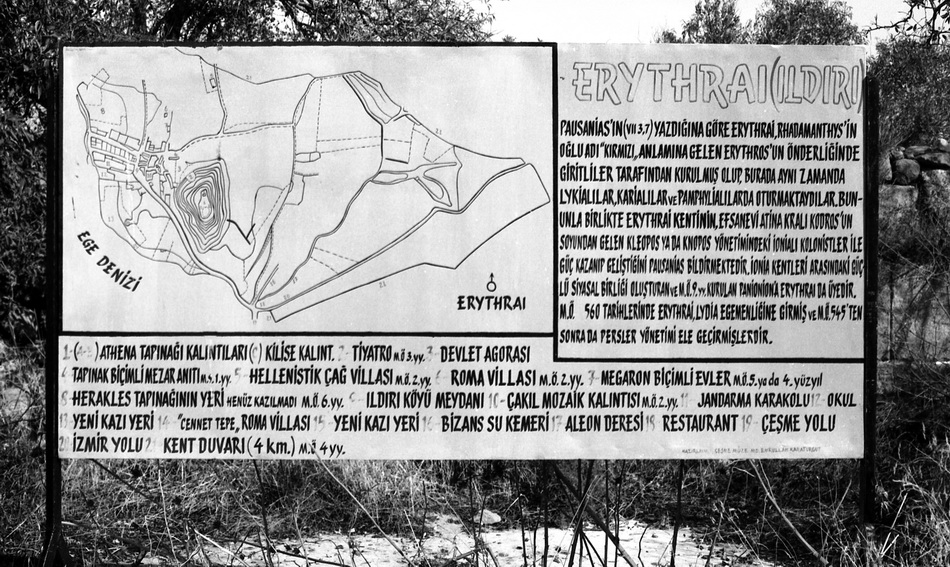
Situated on the western coast of the Karaburun Peninsula, overlooking the Gulf of Ildırı and the island of Chios, Erythrai was one of the twelve cities of ancient Ionia. Developing around the site of present-day Ildırı, it became an important centre of trade, maritime activity and cultural life in the Aegean world.
As someone from Karaburun, Erythrai is more than an ancient city I happened to visit. The Karaburun Peninsula, known in antiquity as Mimas, had strong historical ties to Erythrai, and much of the peninsula lay within the city’s sphere of influence and territory. Its history is therefore part of the long history of the landscape to which I belong.
The name Erythrai is thought to derive from the Greek word erythros, meaning “red”, possibly referring to the reddish colour of the local soil. Another foundation legend connects the name to a mythical figure called Erythros. Archaeological evidence indicates that settlement in the area reaches back to the Early Bronze Age.
Erythrai belonged to the Ionian League, a religious and political association of Ionian cities centred on the Panionion. From the seventh and sixth centuries BCE, maritime trade contributed to its prosperity. Its proximity to Chios encouraged both commercial connections and rivalry. The city was associated with wine production, millstones and seafaring.
The city passed through periods of Lydian and Persian domination and participated in the struggles that shaped the Ionian world. Following Alexander the Great’s arrival in Anatolia in 334 BCE, Persian control came to an end. Erythrai later passed between Hellenistic powers and eventually came under Roman rule, gradually losing its former political and economic prominence.
Erythrai is also associated with the Erythraean Sibyl, one of the celebrated prophetesses of antiquity. Her traditions reflect the city’s place not only in commerce and seafaring but also in the religious and intellectual imagination of the ancient world.
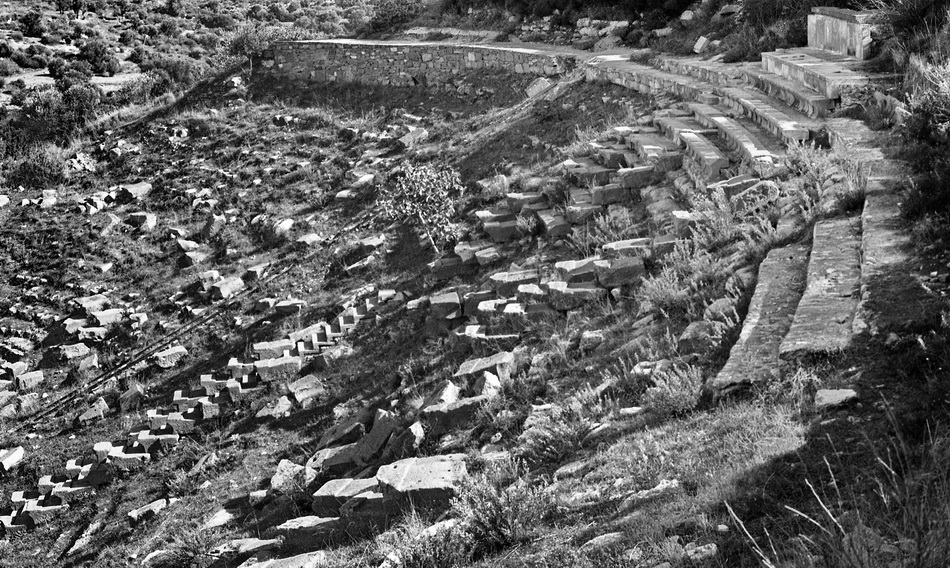
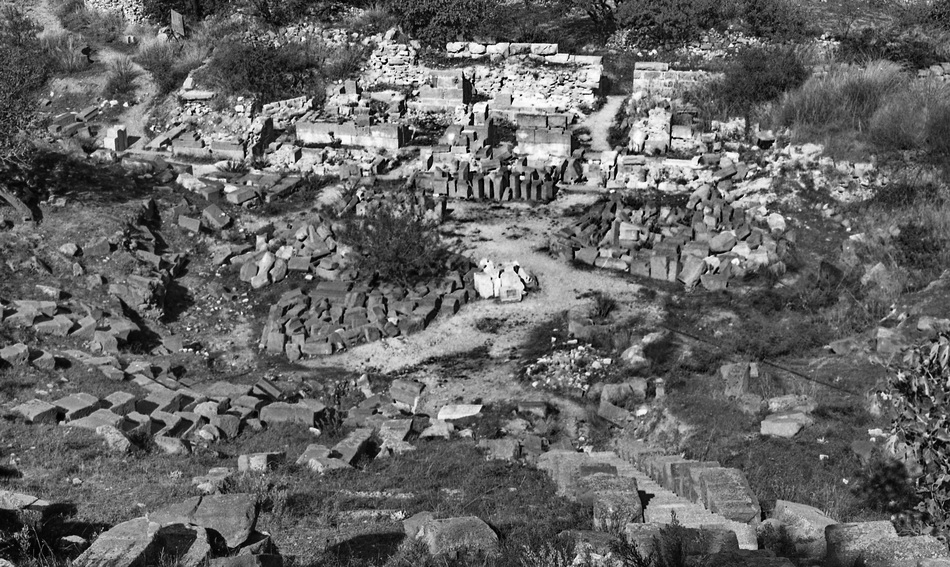
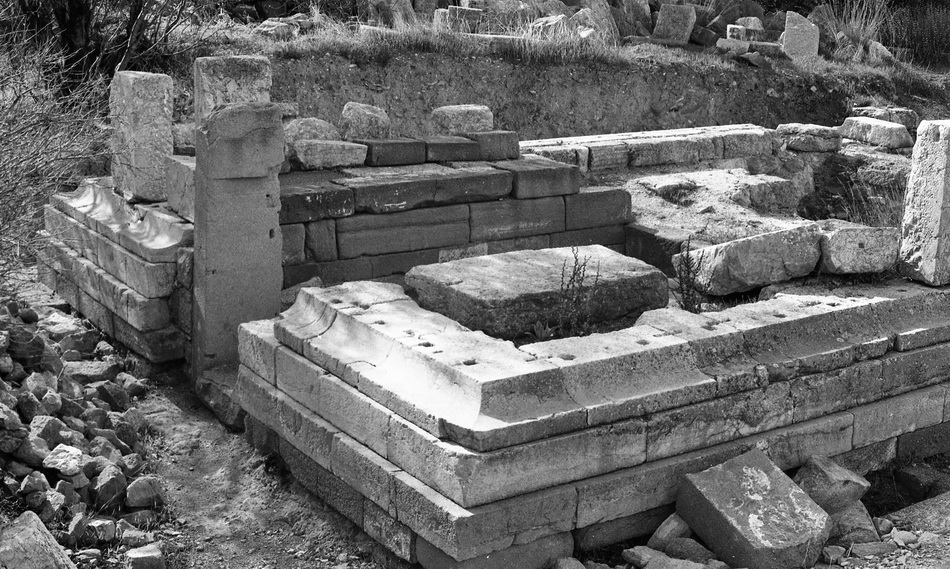
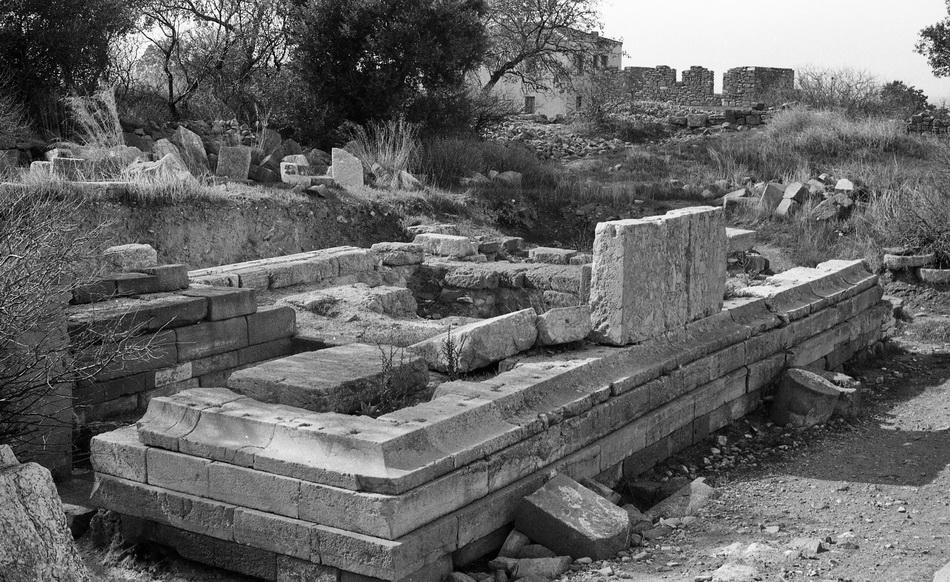
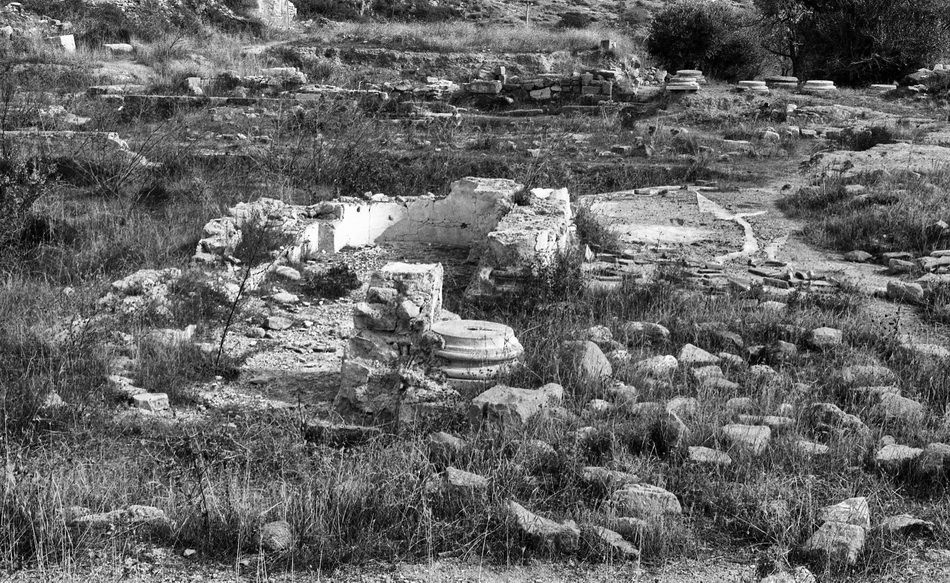
Surviving remains include the acropolis, the sanctuary of Athena, the theatre, city walls and traces of residential buildings. The theatre on the northern slope of the acropolis dates to the Hellenistic period, while the sanctuary of Athena has roots in the Archaic age. The extensive defensive walls testify to the scale of the city and the importance of its protection.
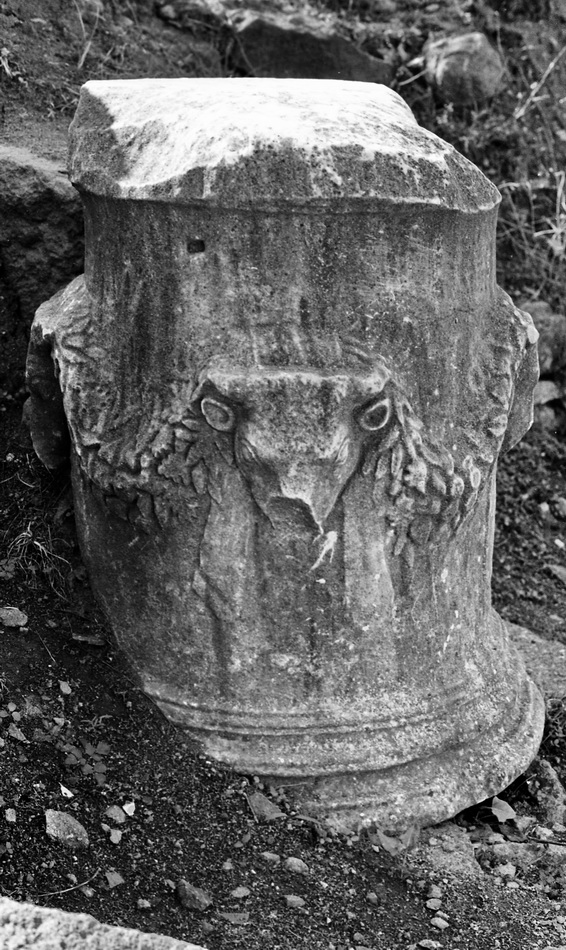
Modern archaeological investigations began in the 1960s. Excavations led by Professor Ekrem Akurgal made important contributions to understanding the city’s history. Architectural remains, pottery and sculpture recovered from the site help illuminate successive periods of Ionian civilisation.
A Family Visit to Ildırı — 1994
In 1994, I visited Ildırı with my family. At that time Erythrai was not a well-known archaeological site that visitors could easily find. We asked people in the village for directions to the ancient city.
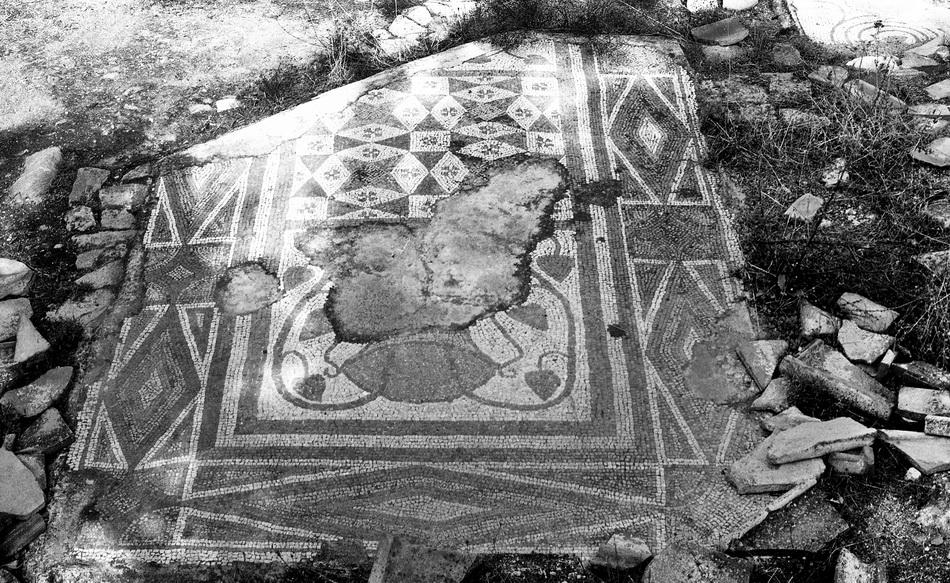
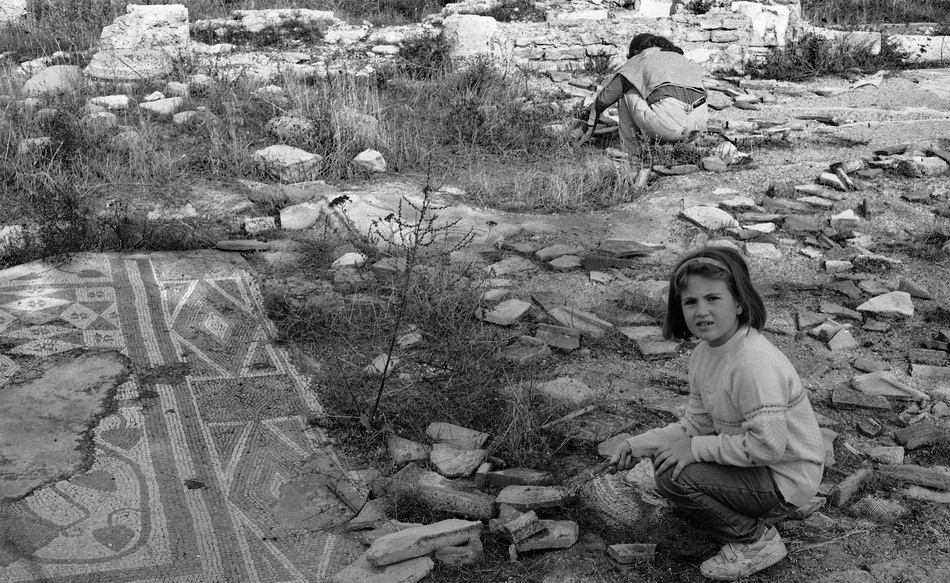
We located the person responsible for guarding the site and asked to see the mosaics. He took us to where they lay. Before us were mosaics that had survived for centuries, yet were exposed in the open air without any protective covering.
The mosaics were directly exposed to the weather and to possible human interference. I found this troubling. Discovering an archaeological work is important, but safeguarding it where it is found is equally essential. Sun, rain, wind and careless visitors can all pose serious risks to such fragile remains.
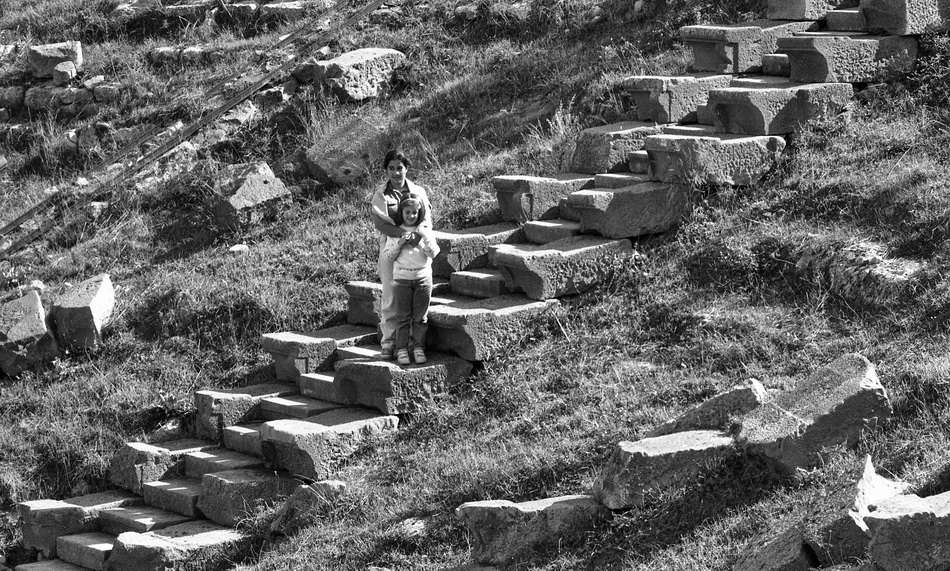
That day I also photographed my daughter beside the mosaics. The photograph is more than a family memory: it documents the conditions in which those mosaics could be seen in 1994.
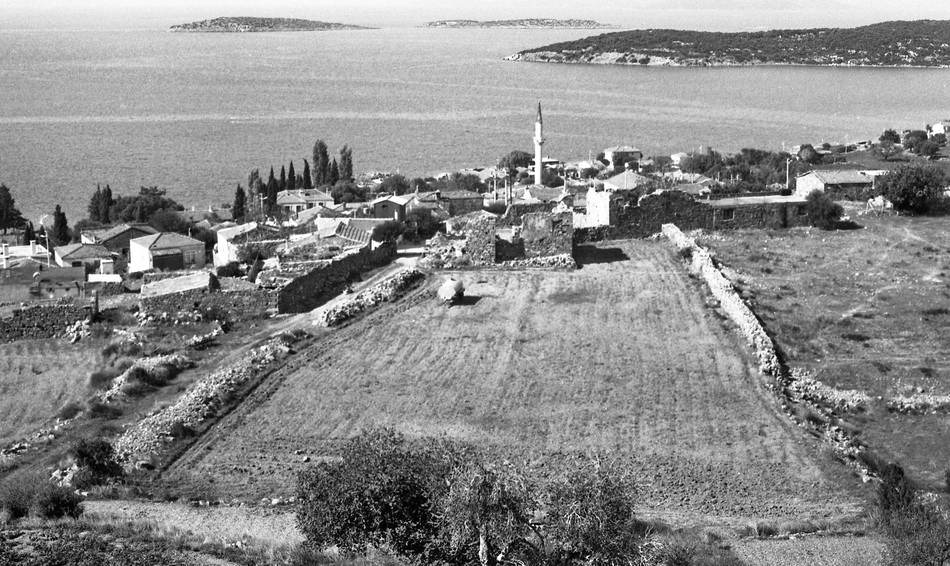
I photographed the ancient theatre, the ruins, the surrounding settlement and the view towards the sea on black-and-white analogue film. The way the archaeological site and the village of Ildırı appeared together suggested how life in this landscape had continued, in different forms, across the centuries.
Looking at my photographs from 1994 today, I see more than the remains of an important Ionian city. I also remember the history of the Karaburun Peninsula, a journey with my family, and the conditions in which I encountered a vulnerable part of our cultural heritage.
For me, Erythrai is both a window into the past of the place I come from and an example of photography’s power to preserve evidence of a particular moment for future generations.