
Cappadocia — Life Within the Rocks
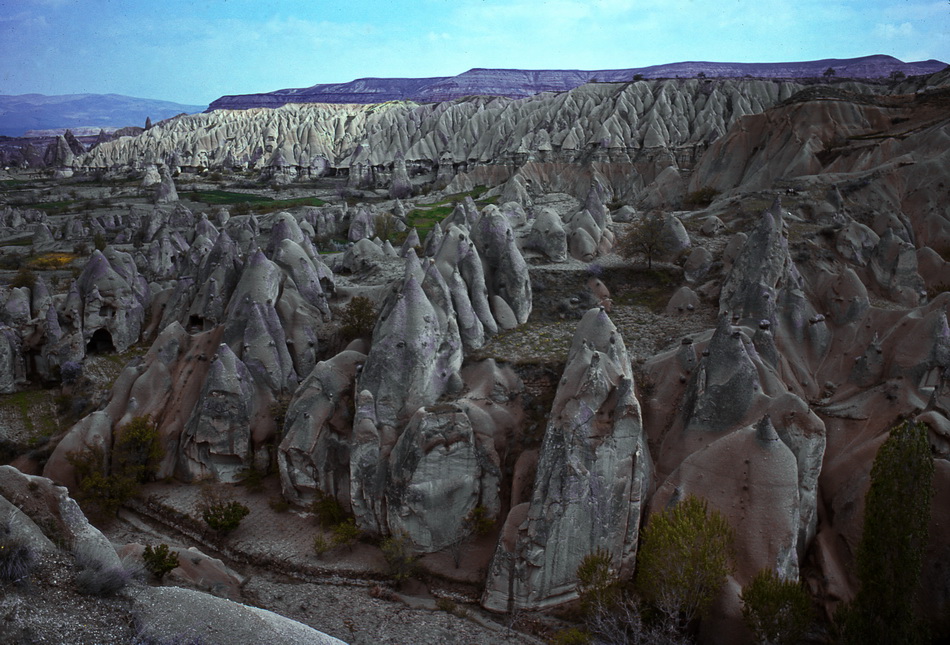
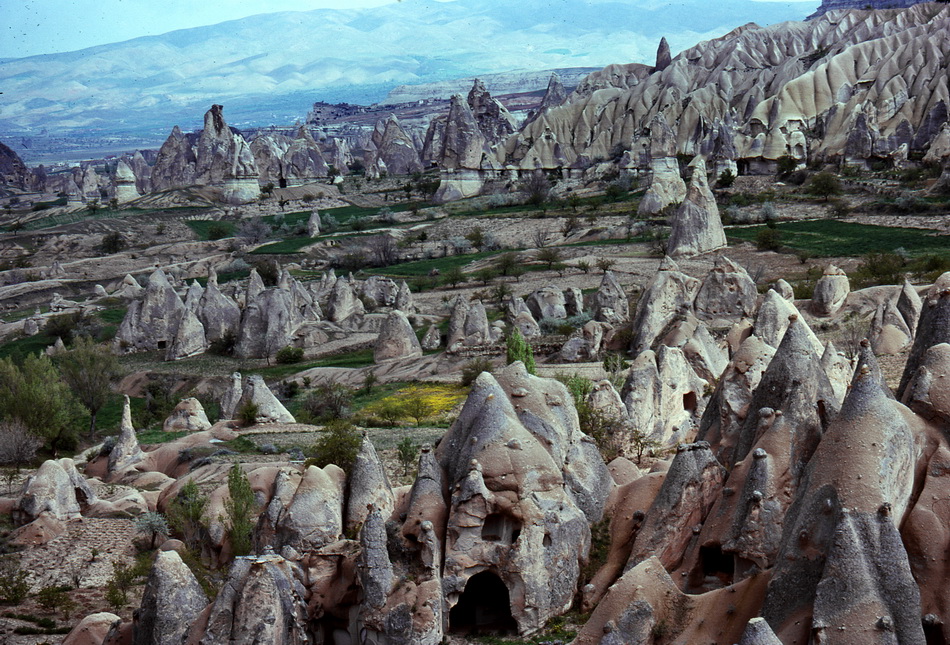
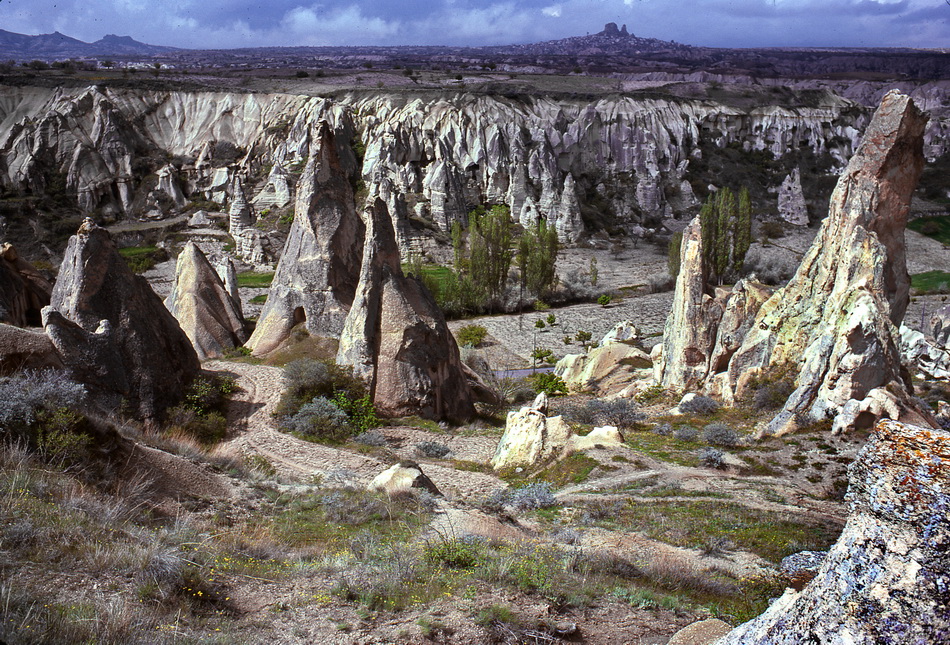
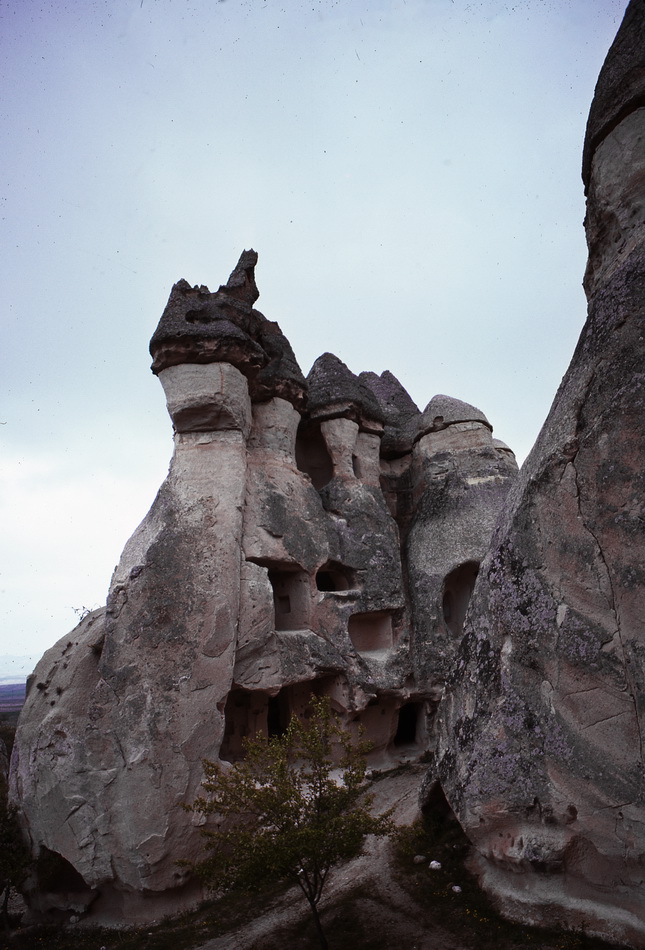
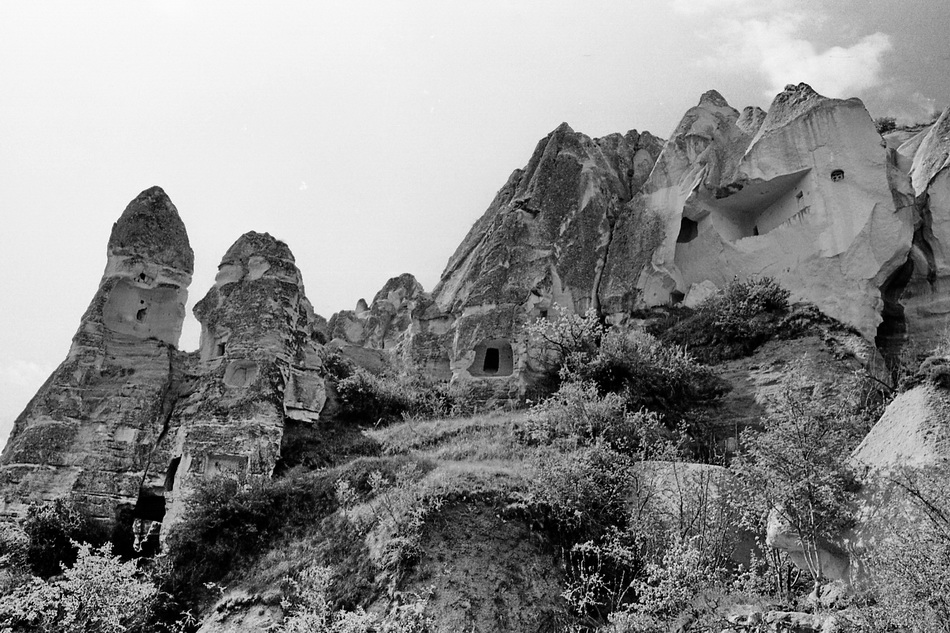
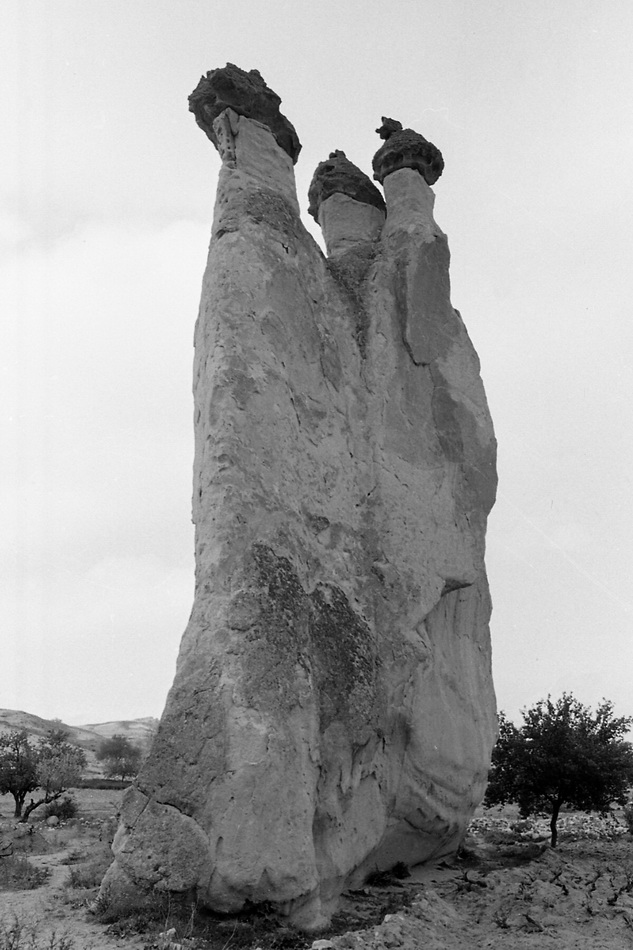
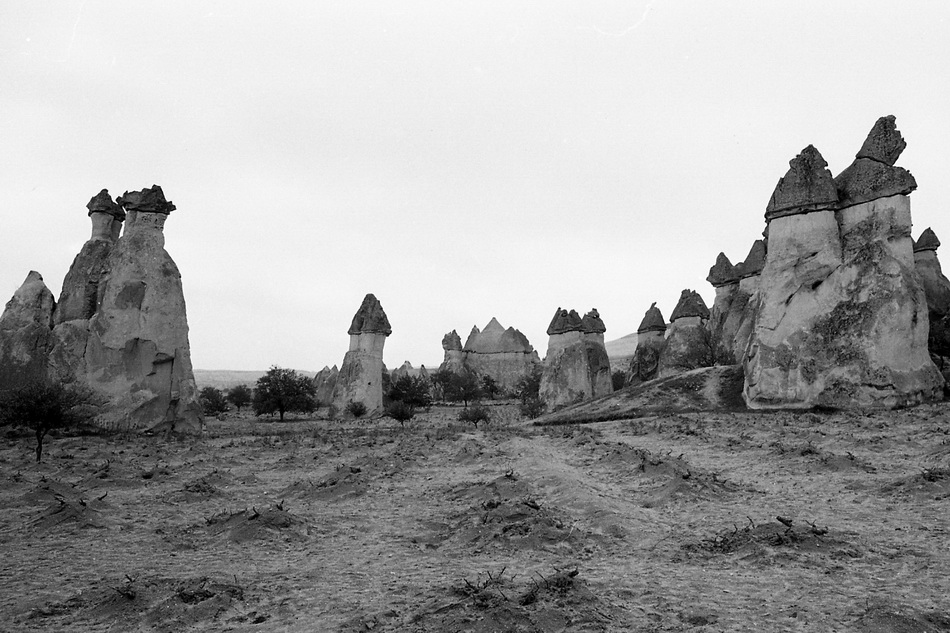
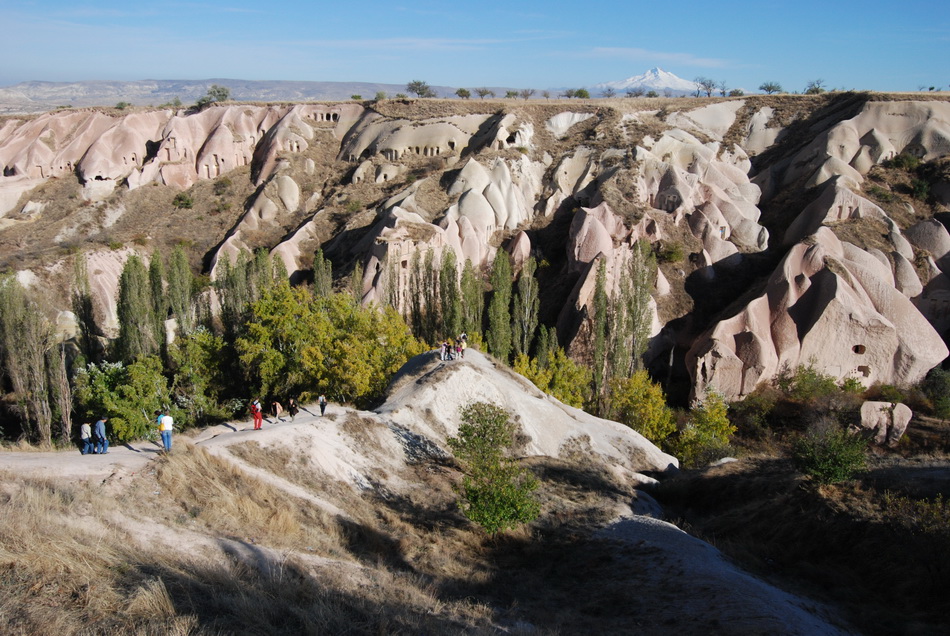
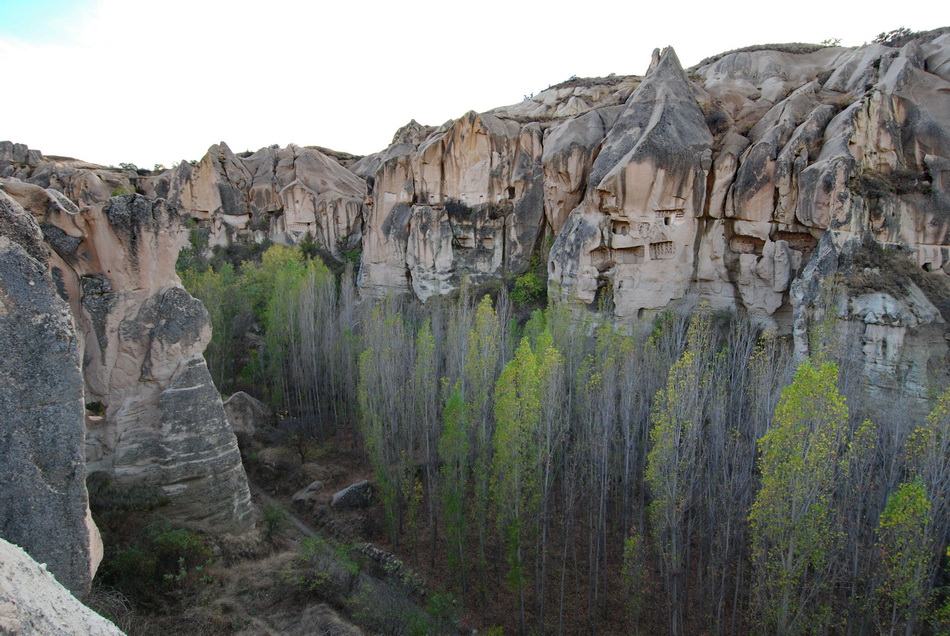
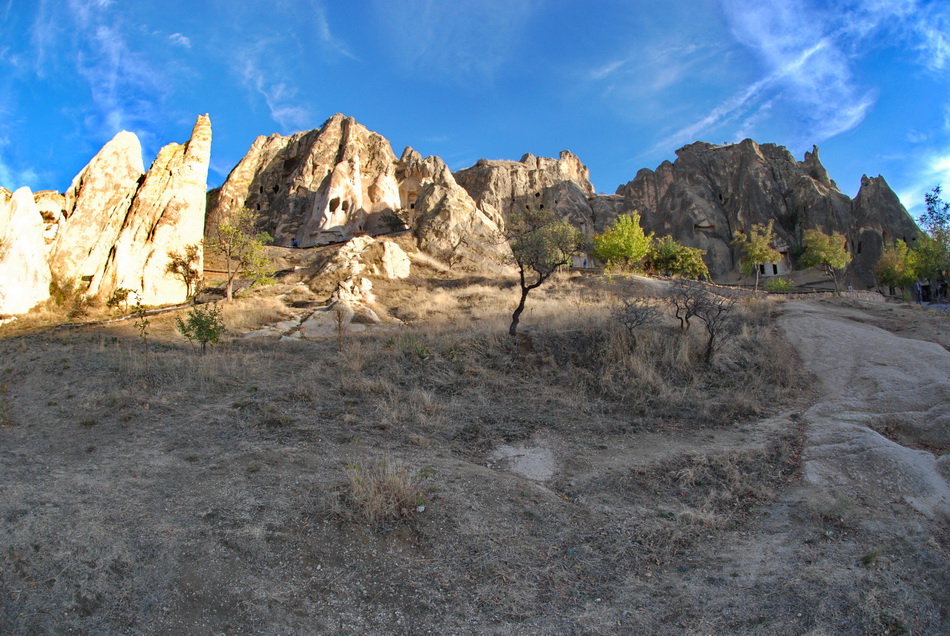
Cappadocia is one of Anatolia’s most remarkable landscapes, where nature and human labour have shaped one another over centuries. Layers of volcanic tuff formed by eruptions of Mount Erciyes, Mount Hasan and other volcanoes were gradually sculpted by wind and water. The fairy chimneys, valleys and rocky hills visible today are the result of this long geological process.
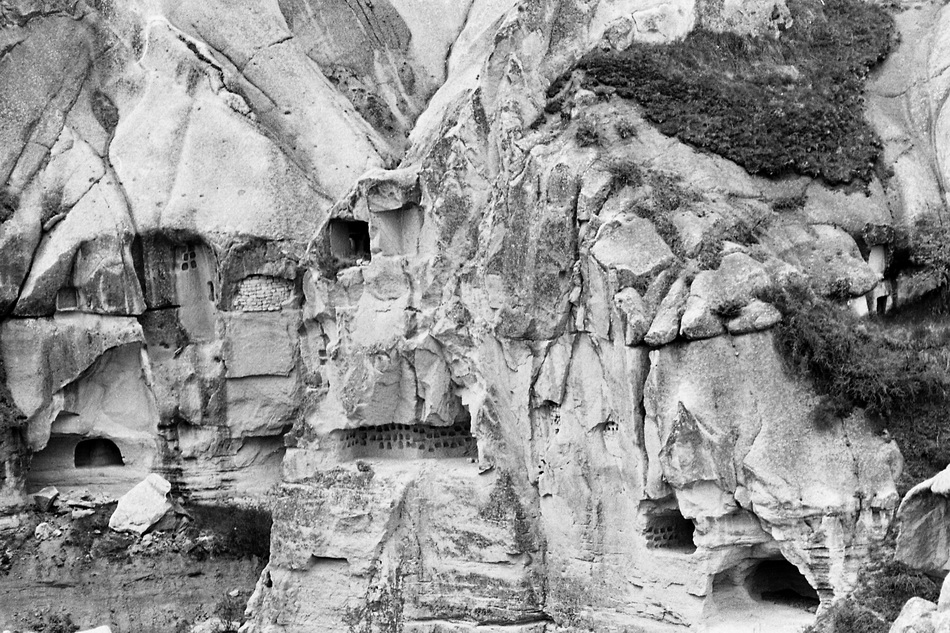
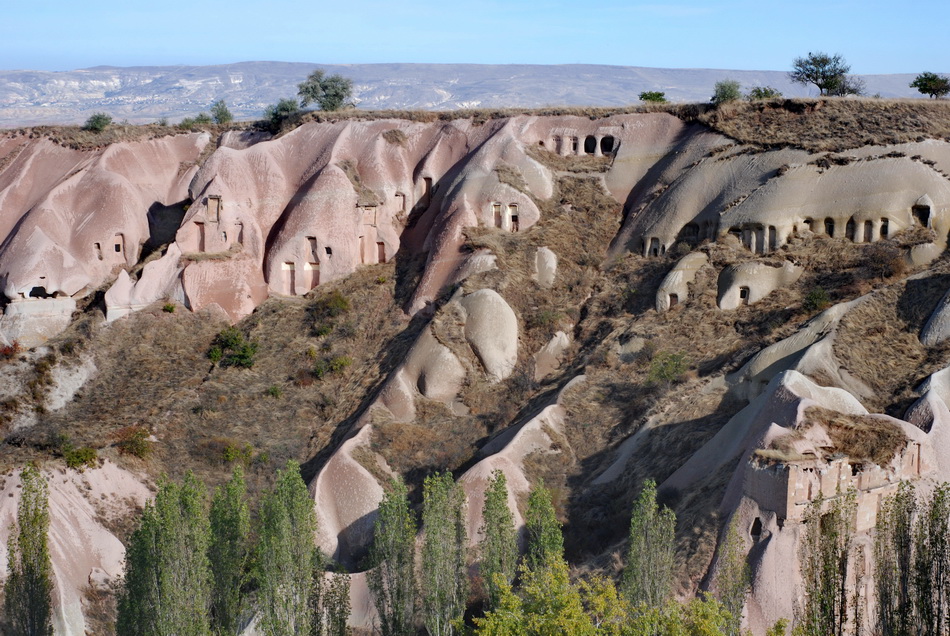
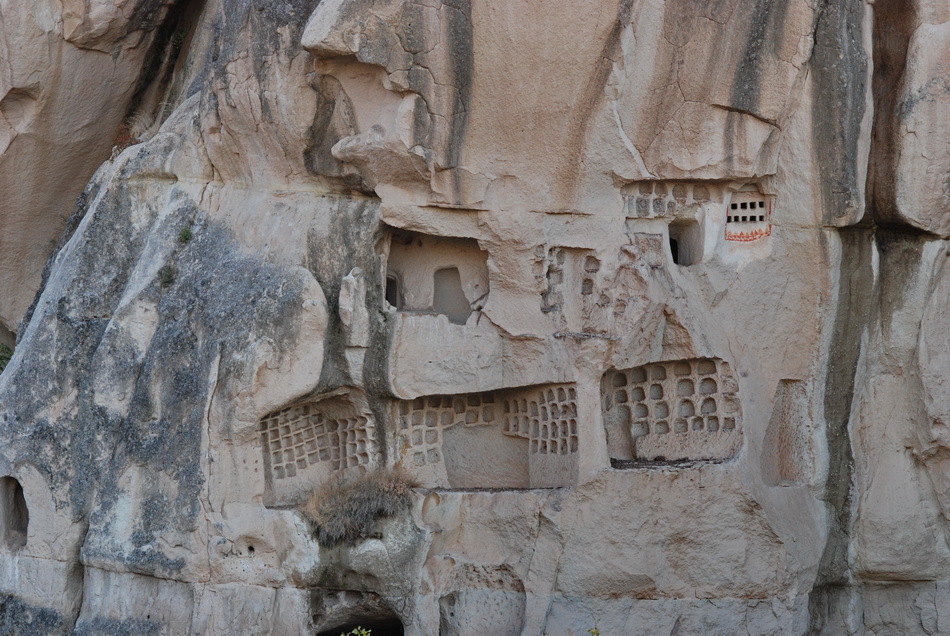
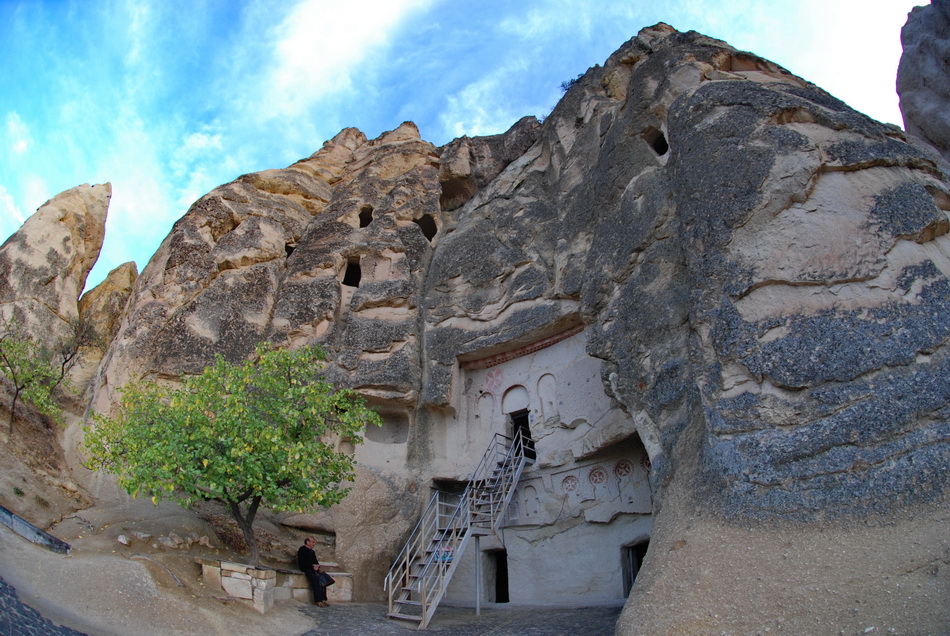
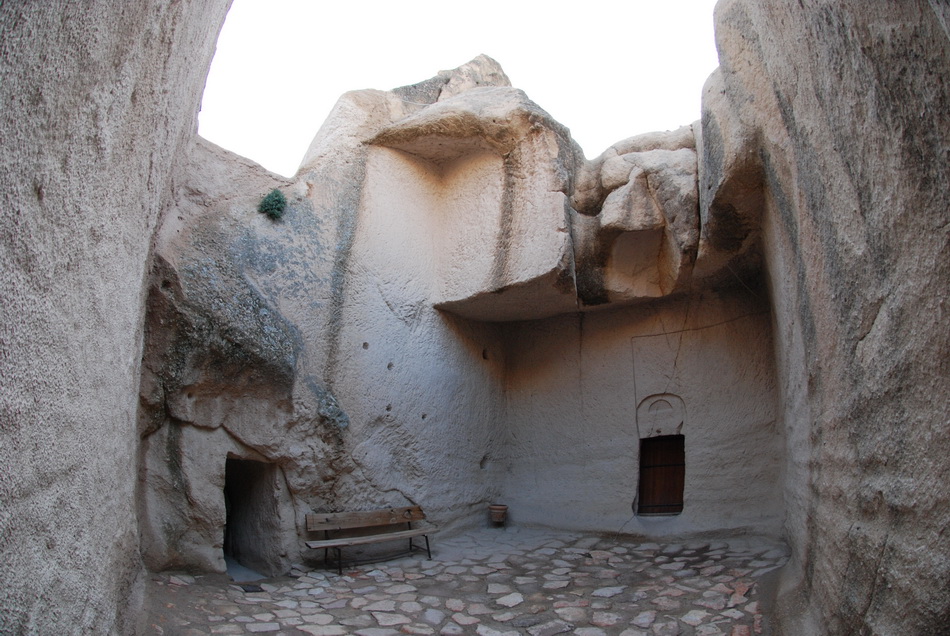
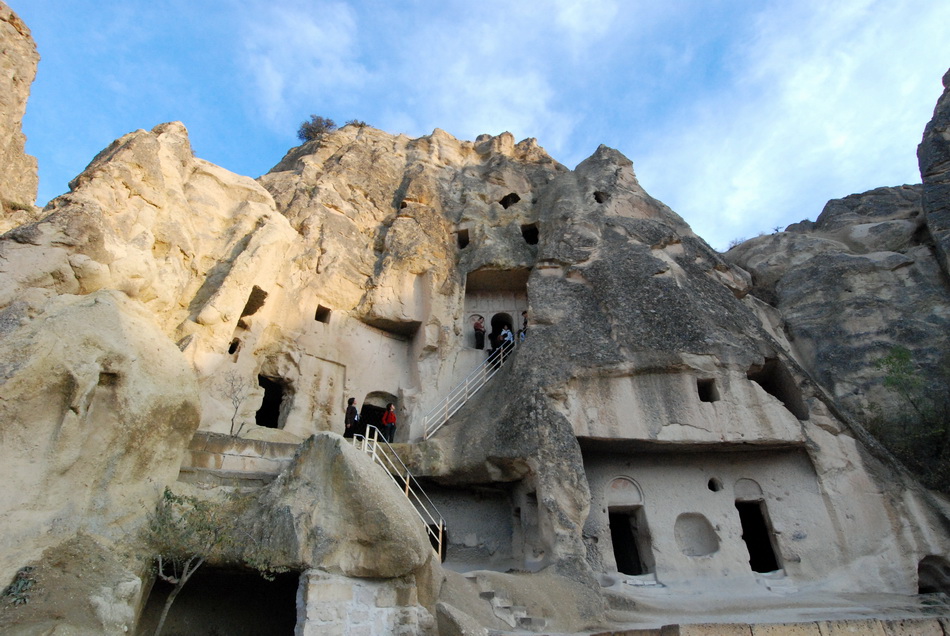
Yet Cappadocia is extraordinary for more than its natural formations. For thousands of years, people have carved the soft volcanic rock into homes, storerooms, dovecotes, places of worship and underground settlements. The rock became a wall of a house, the vault of a church or the protective shell of a cellar.
Through a history extending from the Hittites and Persians to the Hellenistic, Roman and Byzantine periods, the region has been home to many cultures. Its rock-cut churches and monasteries became particularly important in the Christian era. The frescoes of Göreme and Ihlara remain among the most valuable traces of that heritage.
I photographed Cappadocia on two journeys, thirty-two years apart. In 1977 I visited Avanos and Zelve; in 2009 I returned to explore Ihlara Valley, Derinkuyu and the churches around Göreme. The two visits allowed me to encounter different dimensions of the same landscape.
Avanos and Zelve — 1977
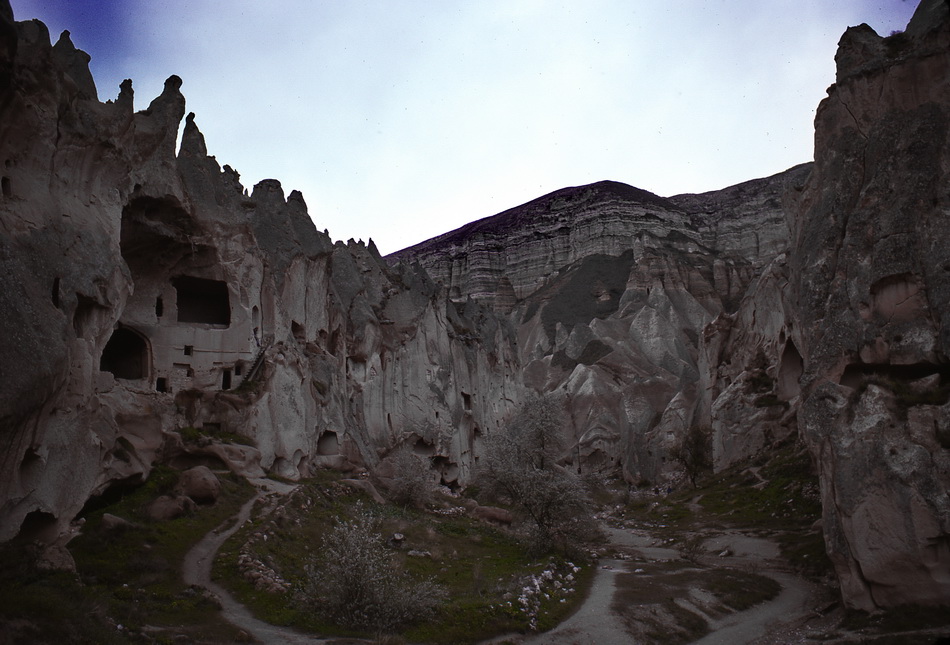
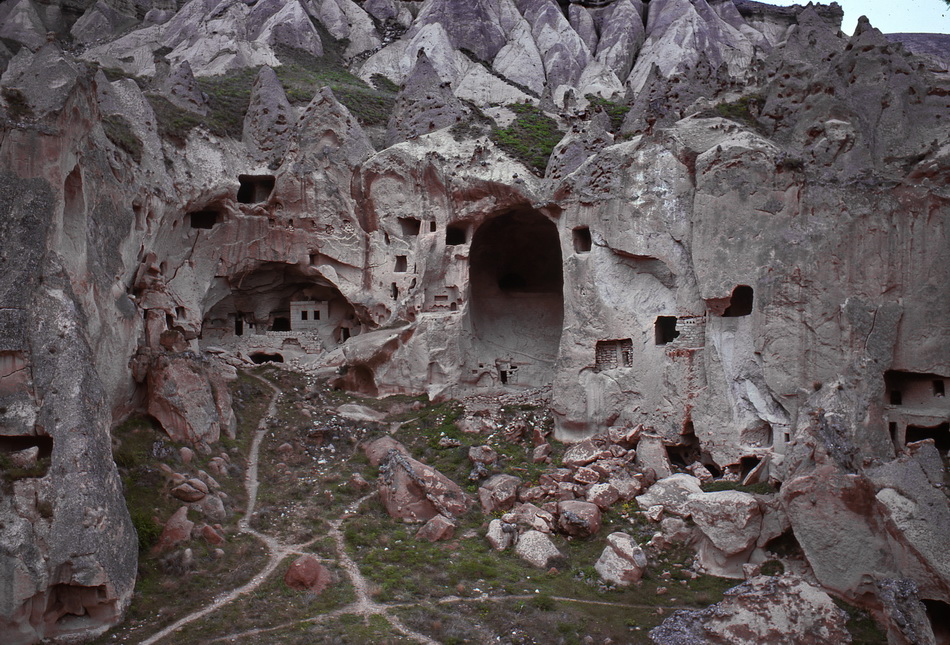
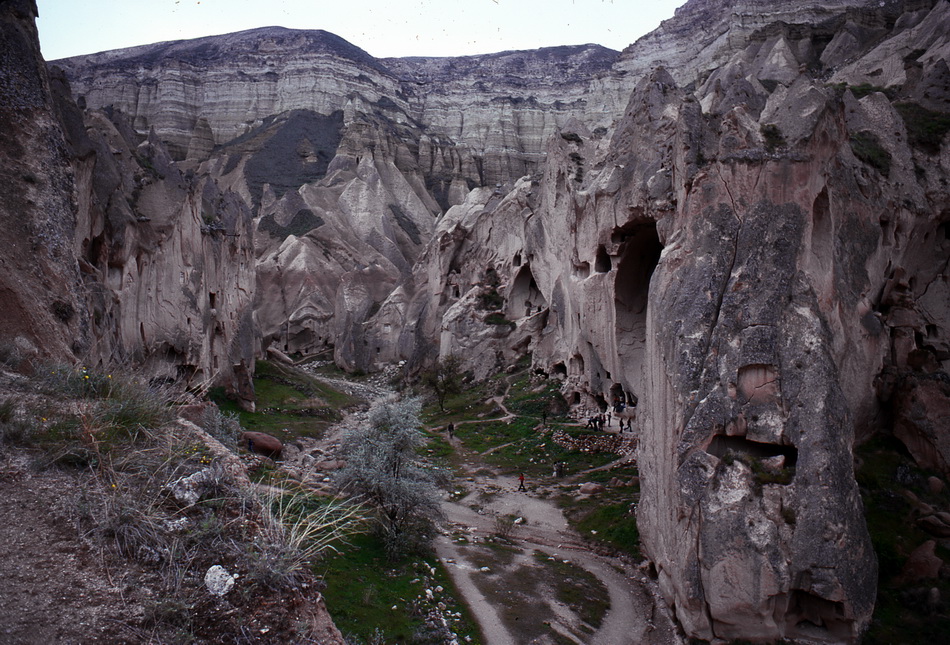
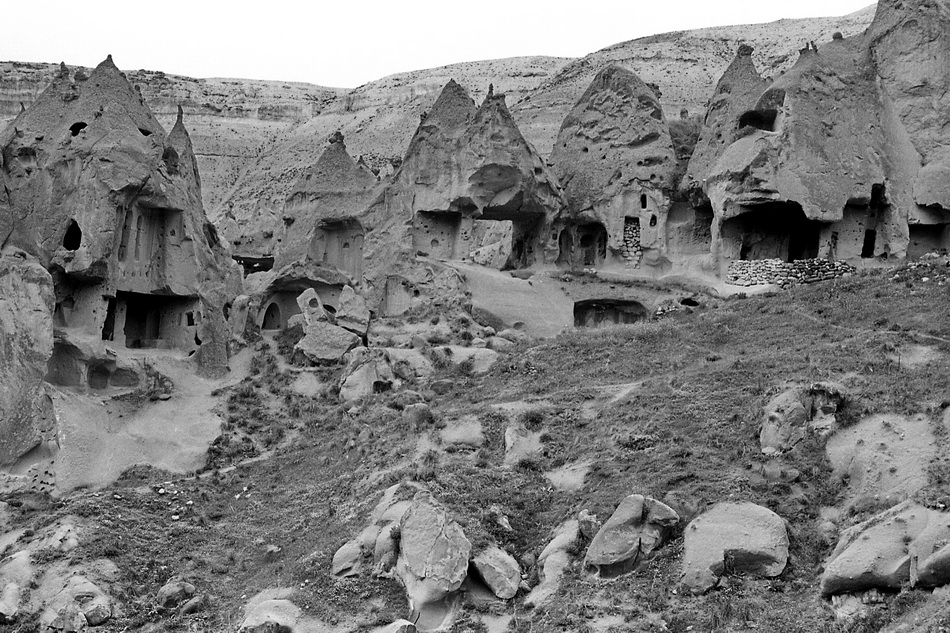
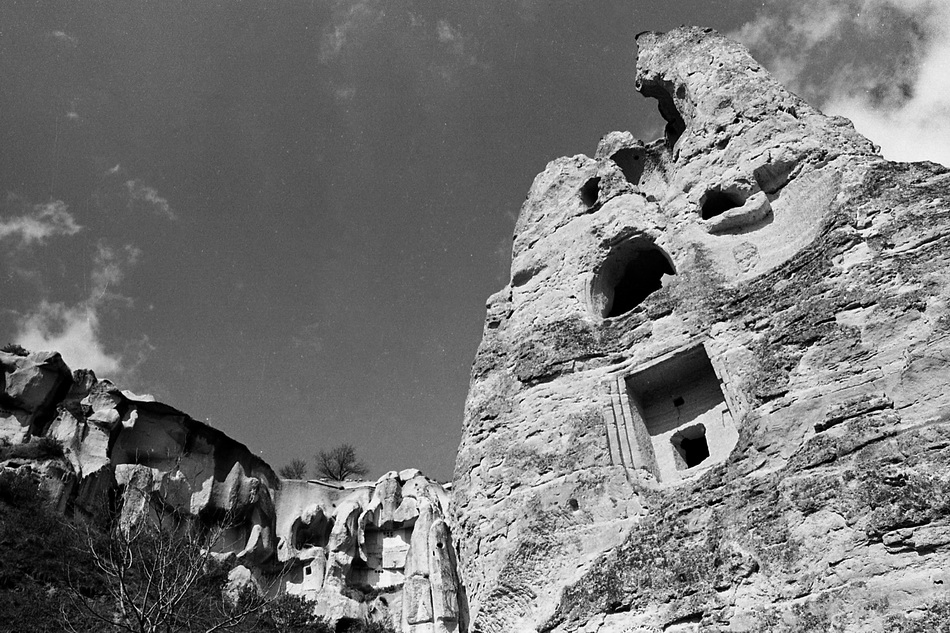
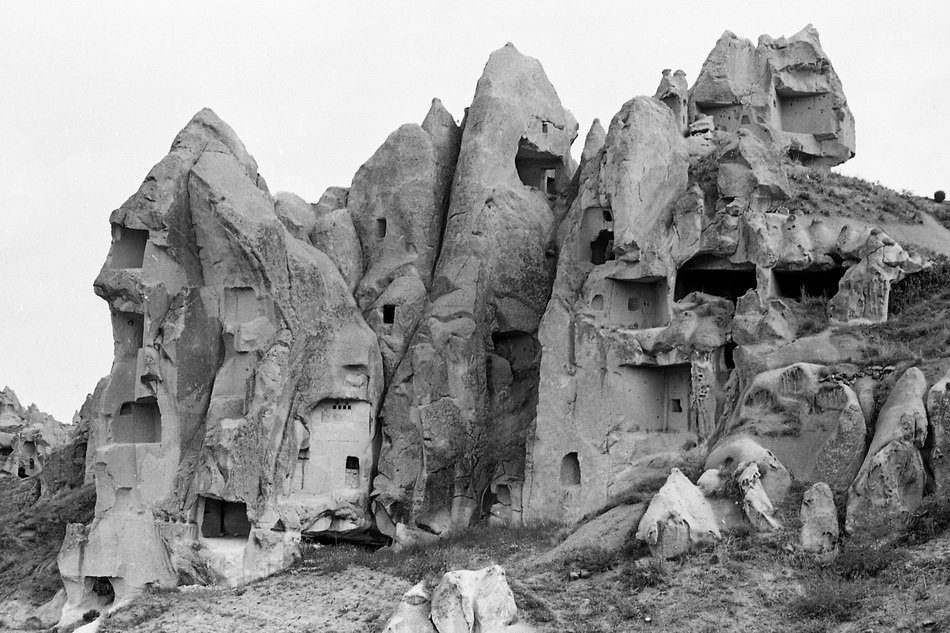
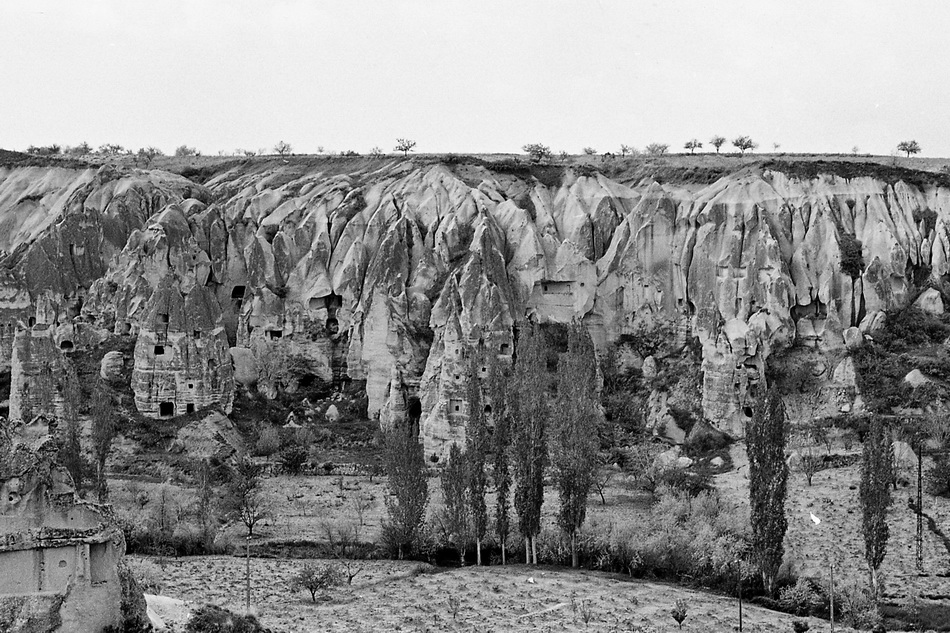
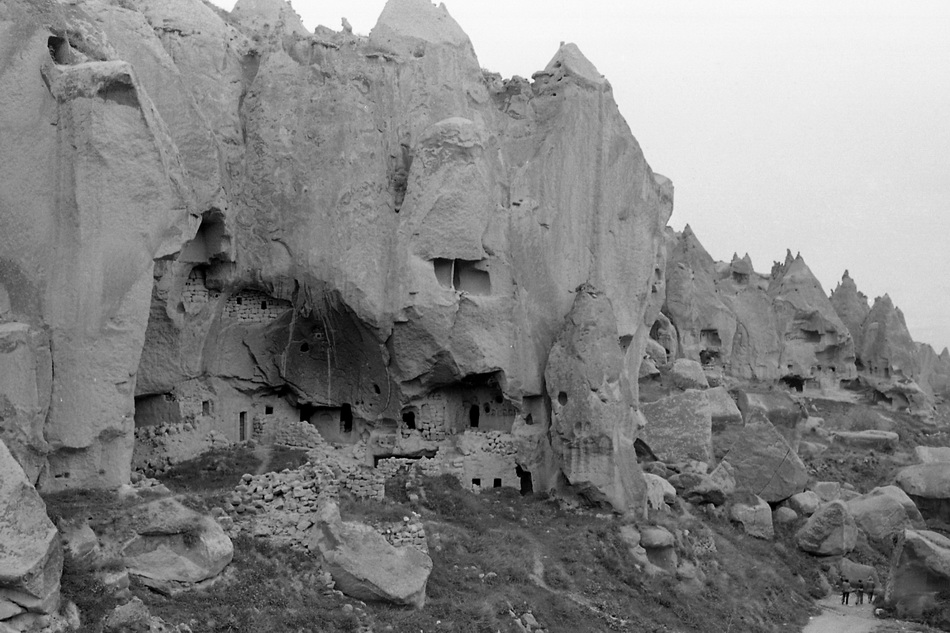
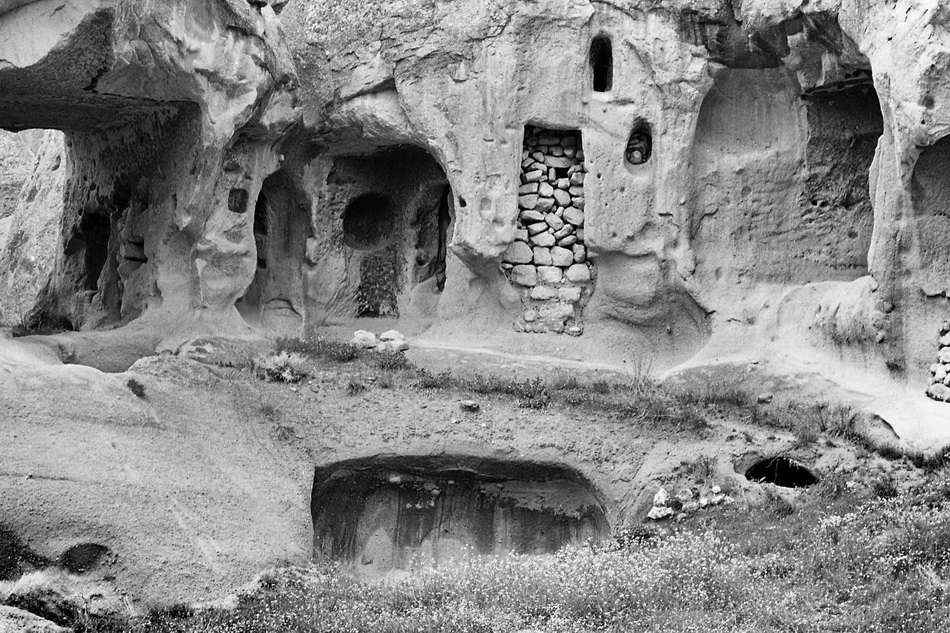
The landscape I encountered in Avanos and Zelve was unlike the Anatolian settlements I knew. Rooms, doors, windows and connecting passages had been carved directly into the rock. Here, a landscape shaped by nature had been transformed into a place for human life.
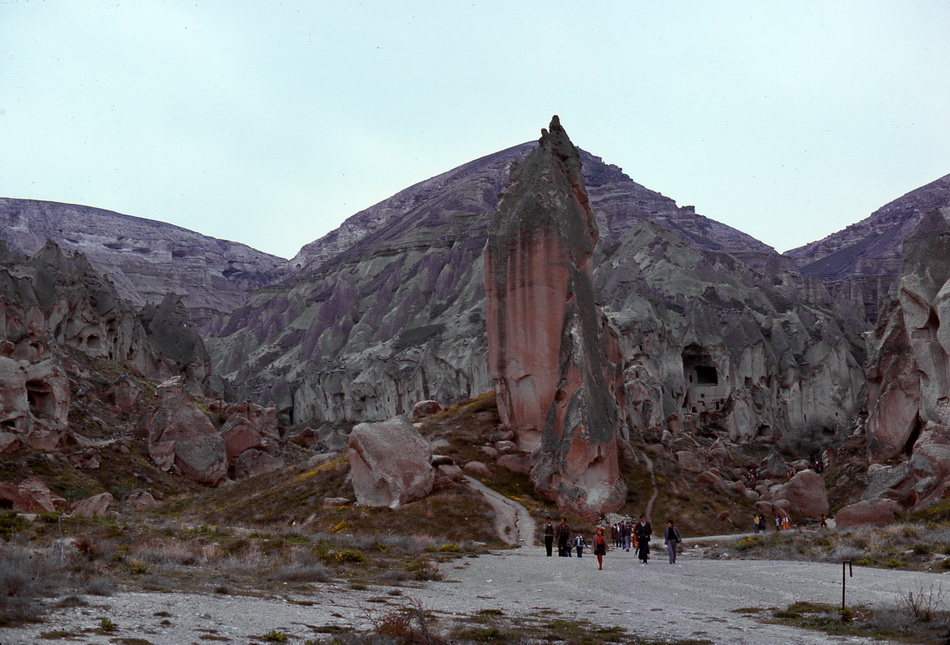
Zelve had once been a settlement of rock-cut homes, churches and everyday living spaces. Because of the danger of falling rocks, it was evacuated in the 1950s and its inhabitants moved to a nearby new settlement. When I photographed Zelve in 1977, the village had been abandoned, but its former life was still clearly visible. Openings in the rock faces, dovecotes and adjoining spaces stood as quiet witnesses to those who had lived there.
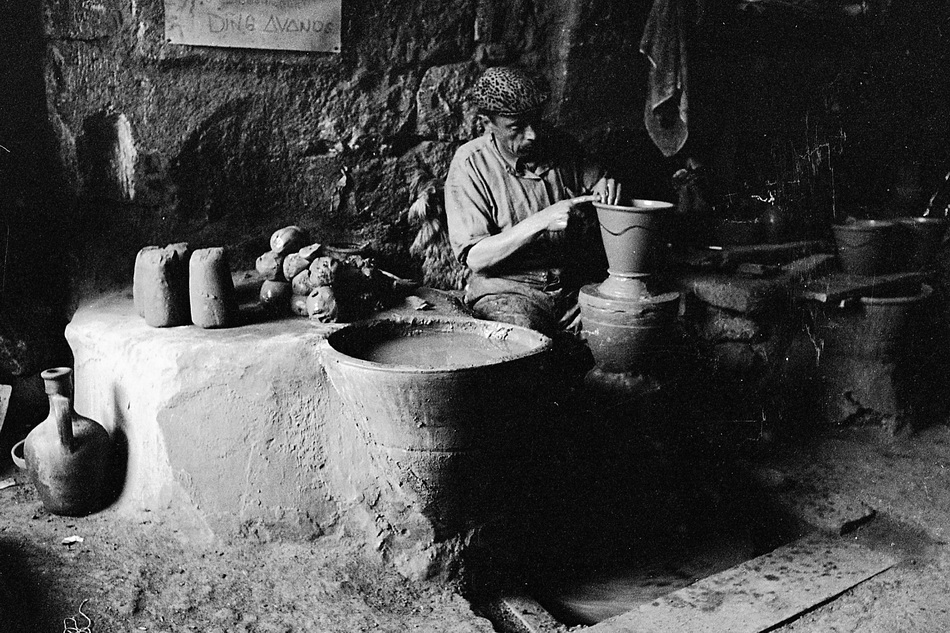
Avanos, meanwhile, was known for its pottery tradition, developed around the clay of the Kızılırmak River. While I was photographing a potter at work, someone asked whether I liked cold tea. Thinking I might discover a new flavour, I said yes. Only after tasting the drink served in a small earthenware cup did I realise it was wine. I liked it very much. They told me that many people in the area made their own wine.
During the same journey, I was surprised when grapes were served at dinner in May, months before the new harvest. Their stems were dry, yet the grapes themselves were still juicy and fresh. When I asked how they had been kept, I was told they had been stored in natural cellars within the rocks.
These two small encounters helped me understand Cappadocia’s rock architecture in a different way. The rocks were not simply material for houses and churches. They were also places where people stored what they produced and met the practical needs of daily life.
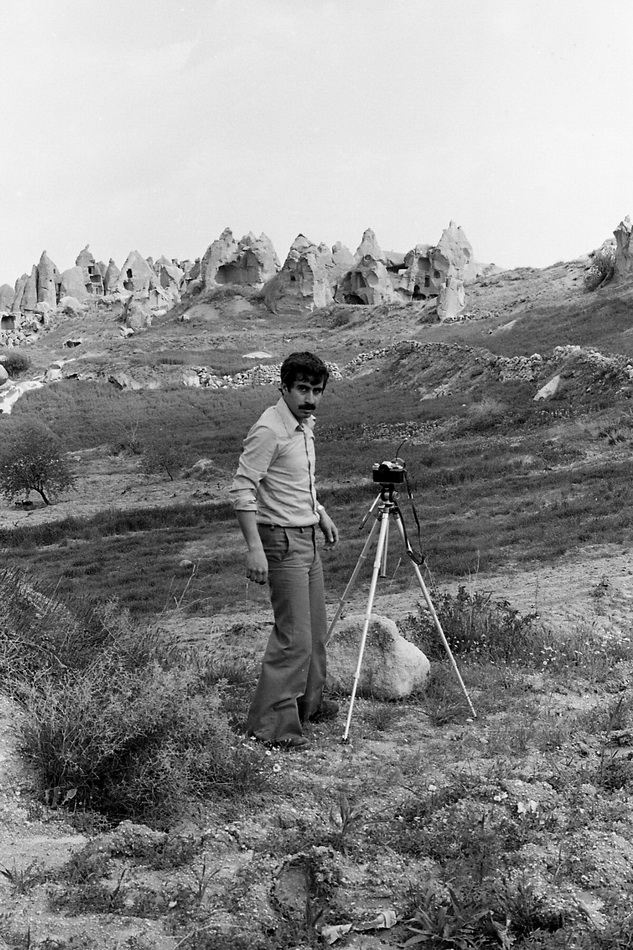
Among my photographs from 1977 is a picture of me as a young man. Looking at it today, I remember the days when I first discovered Cappadocia and the enthusiasm for photography I felt in my youth.
Returning to Cappadocia — 2009
When I returned thirty-two years later, I photographed other layers of the region’s history. The rock churches of Ihlara Valley, the underground spaces of Derinkuyu, Üzümlü Church and the frescoes of Göreme opened a wider historical world behind the rock settlements I had seen on my first visit.
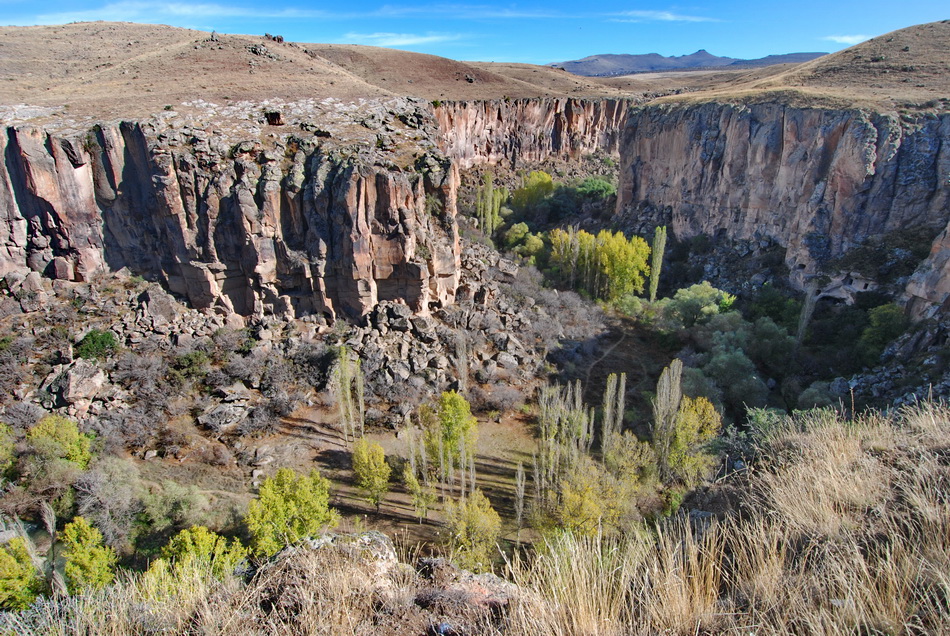
Ihlara Valley
Carved through volcanic tuff by the Melendiz River, Ihlara Valley is one of Cappadocia’s most striking places, with high rock walls, a green corridor along the water and churches cut into the cliffs.
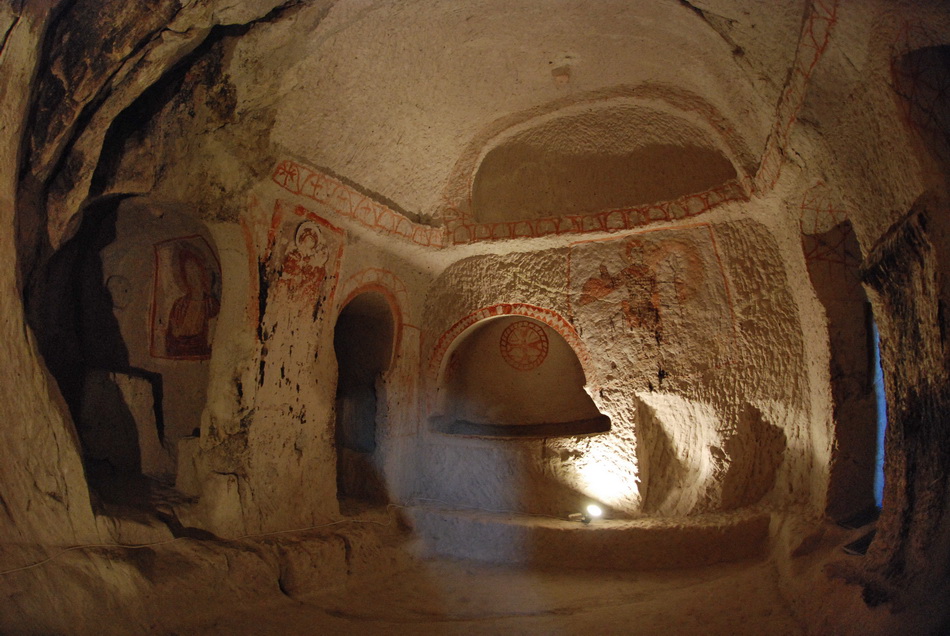
Monastic life, especially during the Byzantine period, led to the creation of many places of worship in the valley. Frescoes within these churches depict biblical scenes and important figures of Christian tradition.
Here the natural rock walls and the spaces carved by people form an inseparable whole. Places once used for worship and retreat now preserve evidence of the region’s religious and artistic past.
Derinkuyu Underground City
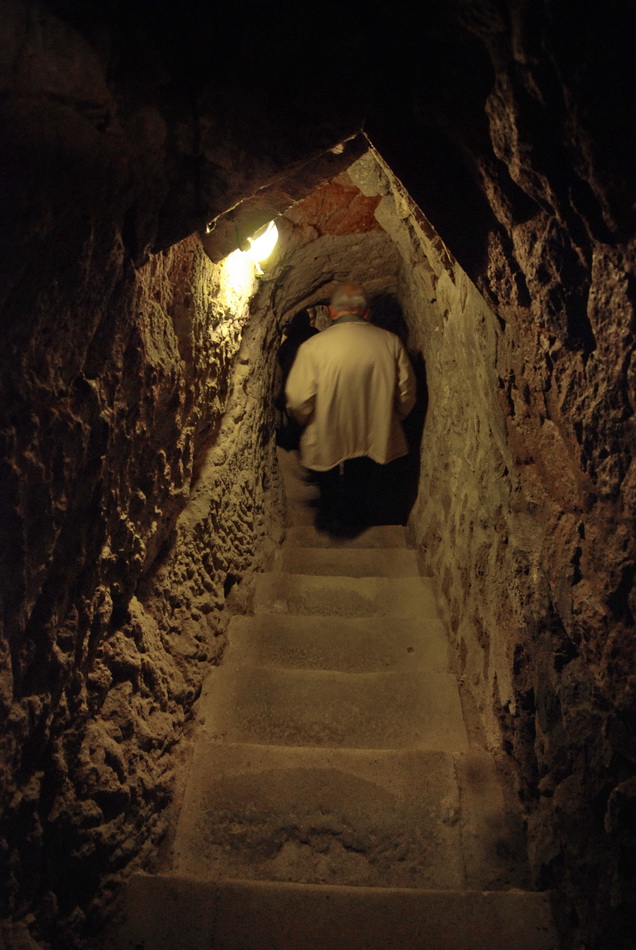
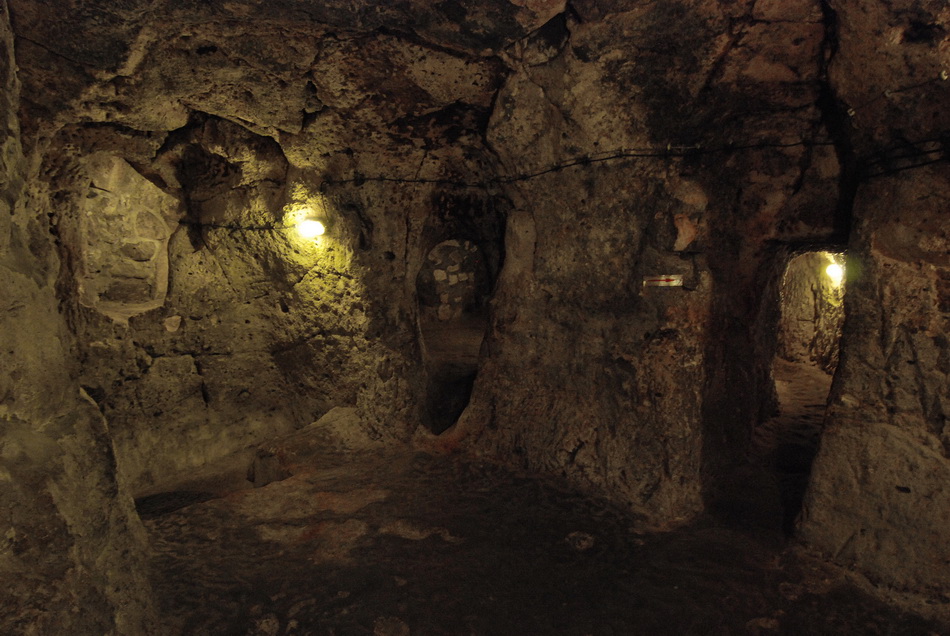
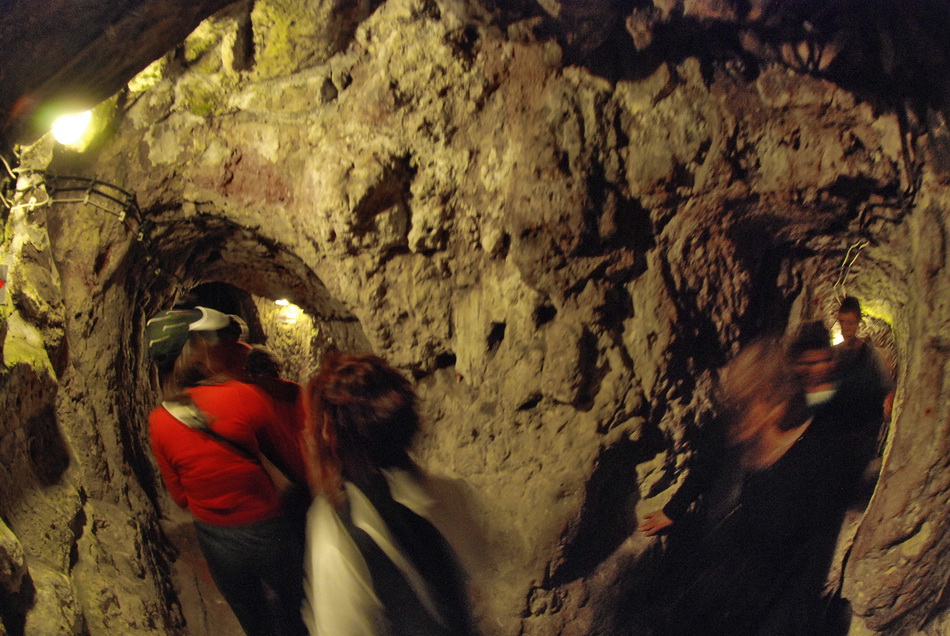
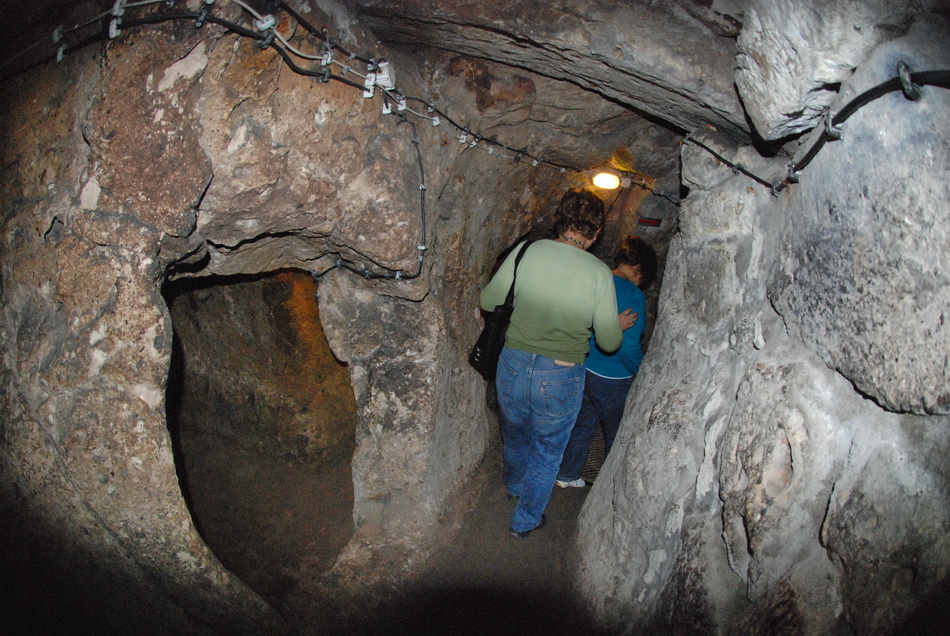
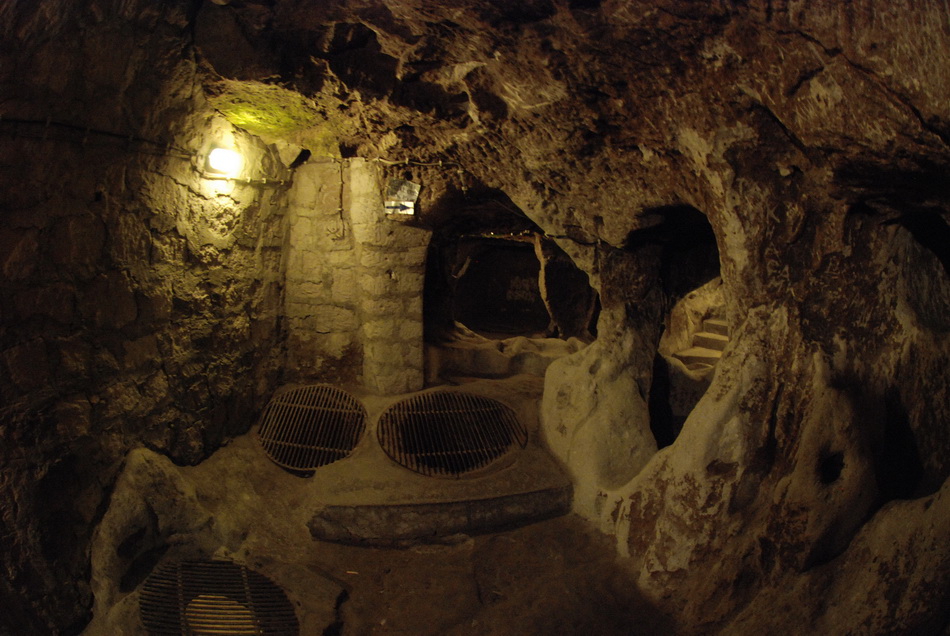
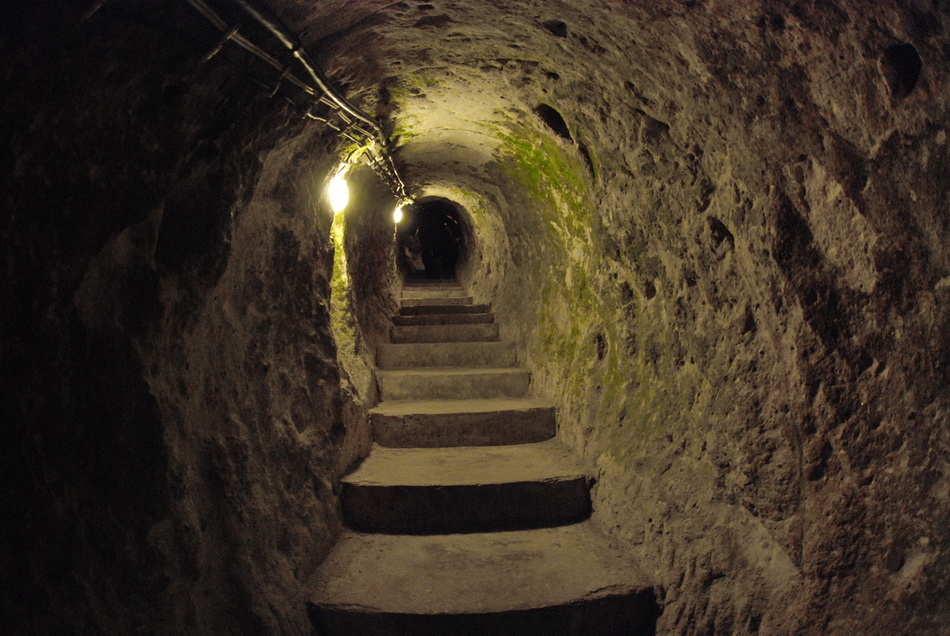
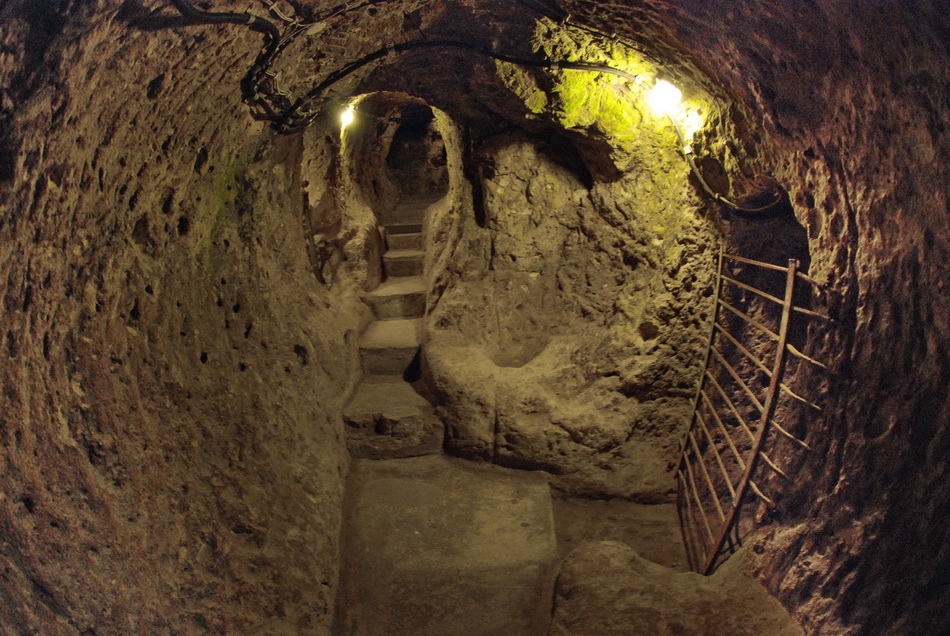
Derinkuyu is one of Cappadocia’s most remarkable underground settlements. Carved and expanded within volcanic tuff over different periods, it contains interconnected levels, narrow passages, rooms, storerooms, kitchens, wells and ventilation shafts.
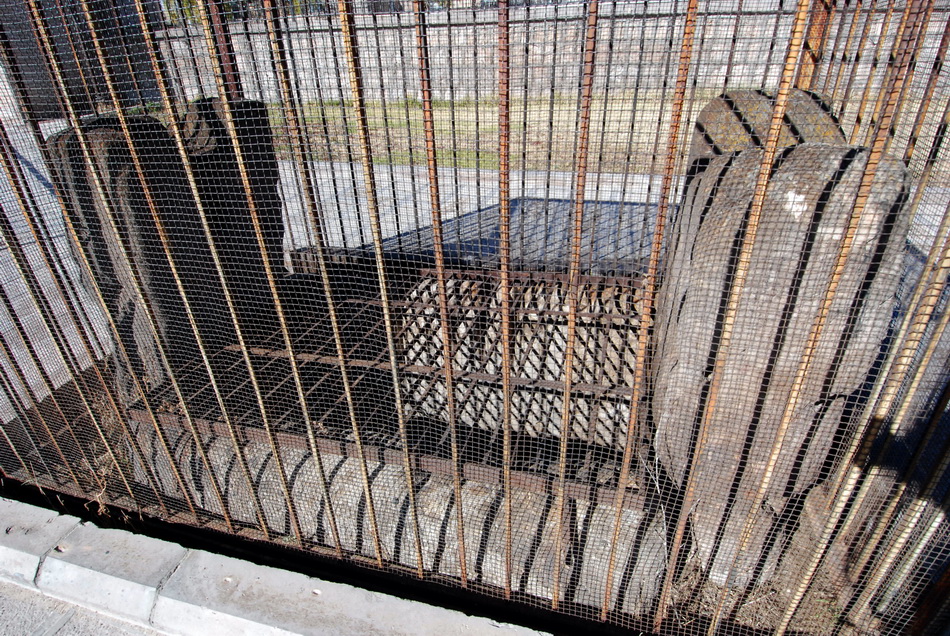
Underground settlements provided refuge in times of danger and allowed people to continue living below the surface for a period. Large circular stone doors that could close passages were important parts of this defensive system.
What struck me at Derinkuyu was not only the depth of its spaces, but also the ventilation shafts and connections between levels that made such a complex settlement usable. I tried to document its narrow passages, stone surfaces and ingenious solutions to underground life.
Church of Saint Theodore Trion — Üzümlü Church
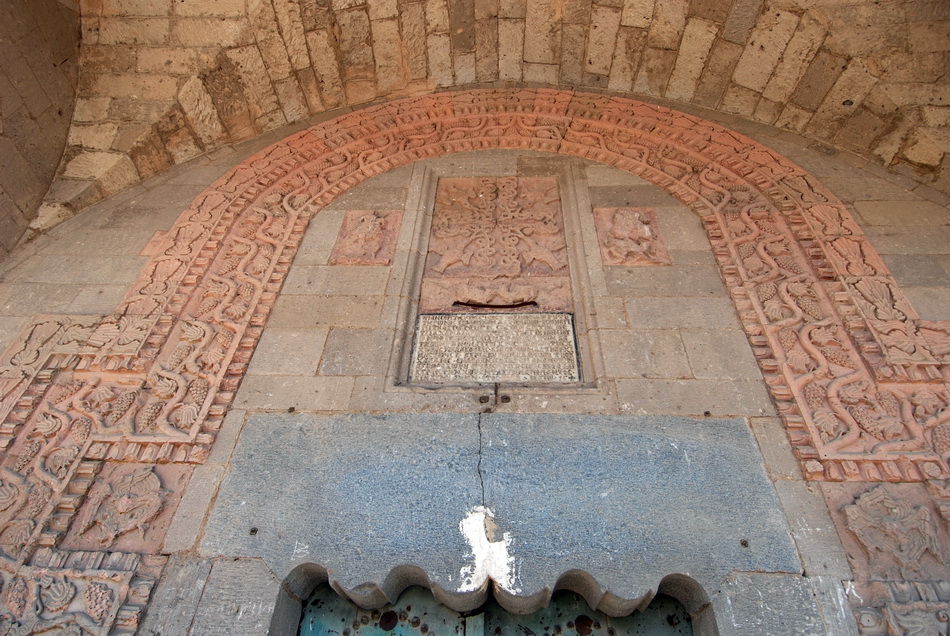
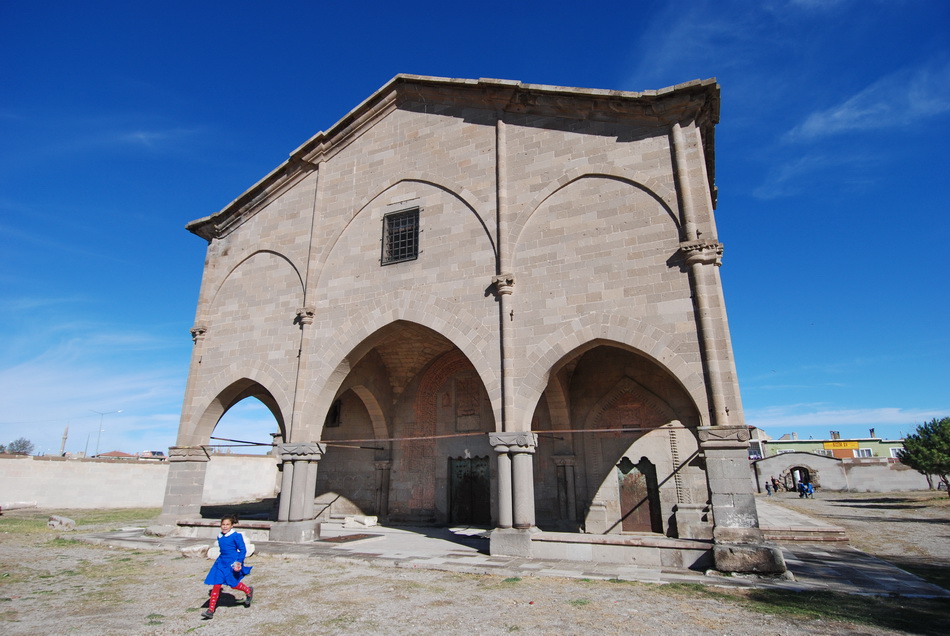
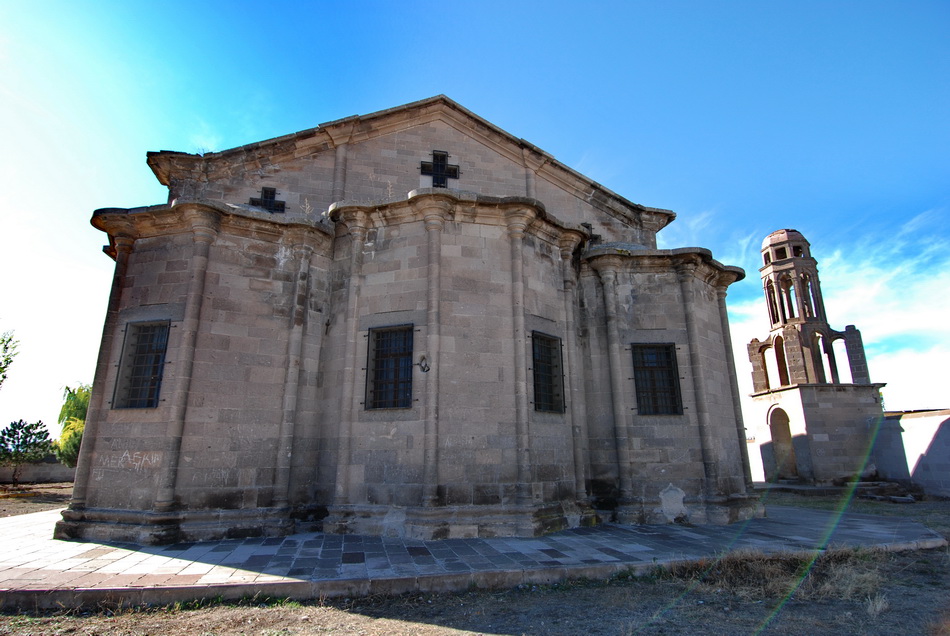
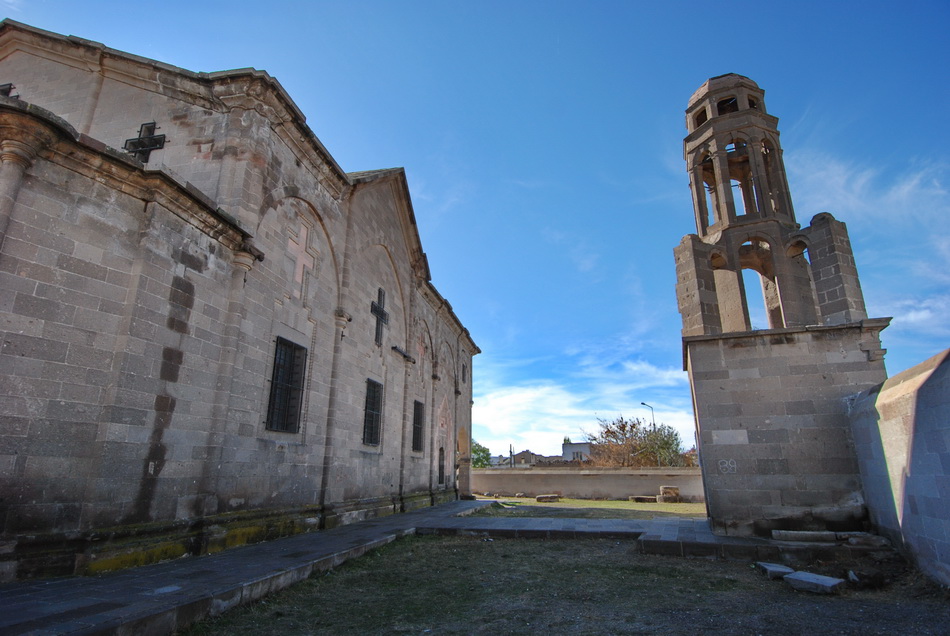
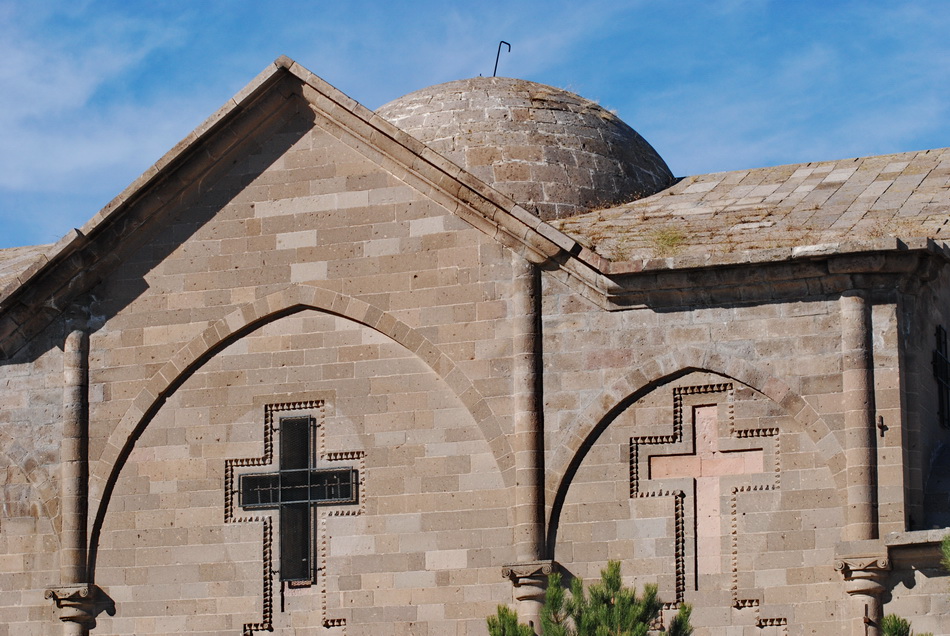
The Church of Saint Theodore Trion, also known as Üzümlü Church, stands in the Derinkuyu district. Built in the nineteenth century, it is an important architectural reminder of the religious life of the region’s Greek Orthodox community during the Ottoman period.
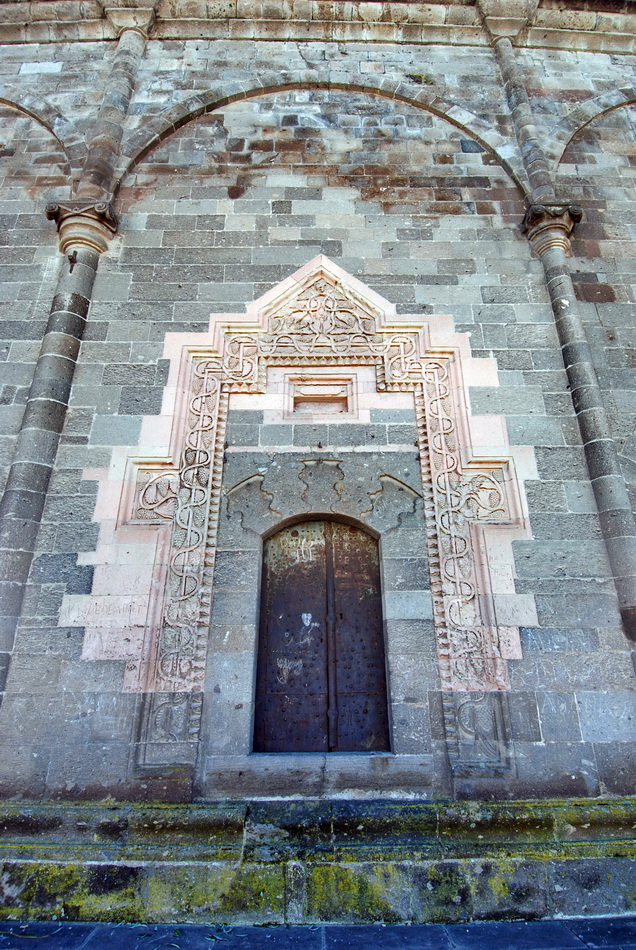
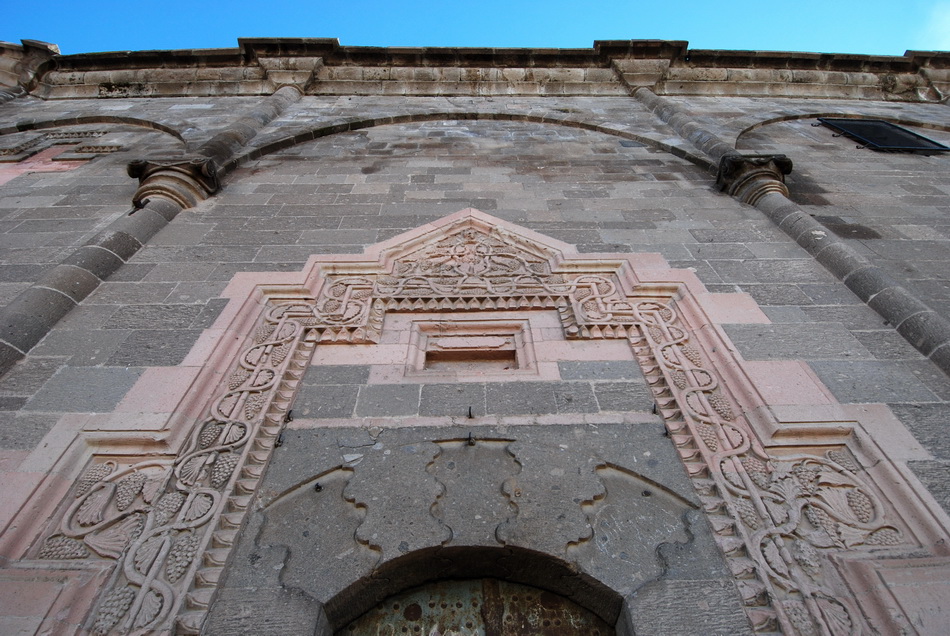
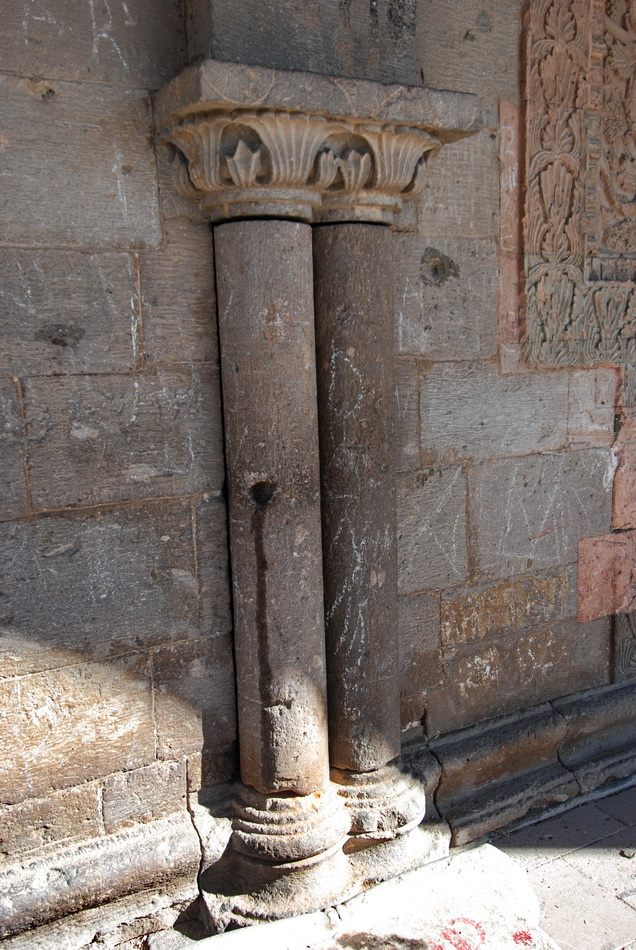
Unlike Cappadocia’s early rock-cut churches, this building is distinguished by its dressed-stone construction. Its arches, spatial arrangement and architectural details show how Christian traditions continued in different forms over many centuries.
Photographing Üzümlü Church reminded me that Cappadocia’s history cannot be confined to early Christianity and the Byzantine period. Religious and cultural life in this landscape continued into much more recent times.
The Rock Churches of Göreme
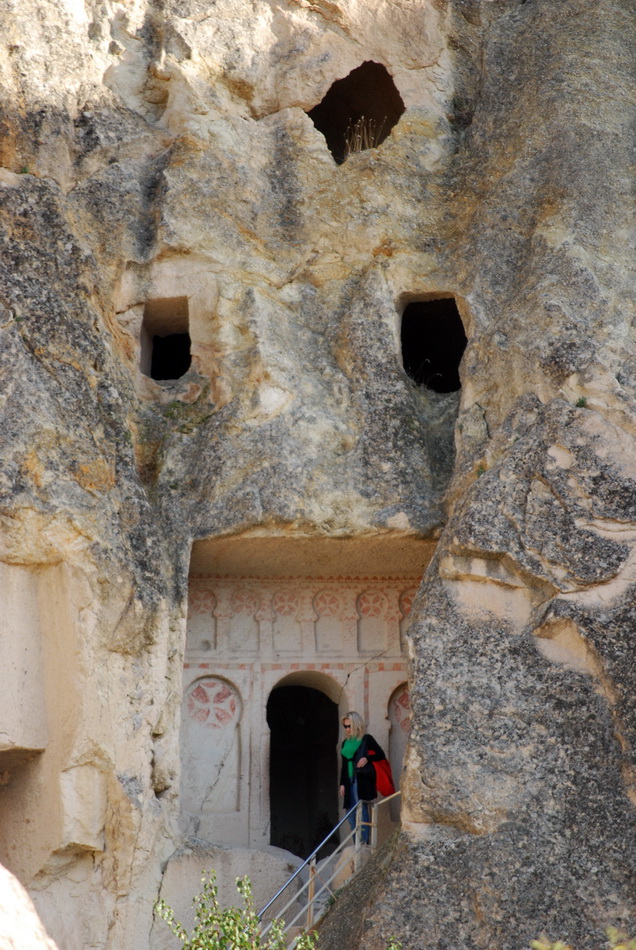
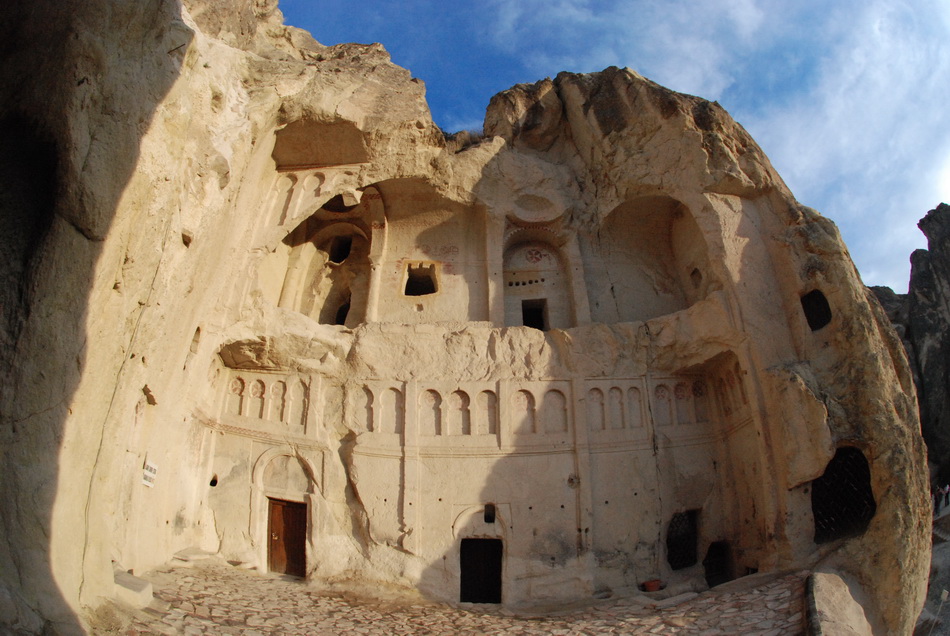
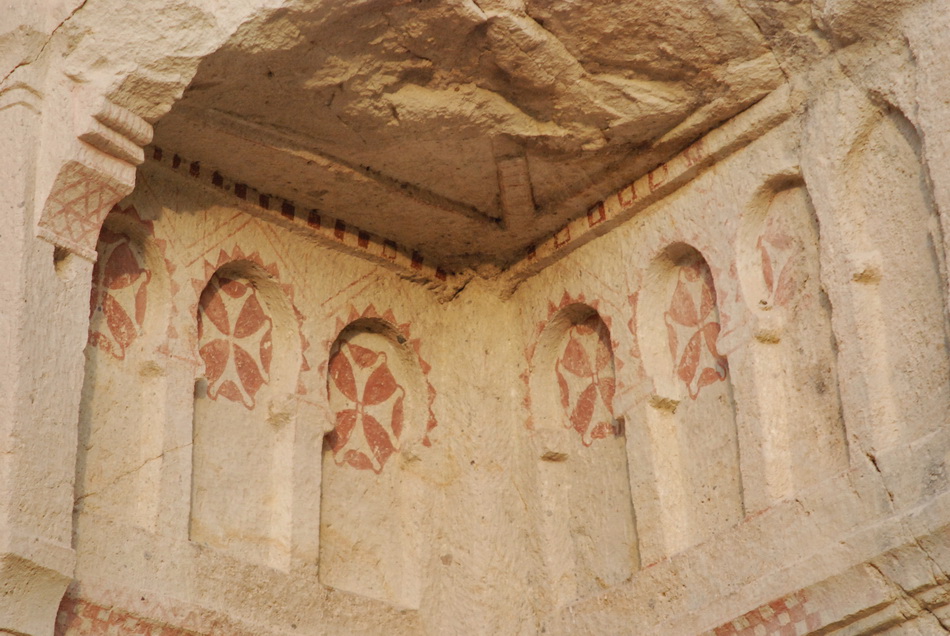
Göreme is among Cappadocia’s most important centres of rock-cut churches and monastic settlements. Religious architecture, particularly during the Middle Byzantine period, created an exceptional concentration of churches here.
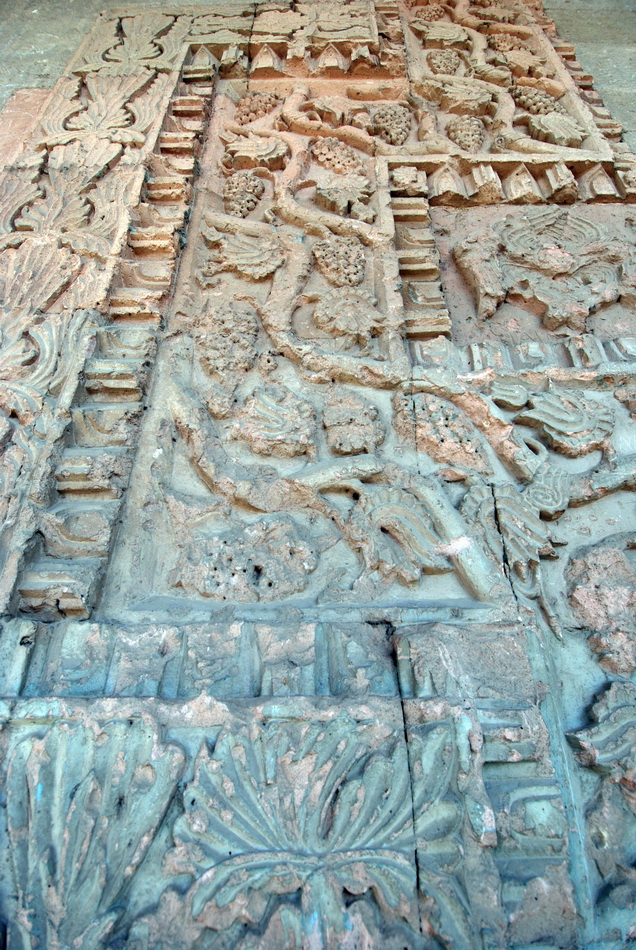
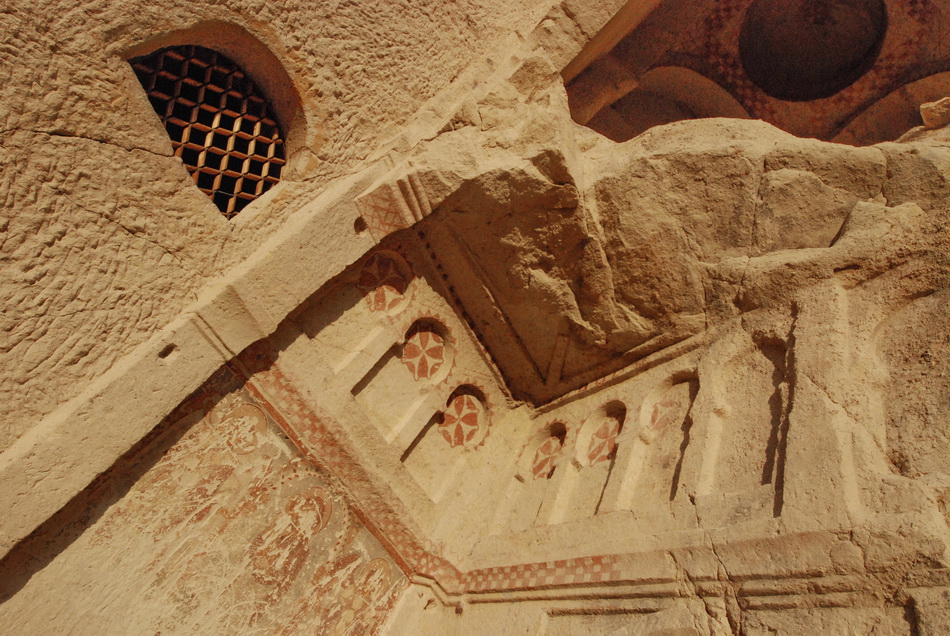
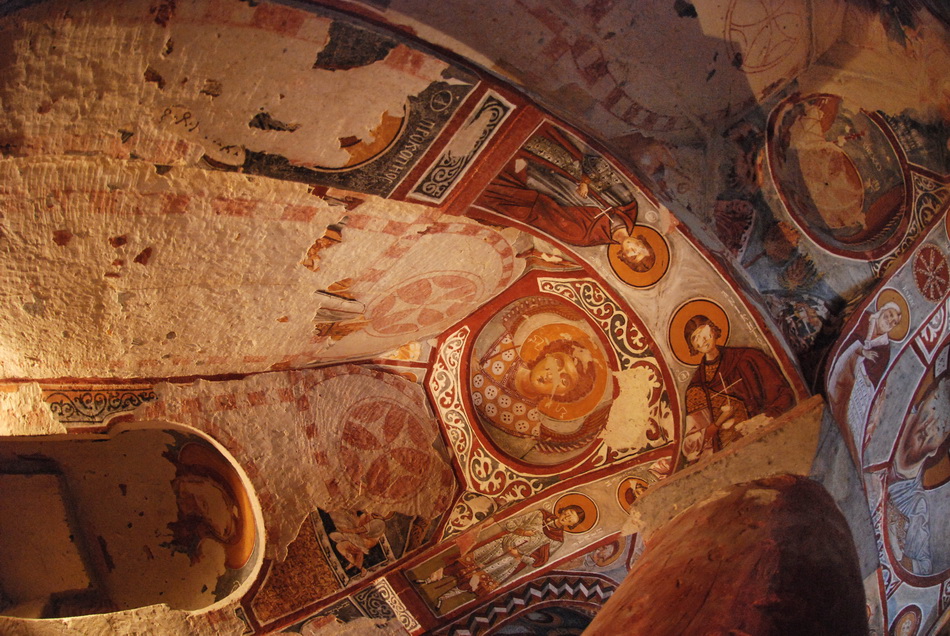
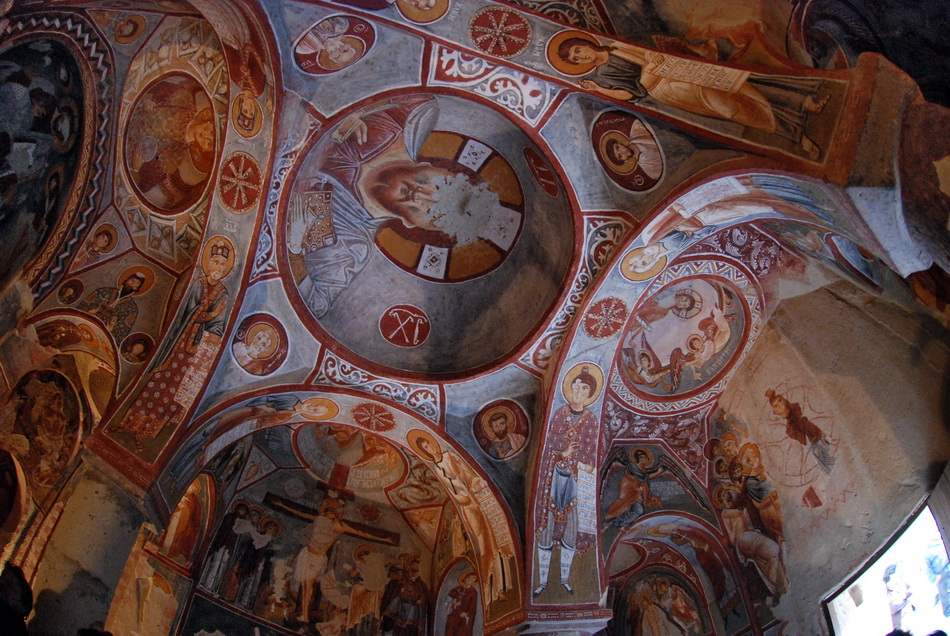
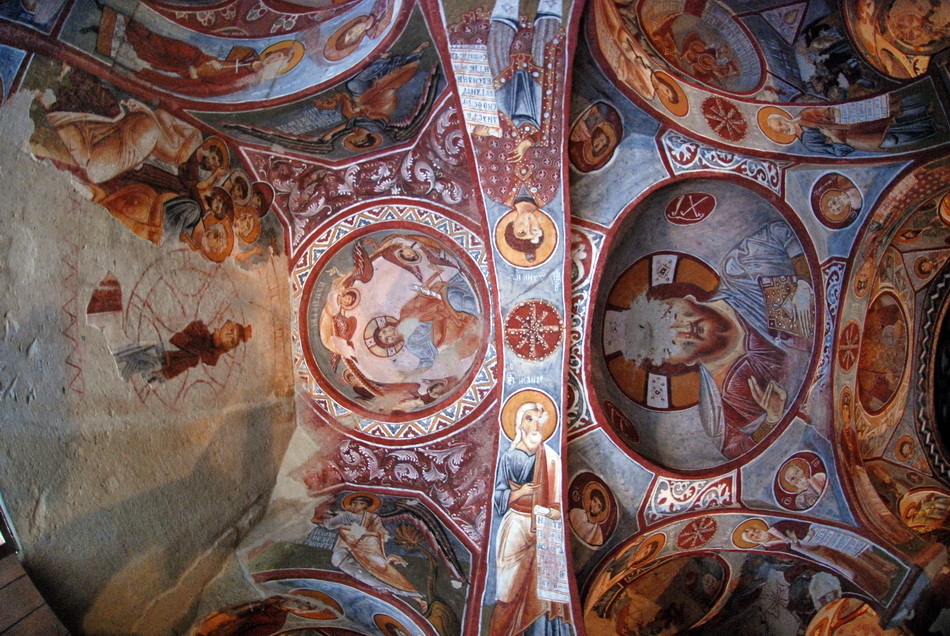
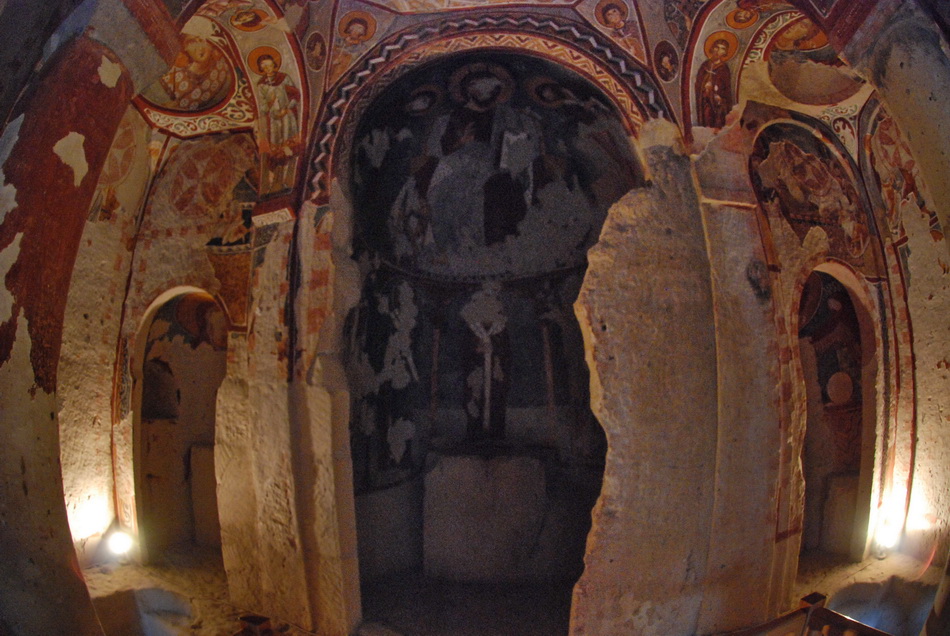
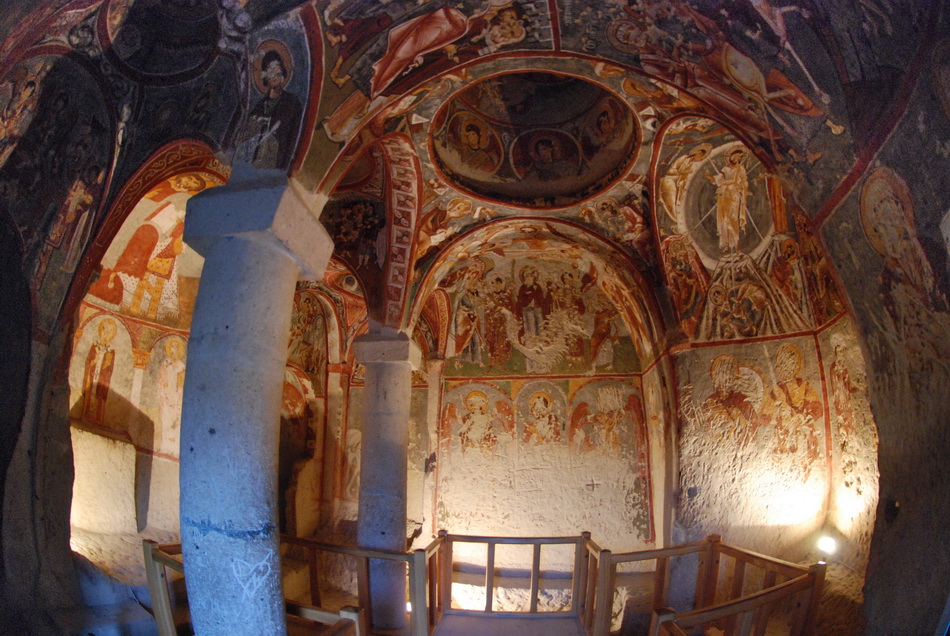
Domes, columns, arches and apses were carved into the rock, reproducing forms familiar from built architecture within the natural stone itself. Frescoes on the walls and ceilings gave these interiors another dimension.
Scenes from the life of Christ, images of Mary, saints and other religious narratives have survived in colours that still speak across the centuries. These paintings are not only records of faith, but also significant documents of Byzantine art and visual storytelling.
In my photographs I sought to show both the spatial qualities of the rock architecture and the details of the frescoes. The coexistence of natural rock and painted imagery reveals Cappadocia’s distinctive historical character.
After Two Journeys
In 1977, I was drawn above all to the traces of life within the rocks and to the people I met. In 2009, I had the opportunity to explore more closely the underground settlements, churches and paintings preserved over centuries.
The photographs from my two journeys show different faces of the same region. The first reflects the curiosity of a young photographer and his encounters with everyday life; the second, a closer attention to historical and architectural heritage.
For me, Cappadocia is more than an extraordinary landscape of fairy chimneys. It is a long human story of learning to live with the rocks, transforming them into homes, places of worship, shelters and cellars.
These photographs, taken in 1977 and 2009, bring together the traces of that story that I encountered at two different moments in my life.