
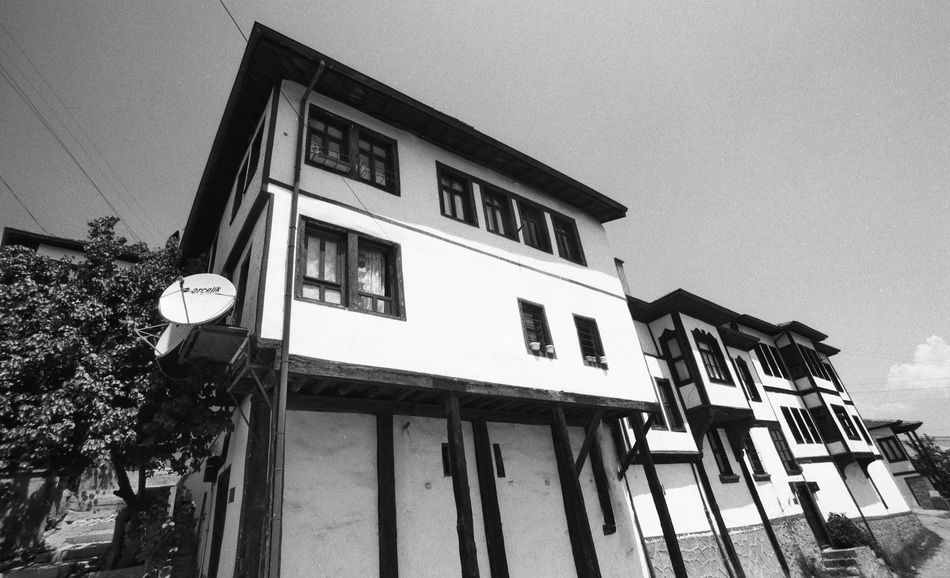
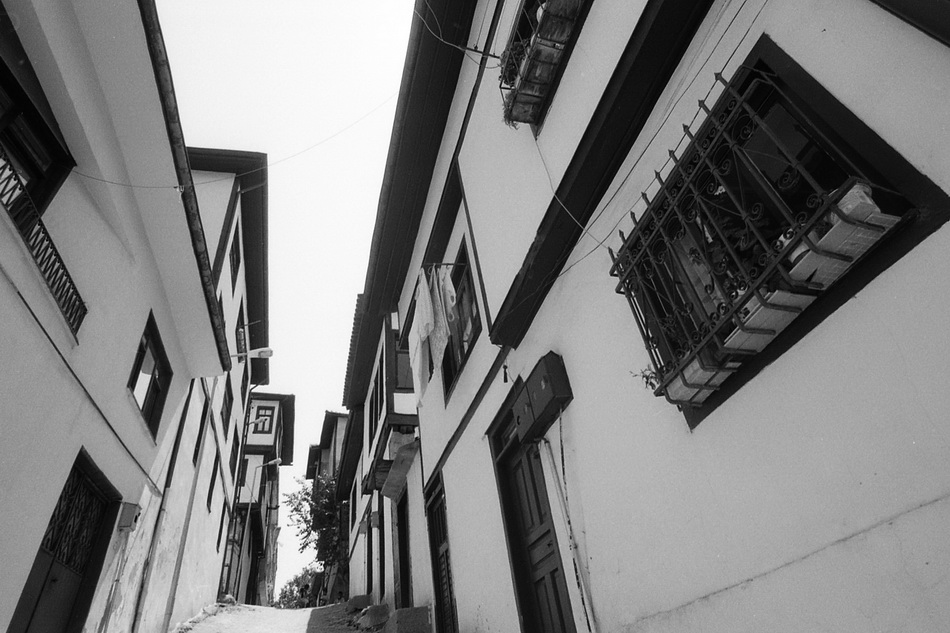
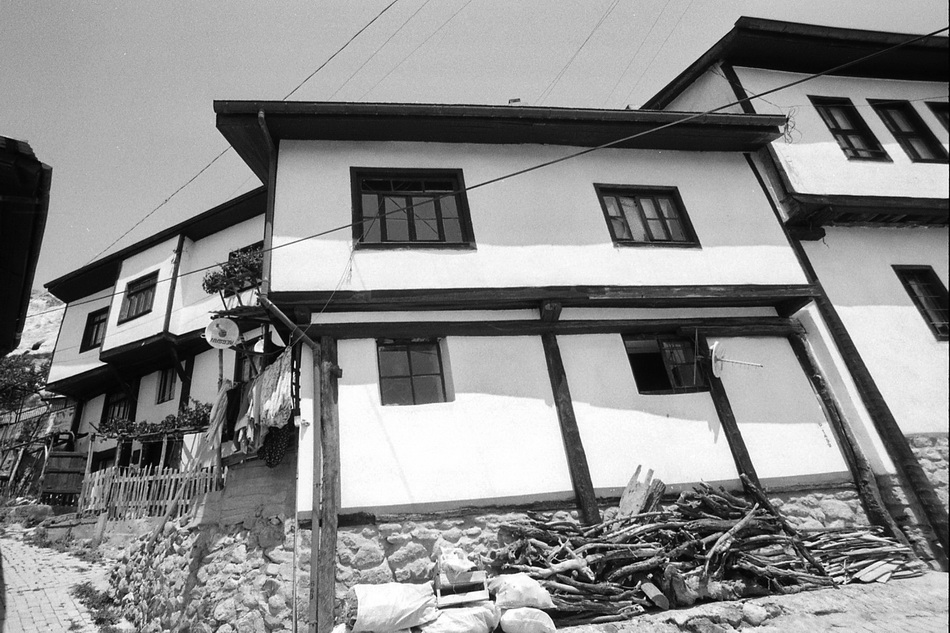
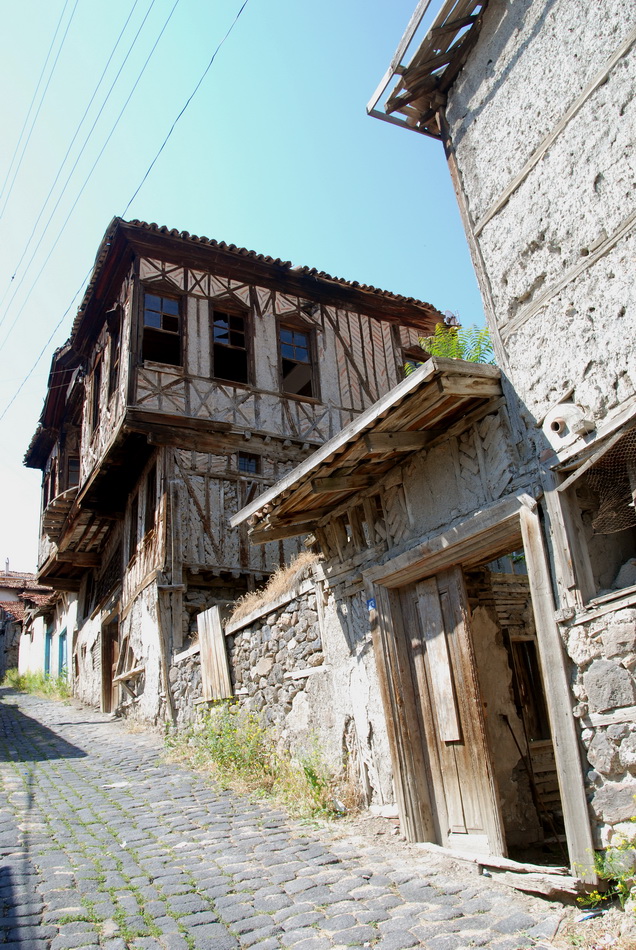
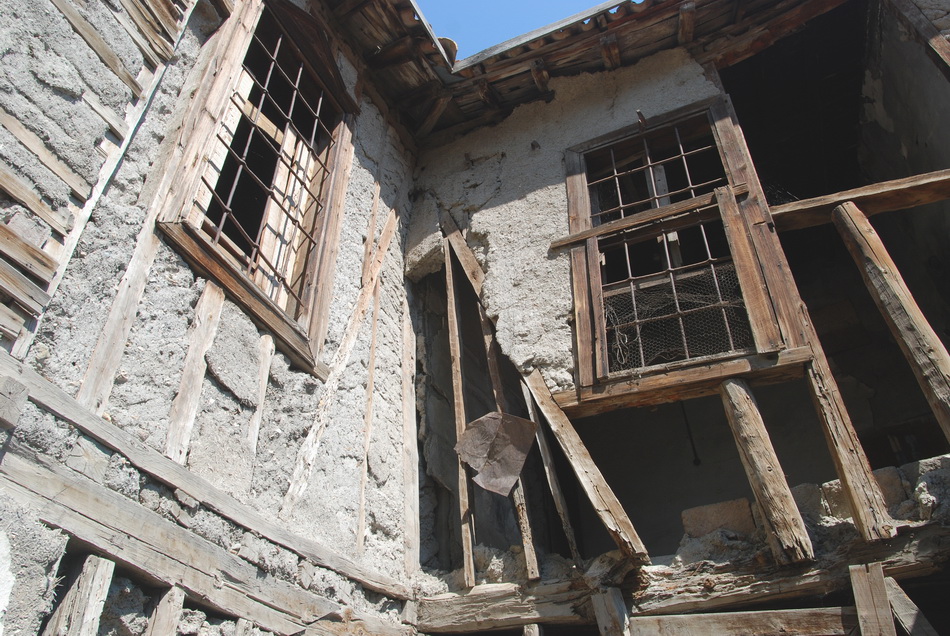
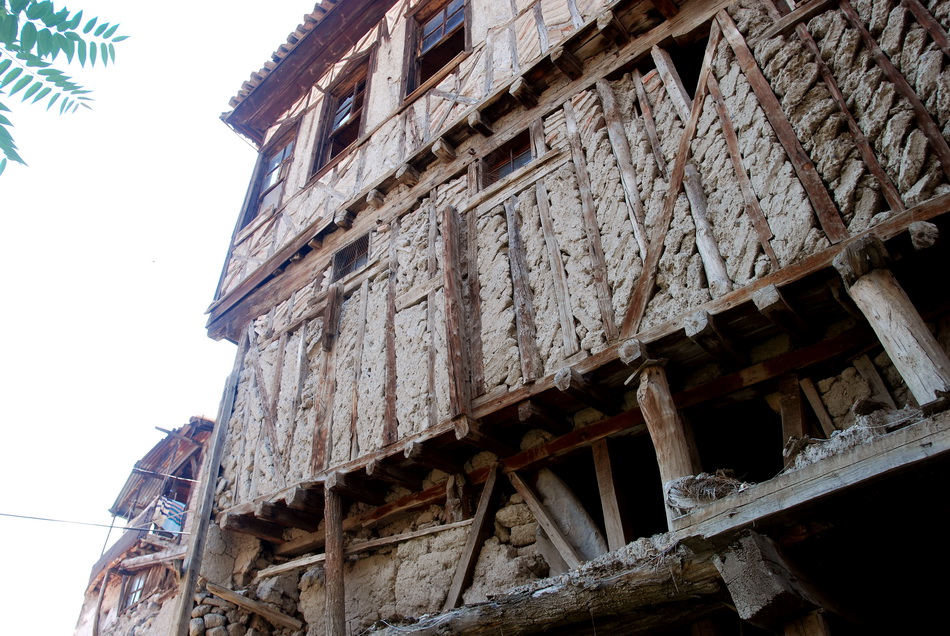
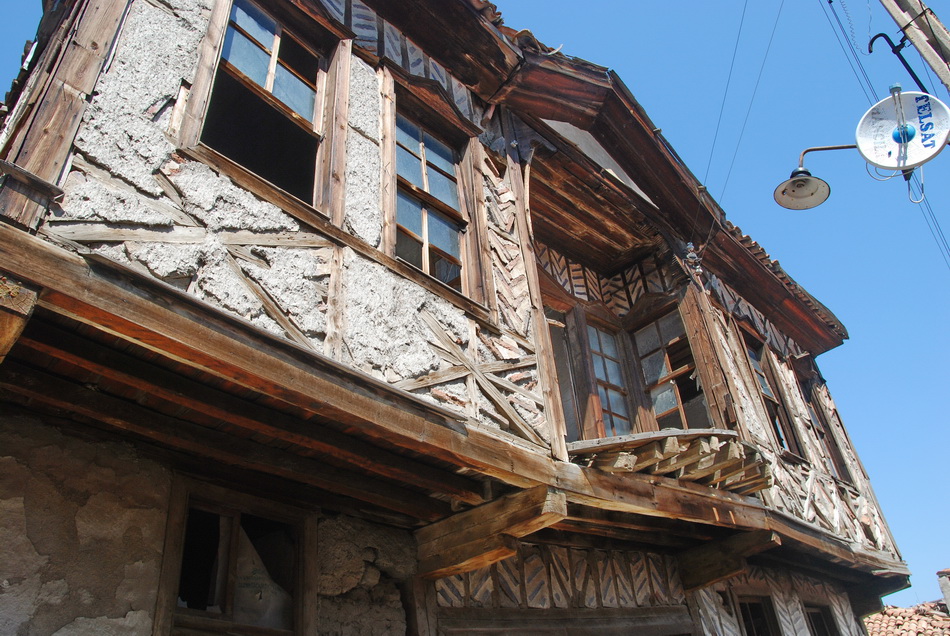
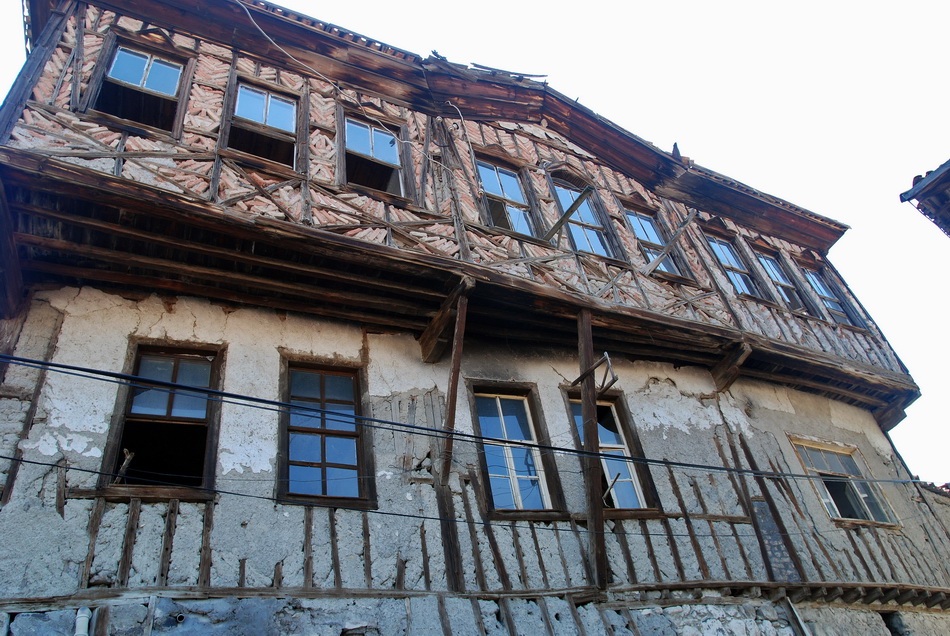
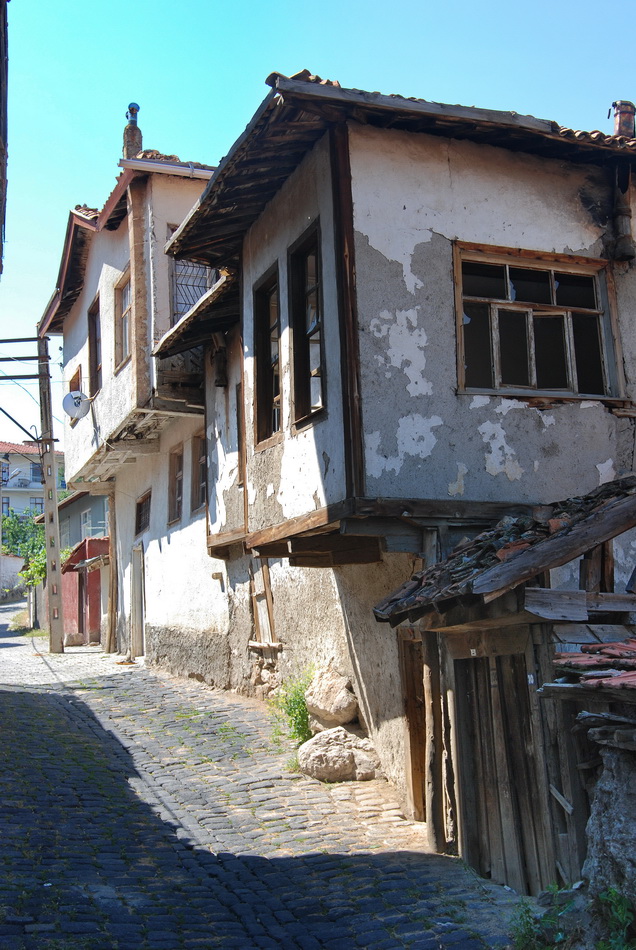
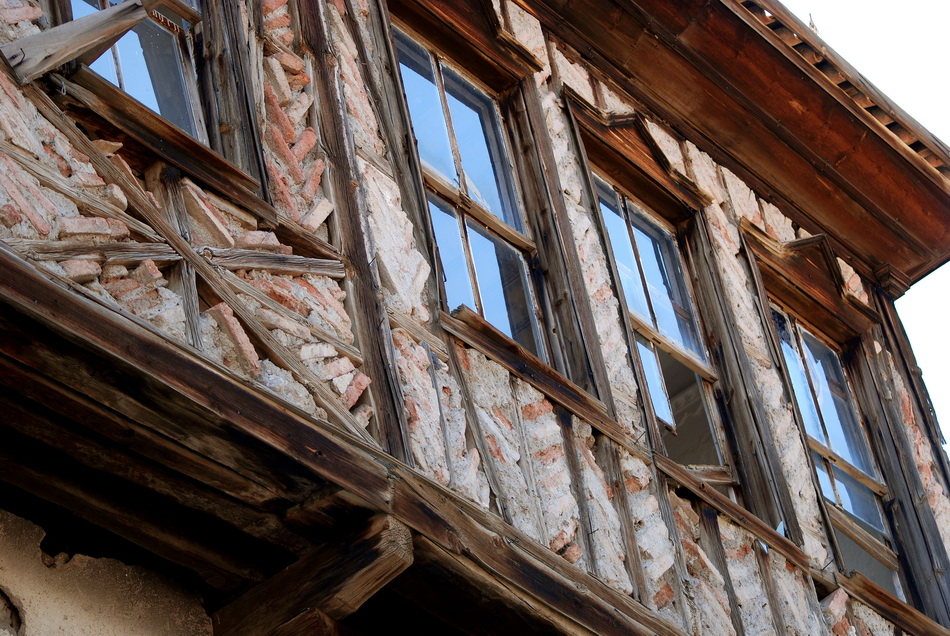
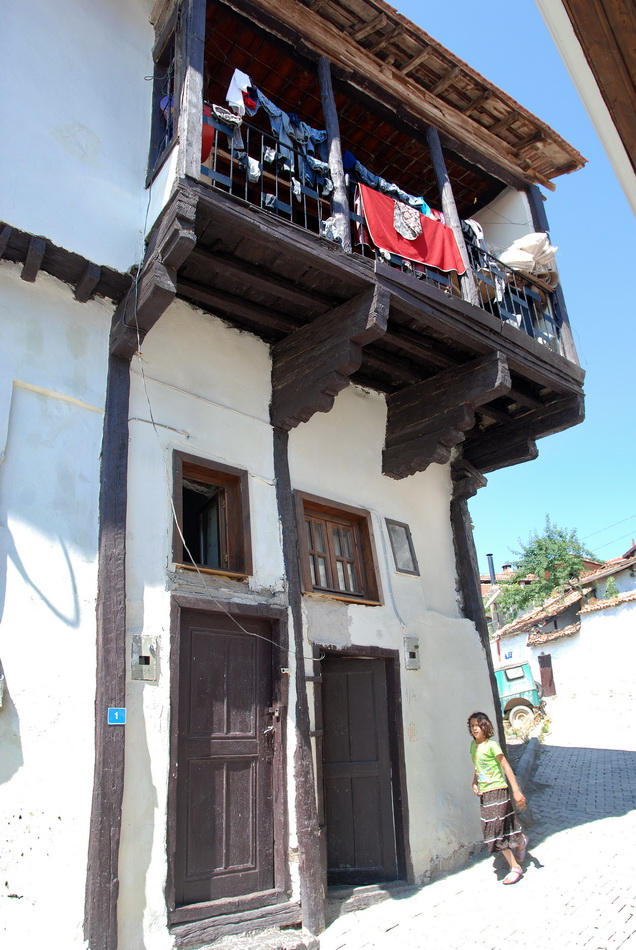
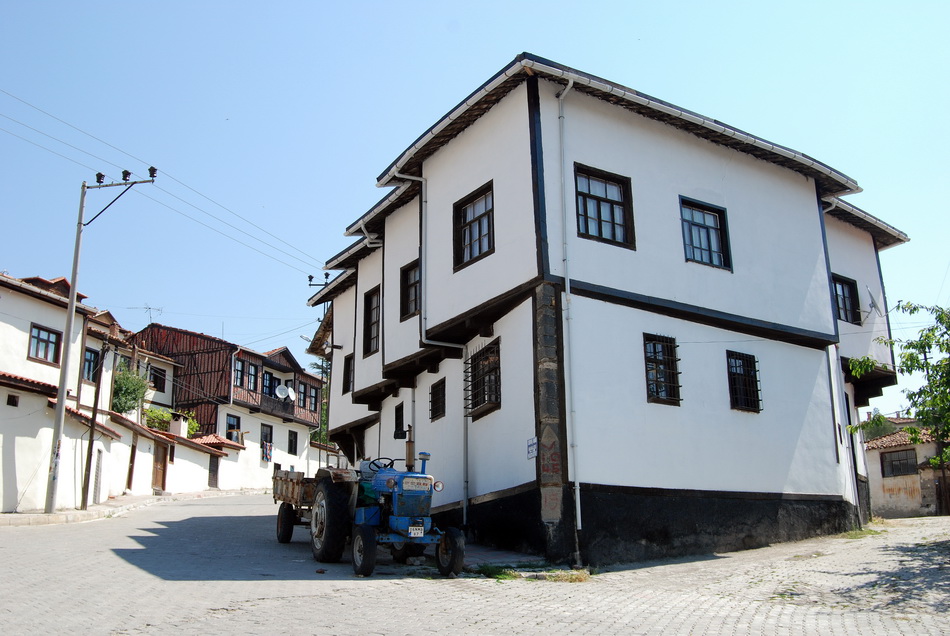
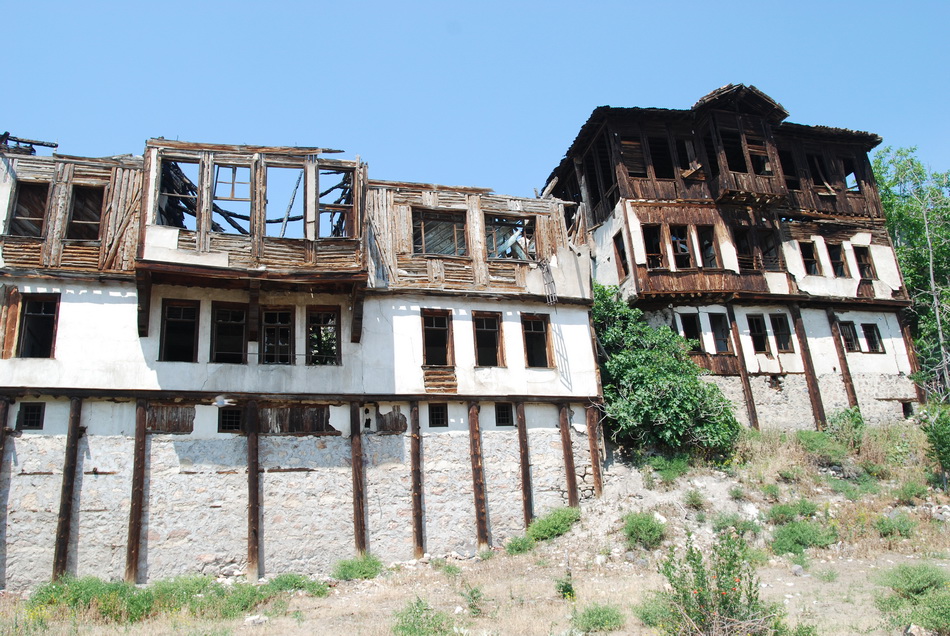
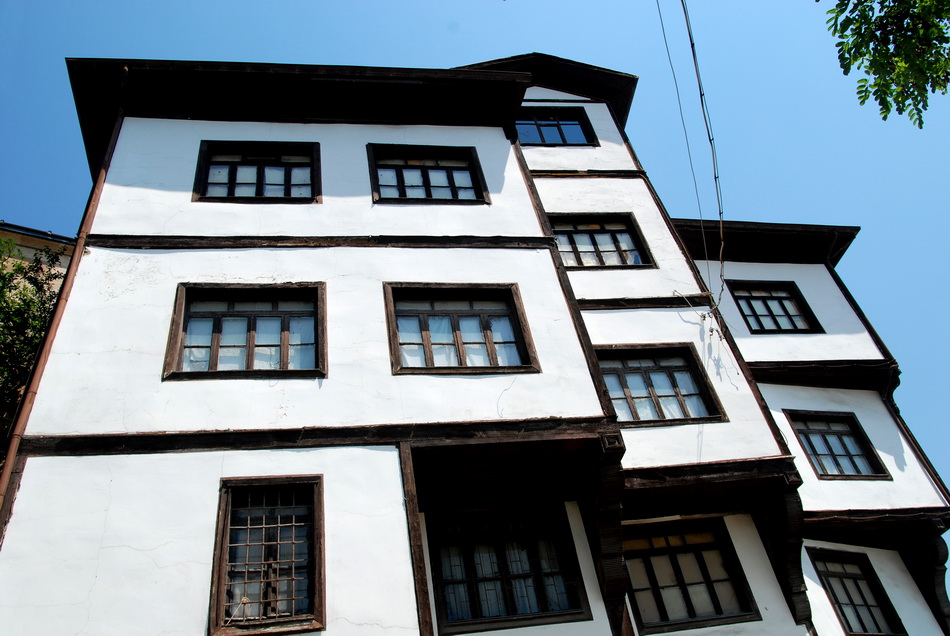
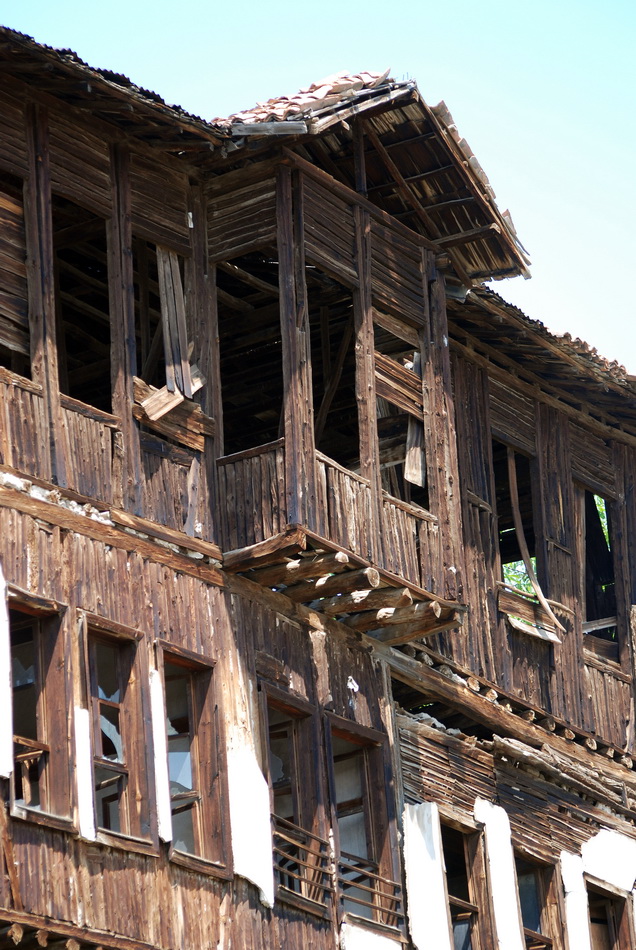
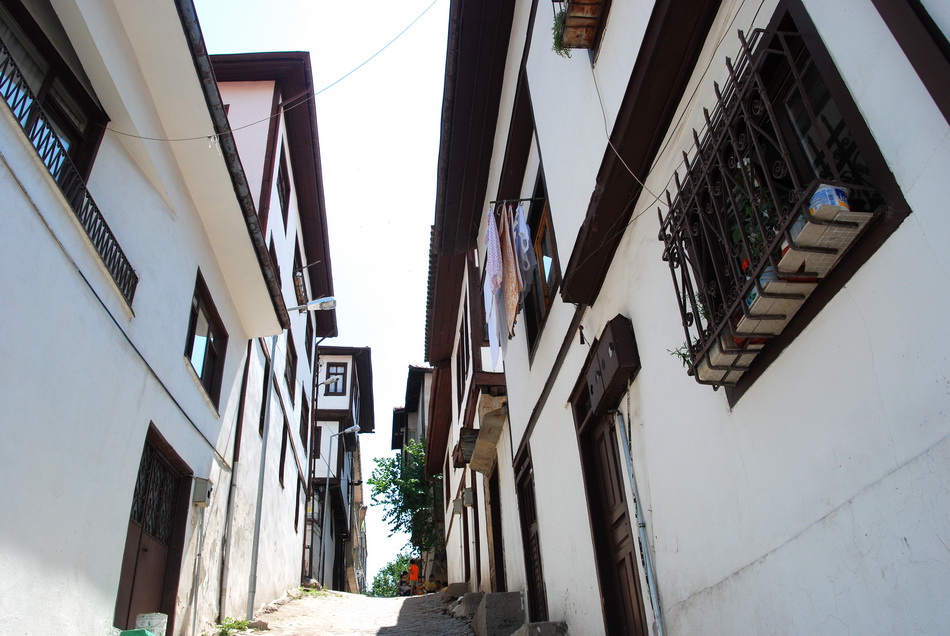
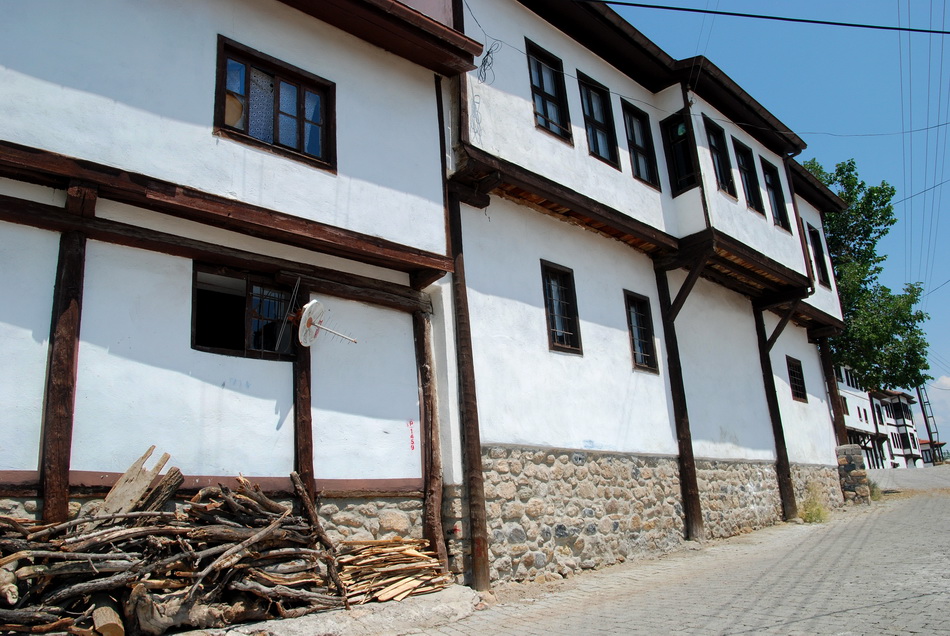
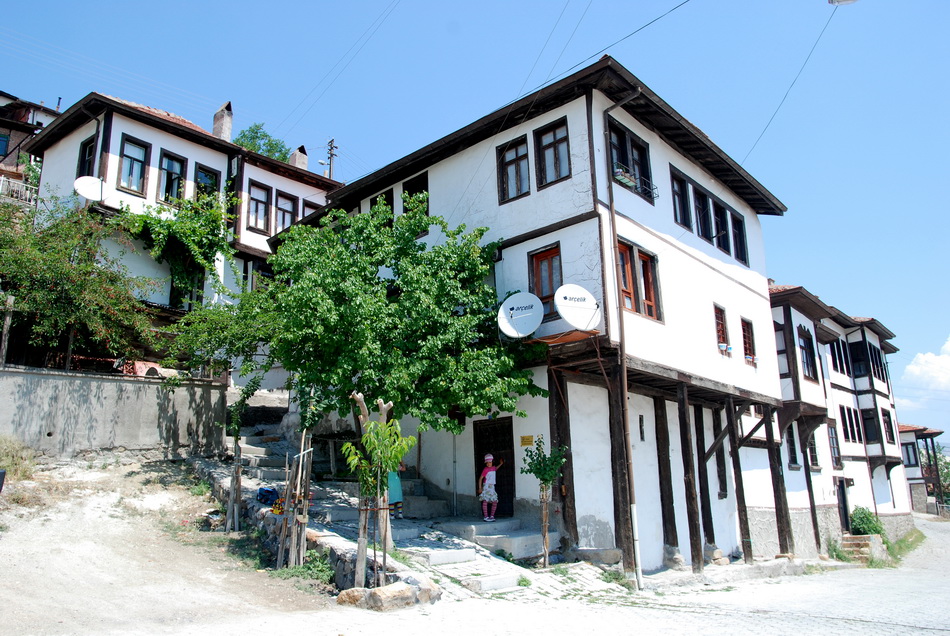
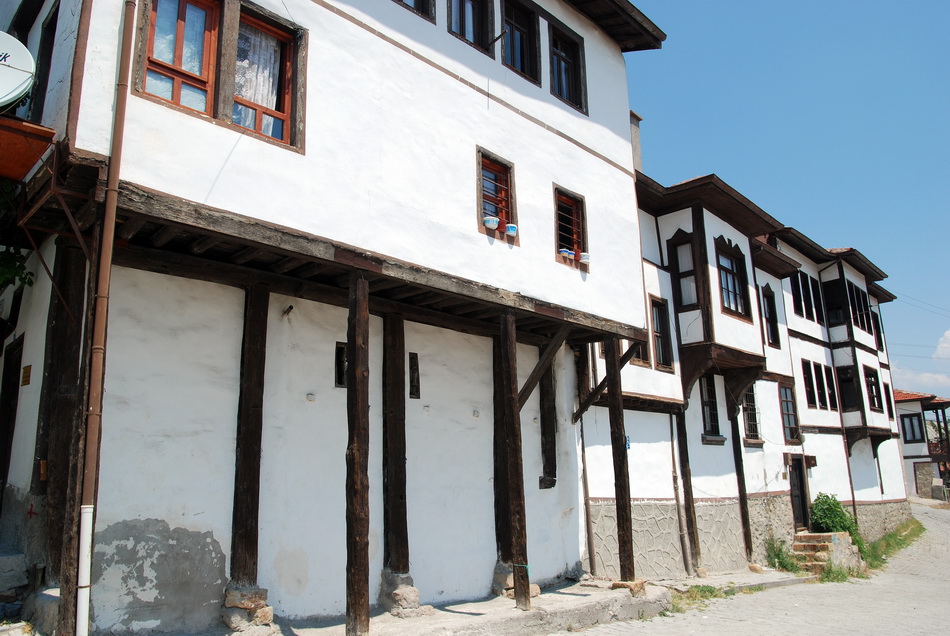
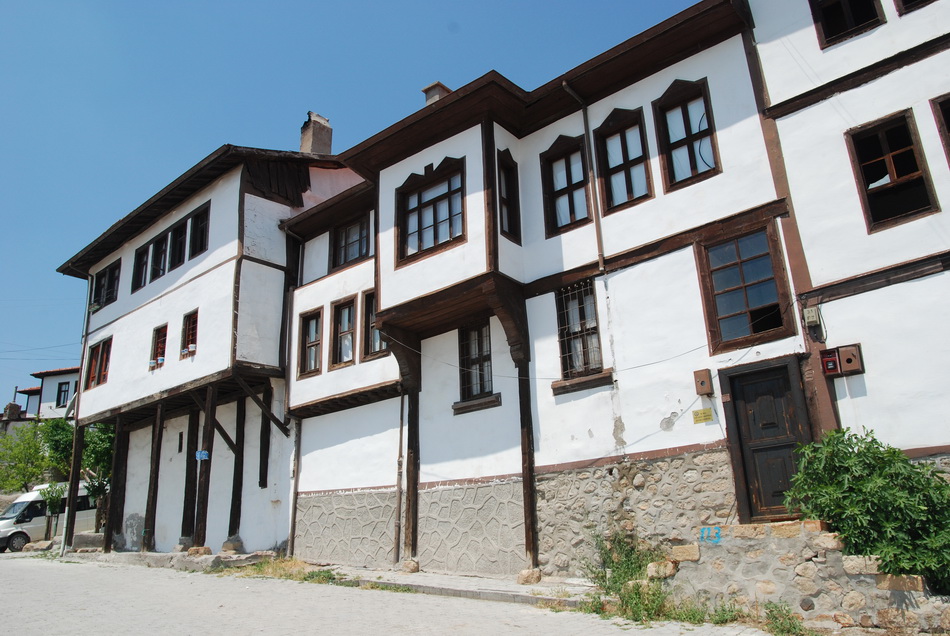
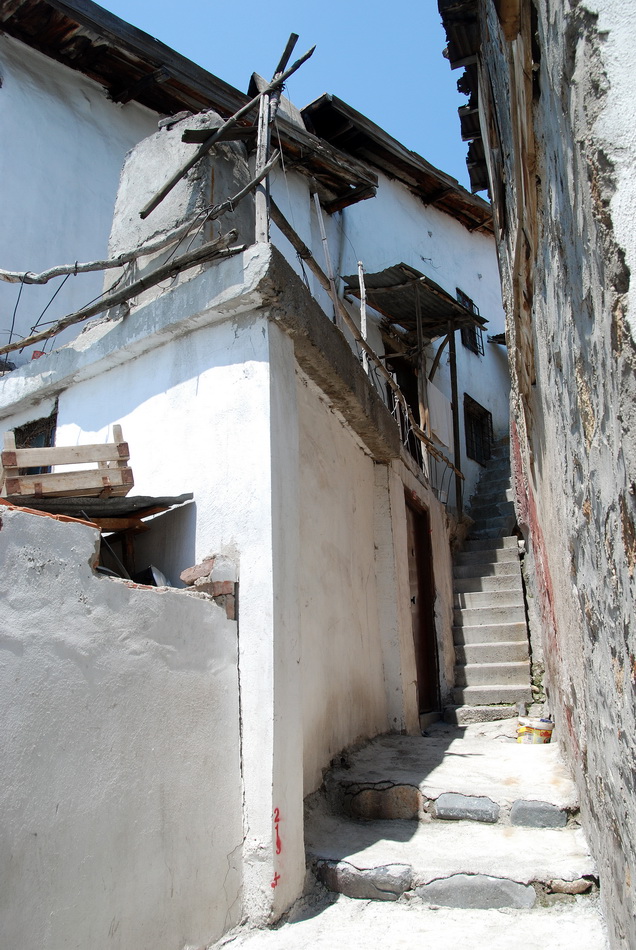
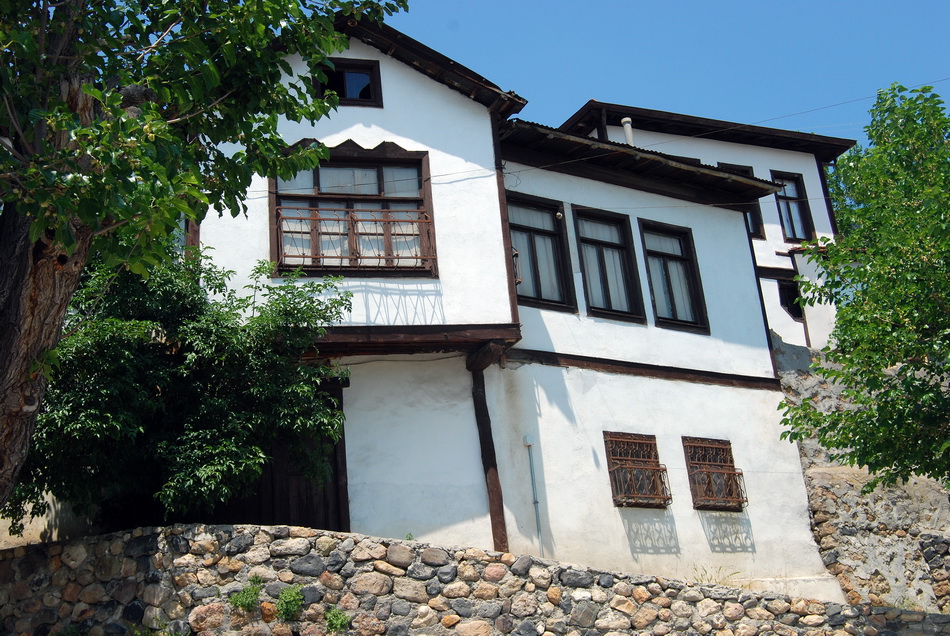
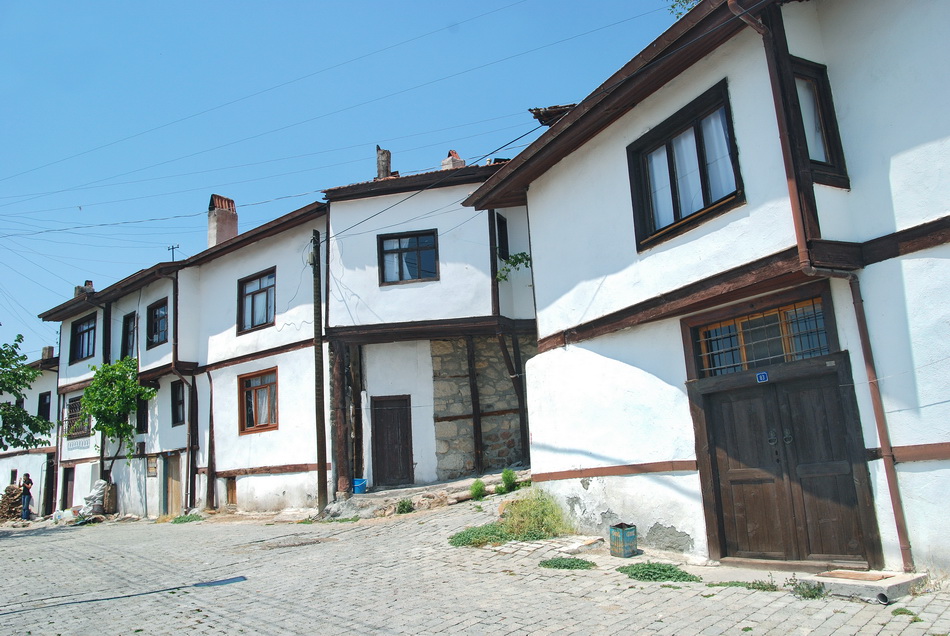
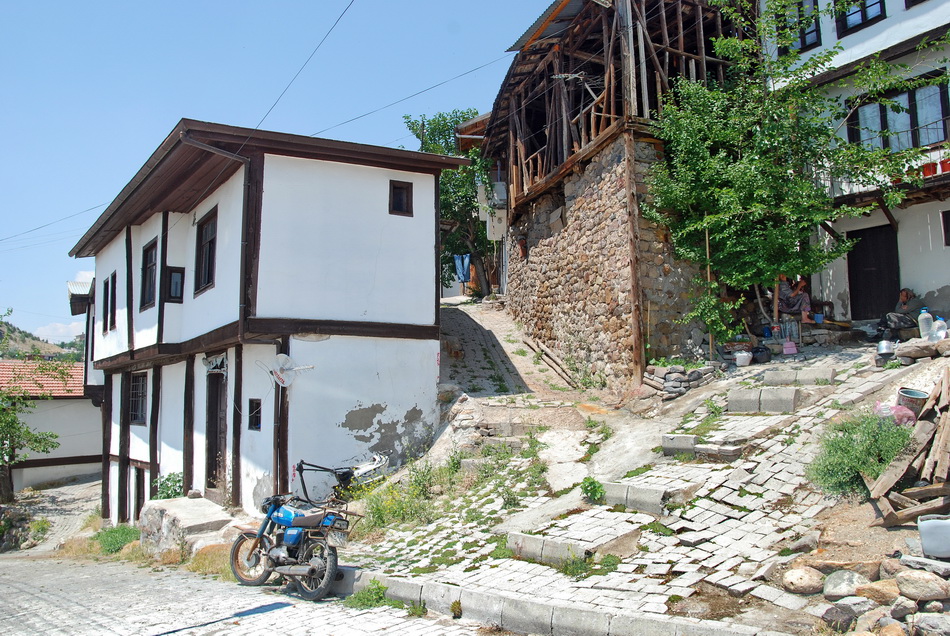
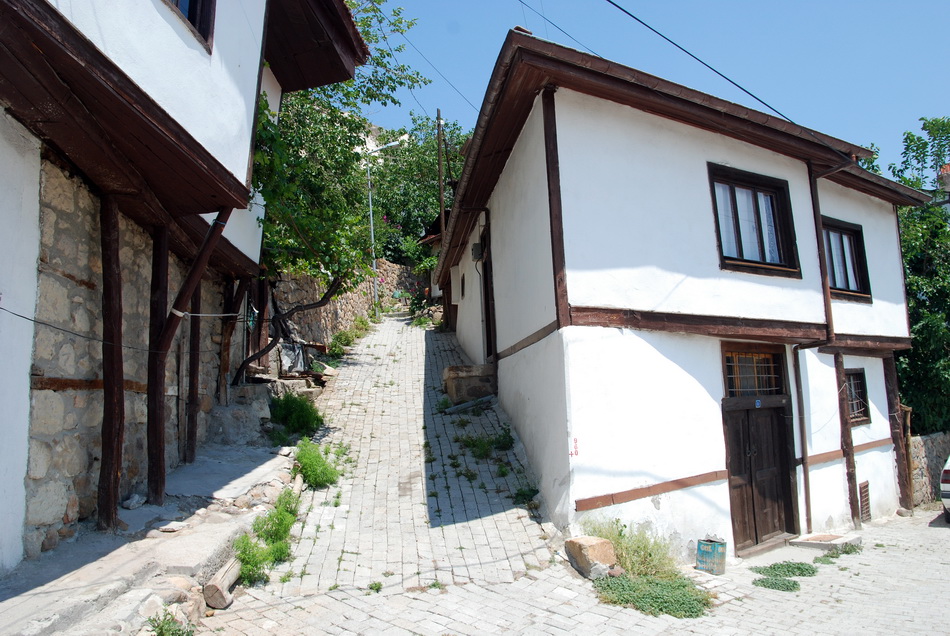
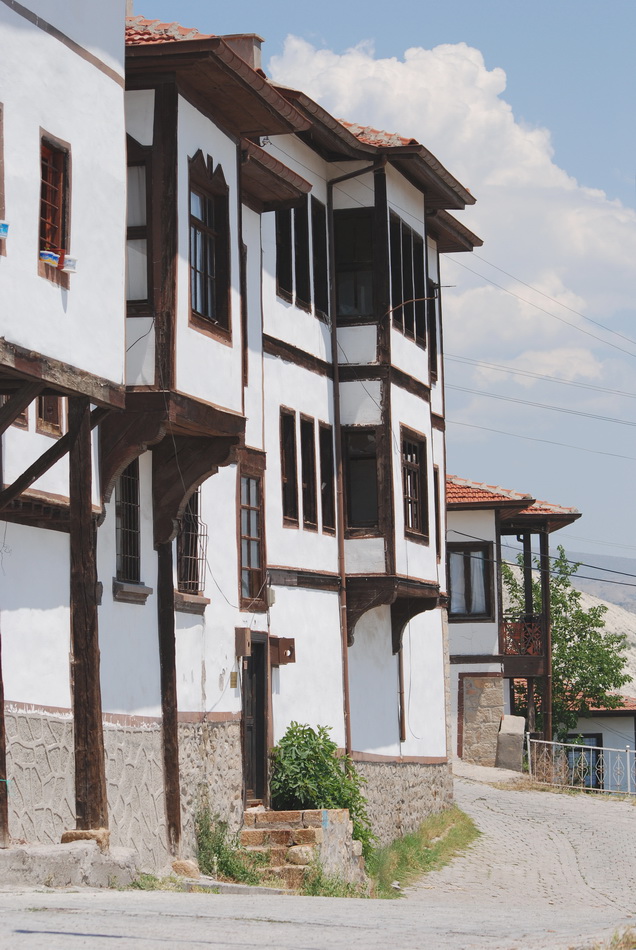
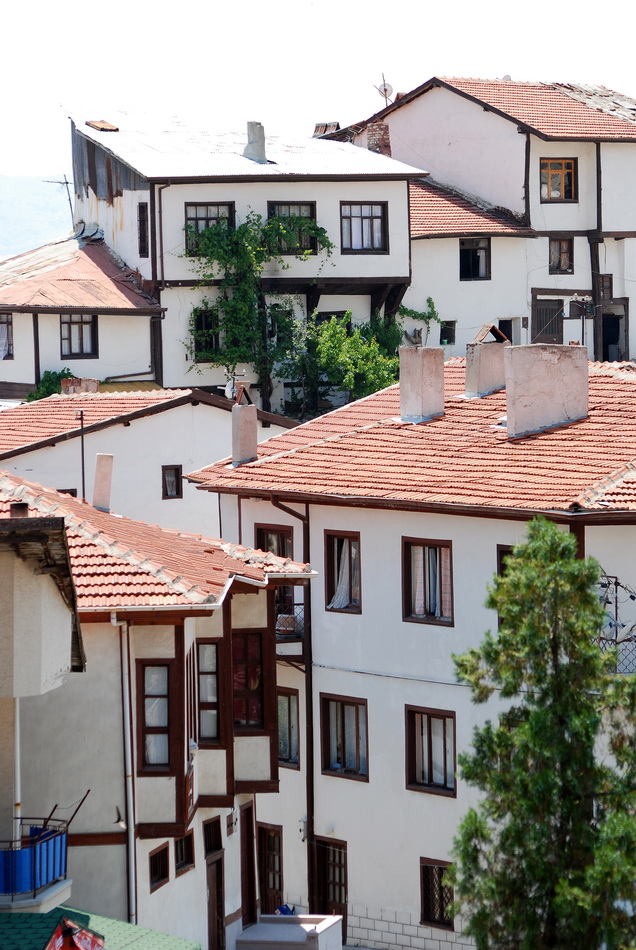
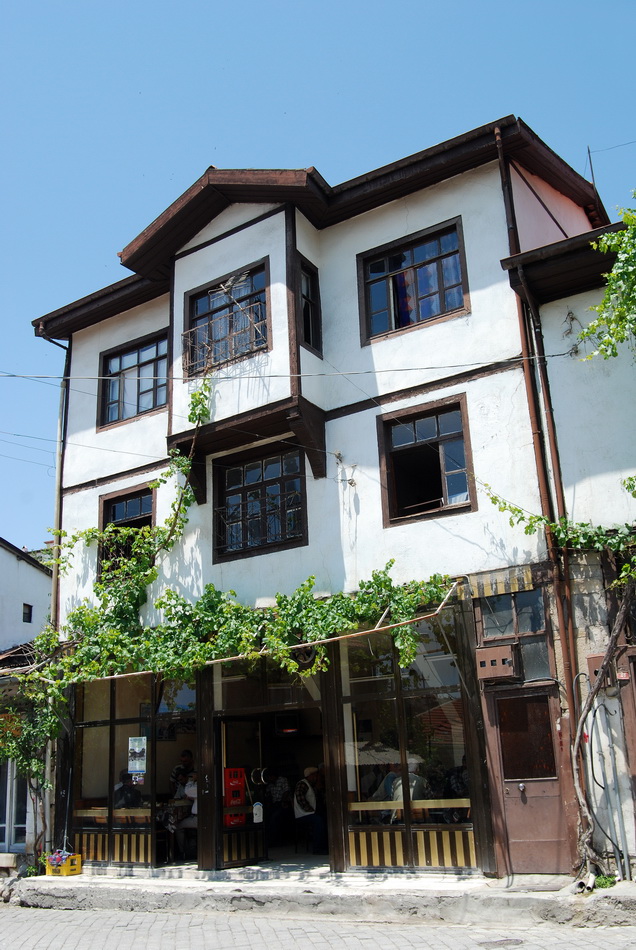
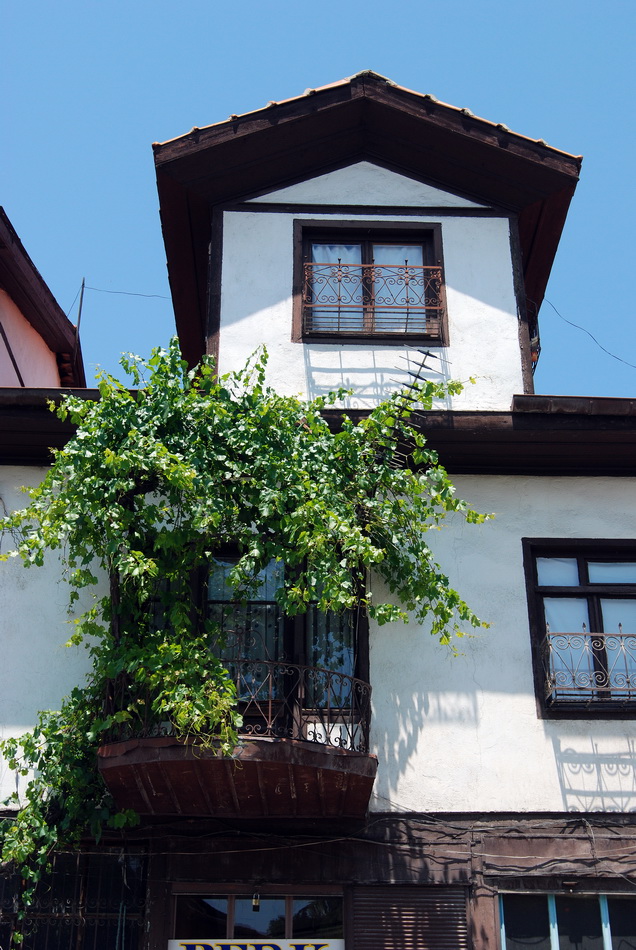
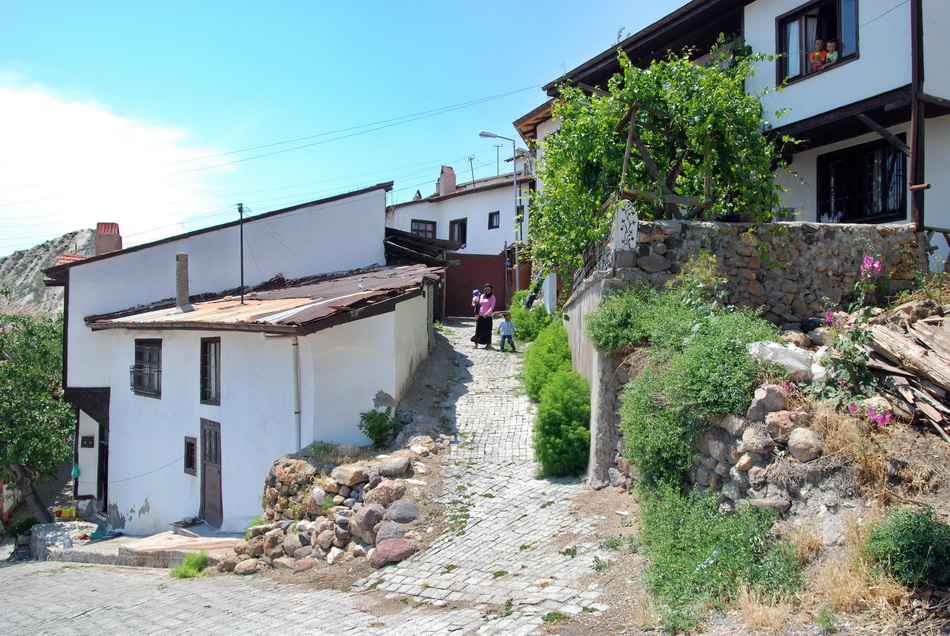
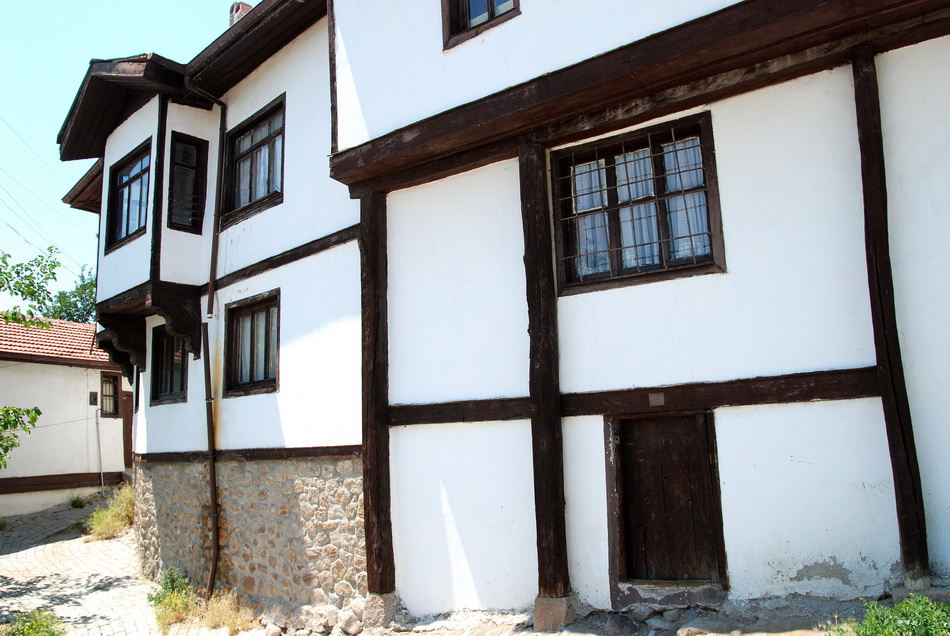
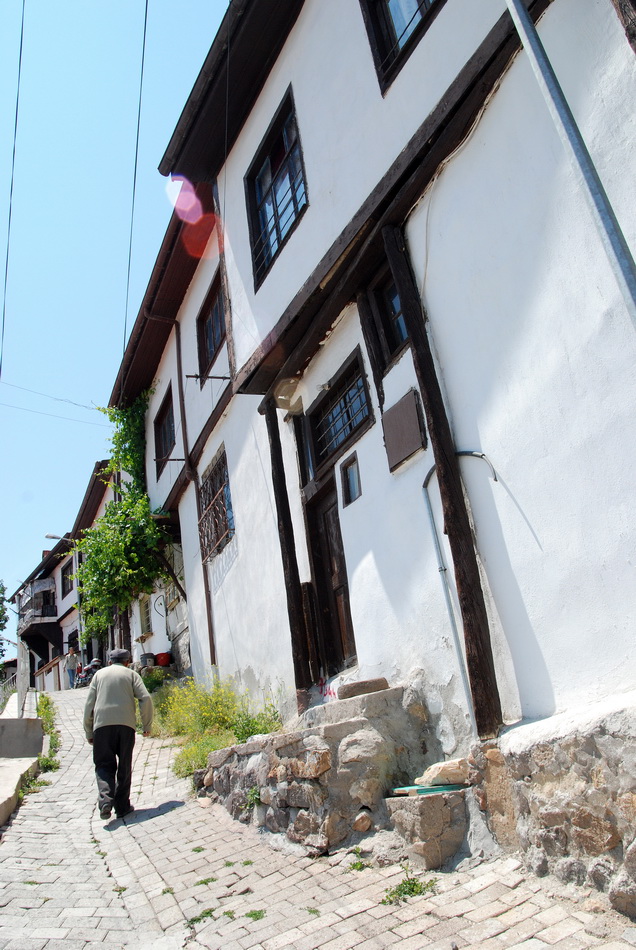
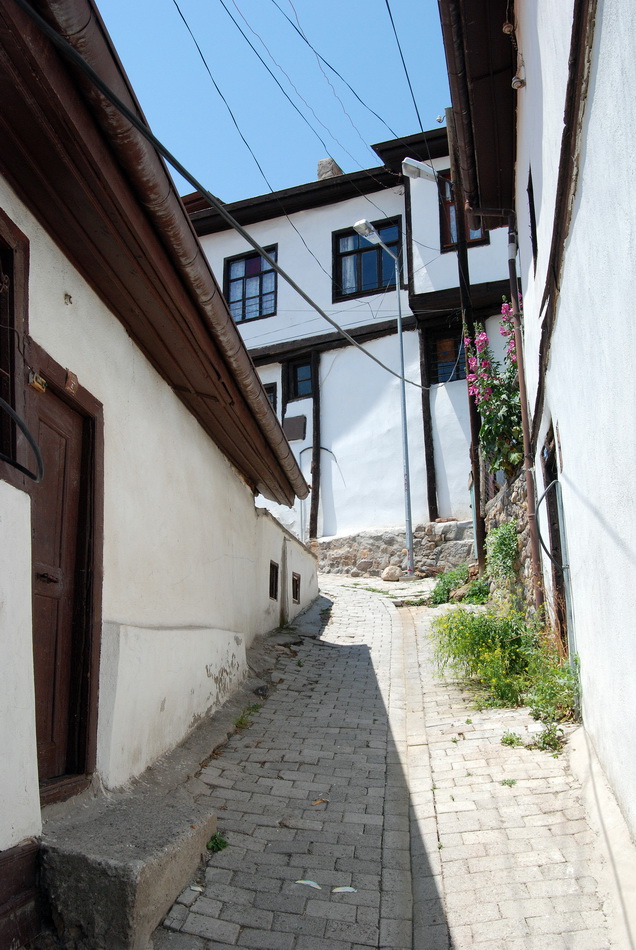
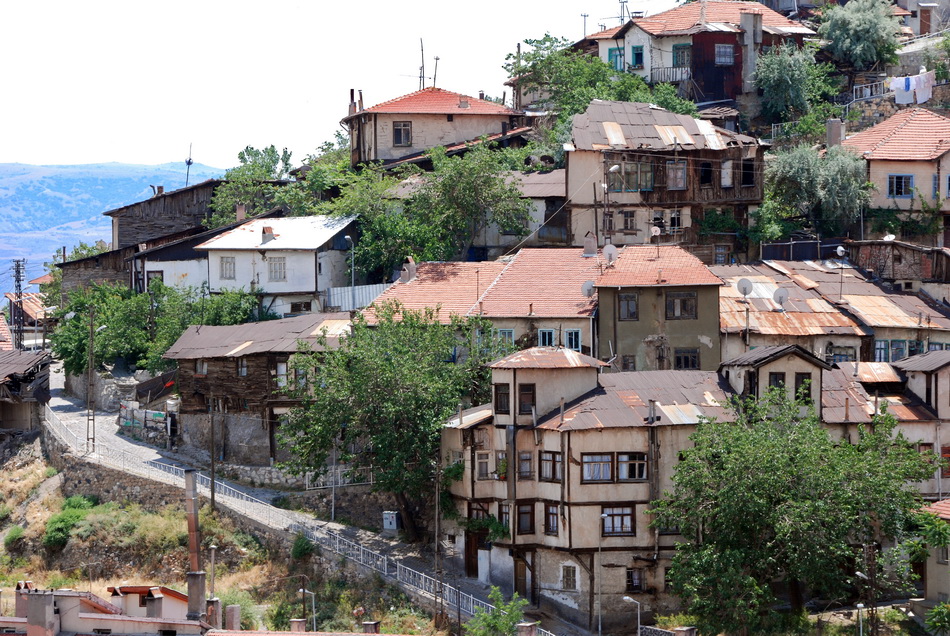
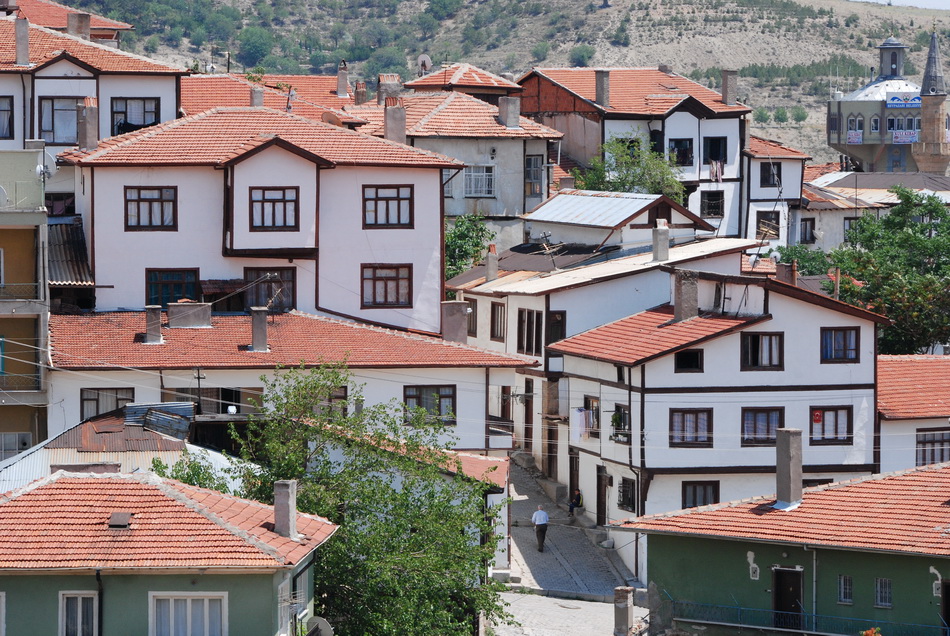
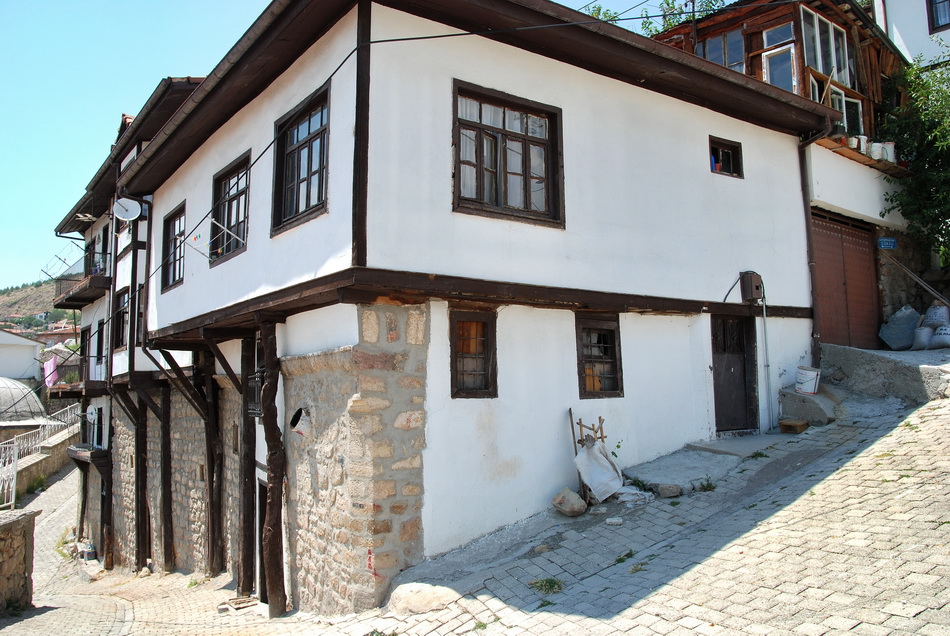
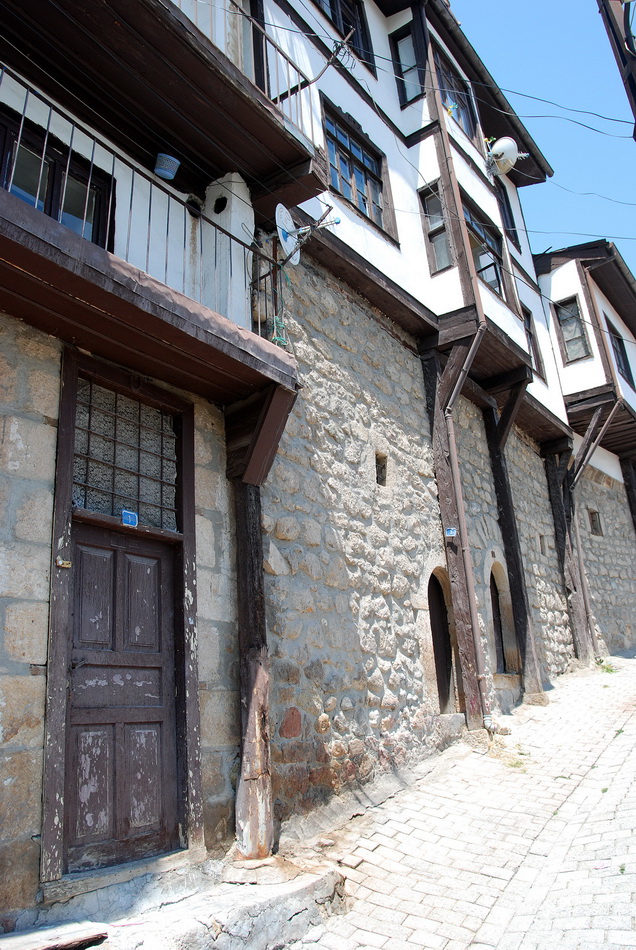
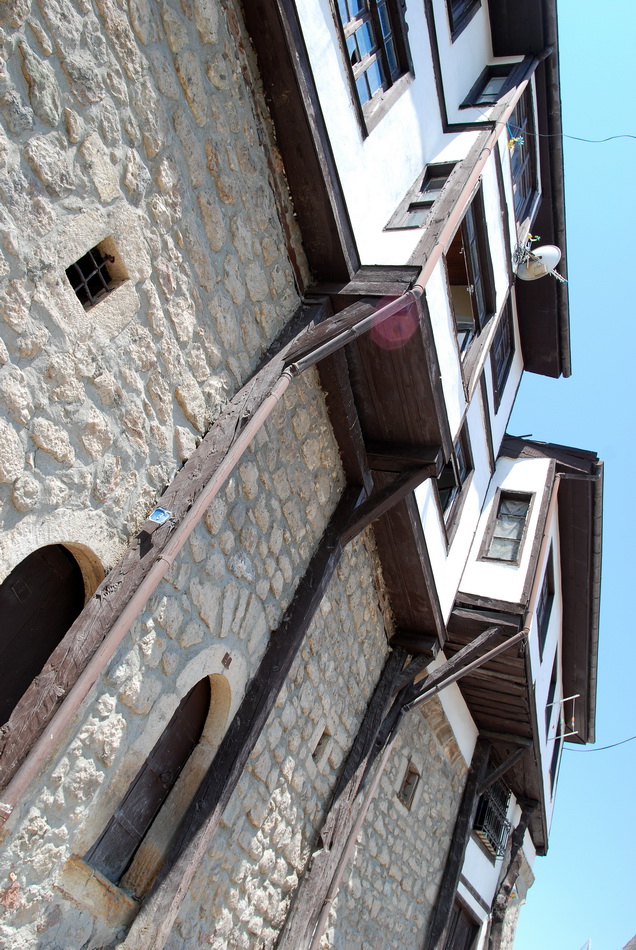
In 2007, I walked through the streets of Beypazarı, near Ankara, photographing a remarkable example of traditional Anatolian urban architecture. Along the narrow, sometimes sloping streets, houses stood close to one another, with projecting timber bays and whitewashed façades forming a distinctive rhythm. Some had been carefully restored; others still bore the marks of time. I wanted to record not only the well-preserved mansions, but also the weathered doors, crumbling plaster and wooden details that had endured for generations.
Beypazarı houses carry many characteristics of traditional Ottoman-period domestic architecture. They are often two or three storeys high, with stone used in lower levels and timber framing with infill materials above. Bay windows extending over the street, shuttered windows, wide eaves and tiled roofs are recurring features. Some houses have a small raised roof-level room known locally as a guşgana. The arrangement of the buildings reflects the slope of the land, the need for light and ventilation, and the relationship between neighbours. To understand an individual house, I felt it was necessary to see it as part of the street around it.
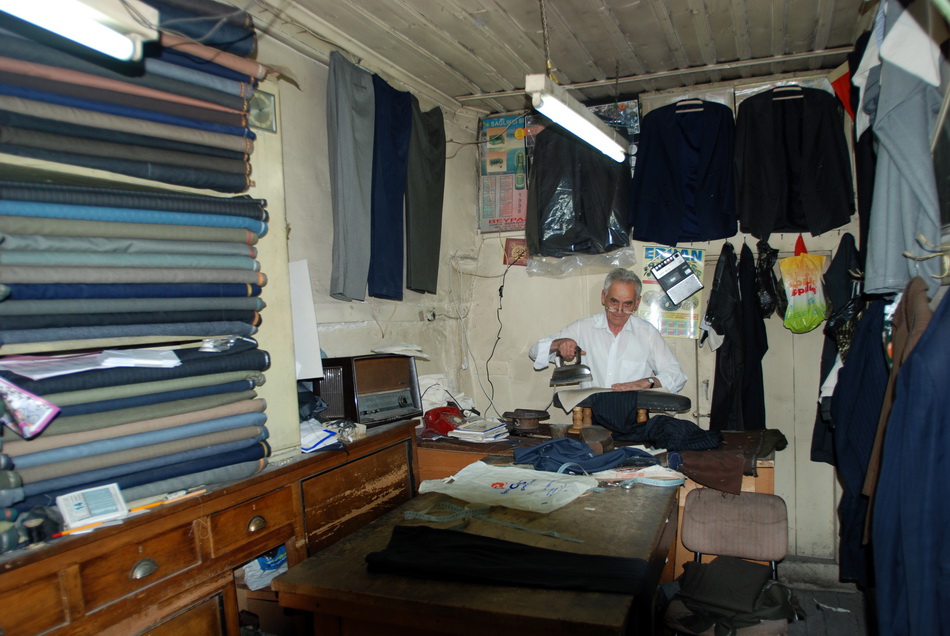
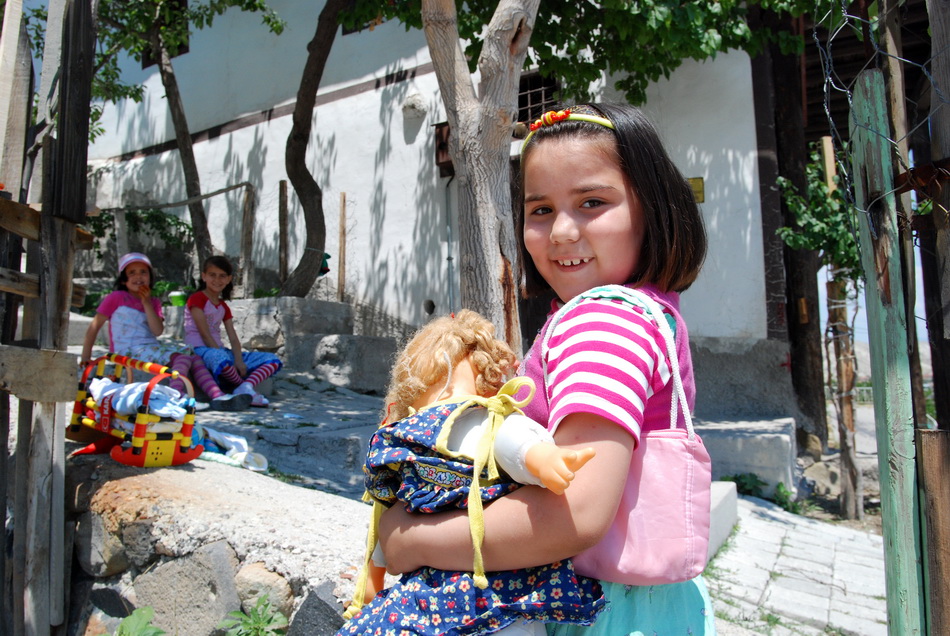
The historic fabric of Beypazarı is not made up of houses alone. Its bazaars, small shops, doorsteps and streets are inseparable from everyday life. While photographing the buildings, I was also drawn to the people I encountered and to small scenes of daily activity. Their presence reminded me that these houses were not simply architectural monuments to be preserved; they were places shaped by memories, routines and human relationships. For that reason, I included photographs of street life alongside the architectural views.
Restoration efforts in Beypazarı had gathered momentum in the early 2000s, marking an important stage in the protection of the old town. My photographs from 2007 belong to that period, when renewed façades could still be seen beside buildings awaiting repair. Looking at these images years later, I see them not only as a record of traditional Turkish houses, but also as a documentary account of Beypazarı's streets, people and everyday life at a particular moment in time.