




Xi'an, the capital of Shaanxi Province, is one of China's oldest cities and one of its historic imperial capitals. It is closely associated with the eastern end of the Silk Road and with the Terracotta Army of Qin Shi Huang, the first emperor of a unified China. These were among the reasons I wanted to visit the city during my journey through China in June 2014.
My train from Pingyao was scheduled to leave at 10:16. The waiting room was crowded with travellers and their luggage, much of it food for the long journey. On the platform, a railway employee examined each ticket and directed passengers to the place where their carriage would stop. He showed me my position, and the train door came to a halt almost exactly in front of me.
Someone was sitting in my reserved seat. When I showed him my ticket, he politely stood up and moved. People used any empty seat they could find rather than standing in the aisle. I kept my suitcase beside me, and, with my permission, a little girl sat on it for part of the journey. Looking around the carriage, I realized that I was the only foreigner. Passengers sat facing one another on three-person benches. They watched me with curiosity and smiled whenever our eyes met.
I handed the Chinese translation of my UNESCO award document to a young man seated opposite me. He read it, then suddenly climbed onto his seat and read it aloud to the entire carriage, pointing towards me. In an instant I had become a celebrity among my fellow passengers. People queued to have their photographs taken with me, and afterwards they welcomed my camera as I photographed life inside the train. It was a warm and unforgettable encounter. When I look at the photograph of us together, I remember the young man's excitement.
The journey lasted about ten hours. I watched young people talking and laughing, families sharing their food and the landscape passing beyond the windows. At one point we crossed a long, high bridge above the Yellow River. By the time I reached Xi'an it was raining and night had fallen.
Outside the station I had to find a taxi. After some difficult bargaining among the drivers, I chose one who turned out to be helpful. He telephoned my hostel several times to find the right way. He also stopped to refuel his vehicle with gas. Finally he pulled up beside a large traditional wooden gate. A young woman from the hostel was waiting under an umbrella and guided me through the rain to my accommodation.
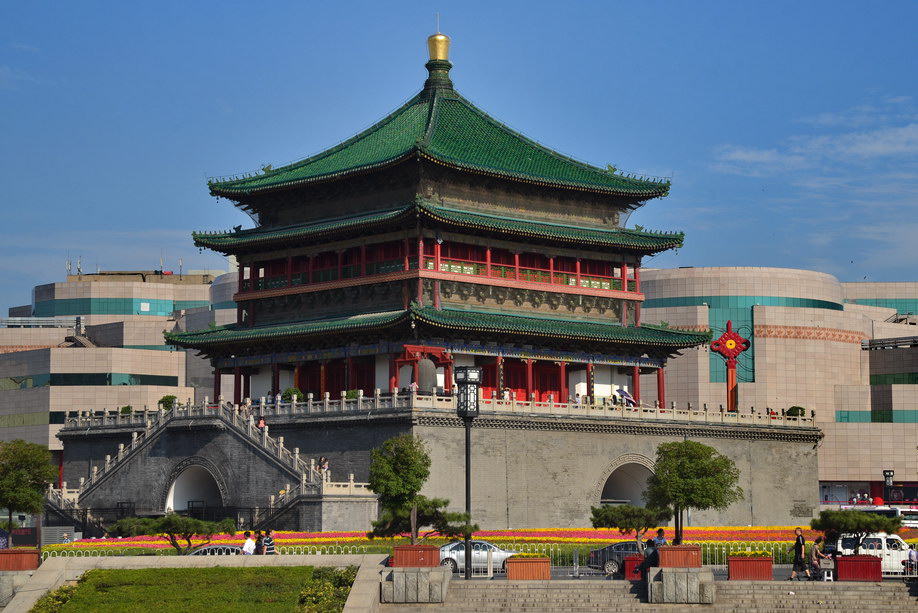
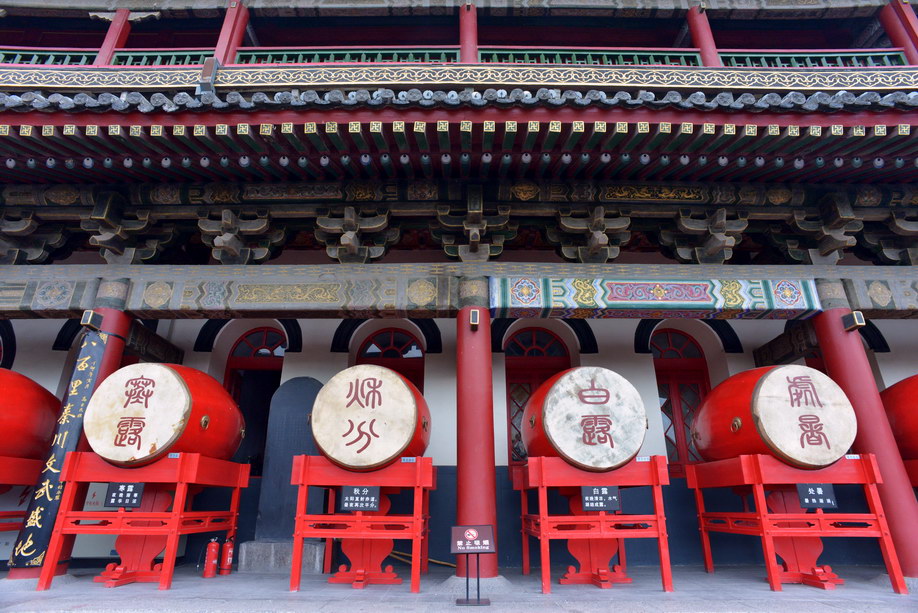
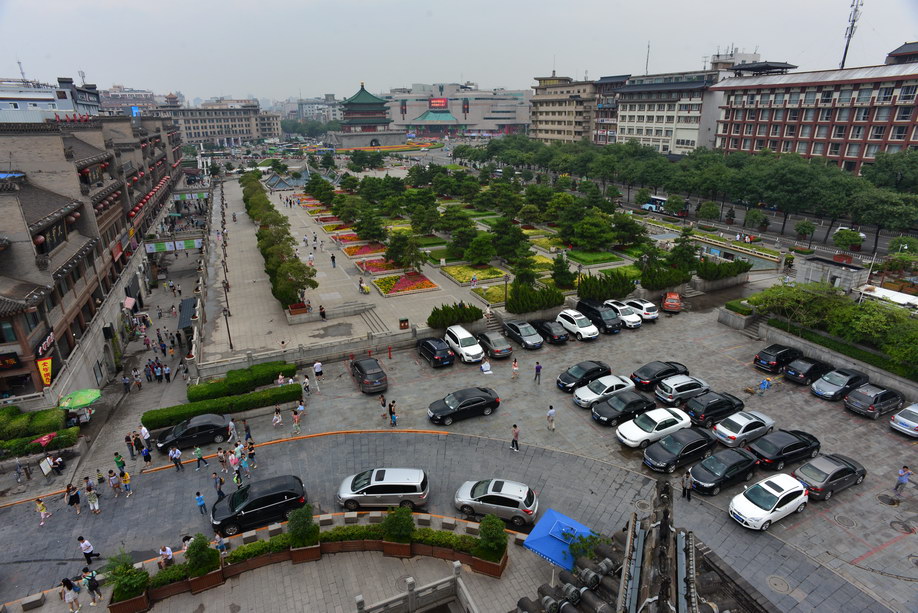
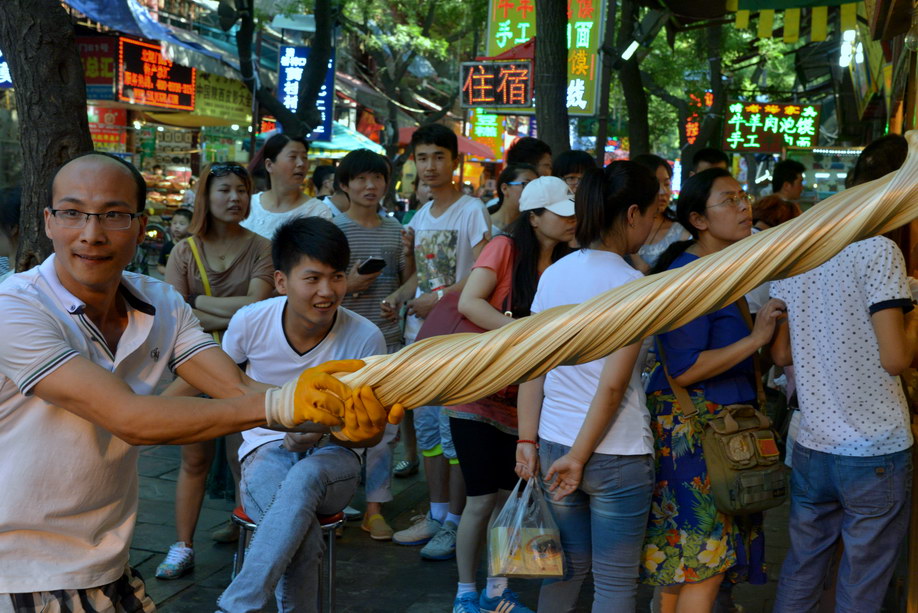
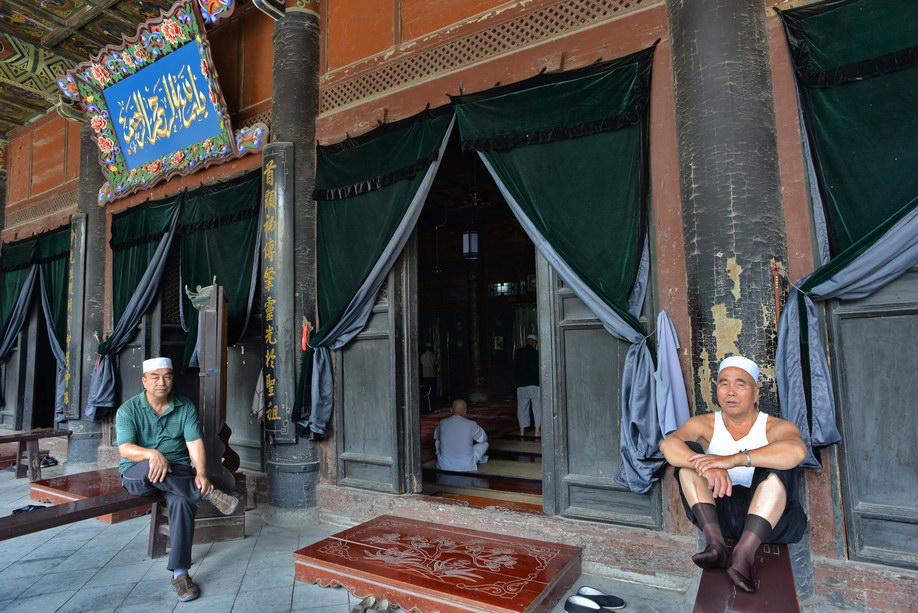
On the morning of 28 June 2014, my first task was to find a city map. I marked the hostel's location and set out on foot. I watched a performance at the Drum Tower and explored the streets around it. My hostel stood in the Muslim Quarter, and I soon found myself among shops, markets and everyday scenes that offered a different view of the ancient capital.
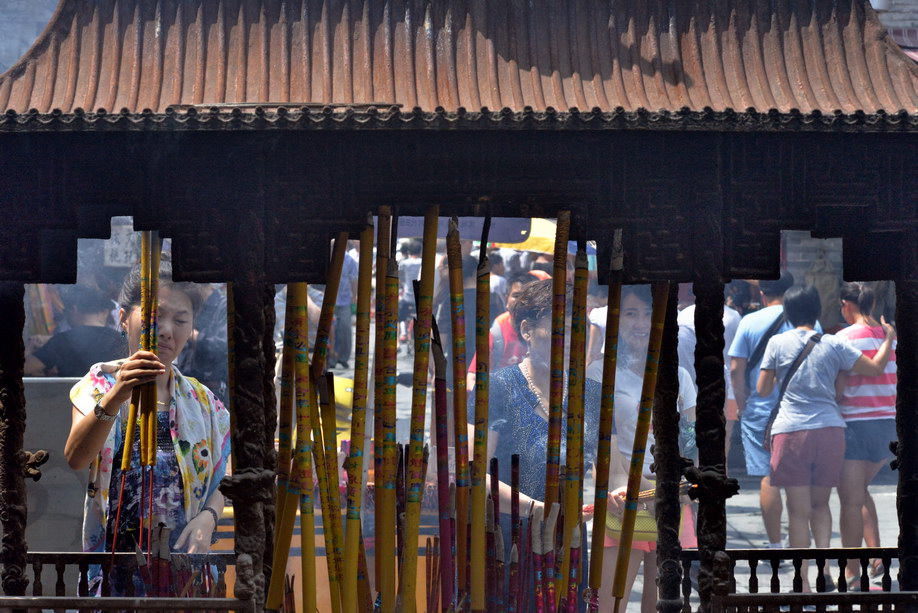
One of my main interests was the Great Mosque of Xi'an, whose courtyards and buildings follow traditional Chinese architectural forms. I visited and photographed the mosque and the surrounding neighbourhood. It was Ramadan, and I had an opportunity to observe and photograph aspects of Muslim life, including the evening iftar meal. Those encounters became an important part of my memories of the city.
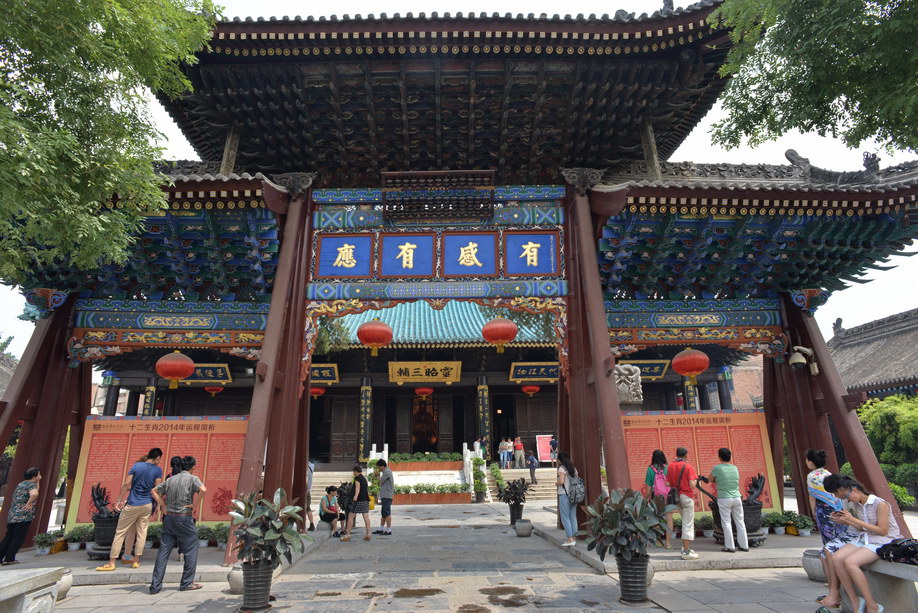
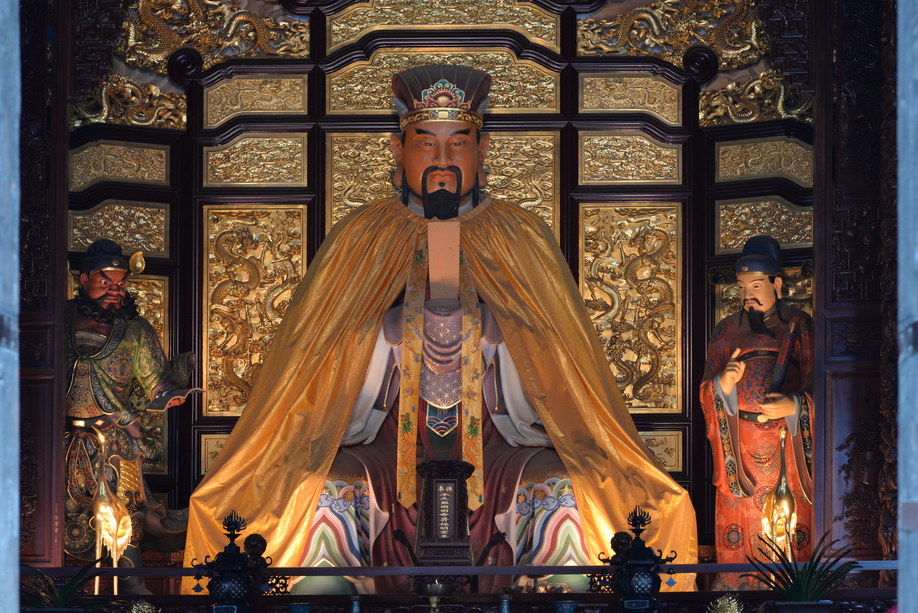
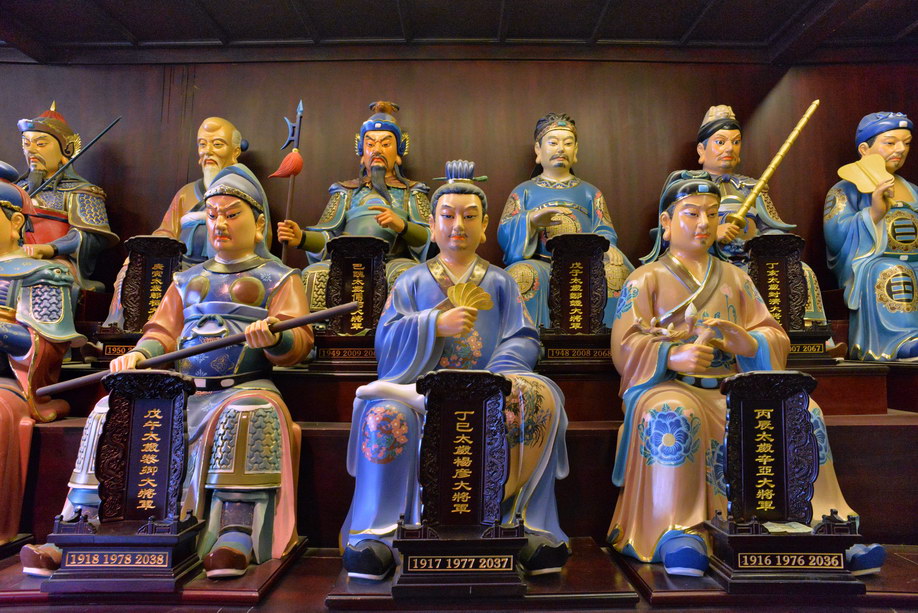
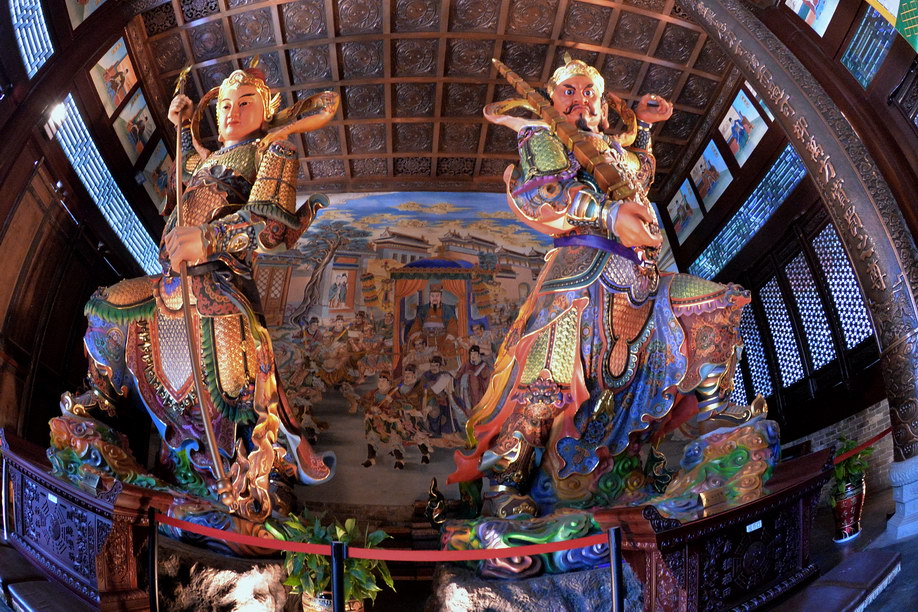
Another place that intrigued me was the Xi'an City God Temple, known in Chinese as Xi'an Duchenghuang Miao (西安都城隍庙). Founded in 1387, it is dedicated to the protective deities of the city. During my visit I noticed inscriptions and representations that I associated with sixty-year cycles. Photography was restricted, but when I showed a member of staff my UNESCO award certificate, he allowed me to take pictures.
As I was leaving, the attendant offered me a book written in Chinese. I tried to explain that I could not read Chinese, but he insisted, smiling warmly. I thanked him and accepted it. For the next twelve years, the book remained on a shelf in my library.
In 2026, I finally used artificial intelligence to explore what the book contained. Its title was Yu Li Bao Chao (玉曆寶鈔), which may be rendered approximately as 'Precious Records of the Jade Calendar'. The work concerns Chinese popular religious beliefs, moral teachings and the spiritual consequences of human actions. During my AI-assisted exploration, I also encountered explanations about sixty-year cycles and their associations with protective deities. I have not yet independently verified those particular passages in the original text.
Then the AI asked for my date of birth. I answered: 18 February 1954. What I learned next astonished me. I was born in the Year of the Wood Horse in the traditional Chinese calendar. When I visited this temple in 2014, sixty years later, it was once again the Year of the Wood Horse. I had completed a full sixty-year cycle and returned, in calendar terms, to the same point at which my life had begun.
I thought back to the attendant who had insisted on giving me the book, even though I had told him I could not read it. Why had he wanted me to have it? Perhaps it was simply a gift offered to visitors. I cannot know. Yet what had seemed an ordinary souvenir in 2014 acquired an unexpected personal meaning twelve years later.
I had come to Xi'an to discover an ancient Silk Road city and to see the emperor's Terracotta Army. The people I met on the train, my rain-soaked arrival, the Muslim Quarter and this small book became just as memorable. Sometimes a journey continues long after we return home. We discover the meaning of a moment only years later.