
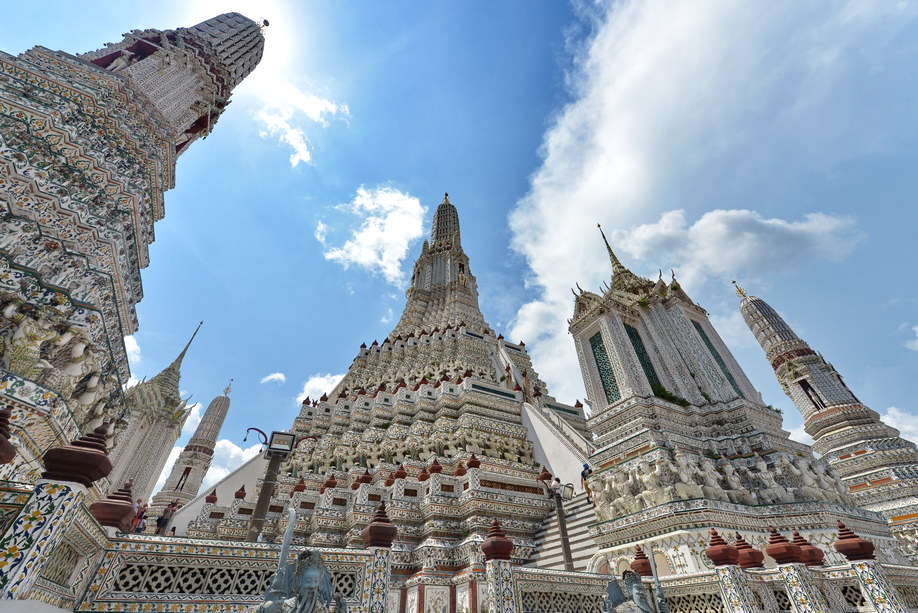

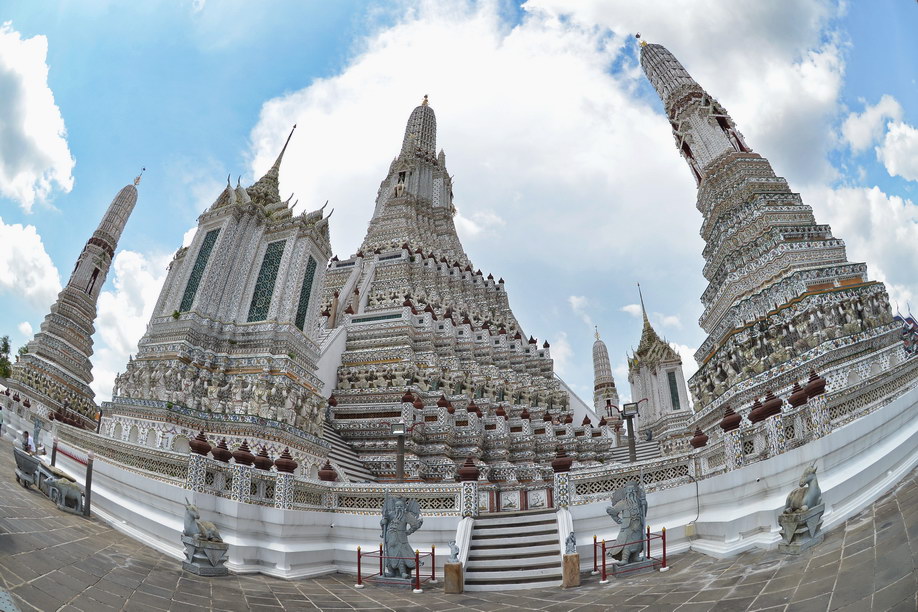
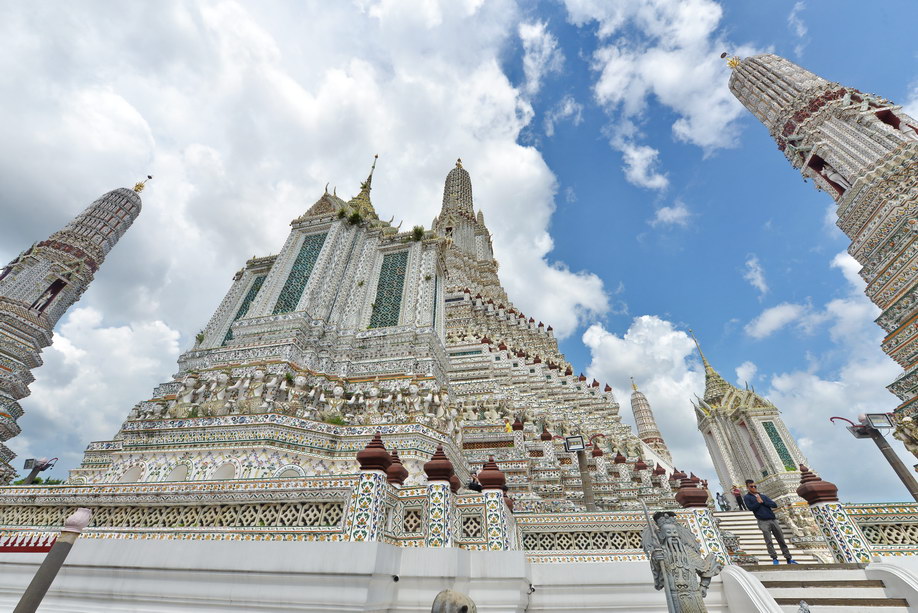
In October 2018, I visited Wat Arun on the western bank of the Chao Phraya River. Bangkok is a city that often reveals itself from the water, and this temple is one of its most recognizable landmarks. Its tall central tower rises above the riverfront, giving the surrounding landscape a silhouette unlike that of the city's modern buildings. I came to photograph not only a famous monument but also the details through which its history and craftsmanship become visible.
Wat Arun Ratchawararam Ratchawaramahawihan is commonly known as the Temple of Dawn. The name Arun refers to Aruna, the figure associated with the dawn in Hindu tradition. The temple stands in the Bangkok Yai district of Thonburi, across the river from the historic royal precinct. Its location is inseparable from its character: for generations, boats, traders, worshippers and travelers have passed along the water in front of it.
A temple existed here before Bangkok became the capital of Siam. During the Thonburi period in the late eighteenth century, King Taksin made this side of the river the center of his kingdom. Wat Arun consequently acquired particular importance. After the capital moved to the opposite bank, the temple continued to develop under the early Chakri kings. The monumental central prang took on its present form largely through nineteenth-century royal patronage.
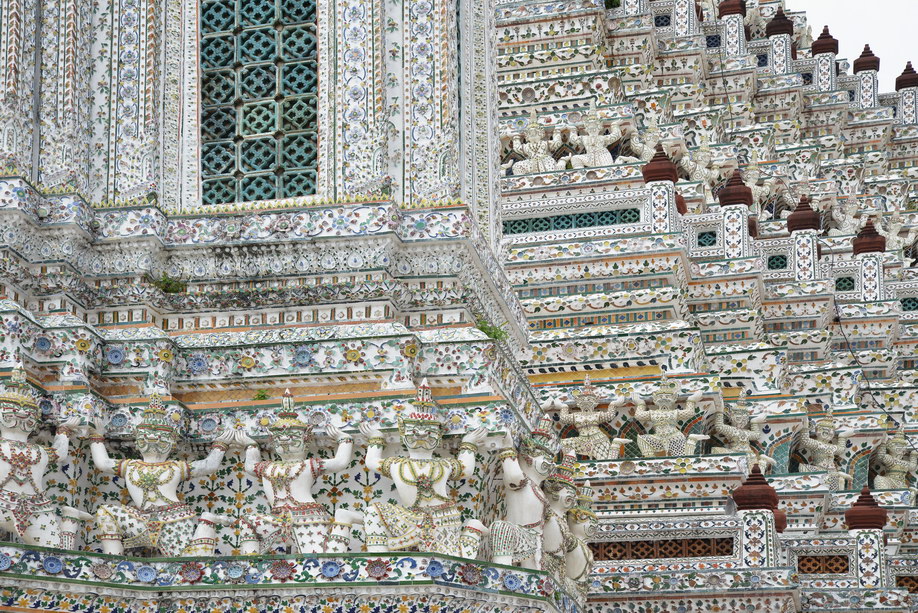
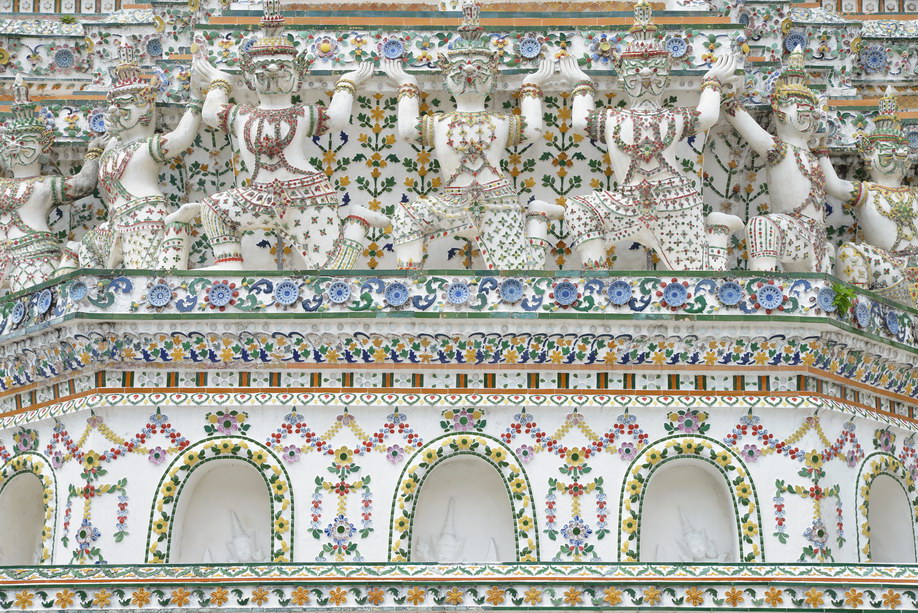
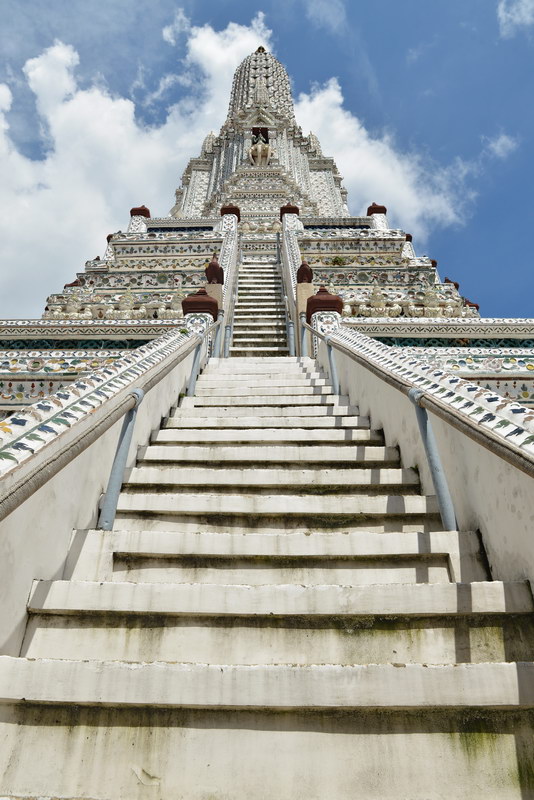
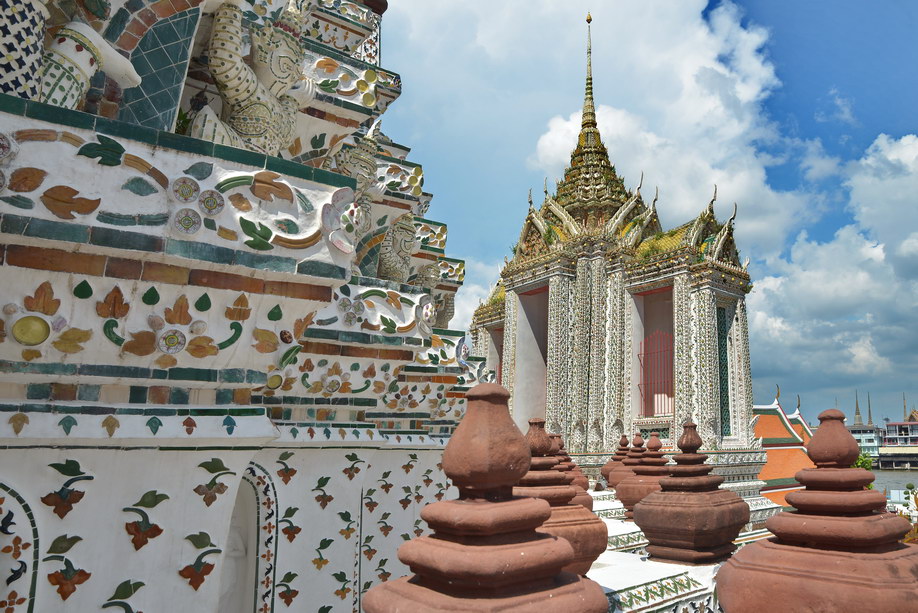
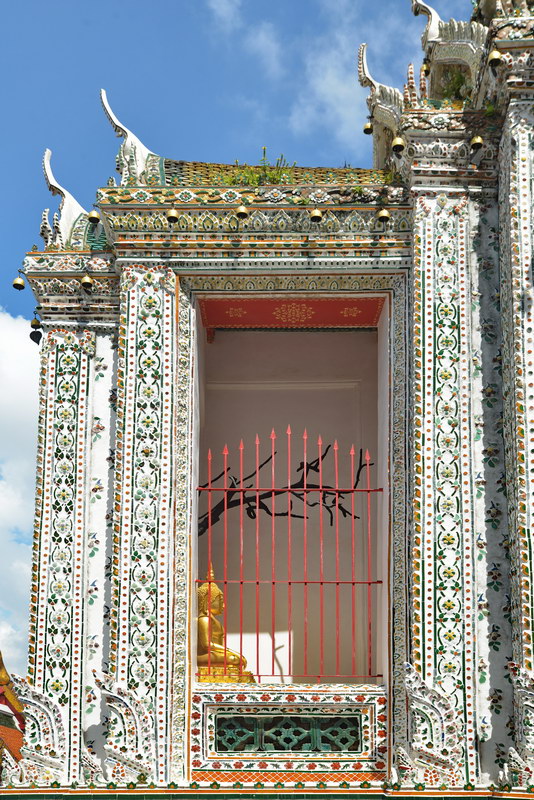
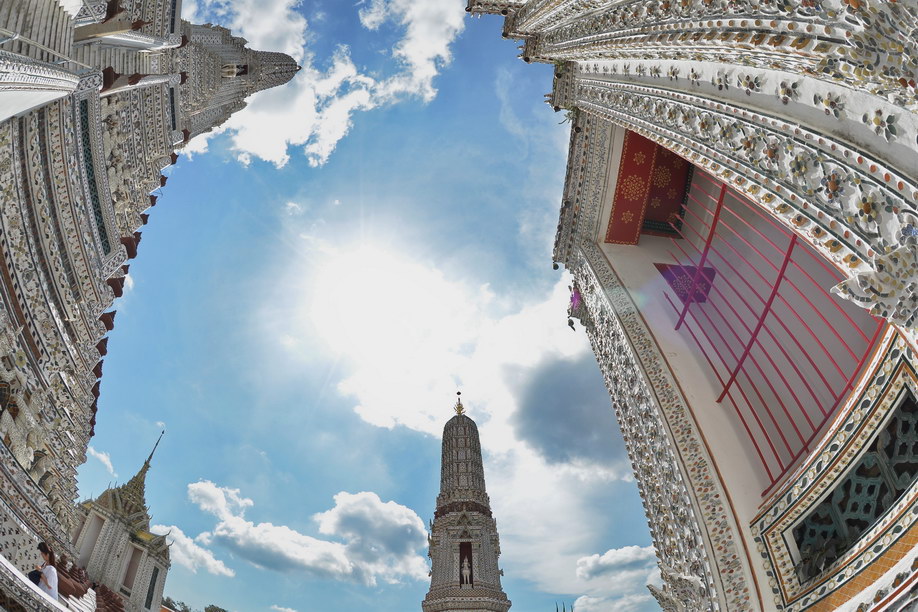
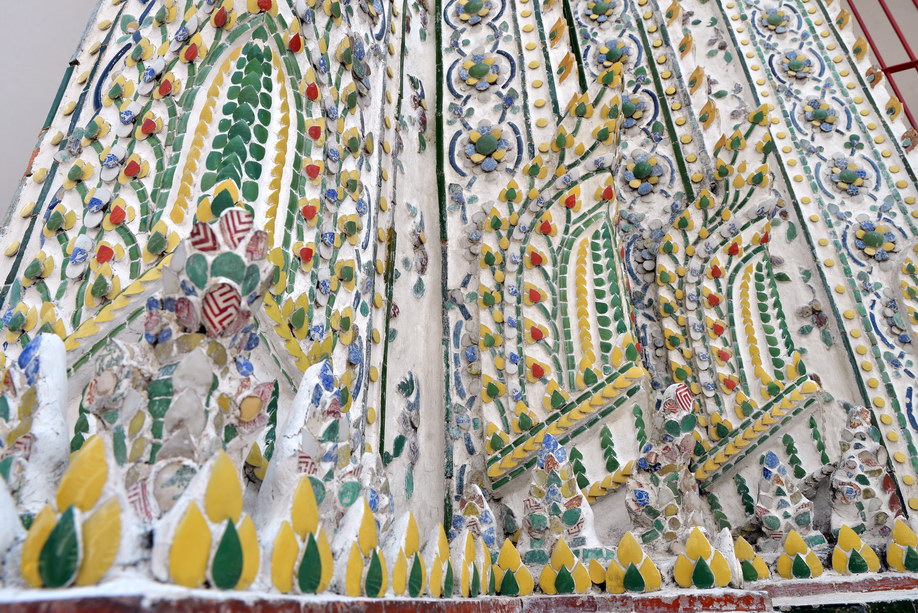
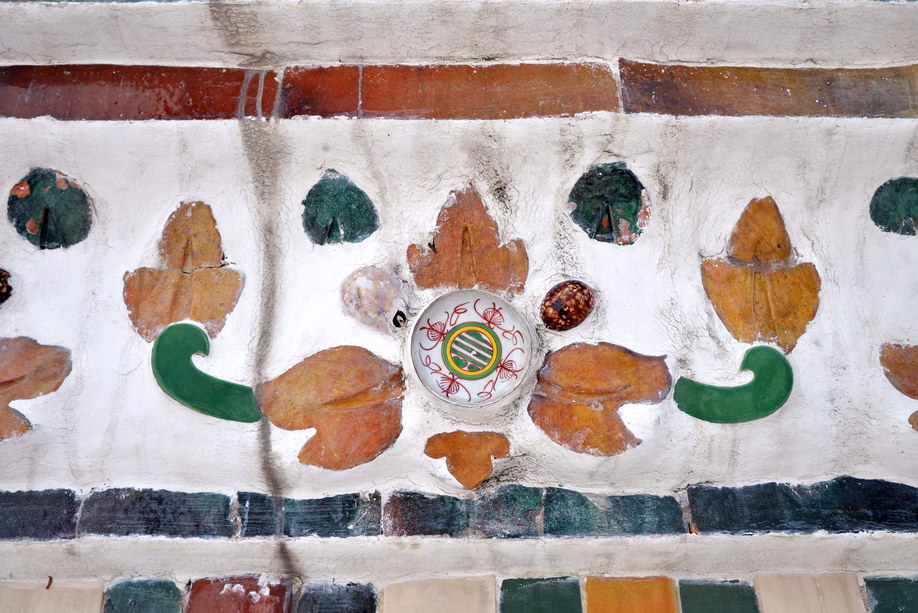
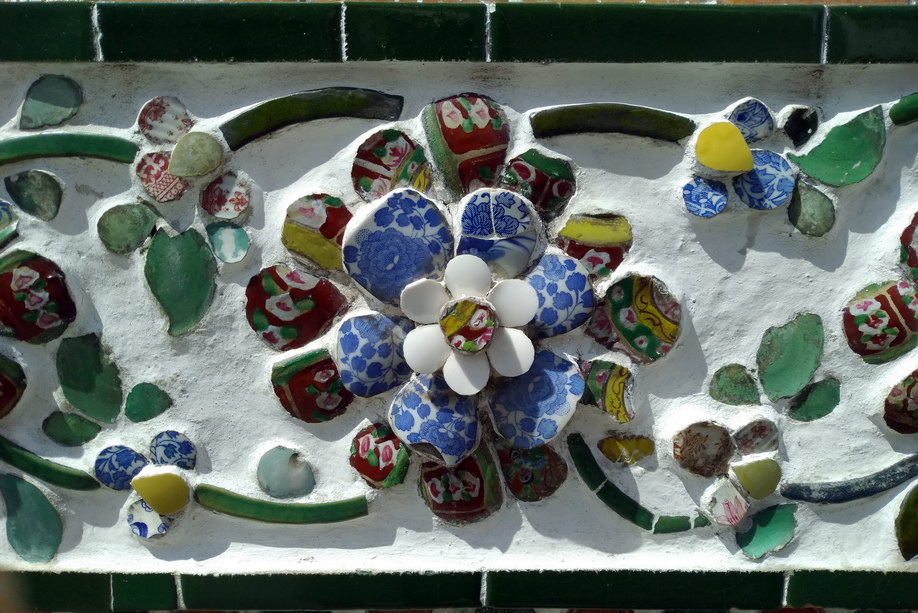
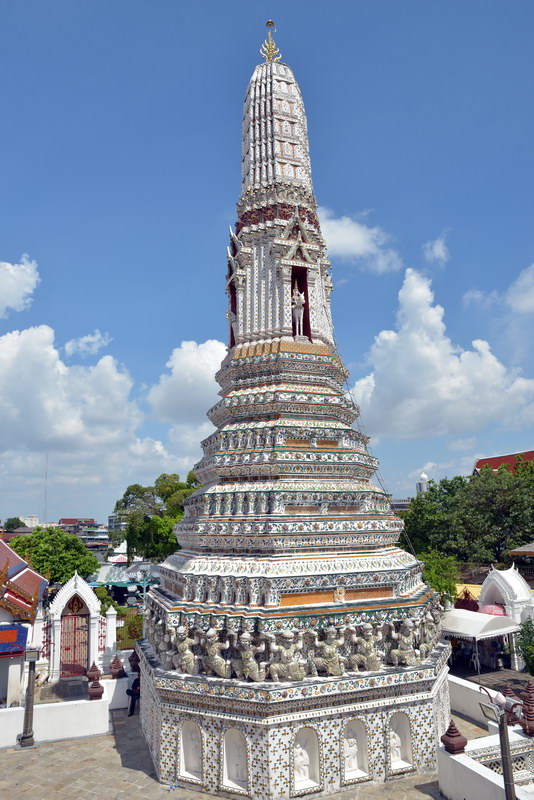
The central prang, a tower drawing on Khmer architectural forms, is surrounded by four smaller towers. From a distance, the composition appears almost sculptural. Up close, however, its surface becomes a world of intricate decoration. Floral motifs and patterned reliefs are assembled from fragments of glazed porcelain and ceramic, interspersed with shells and other ornament. These materials catch the light differently as the angle of view changes.
I was particularly drawn to the contrast between the monument's imposing scale and the patience implied by its smallest details. The tower is not simply a mass of stone rising toward the sky; it is a surface shaped by countless acts of skilled labor. Looking through my camera, I found myself moving between the overall geometry of the structure and the individual decorative forms that give it texture and rhythm.
The use of Chinese porcelain in the decoration also speaks to Bangkok's long history of river trade. Ceramic pieces were among the materials carried on ships traveling between China and Siam, and they became part of the visual language of the temple. The resulting ornament is unmistakably Thai in its setting, yet it also recalls the movement of goods, techniques and artistic ideas across the region.
Like many important Buddhist sites in Thailand, Wat Arun is both a historic landmark and a place of religious significance. Its architecture carries layers of royal, religious and urban history. As a photographer, I try to remain attentive to that distinction: a temple is more than an impressive backdrop, even when its towers and ornament invite the camera at every turn.
My photographs from Wat Arun form a record of a particular encounter in October 2018. They cannot contain the whole history of the temple, but they preserve the things that held my attention: the vertical lines of the towers, the changing surfaces of the decoration and the relationship between this extraordinary structure and the river beside it. What remains with me is the way monumental architecture and minute craftsmanship meet in the same place.