
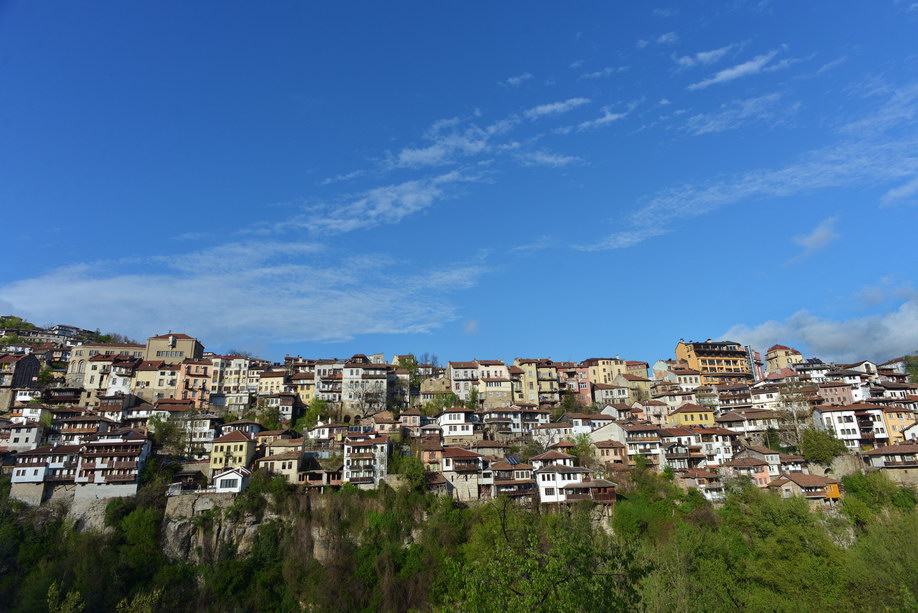
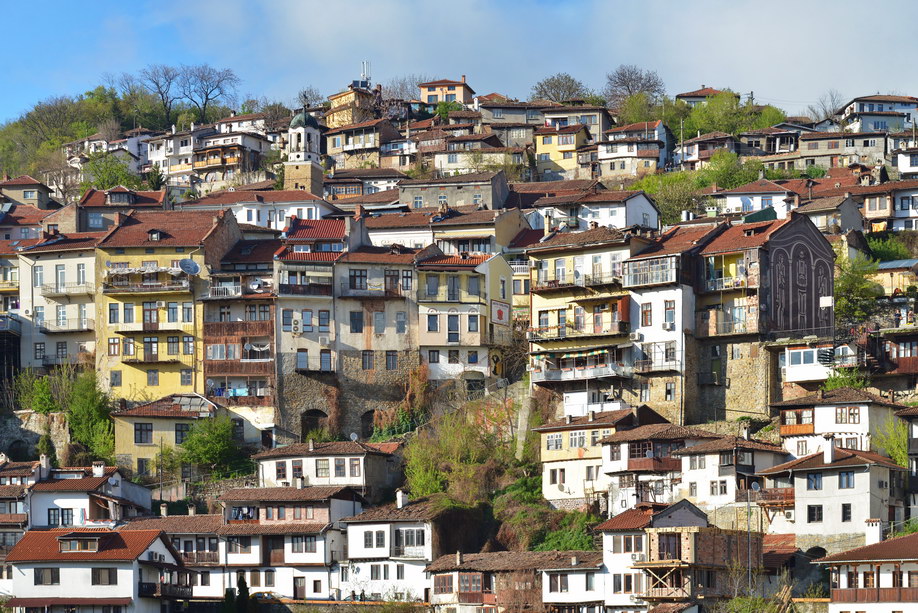
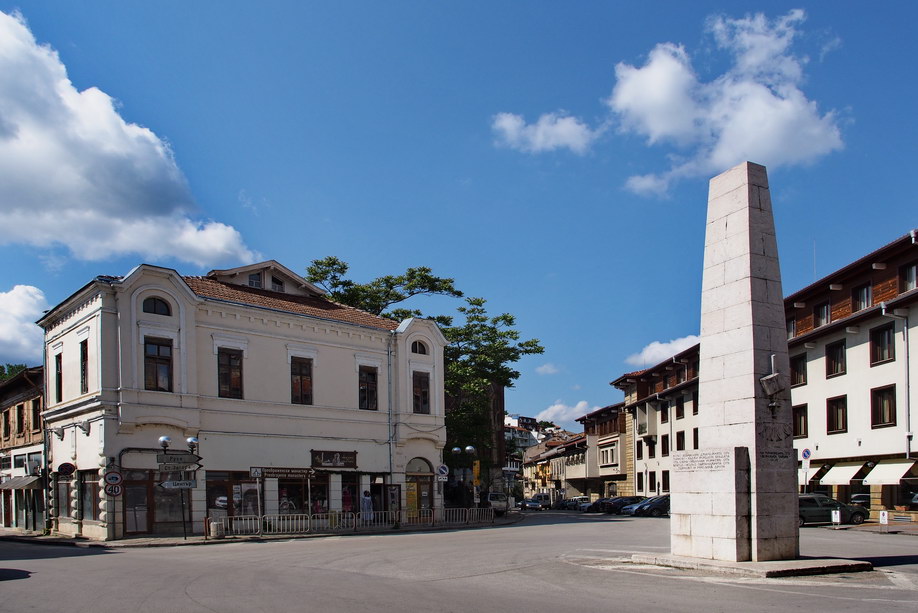
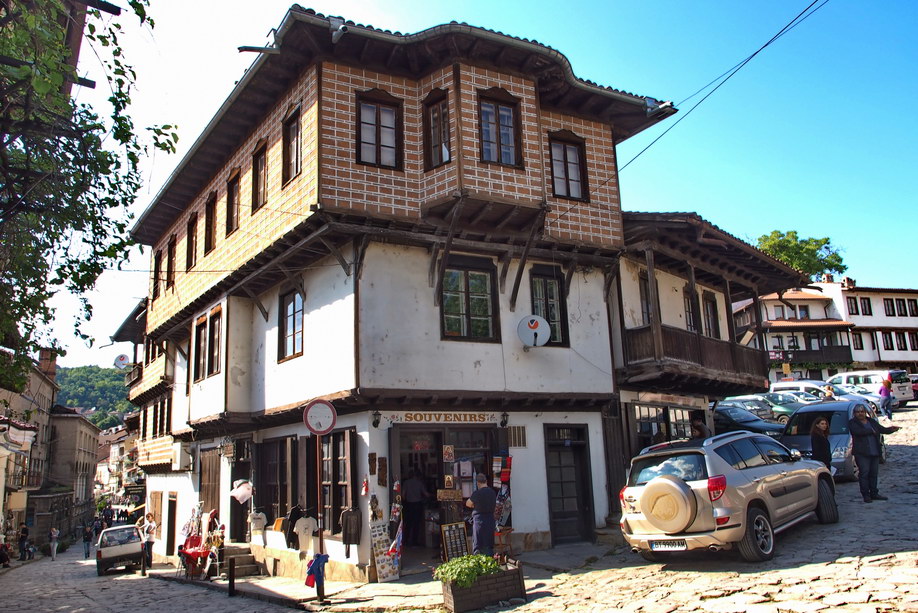

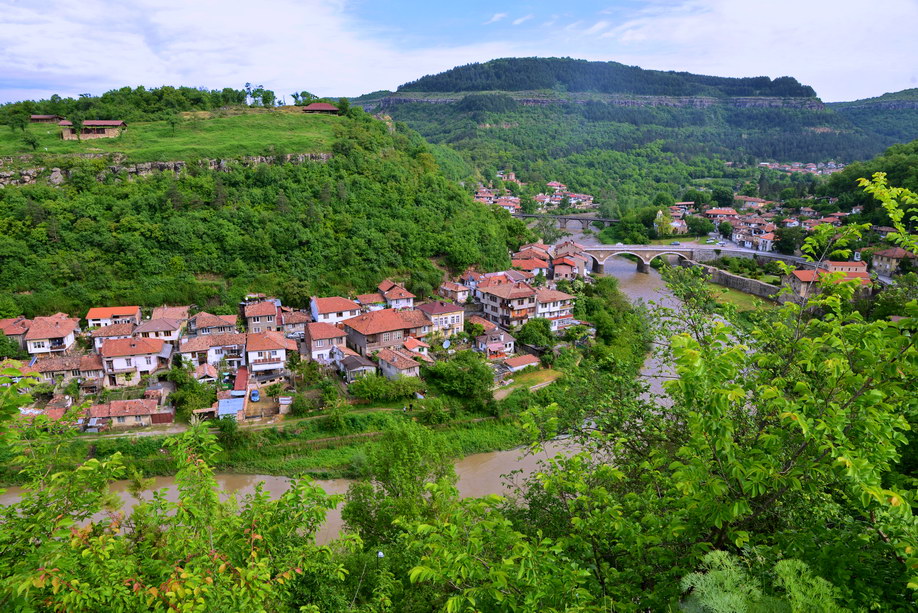
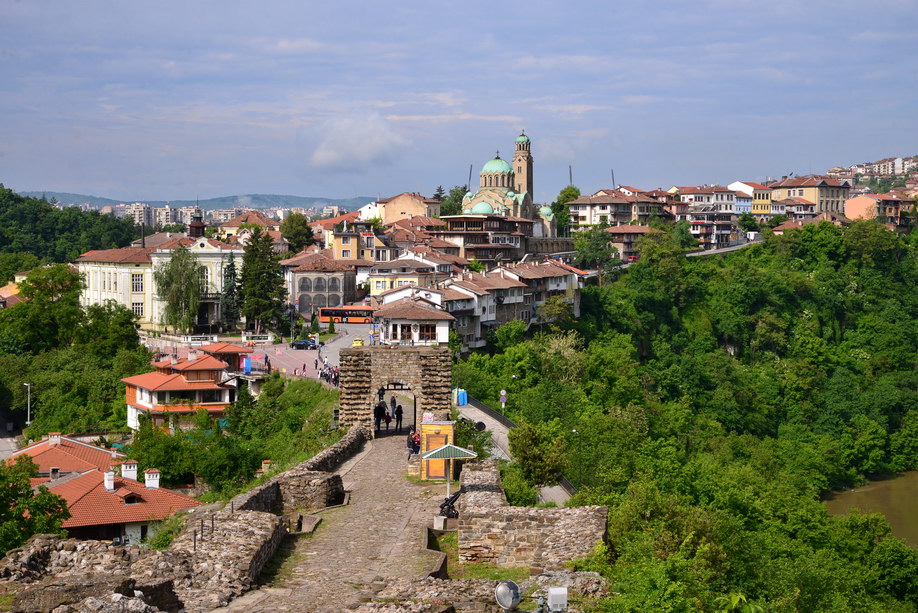
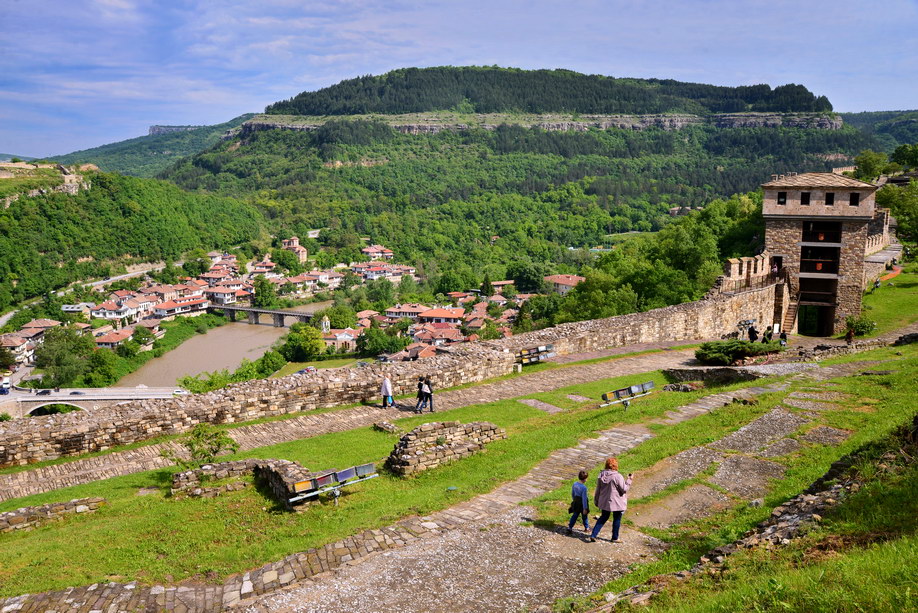
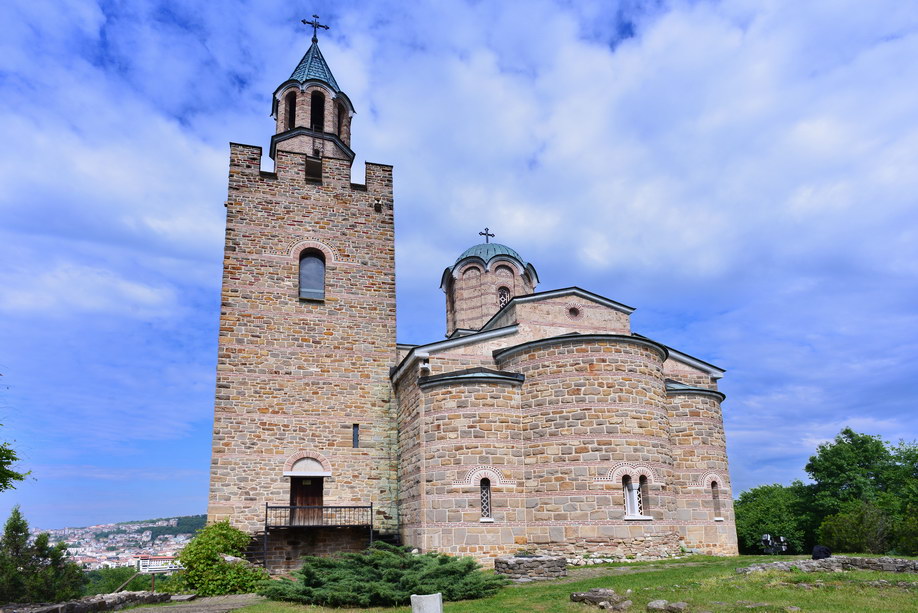
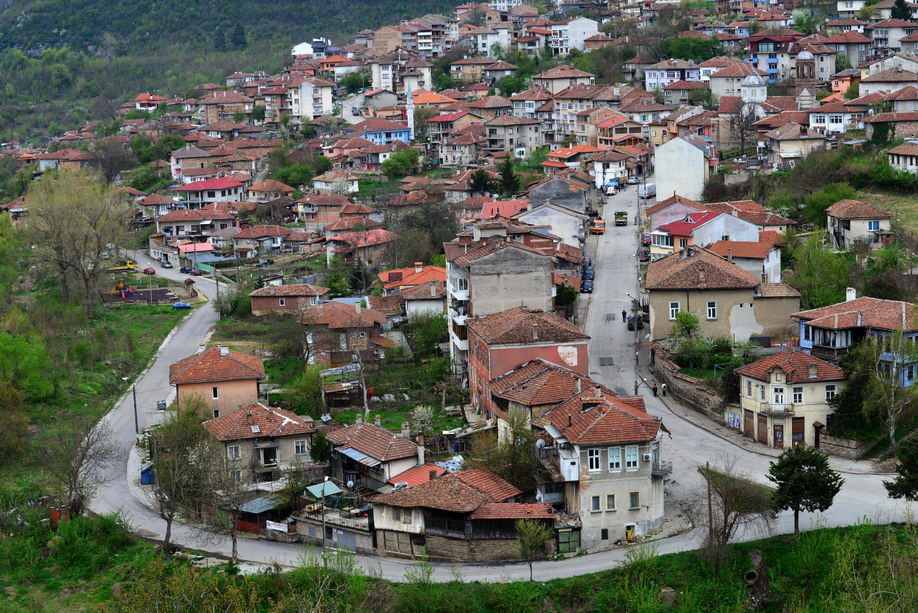
I photographed Veliko Tarnovo on visits between May 2016 and April 2017. The city reveals itself gradually: first as a sweep of houses rising above the Yantra River, then as a succession of steep streets, old façades, churches and unexpected views. I was drawn to the way its buildings follow the contours of the hills, creating a landscape in which architecture and geography seem inseparable.
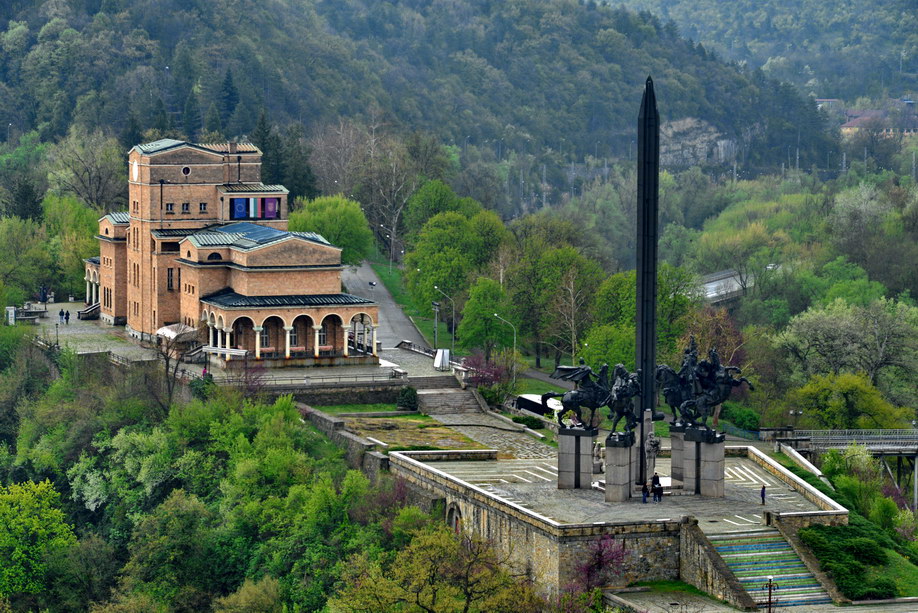
Veliko Tarnovo was the capital of the Second Bulgarian Empire from the late twelfth century until the Ottoman conquest in 1393. Its historical heart is formed by the hills of Tsarevets and Trapezitsa, while Sveta Gora rises nearby. The bends of the Yantra provided natural defenses and shaped the settlement. Looking across the valley today, I could see how the city’s long history is written into its terrain.
Tsarevets is the most visible reminder of medieval Tarnovo. Within its surviving and reconstructed fortifications stood the royal and patriarchal complexes, alongside churches and dwellings. From the walls and paths, the eye moves between the old stronghold and the present-day town. These wide views were an important part of my photographs: they show not only monuments but also the distances and elevations that once defined the city.
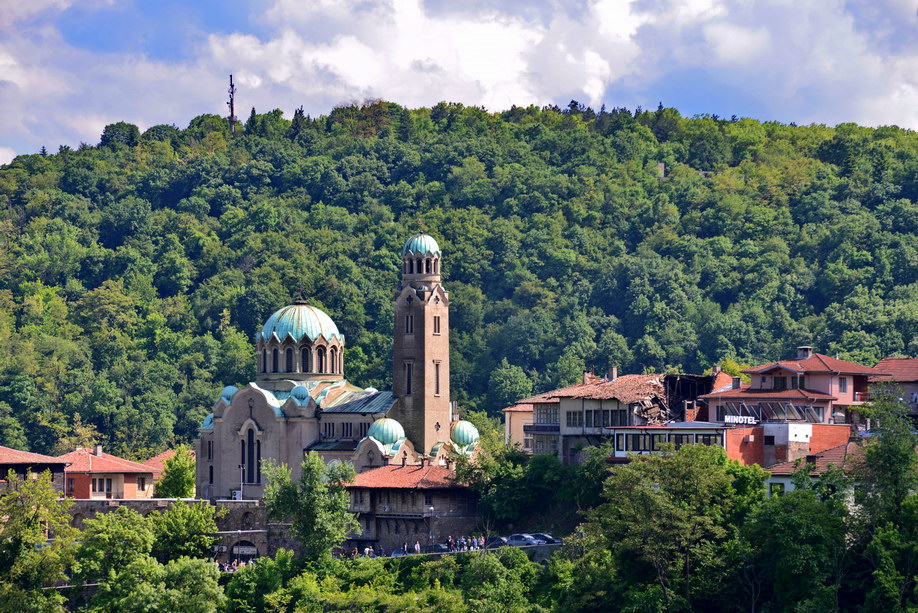
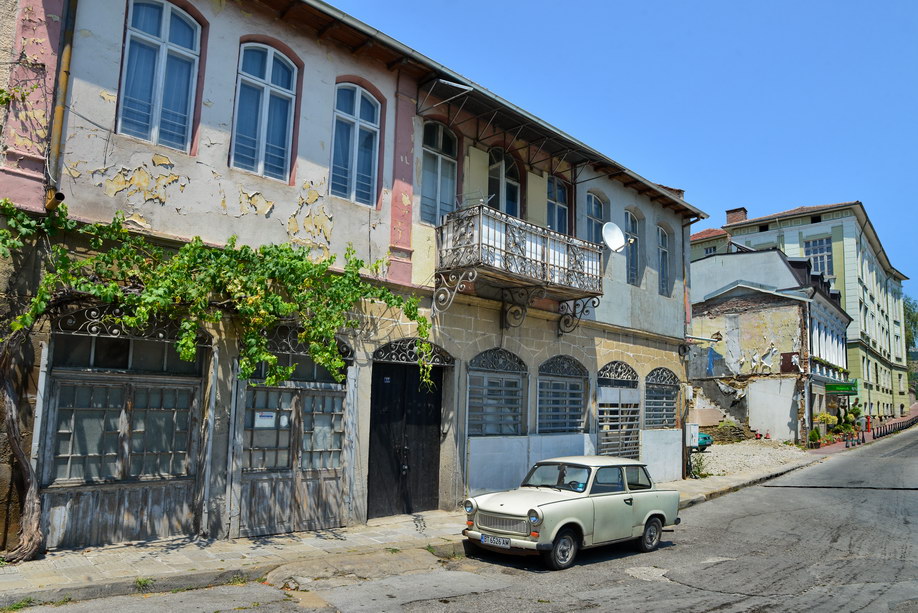
The old quarters offer another scale of observation. Houses with projecting upper floors, timber details and tiled roofs cling to the slopes, sometimes appearing almost stacked one above another. In the streets, the buildings are close enough to study individually; from across the river, they become part of a dense and intricate pattern. I wanted both perspectives in this series.
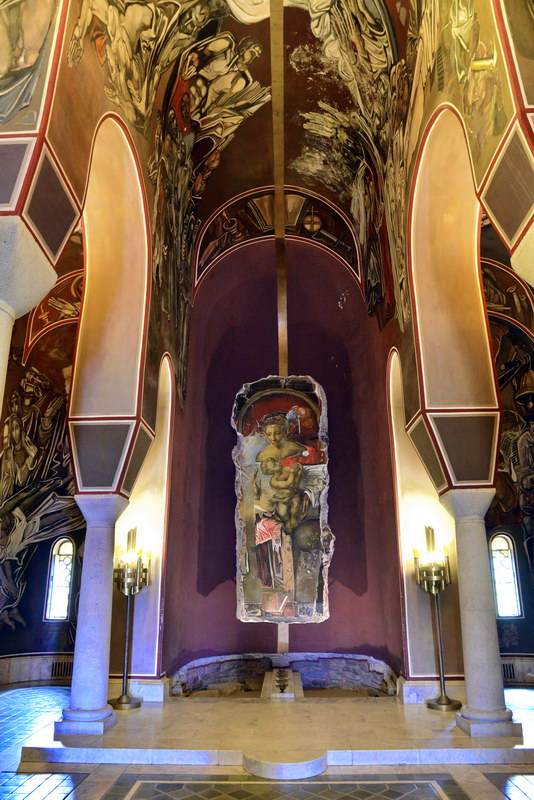
Religious buildings also mark the changing layers of the city. Churches and their interiors recall Tarnovo’s role as a major center of Orthodox Christianity and medieval Bulgarian culture. The presence of a mosque in the urban landscape points to the centuries of Ottoman rule that followed. Rather than treating these structures as isolated sights, I photographed them as parts of a city shaped by different historical periods.
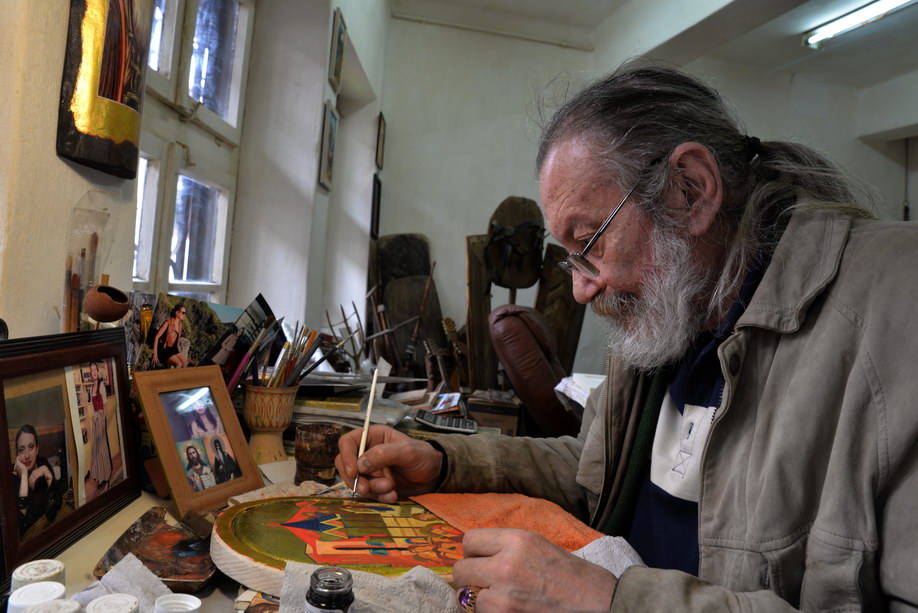
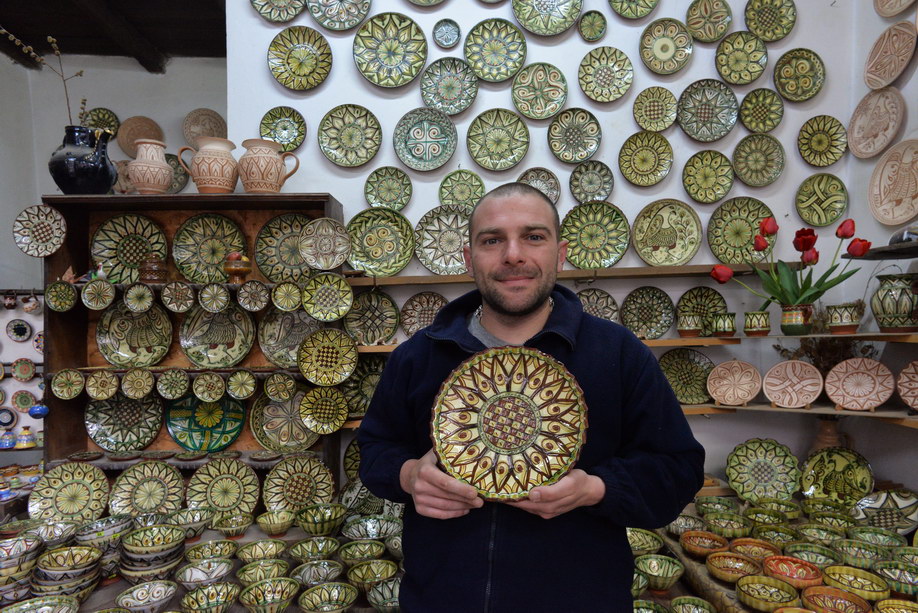
Beyond the celebrated skyline, I found quieter corners: streets where daily life continues among old houses, and small places of work where craftsmanship still has a visible presence. Such scenes matter to me as much as panoramic views. They connect the historical city to the people who inhabit and use it today.
The final photographs move indoors, toward artisans and their work. After the distant views of hills and fortifications, these encounters bring the series back to the human scale: hands, tools, objects and the patient attention required to make something. Together, the images form my diary of Veliko Tarnovo—not a complete guide to its monuments, but a record of the places and details that held my attention during those visits.