
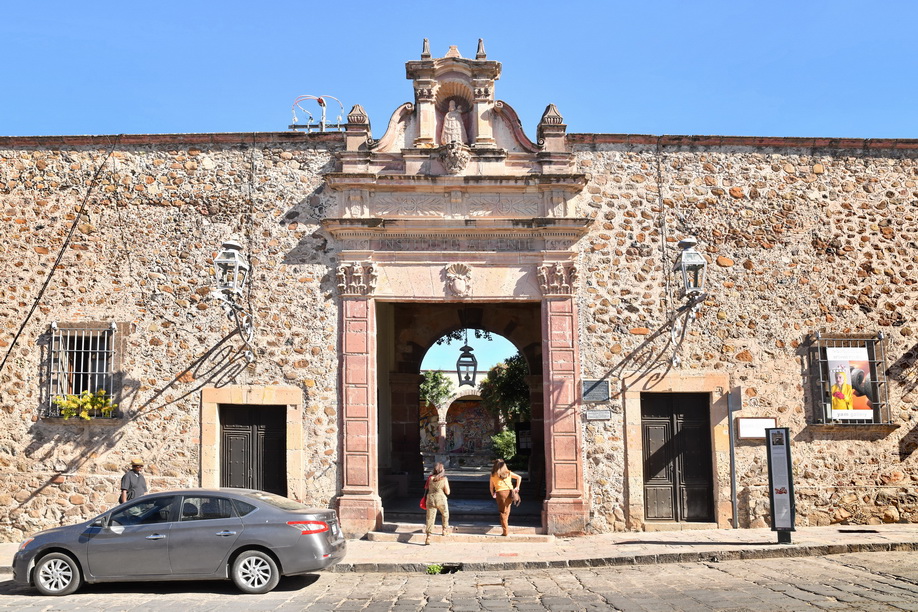
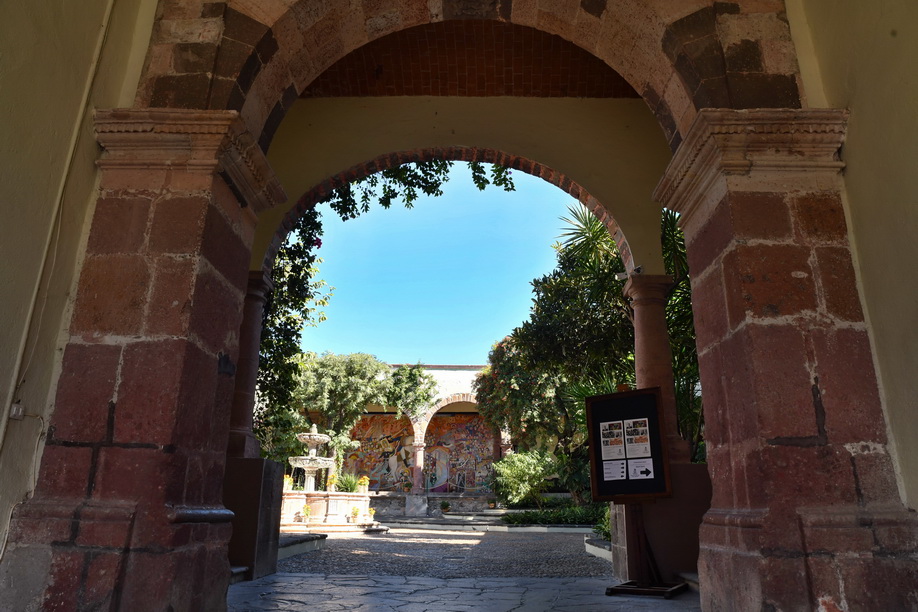
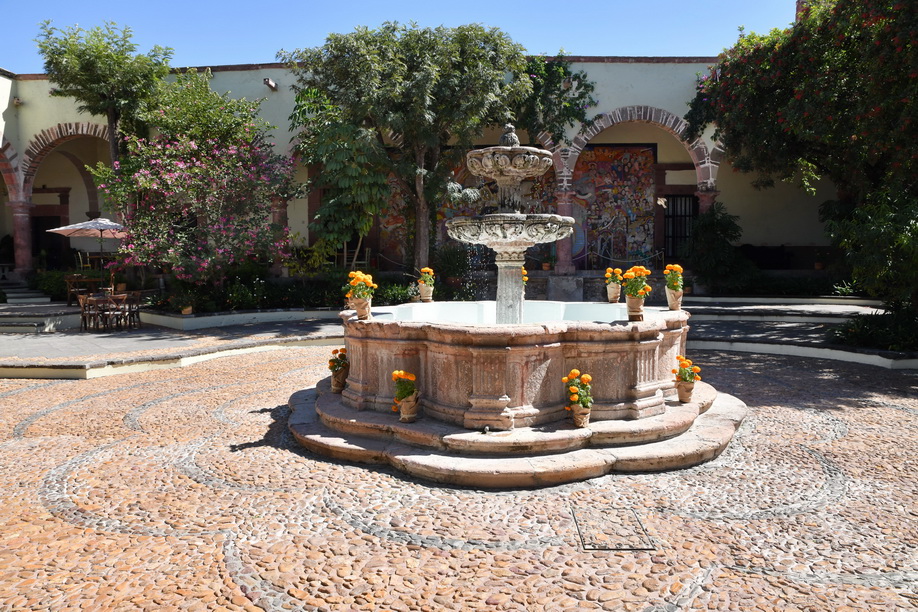
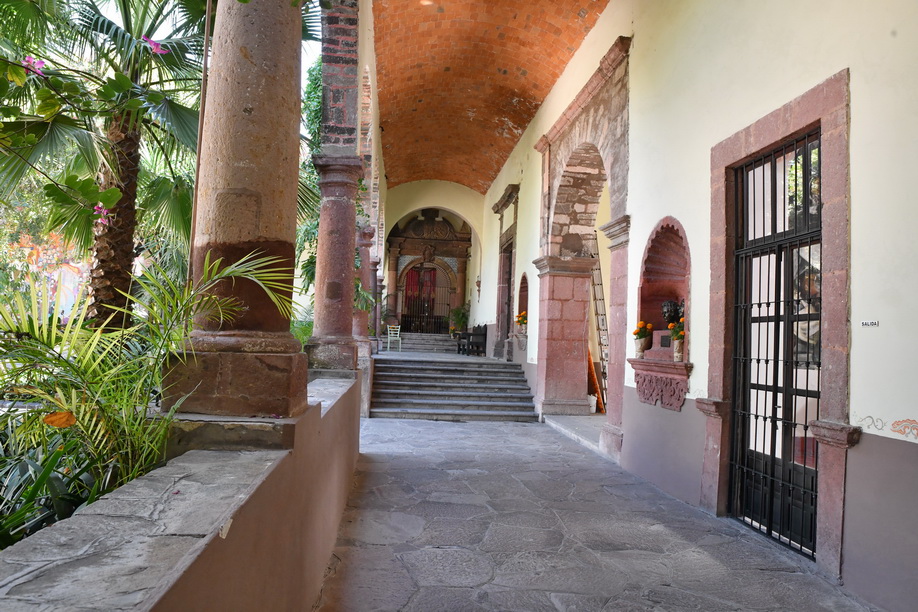
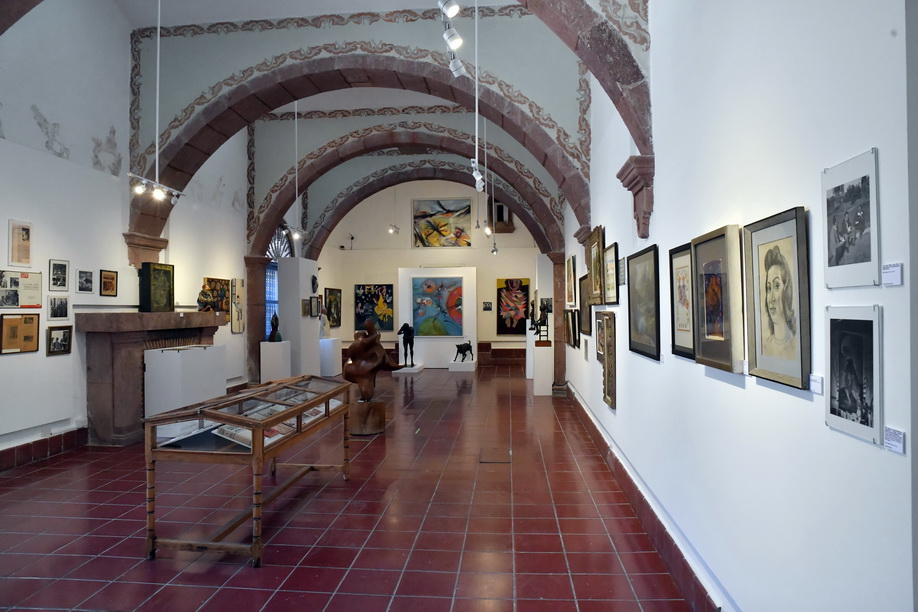
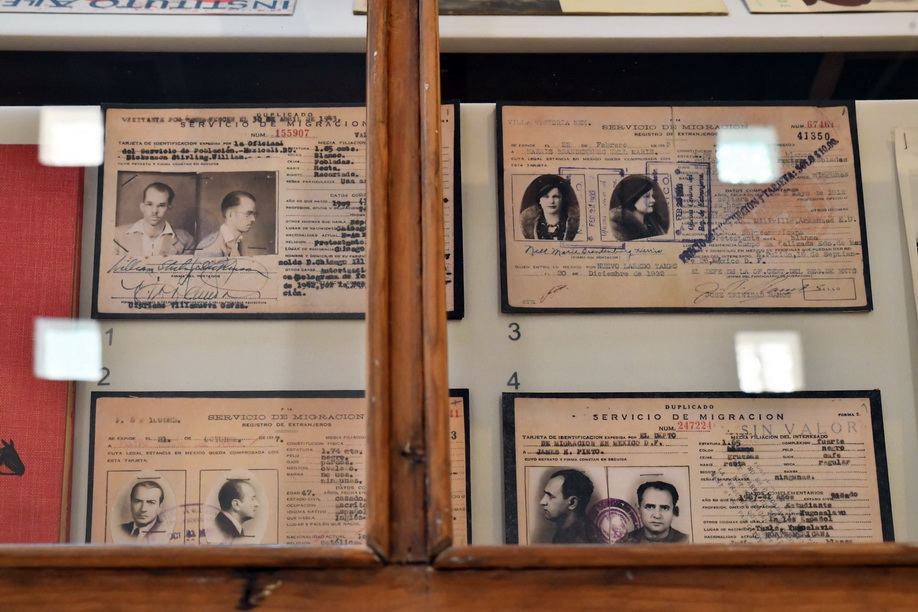
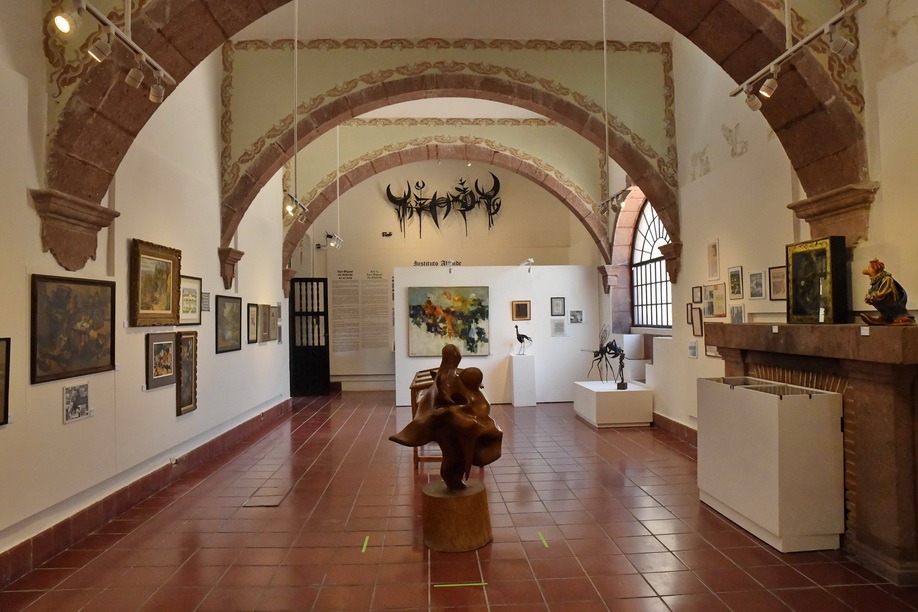
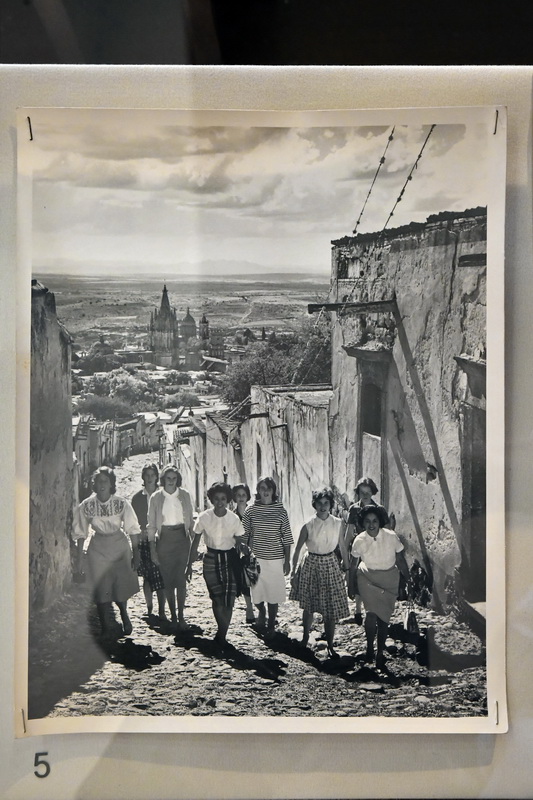
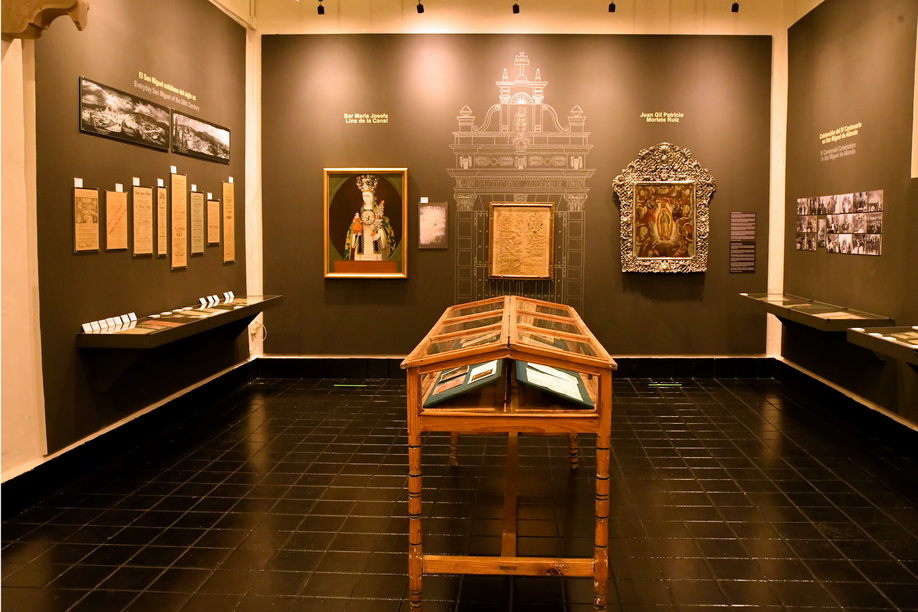
When I entered Instituto Allende in San Miguel de Allende, the building itself was the first thing that caught my attention. Behind the imposing stone facade on Ancha de San Antonio was a spacious courtyard surrounded by arcades, with a stone fountain at its centre, an old chapel and rooms now used as galleries. The history of the building goes back much further than the art school itself. Built in the 18th century as a residence for the wealthy De la Canal family, the complex was purchased by Carmelite nuns in 1809 with the intention of converting it into a convent. However, the outbreak of the Mexican War of Independence prevented the project from being completed.
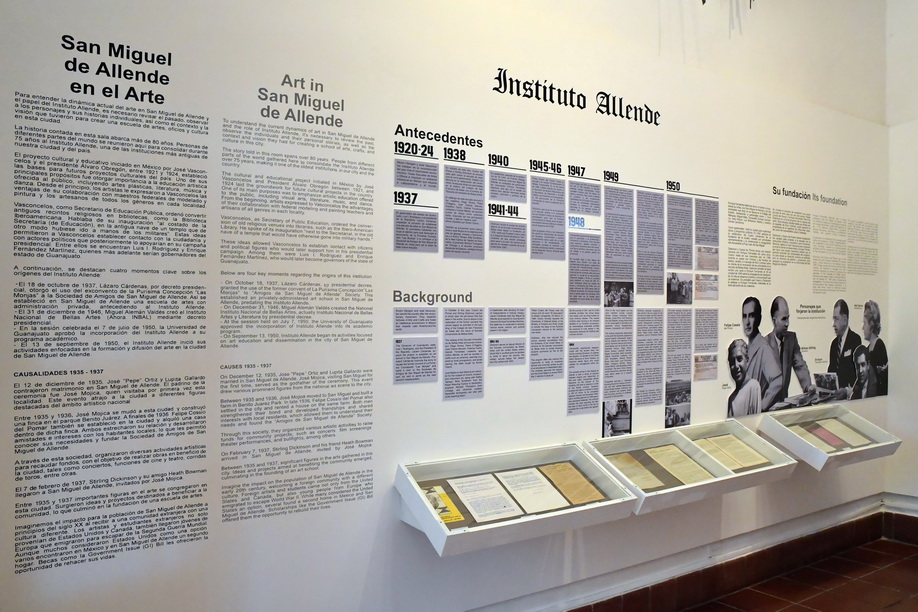
The building's association with art began in the 20th century. Peruvian painter, writer and diplomat Felipe Cossio del Pomar visited San Miguel in 1927 and was deeply impressed by the town. He later developed the idea of establishing an art school here. Following an earlier initiative, the former De la Canal property was acquired, and Instituto Allende was founded in 1950, beginning its activities in 1951. Its purpose was not simply to provide art education, but also to bring Mexican and international artists together and help revitalise San Miguel through art and education. Over time, Instituto Allende played an important role in establishing the town's reputation as an international centre for art and culture.
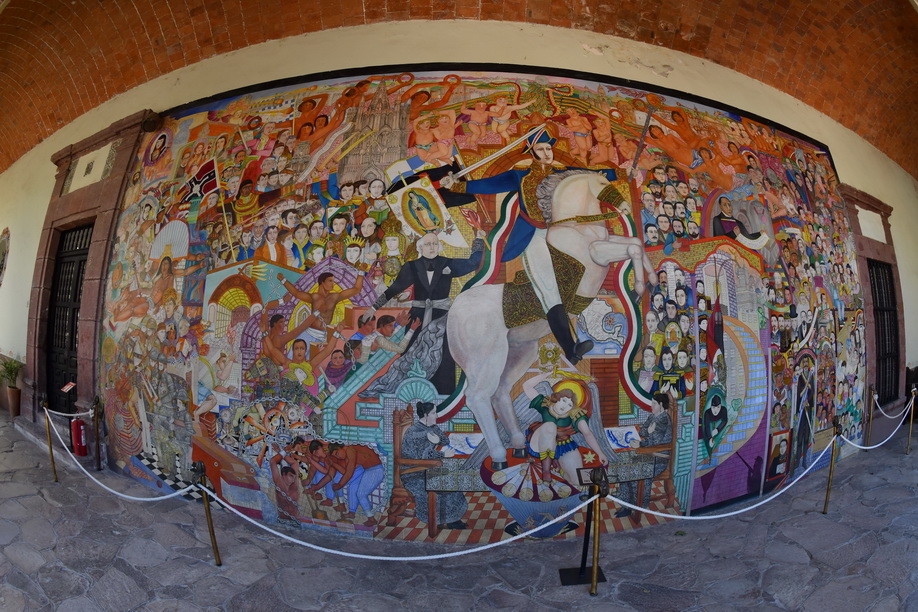
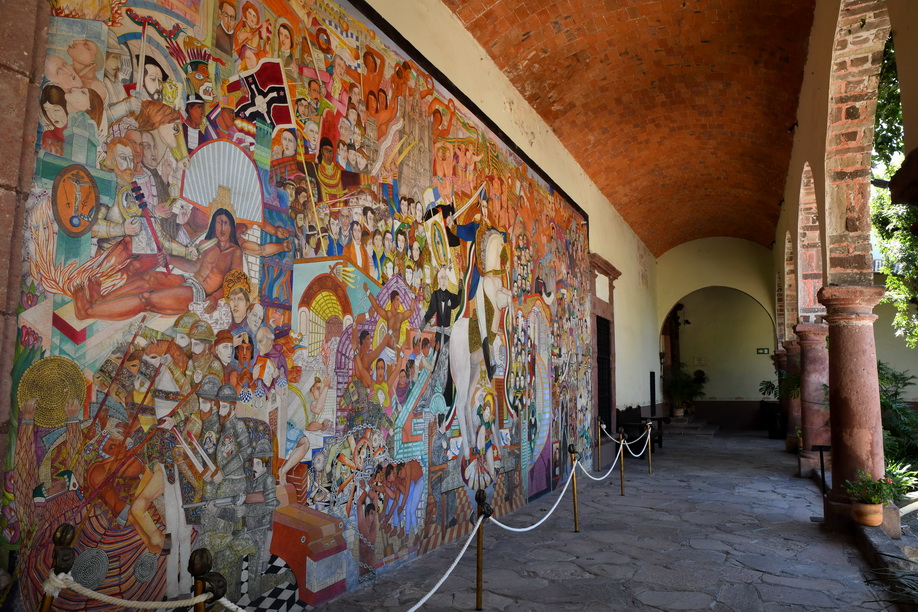
One of the most impressive features of the Instituto for me was the large mural overlooking the courtyard. Created by San Miguel artist and muralist David Leonardo Castaneda, the work brings together different periods of Mexican history within a single composition. Images associated with indigenous cultures, the colonial era, religious traditions and the struggle for independence overlap and interact. At the centre of the composition is Ignacio Allende on a white horse, accompanied by Miguel Hidalgo. Allende's prominent position is natural: one of the leaders of Mexico's independence movement, he was born in this town, which was later renamed San Miguel de Allende in his honour.
I spent quite some time looking at the mural. What at first appeared to be a historical panorama became a much richer visual narrative as I began to notice its details. Figures and symbols belonging to different periods, beliefs and cultures coexist on the same surface. Rather than presenting Mexican history as a simple chronological sequence, the mural seems to build it from many overlapping layers. This was what fascinated me most: the longer I looked, the more details I discovered.
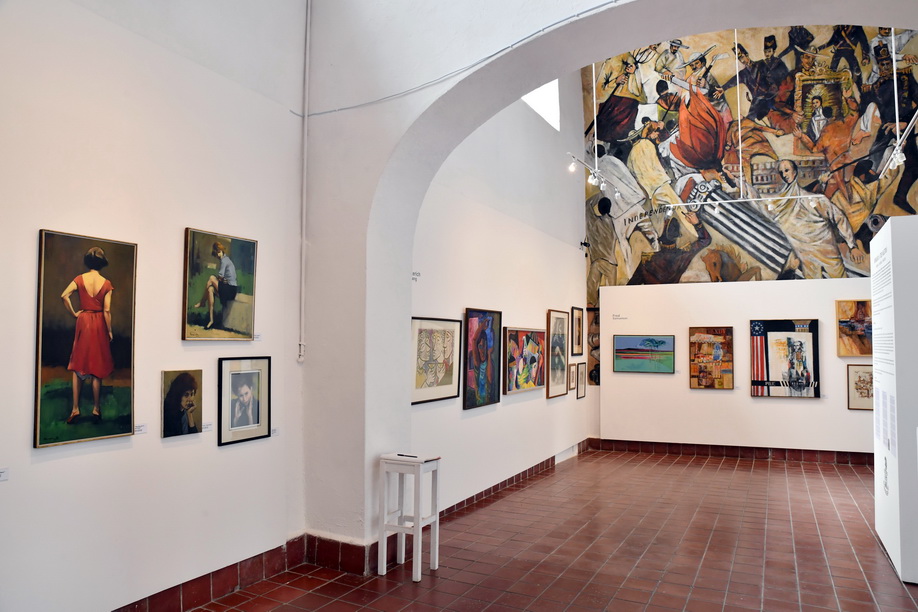
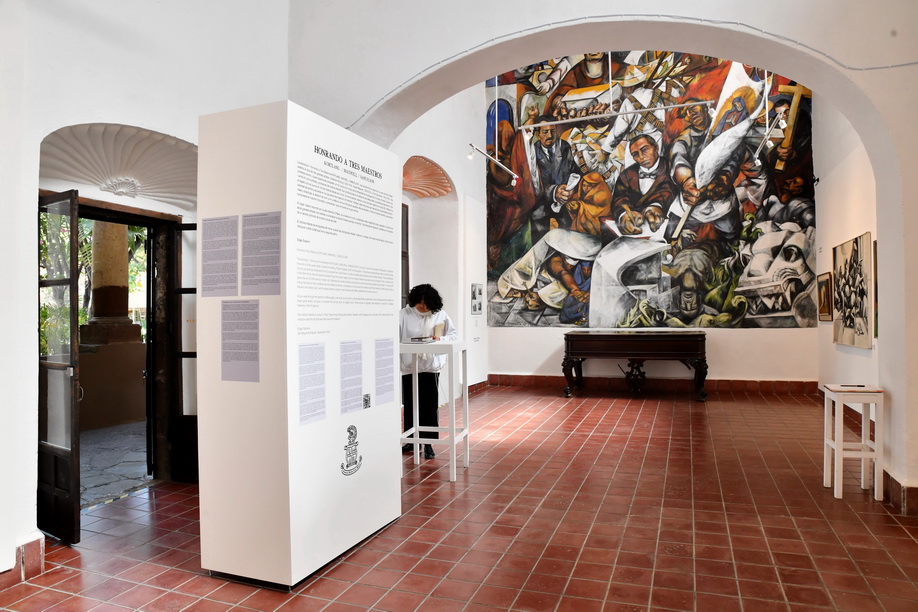
The other murals I encountered at Instituto Allende also revealed the school's connection with the Mexican mural tradition. Artists such as James Pinto, John de Melim and Elaine Hamilton O'Neal created mural works here, transforming the walls from architectural surfaces into spaces for art and historical narrative.
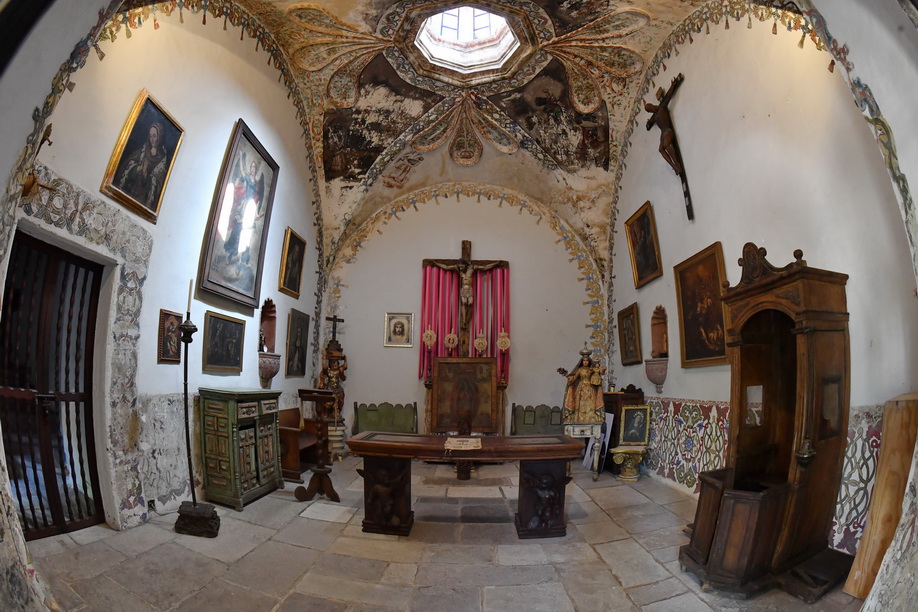
The old chapel was another part of the Instituto that caught my attention. Still preserving its altar, crucifixes, religious paintings, statues and faded decoration around the vault and cupola, it offered a striking contrast to the galleries and contemporary art only a few steps away. For me, this coexistence of the building's religious past with its present artistic life was another reminder of the many layers of history preserved within Instituto Allende.
As I photographed the building, I found myself thinking about the transformations it had undergone. An 18th-century aristocratic residence, once intended to become a convent, had eventually become an international art school in the 20th century. Its past had not been erased. The old courtyard, chapel, arches and stone walls had instead become part of its new identity, with art adding yet another layer to the history of the place.
By the time I left Instituto Allende, I no longer saw it simply as an art school. The old mansion, Mexico's history of independence, Ignacio Allende, the mural tradition and contemporary artistic life all seemed to coexist within the same place. For me, this is what makes Instituto Allende so compelling: rather than preserving its past behind museum glass, it continues to live within that history while providing a space for new art to be created.
Instituto Allende is closely connected to San Miguel de Allende's twentieth-century transformation into an international centre for art education. Its workshops and exhibitions brought artists and students into contact with the city's historic architecture and with Mexican artistic traditions. The building itself makes that exchange visible: a former historic residence adapted to the work of teaching, making and exhibiting art.