



In September 2015, I visited the old town of Shangri-La in northwestern Yunnan, in the Diqing Tibetan Autonomous Prefecture. The town, long known as Zhongdian, took the name Shangri-La in the early 2000s, borrowing it from the imagined Himalayan sanctuary in James Hilton’s novel Lost Horizon. Beyond that literary association, the place has its own history, architecture and living Tibetan cultural traditions.
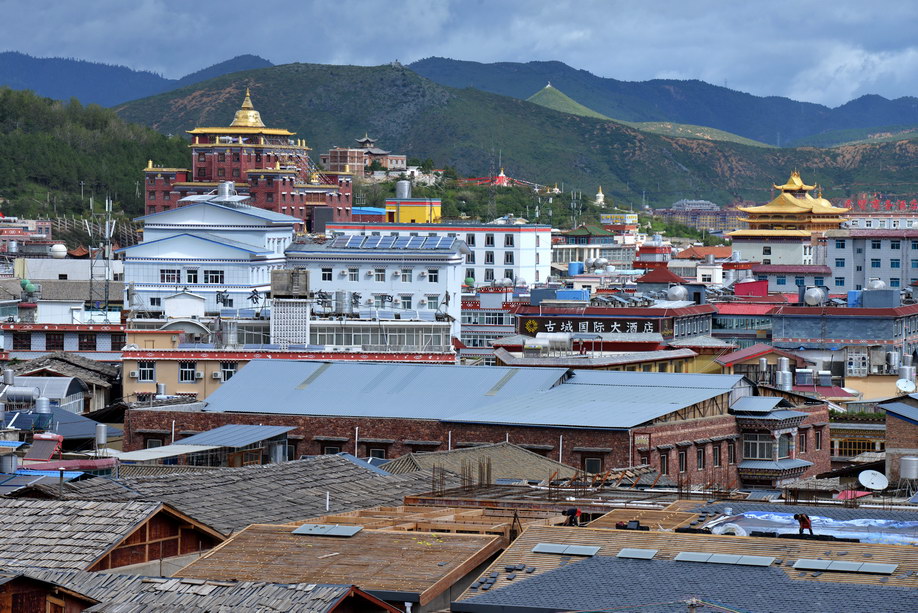
My photographs begin with a view across the roofs of the town toward the hills and religious buildings above it. The old quarter, commonly known as Dukezong, had been an important stopping point on trading routes connecting Yunnan with the Tibetan plateau. Its streets and houses belonged to a landscape shaped by commerce, pilgrimage and the movement of people over many generations.
The photographs were made less than two years after a devastating fire swept through much of Dukezong in January 2014. When I arrived, reconstruction was part of the town’s recent history. I wanted to photograph not only its buildings and monuments but also the life continuing around them. These pictures should not be mistaken for a complete record of the fire’s damage or the rebuilding process; they show what I encountered during my visit.
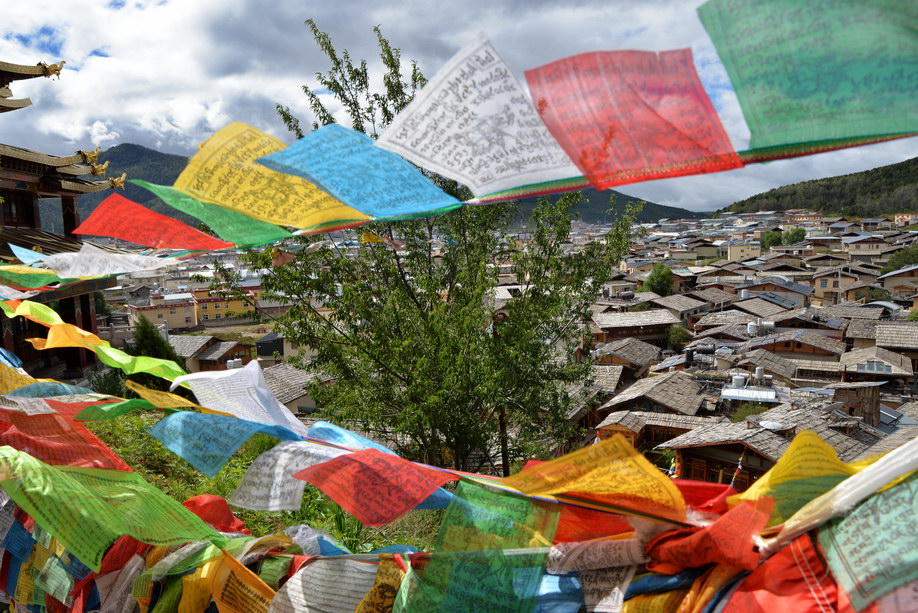
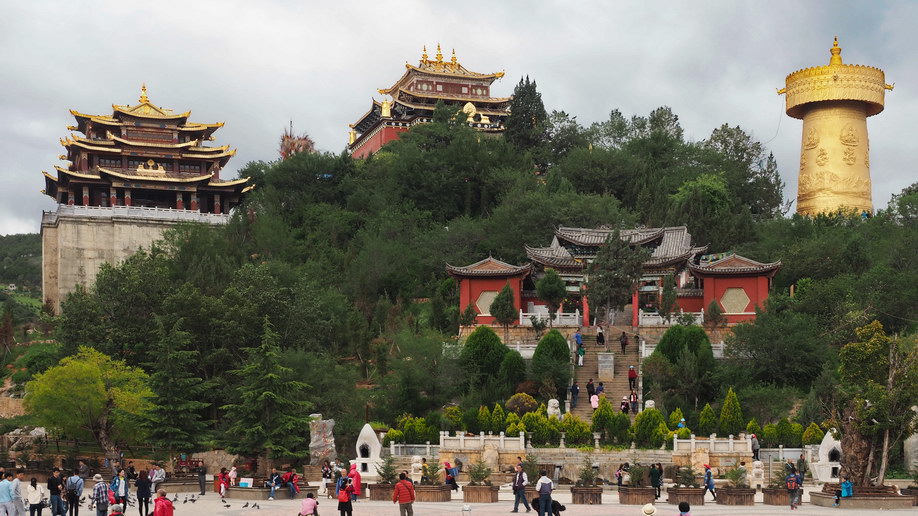
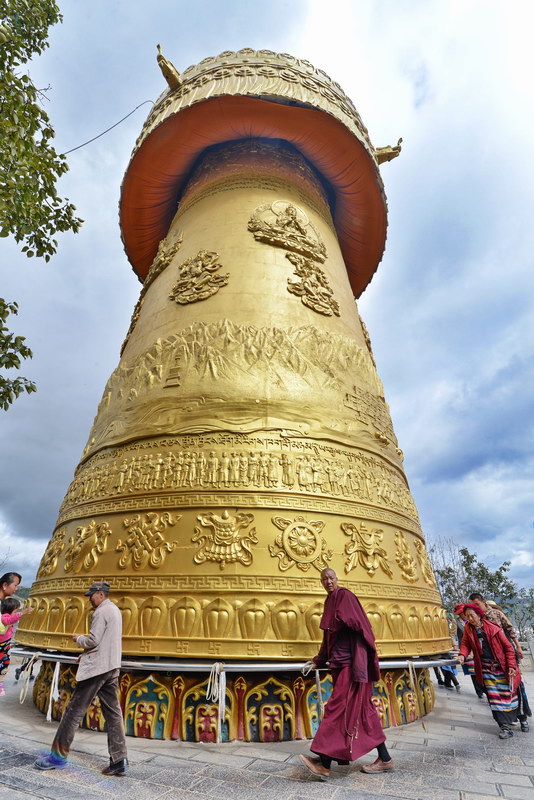
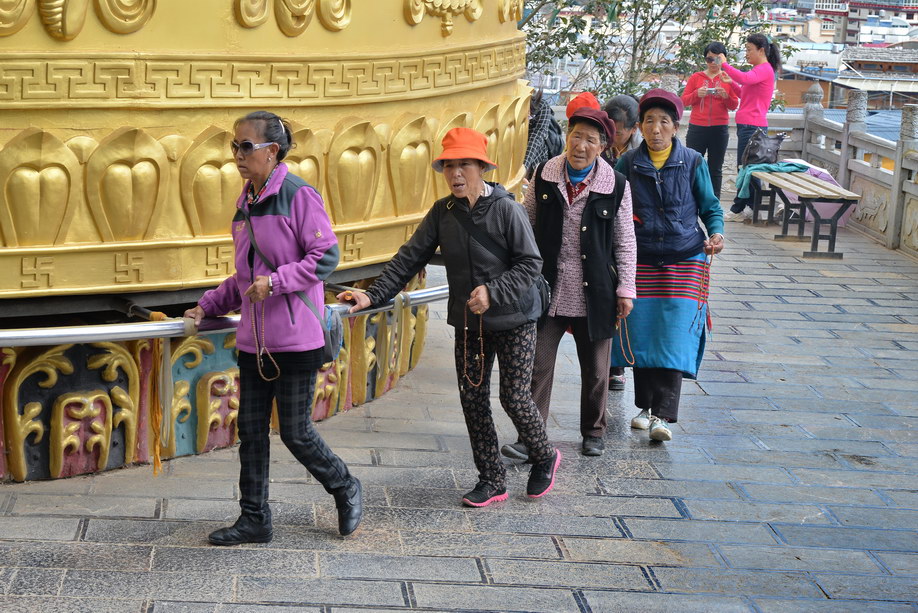
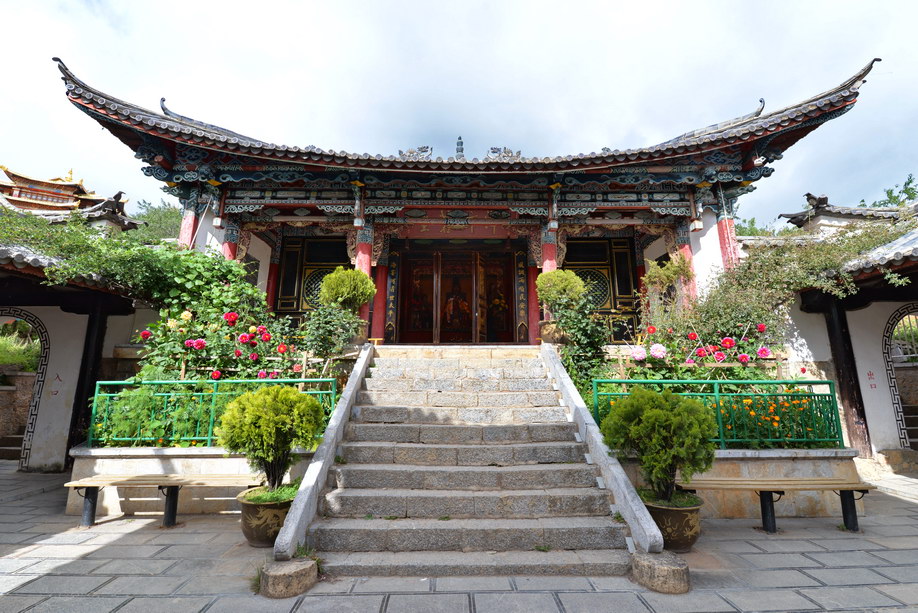
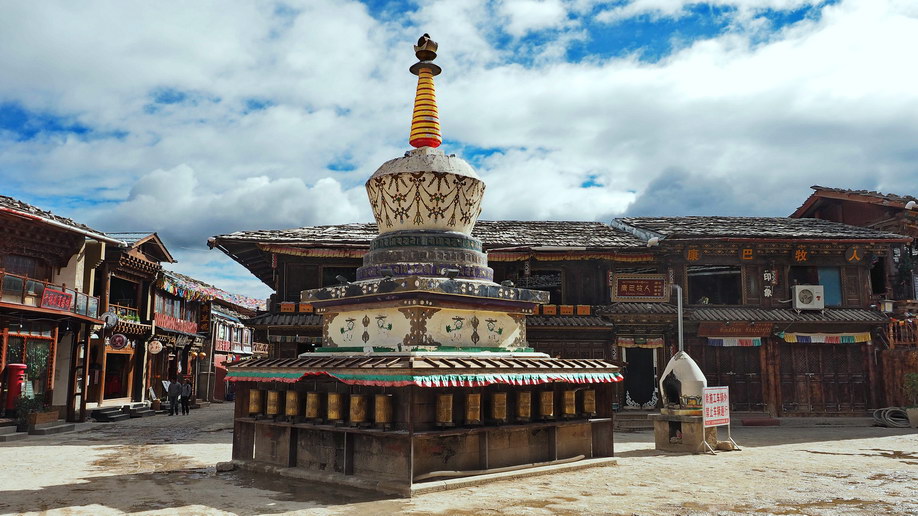
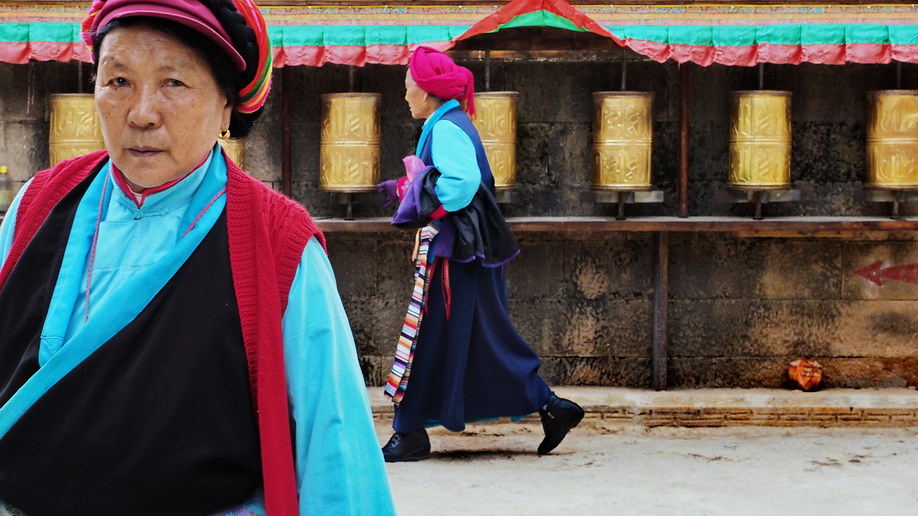
One of the most striking landmarks was the enormous golden prayer wheel on the hill above the old town, near Guishan Park. Visitors gathered around it, and its scale dominated the scene. Prayer wheels are associated with Tibetan Buddhist devotional practice: turning them is traditionally linked to the recitation of prayers and mantras. The colourful prayer flags, temples and richly decorated interiors nearby gave a sense of the town’s religious atmosphere.
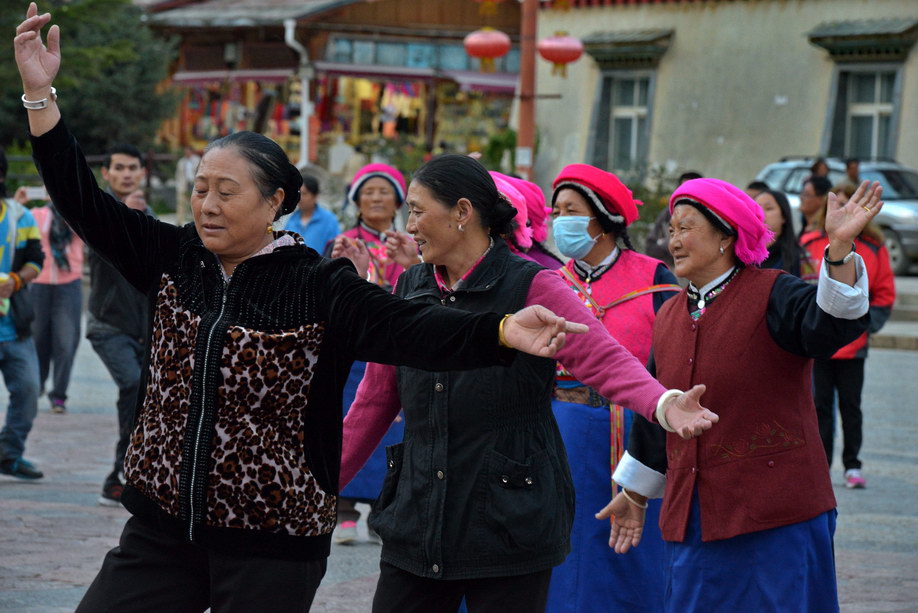
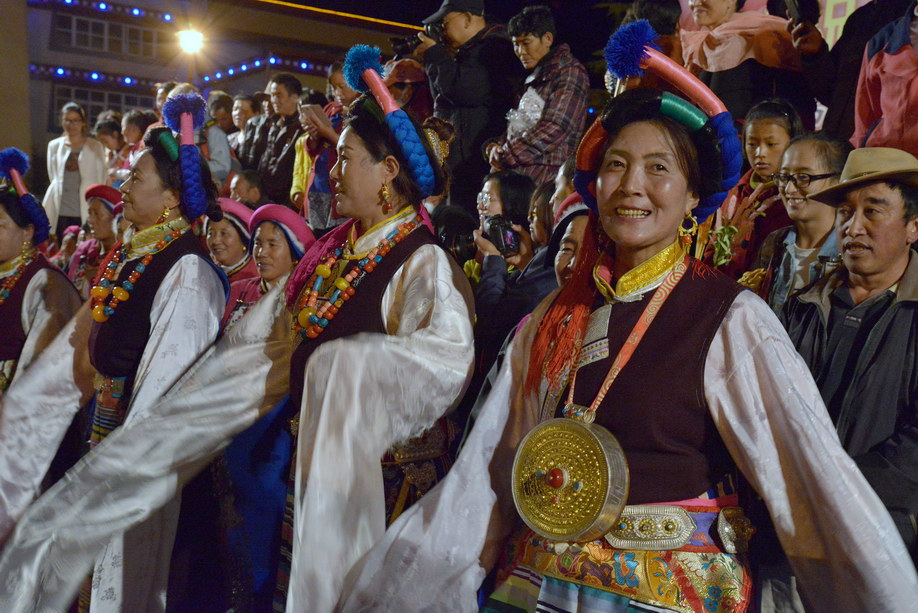
Yet Shangri-La was not only a place of sacred buildings. In an open square I watched people dancing together. Some wore traditional clothing, while others were dressed for ordinary daily life. Their movements brought a different rhythm to the photographs, showing the public square as a meeting place rather than merely a destination for visitors.
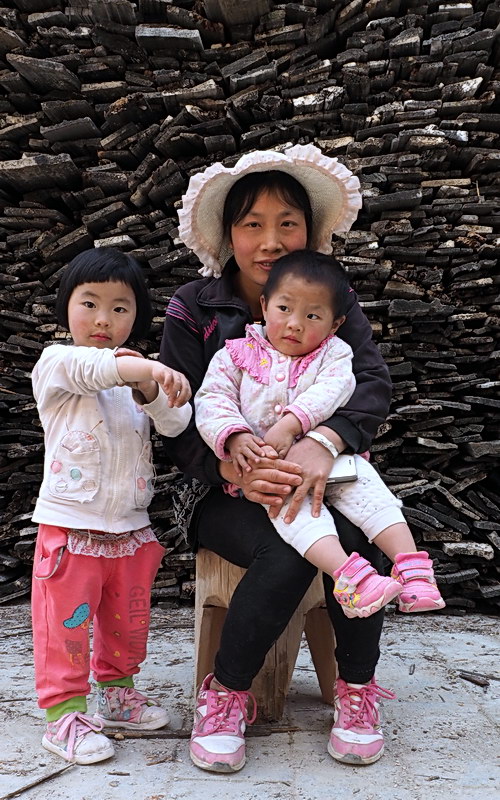
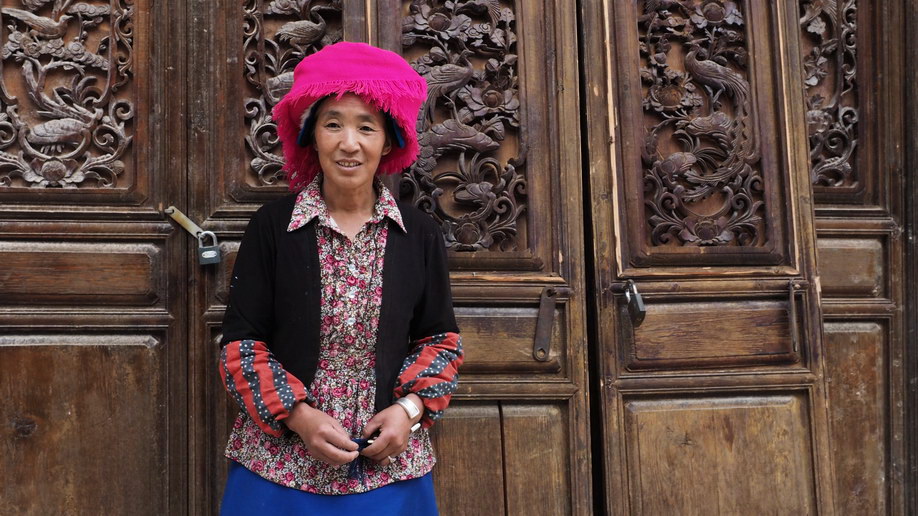
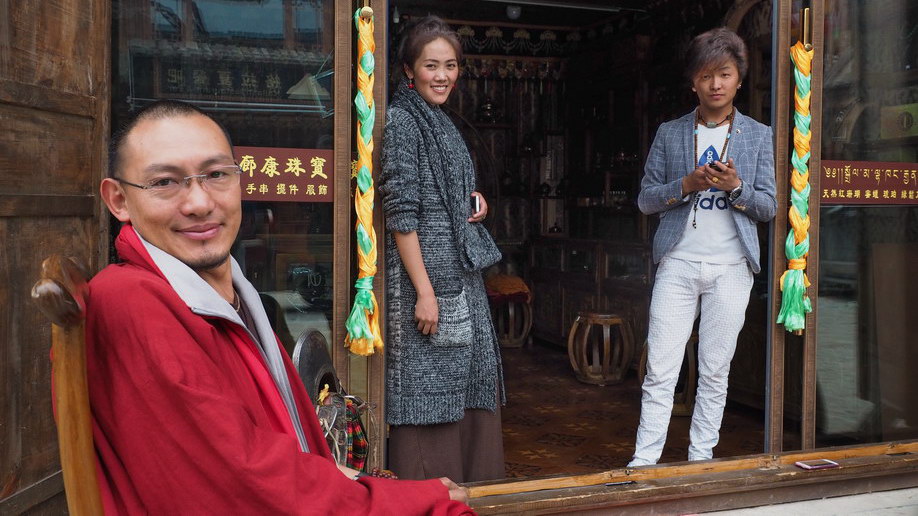
Other photographs brought me closer to individuals: a woman with children, women wearing distinctive head coverings, and people standing or sitting in front of carved wooden doorways. I have not assigned an ethnic identity or a personal story to any of these subjects solely from their appearance. What interested me was the individuality of each encounter and the expressions that emerged in front of my camera.
The carved wood, painted architectural details, bright fabrics and religious objects all caught my attention. But I remember the people just as clearly as the buildings. Taken together, these sixteen photographs form my visual diary of a town balancing its past, its recovery and the everyday life of its residents.
Looking back at Shangri-La, I see a place that cannot be reduced to the romantic name it was given. Its character lay in the coexistence of prayer and public celebration, old architecture and recent change, quiet portraits and movement in the streets. Those were the moments I tried to preserve in September 2015.