
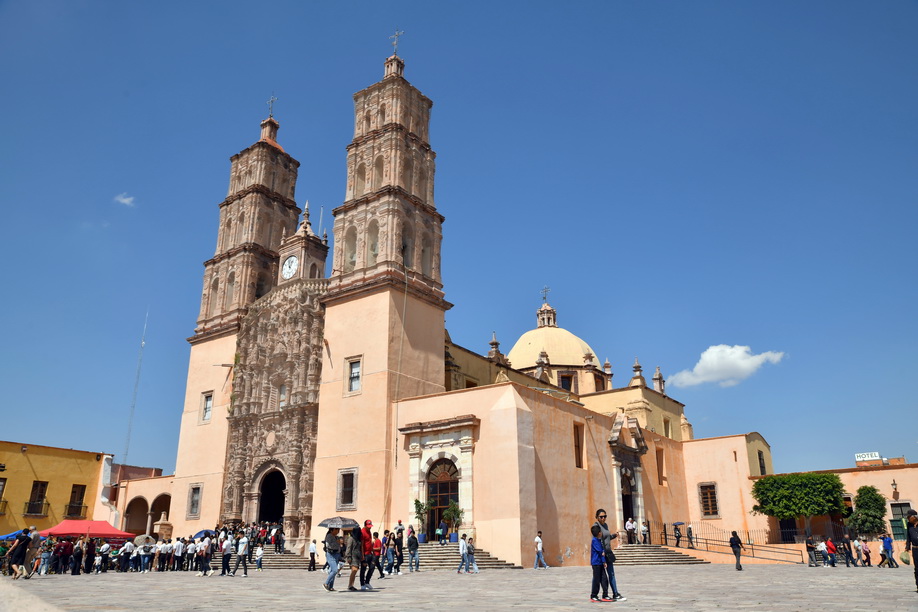
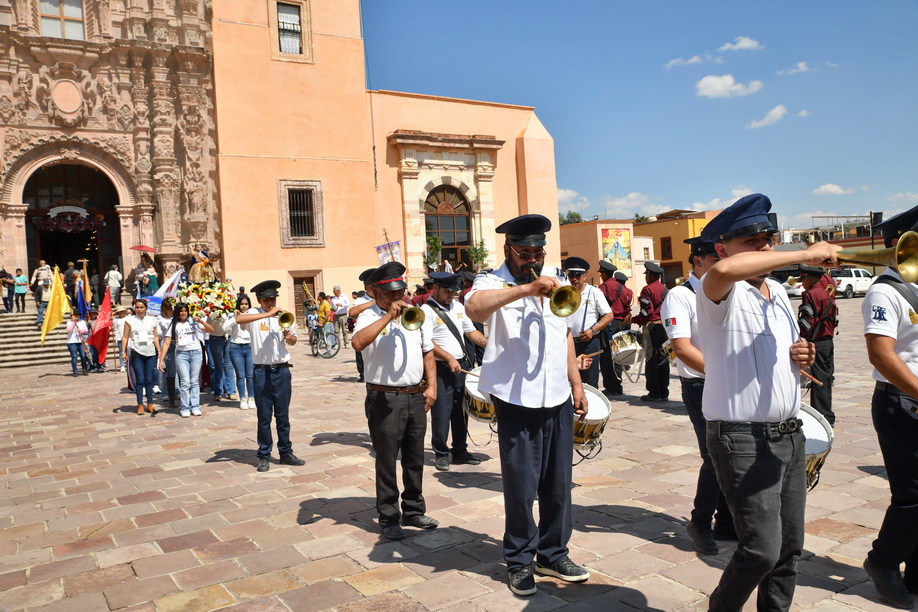
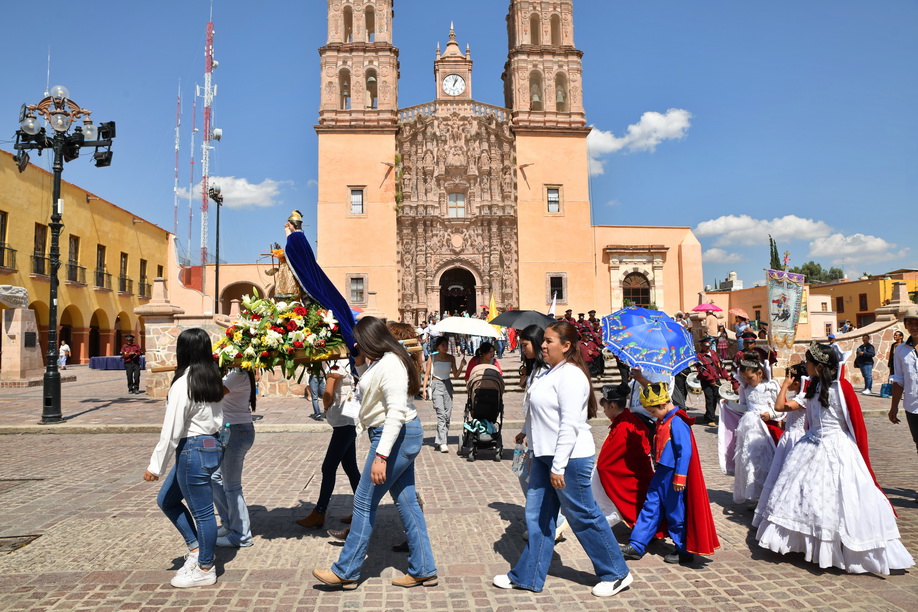
On 26 October 2015, I was in the centre of Dolores Hidalgo. There was an unusual sense of activity in front of the Parroquia de Nuestra Senora de los Dolores, which dominates the town's main square. Musical groups had gathered outside the church, banners were being prepared, and people were gradually forming into a procession. This is not only the town's most important religious building, but also one of the symbolic sites of Mexican history. It was here that Miguel Hidalgo's call to rise against Spanish rule on 16 September 1810 became associated with the Grito de Dolores, regarded as the beginning of the Mexican War of Independence.
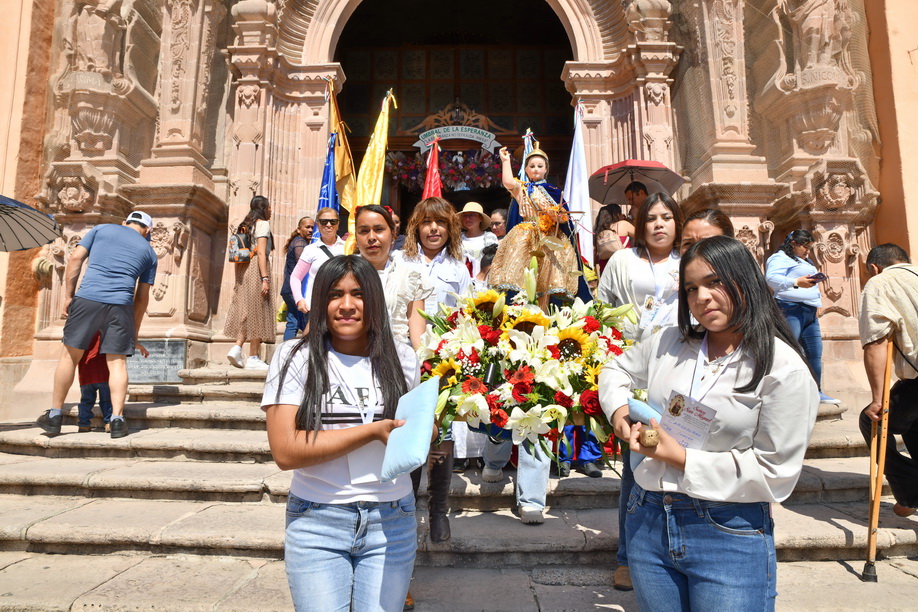
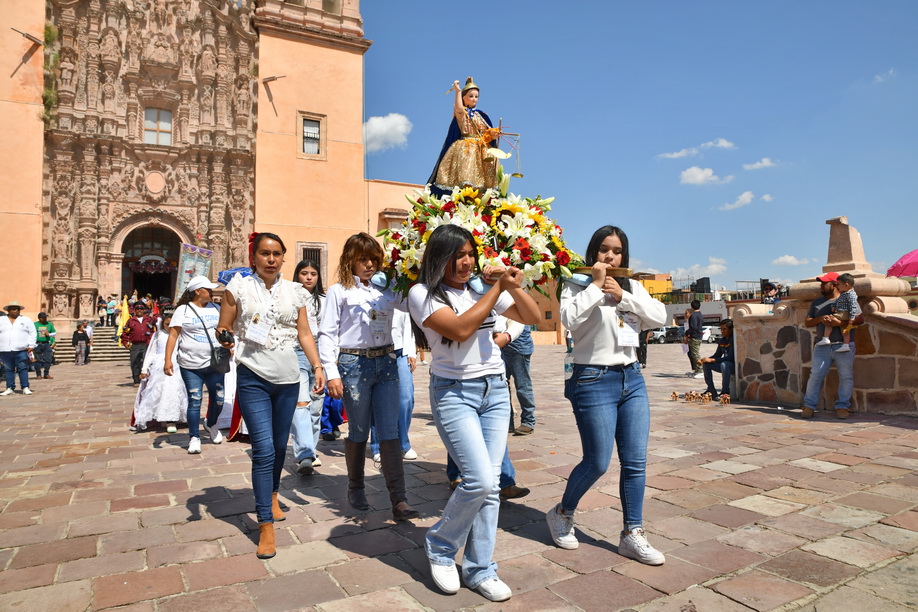
After a while, a small Nino Dios - Child Jesus figure emerged from the church on a platform covered with flowers. From the crown on his head and the scales he carried, I later learned that the figure was most likely dressed as Nino Justo Juez - the Child Jesus as the Just Judge. Young women carried the image on their shoulders, surrounded by banners and musical groups representing different communities. In Mexico, religious pilgrimages known as peregrinaciones often bring together neighbourhoods and local communities, each participating with its own sacred images, banners and musicians. The Child Jesus I photographed may therefore have represented one of the groups taking part in the larger pilgrimage rather than being the central focus of the entire celebration.
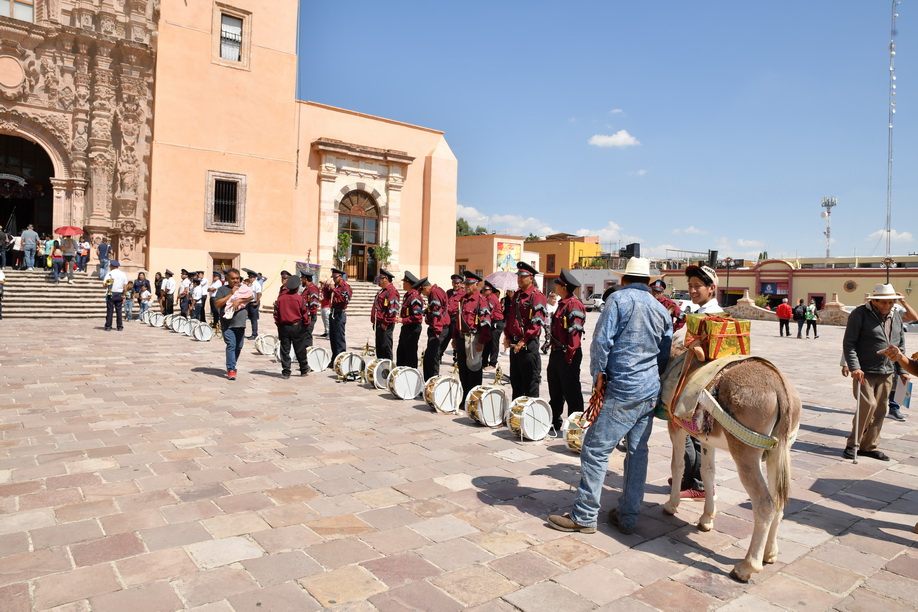
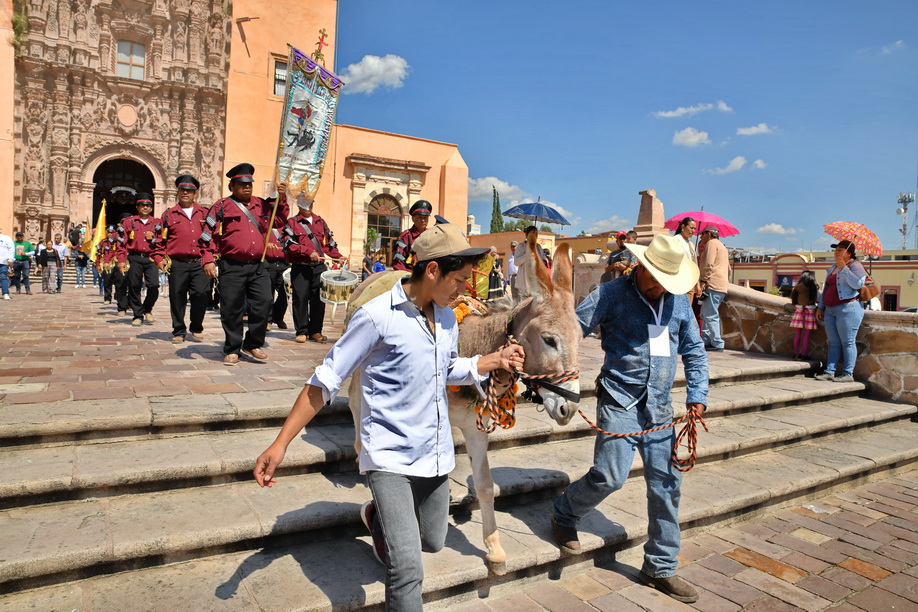
One of the most striking participants in the procession was a donkey. A colourful cloth had been placed over its back, together with what appeared to be a carefully prepared offering or gift. Led by two men, it was brought down the church steps and joined the procession alongside the musicians. At first glance it might have seemed like an animal from everyday rural life that had simply wandered into the ceremony, but it was clearly there as an intentional part of the procession. In the popular religious traditions of the Bajio region, pilgrimages are not necessarily composed of people alone. Flowers, candles, sacred images and offerings - and sometimes animals - become part of the journey, reflecting the close relationship between faith and rural life.
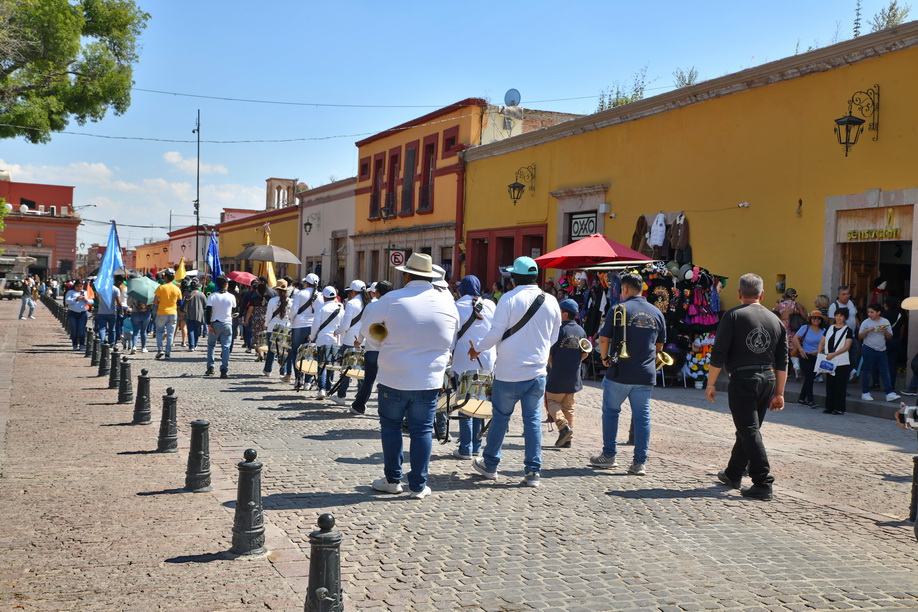
Soon the bands began to play and the procession moved from the square into the streets of Dolores Hidalgo. The young women carrying the Child Jesus, the banners, uniformed musicians, children in ceremonial costumes and the donkey all became part of the same moving scene. For me, these images revealed something I encountered repeatedly in Mexico: Catholic faith was not confined within the walls of a church. It spilled out into the streets, where religion, music, flowers, offerings and elements of everyday life came together in a powerful expression of popular tradition.
A peregrinación is a pilgrimage or devotional procession. In central Mexico, these gatherings can combine Catholic ritual with local music, flowers, banners and offerings prepared by families or community groups. The meaning of a particular animal or object, however, cannot always be established from photographs alone; its presence is best understood as part of the procession without assigning it an unverified symbolic role.