
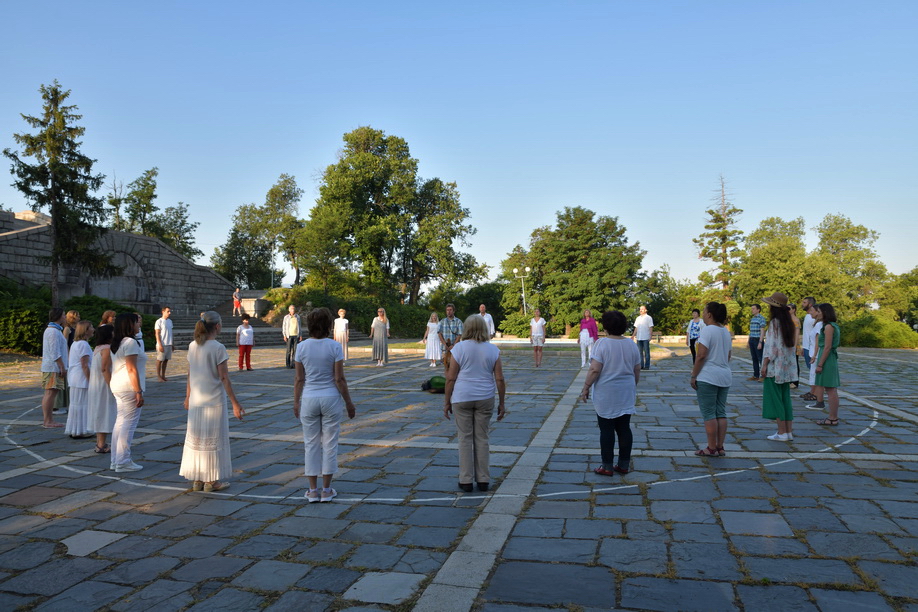
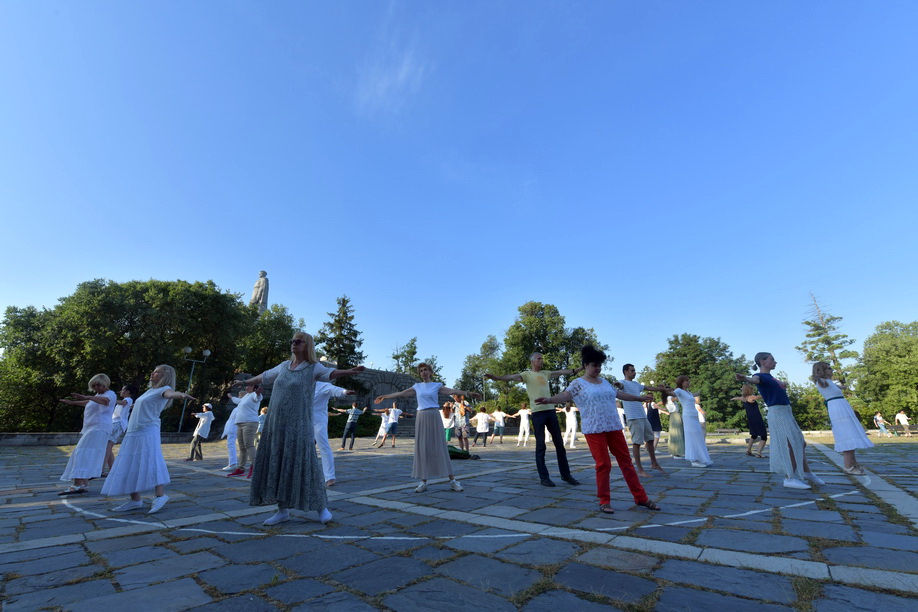
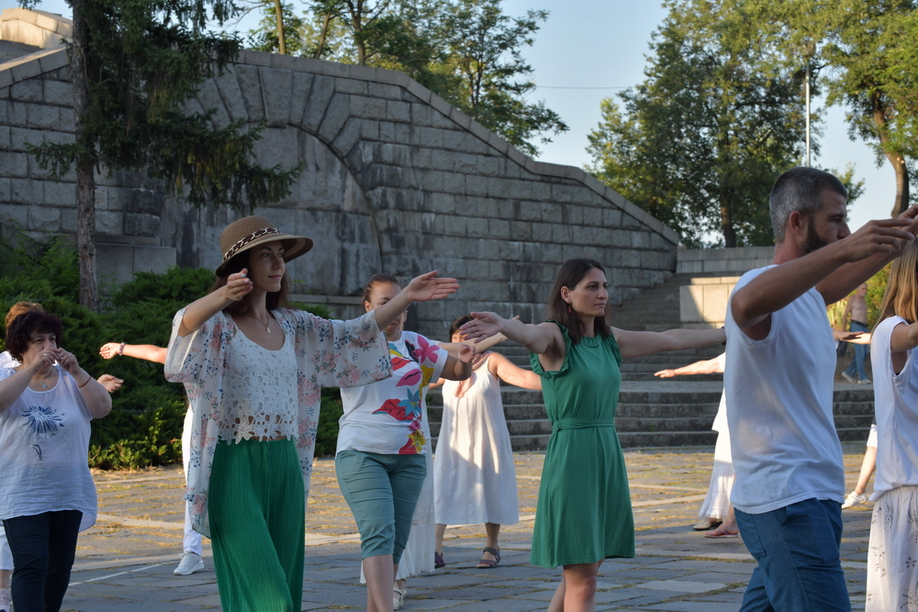
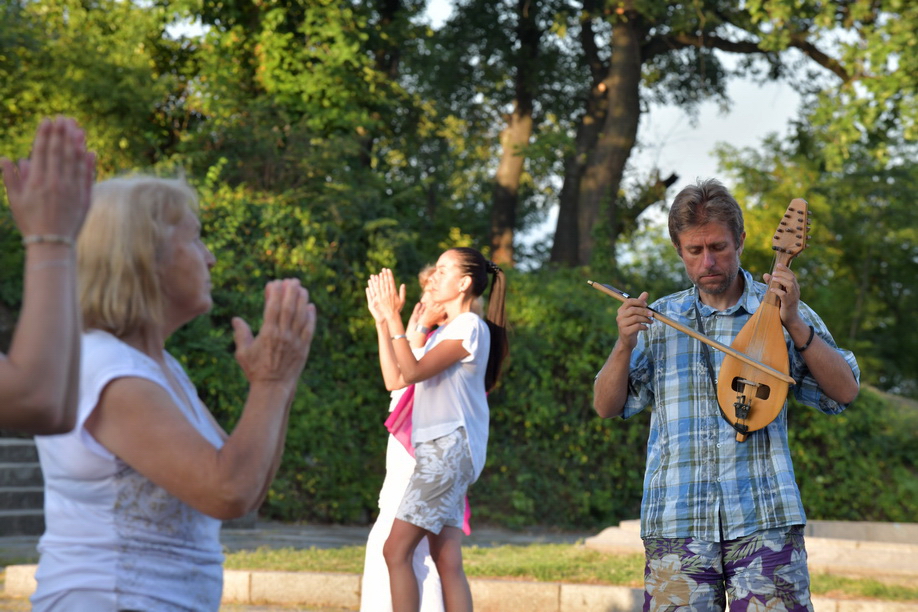
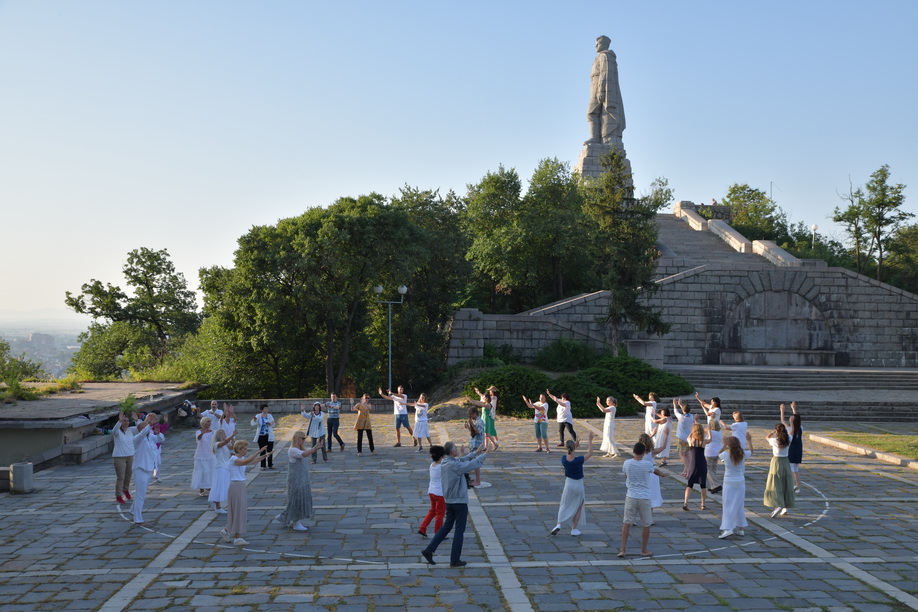
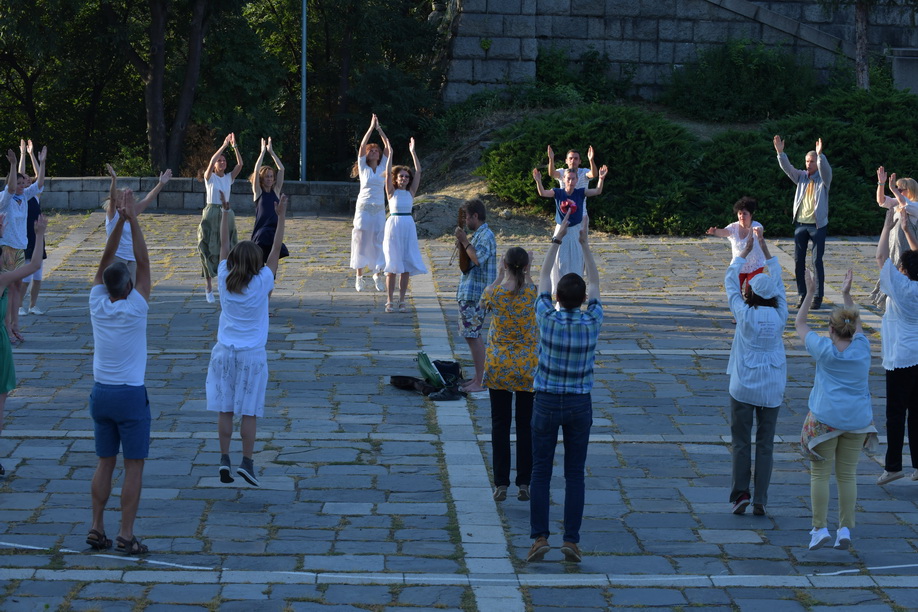
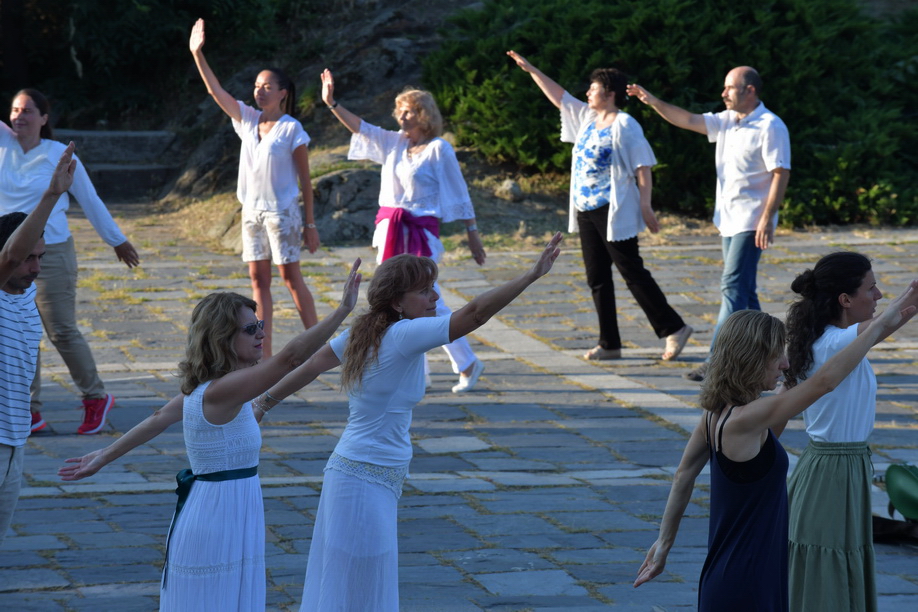
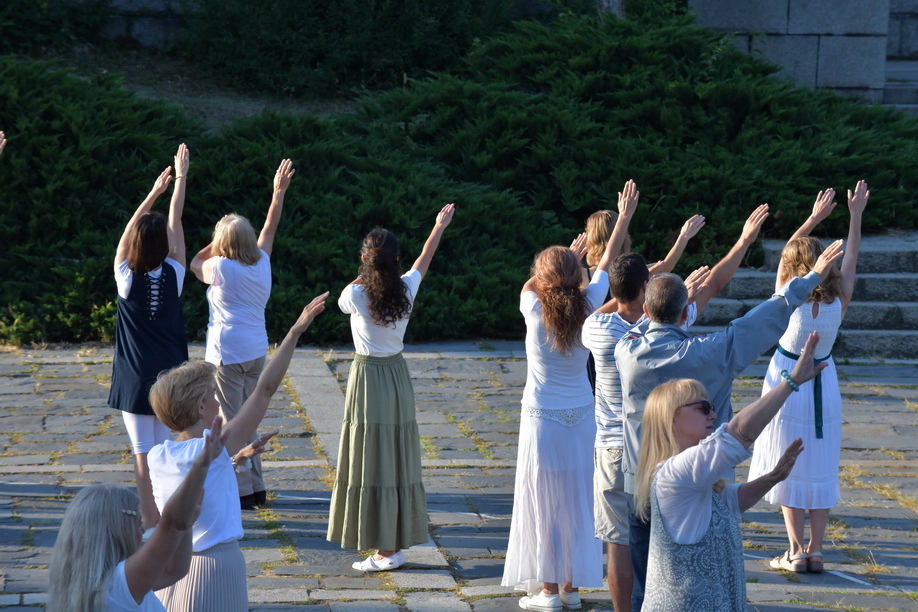
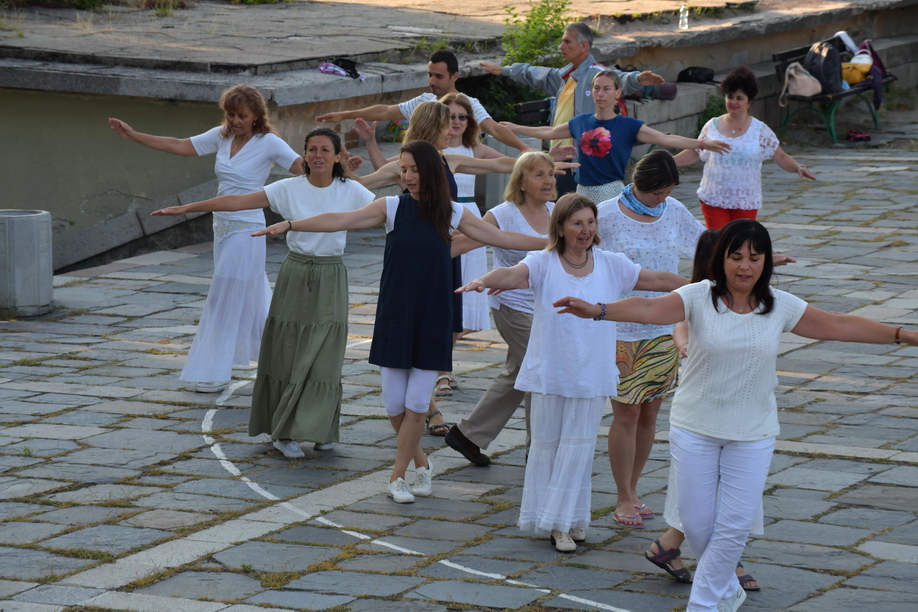
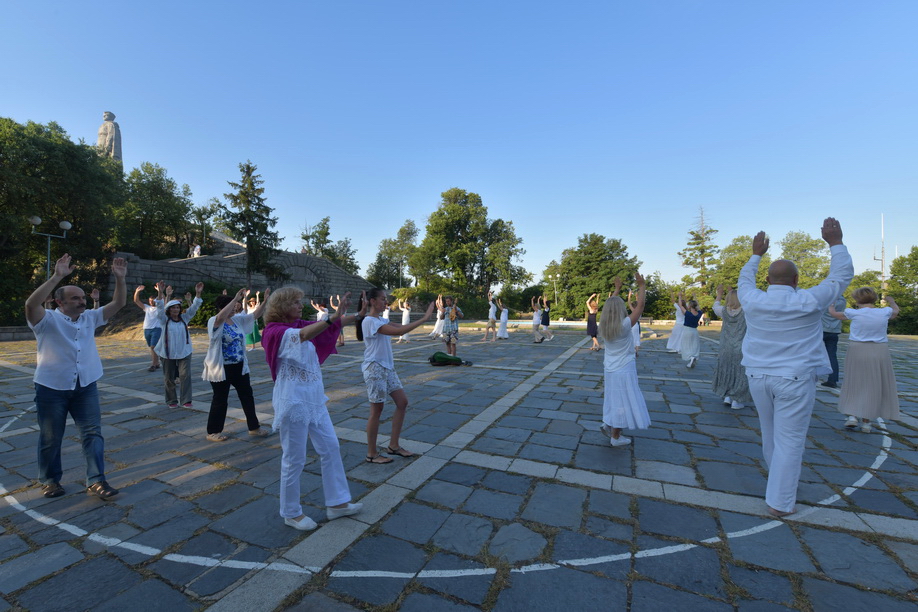
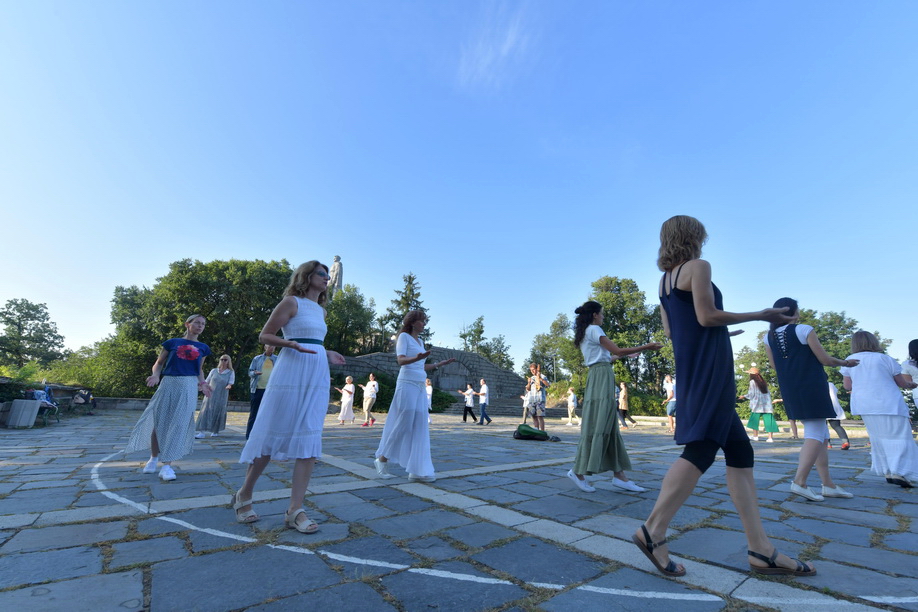
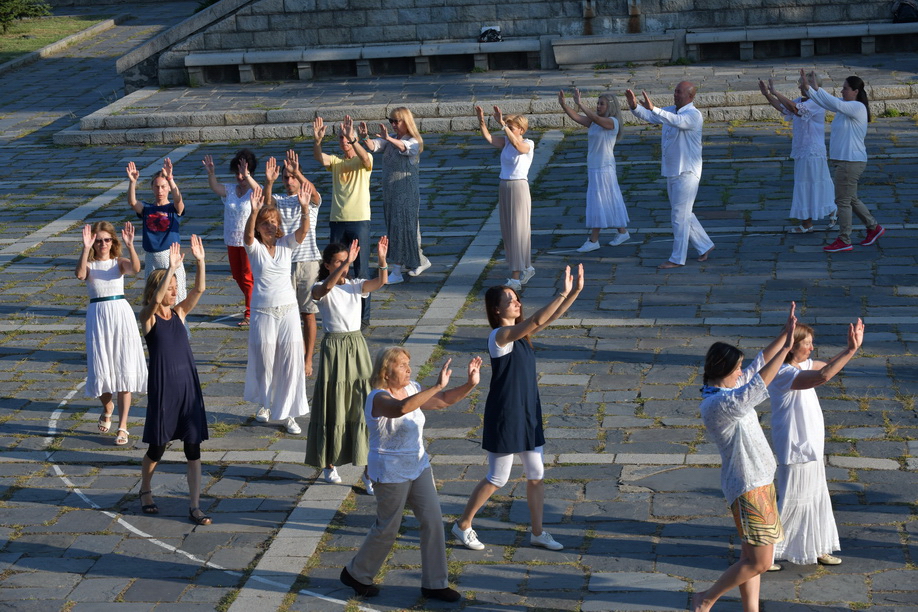
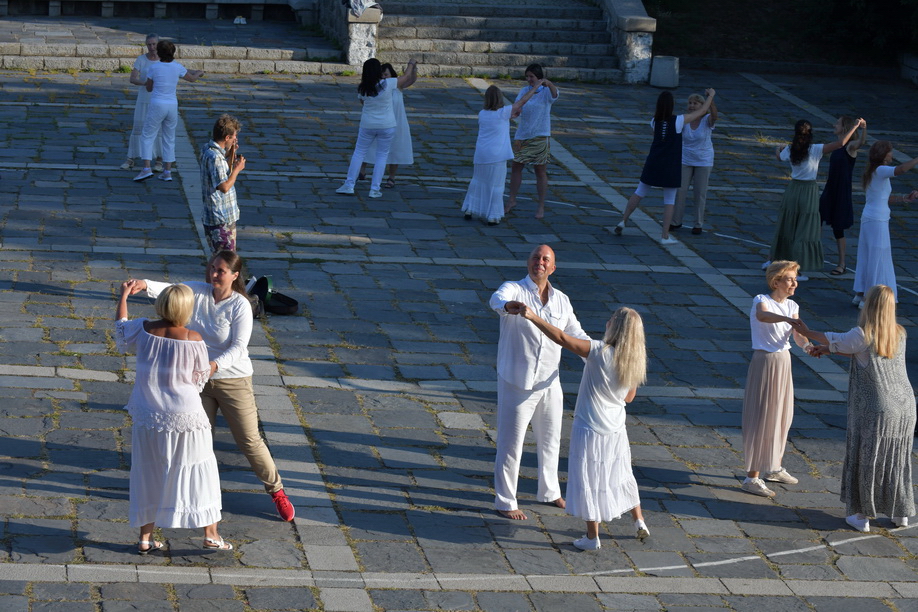
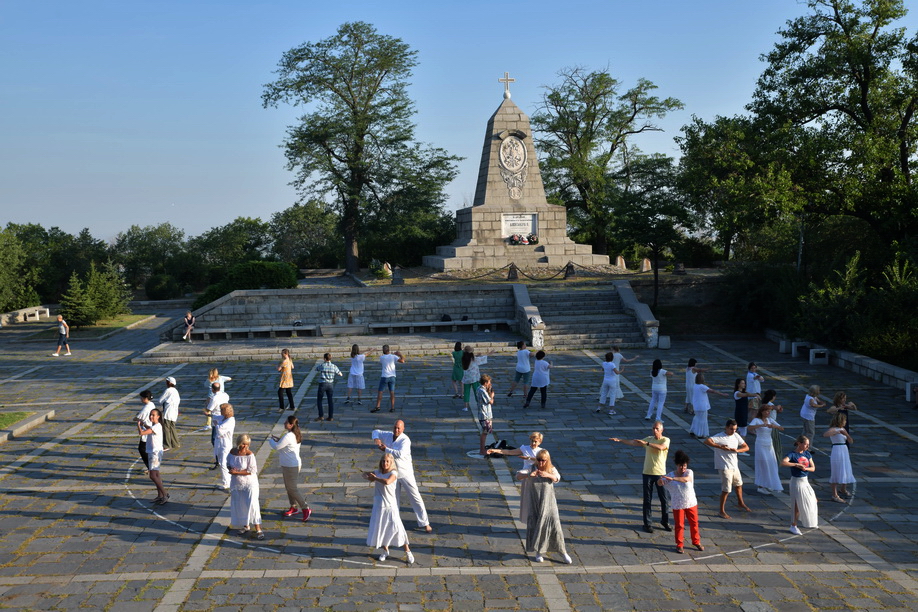
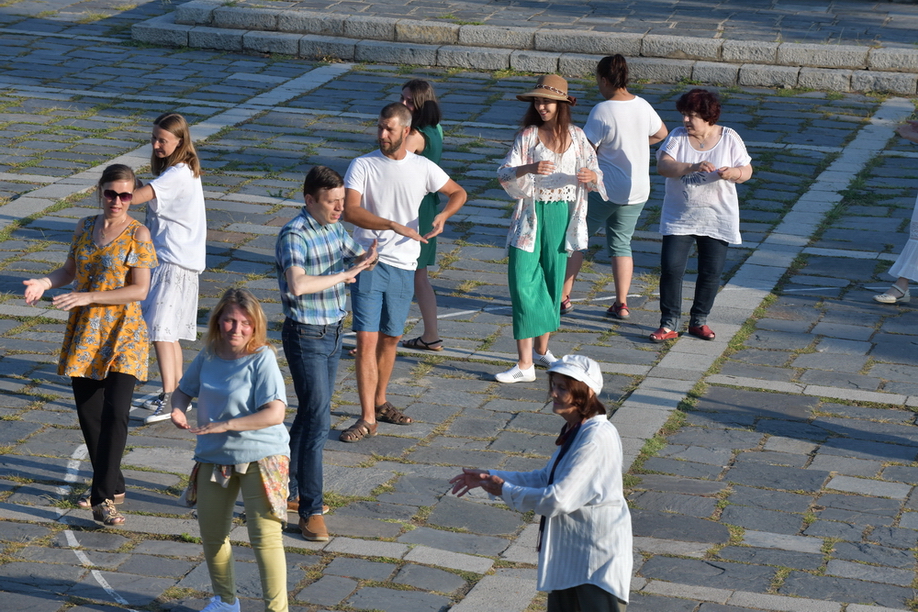
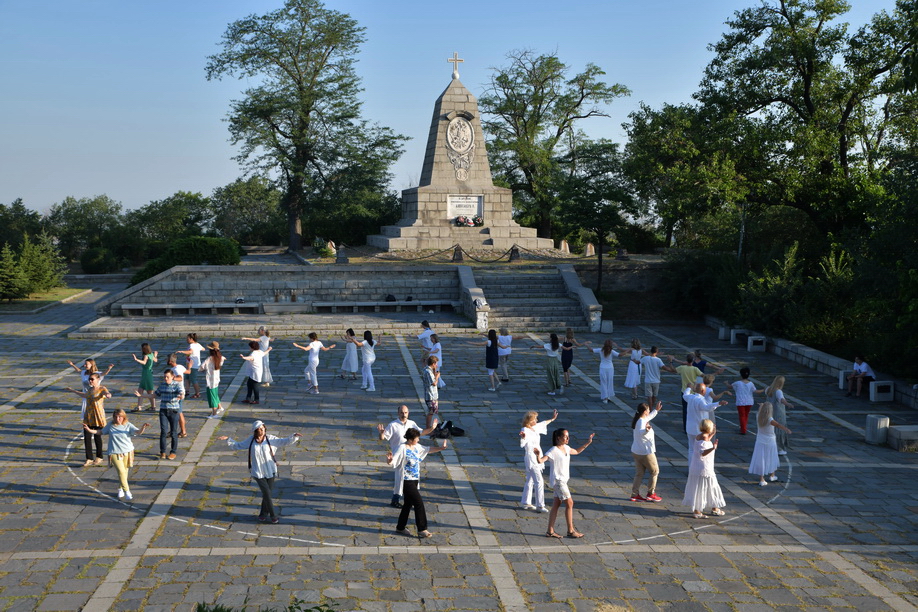
In July 2021, I photographed Paneurhythmy in Bulgaria, a practice in which movement, music and the natural landscape come together. The people I encountered were not performing for an audience in the conventional sense. Their coordinated steps and gestures belonged to a spiritual discipline that seeks harmony among the individual, other people and the world around them.
Paneurhythmy is associated with the Bulgarian spiritual teacher Peter Deunov (1864–1944), also known as Beinsa Douno. During the first half of the twentieth century, he developed a teaching centred on ethical self-improvement, brotherhood, respect for nature and spiritual growth. His followers became known as the White Brotherhood; in this context, “white” is a symbolic reference to light and purity, not an ethnic designation.
The practice combines prescribed bodily movements with original music, often played live, and sometimes with sung texts. Its principal sequence consists of twenty-eight exercises, accompanied in the broader tradition by sections known as Sun Rays and Pentagram. Movements may be performed individually or in pairs, while participants often form large circles that advance together in a common rhythm.
The circle is an important visual and symbolic element. It allows individuals to move as part of a larger whole without losing their own place within it. To a photographer, the repeated gestures, white clothing and changing geometry of the group create a striking relationship between human figures and the surrounding landscape. For practitioners, these patterns express ideals of cooperation, balance and unity.
Deunov encouraged practice outdoors, particularly in the morning, when light and the rhythms of the natural world were understood to support reflection and renewal. Followers interpret the movements in spiritual terms, sometimes speaking of solar or cosmic energies. These are elements of their belief system rather than established scientific effects of the exercises.
The Rila Mountains became an important setting for the movement after Deunov began taking groups of followers to the area of the Seven Rila Lakes in 1929. Over time, gatherings there developed into one of the most recognizable expressions of Paneurhythmy. Yet the practice is not limited to the mountains: communities also meet in parks, meadows and other open spaces.
The tradition continued after Deunov’s death in 1944, despite restrictions and pressure on independent spiritual groups during Bulgaria’s communist period. Following the political changes of 1989, public practice became more visible, and Paneurhythmy attracted participants beyond Bulgaria as well.
What interested me most was the quiet collective concentration. The photographs record a living tradition in which the movements themselves are the language: people meeting in a circle, listening to music, observing the morning and trying, in their own way, to live in harmony with nature.