
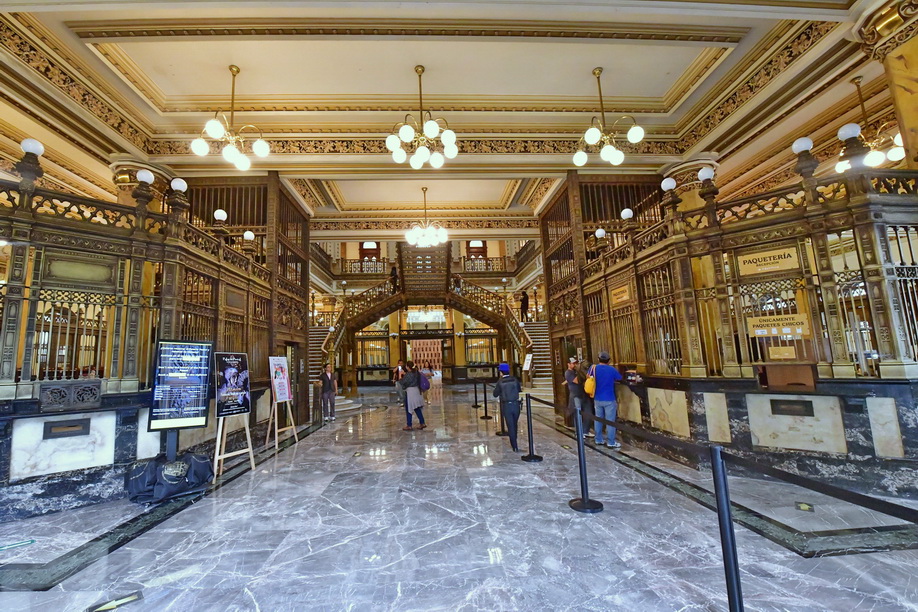
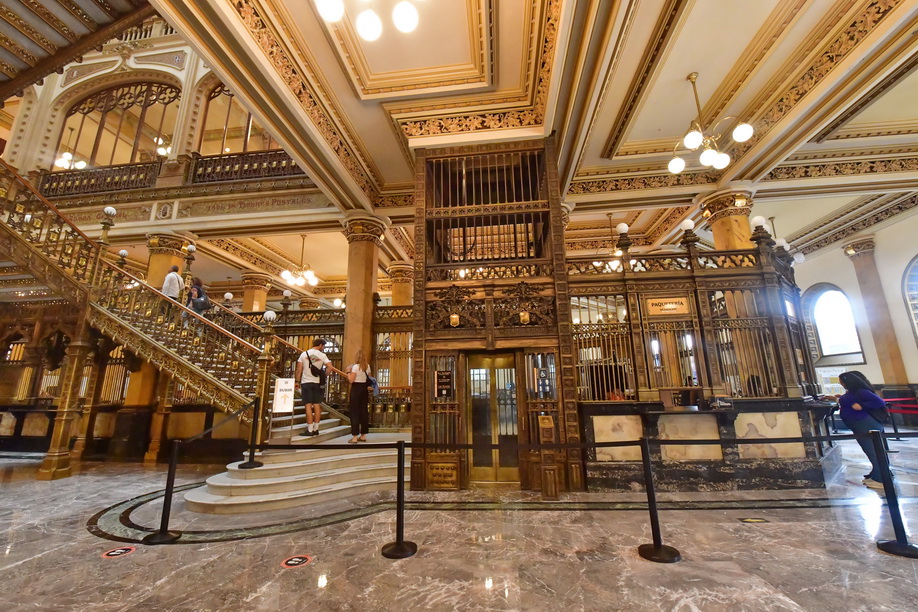
While walking through the historic centre of Mexico City, I came across the Palacio Postal, just a short distance from the Palacio de Bellas Artes. From the outside, it looks more like a palace than a post office. Once inside, however, I found an interior even more impressive than its monumental facade.
Also known as the Quinta Casa de Correos, the building is one of the landmarks of Mexico's modernization at the beginning of the 20th century. Designed by Italian architect Adamo Boari and Mexican engineer Gonzalo Garita, it was constructed between 1902 and 1907 and officially opened on February 17, 1907, during the presidency of Porfirio Diaz.
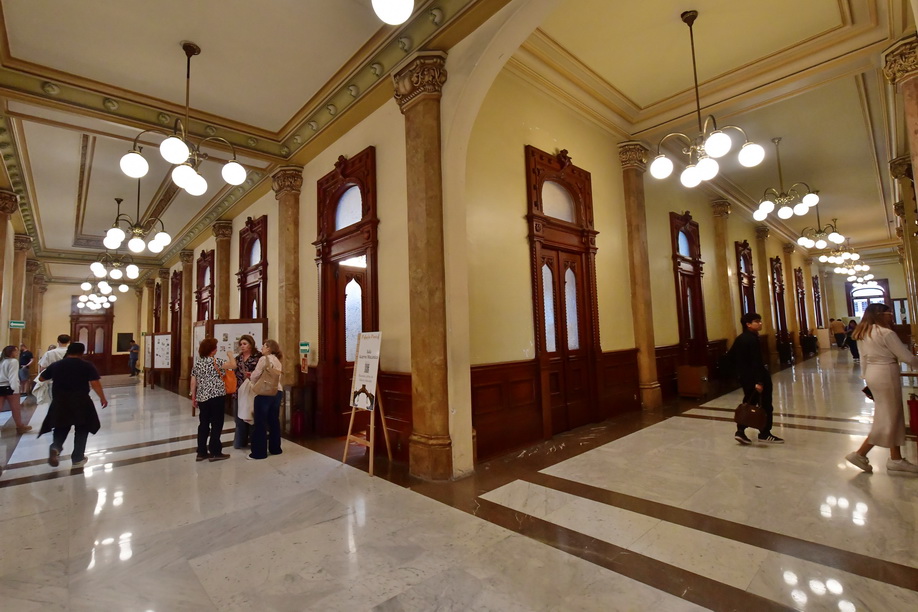
Its architecture is difficult to define within a single style. Venetian Gothic, Spanish Plateresque and other European influences coexist with a modern structural system of steel columns and beams. Mexican stone and marble were combined with elaborate metalwork produced in Florence, creating a remarkable dialogue between European craftsmanship and Mexican materials.
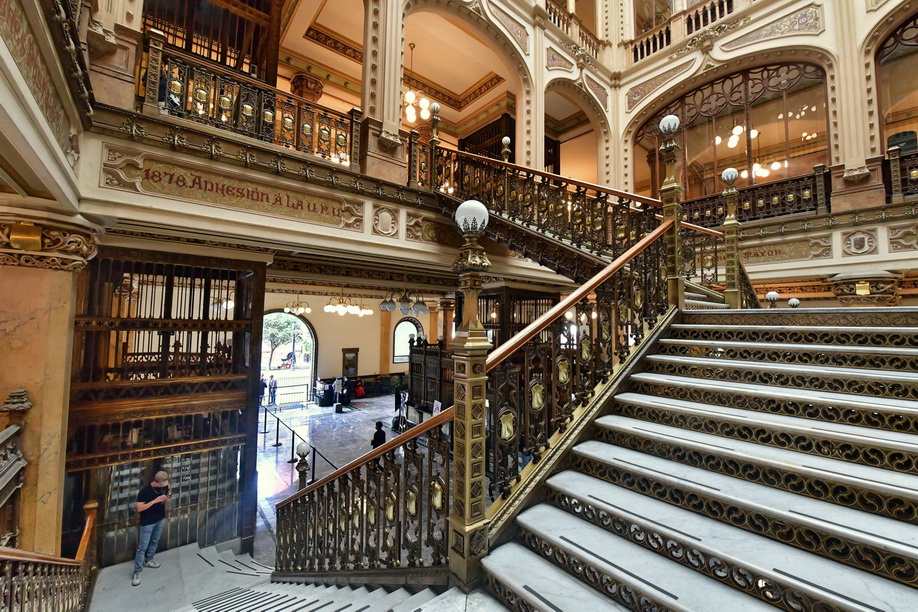
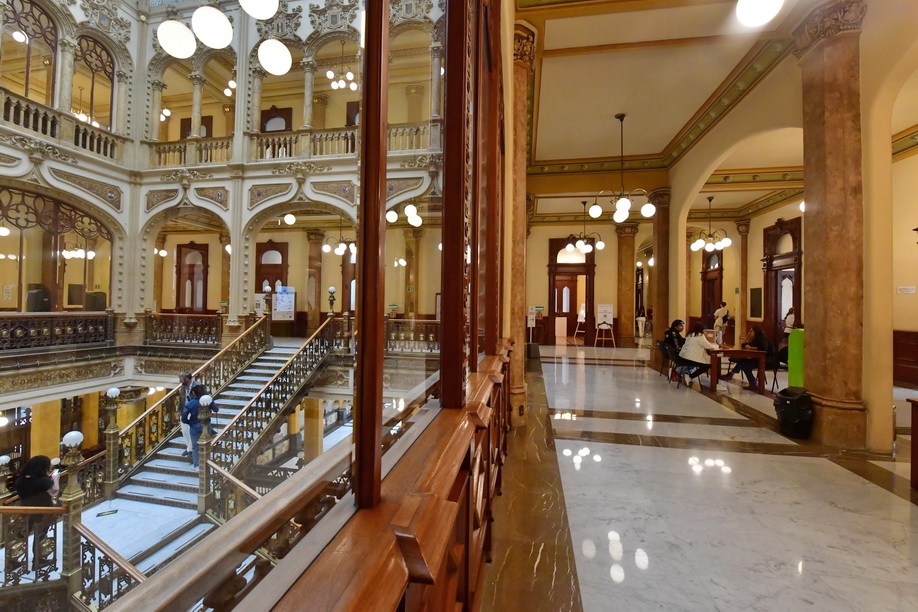
Around the Grand Staircase
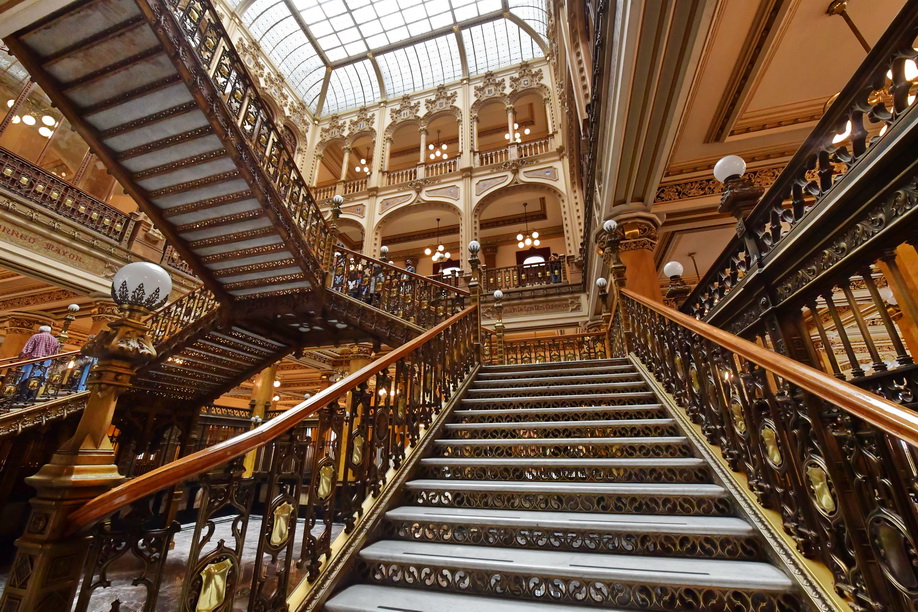
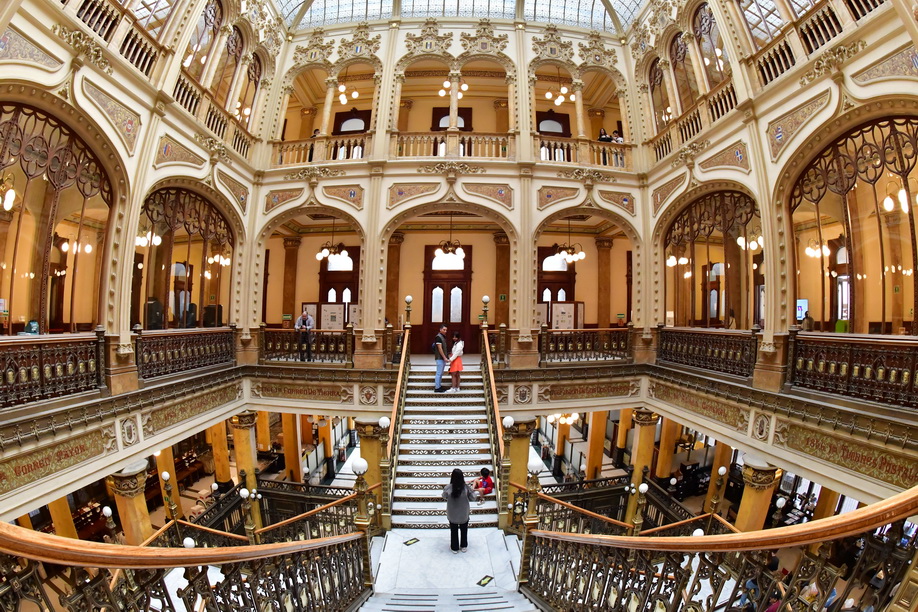
As I began photographing the interior, I found myself repeatedly returning to the grand staircase.
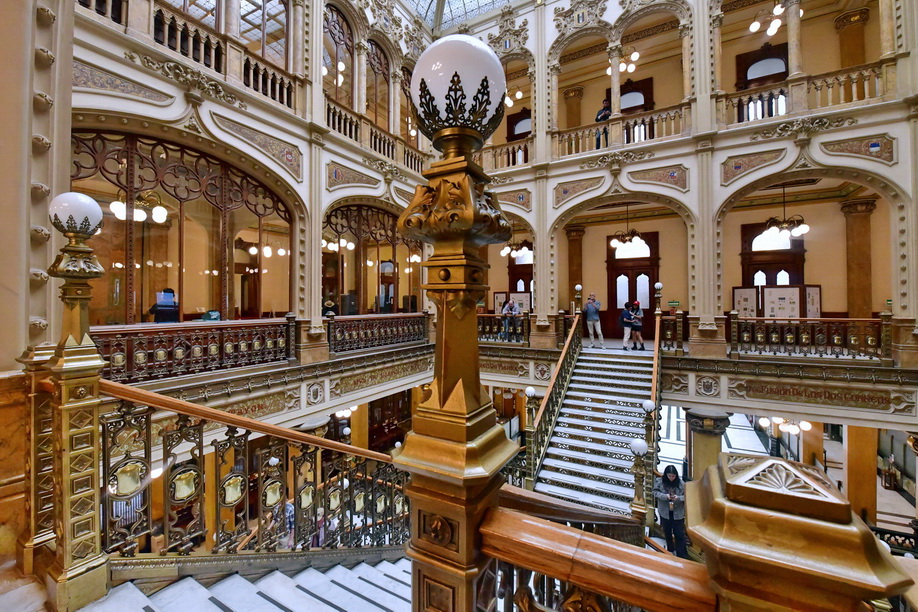
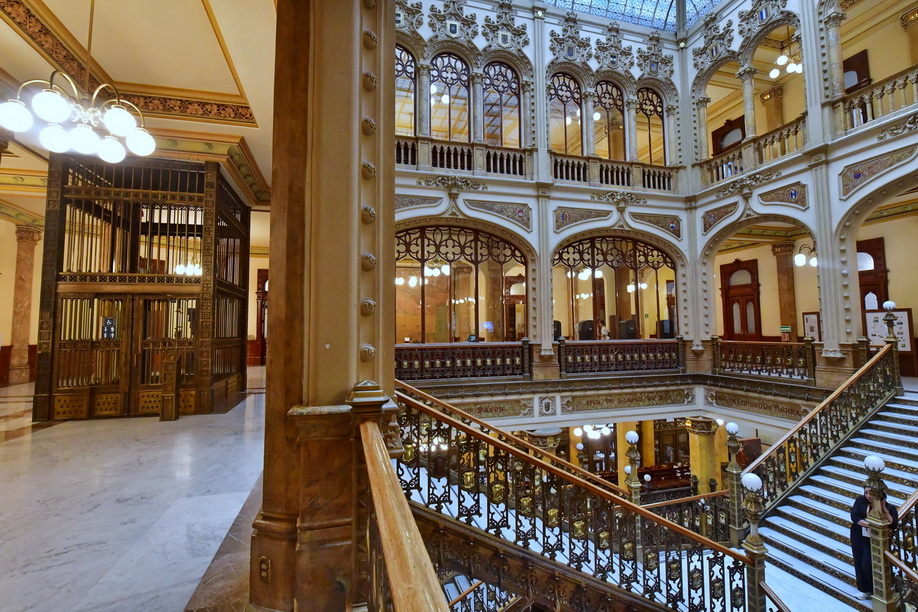
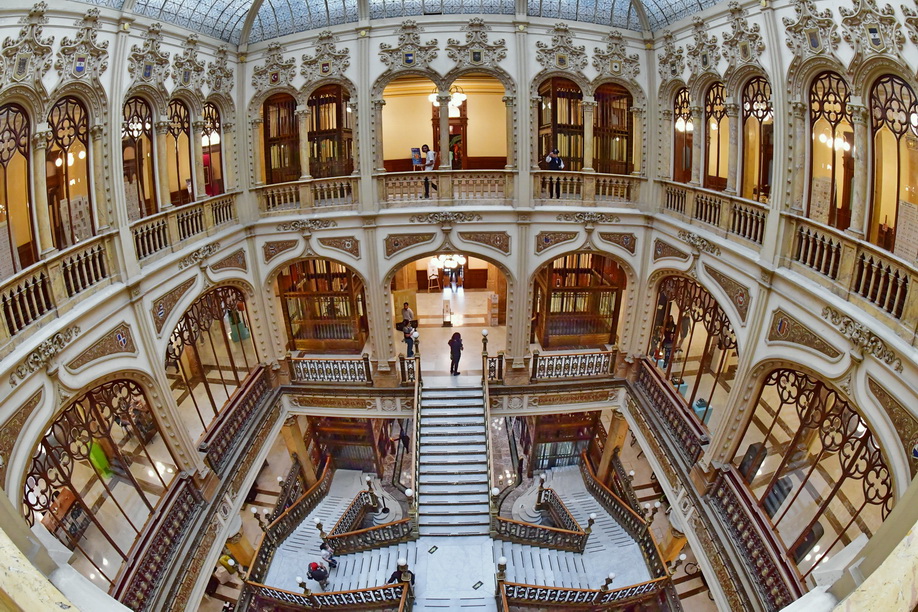
Seen from below, from the upper galleries and from across the central hall, the staircase seems to organize the entire building around itself. White marble steps contrast with dark ornamental metalwork, polished wooden handrails and golden details. With every floor, the same elements reappear in different combinations.
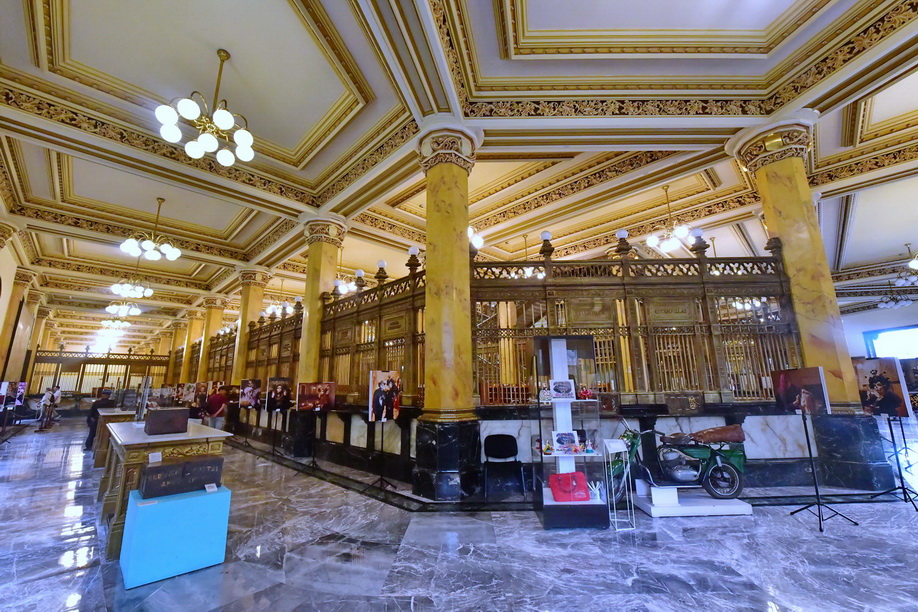
Much of the elaborate metalwork - including the staircase, railings and postal counters - was produced by the Fonderia del Pignone in Florence. Yet these imported elements were integrated with Mexican marble and stone, giving the interior a character of its own.
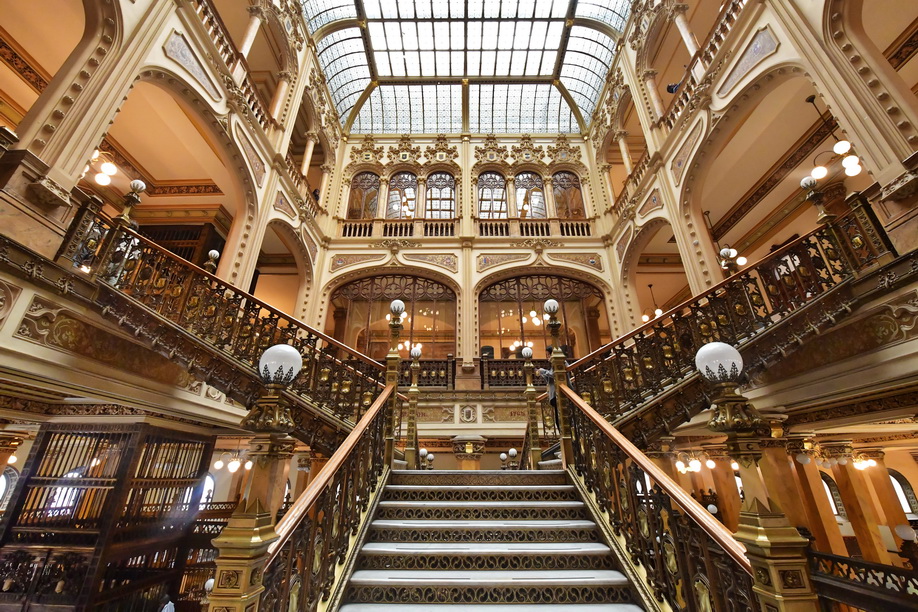
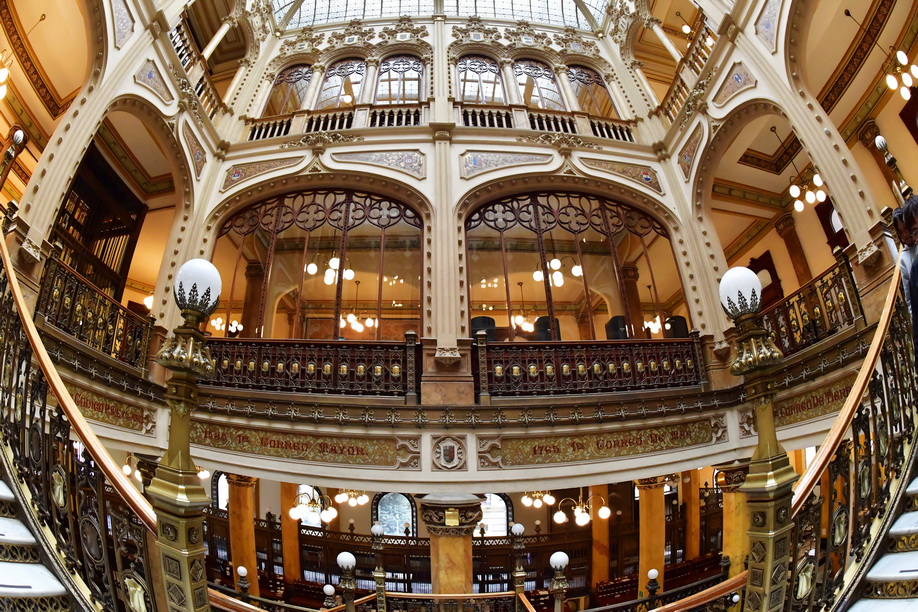
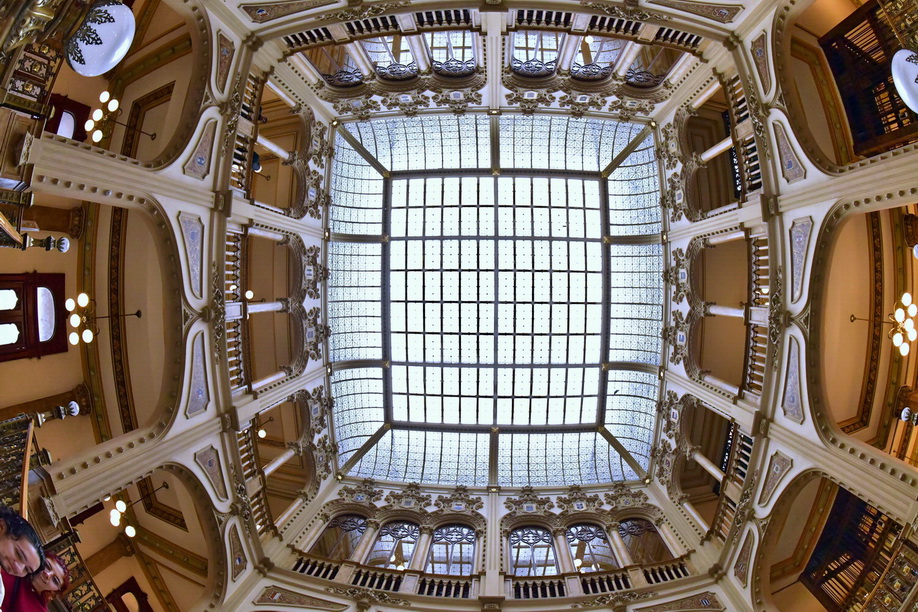
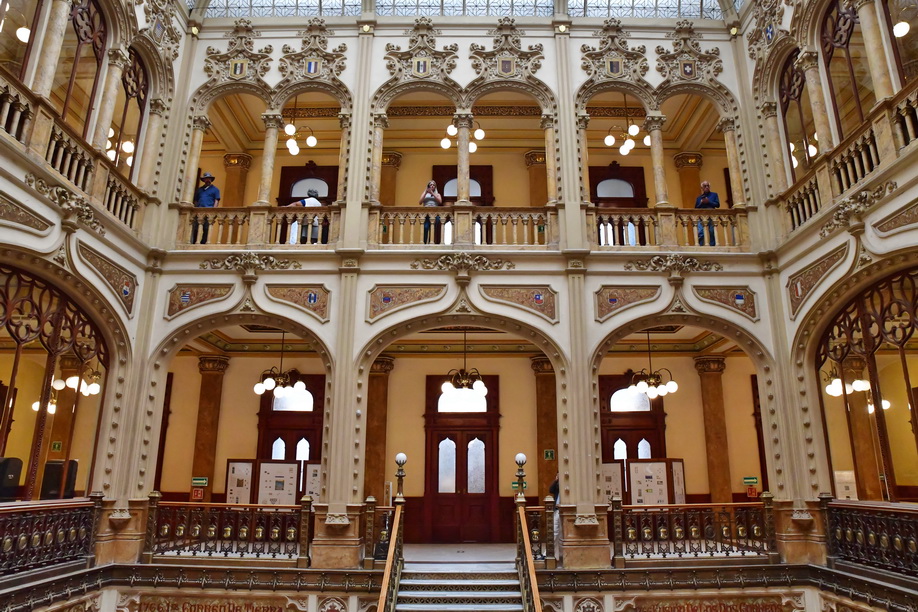
As I climbed higher, the building gradually opened around a vast central space. Galleries, arches and slender columns rise through several levels, culminating in the enormous glass roof above. Pointing my camera directly upwards, I could see the symmetry of the architecture most clearly: four sides of galleries and arches converging around a great source of natural light.
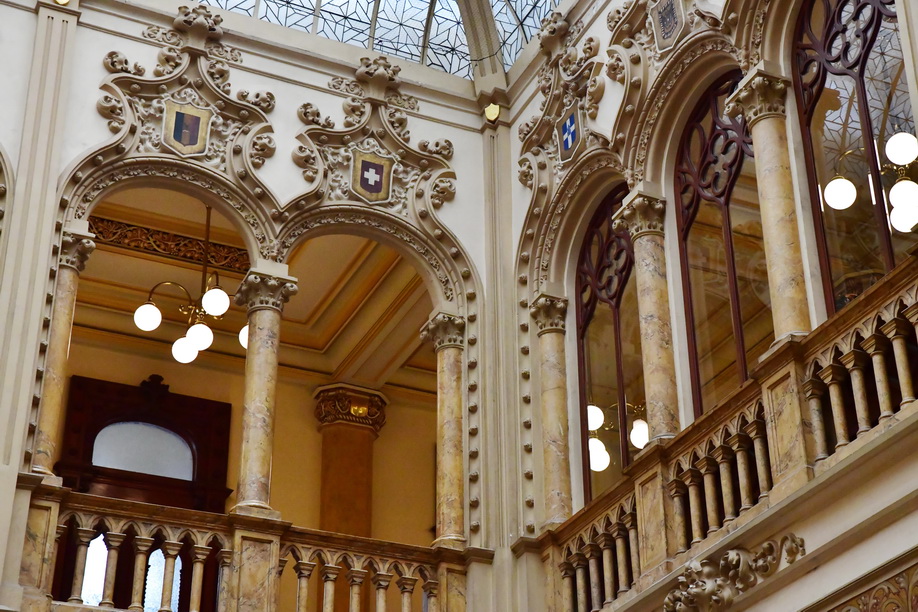
Small coats of arms incorporated into the decoration are also part of the building's story. They represent countries belonging to the Universal Postal Union when the building opened, placing the international character of postal communication directly into its architecture.
A Palace That Still Works as a Post Office
What interested me most was that Palacio Postal is not simply a preserved historic monument.
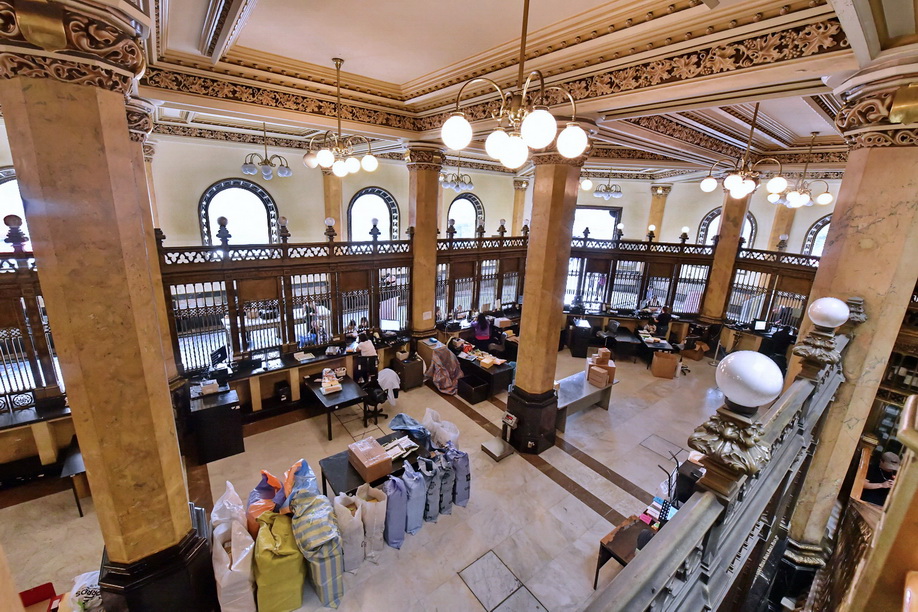
Looking down from the upper floors, I could see employees at their desks, parcels waiting to be processed and large mailbags gathered below. More than a century after the building was constructed for postal services, it continues to serve its original purpose.
This coexistence fascinated me: marble columns, bronze counters and ceremonial staircases on one side; the ordinary work of sending and receiving mail on the other. The building belongs simultaneously to history and to everyday life.
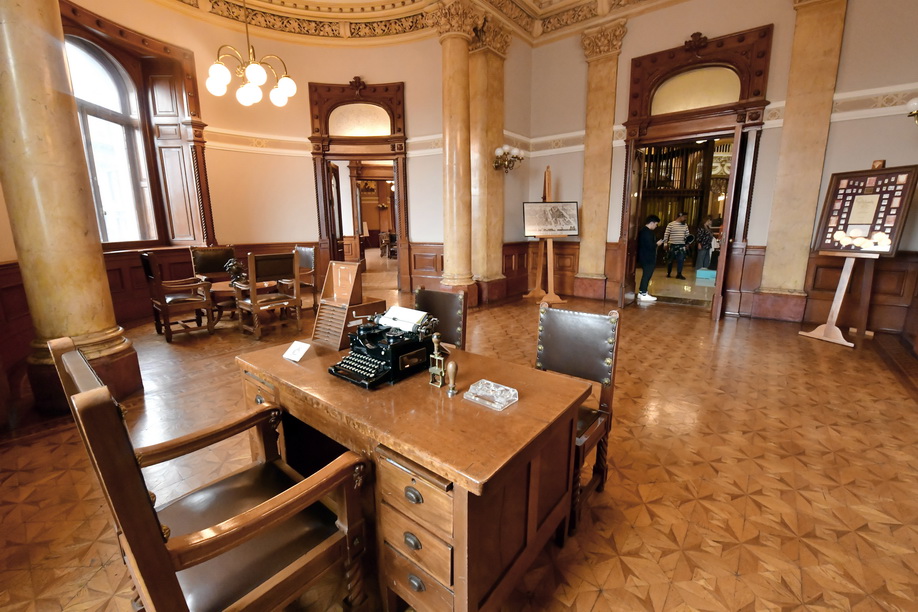
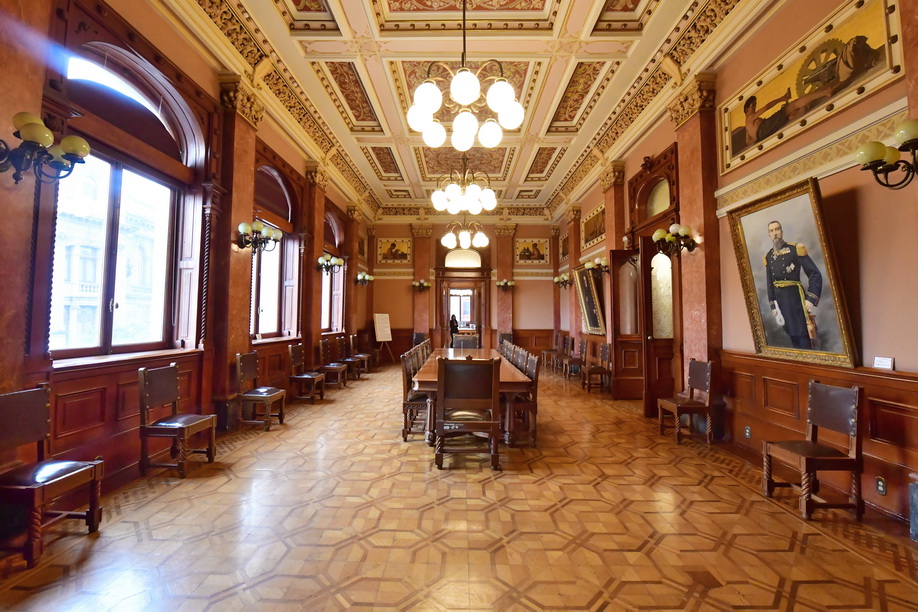
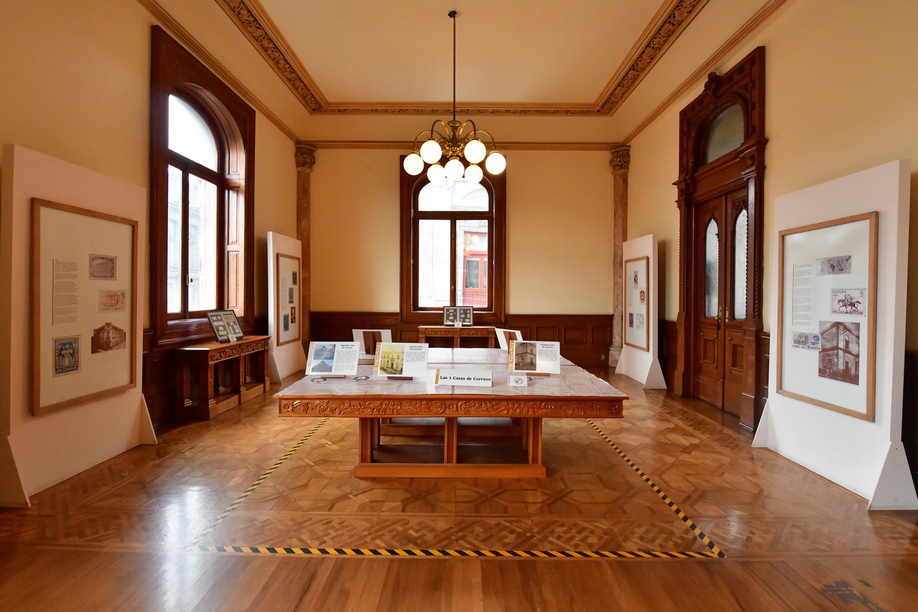
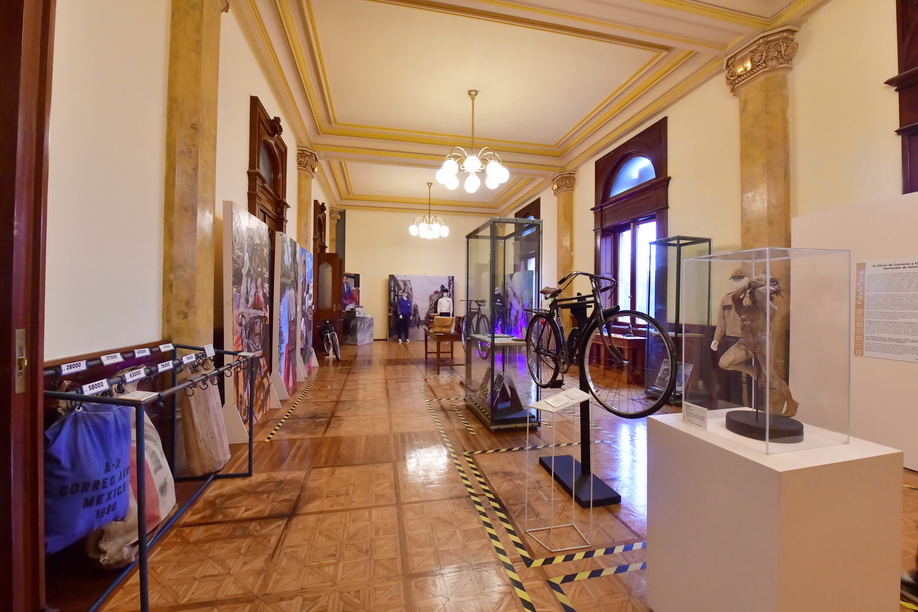
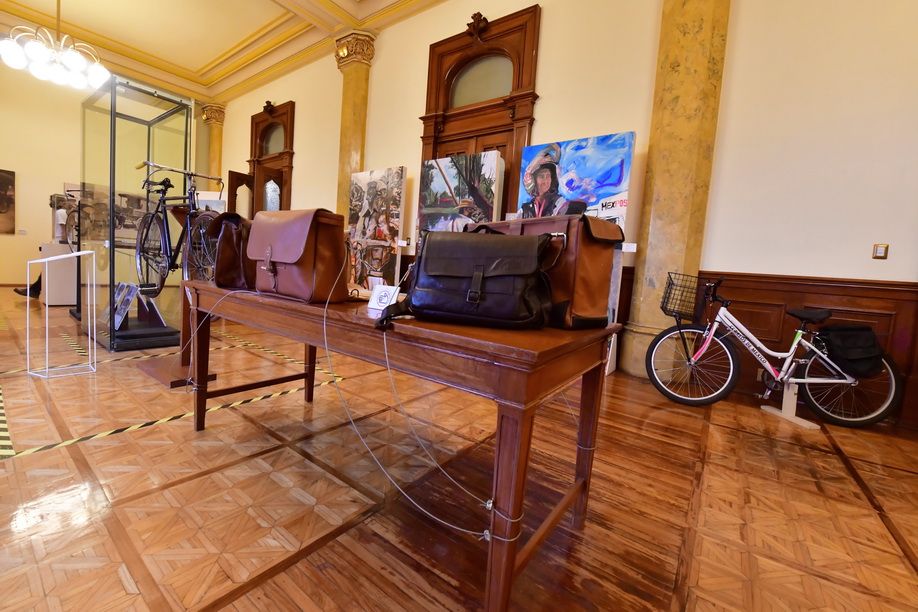
On the upper floors, another part of the story appears. Old offices preserve wooden desks, chairs, typewriters and other furnishings, while exhibition spaces trace the history of Mexico's postal service.
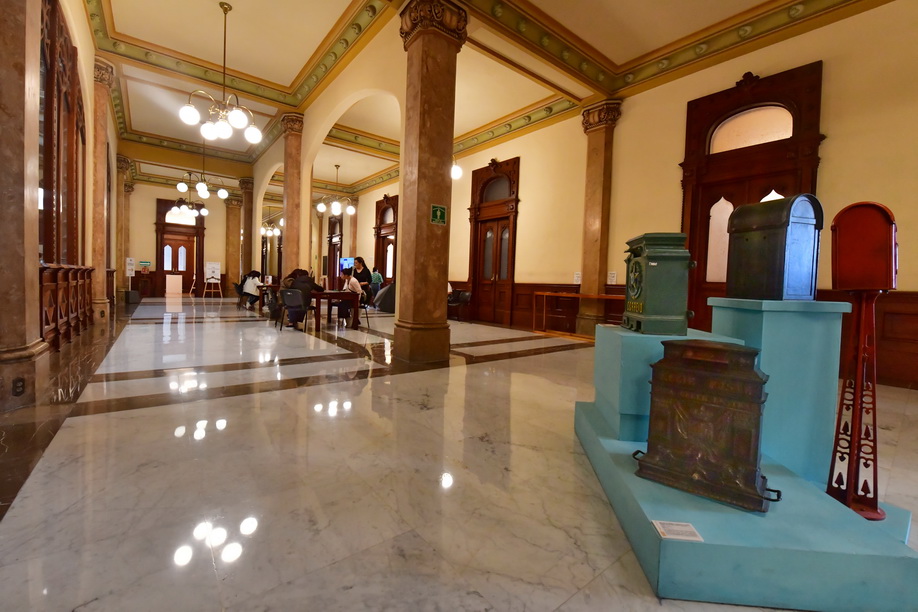
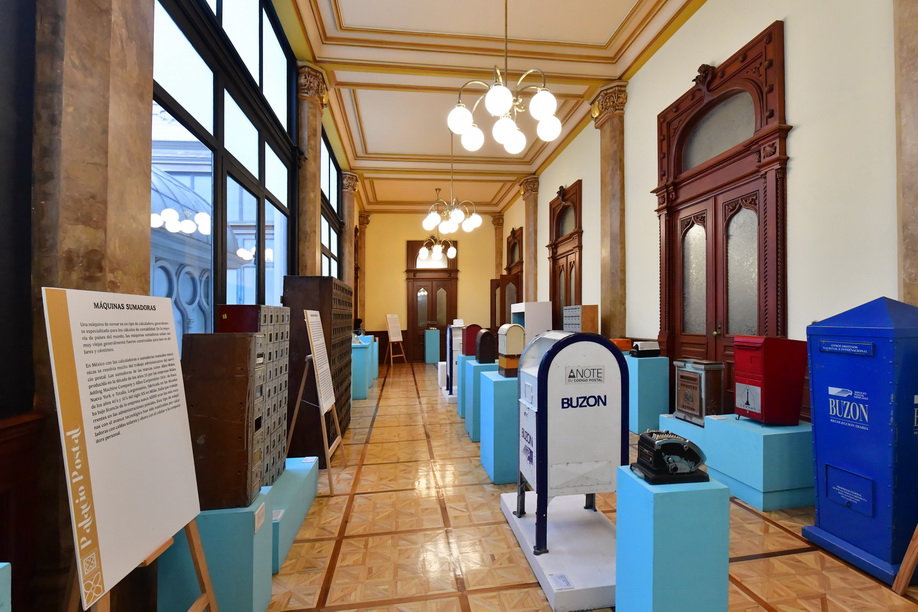
Old mailboxes, sorting equipment, postal bags and bicycles document a world in which delivering a letter from one person to another required an extensive physical network of people and objects. Things that once belonged to the everyday machinery of communication have now become museum pieces.
Yet only a few floors below, the postal service continues.
More Than a Post Office
Photographing Palacio Postal with a wide-angle lens allowed me to explore the scale of the building and the relationships between its different levels. Sometimes I stood directly in front of the staircase; sometimes I photographed down from the galleries; at other moments I turned the camera towards the glass ceiling.
The same staircase became a different composition from every viewpoint.
When I left Palacio Postal, what remained with me was not simply the richness of its architecture. The building seemed to embody the importance that communication and modernization represented at the beginning of the 20th century.
More than a hundred years later, it still performs the function for which it was created while preserving and exhibiting the history of that function.
For me, Palacio Postal was therefore more than an architectural monument. It was a piece of living history.