
Ofrendas, San Miguel de Allende Nov.2025 - Mexico
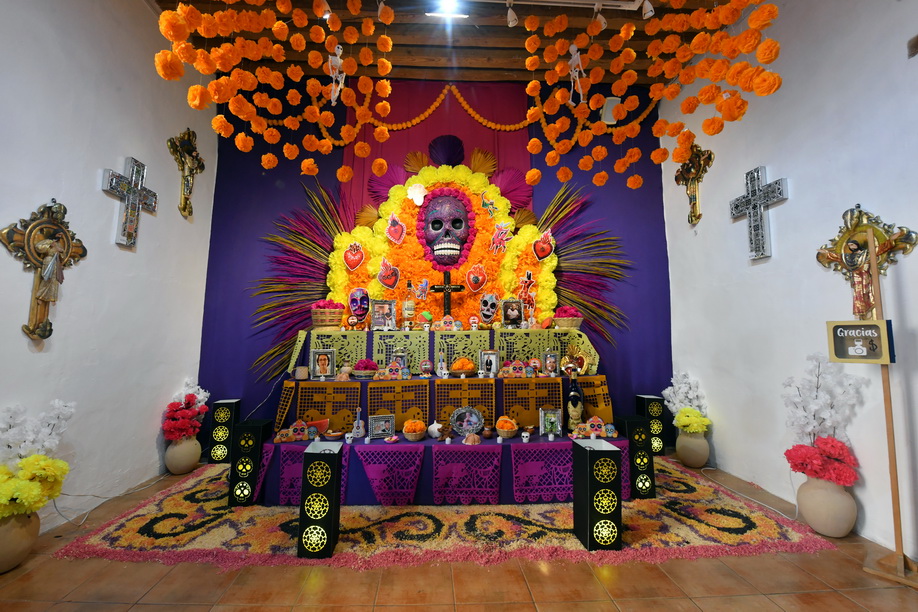
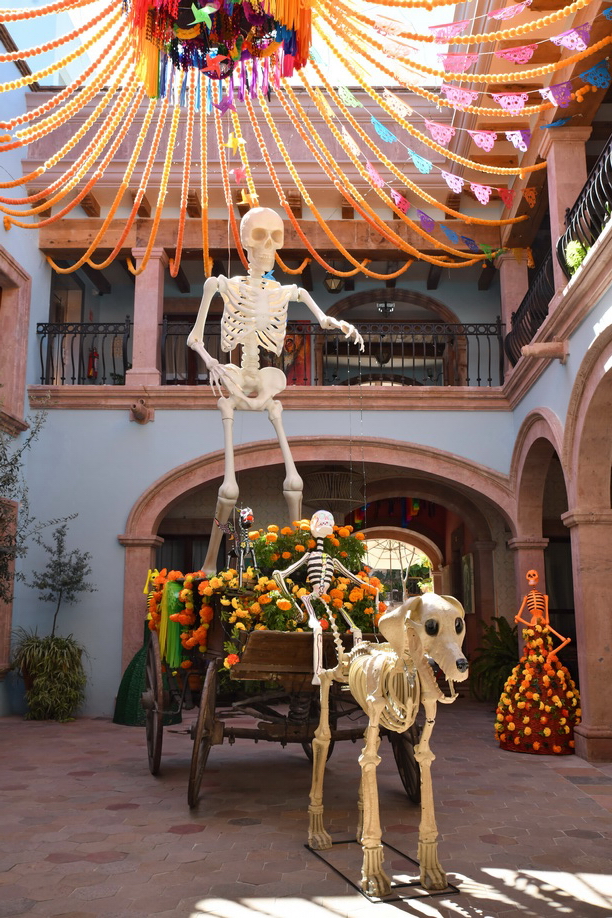
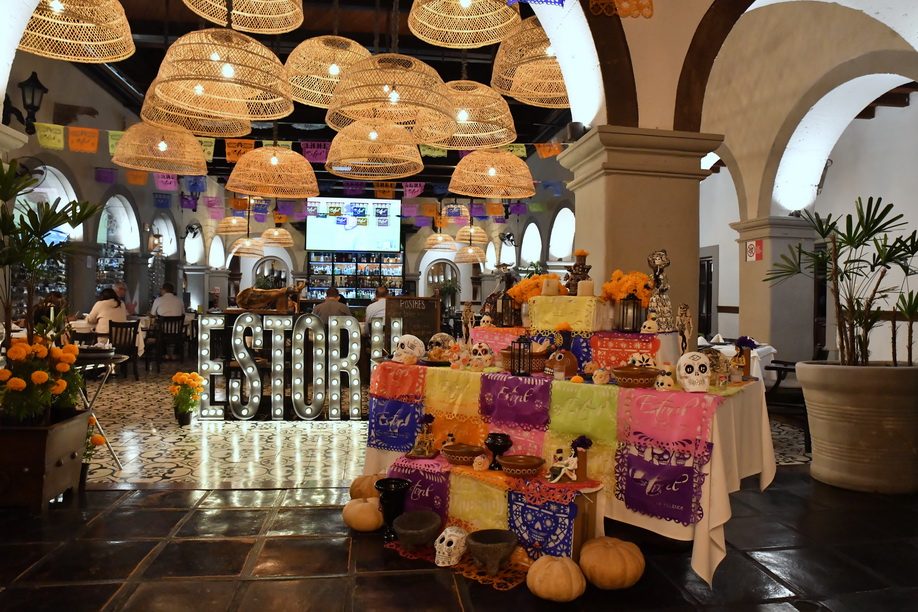
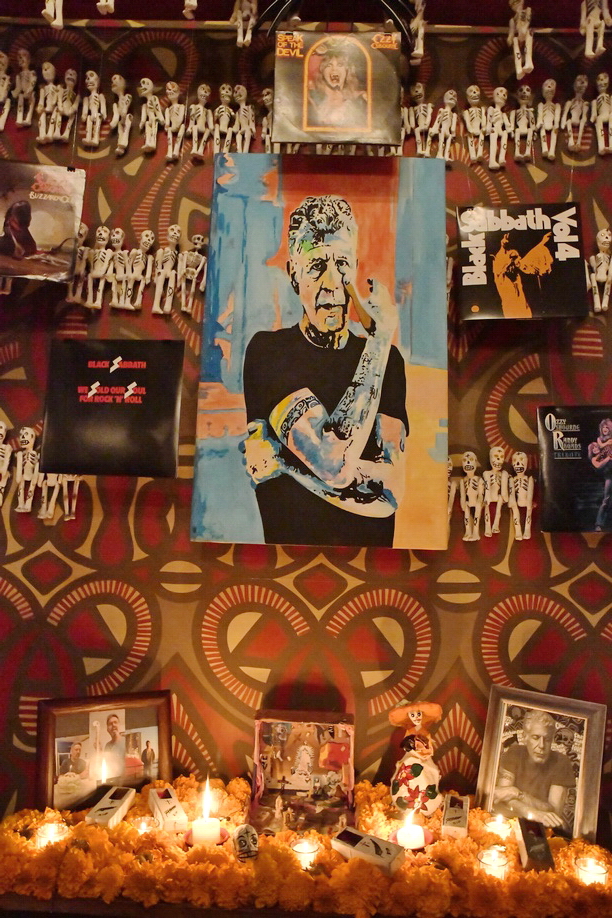
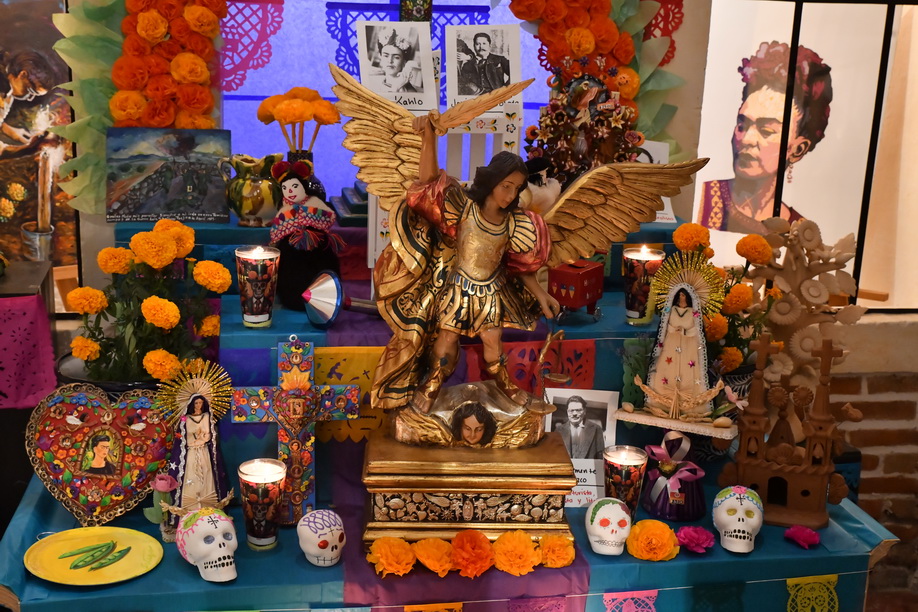
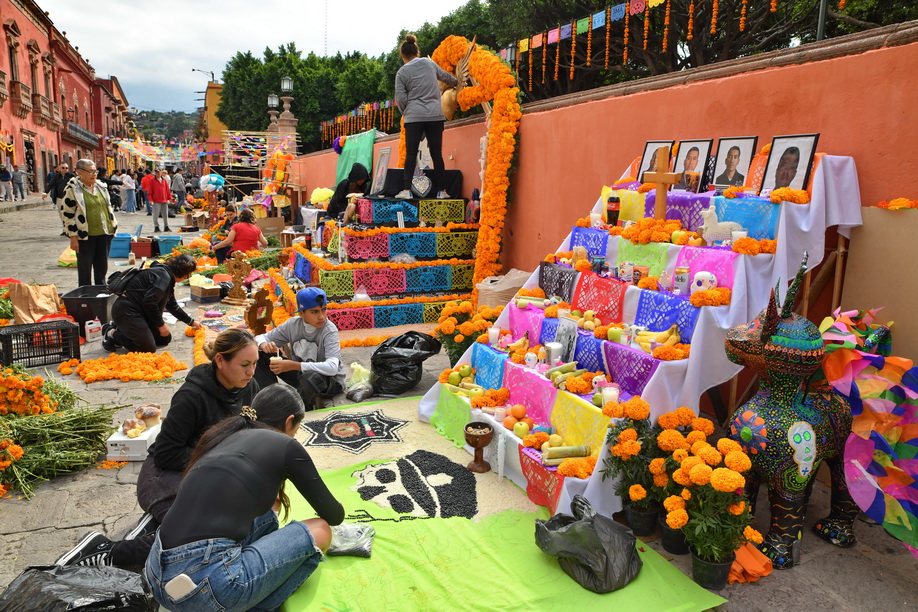
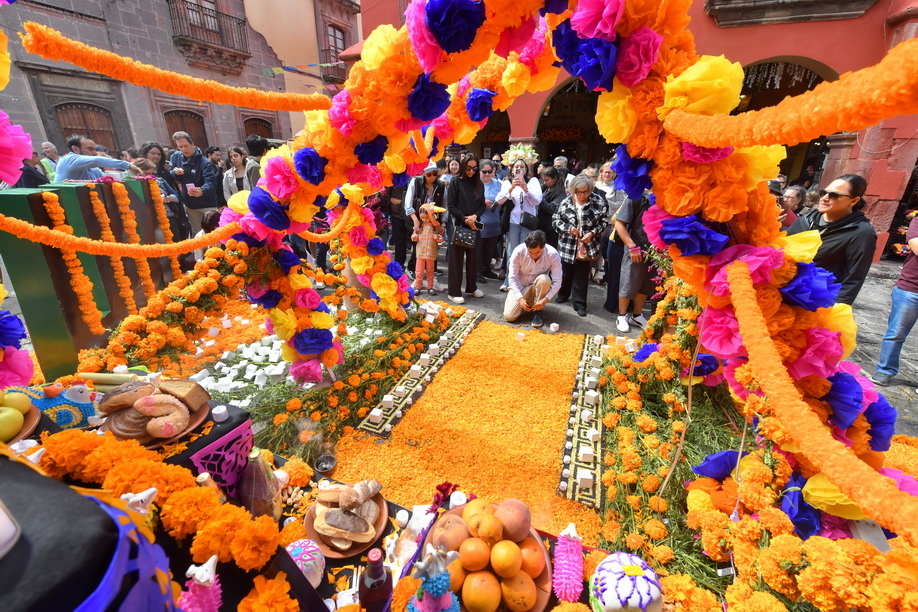
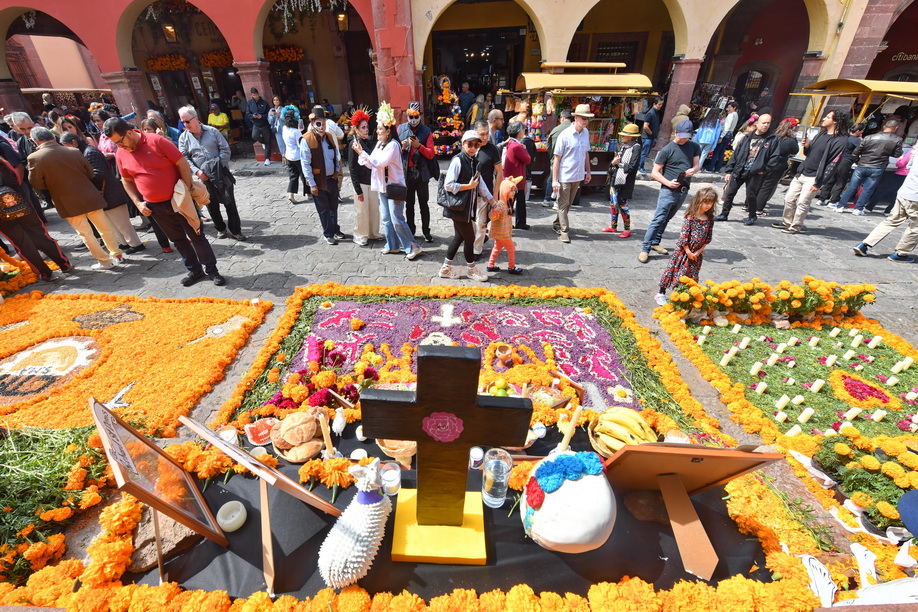
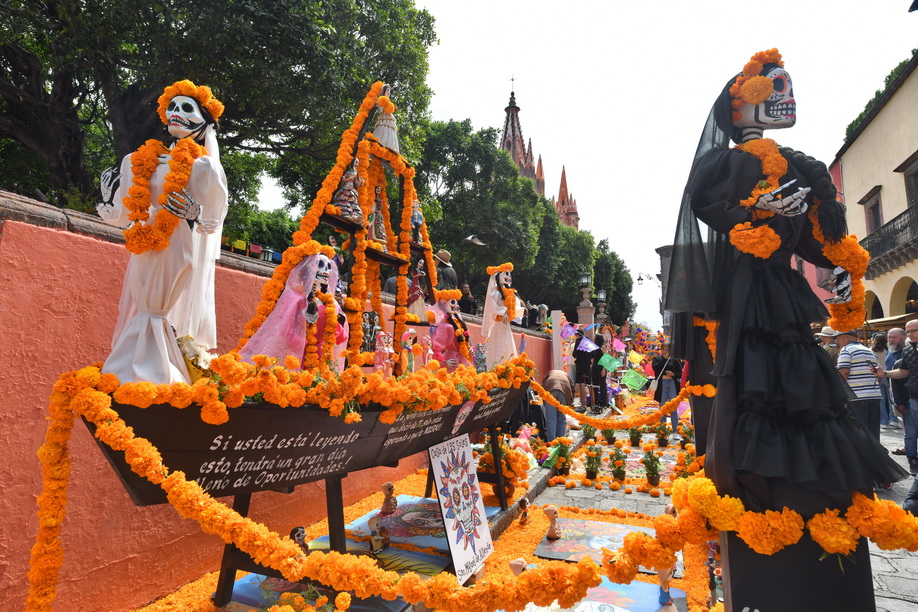
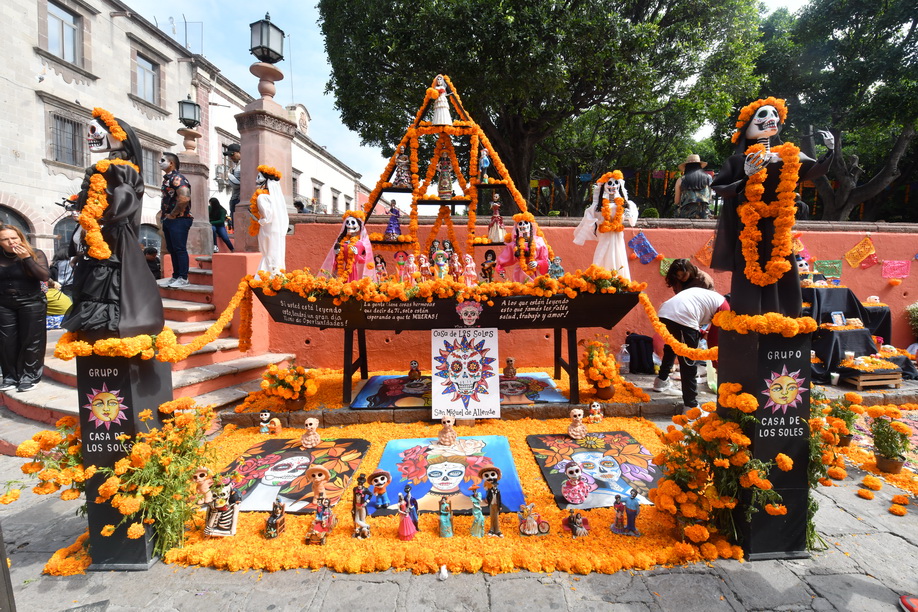
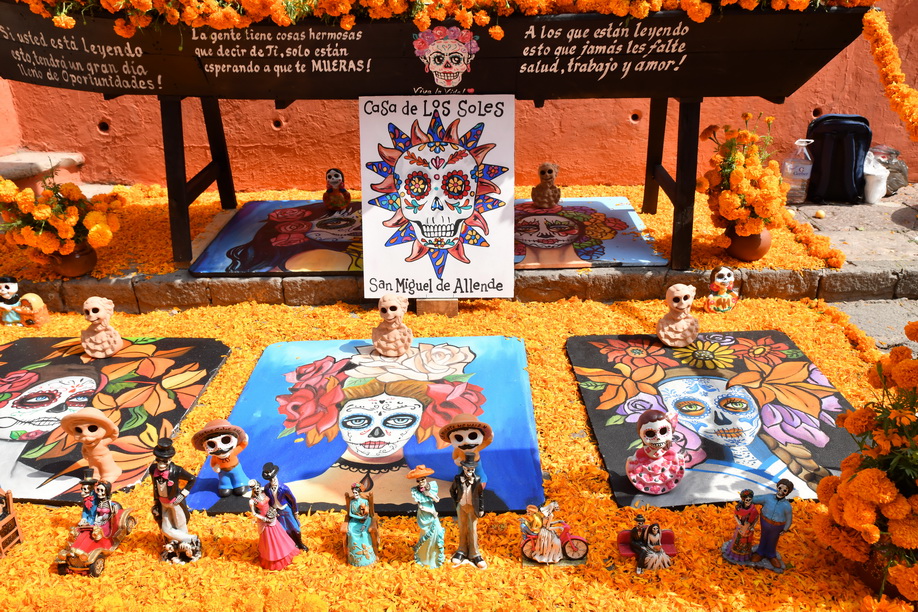
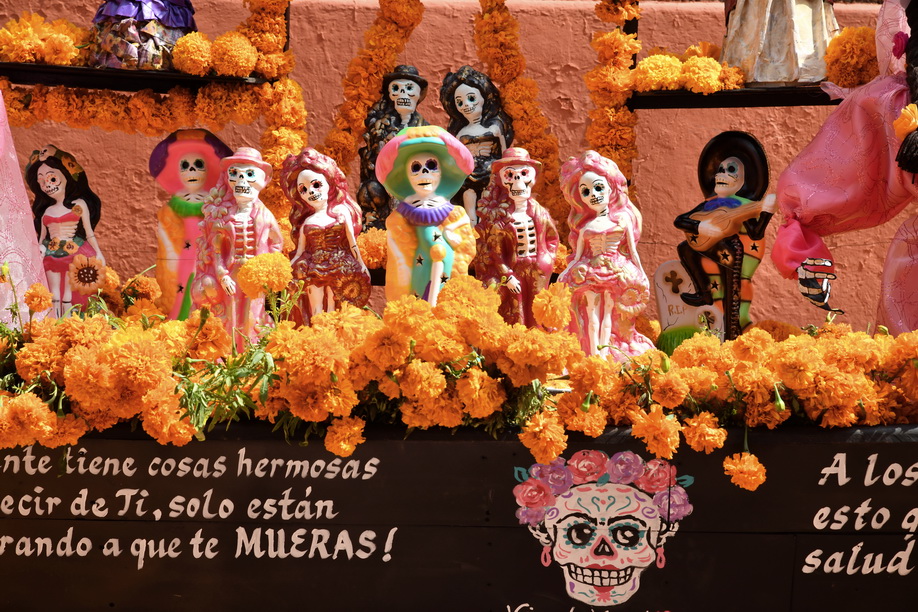
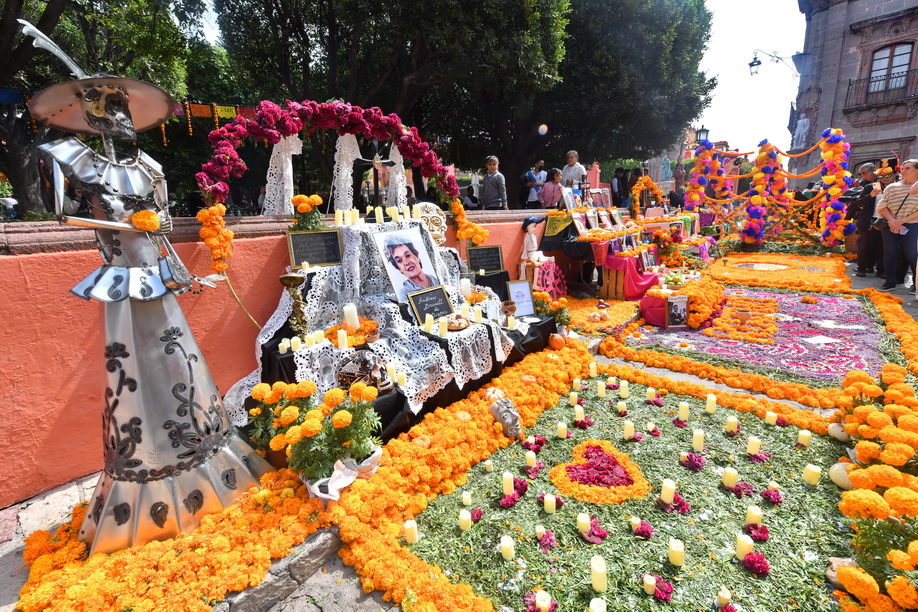
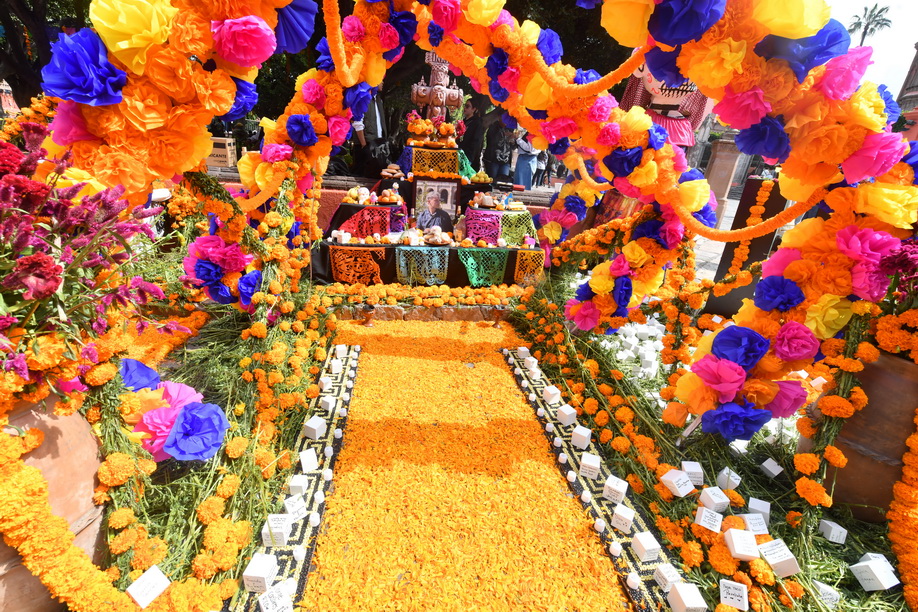
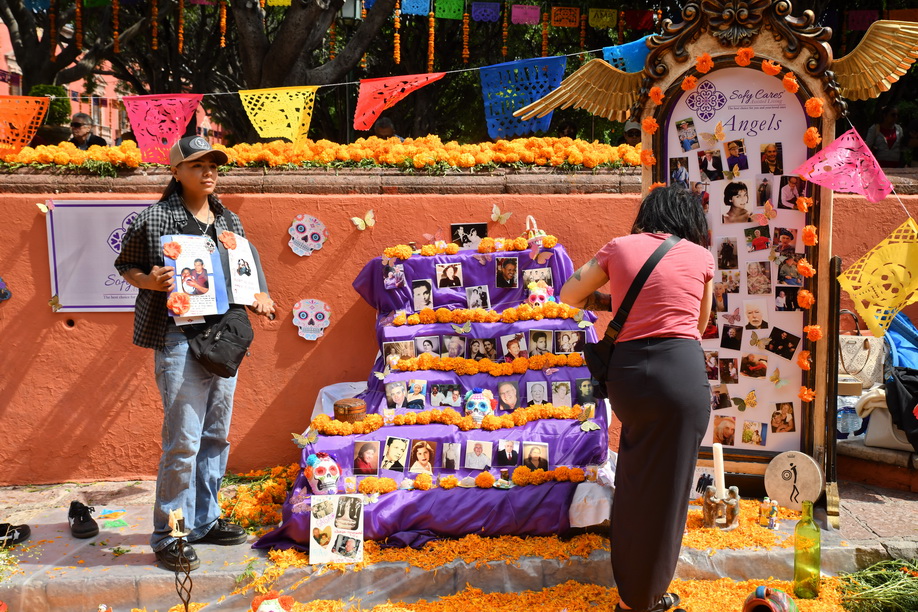
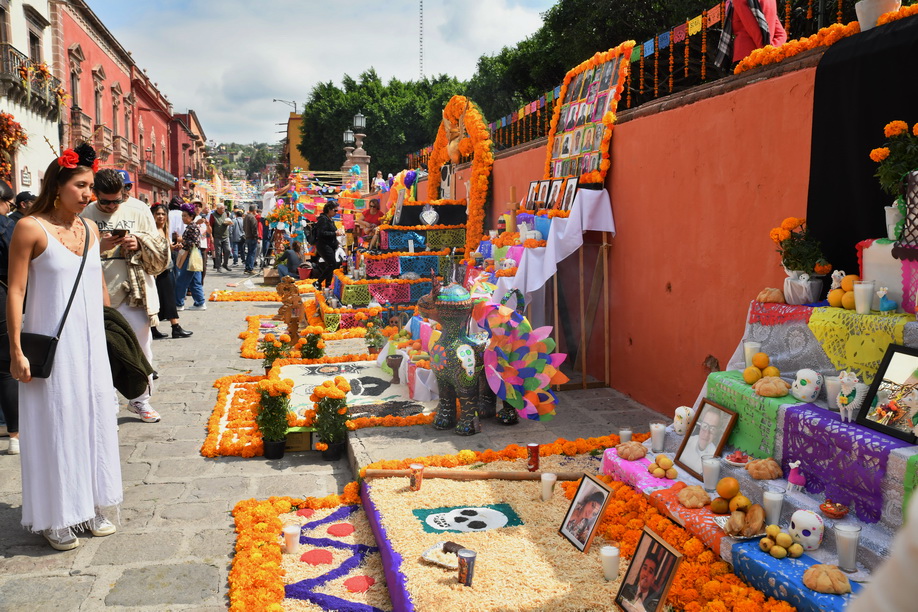
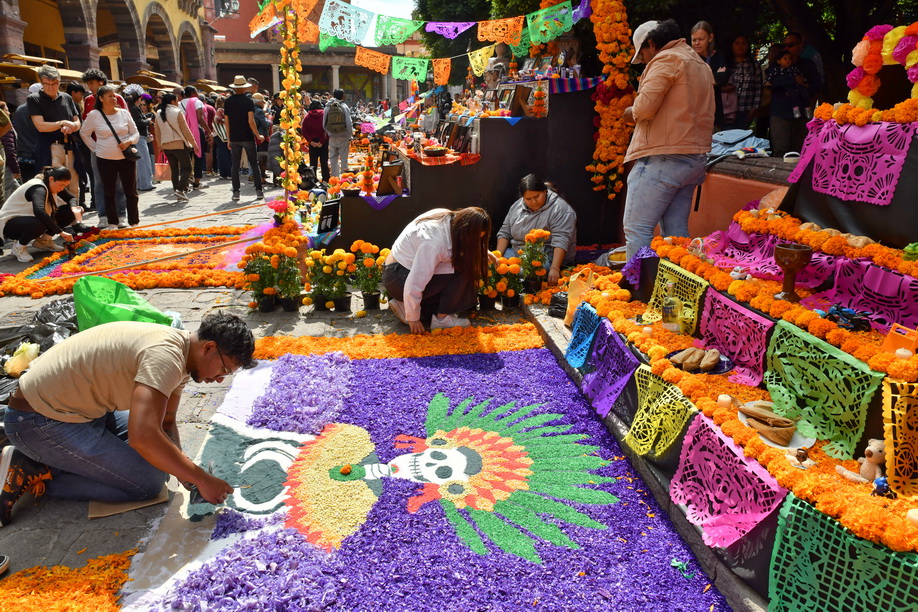
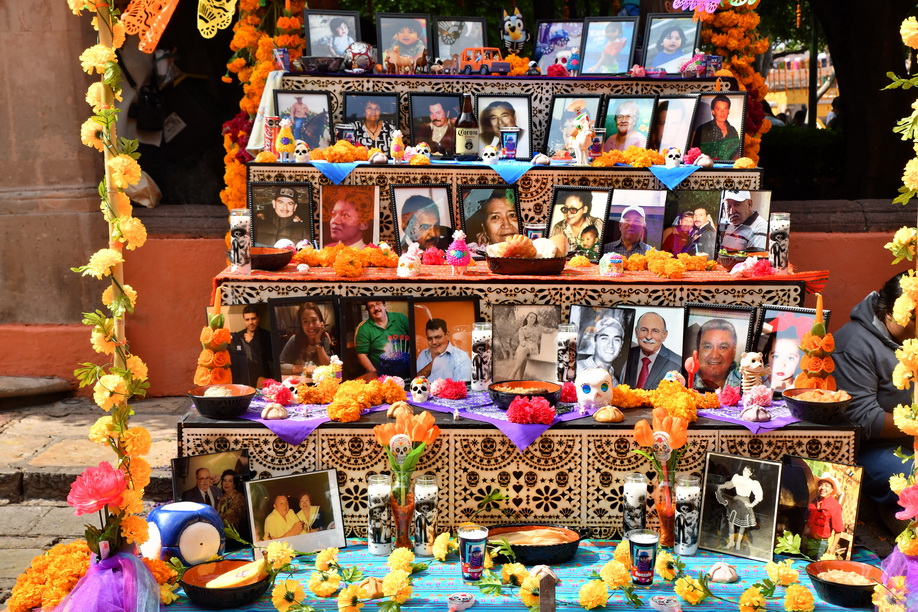
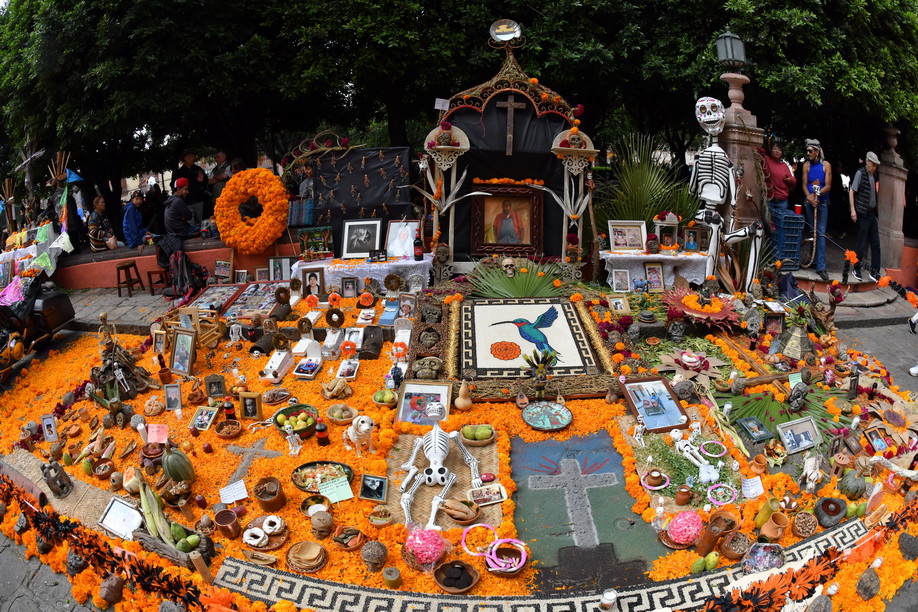
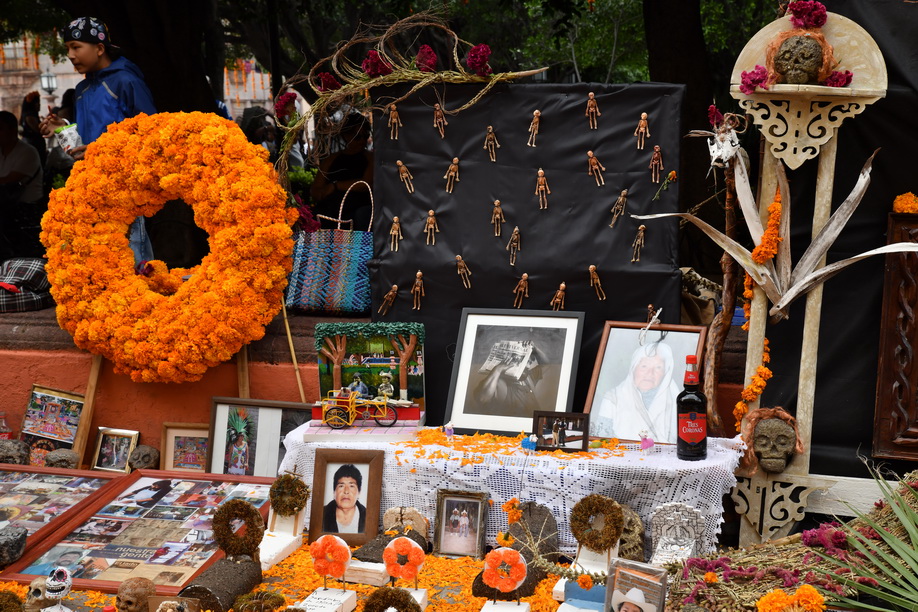
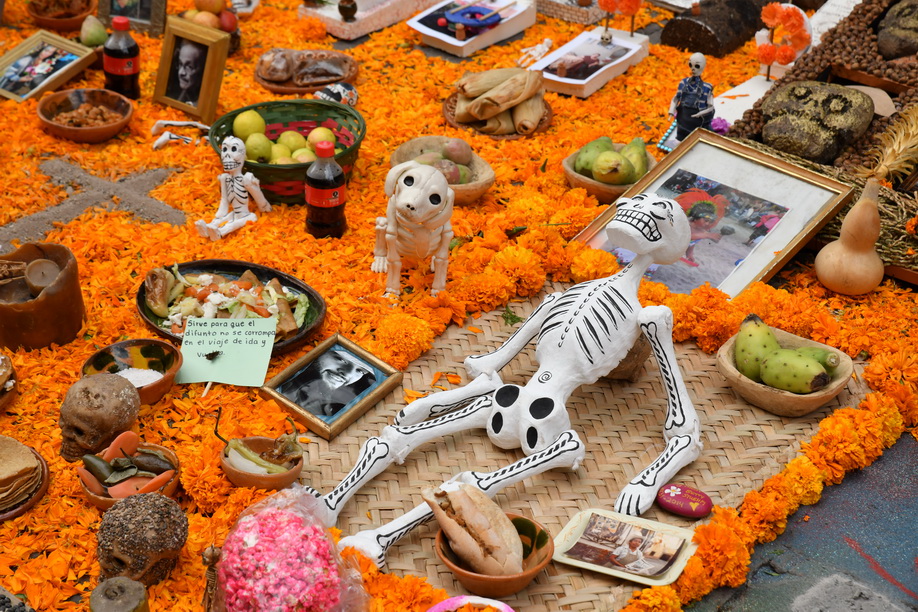
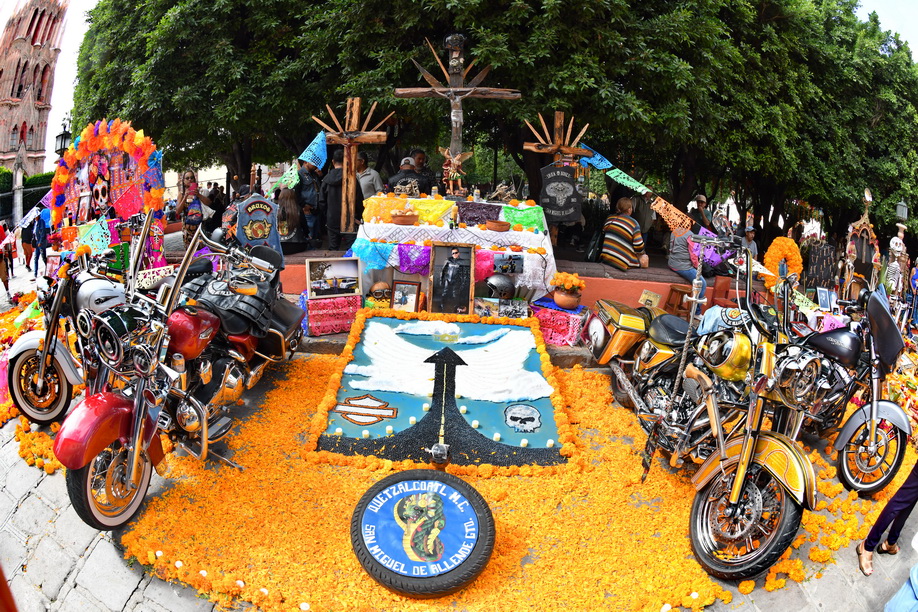
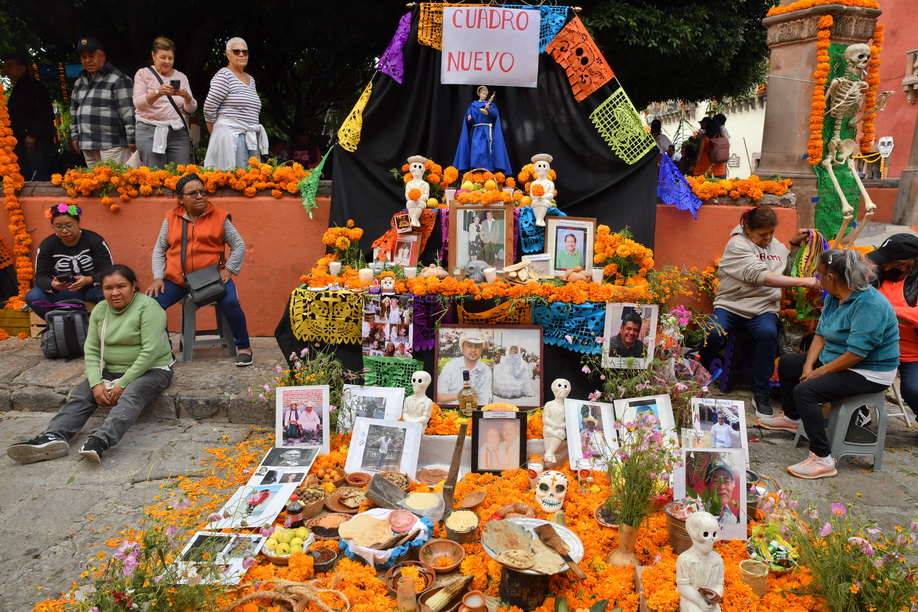
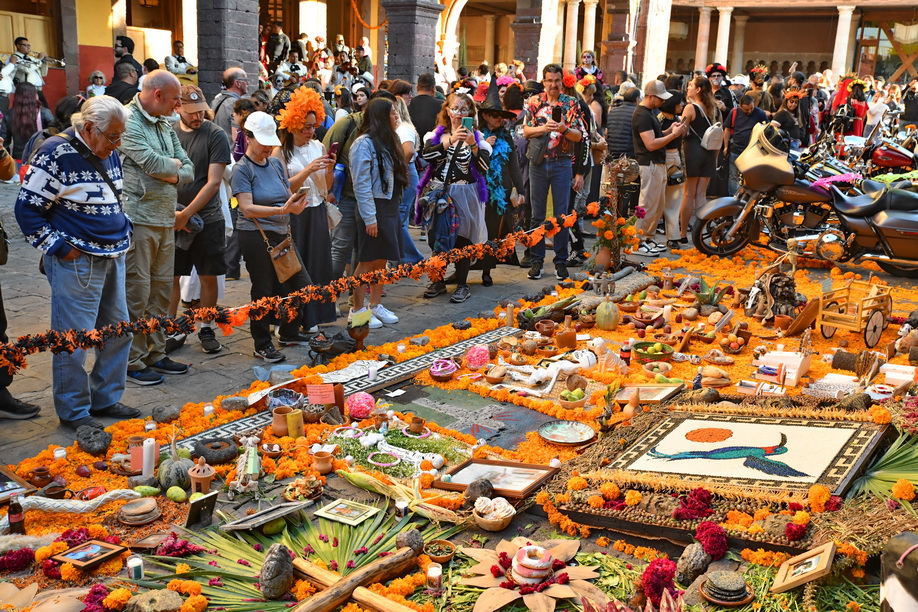
Many families build altars, called ofrendas, in their homes, using photos, candles, flowers, incense, salt, and food. The ofrendas are usually set up by October 31 and are taken down after the holiday on November 2, although specific local or family traditions vary, as does personal preference. The style, shape, and ornamentation of ofrendas are largely up to individual celebrants, but there are many traditions that are typical. An ofrenda may have a single level or multiple levels or steps and is typically covered by a cloth. The ofrenda is an important part of any Day of the Dead celebration as the altar that welcomes ancestors into the Land of the Living. Photographs are an important part of many altars that help us remember our incredible loved ones whom families remember during the holiday. Not only are these a traditional piece of decor, but they also help us share the stories of our remarkable loved ones throughout the day. The ofrenda traditionally brings together four elements: earth, wind, fire, and water. Water is included on the ofrenda in a pitcher so that the ancestral spirits can quench their thirst when they return from the Land of the Dead. Pan de muerto, the traditional bread, represents earth. This is a sweet bread that is typically made with a circle and a cross on top to represent a skull and crossbones. This is left on the altar for hungry souls entering the Land of the Living. Fire is represented by the candles that are lit on the ofrenda. Candles are typically arranged in the shape of a cross, representing a compass. This is for the purpose of guiding the spirits. Papel picado, intricately cut paper, represents wind. This may also be in the form of paper banners. These pieces of the ofrenda help us care for the souls of our ancestors, much like they cared for us in life.(source:https://www.eterneva.com/resources/day-of-the-dead-decorations, https://www.britannica.com/topic/Day-of-the-Dead)