
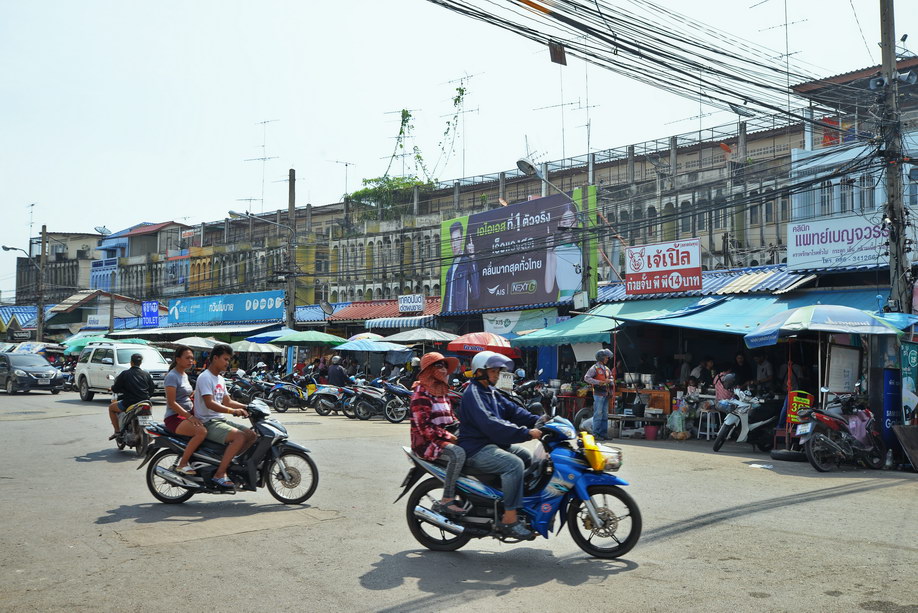
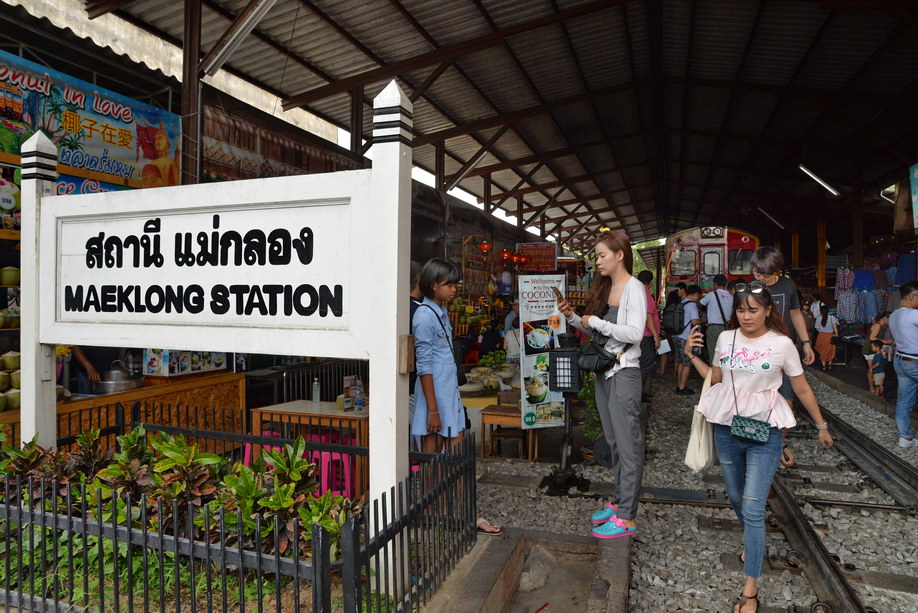

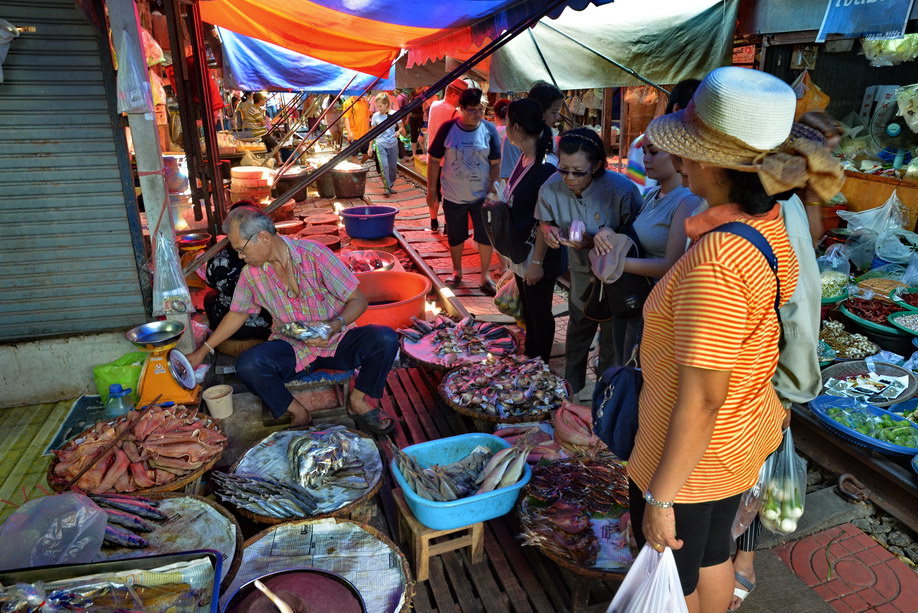

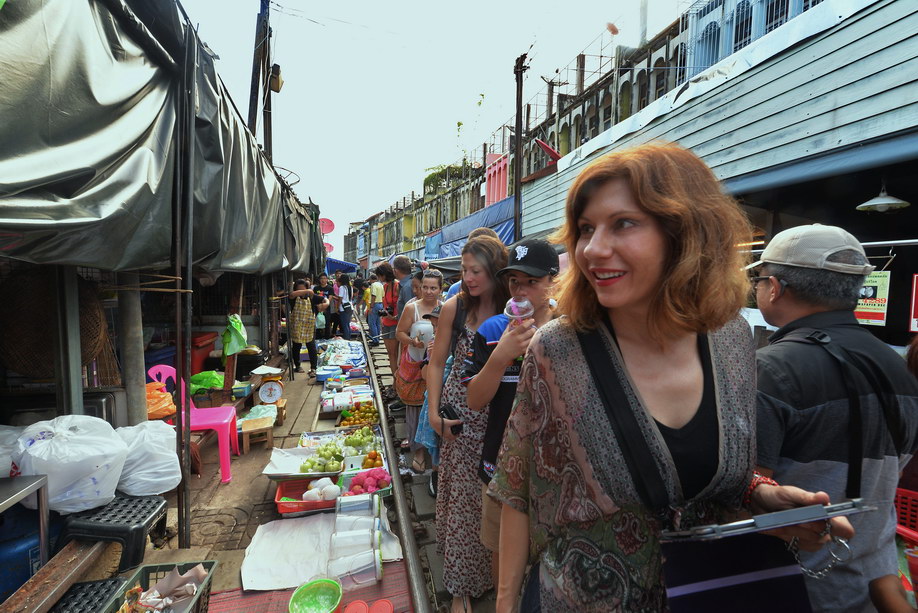
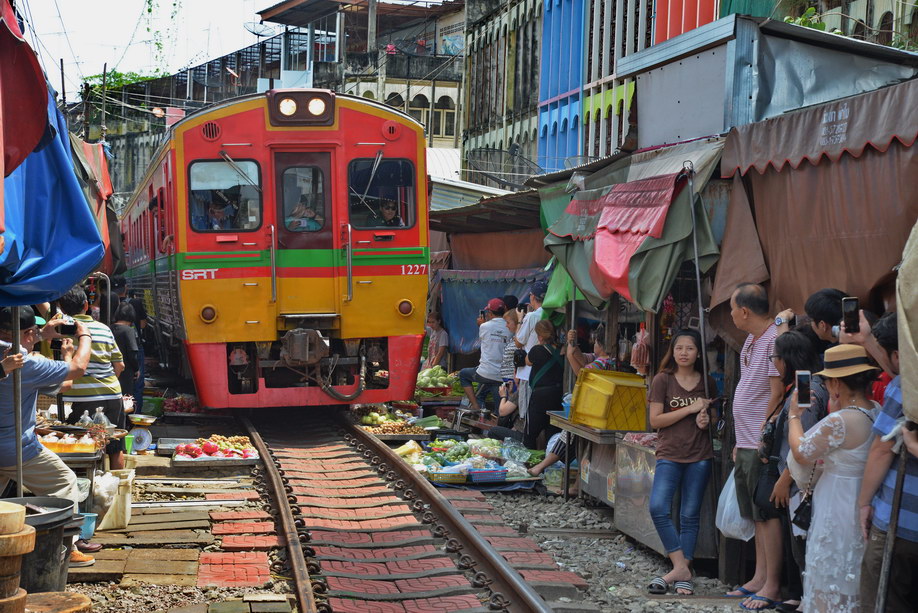
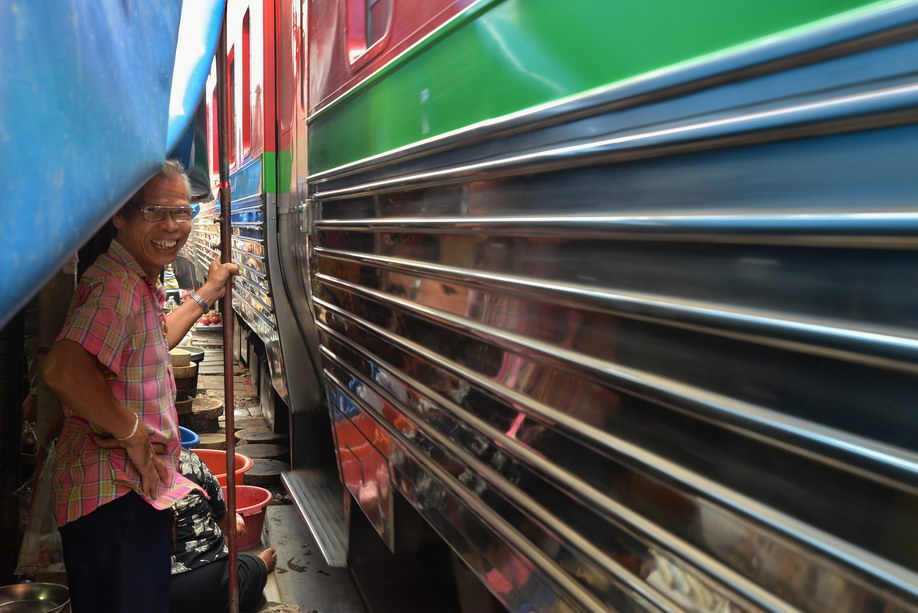
On 14 October 2018, I travelled by minibus from Bangkok to see a market that had long intrigued me: the Mae Klong Railway Market in Samut Songkhram. I had seen images of trains passing between stalls, but I wanted to experience the scene myself and photograph the people whose working day unfolds directly beside the tracks.
The railway has a history reaching back to the early twentieth century. Its two sections were developed to connect Bangkok with the fishing and trading communities of the coastal region. The line became part of Thailand’s state railway system in the mid-twentieth century. Although it serves local transport, one short stretch through the market has become internationally known for the unusual closeness of trains and commerce.
The market is often called Talat Rom Hup, commonly translated as the “umbrella-pulldown market.” The name describes what happens whenever a train approaches. Awnings that provide shade for sellers and customers must be folded away, while goods and movable displays are drawn back from the narrow corridor beside the rails. It is not a staged performance: the market continues to operate around the railway’s timetable.
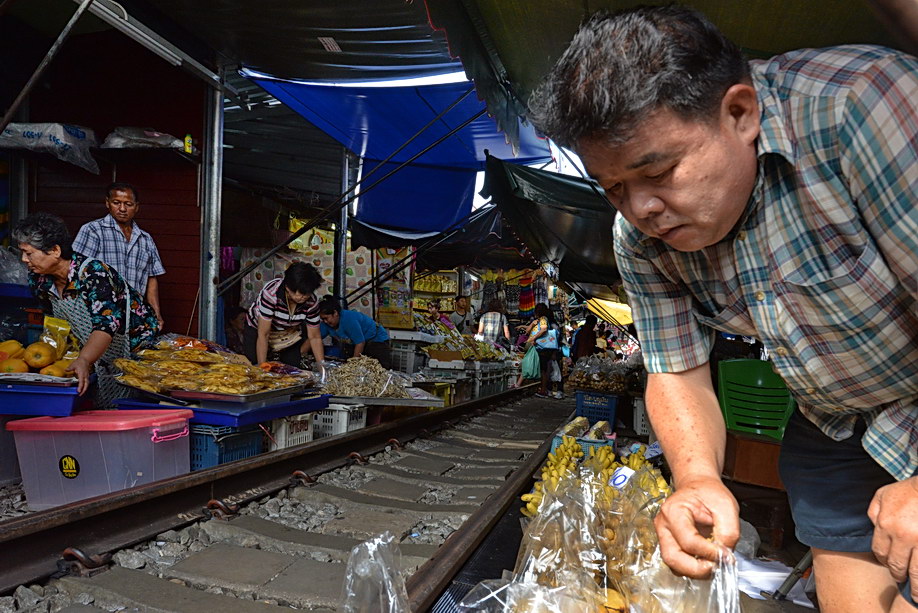
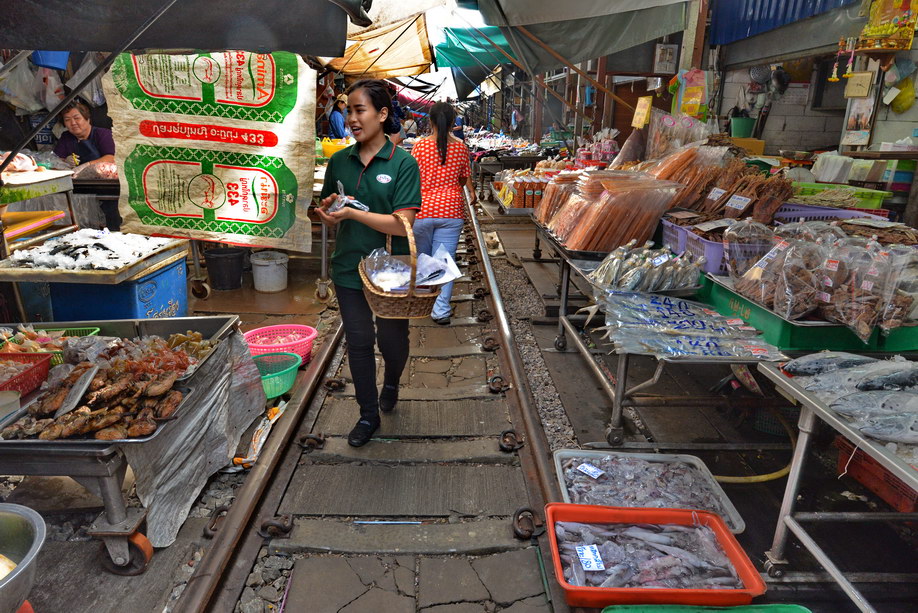
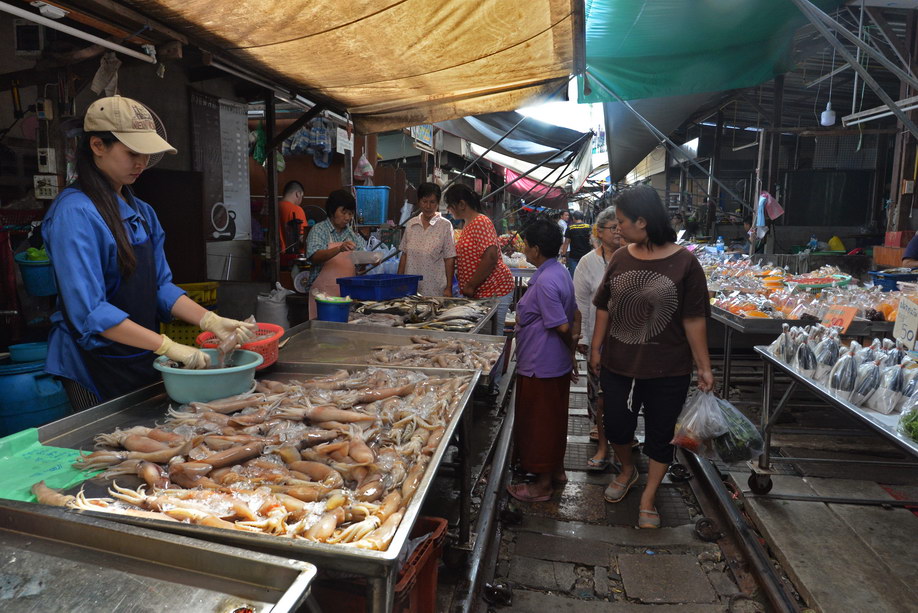
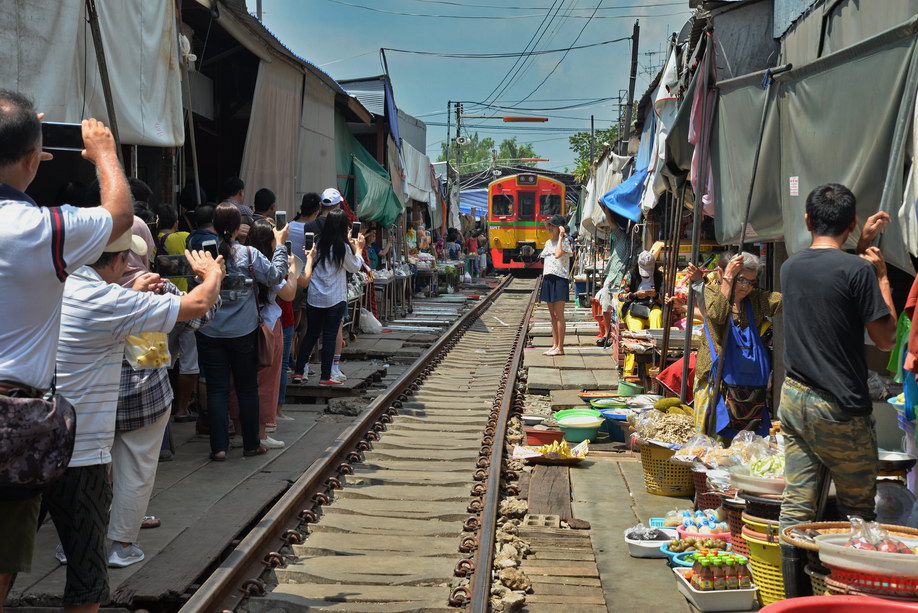
When I arrived, the place was crowded. Local shoppers moved among stalls selling everyday produce, while many visitors, like me, had come to watch the train. The railway line itself was almost hidden beneath the activity. People were buying and selling directly over the tracks, sheltered by awnings stretched across the space through which a train would soon pass.
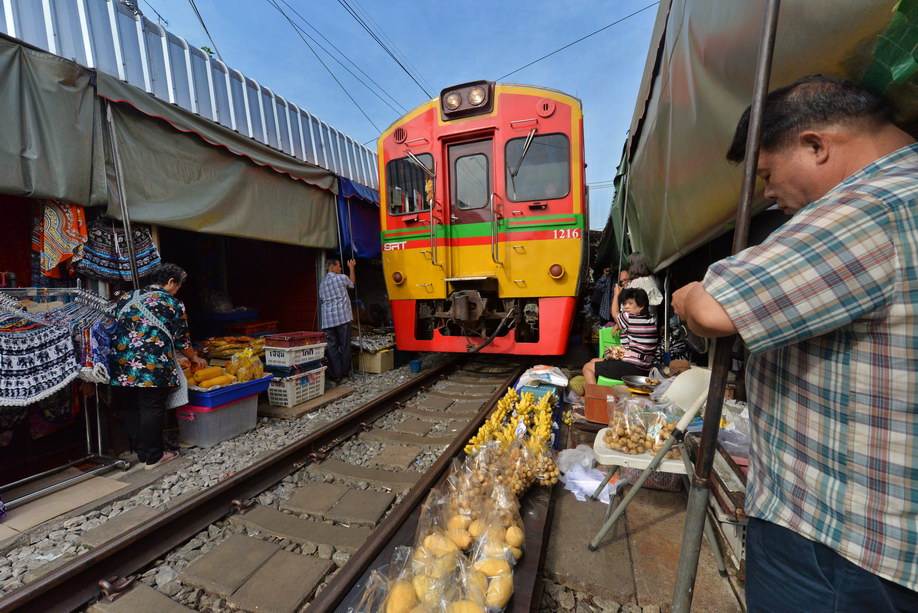
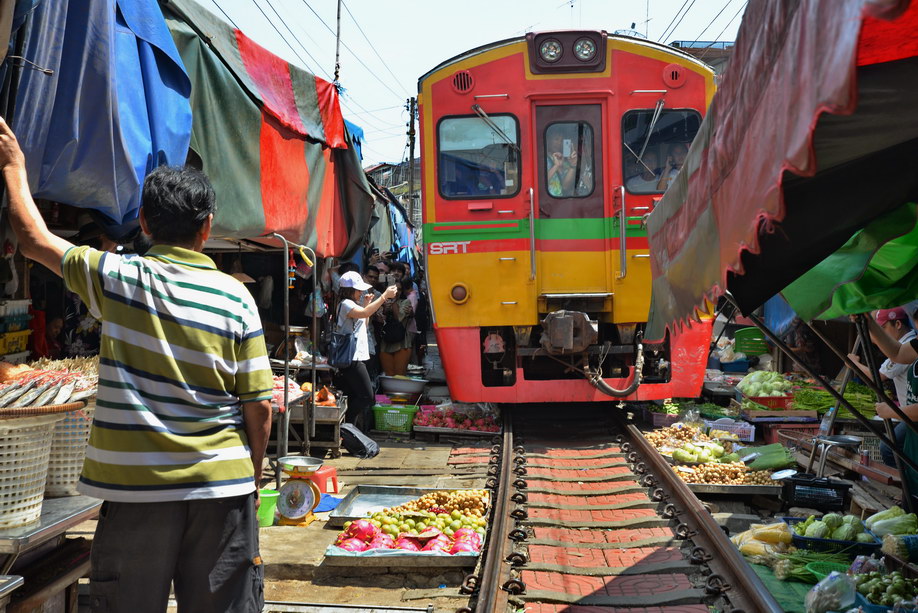
Then the atmosphere changed. The approaching train prompted an astonishingly coordinated response. Awnings were quickly pulled back and larger displays moved into the shops. Low trays and goods remained close to the ground where there was sufficient clearance. What had appeared to be an ordinary crowded market was transformed, within moments, into a narrow railway passage.
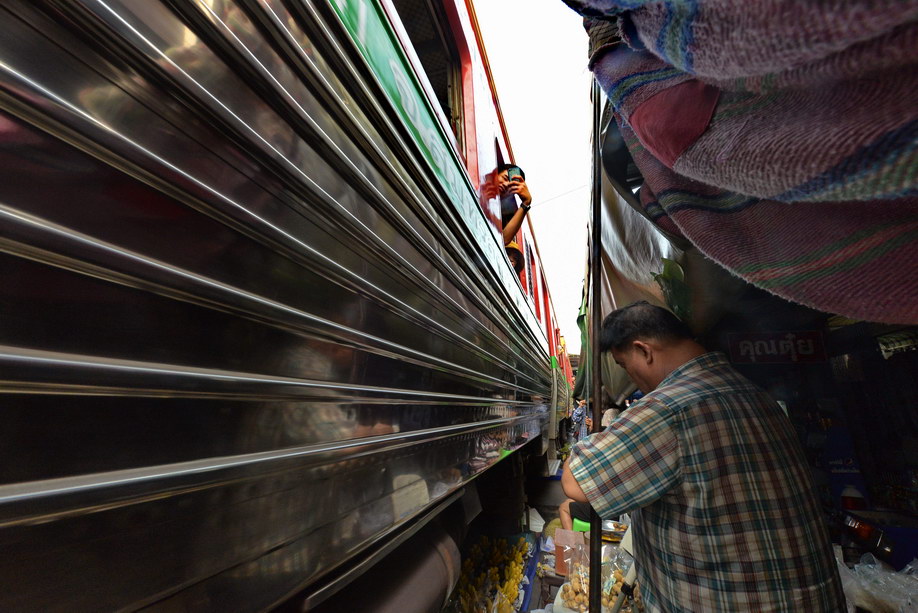
I stood close to the line with my camera. As the train moved slowly through, it passed perhaps twenty centimetres from me before stopping at the station just ahead. The proximity was extraordinary. For someone visiting for the first time, the moment felt almost unbelievable; for the vendors, it was evidently a familiar part of the working day. I photographed the passing train and the people making room for it.
What stayed with me was not only the spectacle of the train but the practical knowledge behind it. Every seller seemed to know what had to be moved, what could remain and when it was safe to return. This temporary transformation depended on experience, attention and cooperation. The rails were not separate from the market: they had become part of its daily rhythm.
As soon as the train had passed, the awnings extended again, the stalls returned to their places and buying and selling resumed. Within minutes the railway corridor was once more a marketplace. My photographs record a brief interruption in a much longer routine—one in which ordinary work, local transport and the curiosity of visitors meet in the same narrow space.