
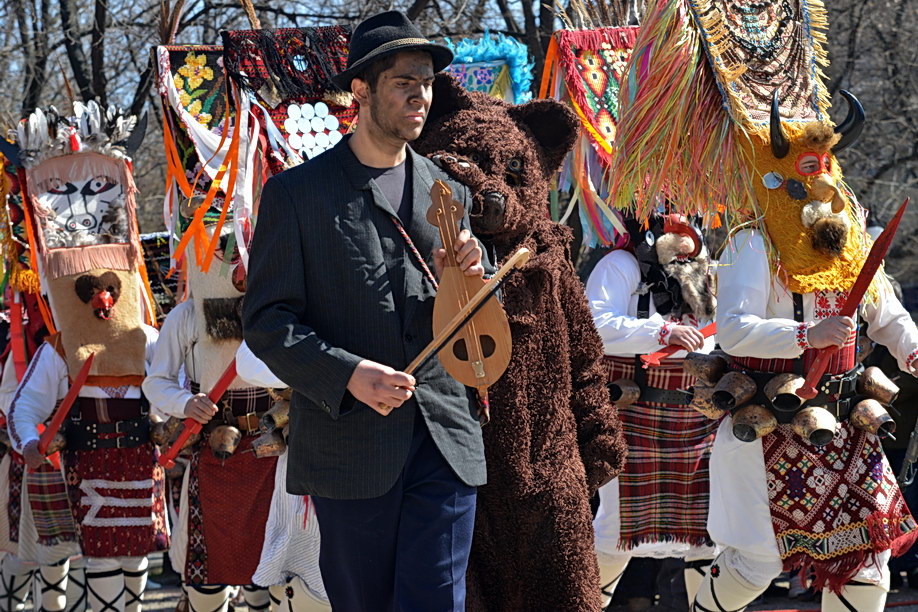
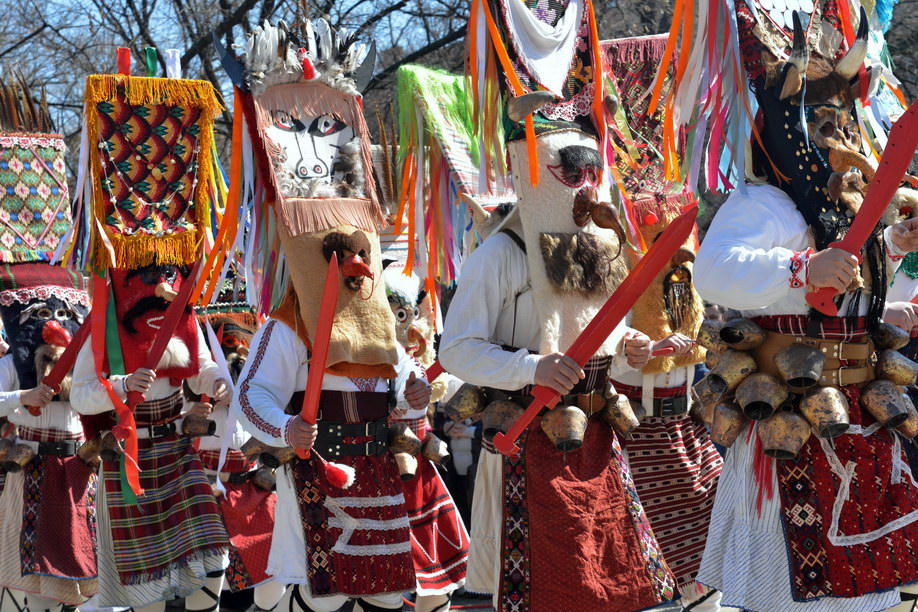
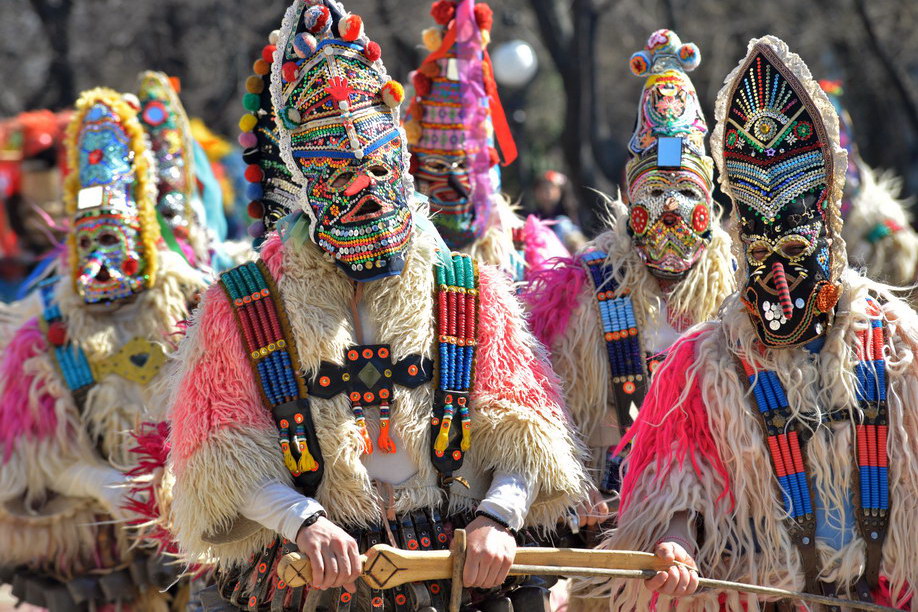
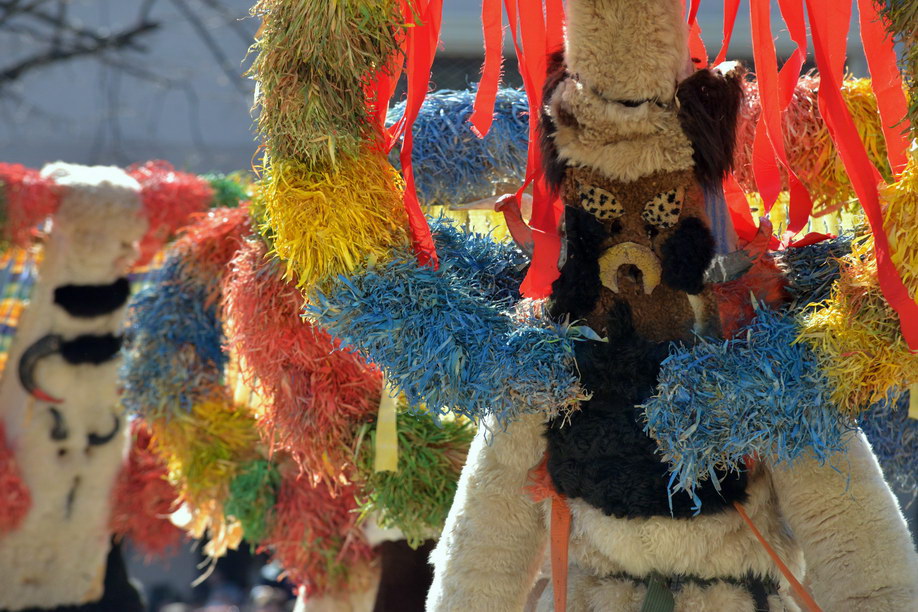
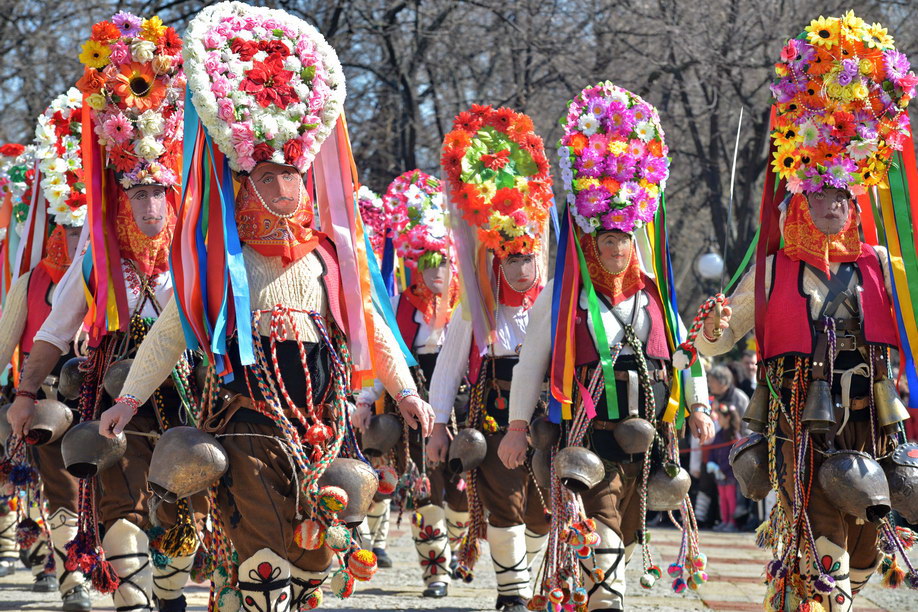
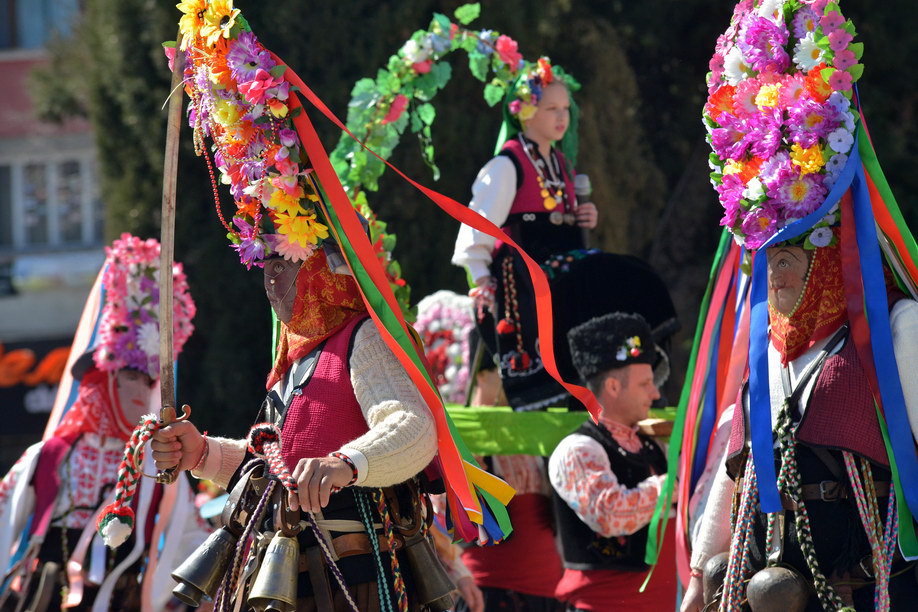
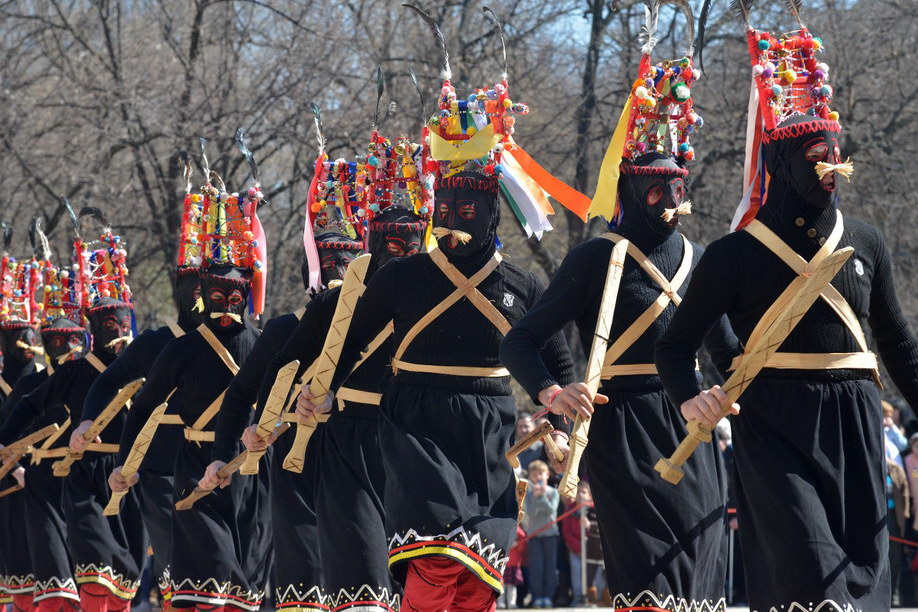


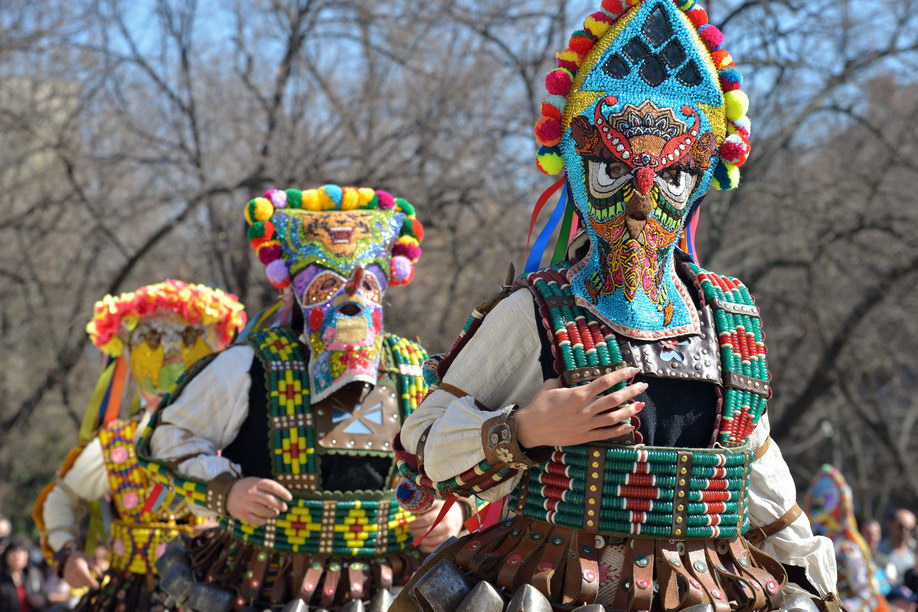
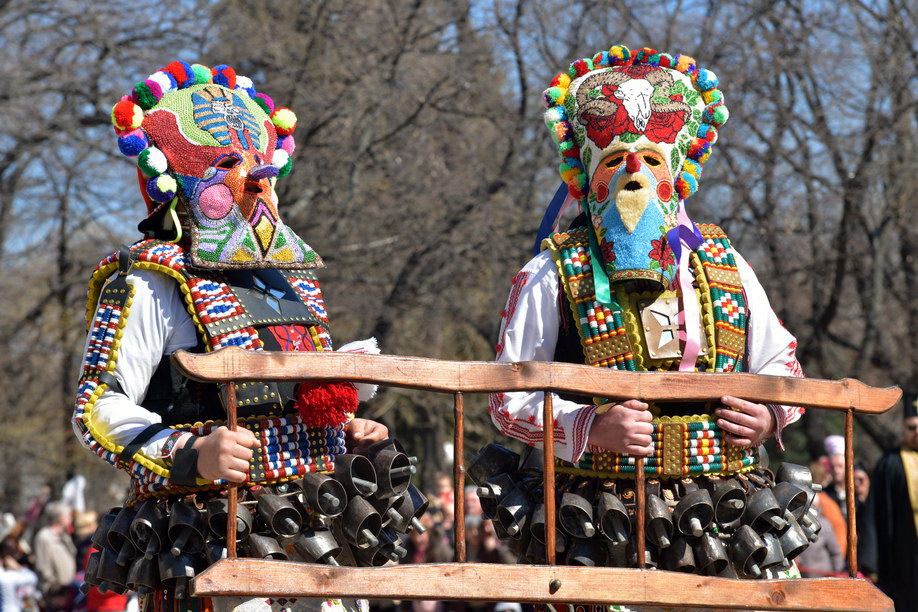
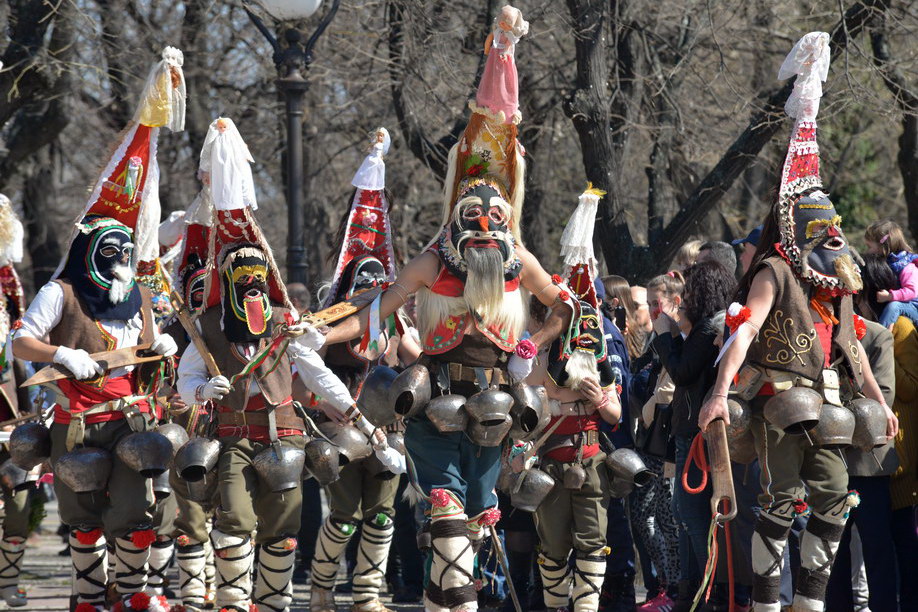
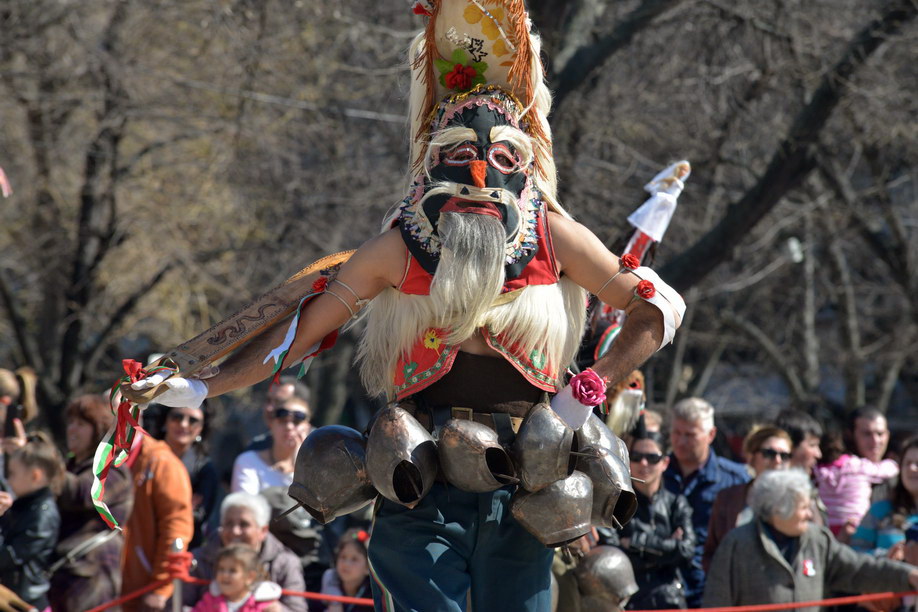
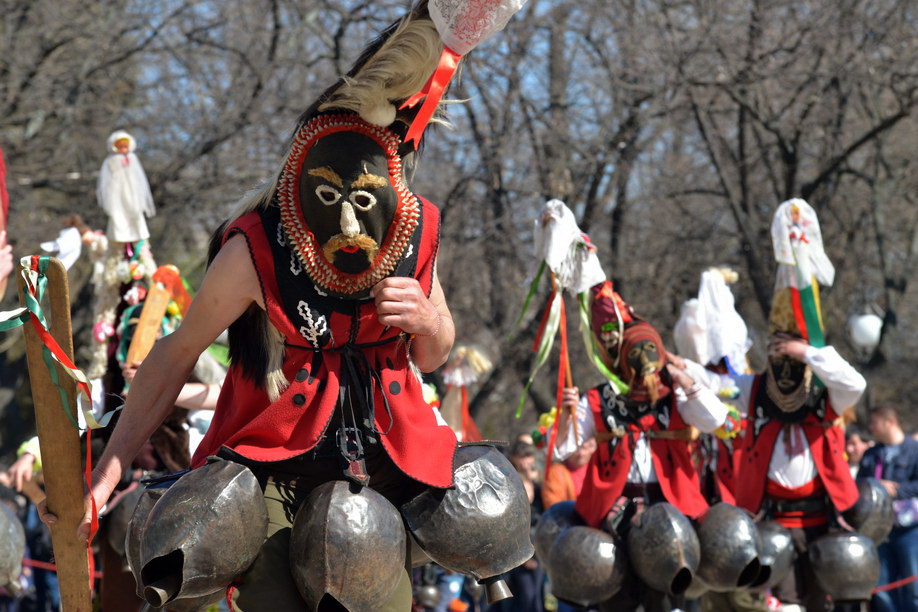
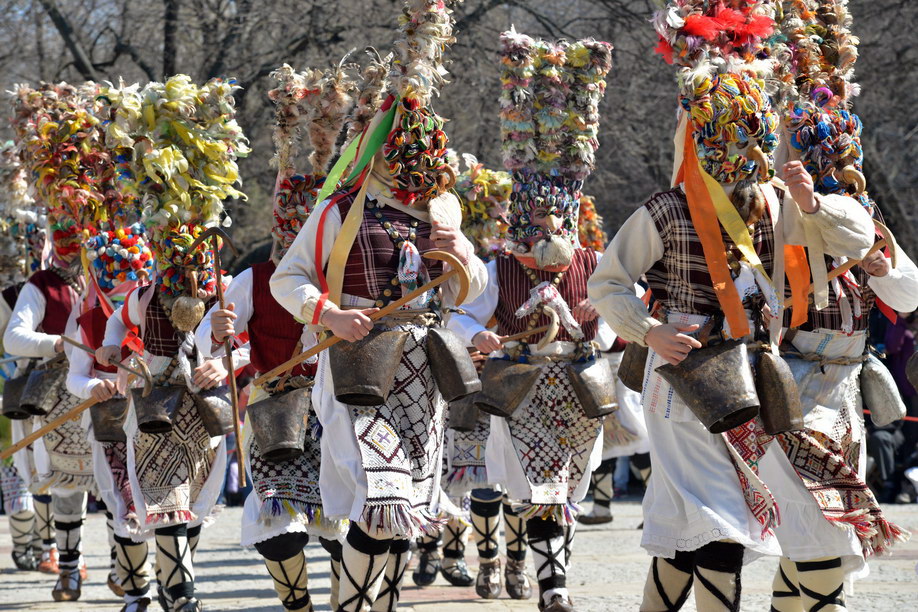
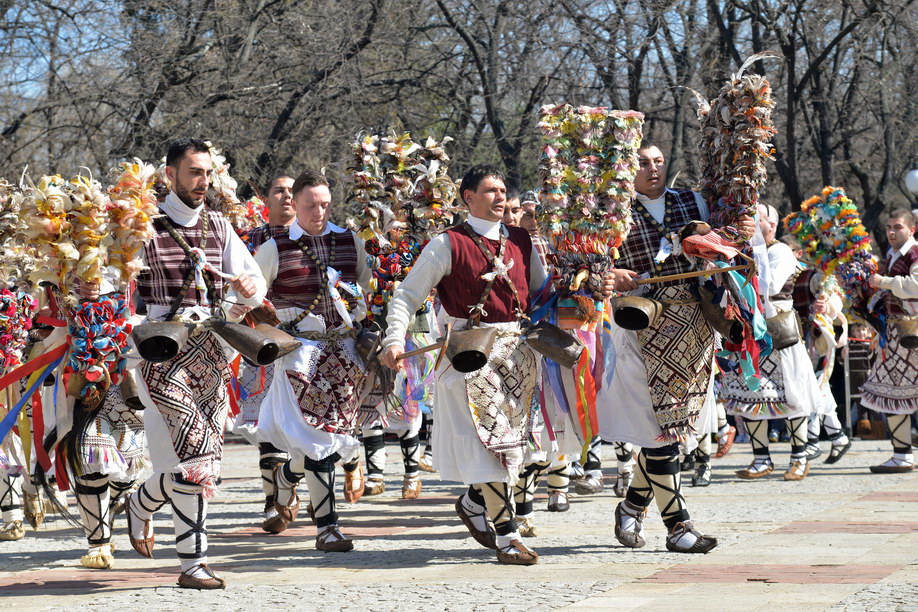
In March 2018, in Stara Zagora, I photographed one of Bulgaria's most striking living folk traditions: the Kukeri masquerade. The figures before me were covered in skins, wool and elaborate masks, with heavy bells hanging from their waists. Their appearance was deliberately unsettling, but the atmosphere around them was joyful. The movement of their bodies and the metallic thunder of the bells were as important as the extraordinary costumes.
Kukeri rituals are associated with the turning of the seasons, the expulsion of harmful forces and wishes for health, fertility and a good harvest. Their precise forms and dates vary across Bulgaria: some take place around the New Year, others before Lent or in early spring. The tradition is often described as pre-Christian, sometimes linked to ancient Thracian practices, although a direct and uninterrupted historical lineage cannot be demonstrated with certainty.
The masks transform ordinary people into beings that seem to stand between the human and animal worlds. Horns, teeth, feathers, coloured threads, carved wood and animal hides appear in different regional styles. Large bells, secured to belts and shaken by vigorous steps, create a sound intended to frighten away misfortune. To photograph a kuker is also to try to photograph sound: the costume only becomes fully alive when its wearer moves.
The masquerade frequently includes characters drawn from everyday social life: a bride and groom, an elderly couple, a bear, a priest or a mock ruler. Humour, playful disorder and exaggerated gestures may accompany symbolic weddings, ploughing or scenes of birth. These performances evoke the renewal of life and the hope that the coming agricultural year will be prosperous. Not every figure or gesture appears in every locality, and that diversity is part of the tradition's richness.
I was interested in the craftsmanship as much as the spectacle. The masks and garments require considerable work, and knowledge of their making is often passed between generations. What looks like a spontaneous street performance rests on a long process of preparation, family participation and local pride.
Bulgaria's related masquerade customs have received international recognition. UNESCO inscribed the Surova folk feast of the Pernik region on its intangible cultural heritage list in 2015. That recognition concerns the specific Pernik tradition, not every Kukeri event in the country, but it helps explain the wider importance of these seasonal masquerades as living community practices.
In Stara Zagora, my photographs followed the meeting of masks, bodies and spectators. Behind the fearsome faces I saw humour, energy and a desire to keep an inherited custom visible. The images are a record of a celebration in which noise is a blessing and the frightening becomes a way of welcoming spring.