
During my journey through Mexico, one of the places I particularly wanted to visit was the Frida Kahlo Museum, Casa Azul, in Coyoacan. Frida Kahlo's paintings can be seen in museums around the world, but Casa Azul offers something different. Here, we encounter the artist through the rooms in which she lived, the objects she used, her bed and studio, the folk art she collected, and the garden that surrounded her.
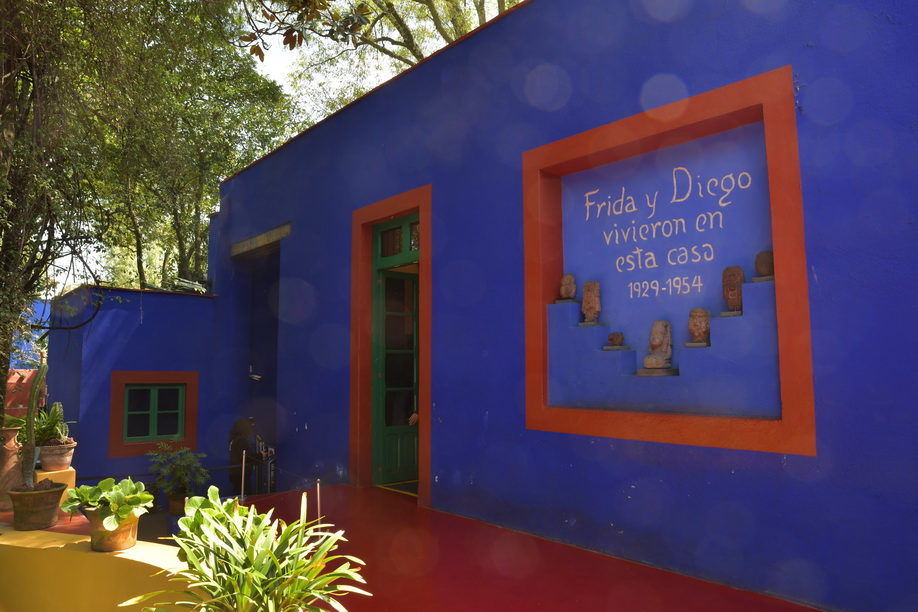
Her father, the photographer Guillermo Kahlo, had the family home built in Coyoacan in 1904. Frida spent much of her life here, and the house later became part of the life she shared with Diego Rivera. She worked here and died here in 1954. Four years later, Casa Azul opened as a museum.
First, the Colours
When I entered Casa Azul, the first thing that struck me was not a work of art, but colour.
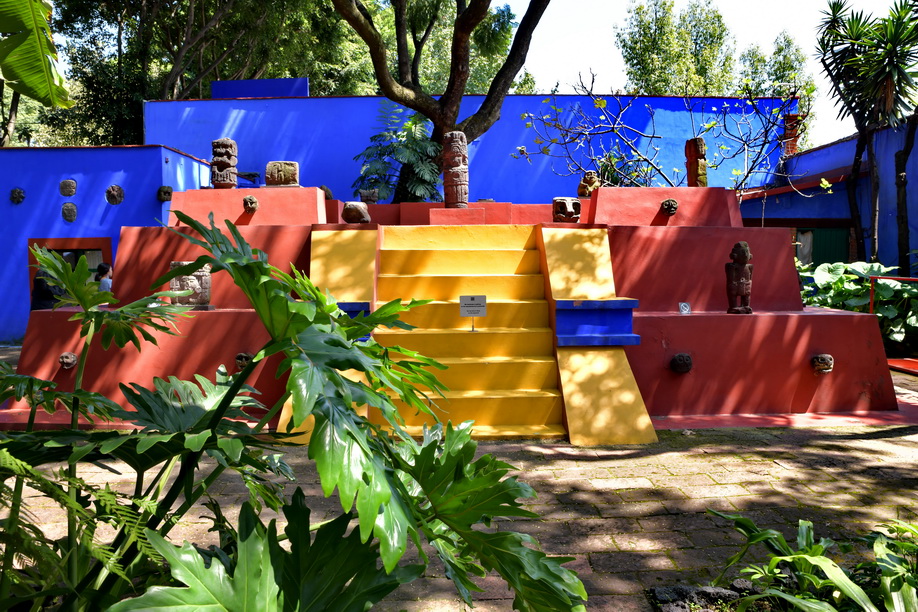
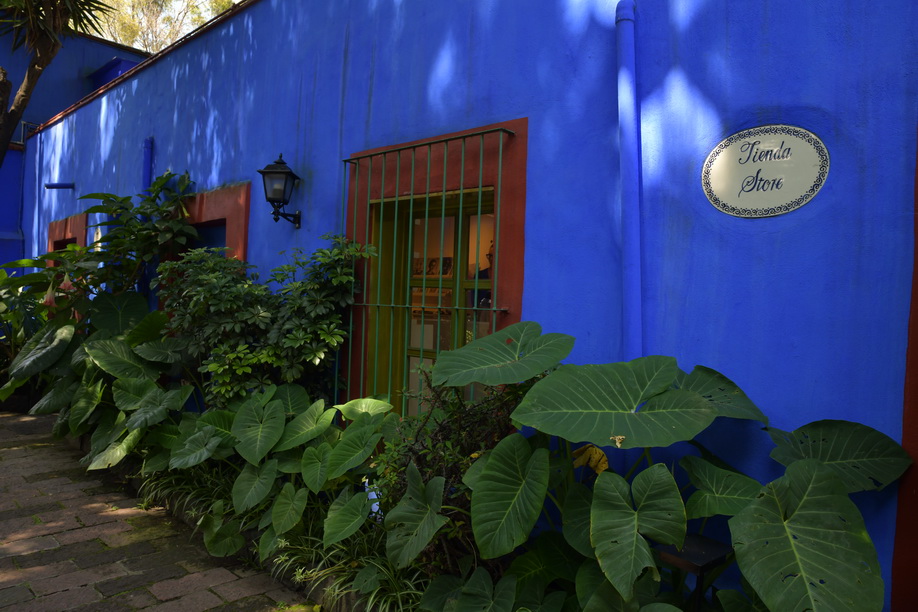
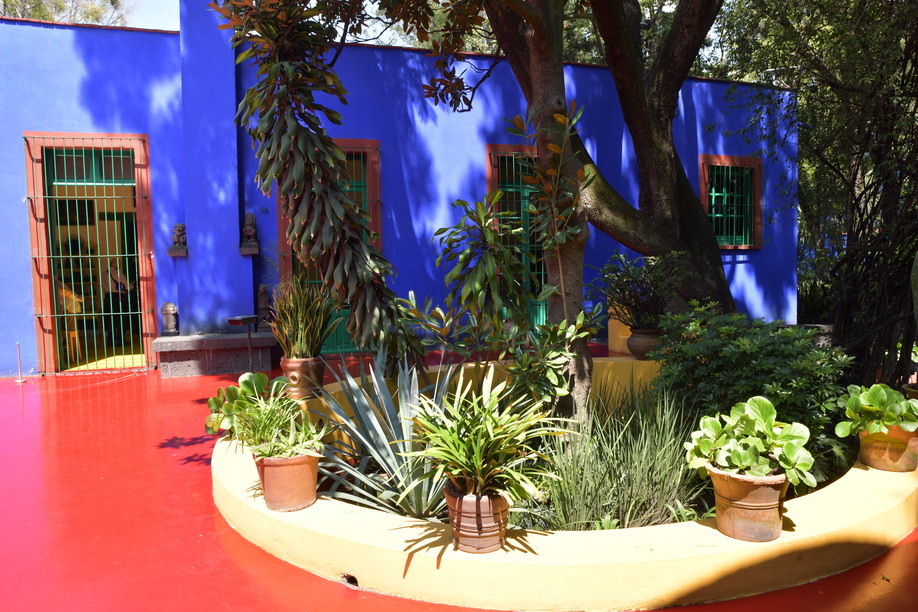
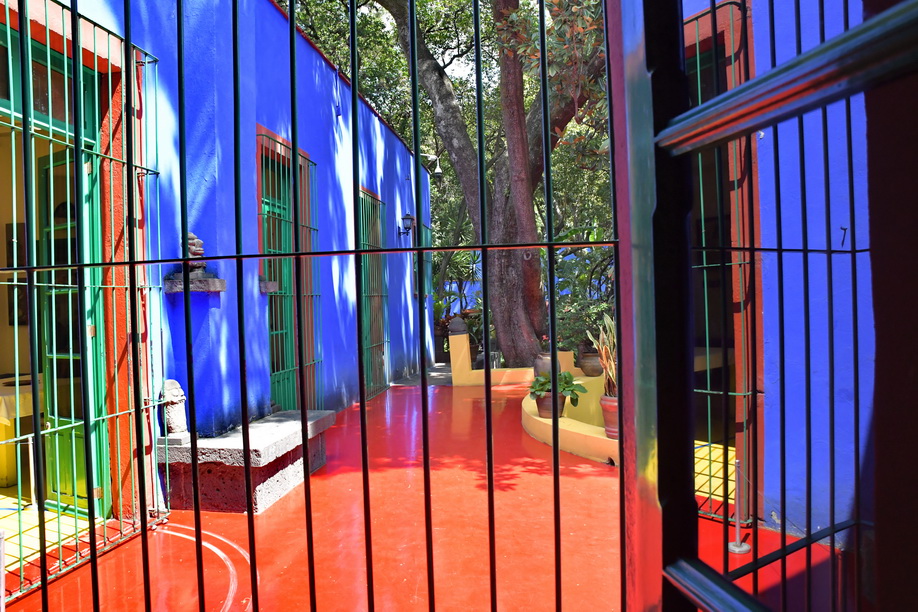
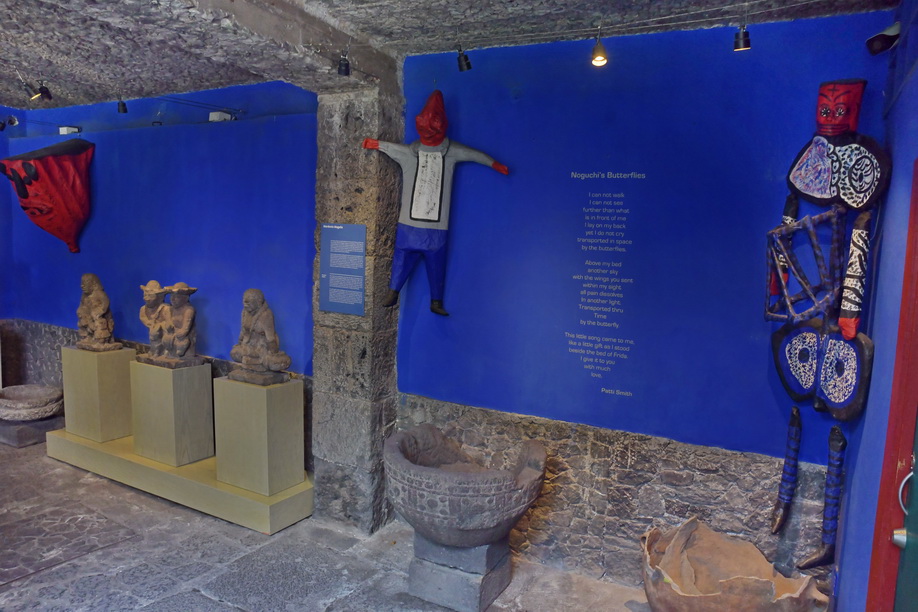
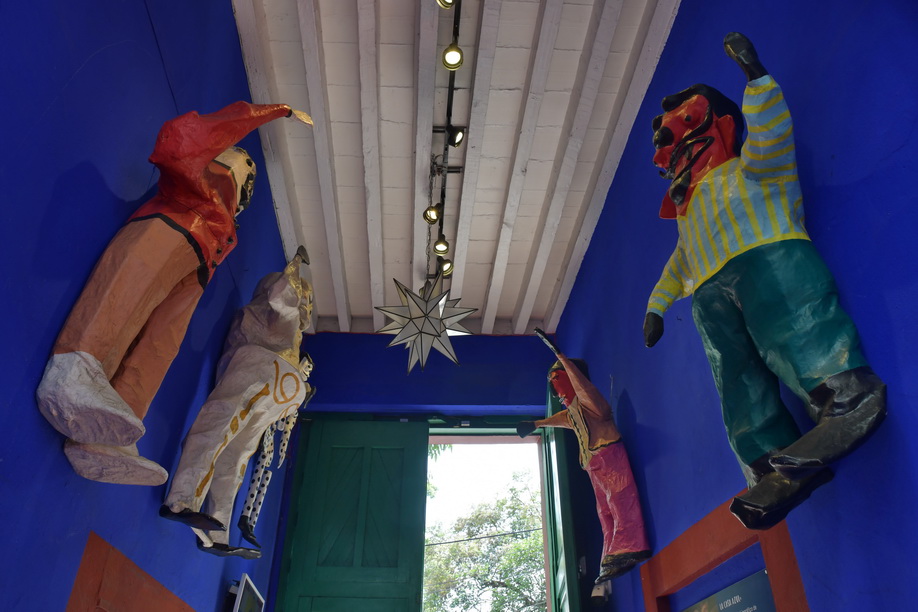
The almost electric cobalt blue walls, green doors and window frames, red and yellow floors, and the dense vegetation of the garden create a remarkable visual world.
While photographing the house, I found myself following the geometry of these colours: a red floor against a blue wall, yellow steps, green window bars and the shadows of trees falling across them. Under the Mexican sun, the house itself becomes a composition.
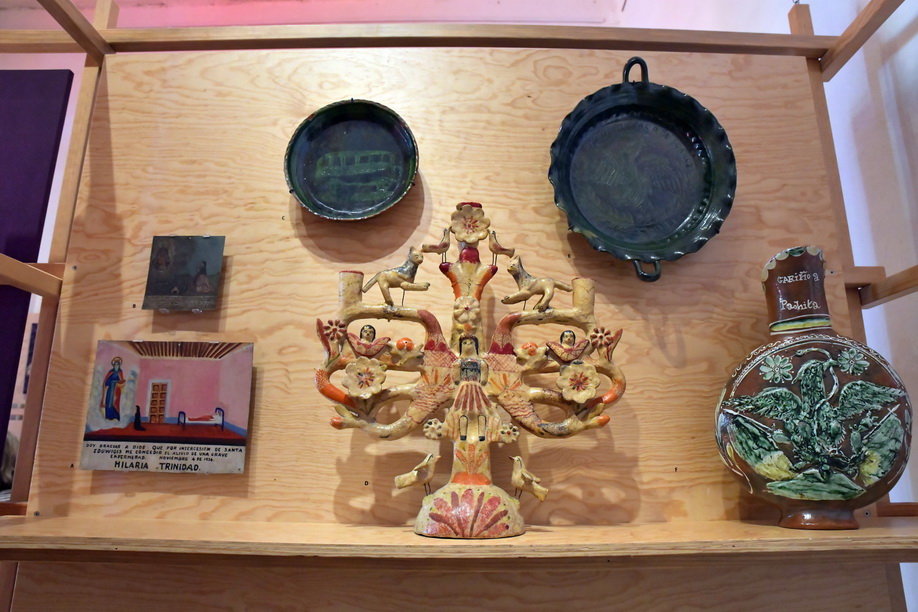
Frida and Diego's fascination with Mexico's pre-Columbian cultures and folk art can also be felt throughout the house. Archaeological pieces, ceramics, sculptures and everyday objects are not simply decorations; they form part of the visual language of the place.
Where Pain Becomes Visible
Inside the house, the joyful colours begin to contrast with the physical reality of Frida's life.
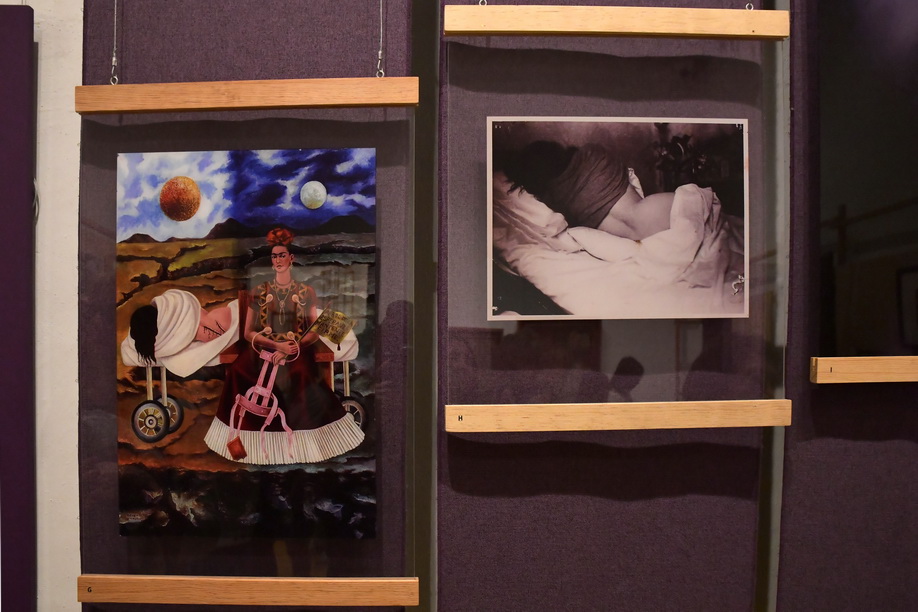
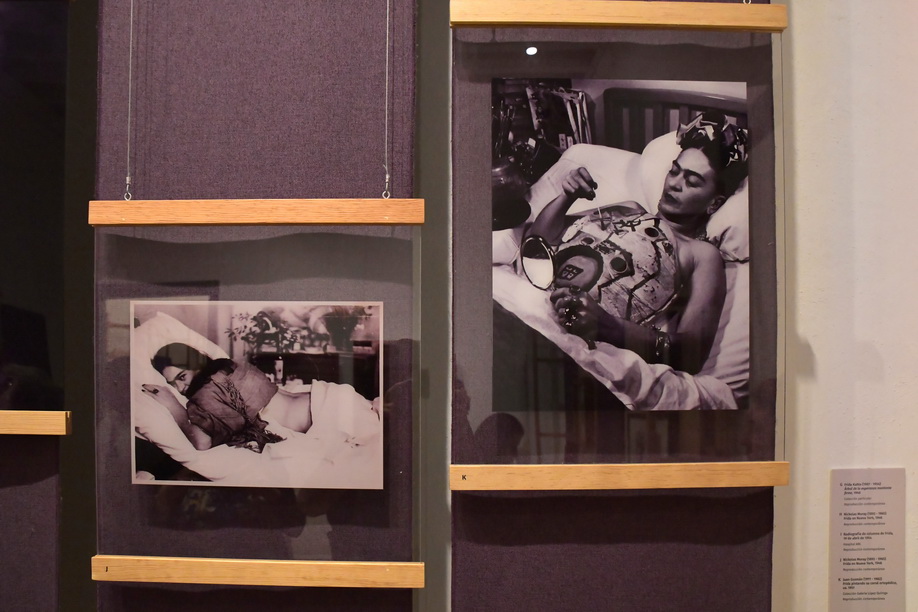
At eighteen, she was seriously injured in a bus accident. Operations, orthopaedic corsets and long periods confined to bed accompanied her for the rest of her life and became inseparable from her art.
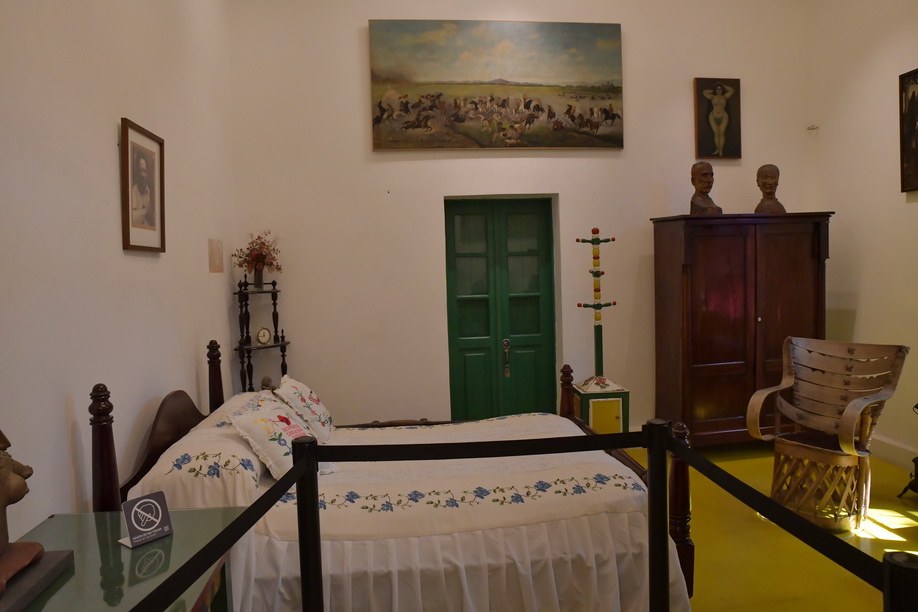
Photographs in the museum show Frida lying in bed and working on the corset surrounding her body. For me, these were among the most powerful images on display. The suffering that appears symbolically in her paintings suddenly becomes the reality of a human body.
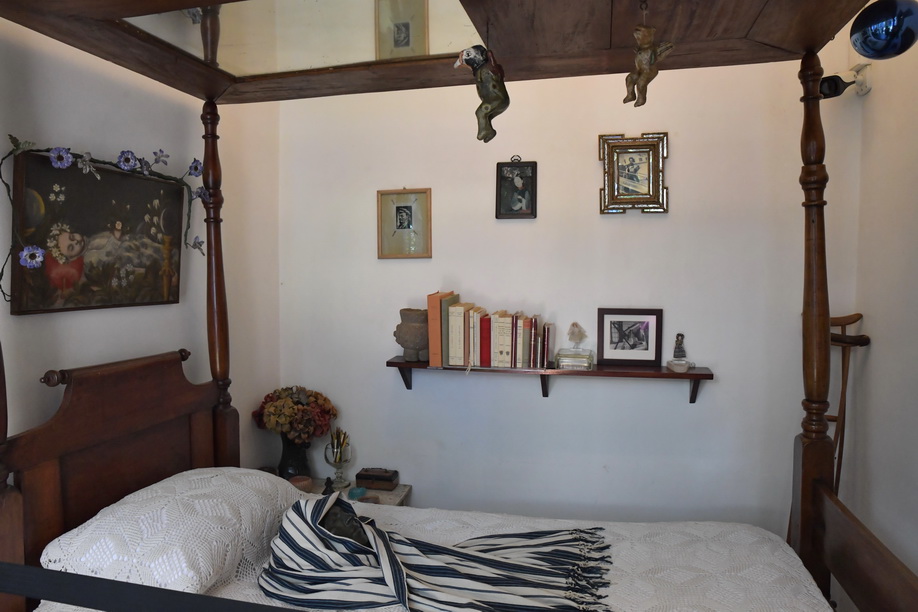
After the accident, a mirror was placed above her bed. Unable to move freely for months, Frida began painting while looking at her own reflection. The mirror was therefore more than an object: at a time when her world had become physically restricted, she herself became her closest model.
A Lived-in Home
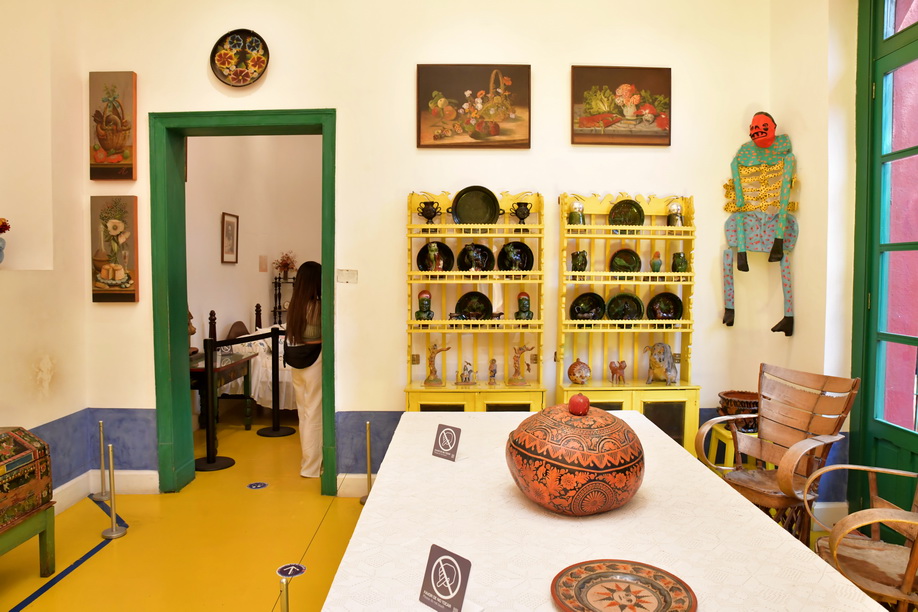
What affected me most about Casa Azul was that it still feels more like a lived-in home than a conventional museum.
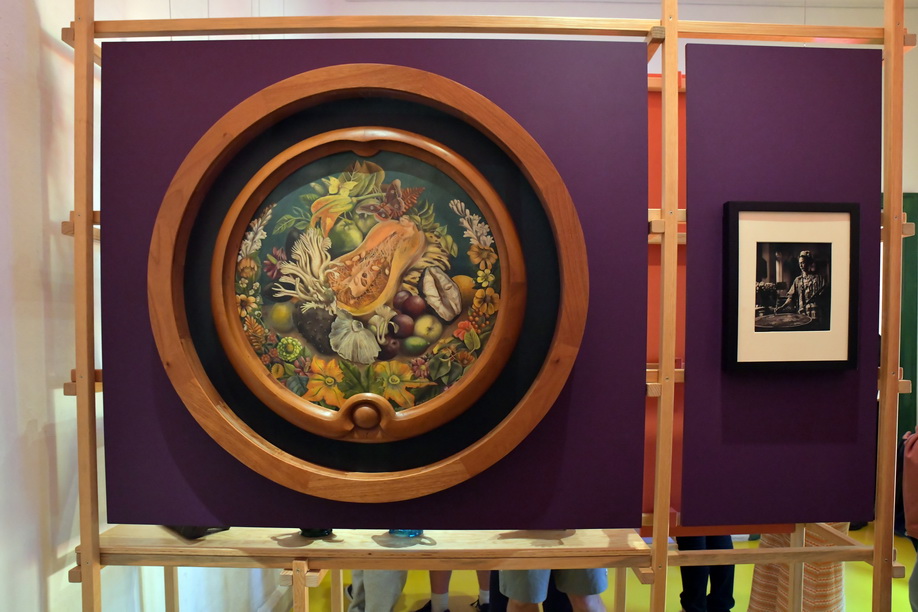
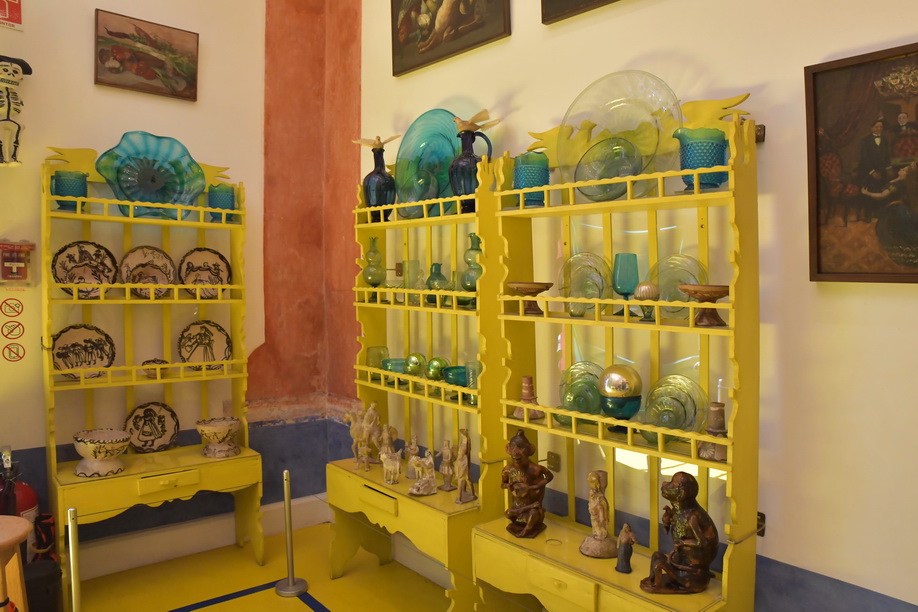
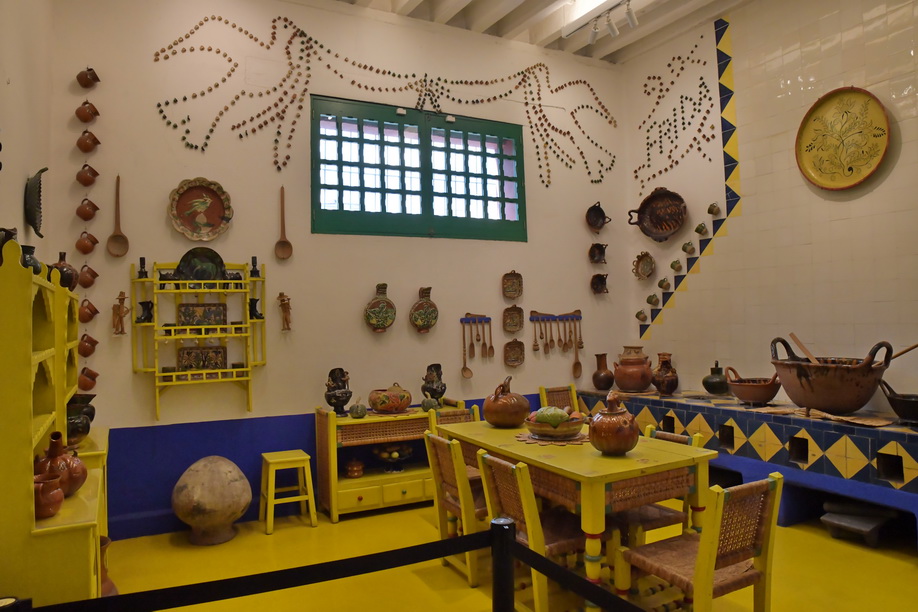
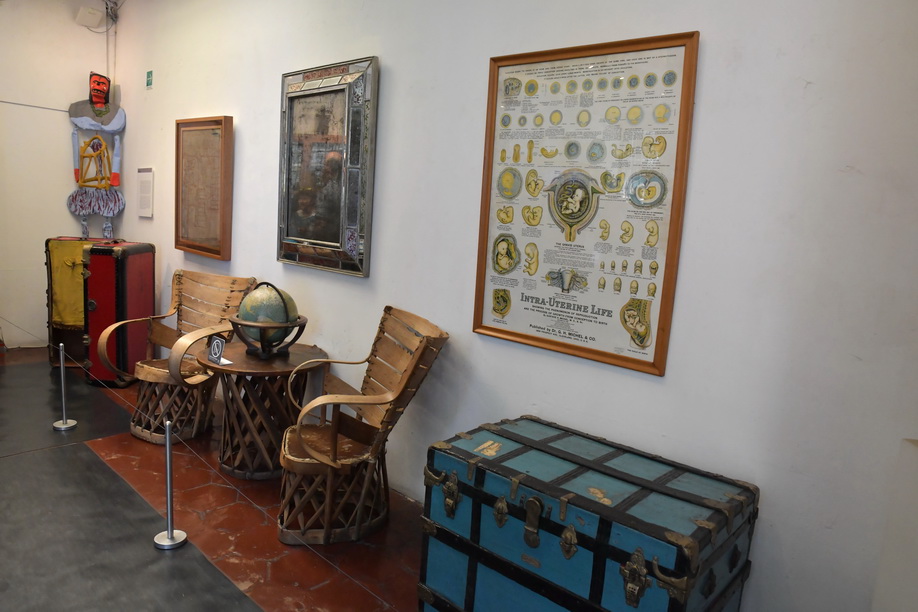
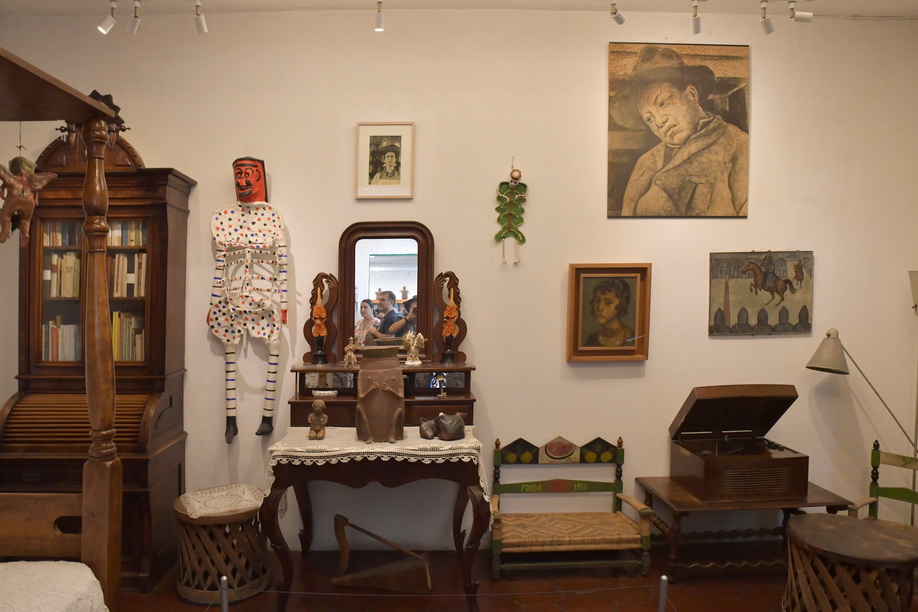
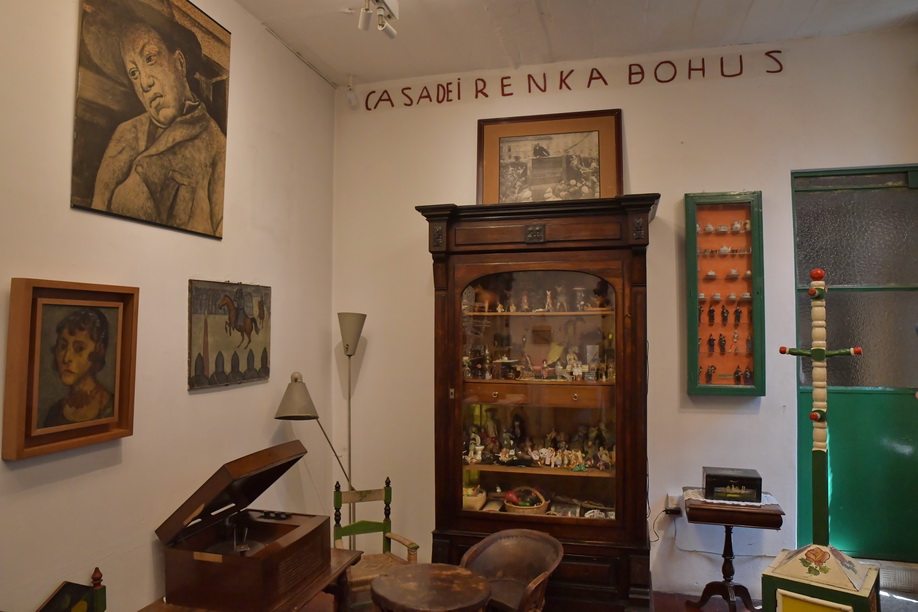
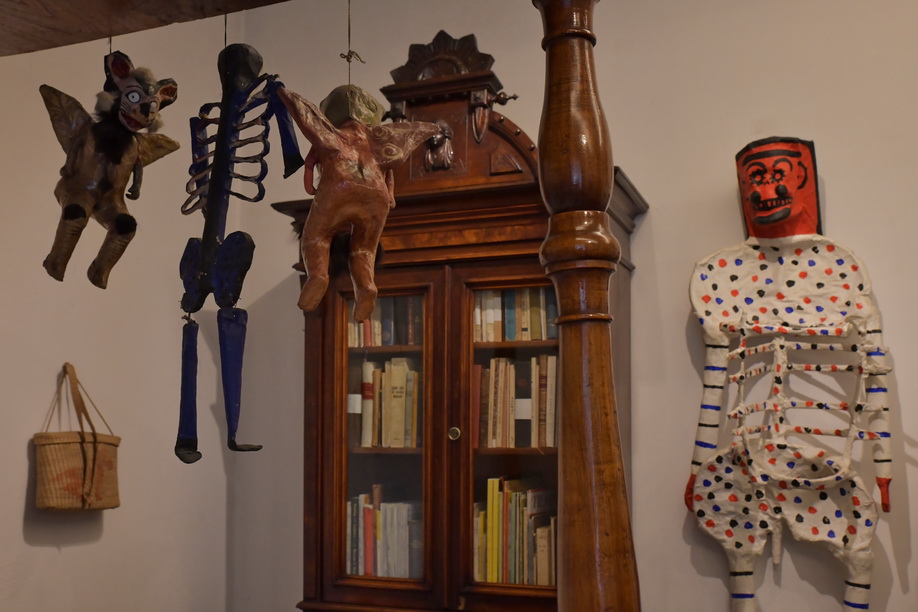
The dining table, brightly painted shelves, green and blue glassware, ceramics, toys, skeletons, Judas figures and small sculptures surround the visitor just as they once surrounded Frida and Diego.
Seen individually, some of these objects might belong in an ethnographic collection. Inside Casa Azul, they tell us something more personal: what an artist chose to look at and what she chose to live among.
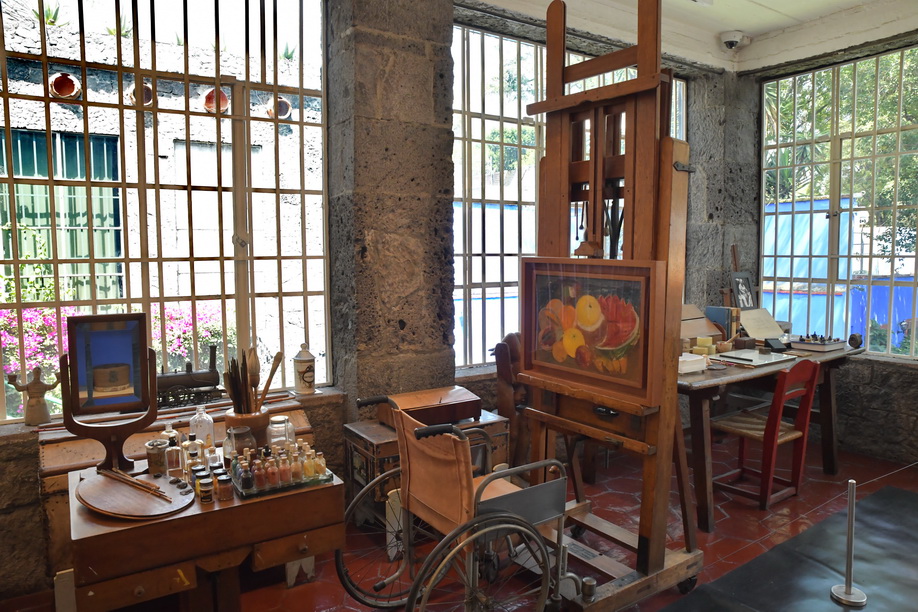
The studio has the same quality. Natural light enters through large windows overlooking the garden, while the desk, chair, shelves and personal objects bring us closer to the person who once worked there.
The house itself changed over time. In 1946, Frida and Diego asked their friend, architect Juan O'Gorman, to enlarge it, adding new rooms and a studio. Yet the garden and the powerful use of colour bind the different parts of the house together.
Beyond the Icon
Today Frida Kahlo's face has become a global icon, reproduced on posters, clothes and countless commercial objects. Casa Azul offers something very different.
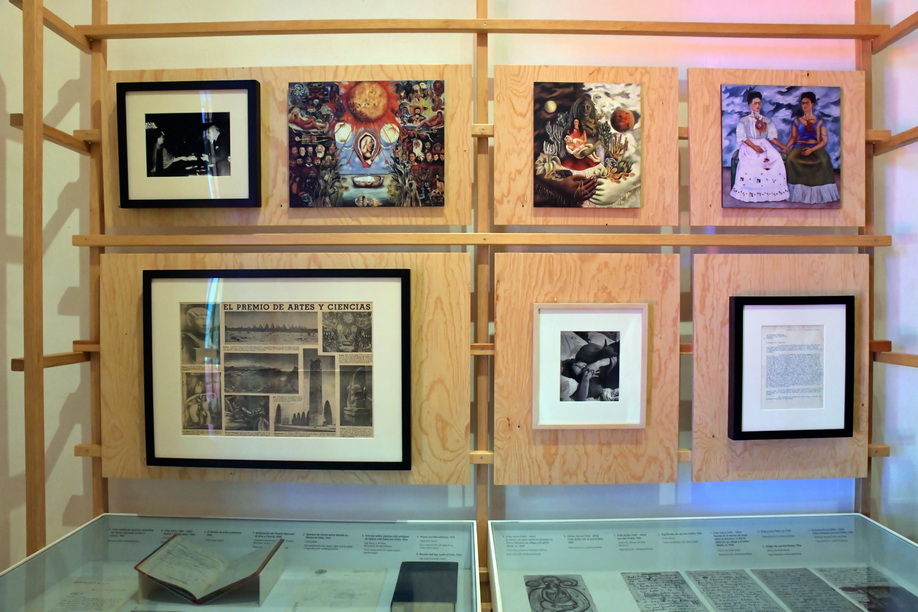
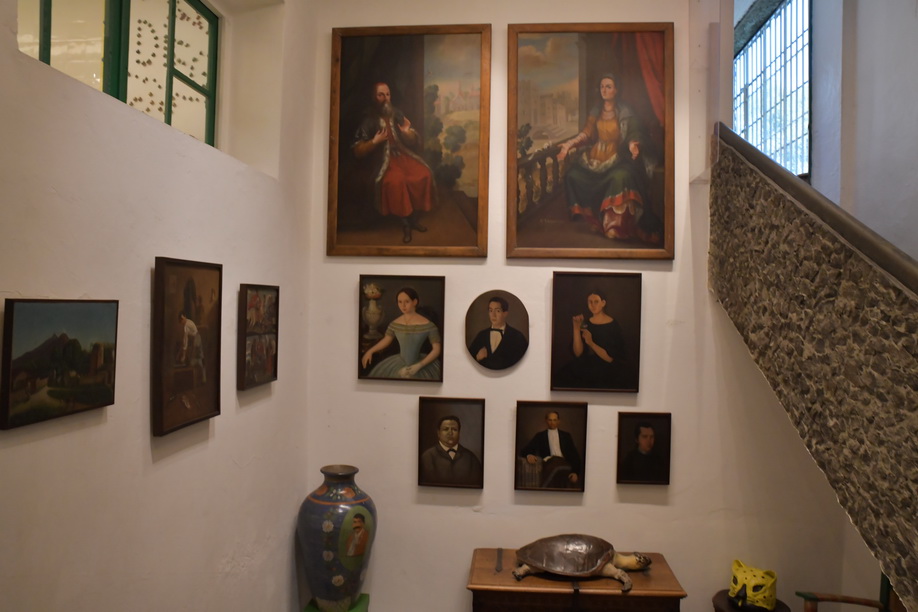
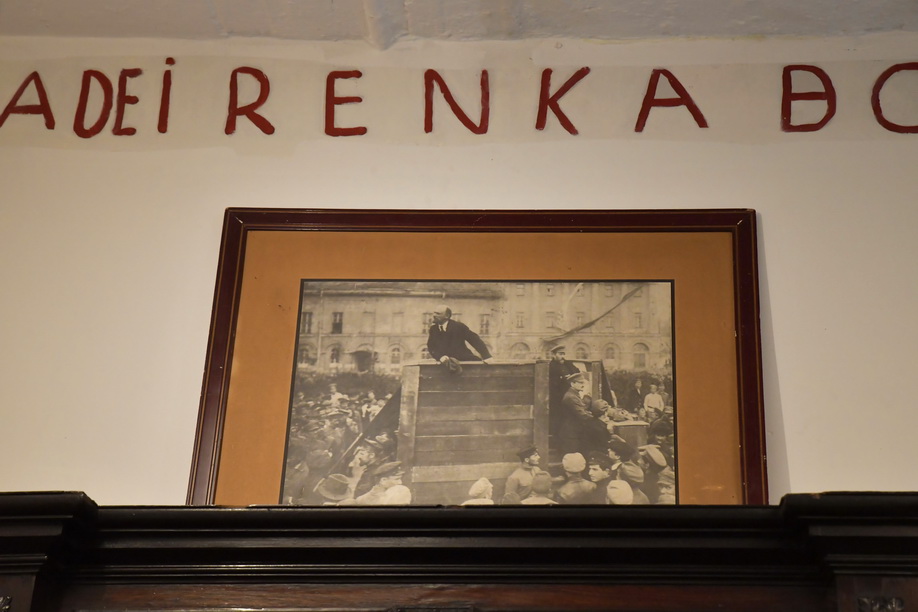
Here we find photographs, family portraits, personal belongings, collections and traces of the artistic and political world she shared with Diego Rivera. They reveal a woman more complex than the familiar image created by popular culture.
That is why I did not want simply to photograph Frida Kahlo's artworks during my visit.
I photographed the house.
Its blue walls, barred windows, her bed and studio, the glassware on yellow shelves, ceramics, folk-art figures, and the shadows of trees moving across the walls.
Because when I left Casa Azul, one thought remained with me:
For some artists, visiting a museum may be enough to understand their work. To understand Frida Kahlo a little more closely, one has to enter the house where she lived..