
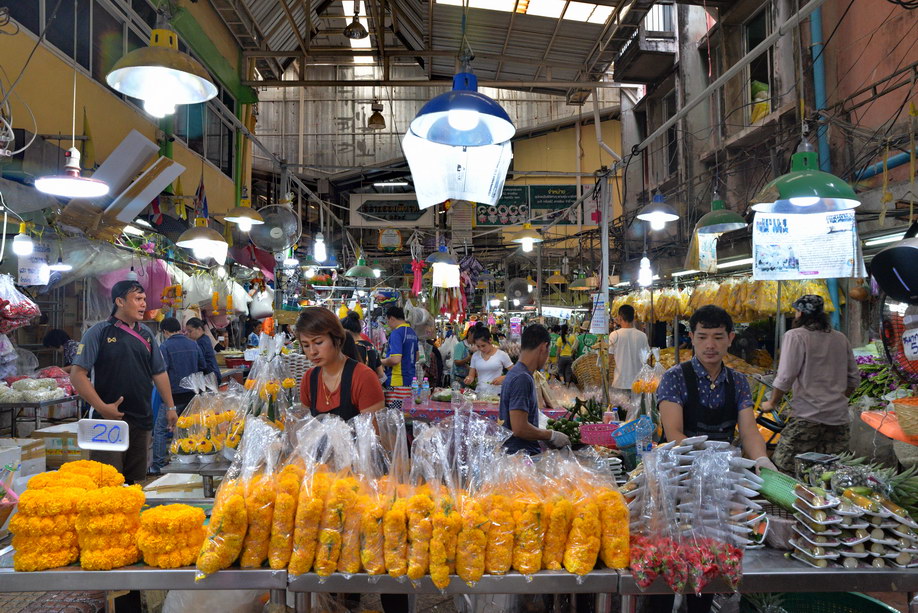
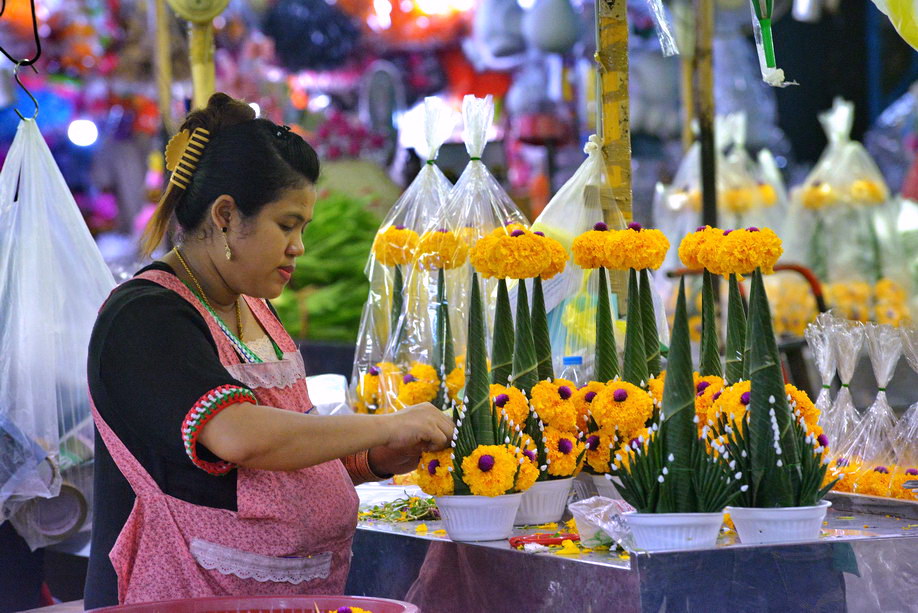
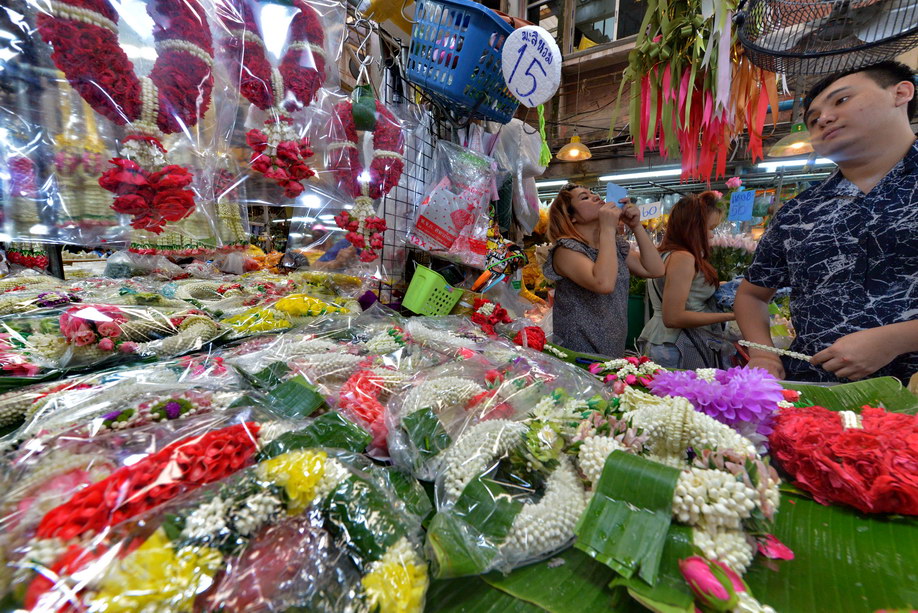

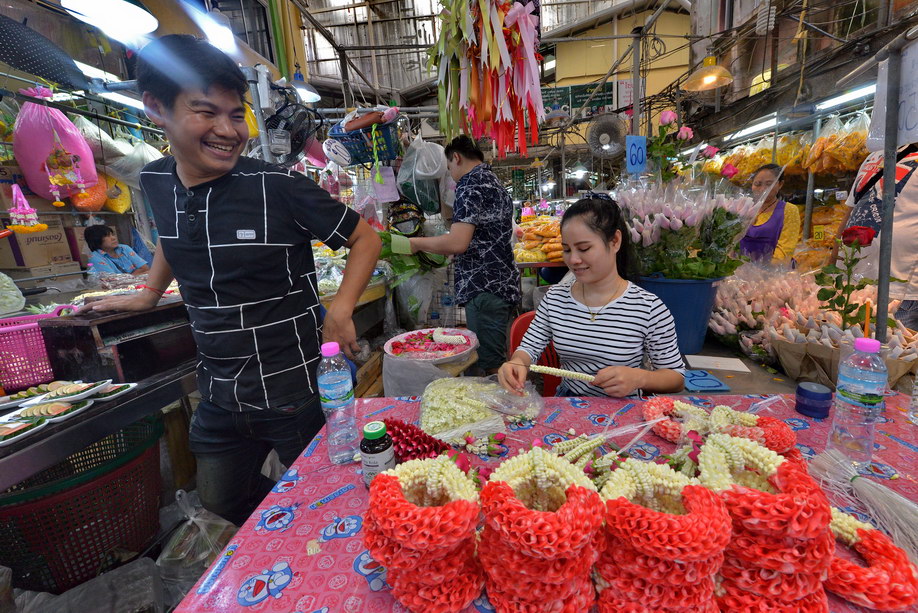
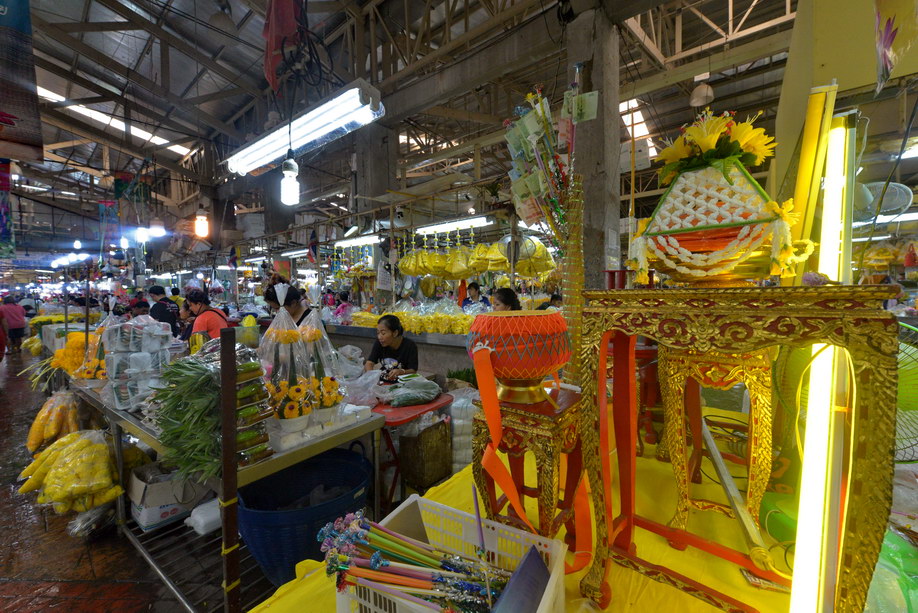
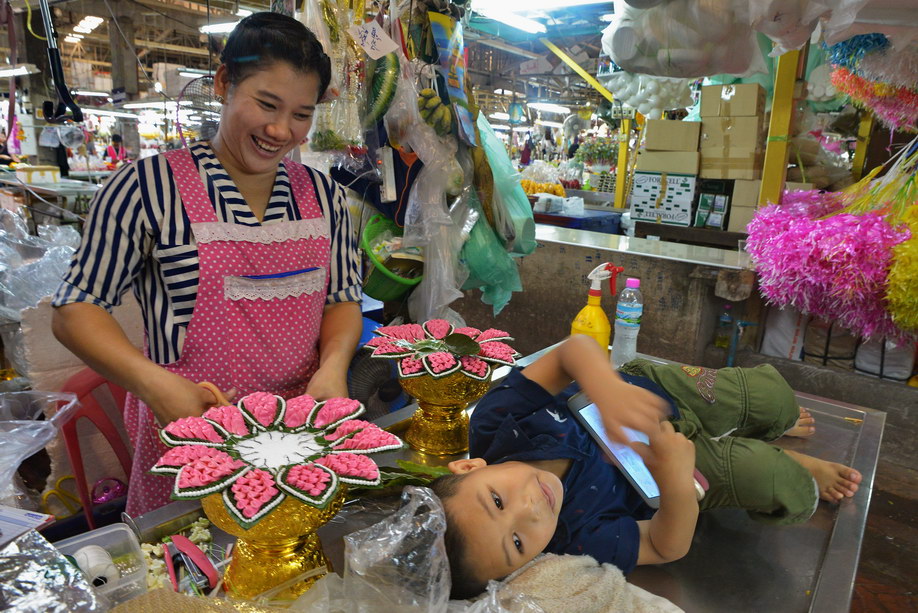
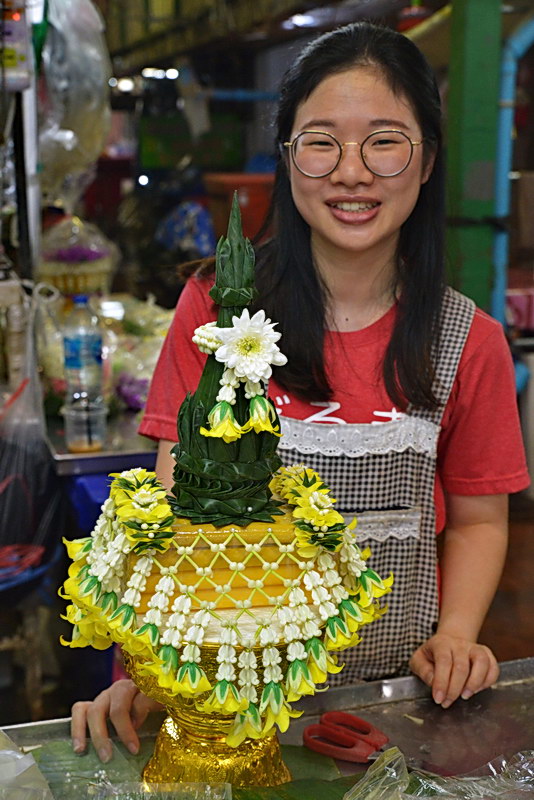
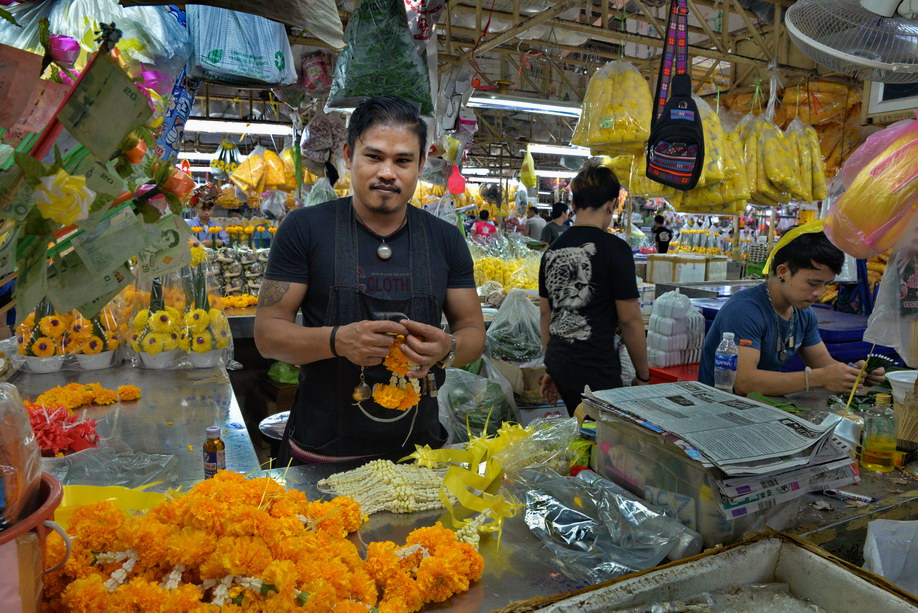
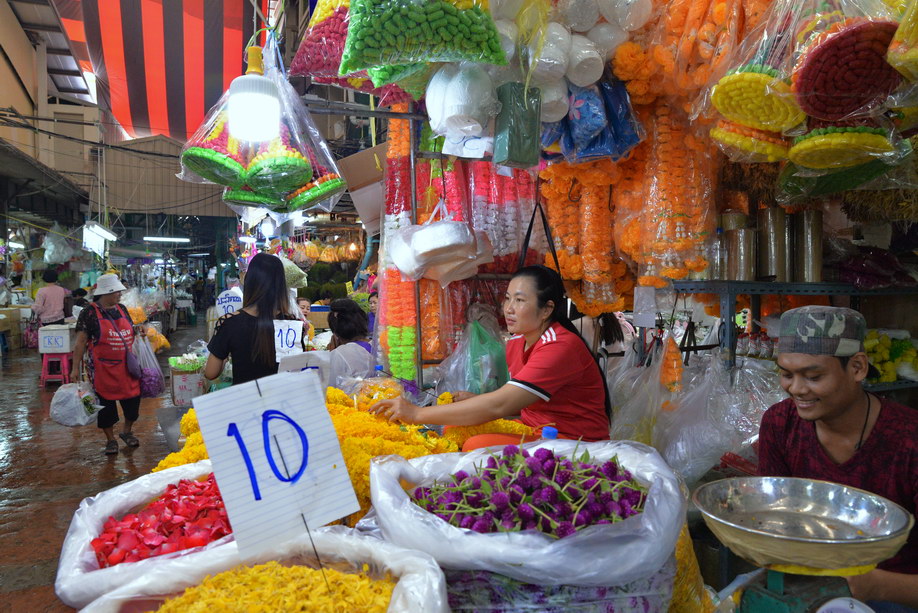
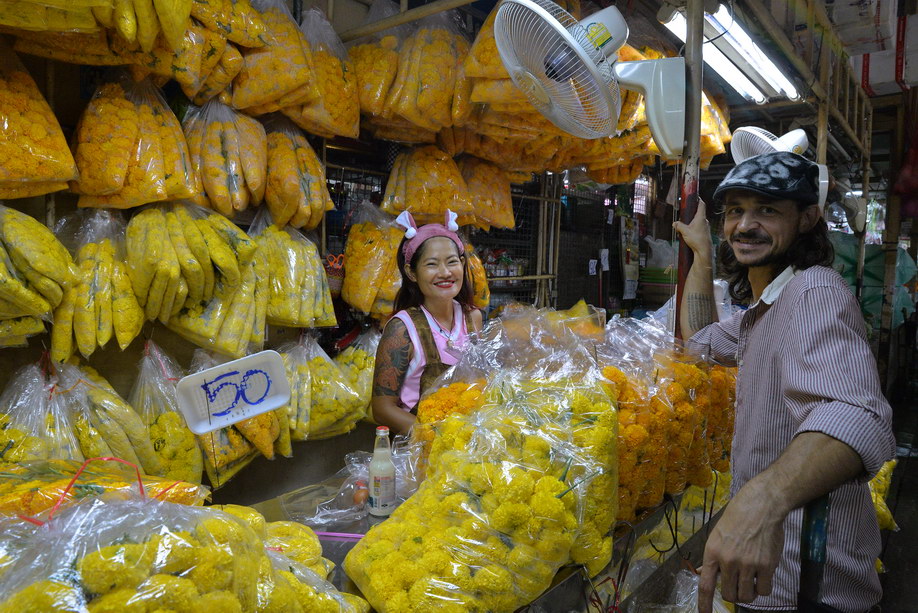
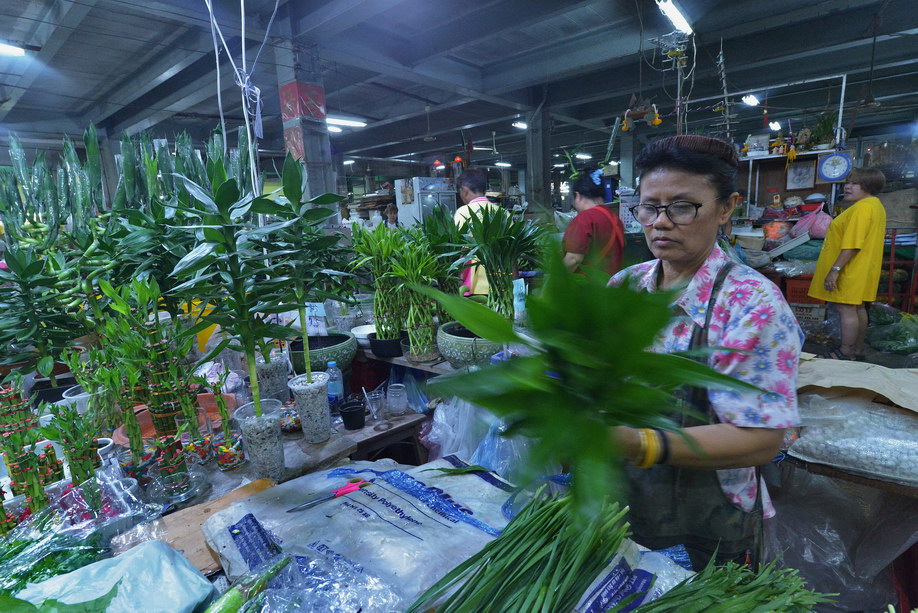
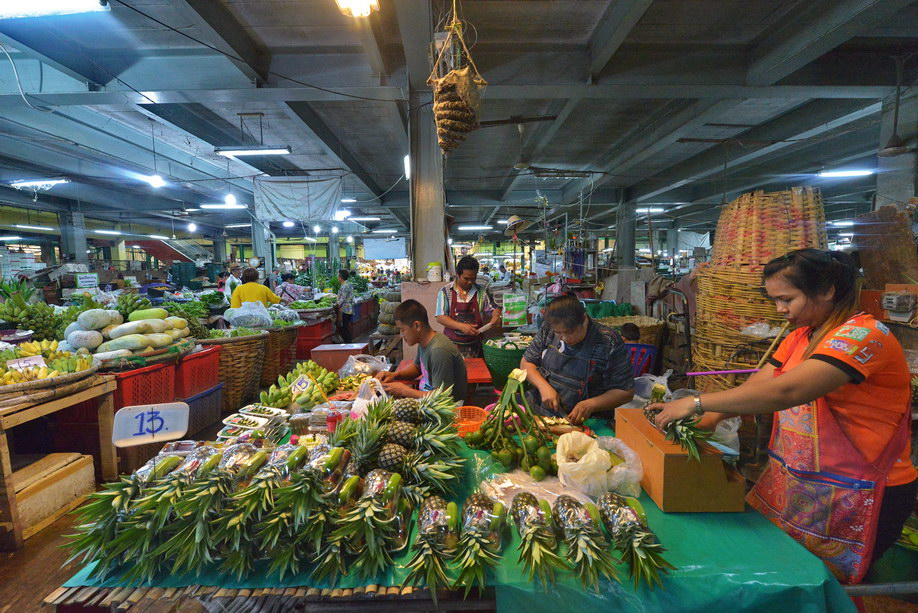
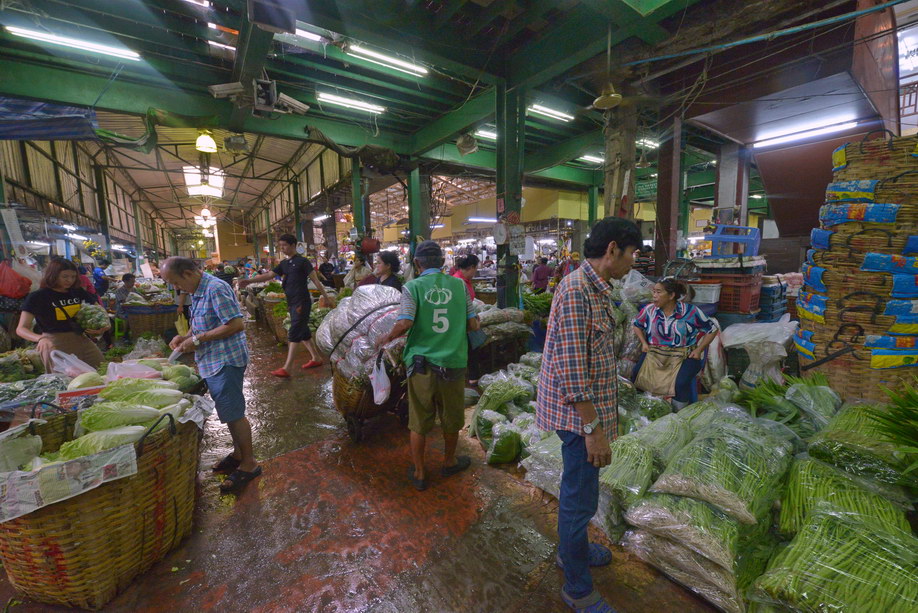
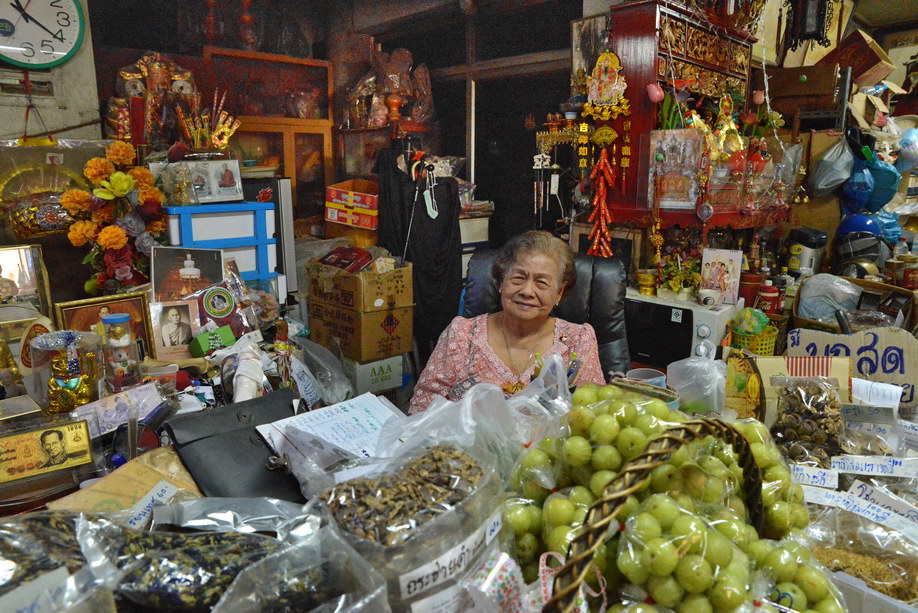
During my stay in Bangkok in October 2018, I returned several times to Pak Khlong Talat, the city’s celebrated flower market. Some places reveal themselves only after a second or third visit. Here, the colors were immediately captivating, but I soon found myself looking beyond the flowers to the people who handled them, sorted them and turned them into arrangements for others.
The name Pak Khlong Talat means “market at the mouth of the canal.” Near the Chao Phraya River and the Memorial Bridge, the market is part of Bangkok’s long relationship with waterways and trade. Passenger boats stop at a nearby pier, making the journey itself part of the experience. The riverside location recalls a time when canals were among the city’s principal routes for moving goods and people.
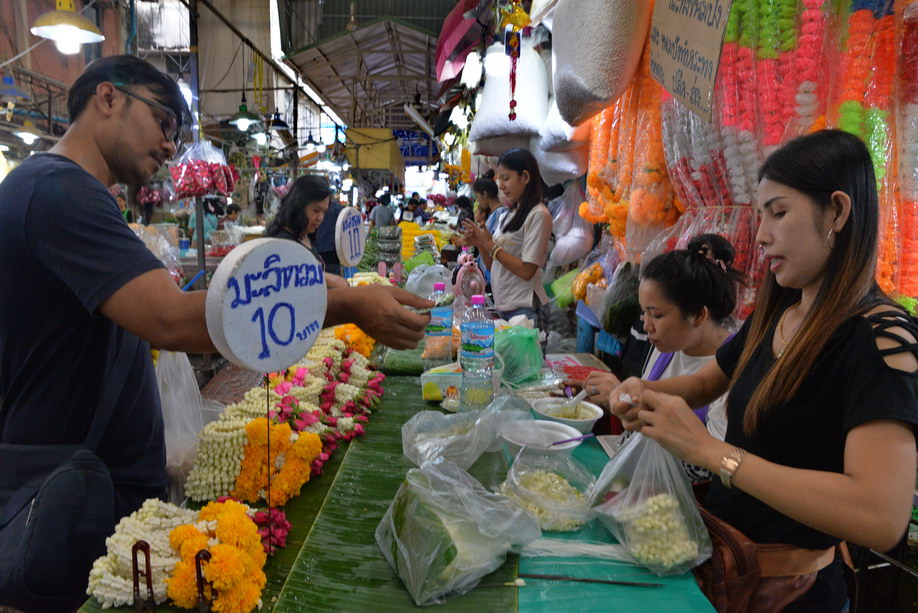
Flowers are not simply decorative objects in Thailand. Jasmine garlands, marigolds and other blossoms are woven into offerings, gifts and ornaments that accompany everyday acts of respect and devotion. The small garlands known as phuang malai are especially familiar: they may be placed at shrines, offered to religious images or given to another person as a gesture of regard. In the market, these traditions take shape through patient manual work.
What first appears to be a dazzling mixture of colors is also an intricate working environment. Bundles of fresh flowers arrive, stems are trimmed, blossoms are sorted and garlands are assembled one flower at a time. Each finished piece represents many small movements of the hands. Photographing the process reminded me that the beauty displayed on a stall depends on the skill and time of people who often remain outside the frame.
Pak Khlong Talat serves both wholesale buyers and individual customers. Florists come to obtain the flowers they will sell elsewhere; other visitors look for offerings or arrangements for a particular occasion. The market has long been associated with activity through the night and especially before dawn, when fresh deliveries and preparations for the day give it a different rhythm. My photographs record the moments I encountered rather than attempting to represent every hour of that cycle.
For a photographer, the market offers much more than bright colors. There are contrasts between delicate petals and rough work surfaces, between carefully ordered bundles and the rapid movements of people trying to complete their tasks. I was interested in these relationships: the gestures of the workers, the density of the stalls and the temporary compositions that appeared and disappeared as the day continued.
I also appreciated the openness of the people I met. In my experience, the workers were generally tolerant of my camera, allowing me to observe the market without turning it into a staged spectacle. I returned because each visit offered a new arrangement of familiar elements. Looking back at these photographs, I remember not only a remarkable abundance of flowers, but also the human labor and everyday generosity that gave the place its character.