
Ceremonies
Ethiopian Orthodox Wedding Ceremony – Istanbul (2024)
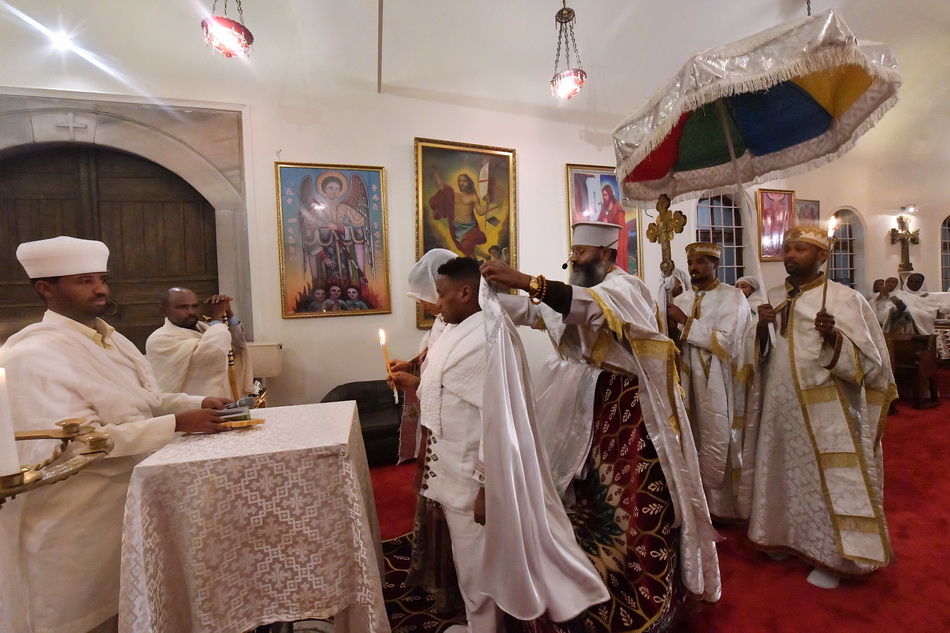
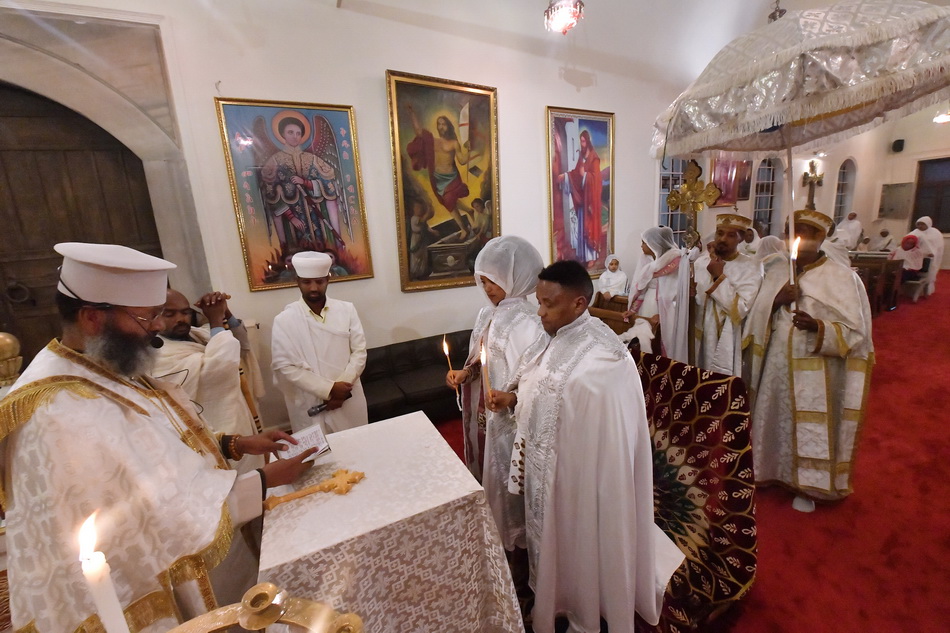
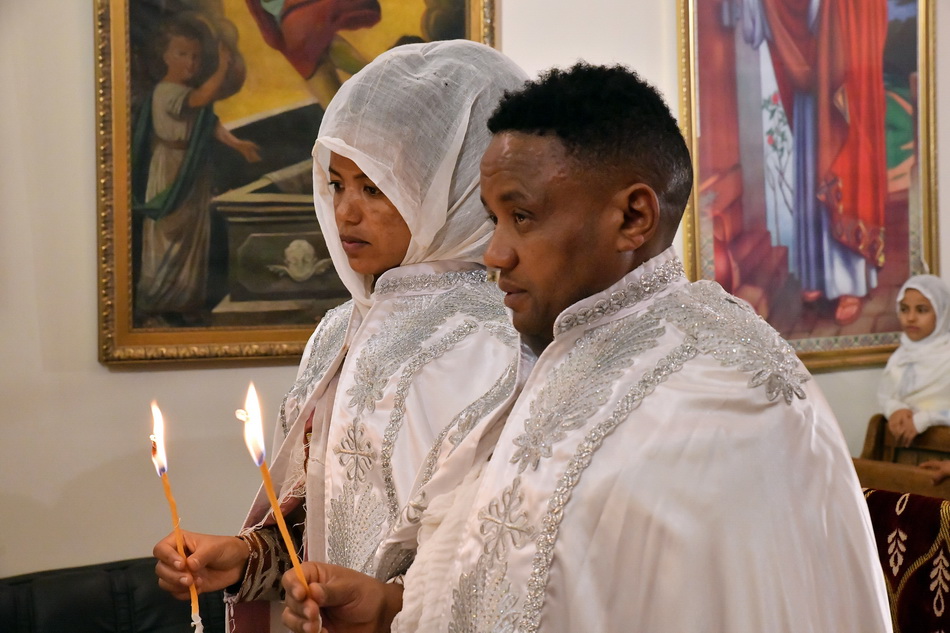
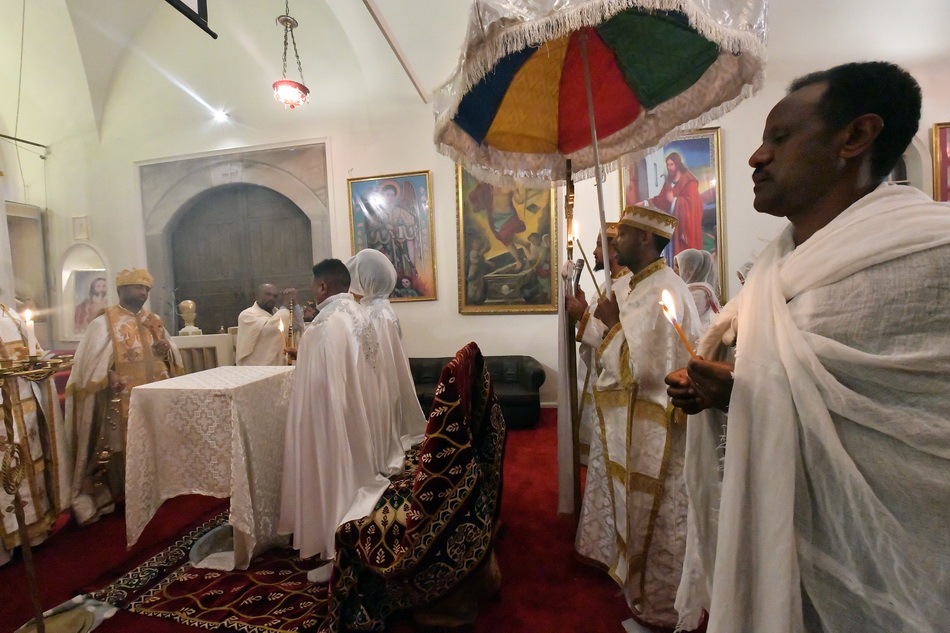
Ethiopia is a country with a Christian history dating back to the fourth century. Over the centuries, the Ethiopian Orthodox Tewahedo Church has preserved its distinctive forms of worship, religious calendar and ceremonies. Marriage is understood not simply as the union of two people, but as a sacred commitment blessed by the Church and witnessed by families and the community.
The Ethiopian Orthodox Church belongs to the Oriental Orthodox Christian tradition, together with the Armenian Apostolic, Coptic and Syriac Orthodox Churches. While these churches share important elements of faith and worship, their ceremonies also reflect distinctive cultural traditions. Prayers, readings from scripture, blessings by the clergy and symbolic acts all have a place in Ethiopian Orthodox marriage rites.
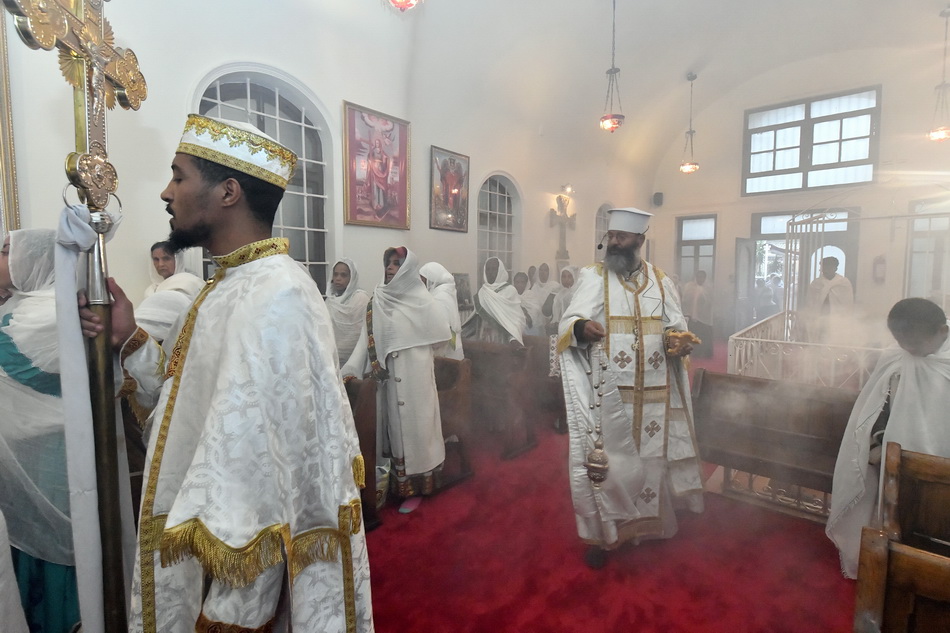
In Istanbul, Ethiopian Orthodox Christians hold their religious ceremonies in an Armenian Apostolic church that welcomes their community. This solidarity allows Ethiopians living far from their homeland to continue their religious and cultural traditions. I had previously photographed their Christmas and Ark of the Covenant celebrations here. On 11 February 2024, I returned to document a wedding ceremony.
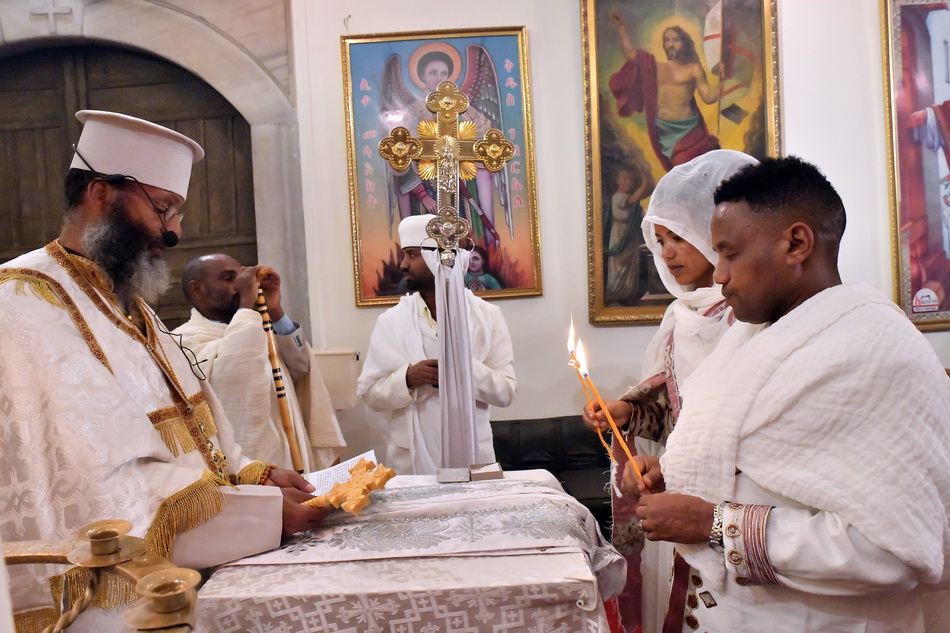
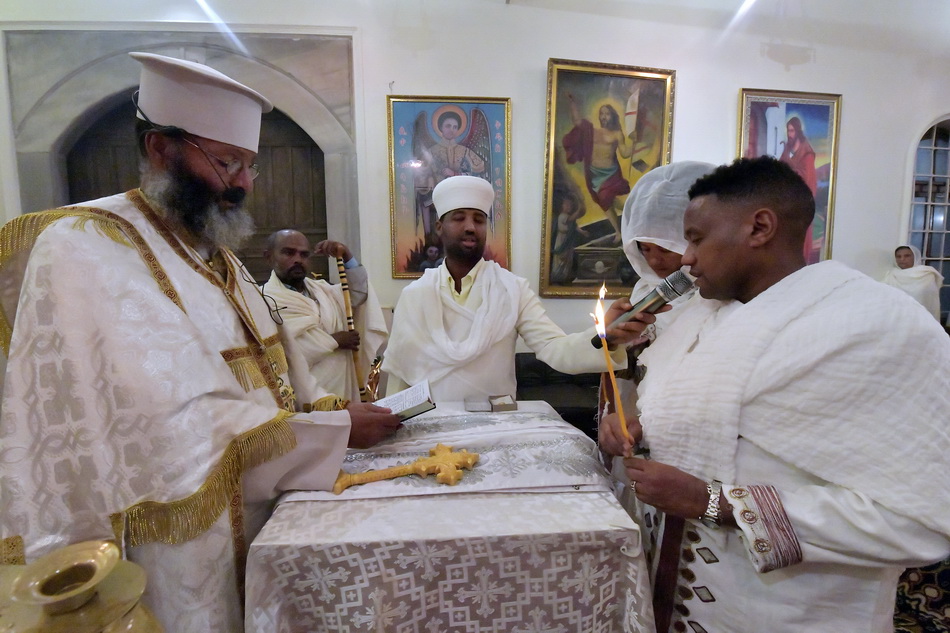
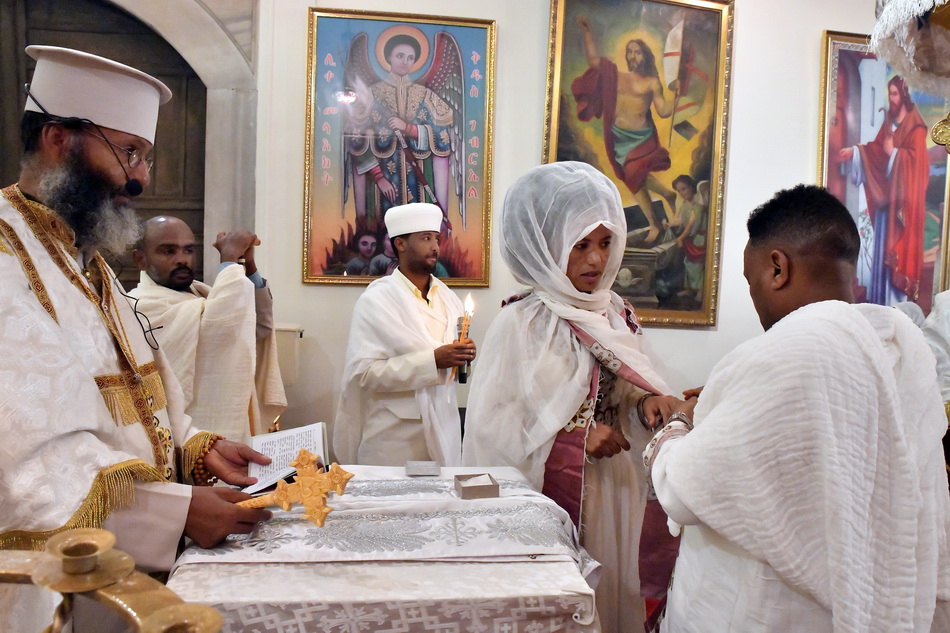
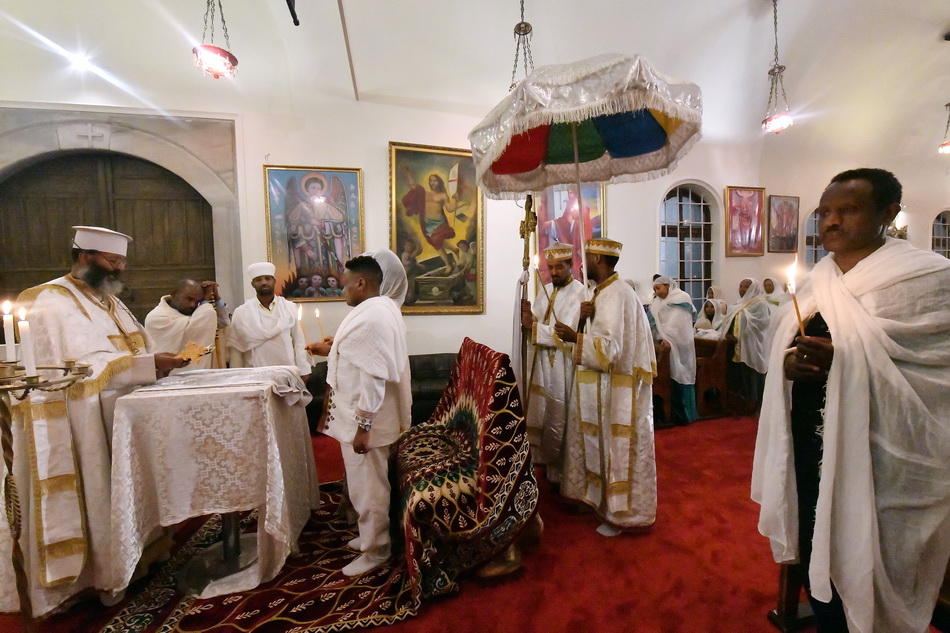
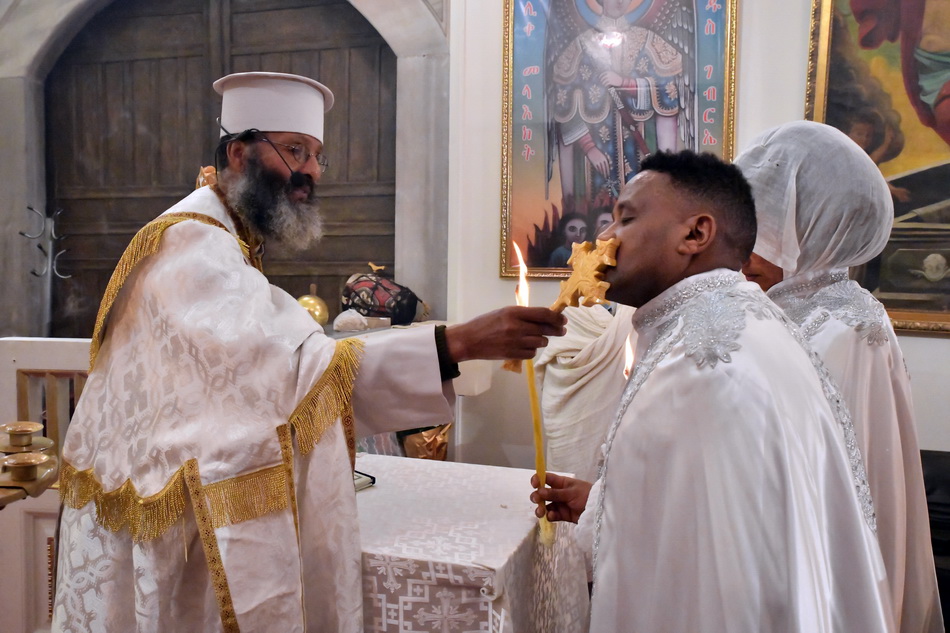
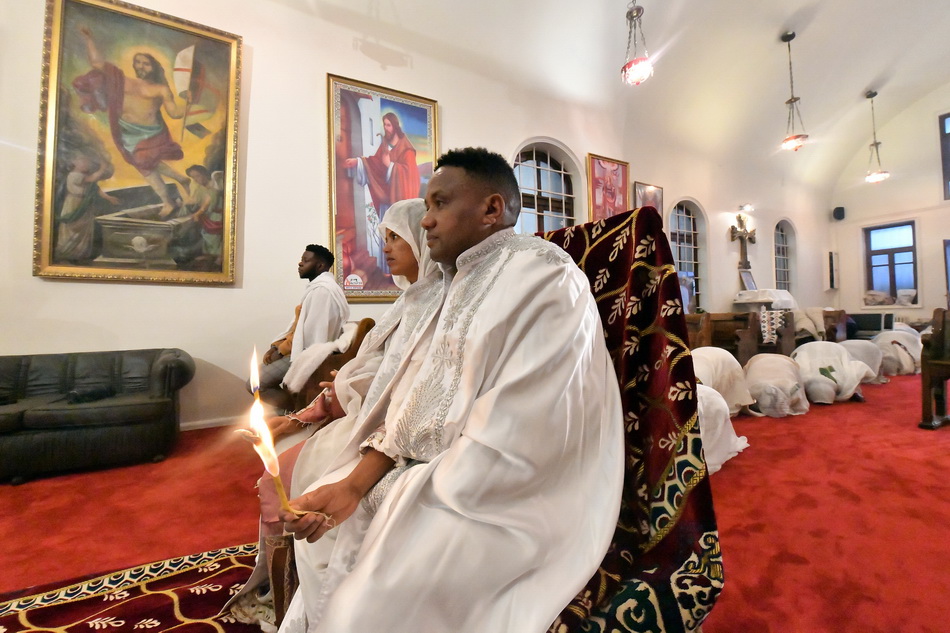
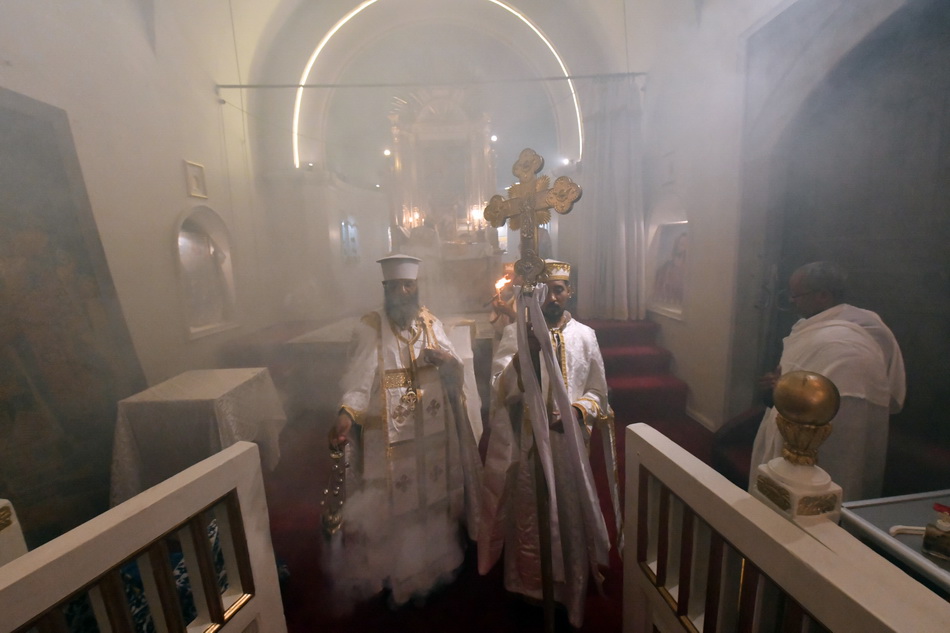
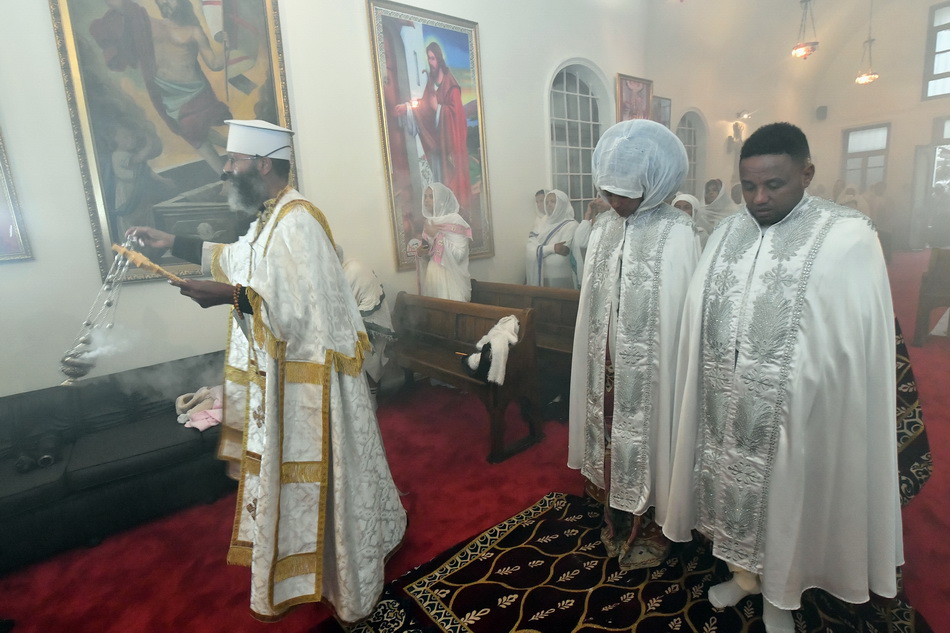
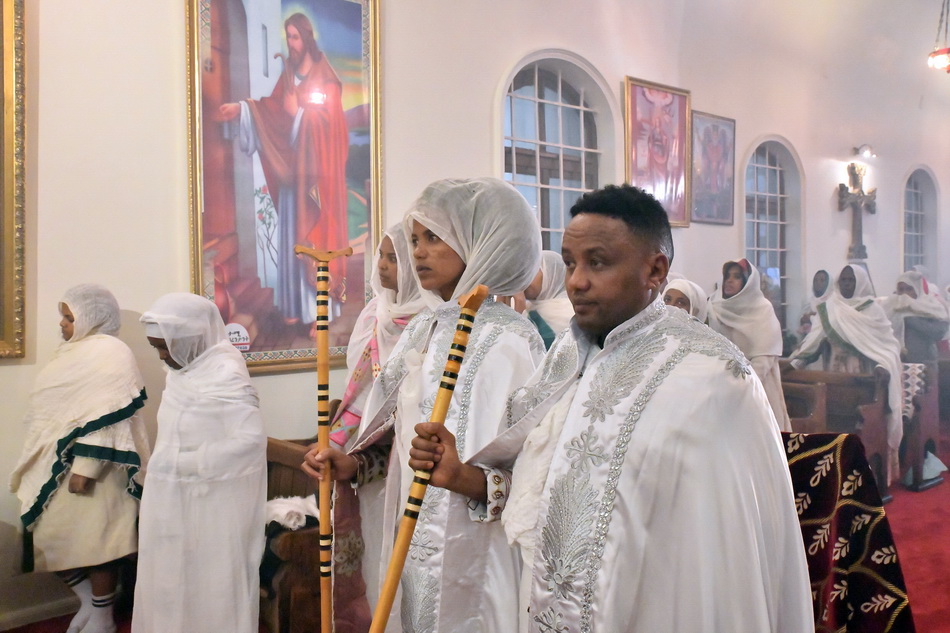
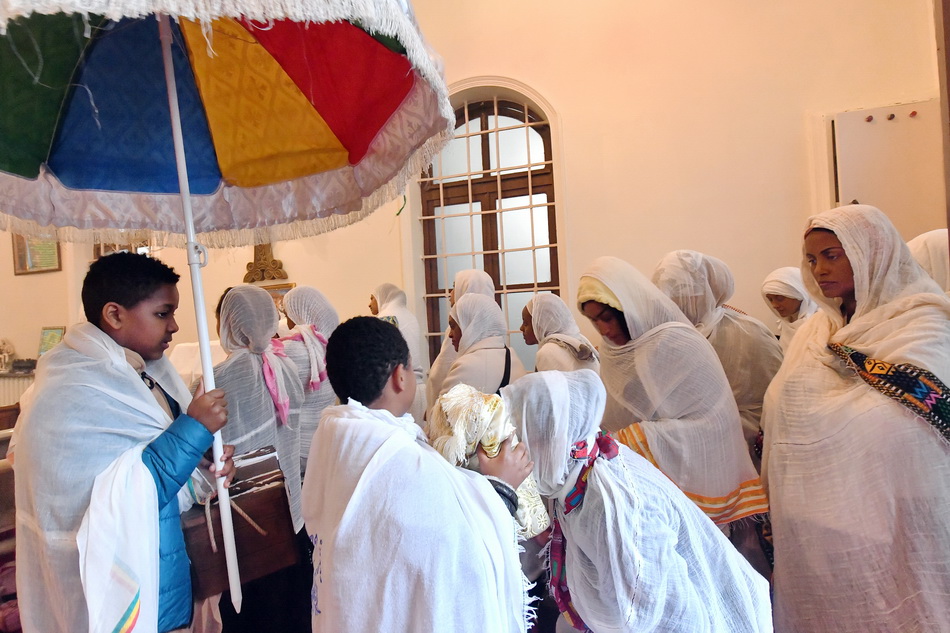
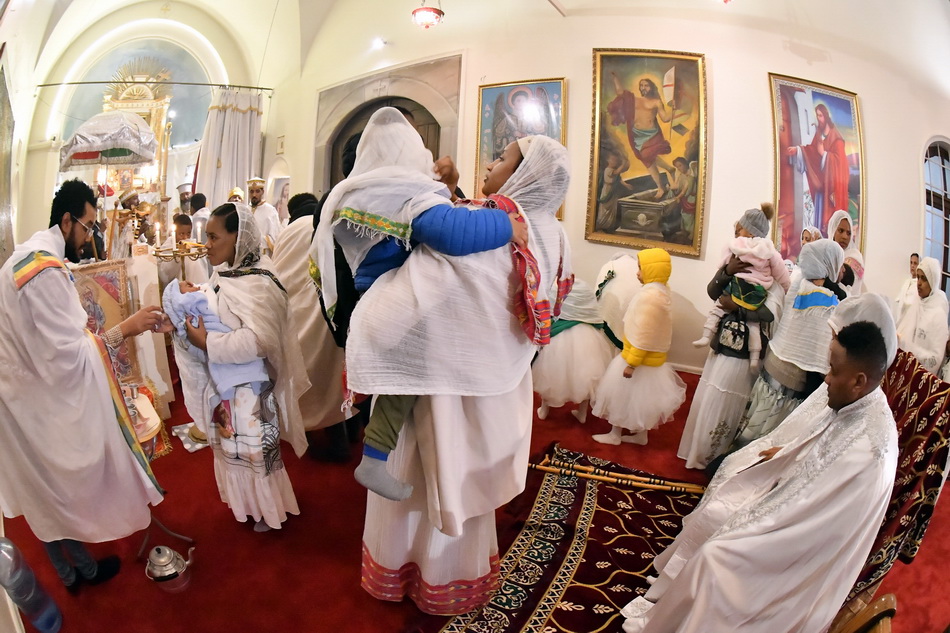
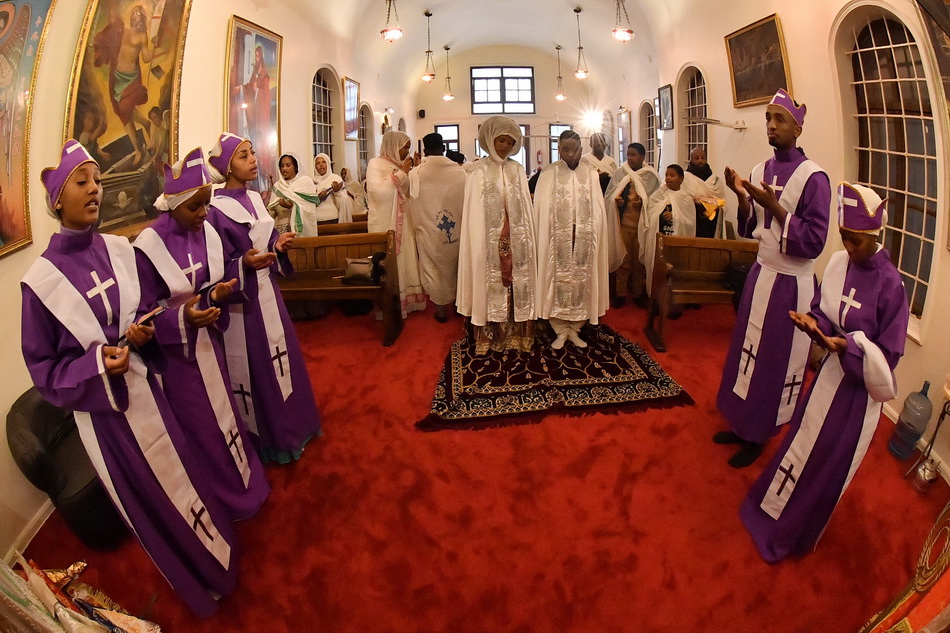
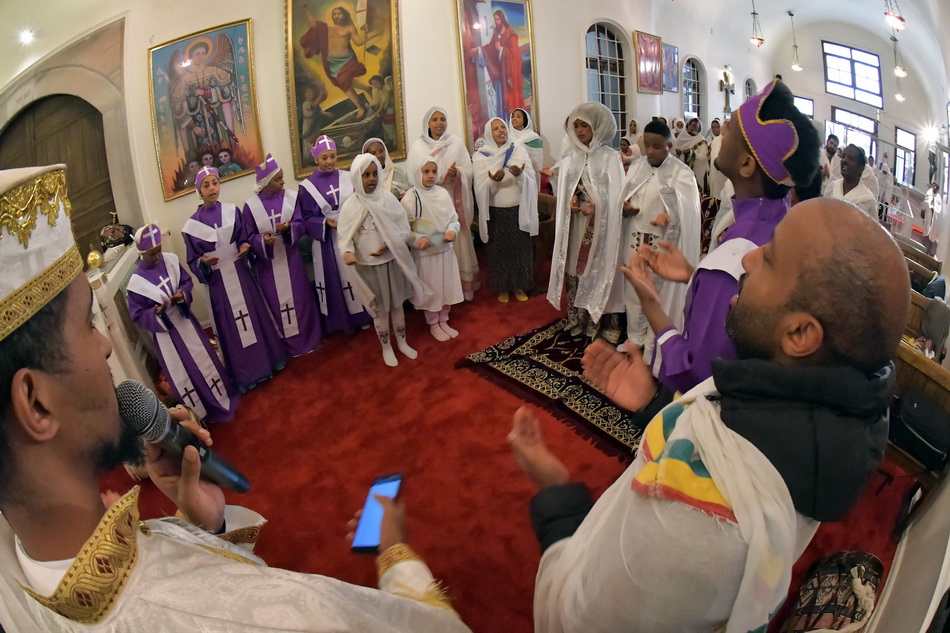
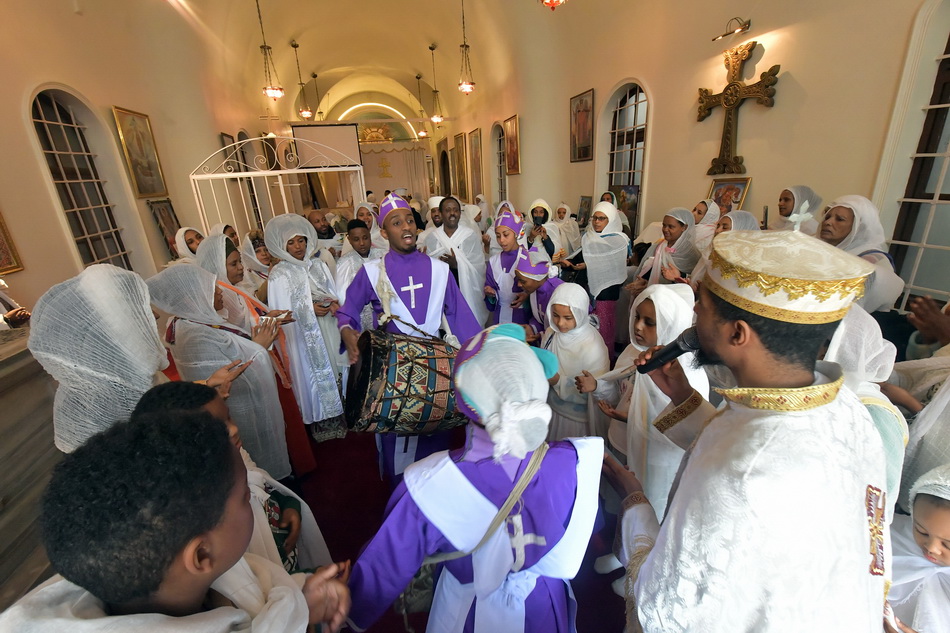
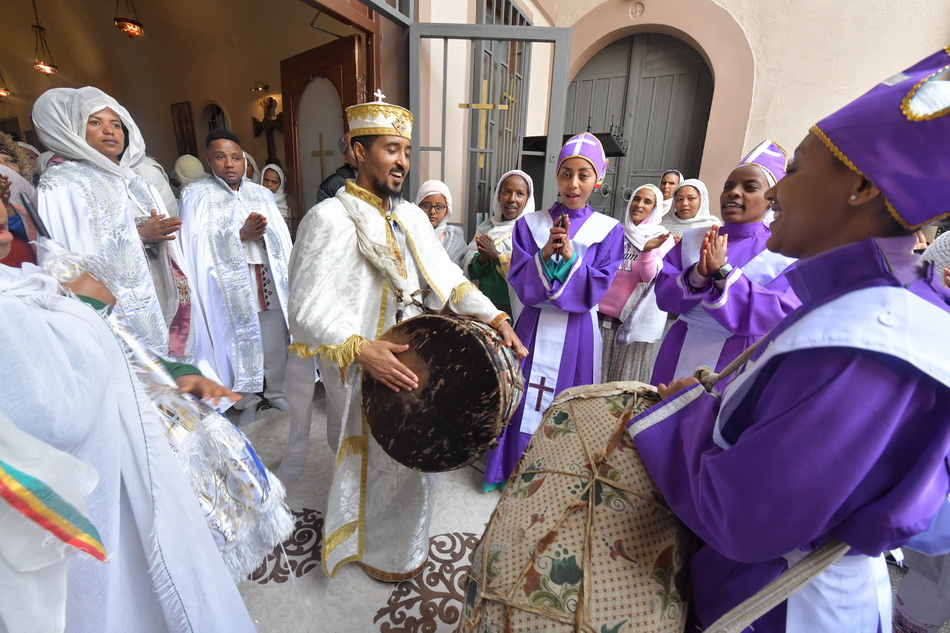
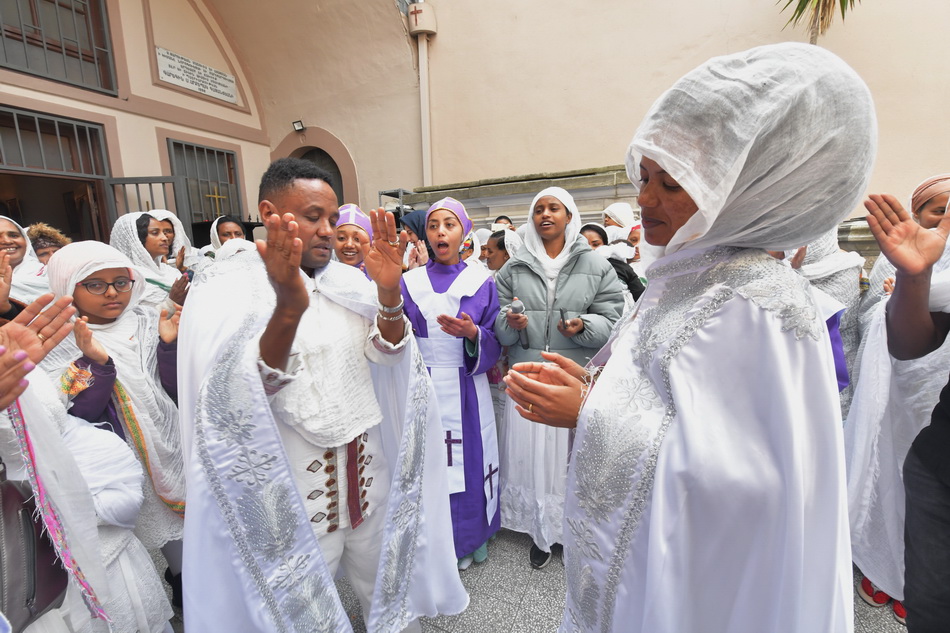
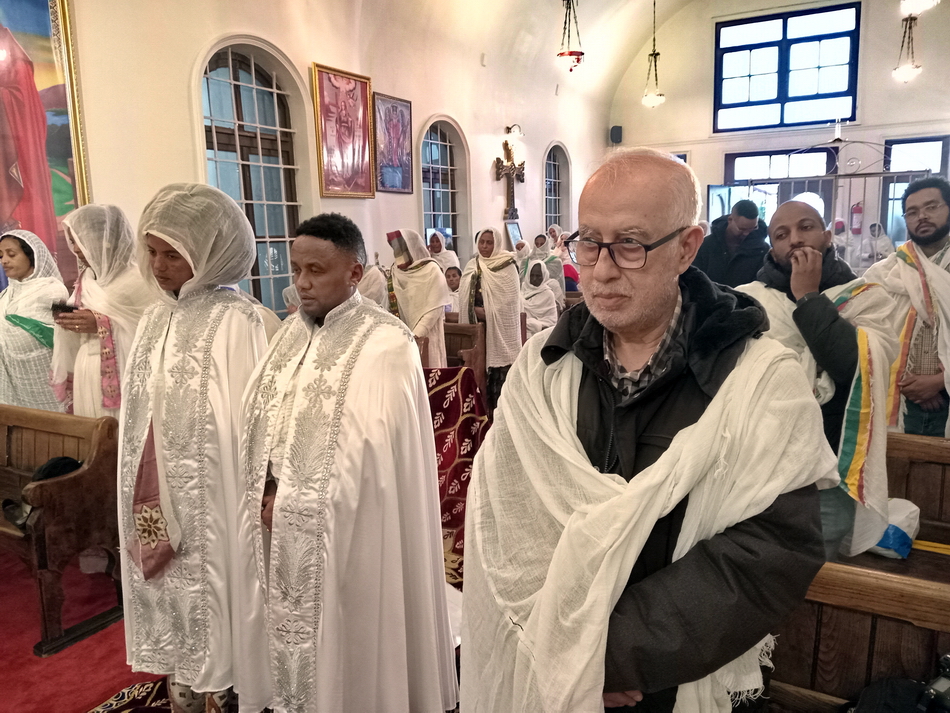
The church was filled with worshippers wearing the traditional white shawls familiar to me from other Ethiopian Orthodox services. Clergy in ceremonial vestments gathered near the altar. The icons, embroidered textiles and colourful ceremonial umbrella helped shape the visual atmosphere of the occasion.
Throughout the ceremony, the couple stood before the clergy as prayers and blessings accompanied their marriage. One moment that particularly drew my attention was the placing of ceremonial coverings over their shoulders. Unlike the crowning I had seen at some other Christian weddings, this ceremony included a different symbolic gesture. The embroidered fabrics and coverings were among its most distinctive visual details.
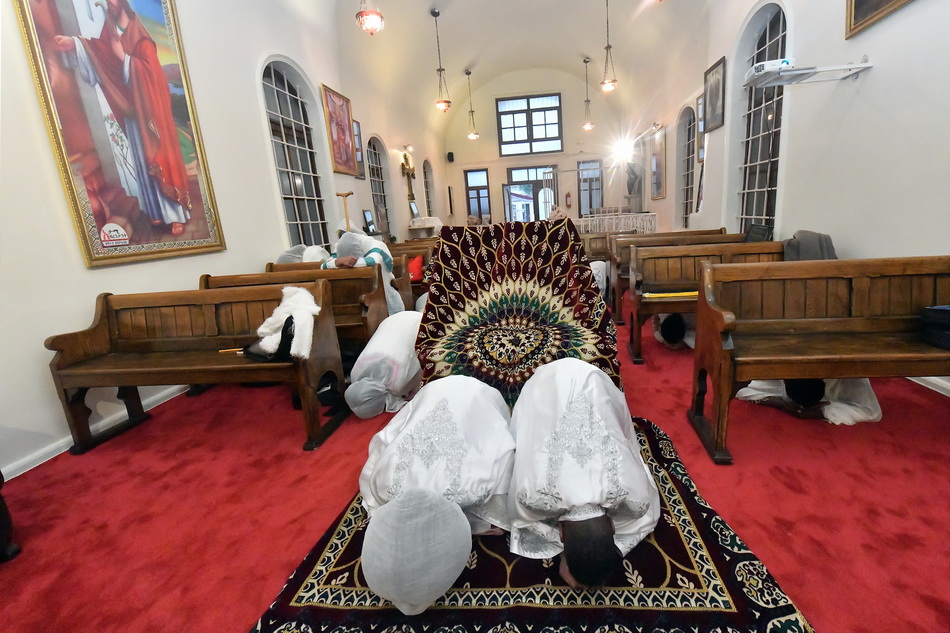
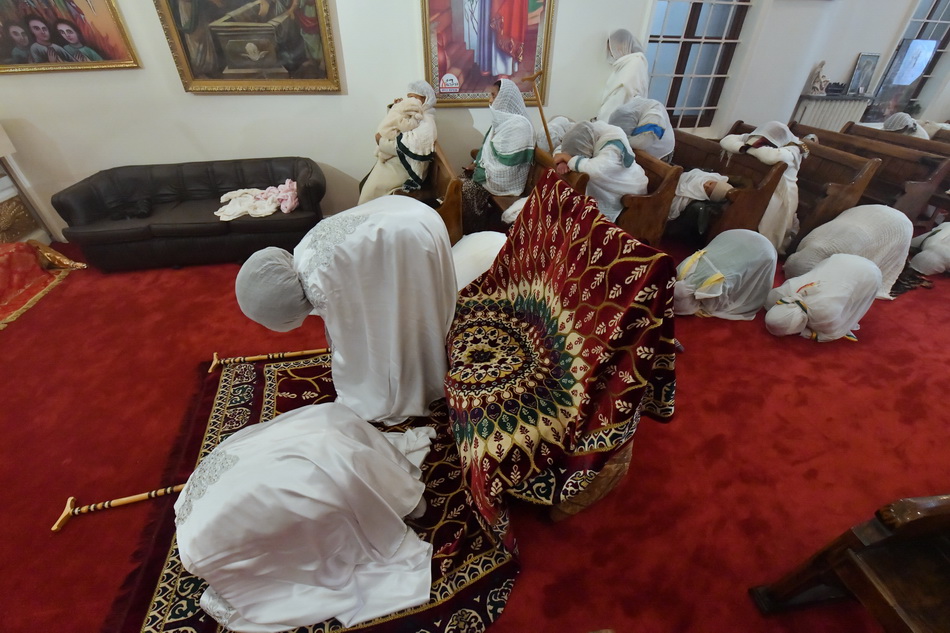
As in the other Ethiopian Orthodox ceremonies I had photographed, worshippers also prostrated themselves in prayer during the wedding service. Seeing people bow fully to the ground reminded me that prayer in this tradition is expressed not only through words but also through physical gestures. Prostration was one of the recurring elements I observed across the community’s religious ceremonies.
The wedding was not simply an event involving the couple and the clergy. Members of the congregation participated through their prayers and presence. For Ethiopians living in Istanbul, such occasions are also gatherings that strengthen community bonds. The church becomes a place where shared memory, faith and solidarity are kept alive.
In my documentary photography, I try to understand not only the formal structure of a religious ceremony but also the relationships among those taking part. Here, the movements of the clergy, the position of the couple, the ceremonial coverings, the acts of prostration and the participation of the congregation were central to what I wanted to record.
I photographed many stages of the wedding on 11 February 2024. The 24 images selected for this portfolio bring together the moments I found most meaningful. I appear in the final photograph, a personal memento of the welcome I received and of the opportunity to witness the religious life of this community.
This wedding was an opportunity not only to encounter a different religious tradition but also to observe how people preserve their cultural identity far from their homeland. I hope these photographs will remain a small but lasting record of the Ethiopian Orthodox community and of Istanbul’s multicultural life.