
Templo Mayor (Mexico),  Mexico  15.Oct.2025

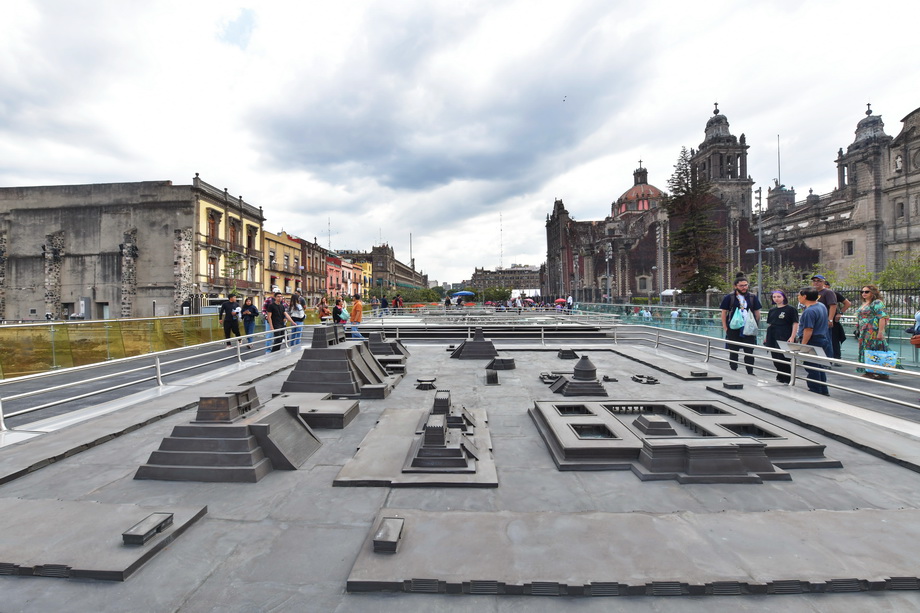
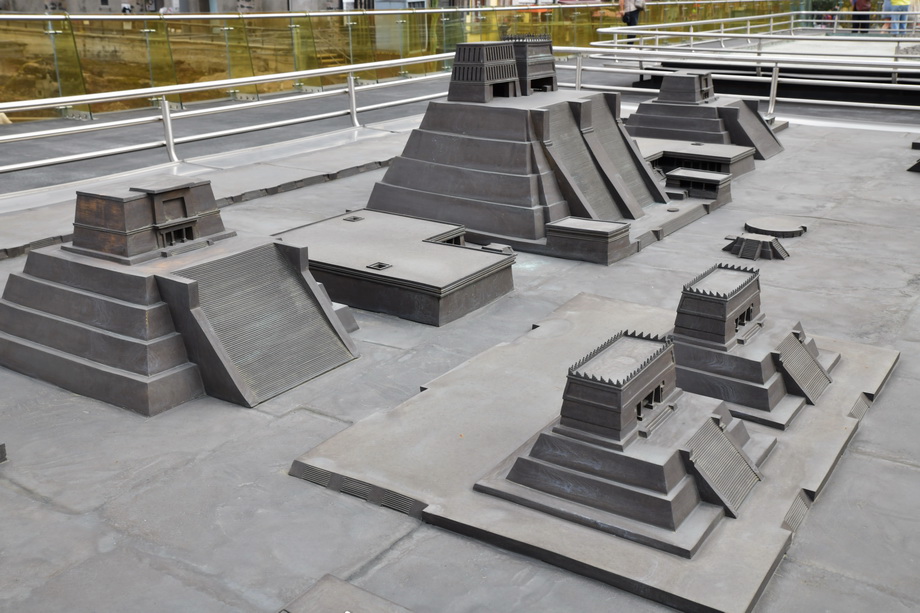
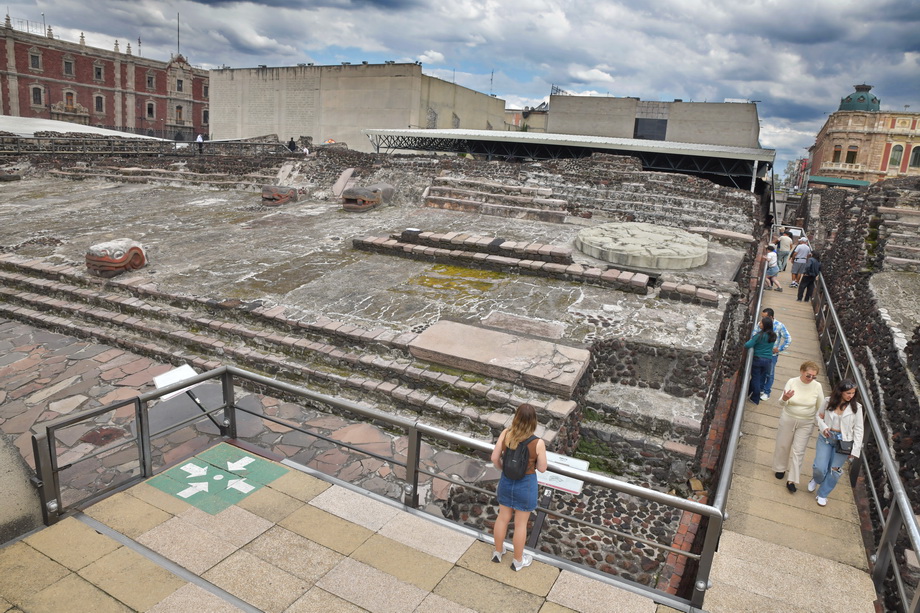
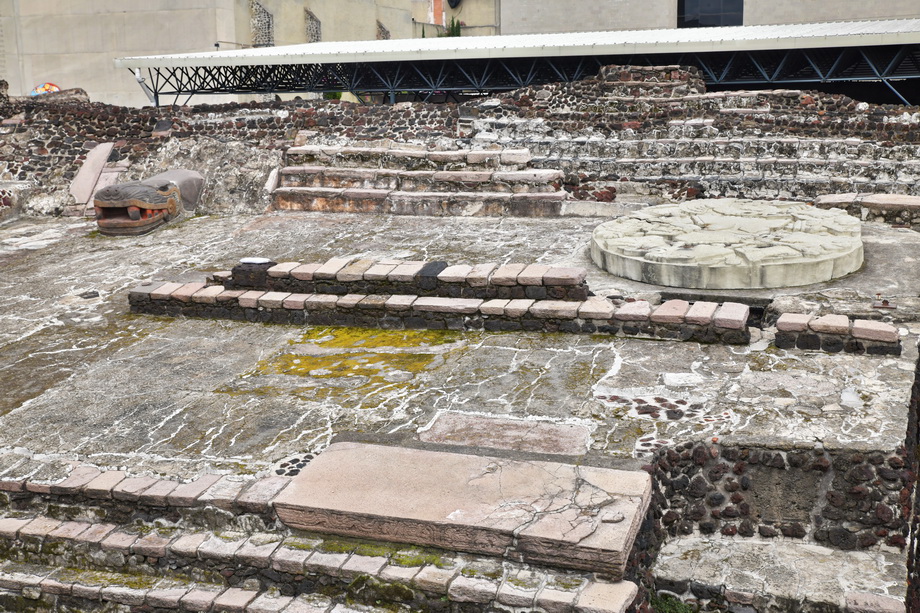
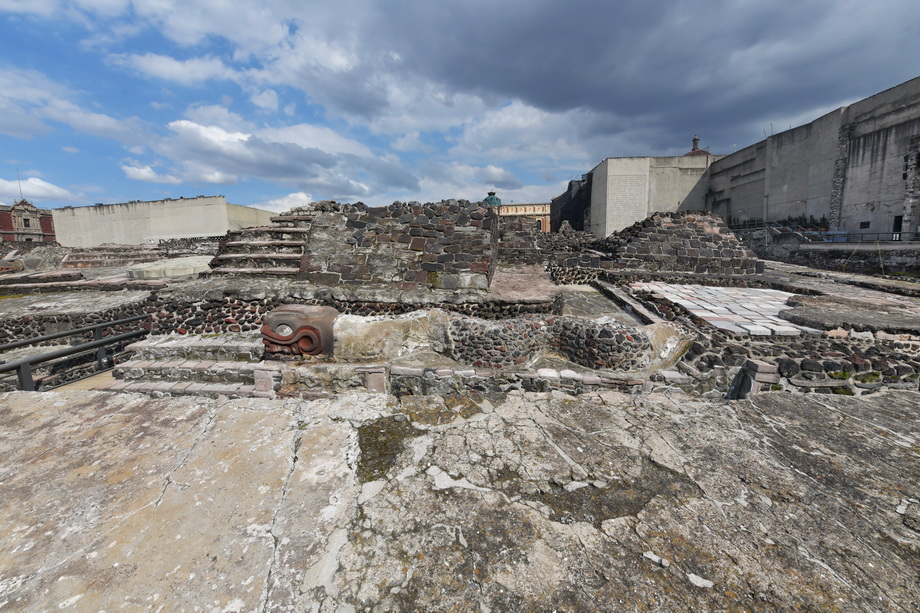
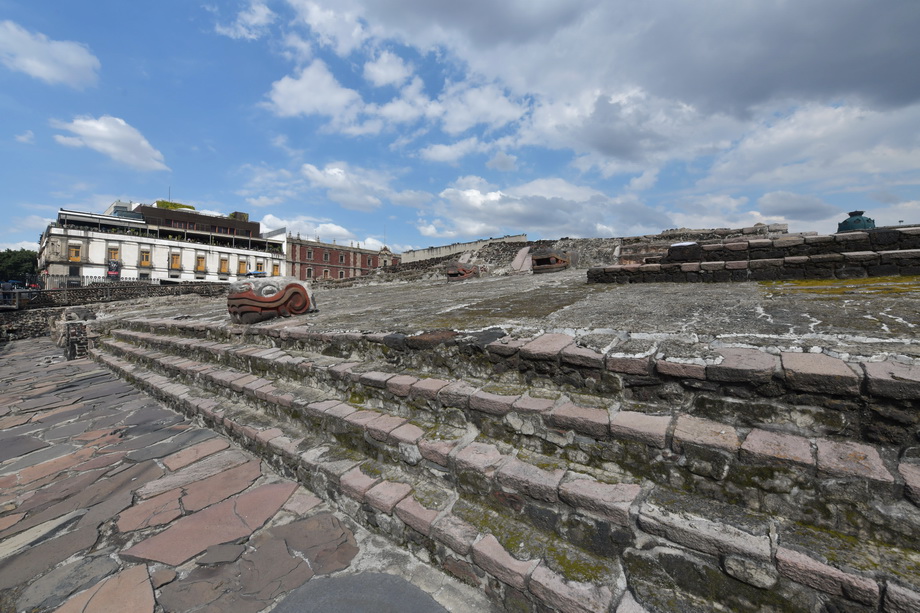
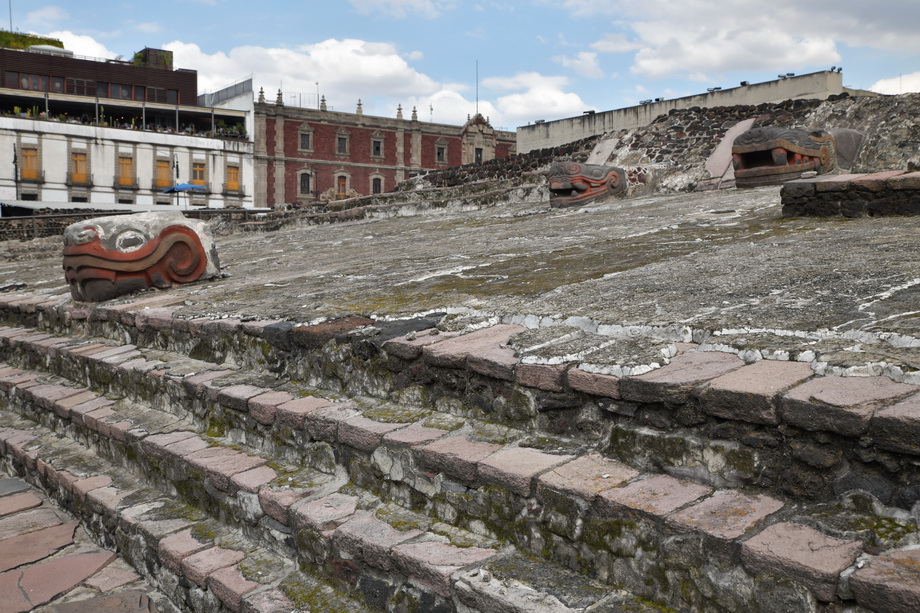
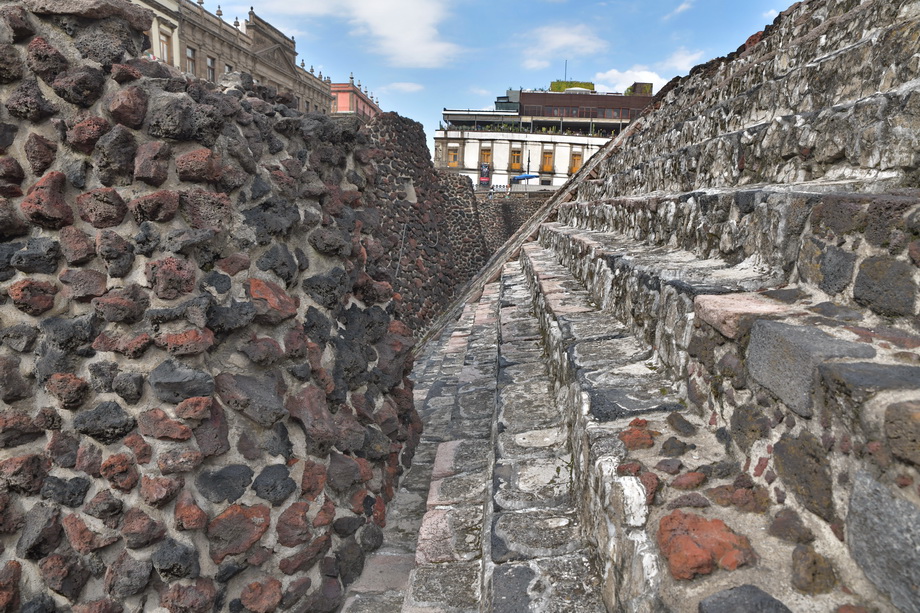
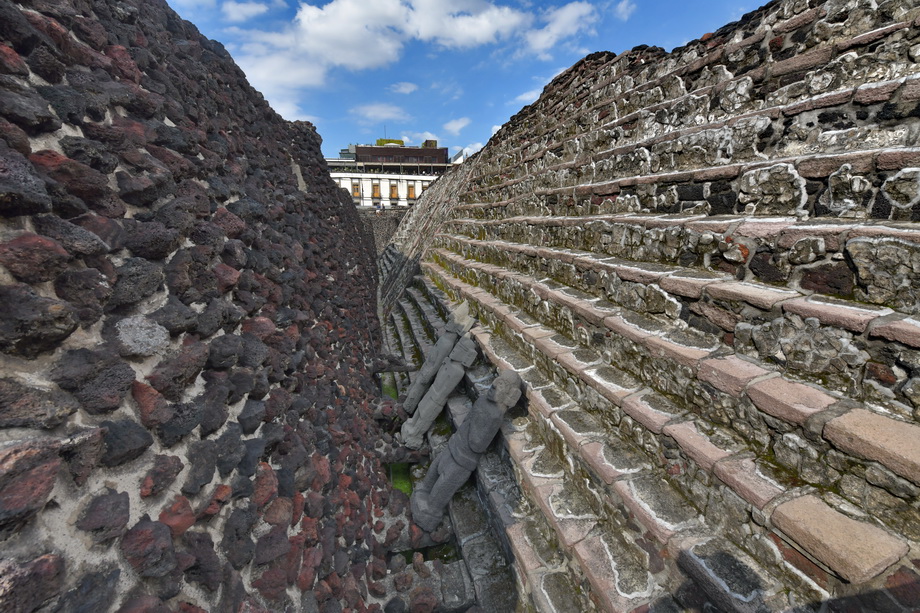
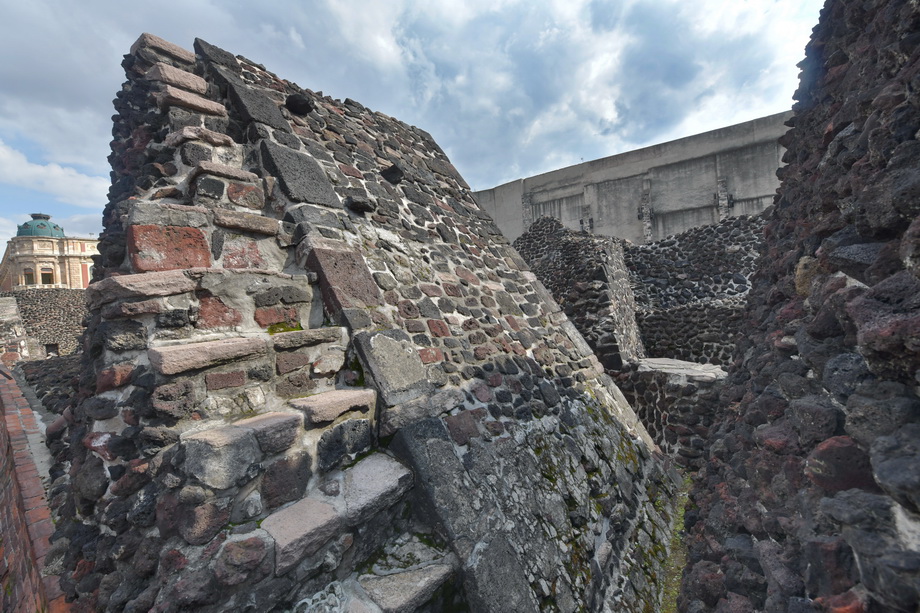
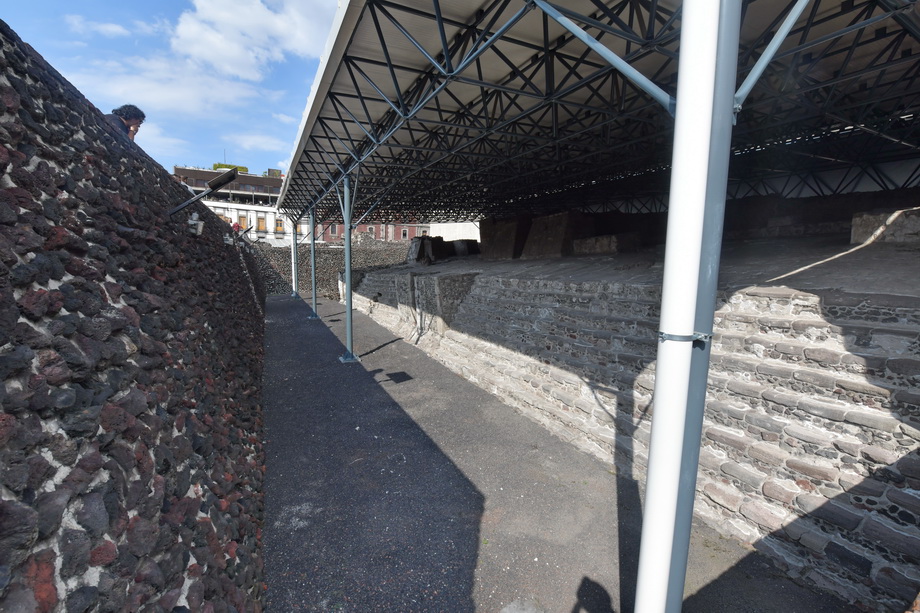
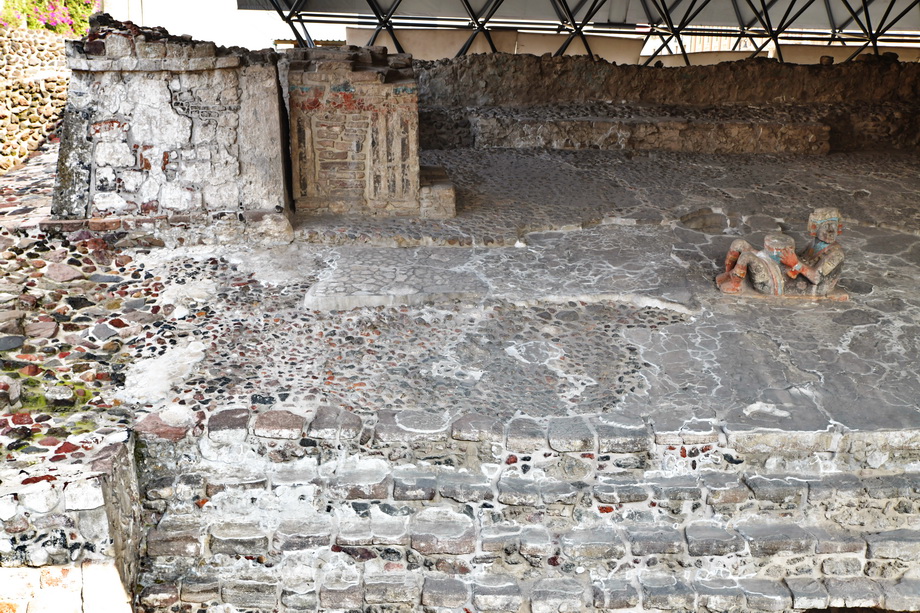
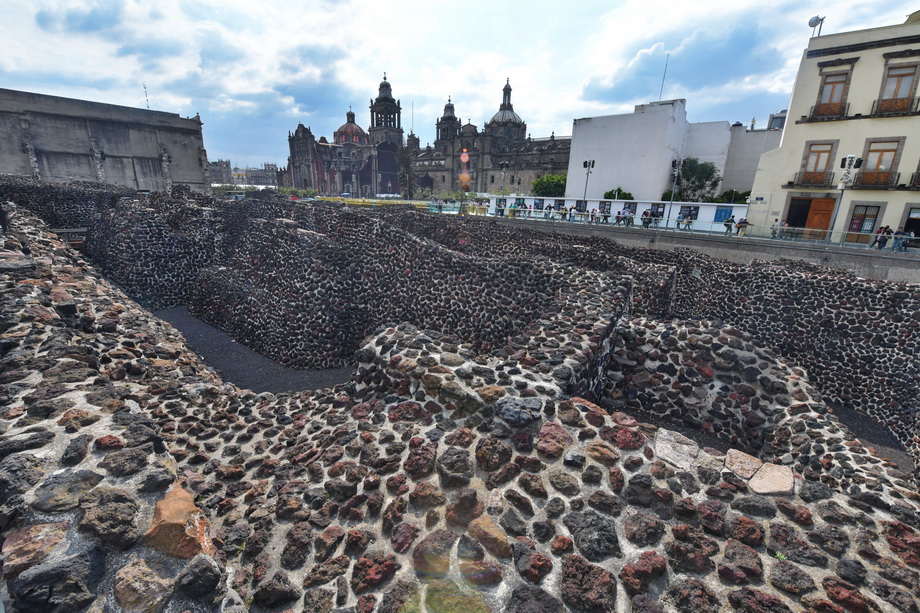
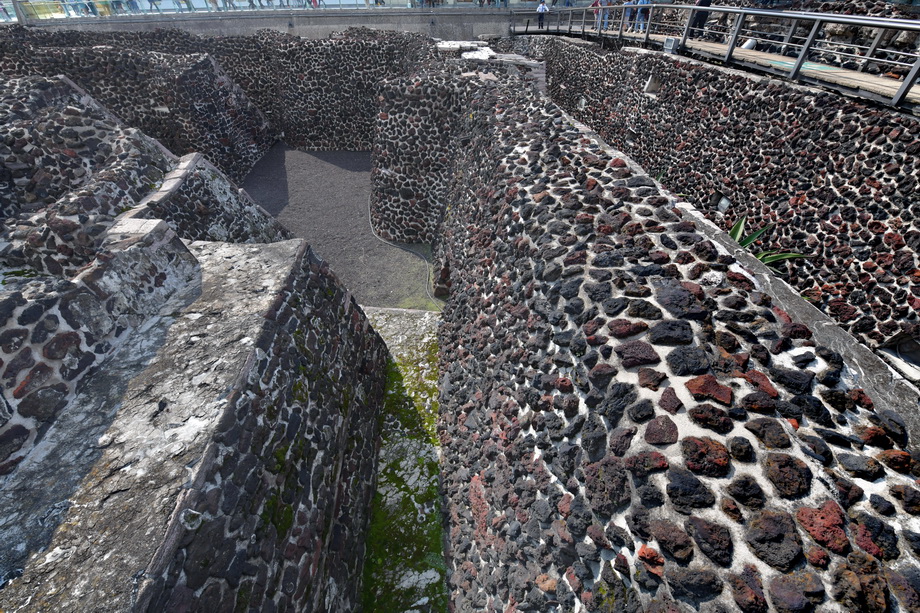
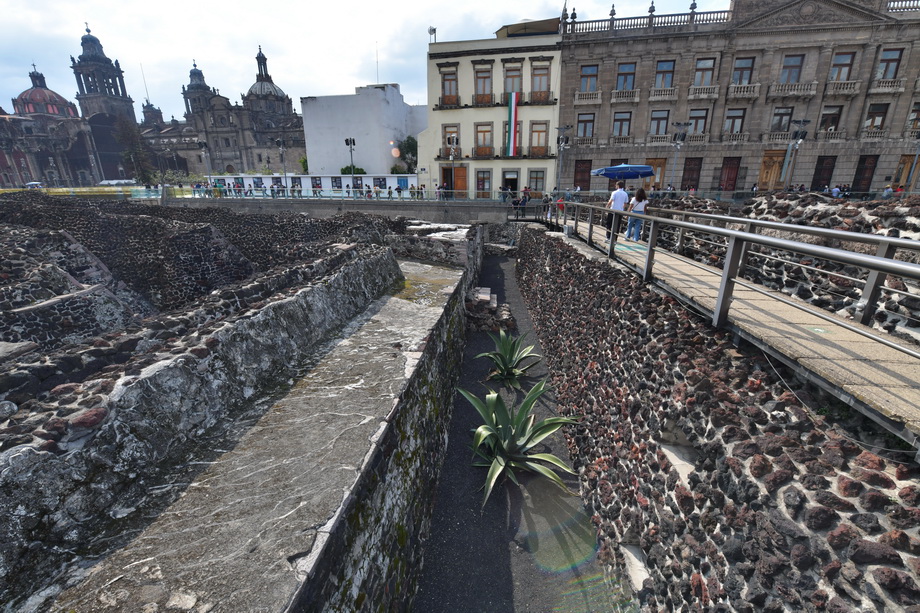
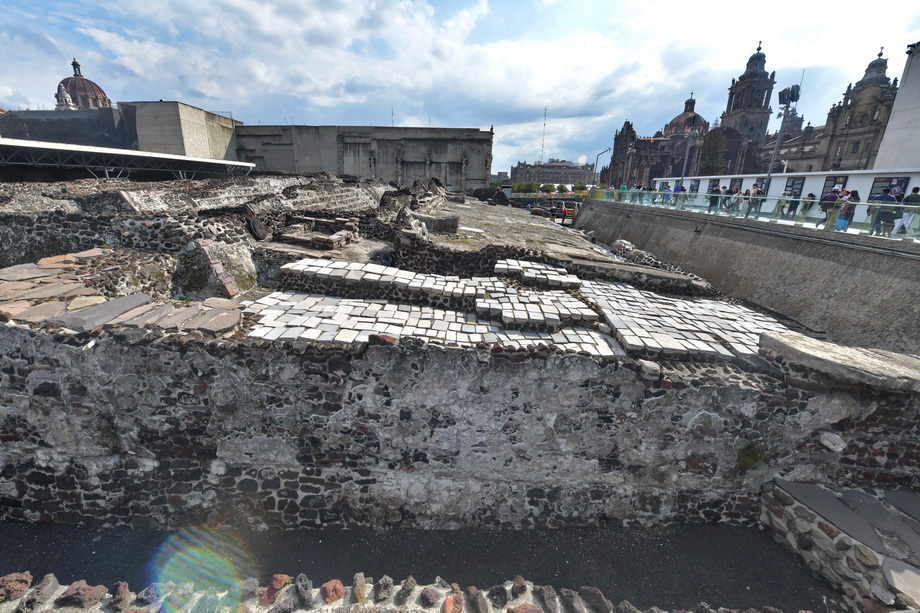
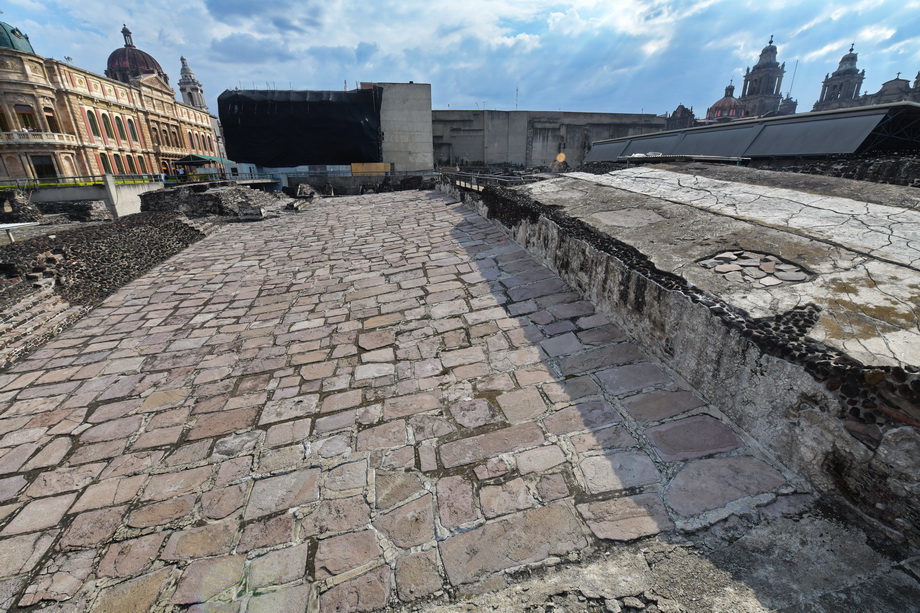
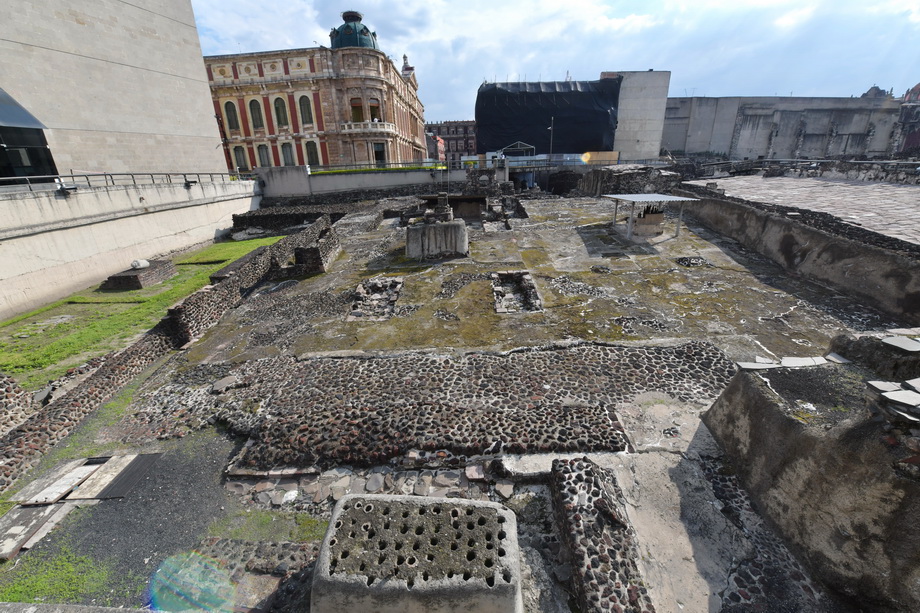
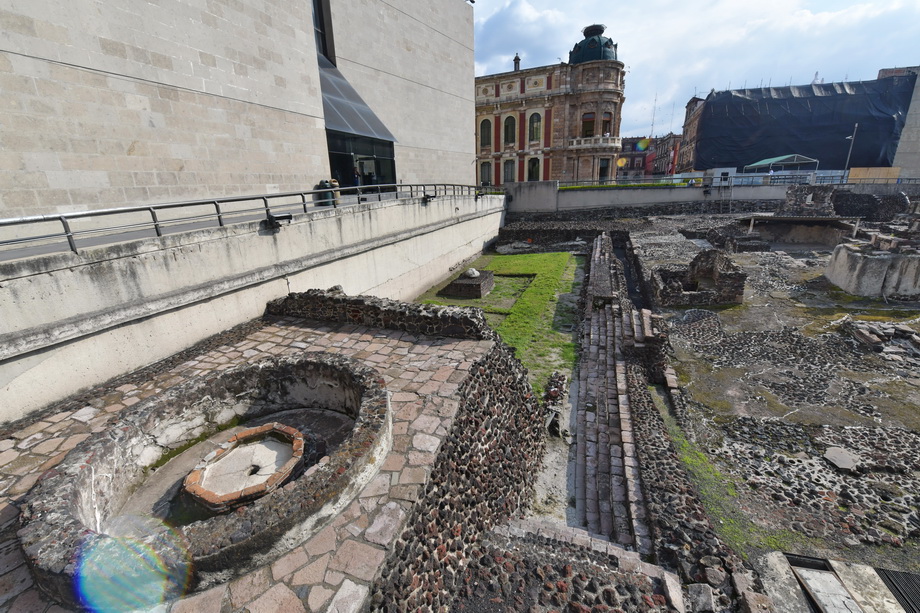
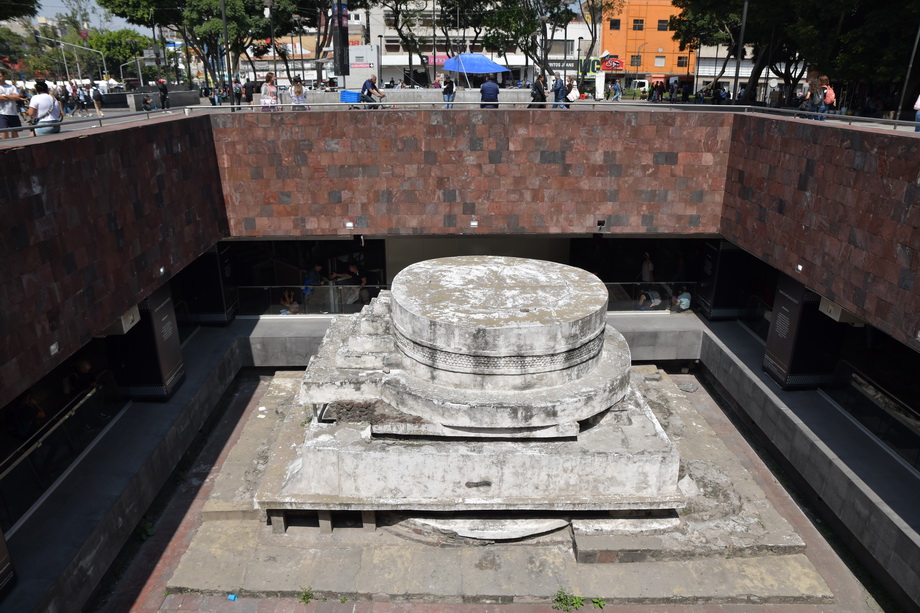
The Templo Mayor (English: Main Temple) was the main temple of the Mexica people in their capital city of Tenōchtitlan, which is now Mexico City. Its architectural style belongs to the late Postclassic period of Mesoamerica. The temple was dedicated simultaneously to Huitzilopochtli, god of war, and Tlaloc, god of rain and agriculture, each of which had a shrine at the top of the pyramid with separate staircases. The central spire was devoted to Quetzalcoatl in his form as the wind god, Ehecatl. The temple devoted to Huitzilopochtli and Tlaloc, measuring approximately 100 by 80 m at its base, dominated the Sacred Precinct. Construction of the first temple began sometime after 1325, and it was rebuilt six times. The temple was almost totally destroyed by the Spanish in 1521, and the Mexico City Metropolitan Cathedral was built in its place. The Zócalo, or main plaza of Mexico City today, was developed to the southwest of Templo Mayor, which is located in the block between Seminario and Justo Sierra streets. The site is part of the Historic Center of Mexico City, which was added to the UNESCO World Heritage List in 1987. It received 801,942 visitors in 2017.

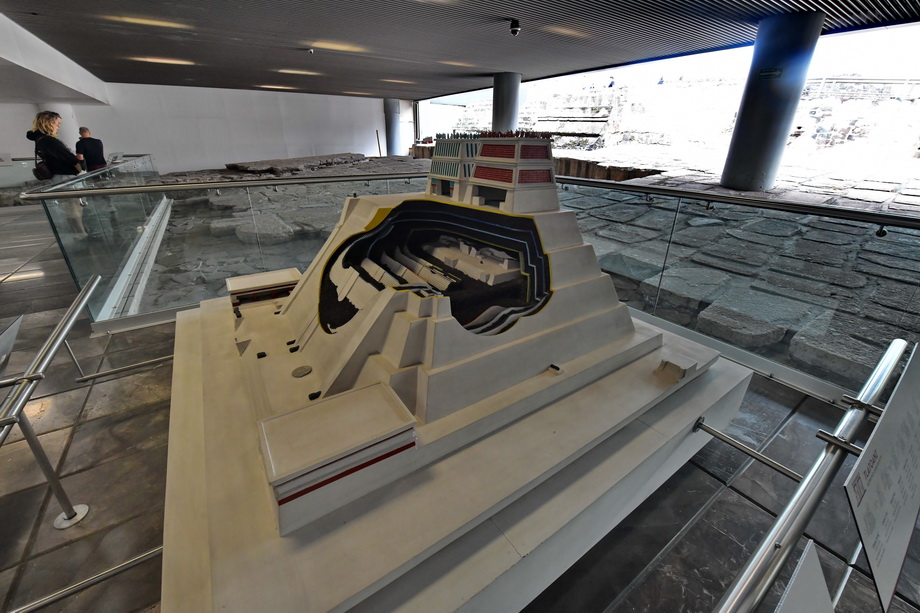
The first of seven temples built on the Templo Mayor site was built in 1325, and the second temple existed by 1375. In 1454, the largest known expansion of the temple took place under the guidance of Moctezuma I. The seventh temple was first mentioned by the conquistadors in 1519, and the temple was last altered by the Aztecs in 1520. The conquistadors then sacked and destroyed the building one year later in 1521. After the destruction of Tenōchtitlan, the Templo Mayor, like most of the rest of the city, was disassembled to be used as construction materials to create the Spanish colonial city. The Temple's exact location was forgotten.

By the 20th century, scholars had a good idea where to look for it based on archeological work completed at the end of the 19th and first half of the 20th centuries. Leopoldo Batres did some excavation work at the end of the 19th century under the Mexico City Metropolitan Cathedral because, at the time, researchers thought the cathedral had been built over the ruins of the temple, though it was later proven to be just southwest of the temple.

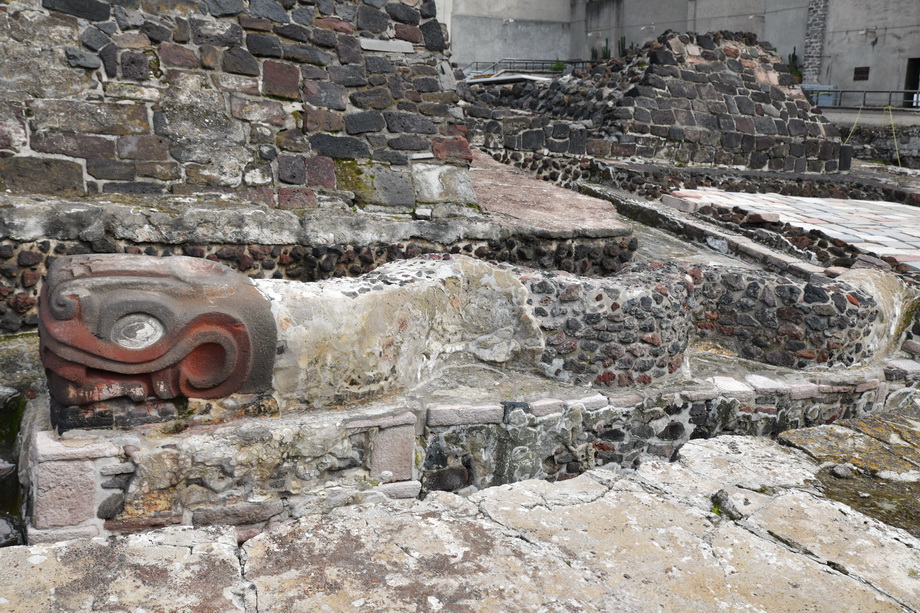
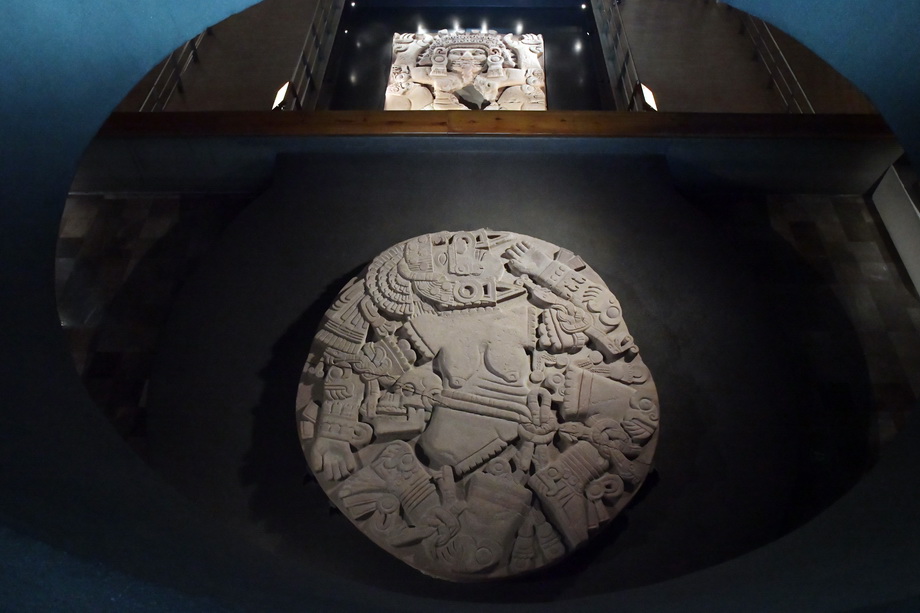
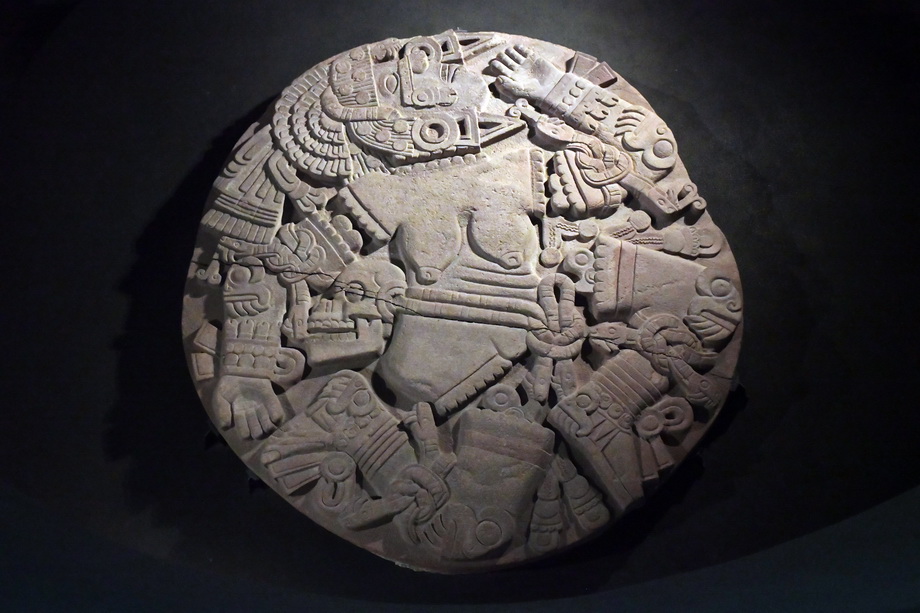
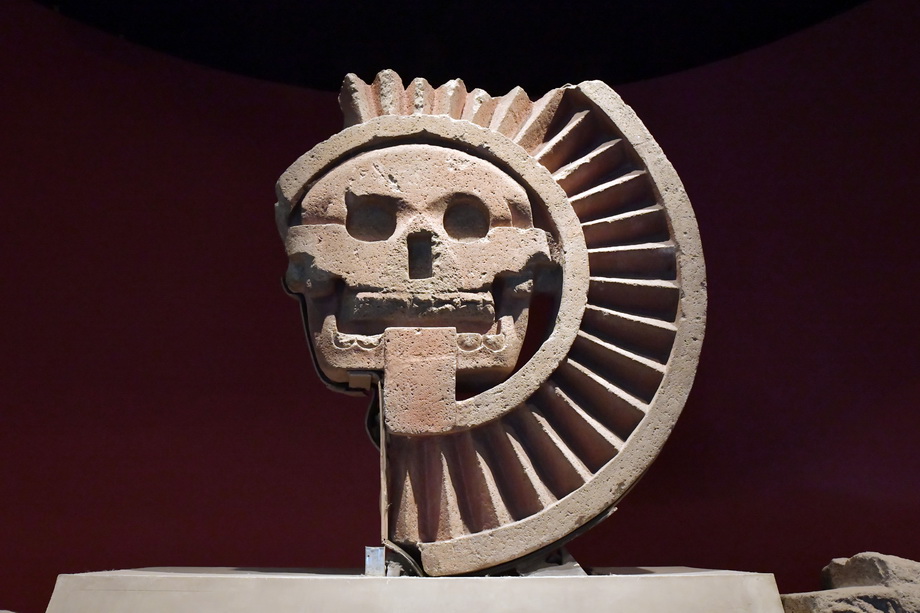
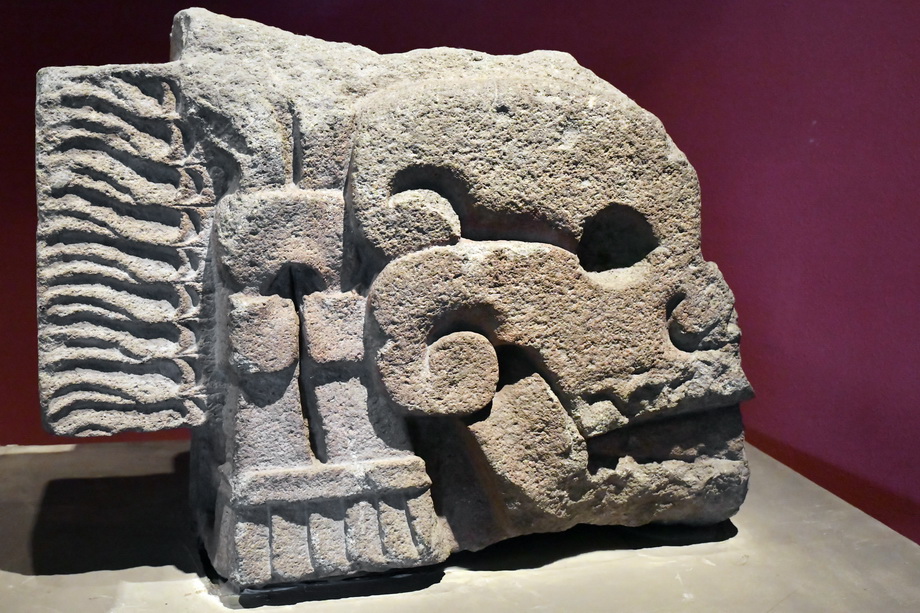
In the first decades of the 20th century, Manuel Gamio found part of the southwest corner of the temple, and his findings were put on public display. However, the discovery did not generate great public interest in excavating further as the zone was an upper-class residential area. In 1933, Emilio Cuevas found part of a staircase and beam. In 1948, Hugo Moedano and Elma Estrada Balmori excavated a platform containing serpent heads and offerings. In 1966, Eduardo Contreras and Jorge Angula excavated a chest containing offerings, which had first been explored by Gamio. The push to fully excavate the site did not come until late in the 20th century. On 21 February 1978, workers for Comisión Federal de Electricidad, the city's electricity provider, were digging at a place in the city then popularly known as the "island of the dogs" as the area was slightly elevated and stray dogs would gather there during times of flooding. Just over two meters down, the diggers struck a massive pre-Hispanic stone disk of over 3.25 meters in diameter, 30 centimeters thick, and weighing 8.5 metric tons. The relief on the stone was later determined to be Coyolxauhqui, Huitzilopochtli's sister, and was dated to the end of the 15th century.

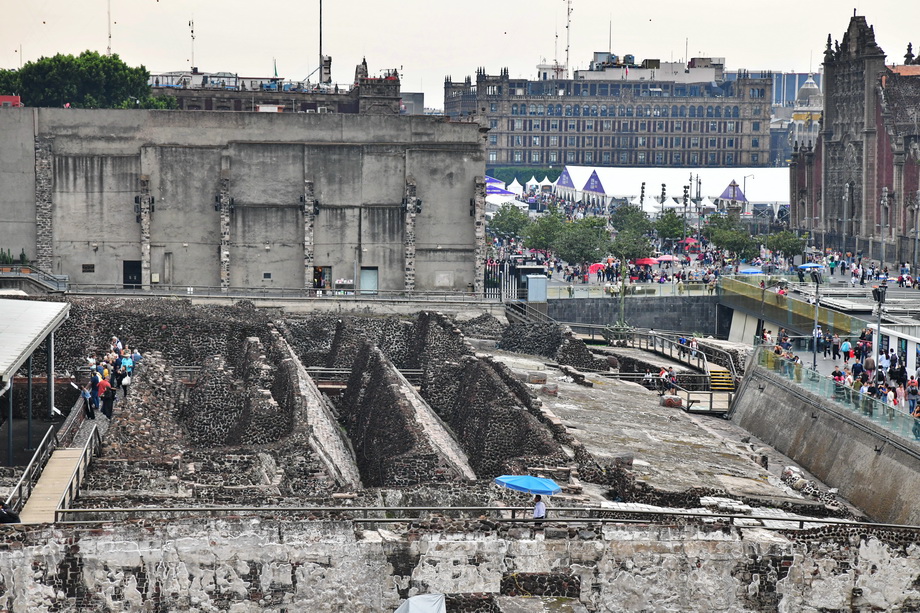
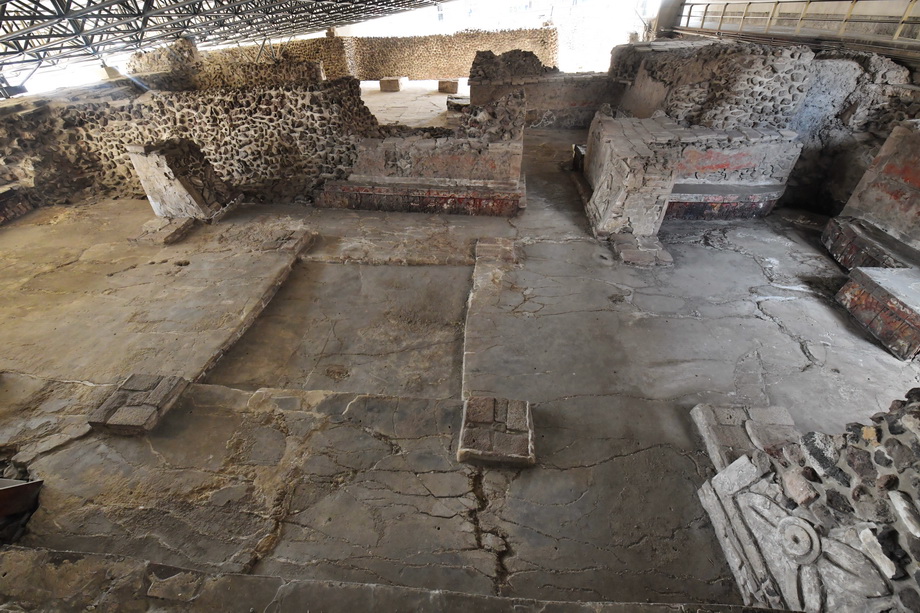
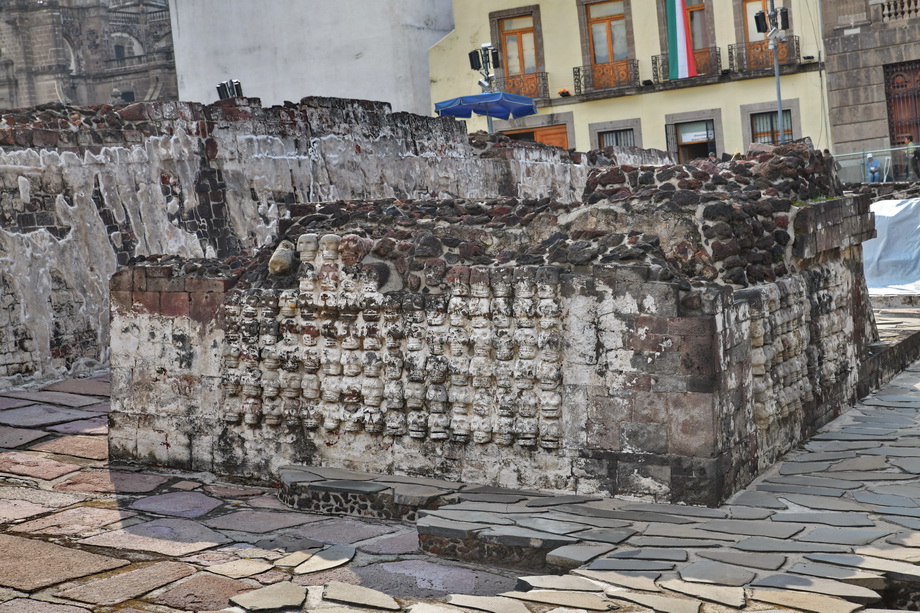
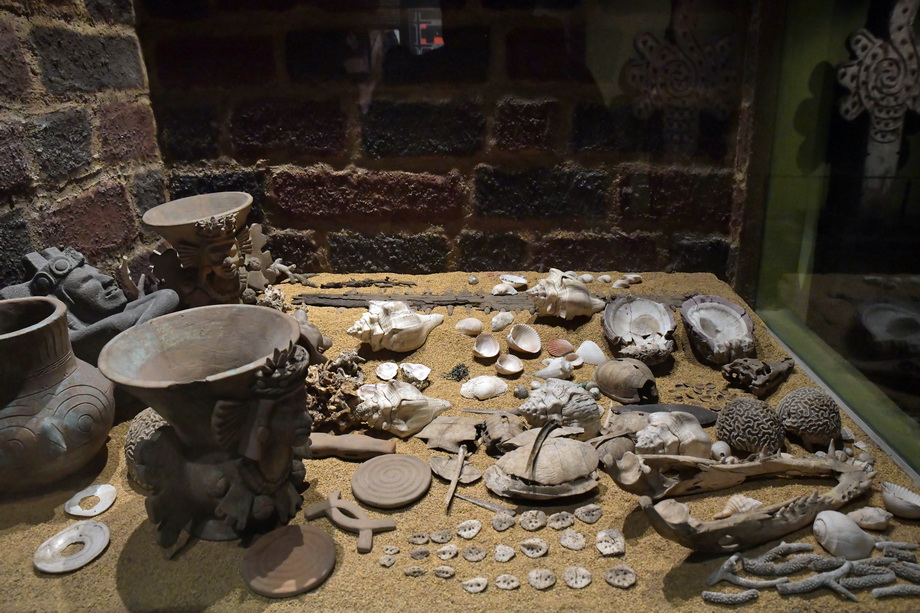
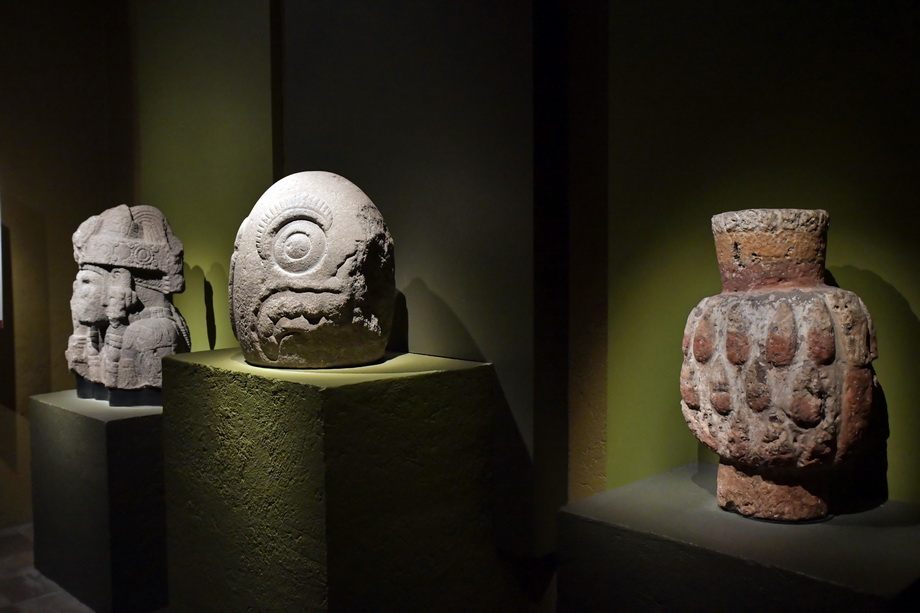
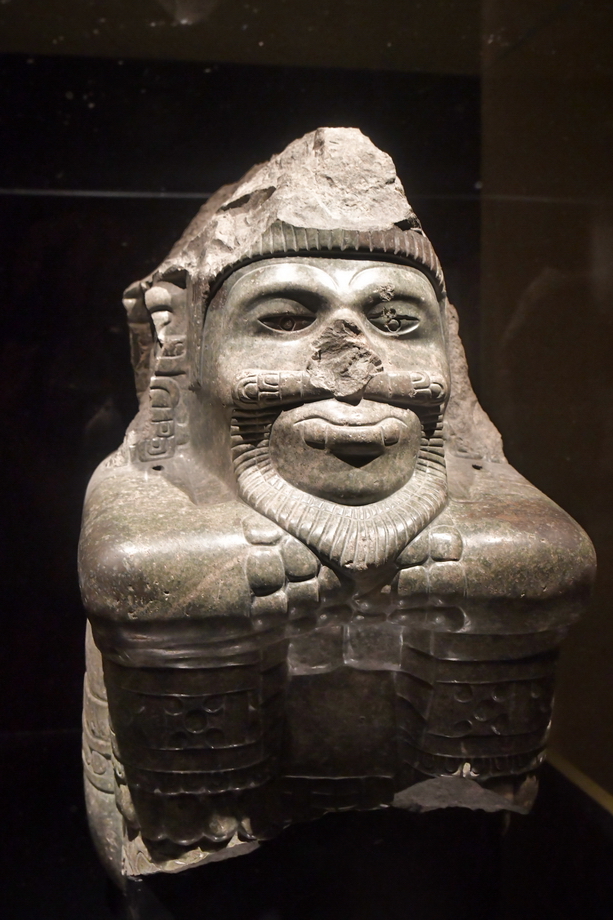
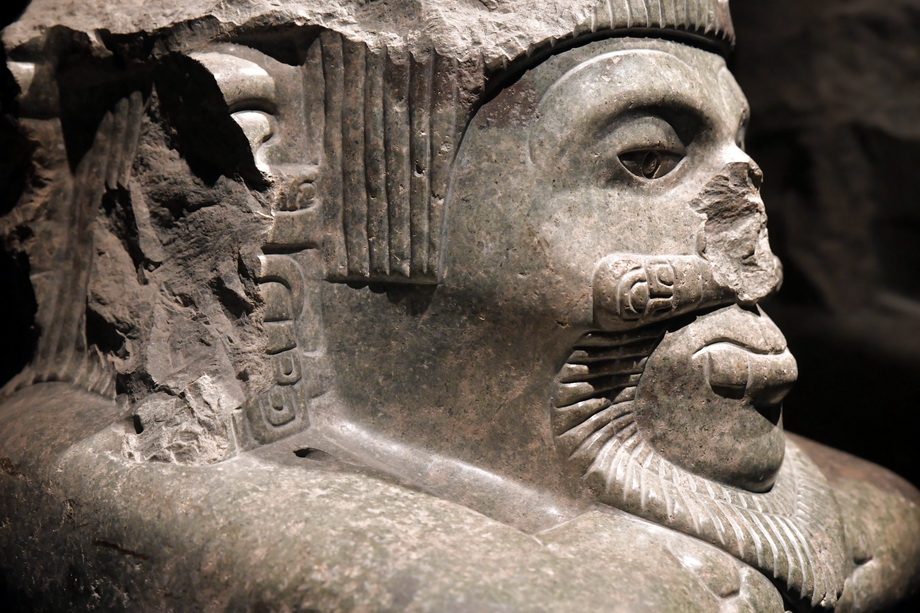
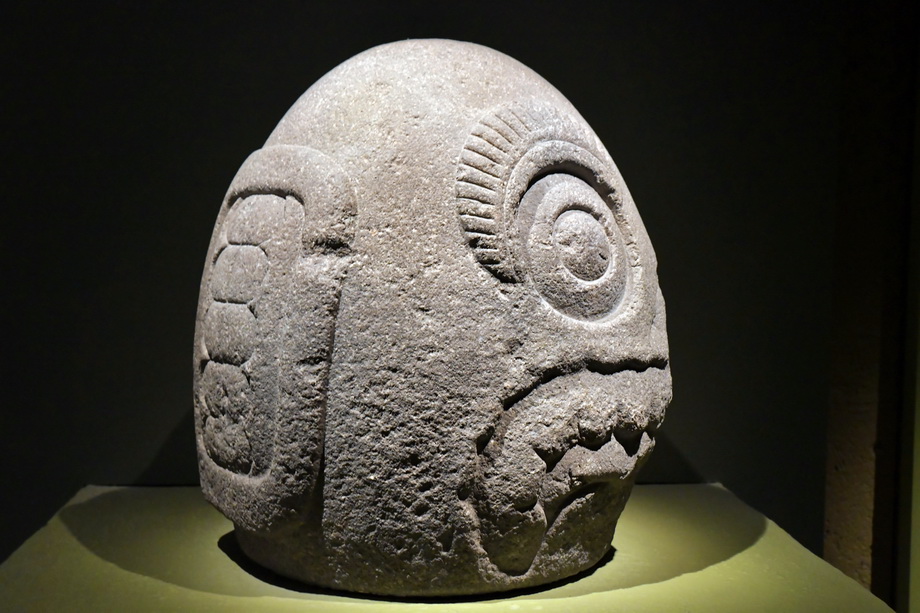
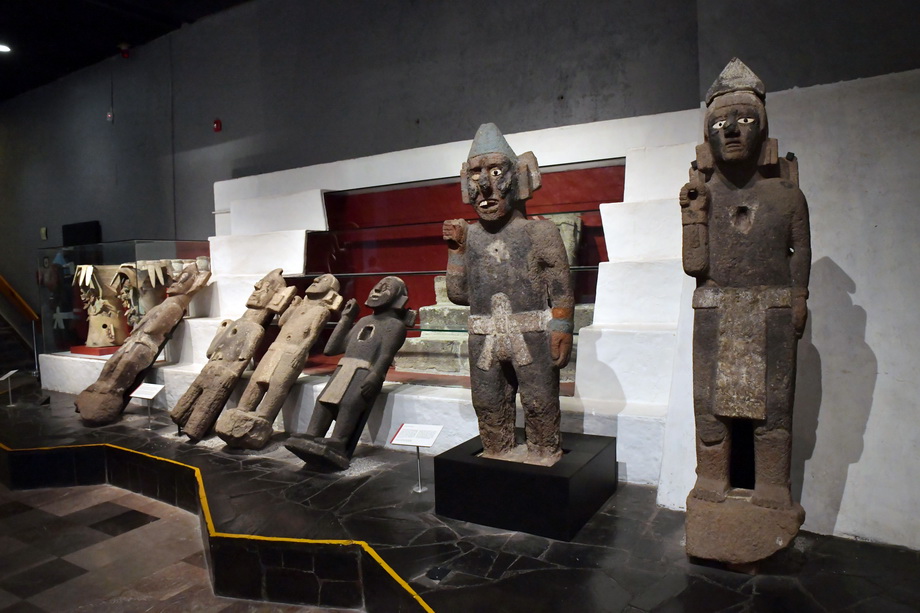
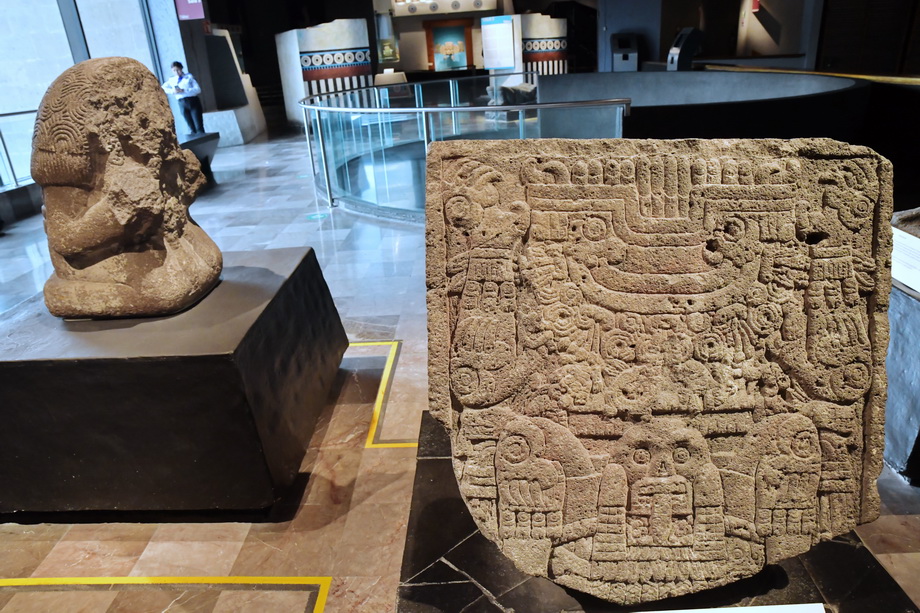
From 1978 to 1982, specialists directed by archeologist Eduardo Matos Moctezuma worked on the project to excavate the Temple.Initial excavations found that many of the artifacts were in good enough condition to study. Efforts coalesced into the Templo Mayor Project, which was authorized by presidential decree. To complete the excavation, 13 buildings in this area were demolished including 9 built in the 1930s and 4 dating from the 19th century that had preserved colonial elements. During excavations, more than 7,000 objects were found, mostly offerings including effigies; clay pots in the image of Tlaloc; skeletons of turtles, frogs, crocodiles, and fish; snail shells; coral; gold; alabaster; Mixtec figurines; ceramic urns from Veracruz; masks from what is now Guerrero state; copper rattles; and decorated skulls and knives of obsidian and flint. These artifacts are now housed in the Templo Mayor Museum.
This museum is the result of the work done since the early 1980s to rescue, preserve, and investigate Templo Mayor, its Sacred Precinct, and all objects associated with it while making these findings available to the public. The process of expanding an Aztec temple was typically completed by new structures being built over earlier ones, using the bulk of the former as a base for the latter. The Aztecs began construction of Templo Mayor sometime after 1325, and the temple was rebuilt six times. All seven stages of the Templo Mayor, except the first, have been excavated and assigned to the reigns of the emperors who were responsible for them.

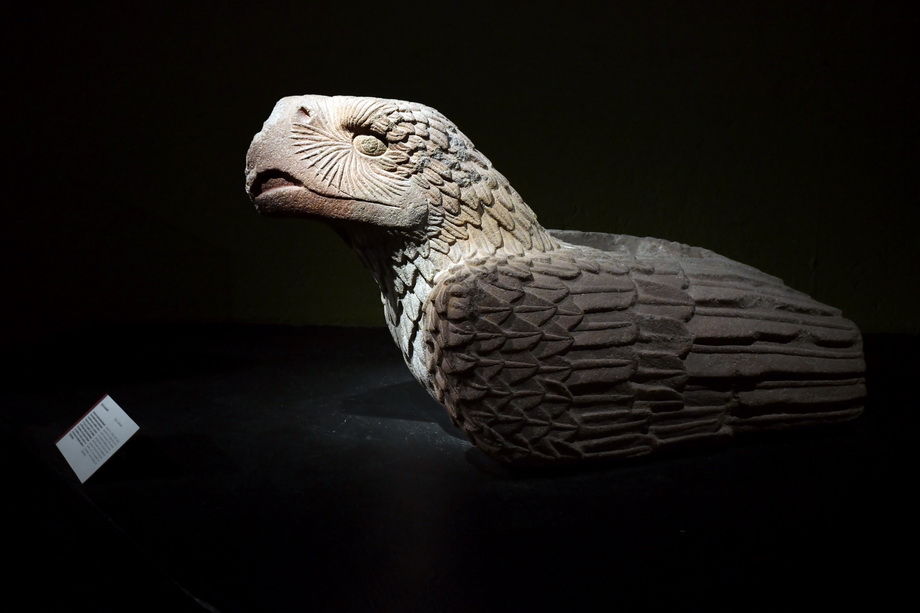
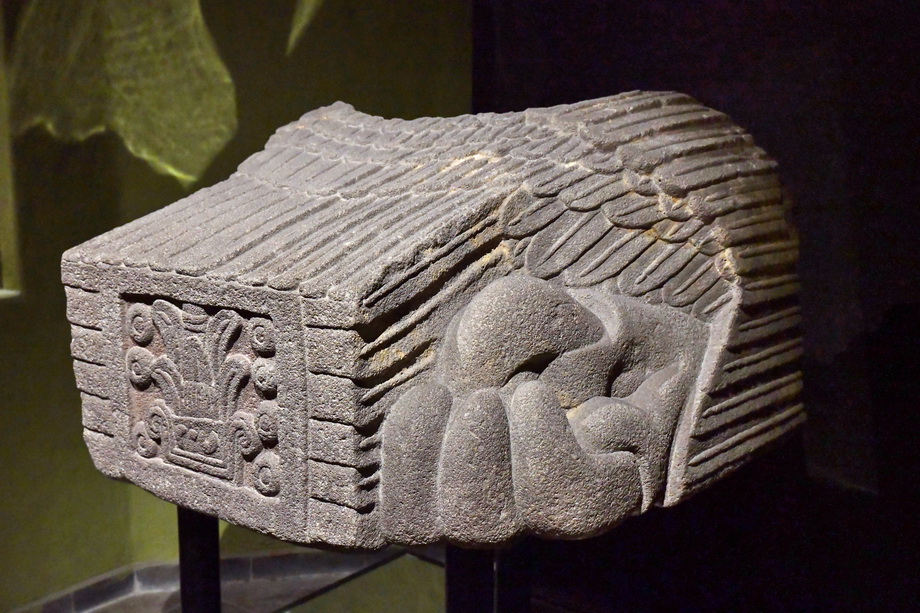
According to tradition, the Templo Mayor is located on the exact spot where the god Huitzilopochtli gave the Mexica people his sign that they had reached the promised land: an eagle on a nopal cactus with a snake in its mouth.

The museum of the Templo Mayor was built in 1987 to house the Templo Mayor Project and its finds-a project which continues work to this day. In 1991, the Urban Archeology Program was incorporated as part of the Templo Mayor Project whose mission is to excavate the oldest area of the city, around the main plaza. The museum building was built by architect Pedro Ramirez Vazquez, who envisioned a discreet structure that would blend in with the colonial surroundings. The museum has four floors, three of which are for permanent exhibitions and the fourth houses offices for the director, museum administration and research staff. Other departments are located in the basement, where there is also an auditorium.

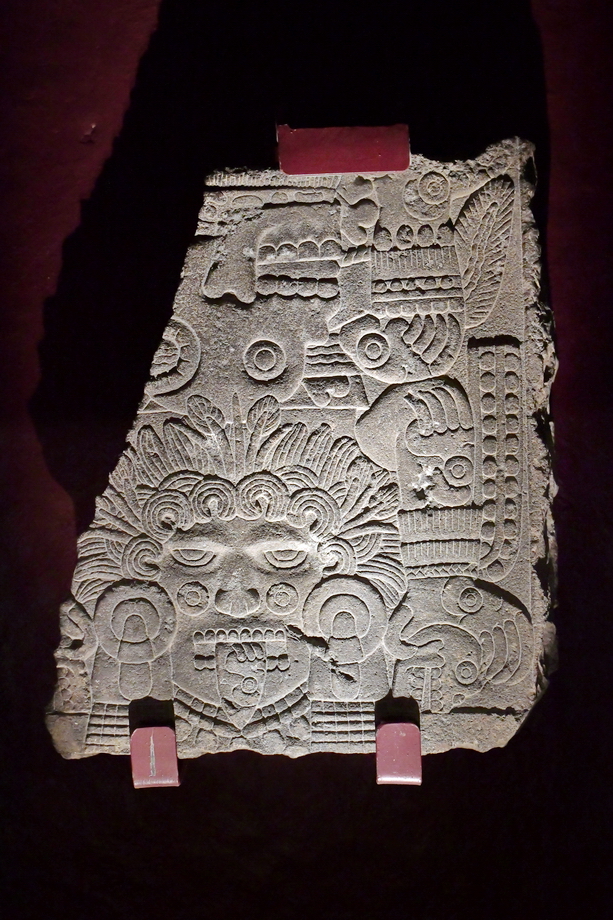
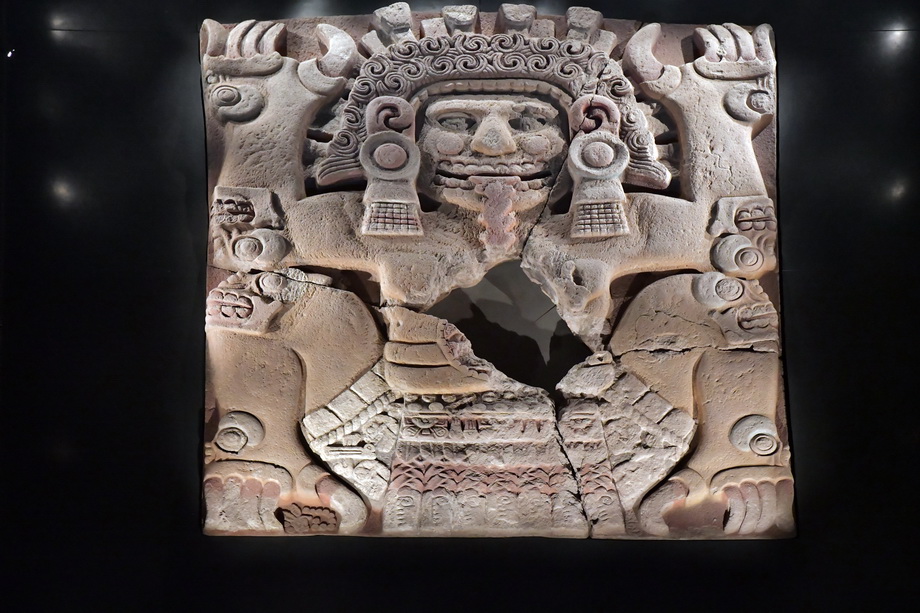
The museum has eight main exhibition halls, each dedicated to a different theme. Room 1 is dedicated to the goddesses Coatlicue and Coyolxauhqui, mother and sister to Huitzlipochtli, respectively. Here are displayed the first finds associated with the temple, from the first tentative finds in the 19th century to the discovery of the huge stone disk of Coyolxauhqui, which initiated the Templo Mayor Project.

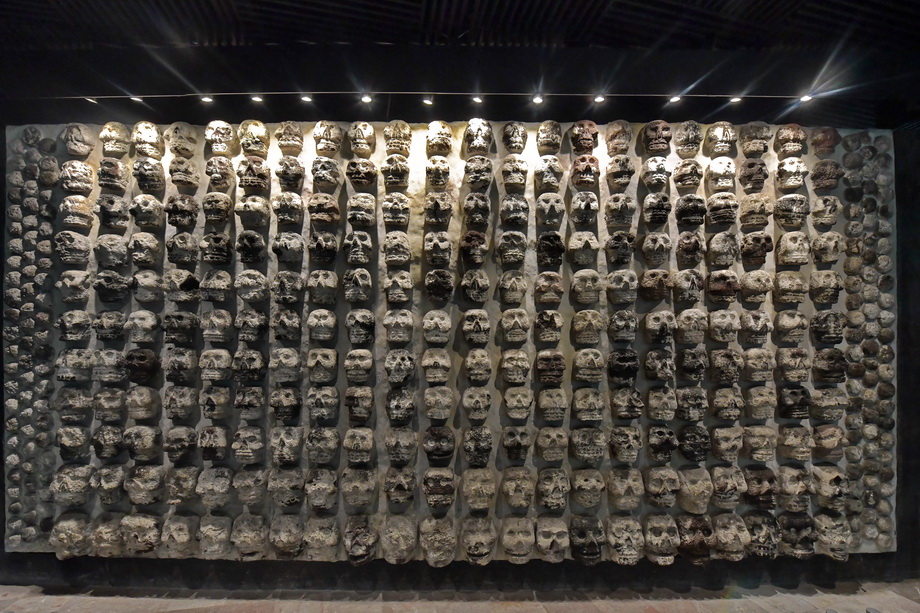
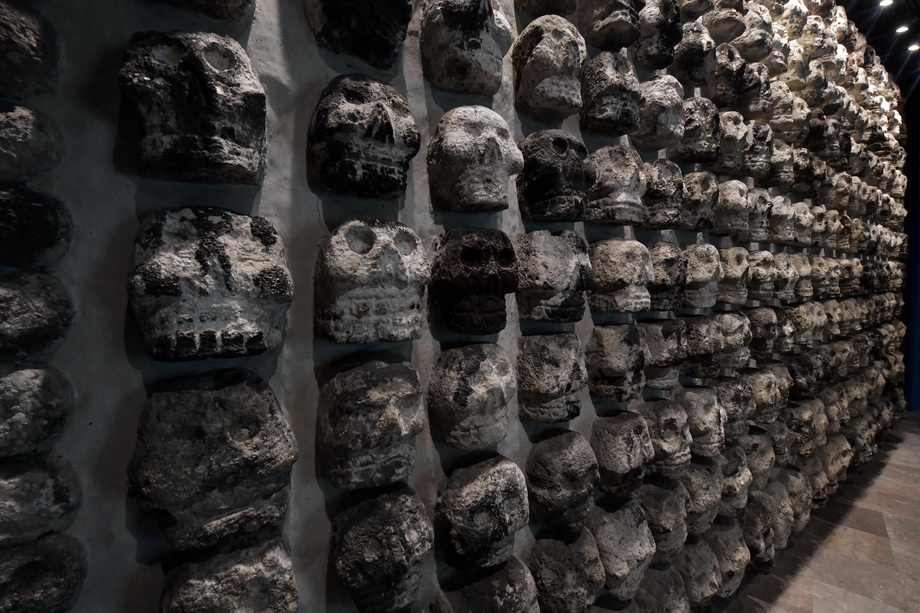
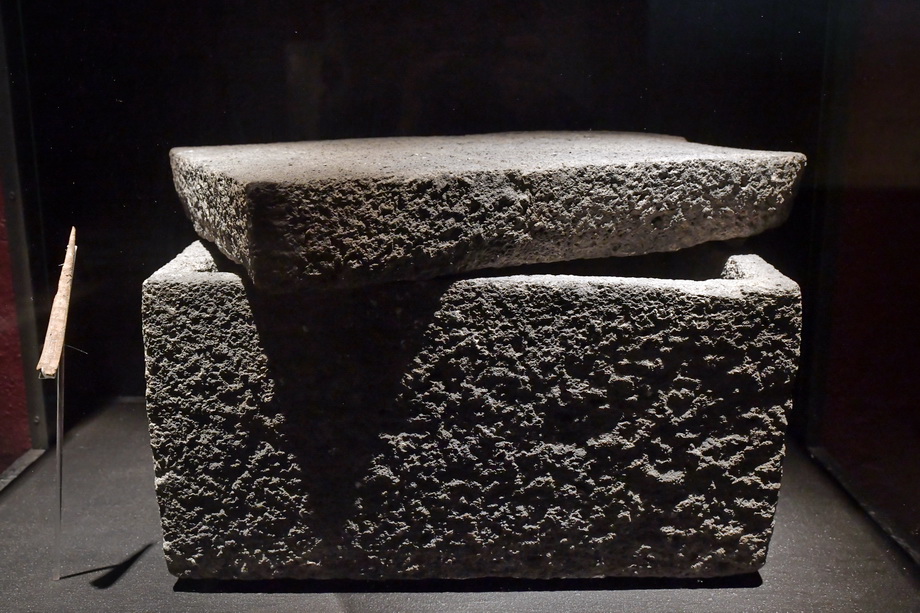
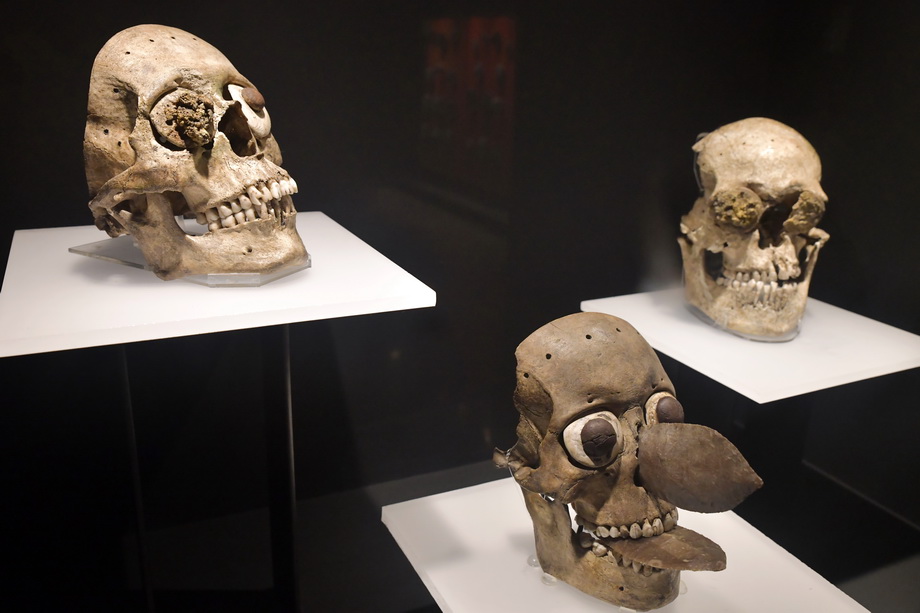
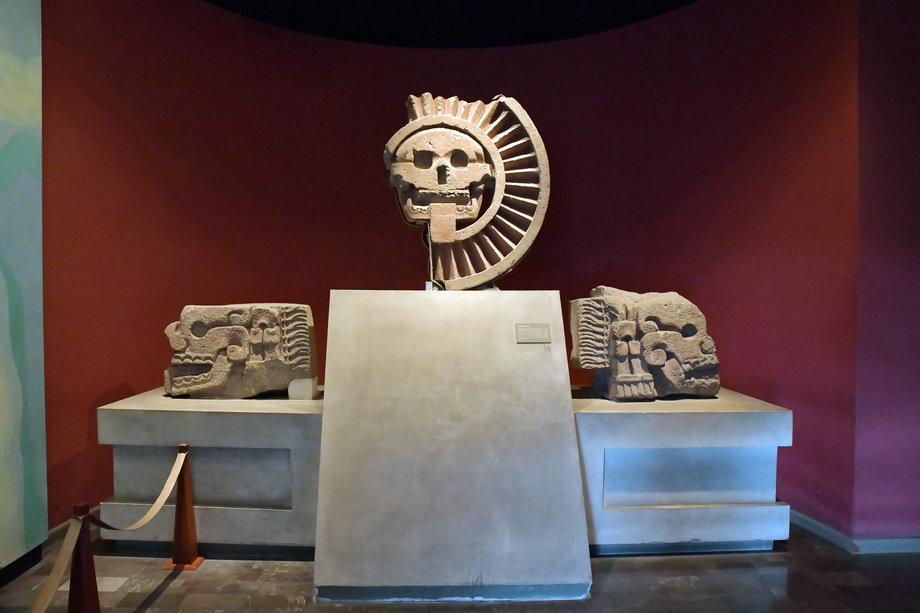
Room 2 is dedicated to the concepts of ritual and sacrifice in Tenōchtitlan. This room contains urns where dignitaries where interred, funerary offerings, as well as objects associated with self and human sacrifice-such as musical instruments, knives and skulls.

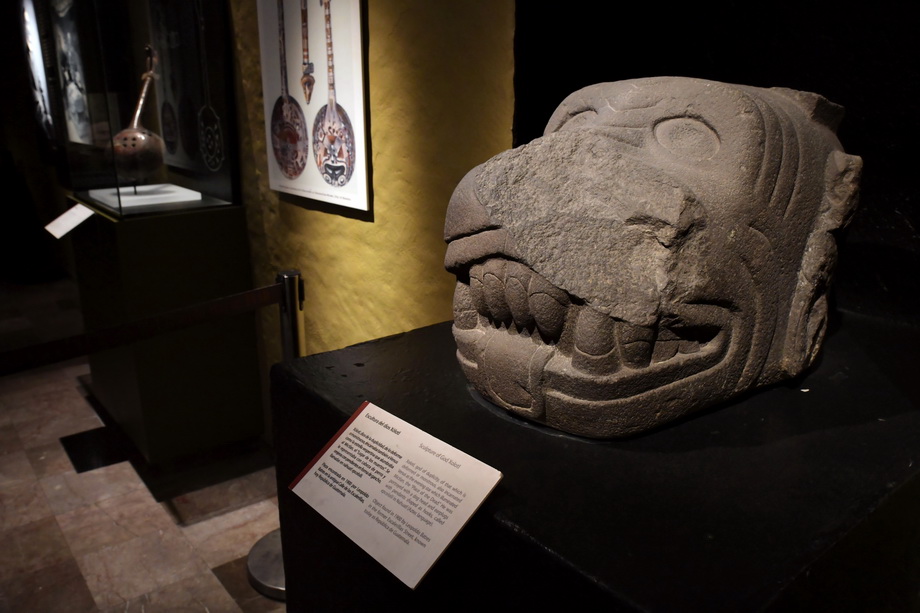
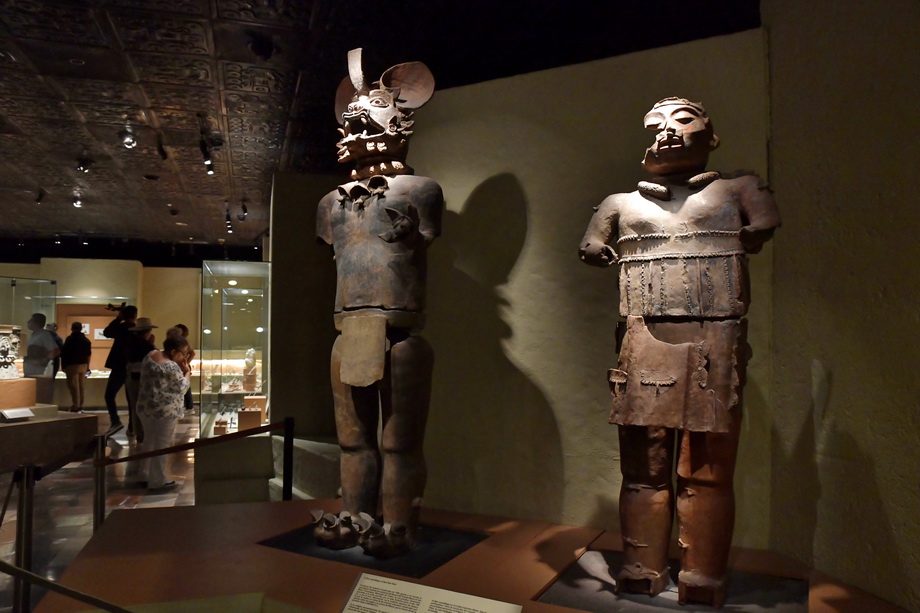
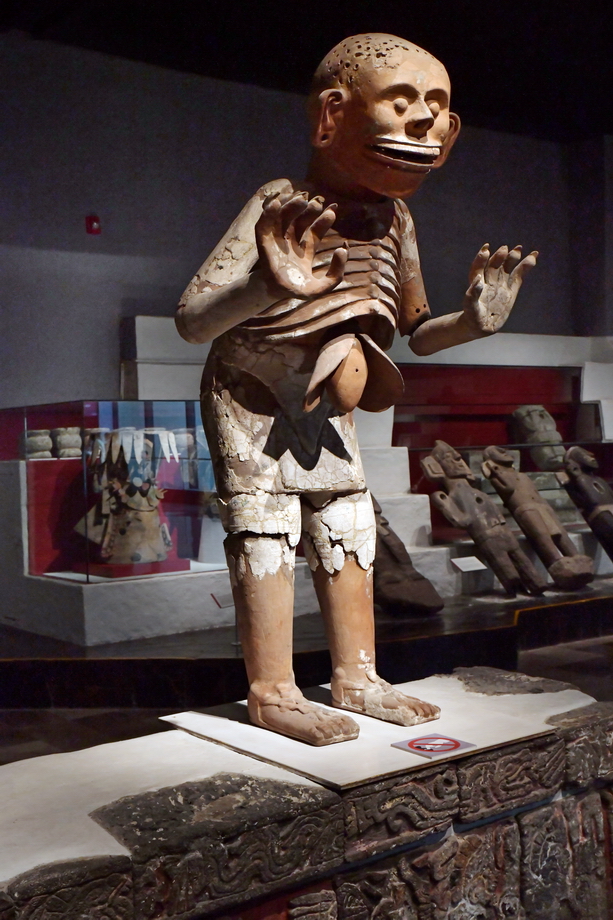
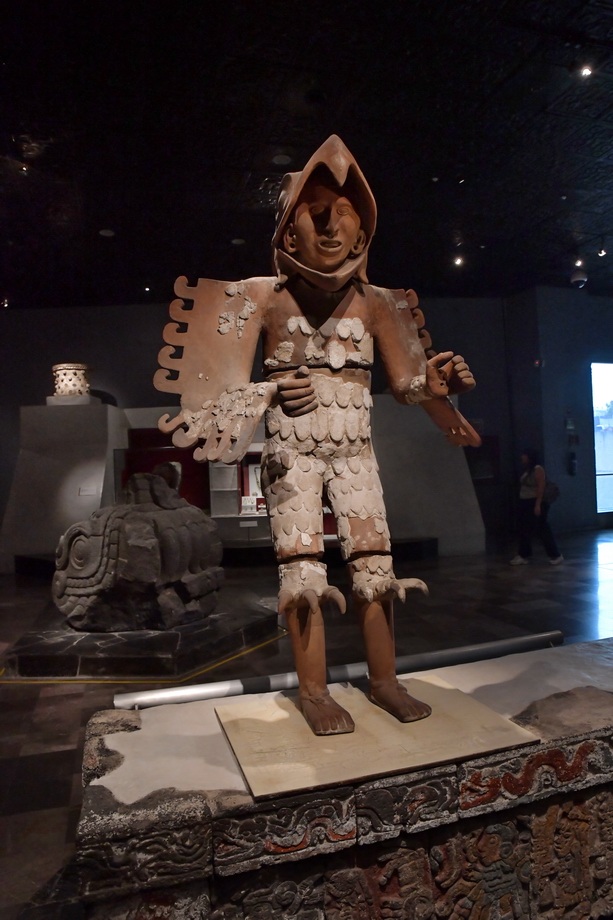
Room 3 demonstrates the economics of the Aztec empire in the form of tribute and trade, with examples of finished products and raw materials from many parts of Mesoamerica. Room 4 is dedicated to the god Huitzilopochtli. His shrine at the temple was the most important and largest. This room contains various images of him as well as offerings. Also located here are the two large ceramic statues of the god Mictlantecuhtli which were found in the House of the Eagle Warriors who were dedicated to Huitzilopochtli.

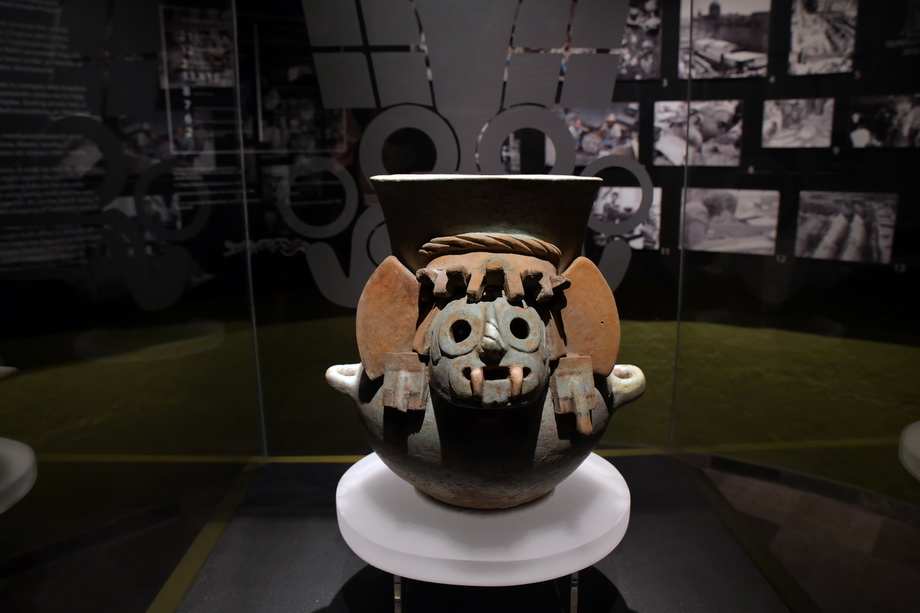
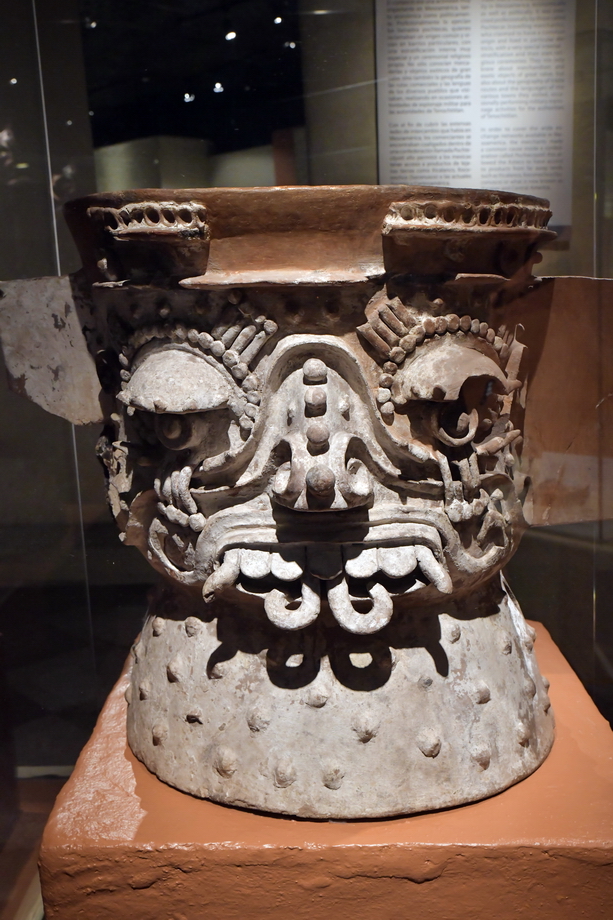
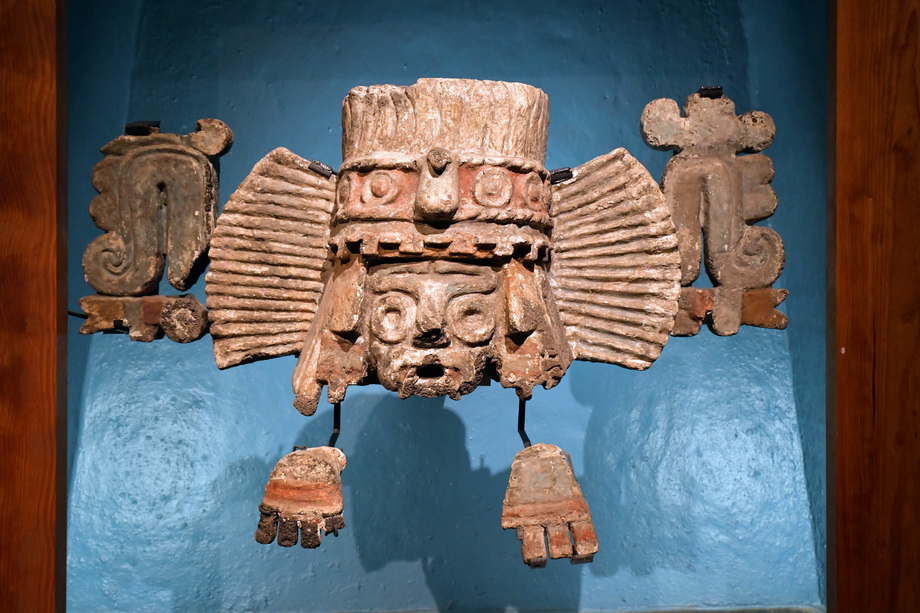
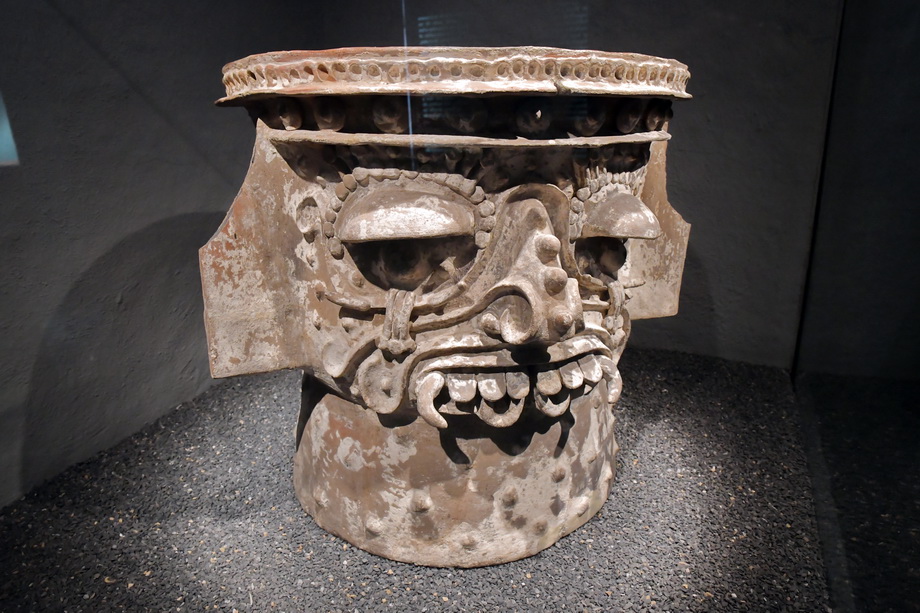
Room 5 is dedicated to Tlaloc, the other principal deity of the Aztecs and one of the oldest in Mesoamerica. This room contains various images of the god usually worked in green or volcanic stone or in ceramic. The most prized work is a large pot with the god's face in high relief that still preserves much of the original blue paint. Room 6 is dedicated to the flora and fauna of Mesoamerica at this time, as most contained divine aspects for the Aztecs. Also many of the offerings found at the Templo Mayor were or were made from various plants and animals. Related to Room 6, Room 7 contains exhibits of the agricultural technology of the time, especially in the growing of corn and the construction of chinampas, the so-called "floating gardens". The last room is Room 8, which is dedicated to the archeology and history of the site. (https://en.wikipedia.org/wiki/Templo_Mayor)

email:cetinbostanoglu@gmail.com