
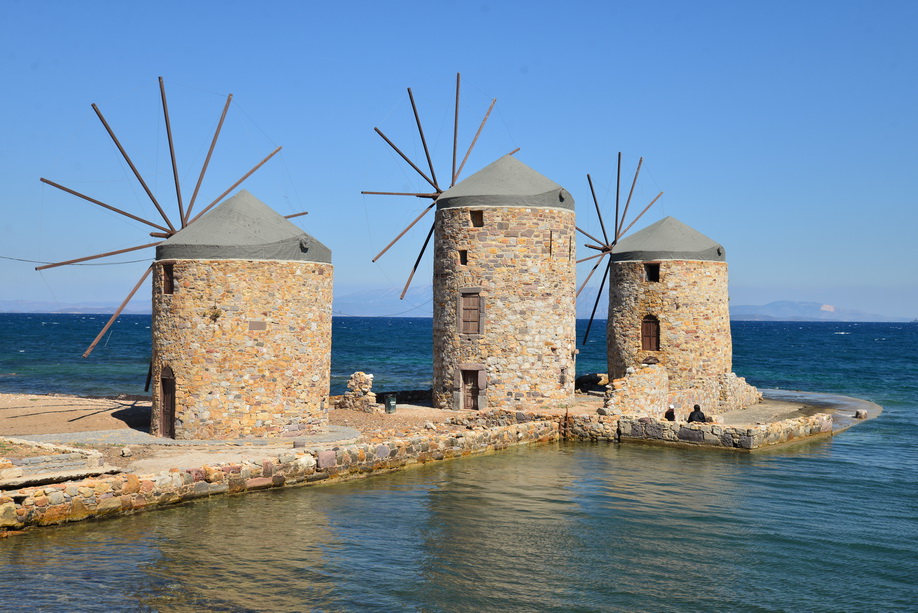
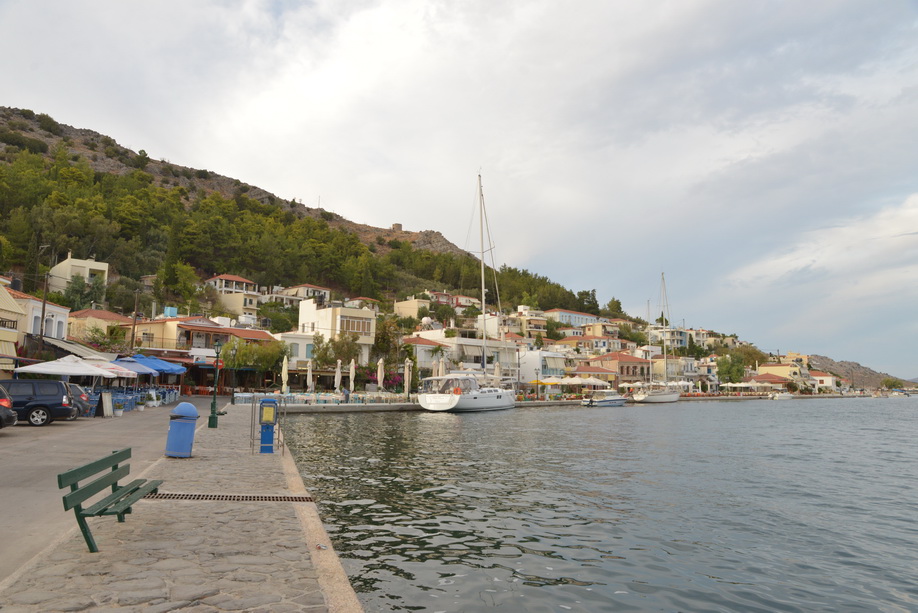
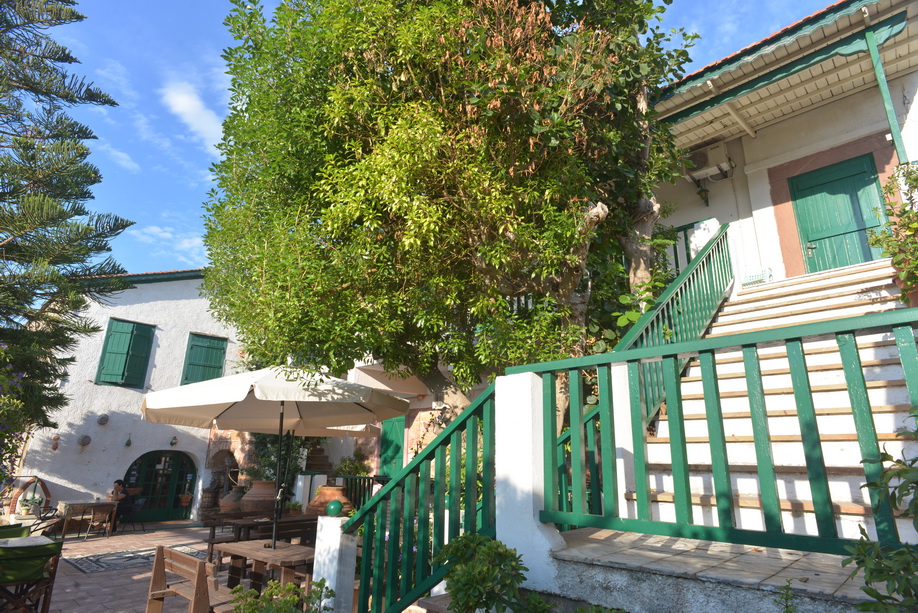
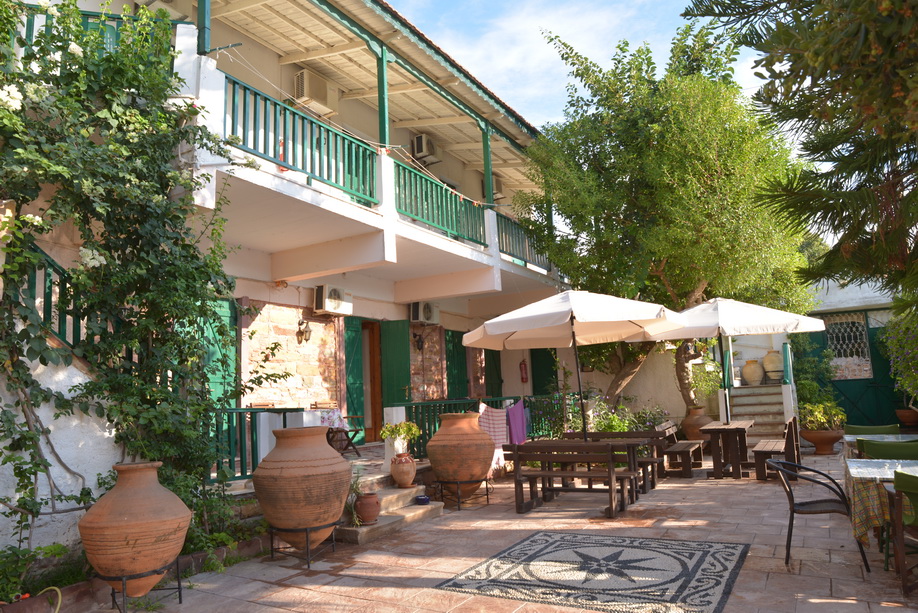
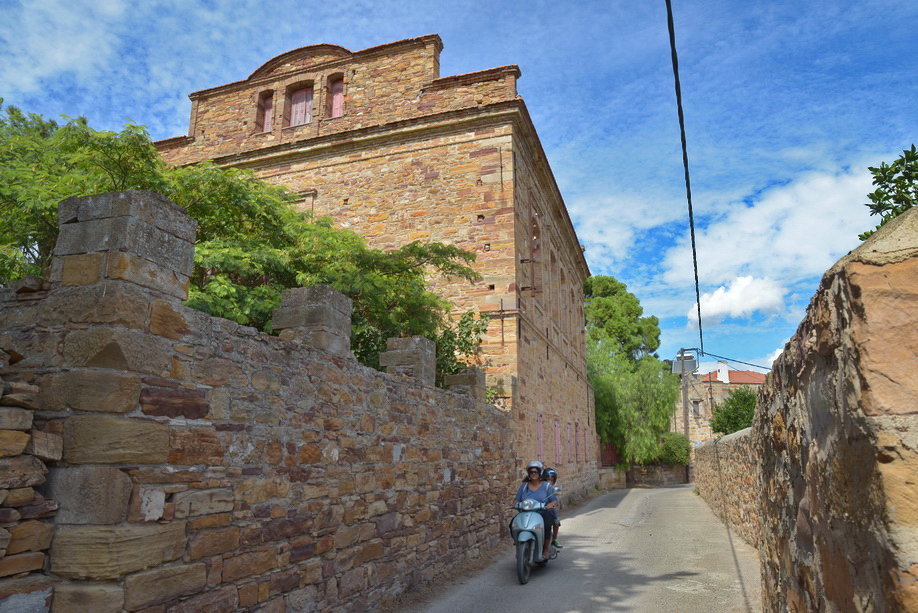
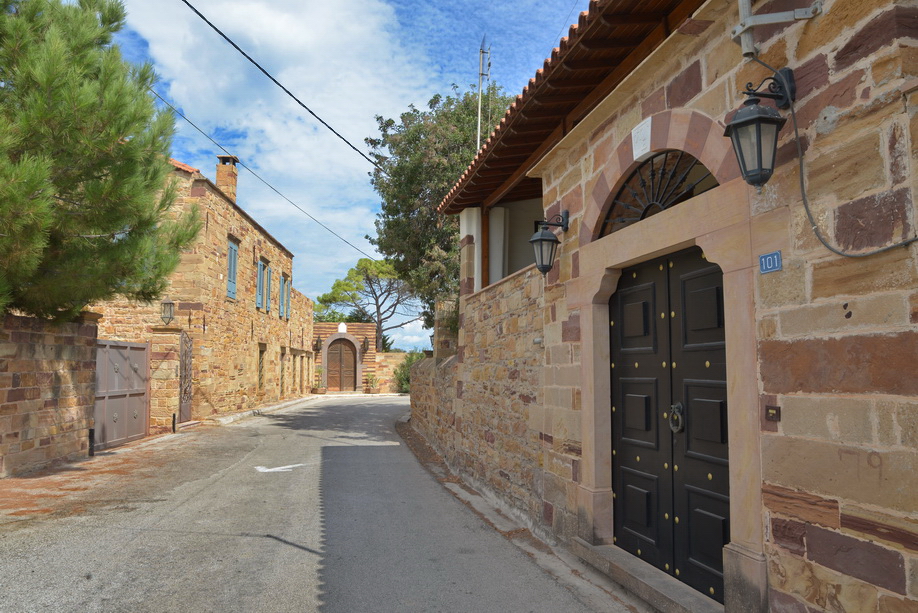
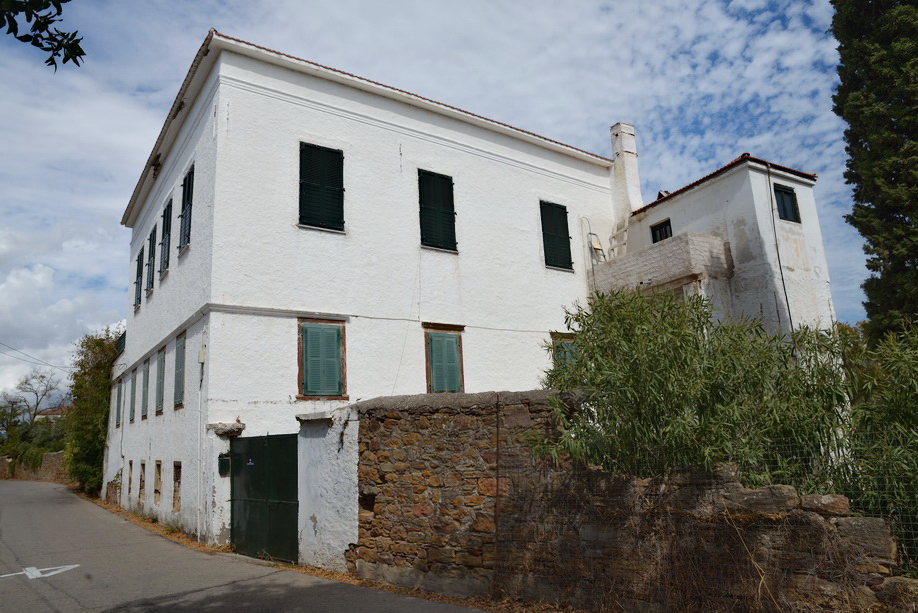
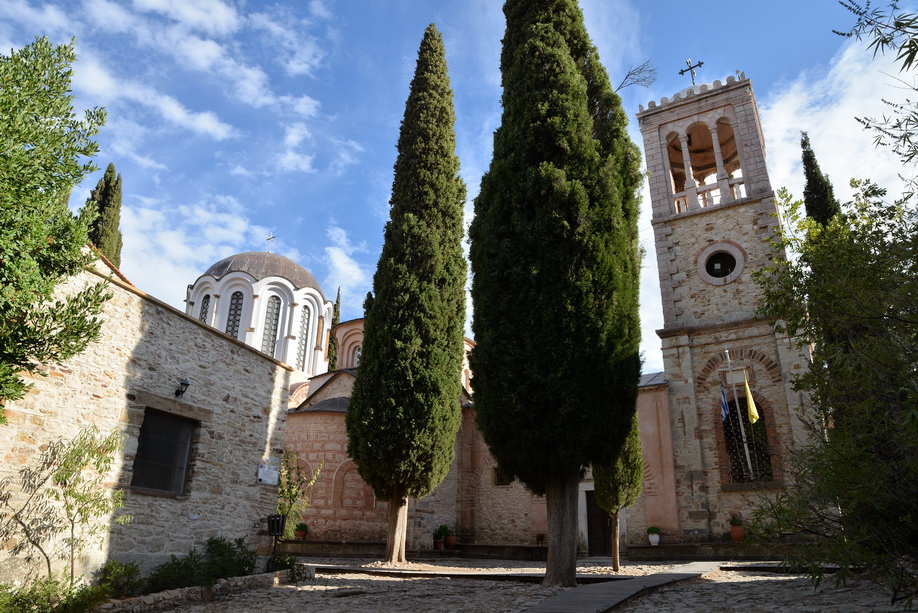
Chios lies just across a narrow stretch of the Aegean from the coast of Anatolia. During my visit in 2016, I photographed an island where landscapes and buildings reveal connections that long predate modern borders. The windmills by the sea, quiet harbours, stone houses and village streets were my first impressions. As I travelled farther inland, I found that Chios offered more than picturesque scenery: its architecture and everyday surroundings preserved traces of trade, religious life, conflict and migration.
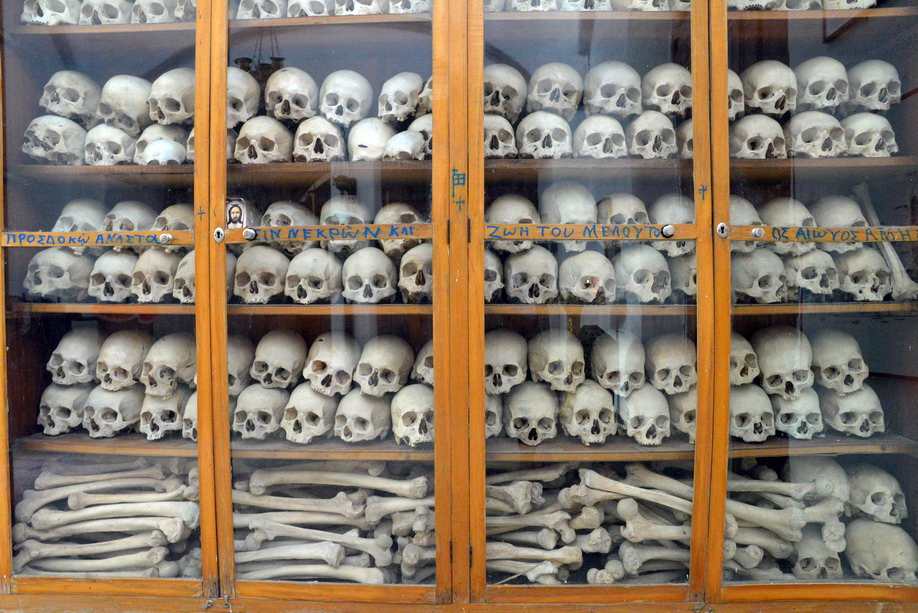
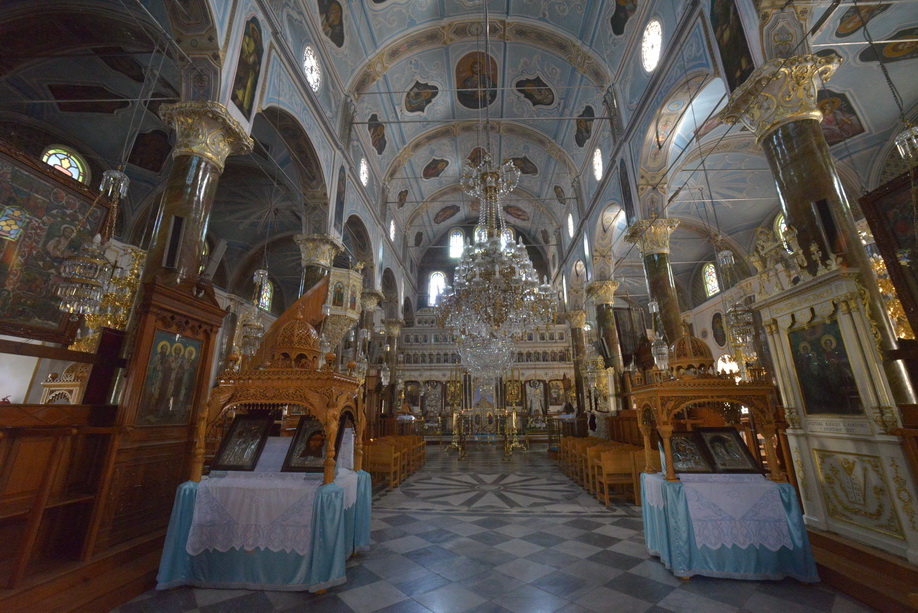
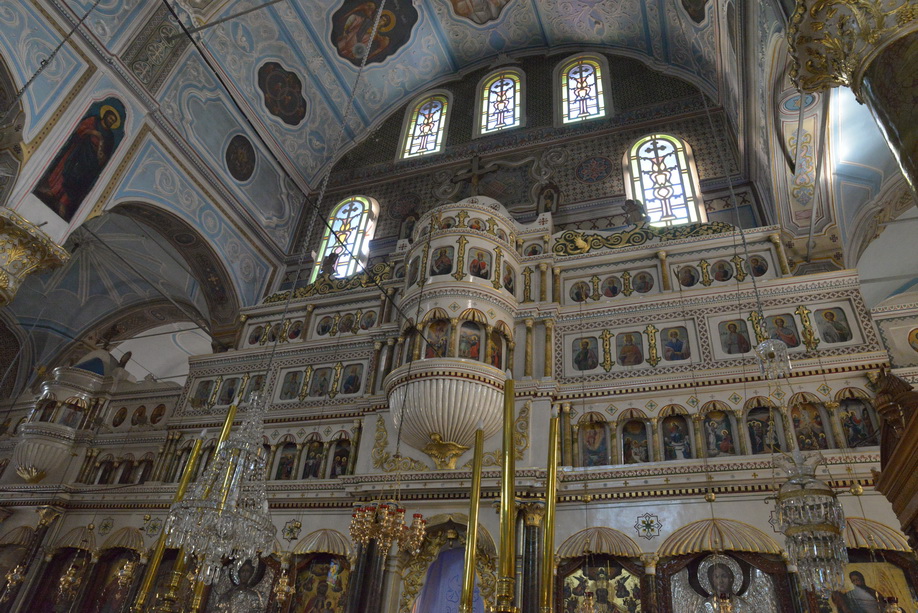
One of the most striking places I encountered was Nea Moni, the eleventh-century Byzantine monastery renowned for its mosaics. Its church and surviving decorations recall a period when Chios was closely connected to Constantinople. But another image from the monastery stayed with me: a glass-fronted cabinet filled with human skulls and bones. These remains are preserved in an ossuary as a memorial to victims of the violence that struck Chios in 1822, during the Greek War of Independence. Ottoman forces killed and enslaved large numbers of islanders, and monasteries were among the places where people had sought refuge. The display is therefore not simply an old monastic burial custom; it confronts visitors with a specific and painful chapter of the island's history. I photographed it because understanding what I was seeing mattered as much as recording it.
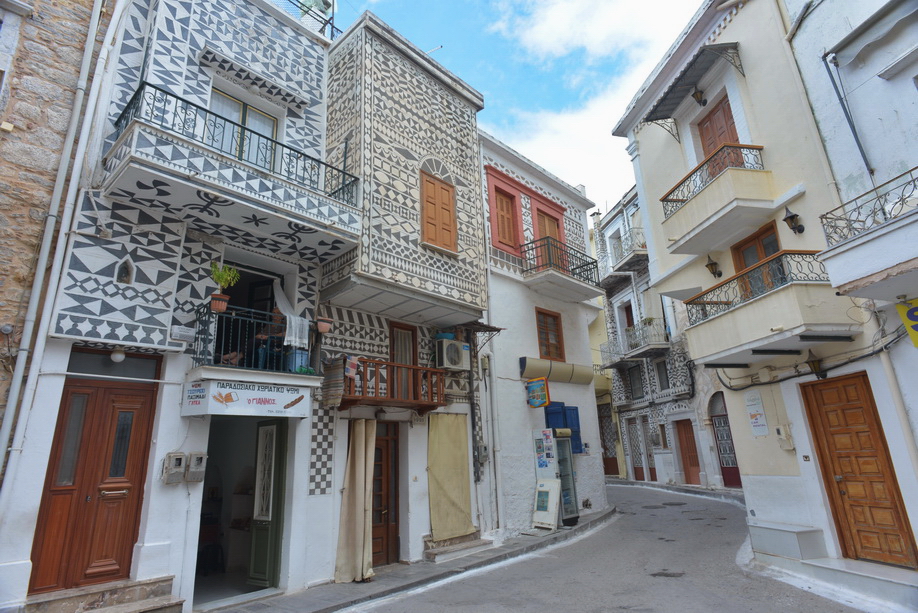
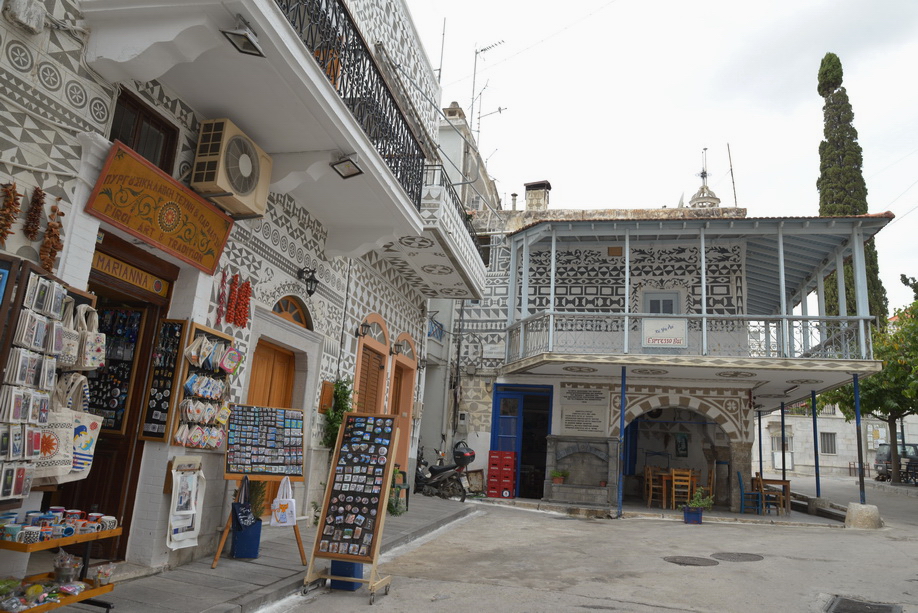
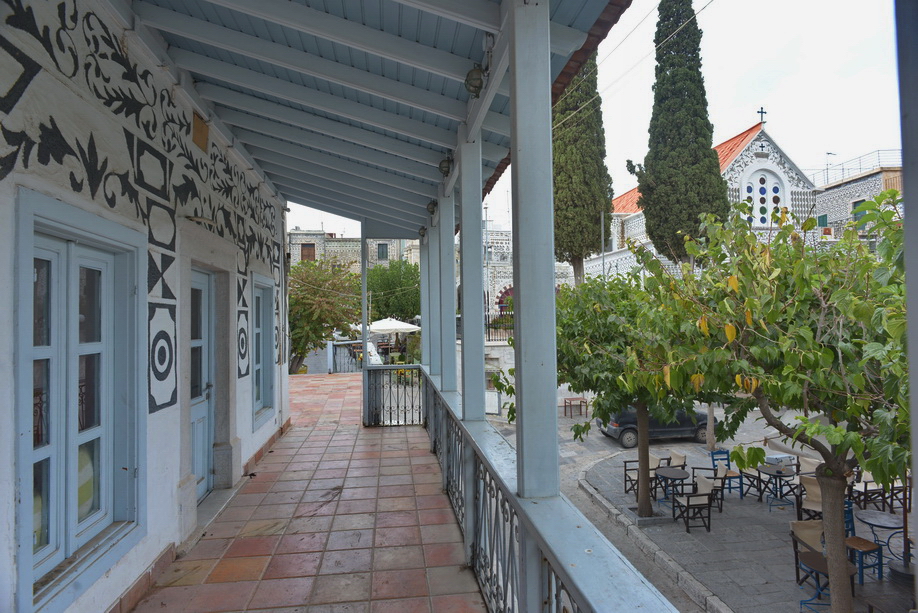
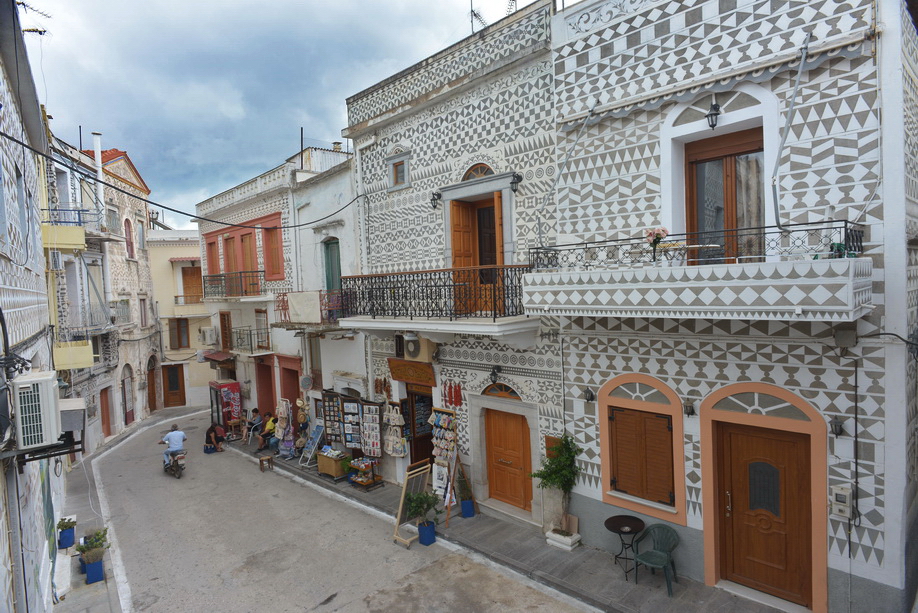
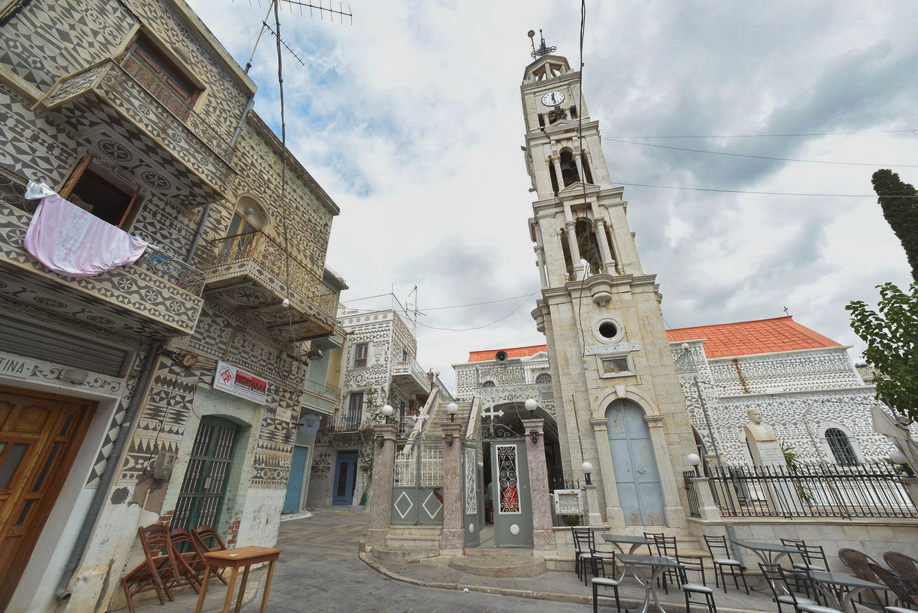
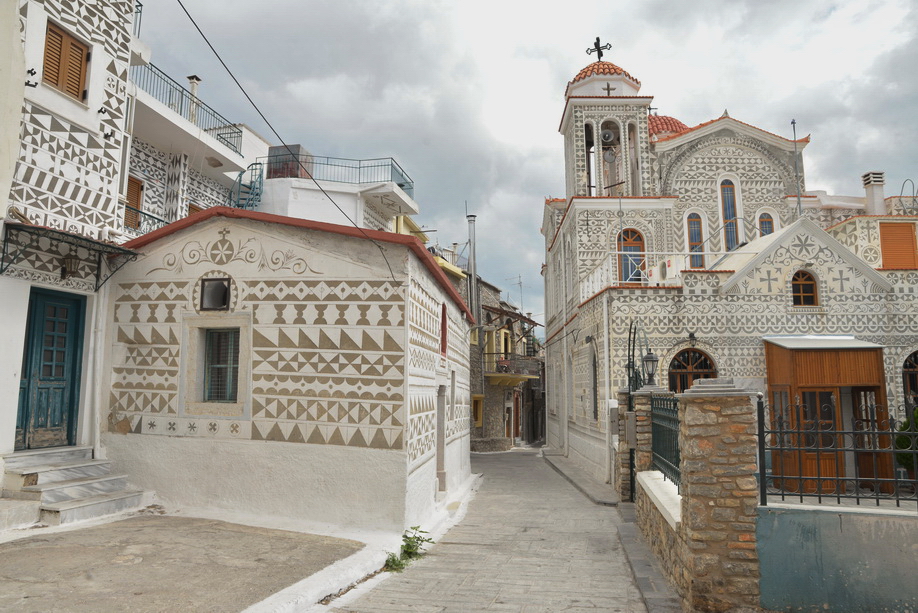
The photographs then lead through streets of extraordinary character in Pyrgi, one of the medieval mastic-producing villages in southern Chios. Its house façades are covered with black-and-white patterns called xysta, from the Greek word for 'scratched'. These are not painted designs. Craftsmen apply plaster and a pale surface coating, draw precise geometric patterns and scrape selected areas away to expose the darker material beneath. Triangles, diamonds, circles and repeated borders turn entire streets into an intricate composition of light and shadow. The craft is related to sgraffito techniques familiar in Italy, while researchers have also noted possible links to eastern Mediterranean textile and carpet motifs. Its precise beginnings remain uncertain, and I would not attribute every pattern to a single culture. What interested me was the way generations of craftsmen had transformed ordinary house walls into a shared visual language.
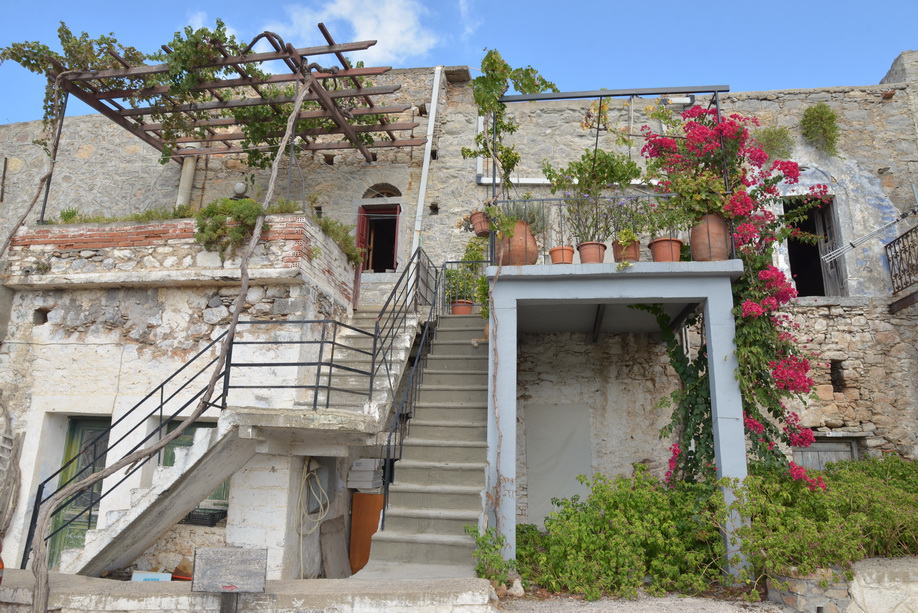
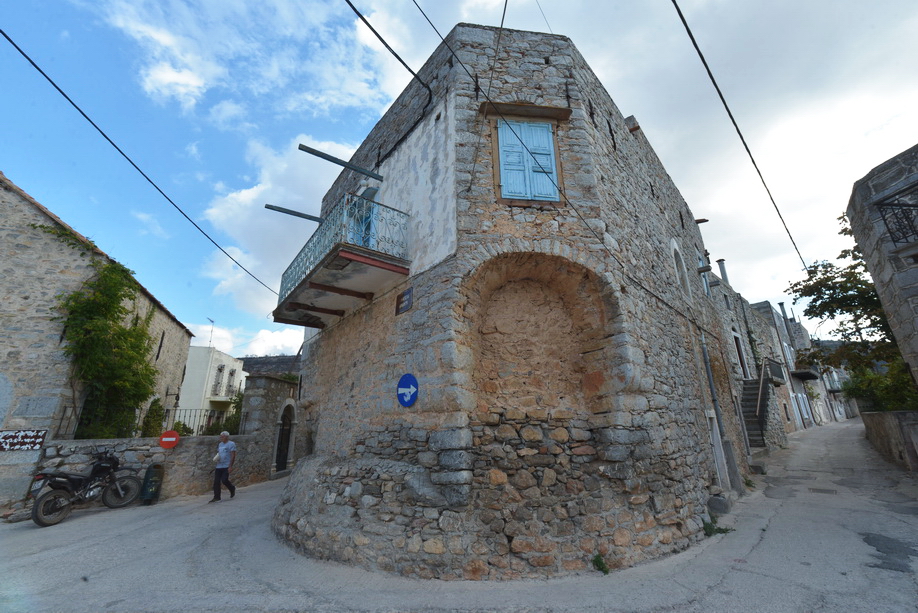
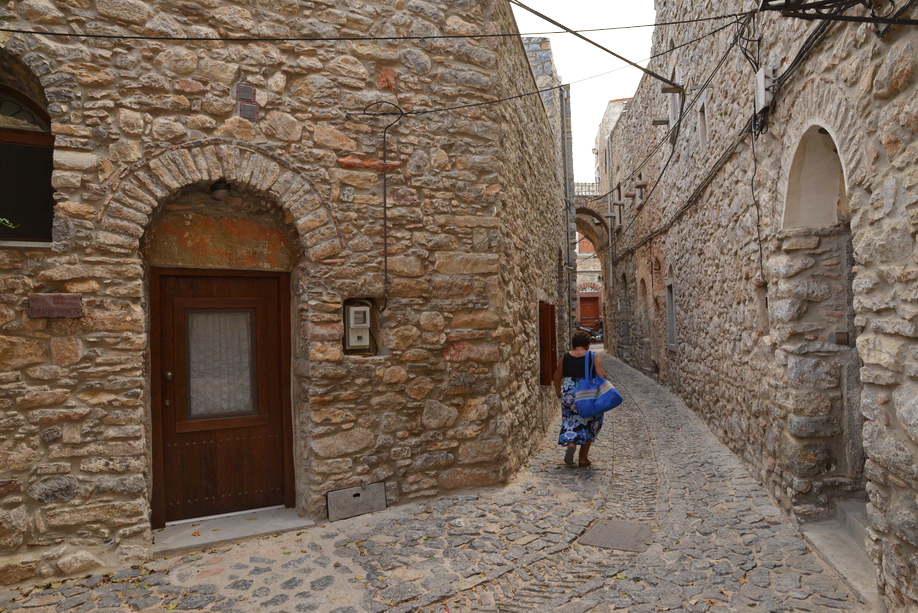
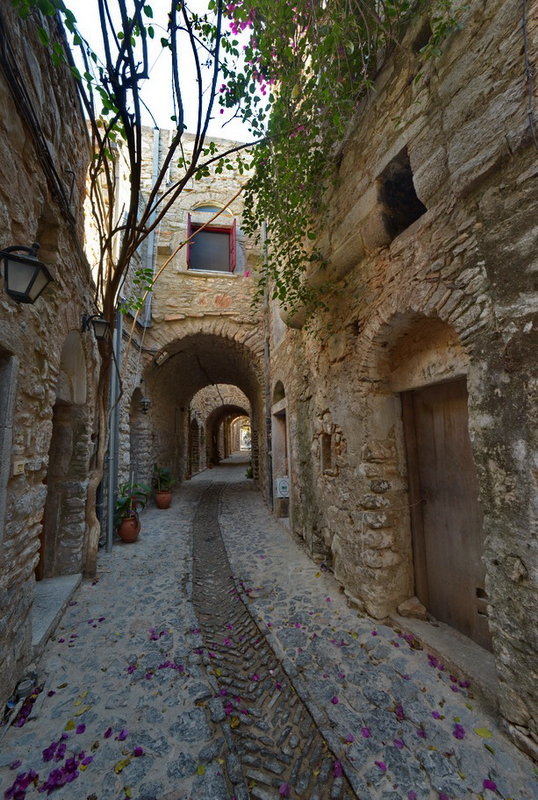
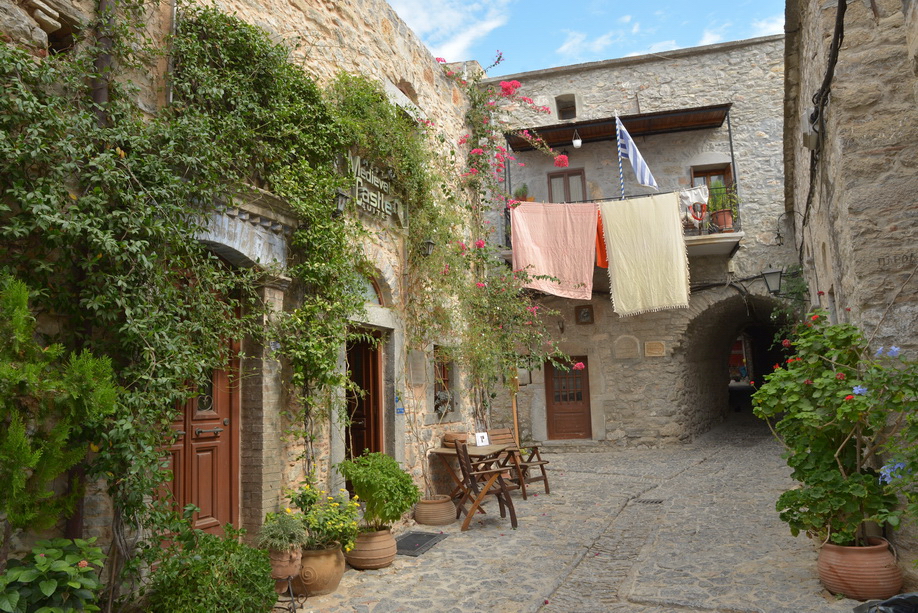
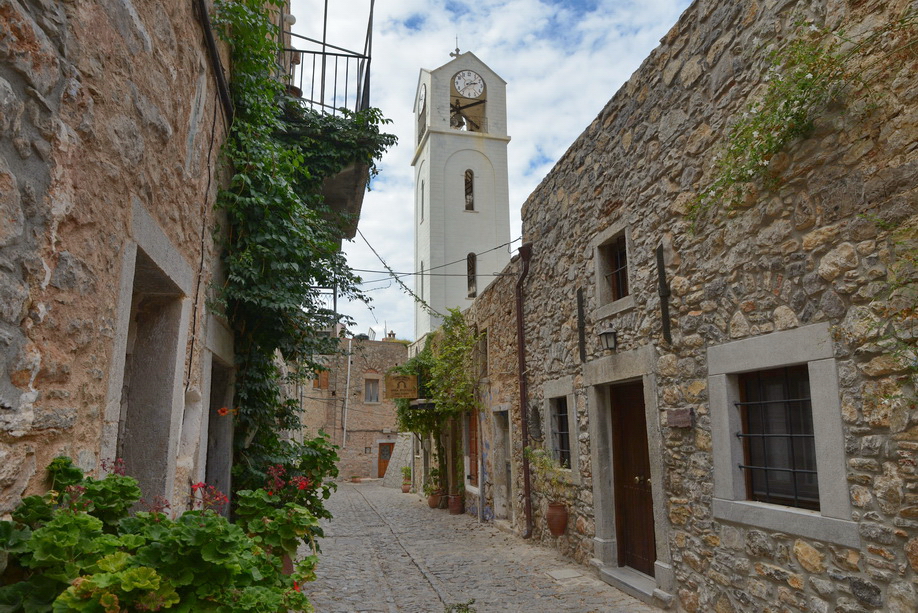
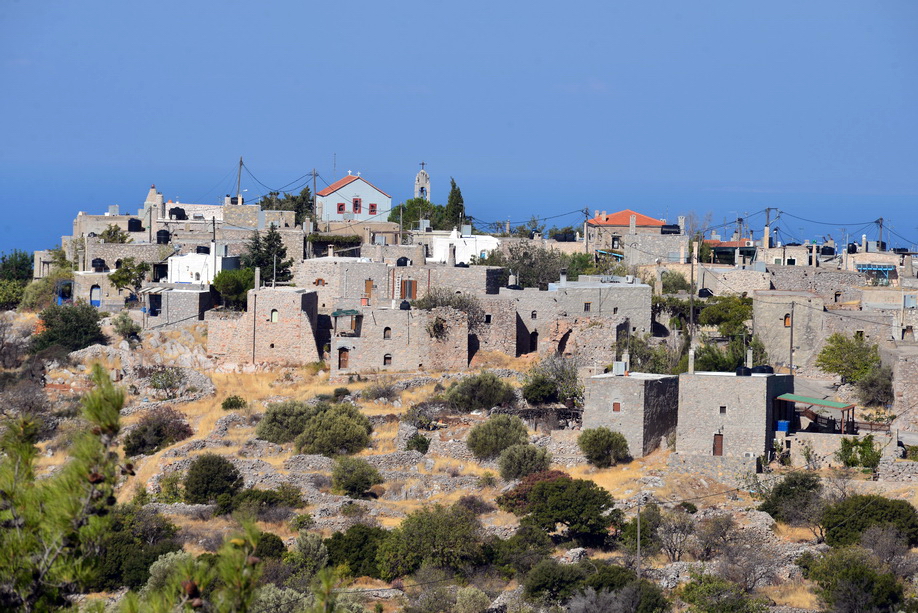
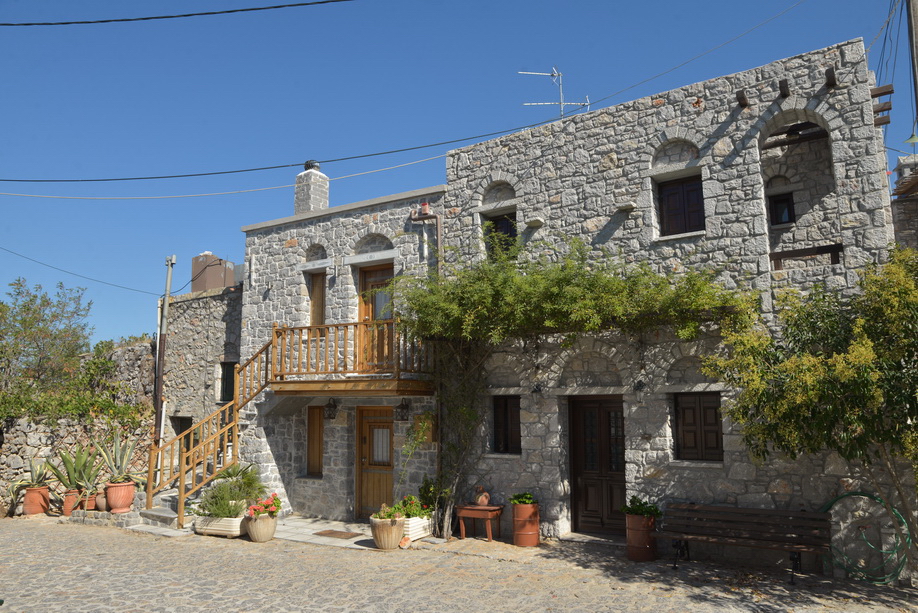
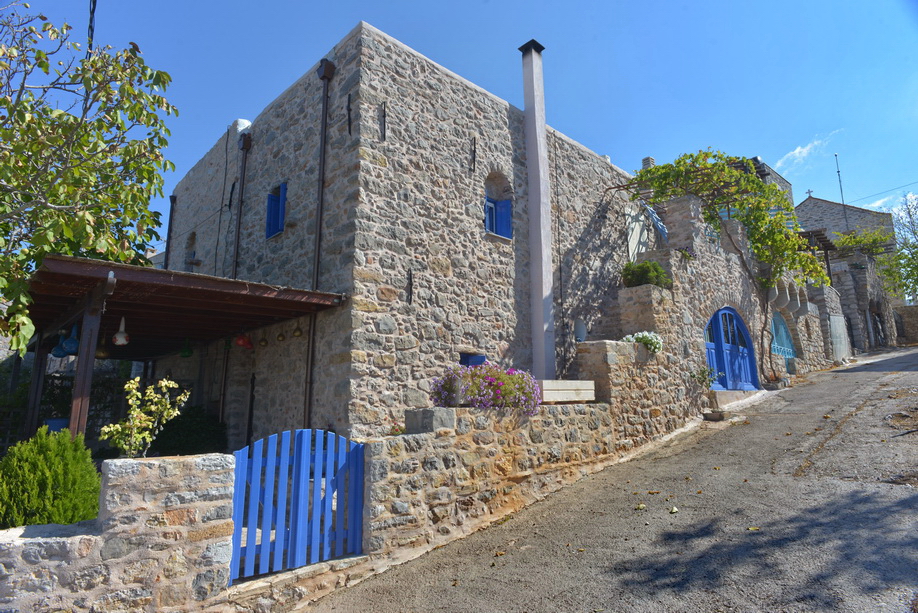
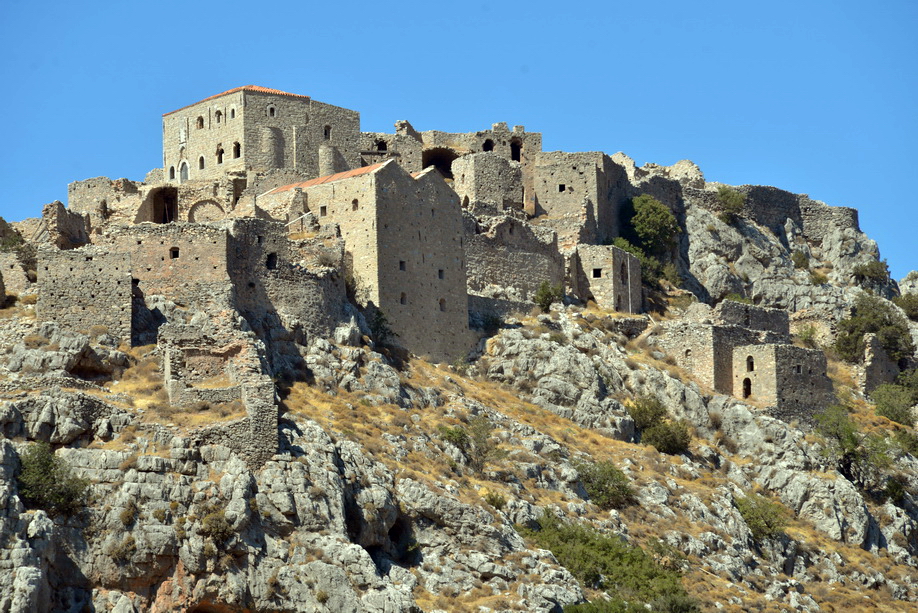
Pyrgi's compact arrangement was not accidental. Like other fortified settlements in the Mastichochoria, it developed with narrow passages and closely built houses that offered protection in periods of insecurity. Mastic, the aromatic resin collected from Pistacia lentiscus var. chia, was valuable enough to shape the economy and even the physical form of the villages. In my photographs, the decorated façades, balconies, churches and tight stone lanes belong to the same story: the meeting of skilled labour, commerce and community life. Elsewhere on the island, the heavy masonry and vaulted passages of other medieval villages suggest a different, more austere architectural expression.
The island's history passed through Byzantine and Genoese administration and then Ottoman rule, which began in 1566. In 1822, during the Greek struggle for independence, Chios suffered a devastating campaign of killing, enslavement and displacement. The tragedy attracted attention across Europe, not least through Eugène Delacroix's painting The Massacre at Chios. The island became part of Greece in 1912; later, the upheavals of the Greco-Turkish War and the population exchange of 1923 altered lives on both sides of the water. Looking at these quiet streets today, it is easy to overlook the histories that lie behind their stones.
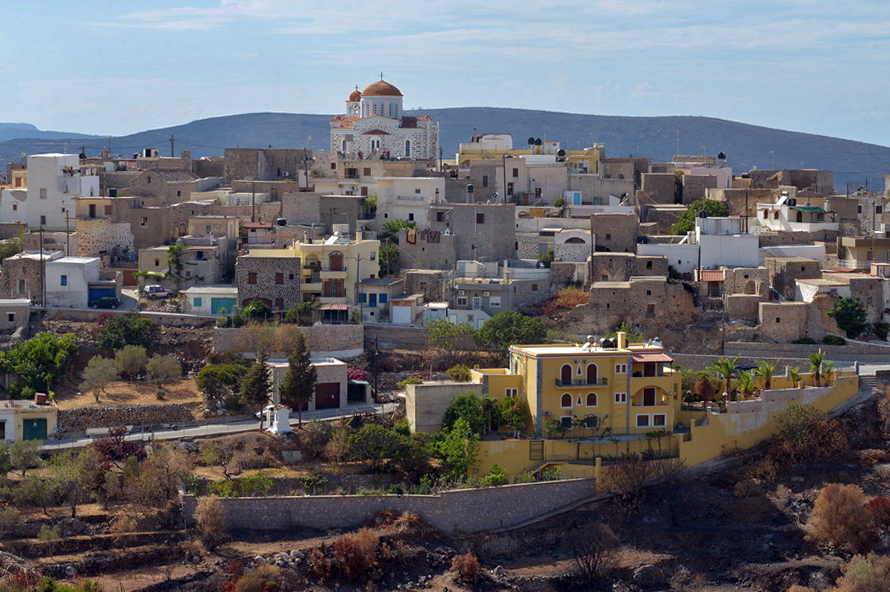
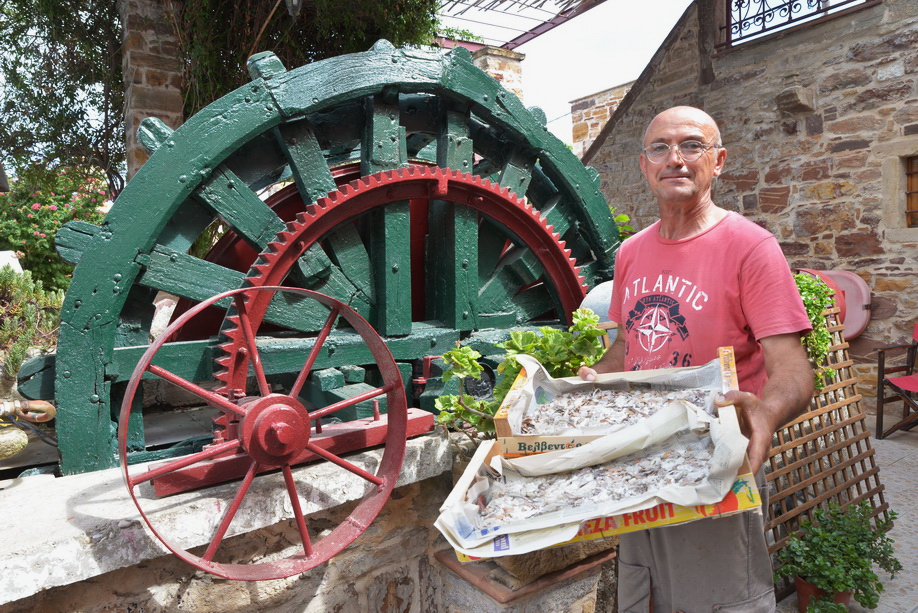
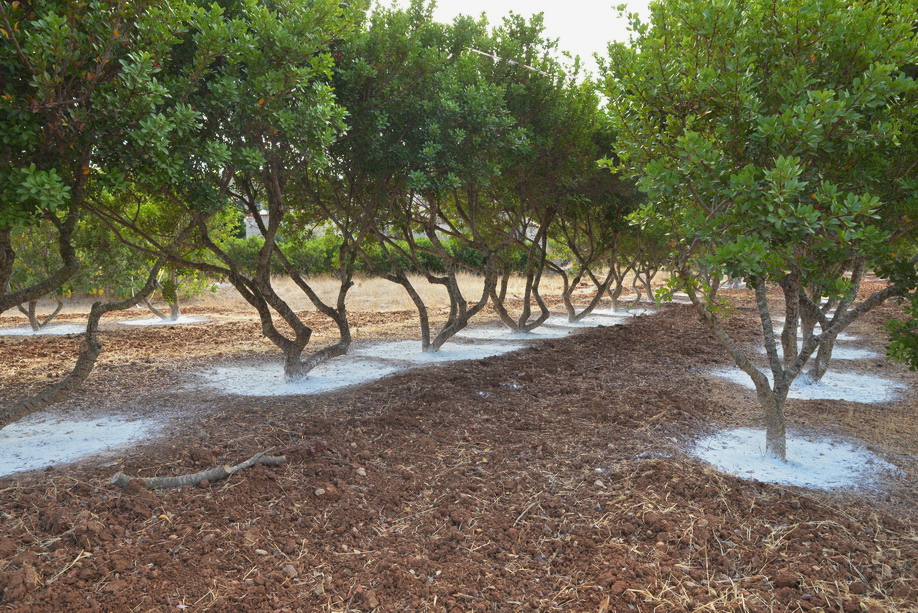
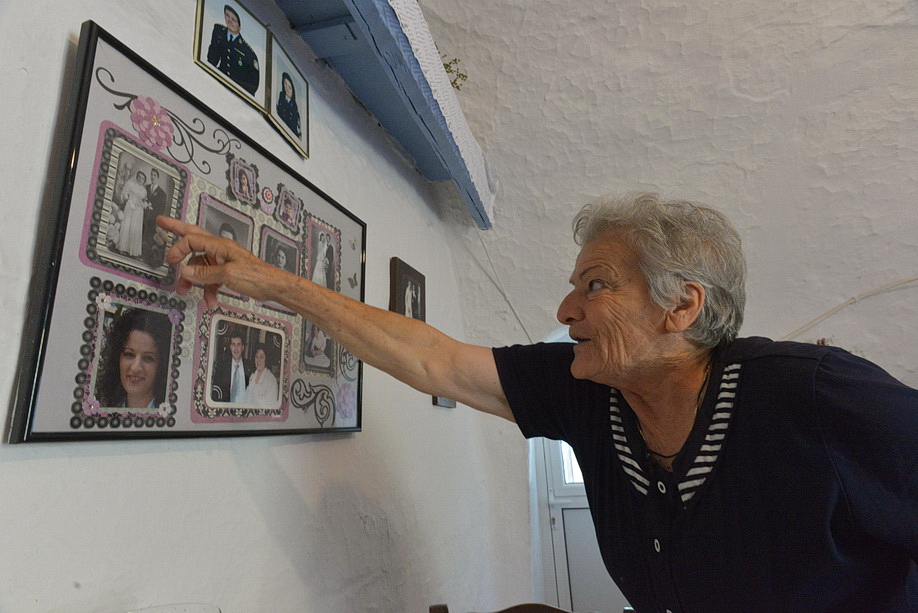
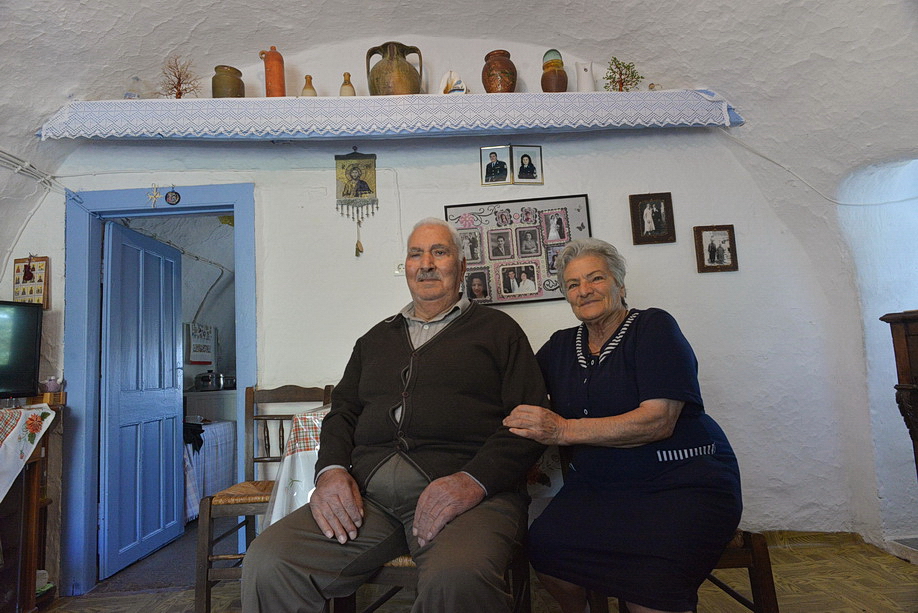
The last photographs turn towards the island's southern landscape and the life sustained by it: mastic trees growing low over dry soil, stone settlements on the hillsides, old buildings and glimpses of people in their own surroundings. The resin is traditionally obtained by making small cuts in the bark so that its fragrant 'tears' can harden before being gathered and cleaned. It is a demanding agricultural practice handed down through families, not merely a product sold to visitors. These images reminded me that the distinctive character of Chios has been shaped as much by work and ordinary domestic life as by its monuments.
For me, the photographs of Chios became a sequence of contrasts: the openness of the sea and the enclosure of medieval lanes, the exuberant geometry of Pyrgi and the plain stone of other villages, the beauty of Byzantine art and the unsettling testimony of the monastery's ossuary. Across the strait from Turkey, Chios offered a tangible reminder of a shared and sometimes painful Aegean past. My intention was not to catalogue attractions, but to observe the layers of history that remain visible in the places people inhabit.