
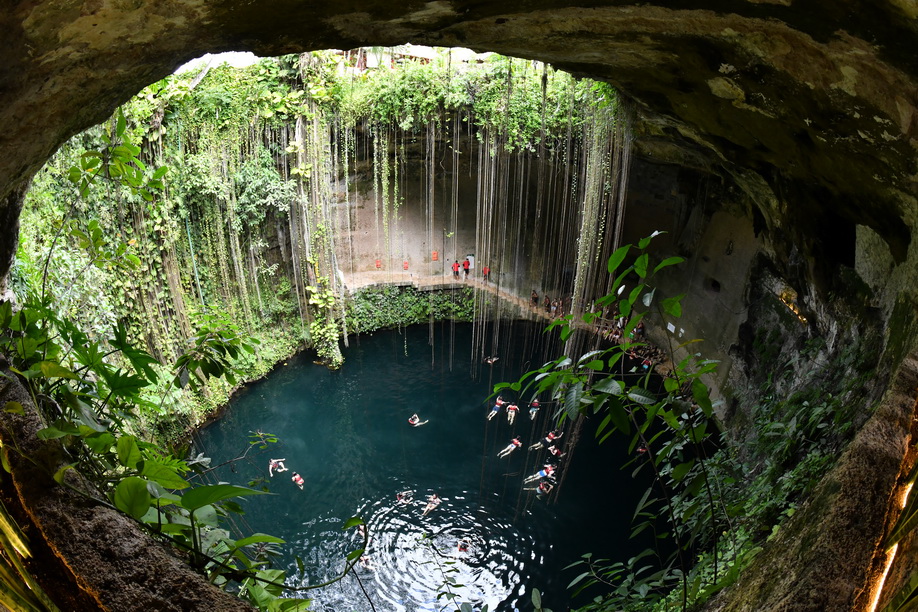
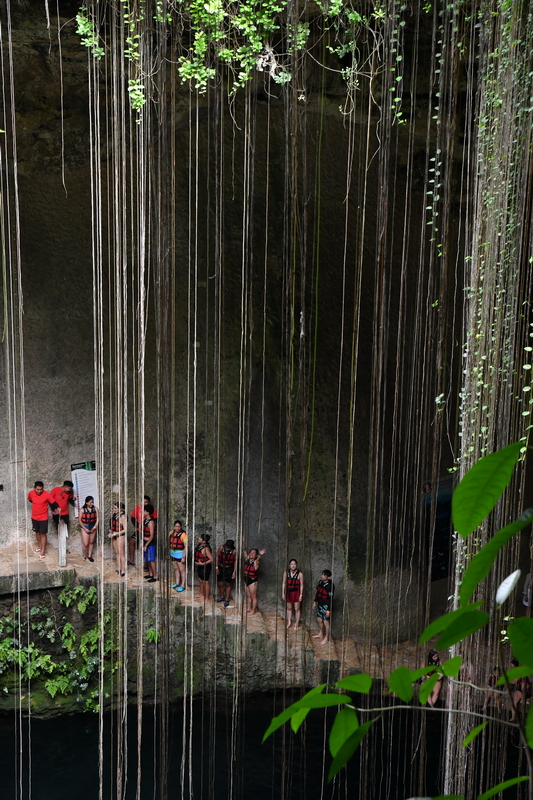

On 11 November, I left Merida for a journey into the interior of Yucatan. My first stop was Cenote Ik Kil. From above, the cenote appeared like a vast opening in the earth, almost completely surrounded by rock and vegetation. Long roots and vines descended from the surface toward the dark blue water below. People swimming at the bottom seemed very small within this natural space. I was interested not only in the beauty of the cenote, but also in this contrast of scale between the human body and the geological formation surrounding it.
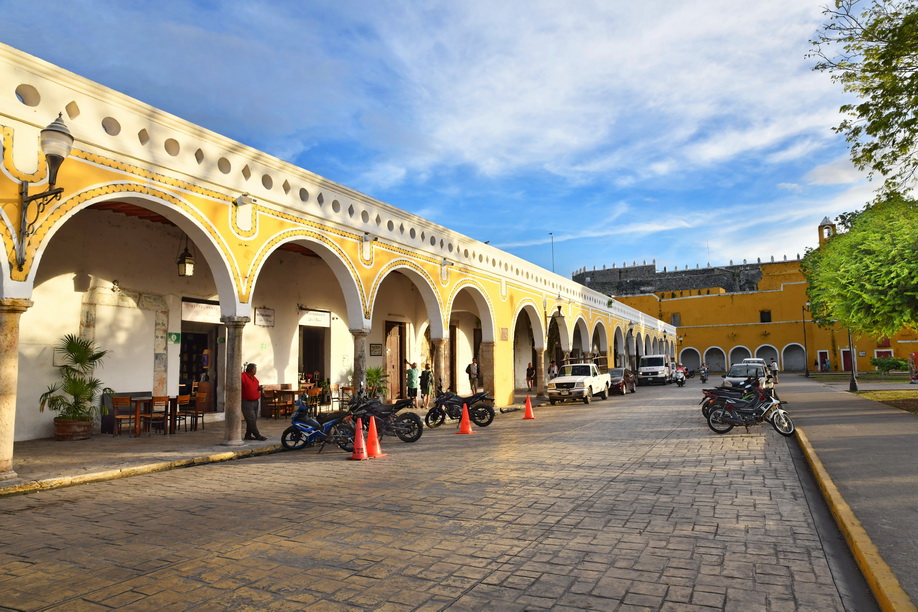
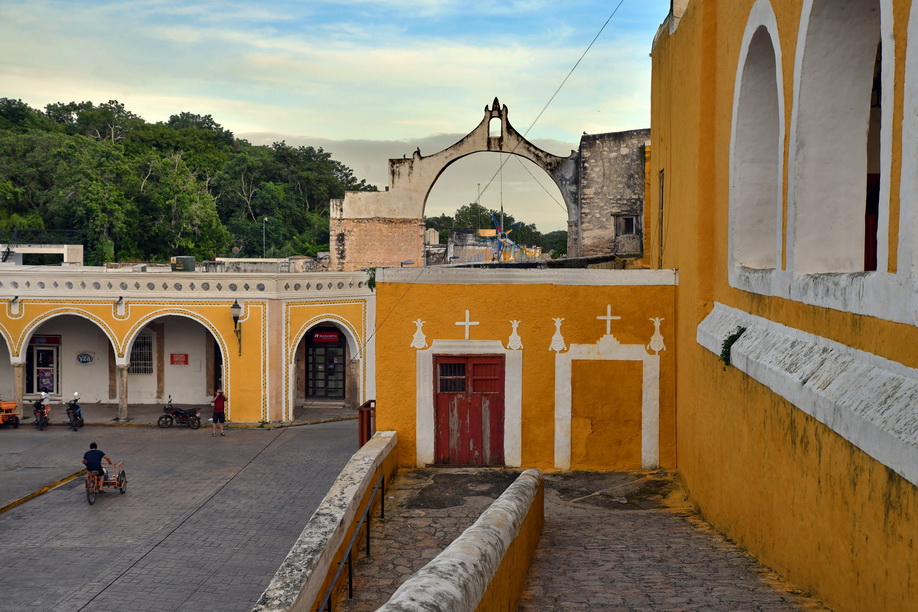
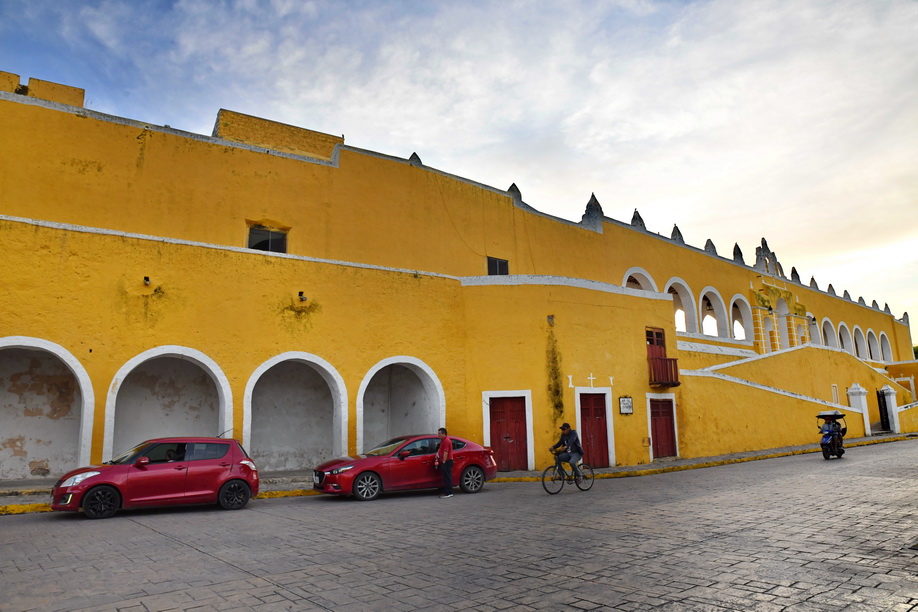
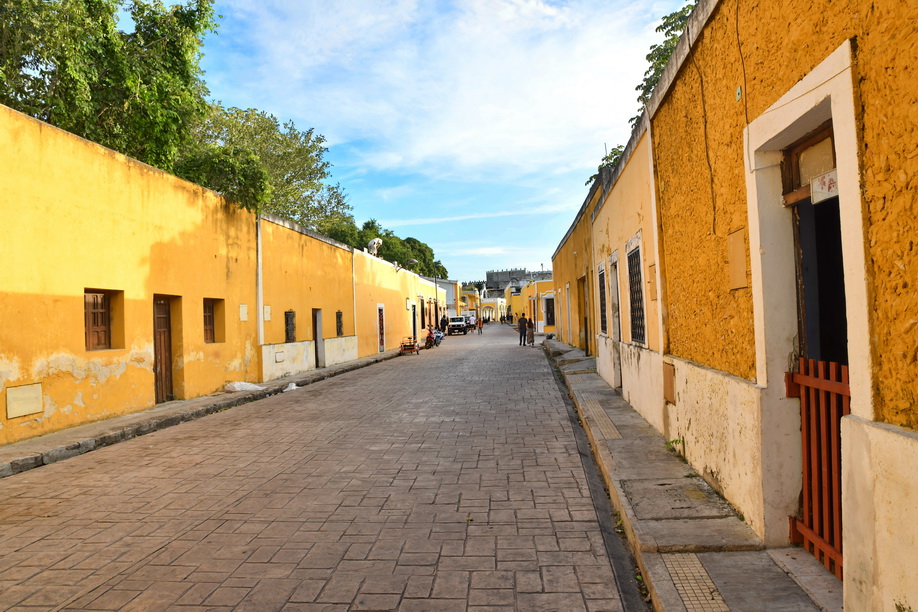
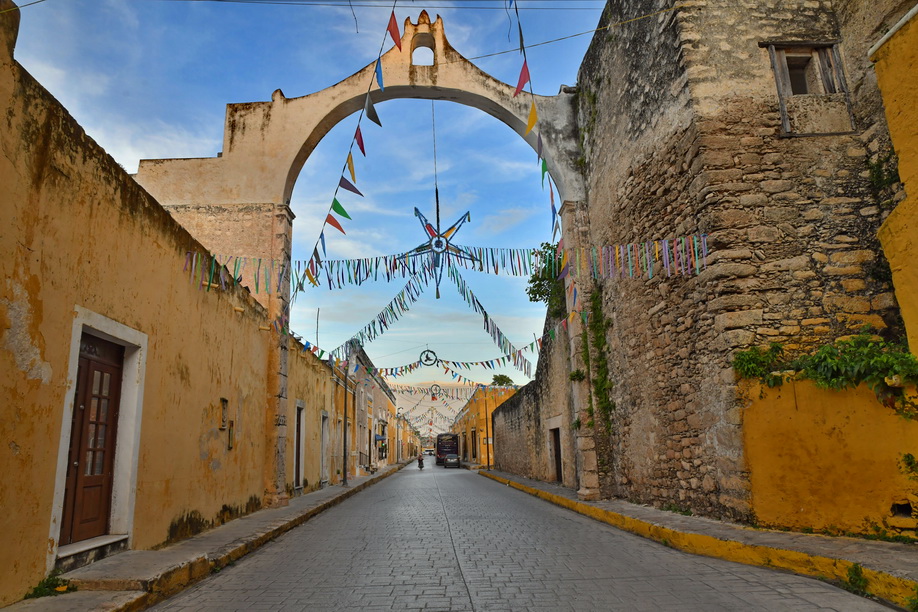
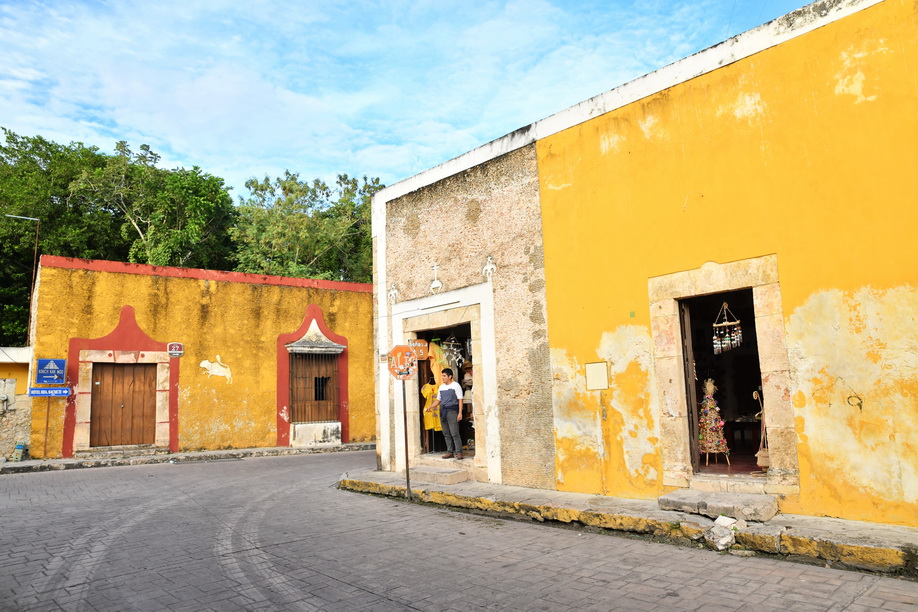
Later in the day, I continued to Izamal. The character of the town revealed itself immediately through its dominant yellow and white colours. Arcades, long walls, modest houses and religious buildings seemed to belong to the same visual language. Walking through the streets, I photographed not only the monumental architecture but also quieter details: old doors, worn walls, bicycles, motorcycles and people moving through everyday life.
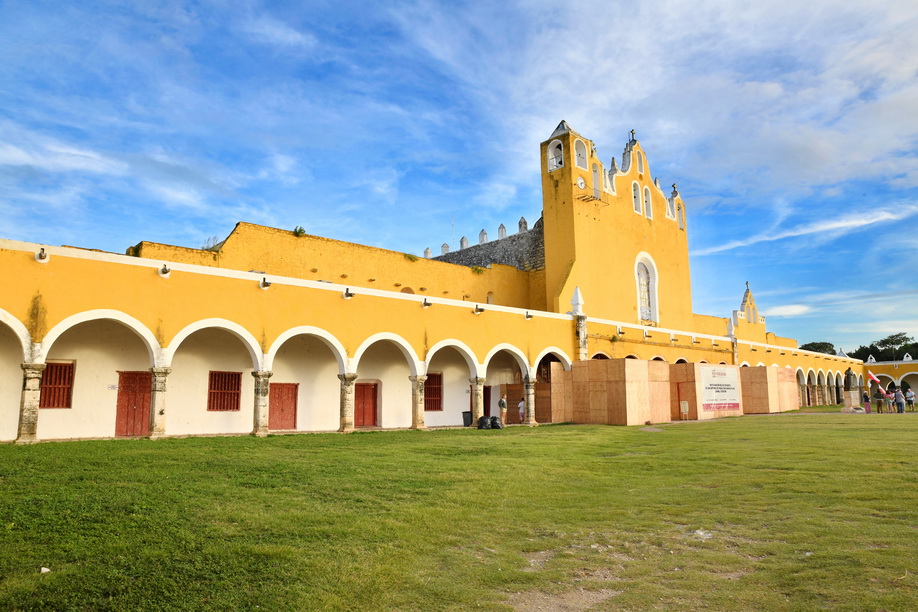
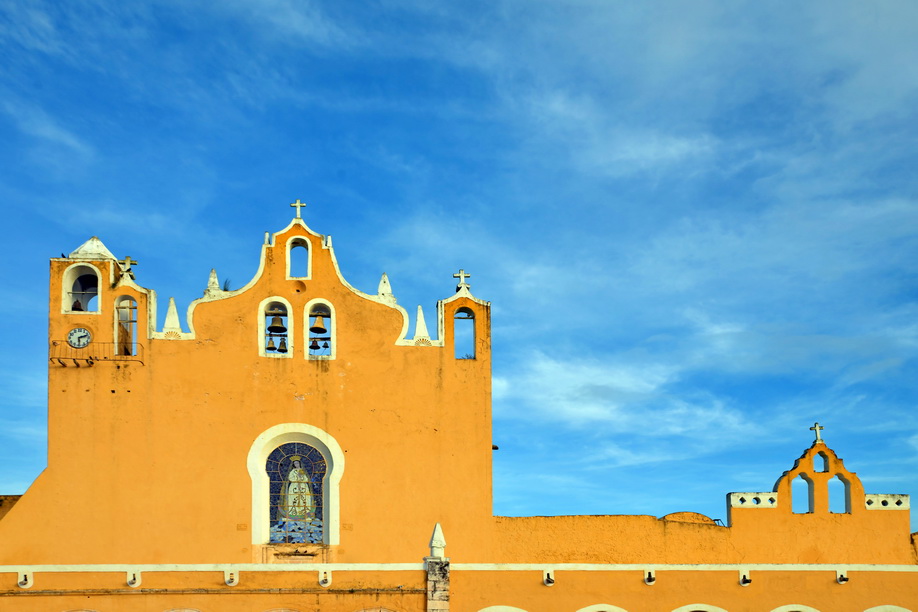
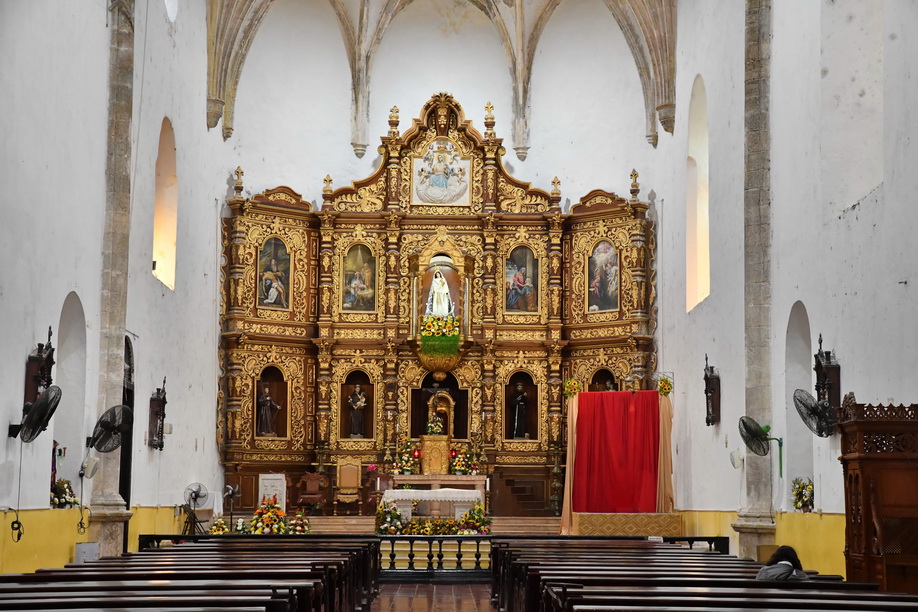
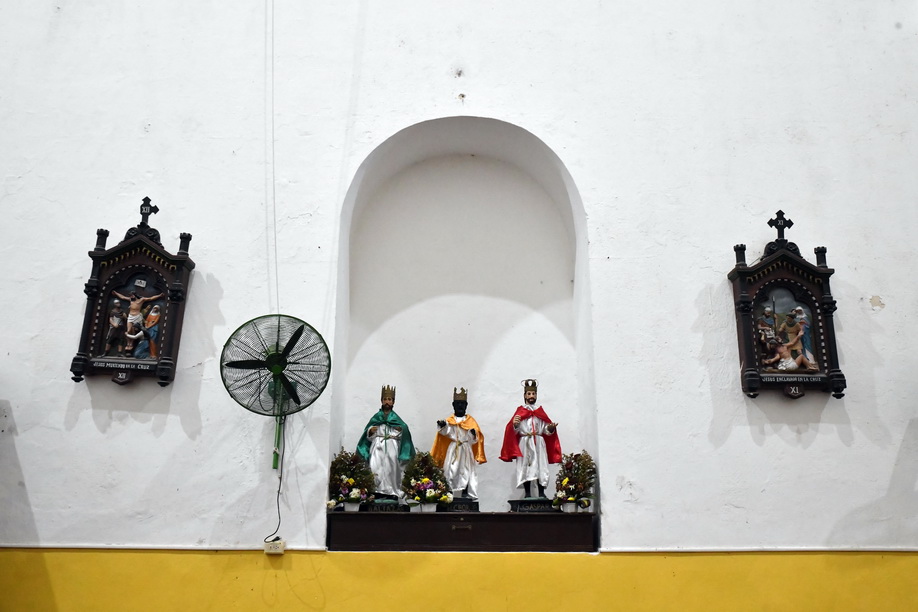
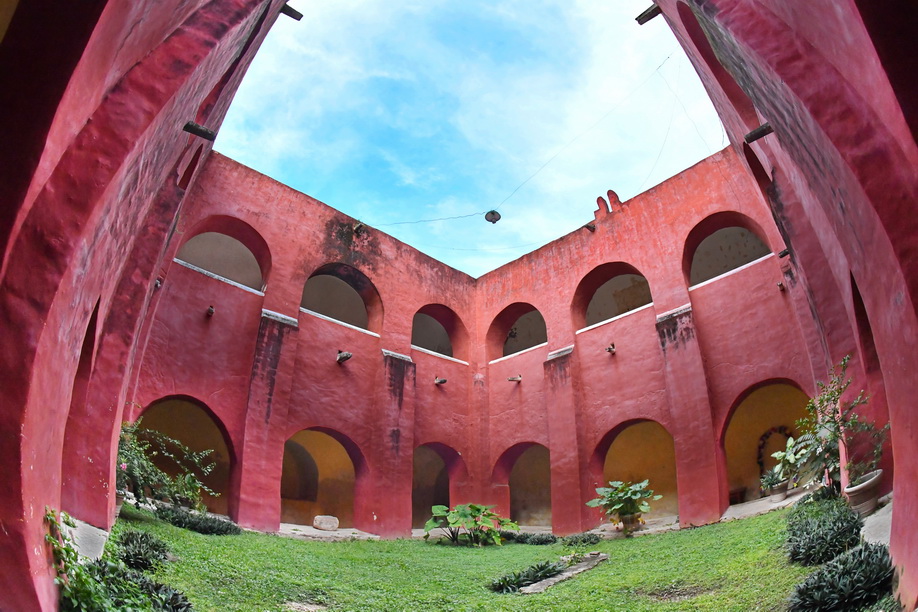
At the centre of Izamal stands the Convent of San Antonio de Padua. Its long arcades enclose an enormous open atrium, while the church rises from within the complex. Inside, the simplicity of the white walls contrasts with the richly decorated golden altarpiece. Moving between the church, the arcades and the surrounding streets, I became increasingly aware that this was not simply a colonial monument preserved from the past. It remained part of the living town around it.
In one of the arcades I encountered a young woman dressed for her quinceanera, posing for photographs in a pale blue gown. Against the old stone columns and whitewashed arches, her presence introduced another layer of time into the scene. The centuries-old architecture had become the setting for a contemporary family ritual. It was one of those moments I often look for while photographing: the past continuing to exist within ordinary life rather than remaining confined to history.
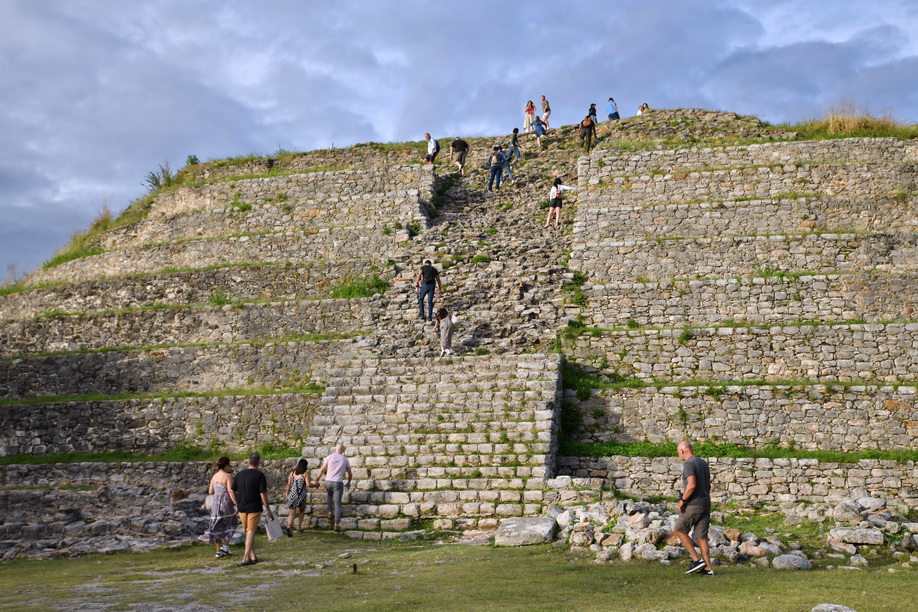
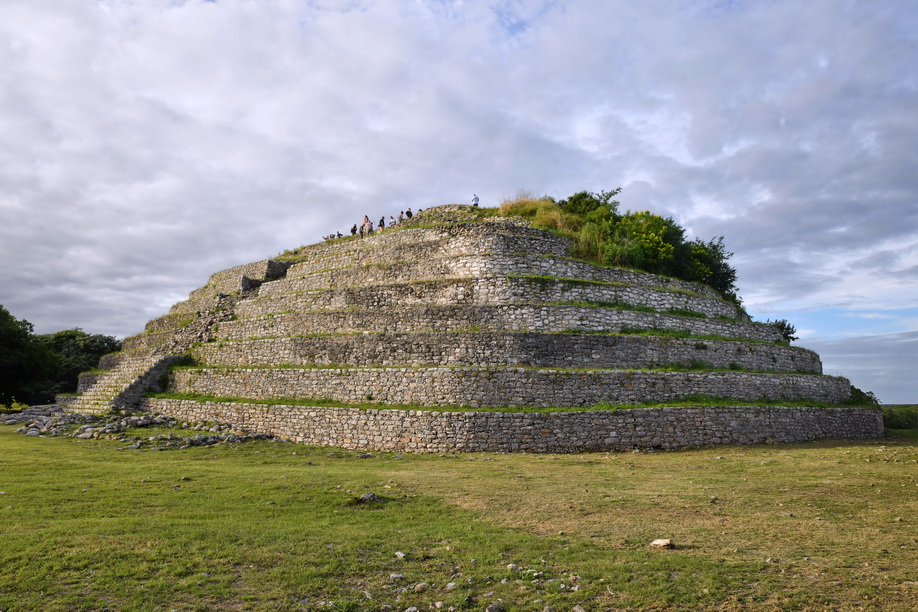
But Izamal has a history much older than its colonial buildings. I ended my photographs at the Kinich Kakmo pyramid, one of the surviving structures of the ancient Maya city. Unlike the carefully painted streets below, its broad stone terraces remain exposed to the weather. People climbed the ancient steps and stood along the summit, looking across the modern town.
During those few hours, Izamal gradually revealed itself to me as a place built from different layers of time. The Maya pyramid, the colonial convent, the yellow streets and the people who inhabit them today do not exist separately. They occupy the same landscape. After beginning the day looking down into the deep waters of Ik Kil, I ended it standing before a Maya structure rising above the ground. Between those two places, Yucatan seemed to tell its history through stone, water, colour and the continuity of everyday life.
Cenotes are openings into the limestone aquifer of the Yucatán Peninsula, formed as rock dissolves and underground chambers collapse. For Maya communities, water sources were essential to settlement and agriculture, and some cenotes also carried ritual significance. Izamal offers a different meeting of landscapes and histories: Maya ceremonial structures remain close to the colonial convent and the yellow-painted streets, making the city a visible record of successive eras rather than a single architectural period.