
Ganden Sumtsenling Monastery

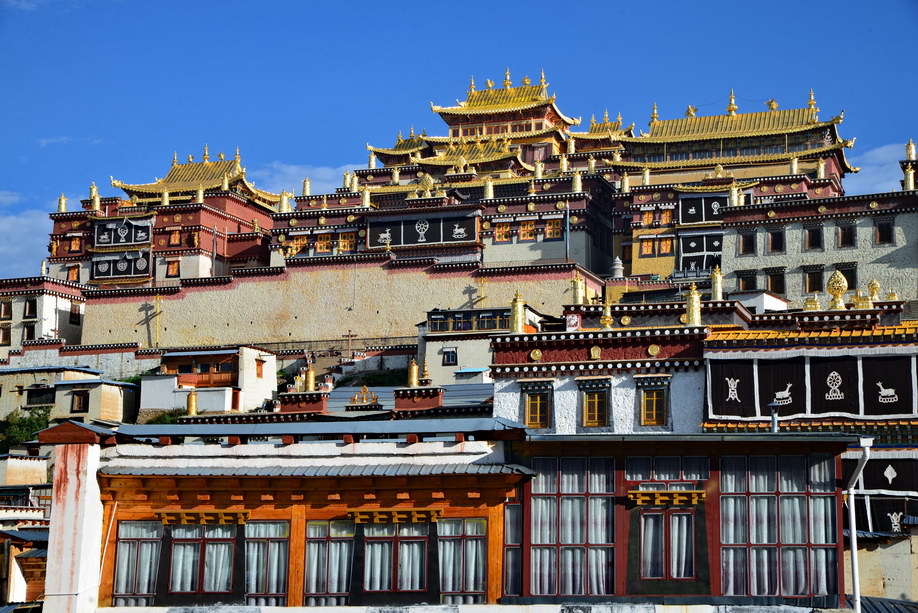
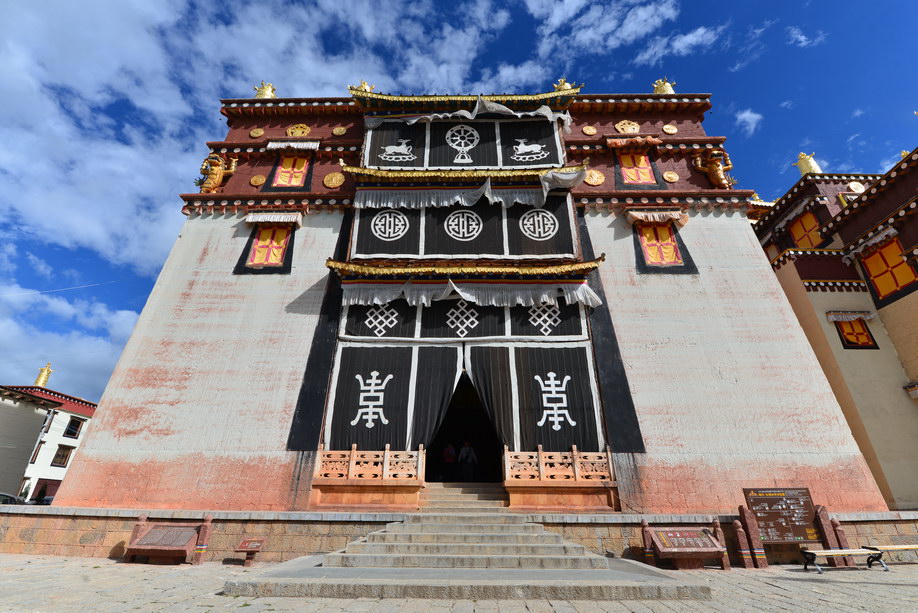

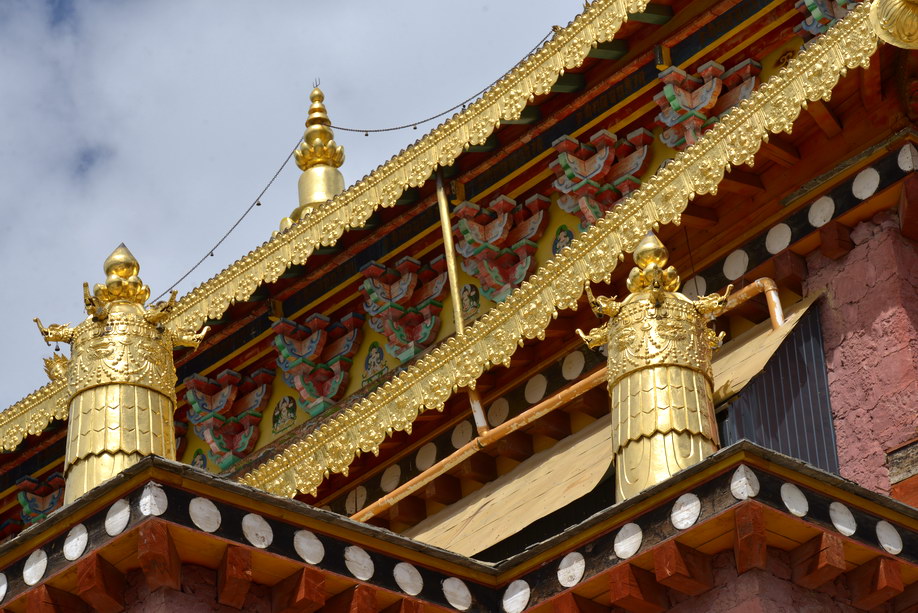


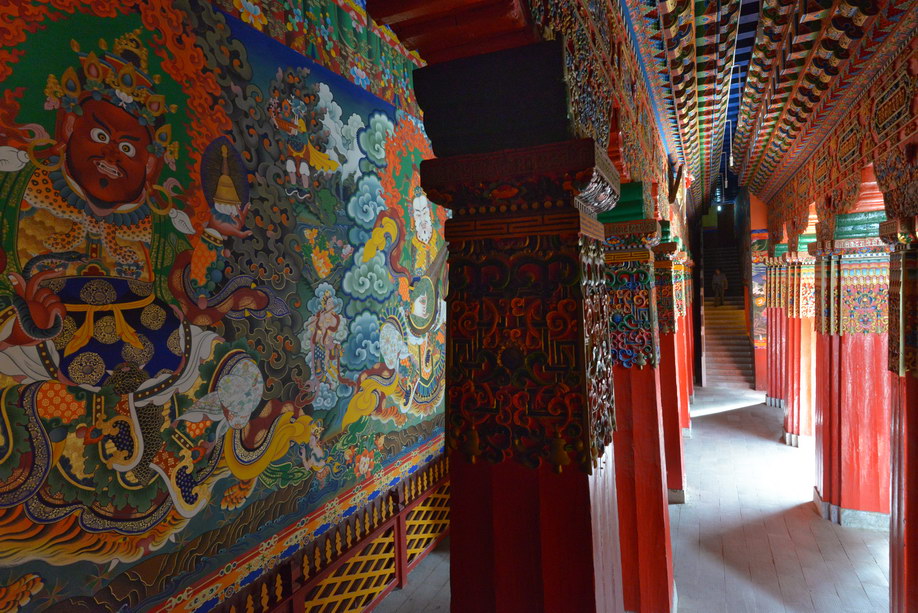
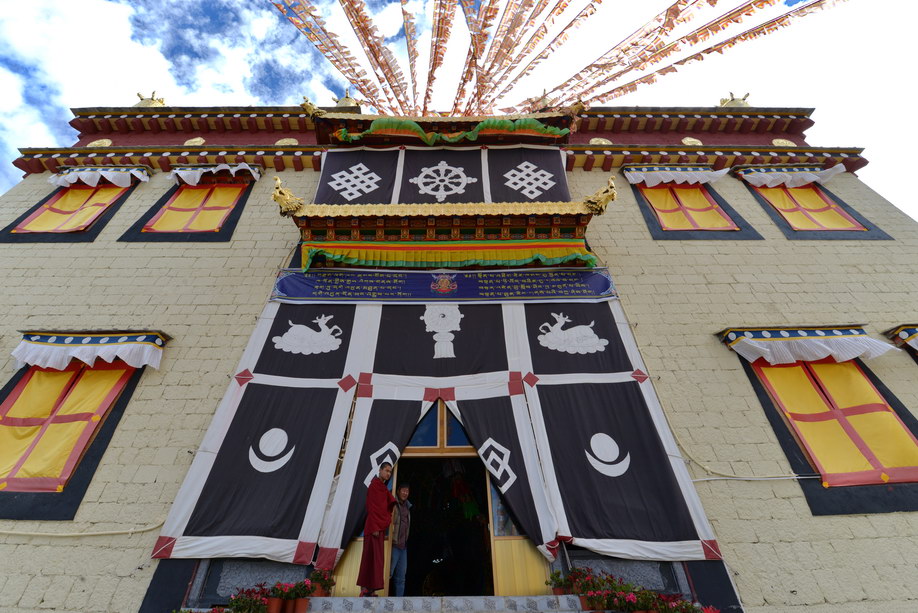
During my stay in Shangri-La, I could see Ganden Sumtsenling Monastery from a distance almost every day. Rising above the surrounding landscape with its massive white walls and golden roofs, it seemed less like a single religious building than a small settlement on the hillside. On a sunny day, I finally took a taxi toward the monastery, stopping at different points along the road to photograph it from a distance before entering the complex.
Located about five kilometres from the centre of Shangri-La, formerly known as Zhongdian, at an altitude of more than 3,300 metres, Sumtsenling is the largest Tibetan Buddhist monastery in Yunnan. It belongs to the Gelug school of Tibetan Buddhism, often known in the West as the Yellow Hat tradition, the same school with which the Dalai Lamas are historically associated.
The monastery was founded in 1679, during the period of the Fifth Dalai Lama and the Qing emperor Kangxi. Its establishment strengthened the religious and political influence of the Gelug tradition in this southeastern part of the Tibetan cultural world. Over time it developed into an important centre of Buddhist learning, ritual and monastic life for communities living across what is today northwestern Yunnan.
Seen from a distance, Sumtsenling is often compared with the Potala Palace in Lhasa, which has led to the popular description “Little Potala.” The comparison is understandable when looking at the monumental complex climbing the hillside, but Sumtsenling has its own architectural identity. Rather than being a single palace, it is a monastic settlement composed of large assembly halls, temples, monks’ residences, courtyards and narrow passages.
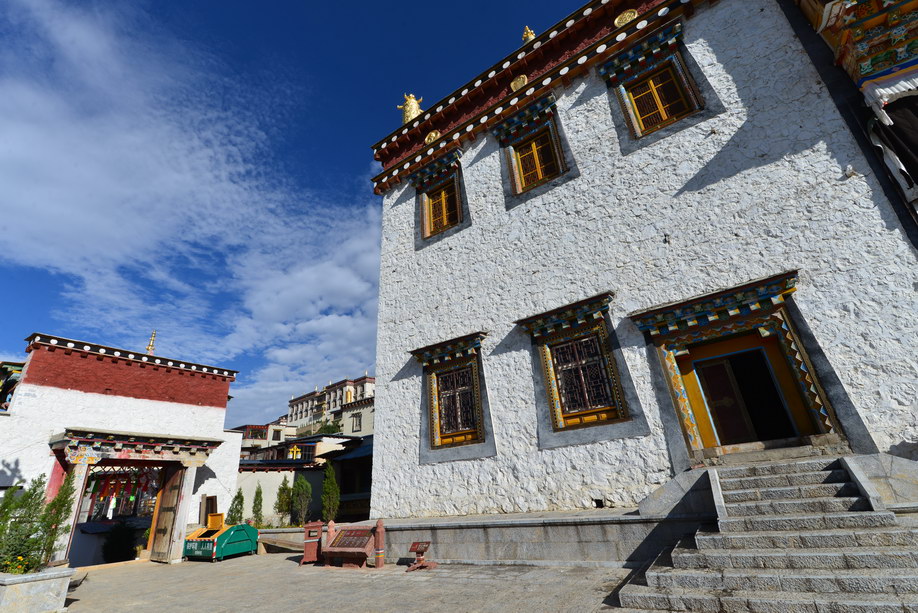
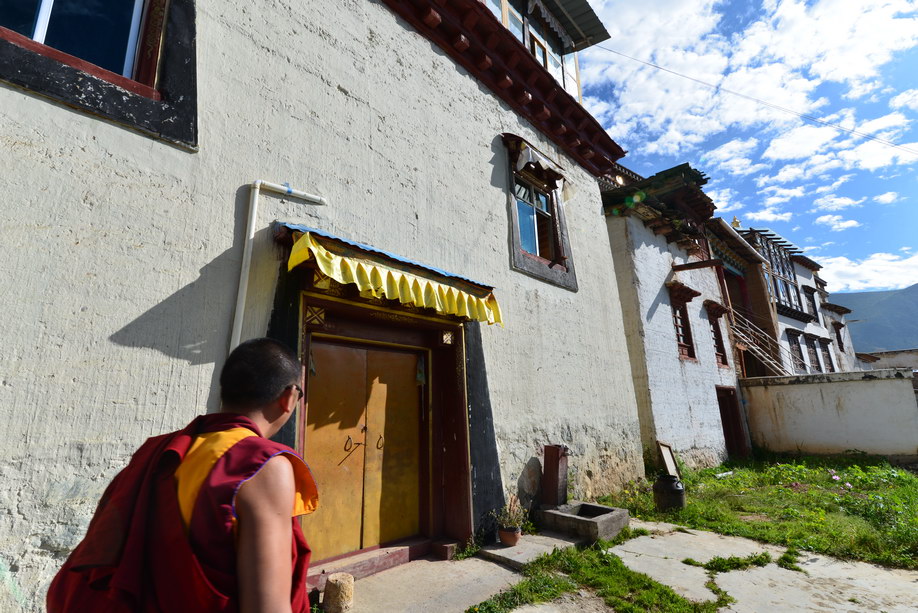
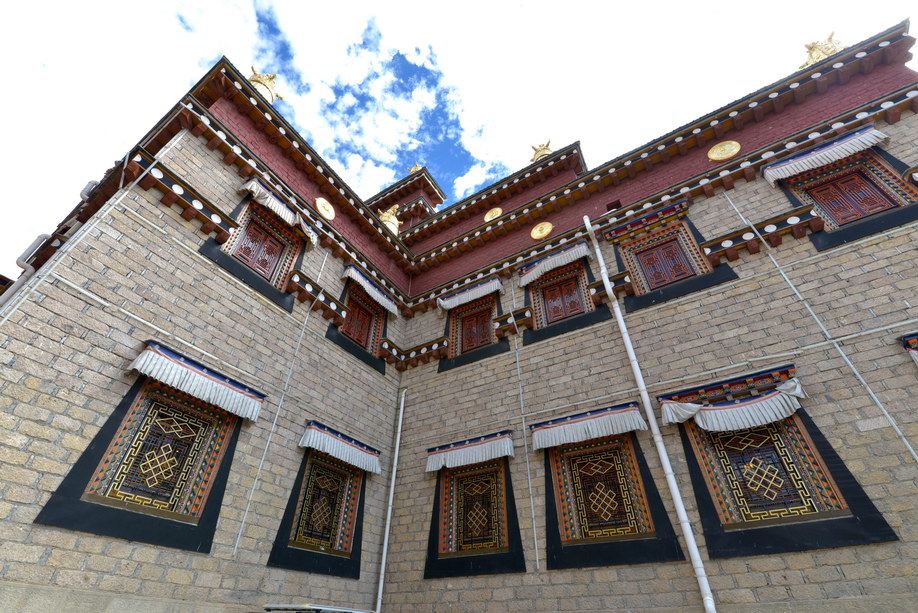
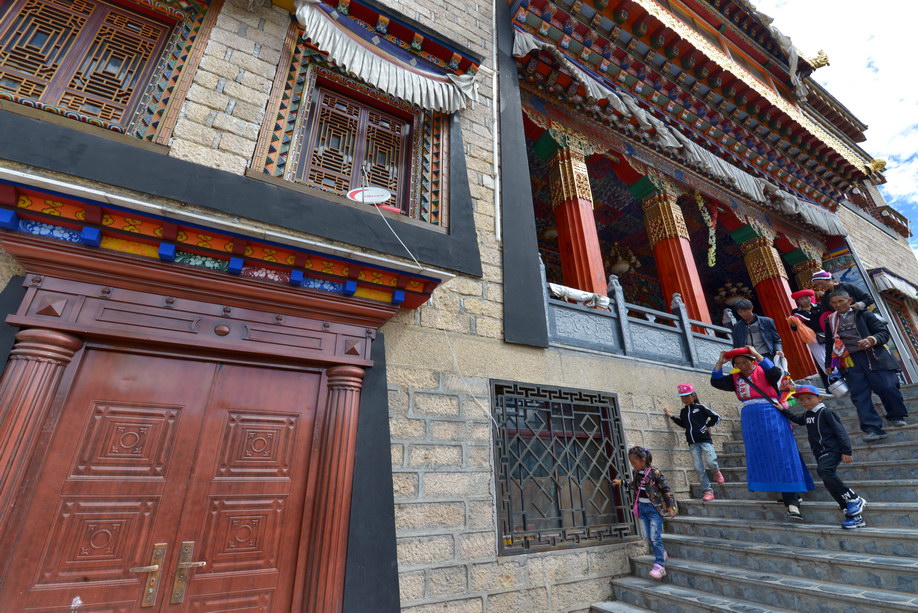
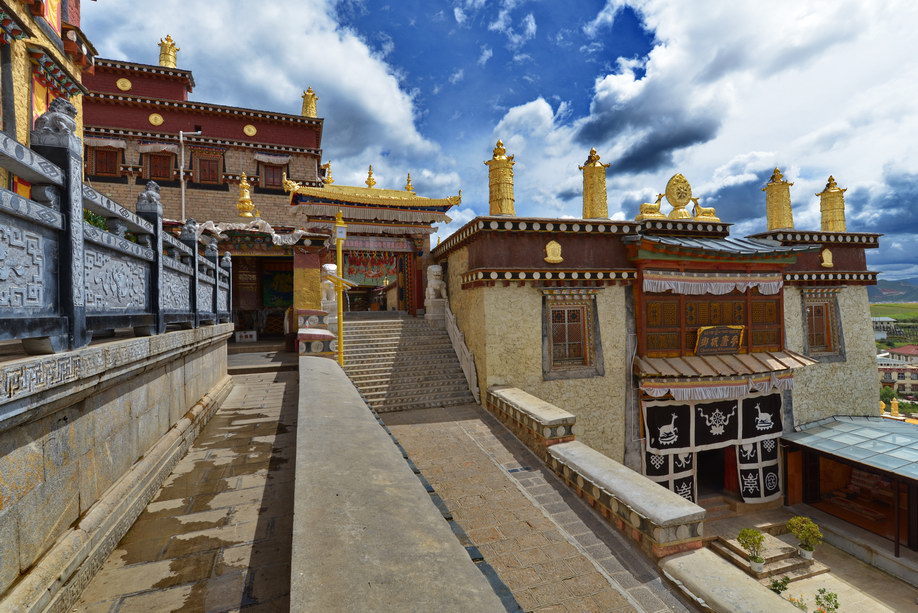
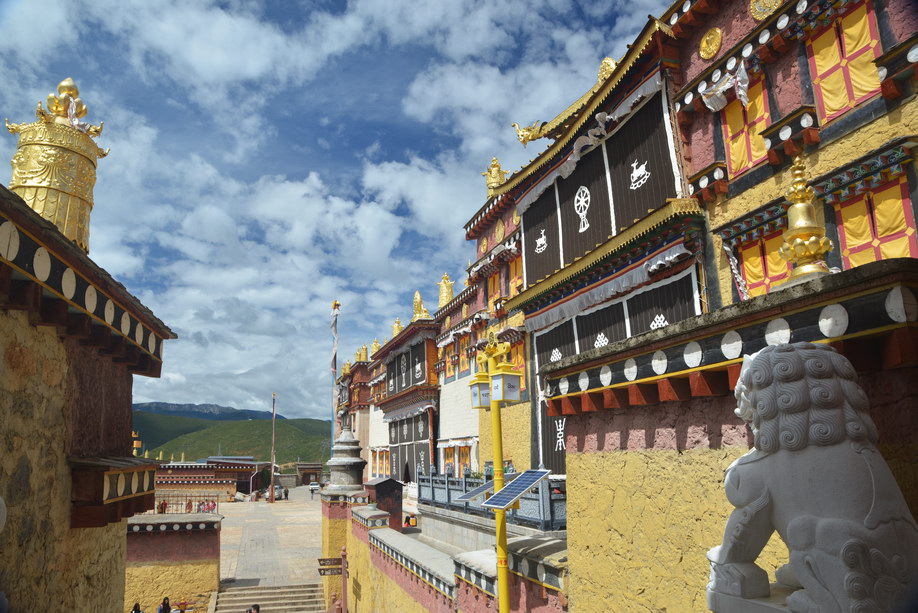
This was also my impression as I walked through it. The monastery felt like a small village. Buildings rise at different levels along the slope, connected by steps and passages. Stone and timber are used together throughout the complex. White walls contrast with dark wooden structural elements, while red, ochre and yellow appear on façades, roofs and religious buildings. Even windows and door frames are richly decorated. Buddhist symbols and ornamental patterns seem to appear everywhere.
At the centre of the complex are the great assembly halls and temples, whose monumental roofs dominate the surrounding monastic residences. Inside these sacred buildings are large Buddhist images, painted thangkas, ritual objects and elaborate decorative surfaces. The heavy timber construction, brightly painted columns and beams, incense-darkened interiors and flashes of gold create a visual world very different from the brilliant high-altitude light outside.
The monastery has not survived unchanged. Like many Tibetan Buddhist institutions, Sumtsenling suffered severe damage during the political upheavals of the twentieth century, particularly during the Cultural Revolution. Religious activity was disrupted and buildings and sacred objects were damaged or destroyed. Restoration and reconstruction began after the end of that period, particularly from the 1980s onward, allowing monastic life gradually to return.
This history makes the complex I photographed in 2015 both old and new. Its religious tradition reaches back to the seventeenth century, while parts of the physical monastery have been restored or rebuilt much more recently. Rather than diminishing its significance, this adds another layer to its history: Sumtsenling is also a place where a religious community reconstructed its physical and spiritual environment after a period of destruction.
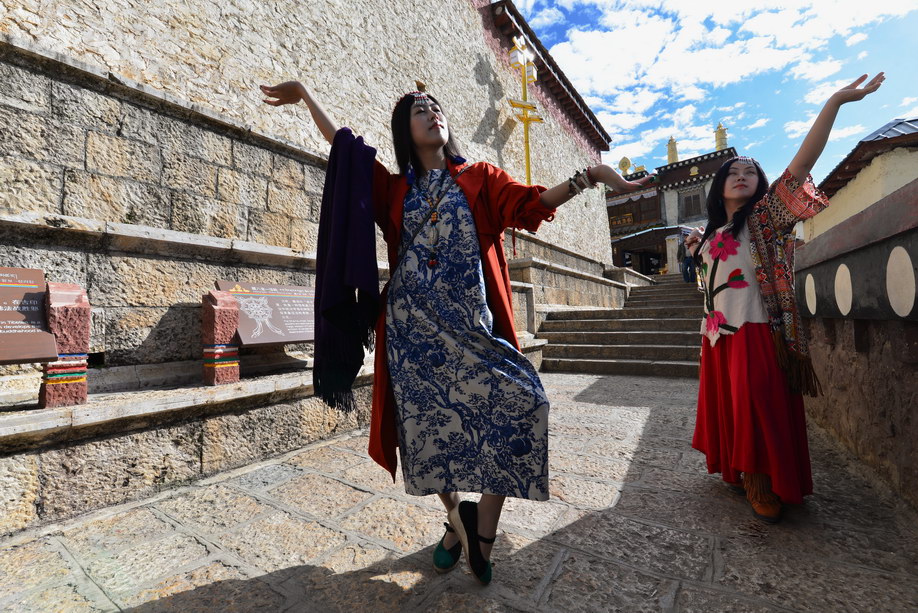
While wandering through the monastery, I encountered a group of young women and asked who they were. They told me they were a performance group from Shanghai. I asked whether they would dance so that I could photograph them, and they agreed. Their movement and colourful clothing suddenly introduced a completely different energy into the quiet atmosphere of the monastery. For a short time, my photographs shifted from architecture and religious details to people and movement.
I also wanted to photograph the monks inside the monastery, but I could not obtain permission. I respected that restriction. Documentary photography sometimes depends not only on what a photographer wants to record, but also on what the people and institutions being photographed are willing to allow. Perhaps staying longer and establishing a relationship with the community would have made another kind of work possible.
The place itself was also changing beyond the monastery walls. The city once officially known as Zhongdian was renamed Shangri-La in 2001, borrowing the name of the fictional Himalayan paradise in James Hilton’s 1933 novel Lost Horizon. The modern name has helped transform the region into a major tourist destination. Sumtsenling therefore exists today at an interesting intersection between a functioning Tibetan Buddhist monastery, a historic monument and an increasingly visited cultural attraction.
For me, however, the strongest memory remains the first one: seeing the monastery from different points in the landscape before reaching it. From a distance the golden roofs and massive buildings form a single monumental silhouette. Up close, that silhouette breaks apart into houses, stairways, wooden windows, painted details, religious symbols and people going about their lives.
I do not know when I will return to Shangri-La. China is an immense country, with many places still waiting to be seen. Perhaps that uncertainty is also part of what these photographs preserve: not only a Tibetan monastery in September 2015, but my encounter with a place that I had watched from afar for days before finally walking inside it.